



TNF Receptor
Tumor Necrosis Factor Receptor; TNFR
Tumor necrosis factor (TNF) is a major mediator of apoptosis as well as inflammation and immunity, and it has been implicated in the pathogenesis of a wide spectrum of human diseases, including sepsis, diabetes, cancer, osteoporosis, multiple sclerosis, rheumatoid arthritis, and inflammatory bowel diseases.
TNF-α is a 17-kDa protein consisting of 157 amino acids that is a homotrimer in solution. In humans, the gene is mapped to chromosome 6. Its bioactivity is mainly regulated by soluble TNF-α–binding receptors. TNF-α is mainly produced by activated macrophages, T lymphocytes, and natural killer cells. Lower expression is known for a variety of other cells, including fibroblasts, smooth muscle cells, and tumor cells. In cells, TNF-α is synthesized as pro-TNF (26 kDa), which is membrane-bound and is released upon cleavage of its pro domain by TNF-converting enzyme (TACE).
Many of the TNF-induced cellular responses are mediated by either one of the two TNF receptors, TNF-R1 and TNF-R2, both of which belong to the TNF receptor super-family. In response to TNF treatment, the transcription factor NF-κB and MAP kinases, including ERK, p38 and JNK, are activated in most types of cells and, in some cases, apoptosis or necrosis could also be induced. However, induction of apoptosis or necrosis is mainly achieved through TNFR1, which is also known as a death receptor. Activation of the NF-κB and MAPKs plays an important role in the induction of many cytokines and immune-regulatory proteins and is pivotal for many inflammatory responses.
TNF Receptor Isoform Specific Products
-
TNF Receptor
(690)
View all products
-
TNFRSF1A/
CD120a (8)View all products
-
TNFRSF3/
CD18 (1)View all products
-
TNFRSF4
(5)
View all products
-
TNFRSF5/
CD40 (127)View all products
-
TNFRSF6/
Fas/ (2)CD95 View all products
-
TNFRSF7/
CD27 (2)View all products
-
TNFRSF8/
CD30 (3)View all products
-
TNFRSF9/
4-1BB/ (3)CD137 View all products
-
TNFRSF10B/
DR5/ (1)CD262 View all products
-
TNFRSF12A/
TWEAK (5)View all products
-
TNFRSF16/
NGF Receptor/ (1)CD271 View all products
-
TNFRSF18/
GITR/ (6)CD357 View all products
All Product Categories
-
TNF Receptor Inhibitors
(877)
View all products
-
TNF Receptor Agonists
(35)
View all products
-
TNF Receptor Antagonists
(25)
View all products
-
TNF Receptor Activators
(78)
View all products
-
TNF Receptor Modulators
(8)
View all products
-
TNF Receptor Inducers
(10)
View all products
-
TNF Receptor Controls
(4)
View all products
-
TNF Receptor Ligands
(2)
View all products
-
TNF Receptor Superfamily Proteins
(282)
View all products
-
TNF Receptor Related Products (1235)
Related Products (1235)

-
Recombinant Proteins (282)
-
Antibodies (23)
-
TNF Receptor Signaling Pathway
-
TNF Receptor Isoform Comparison
-
Lenercept
 0 ImagesCat. No.: HY-P99692CAS No.: 156679-34-4Synonyms: p55TNF-R:Ig; Ro 45-2081; TNFR55-IgG1Lenercept (Ro 45-2081) is a recombinant fusion protein that consists of the soluble TNF-receptor (p55) linked to the Fc portion of human IgG1.
-
4-Isopropylbenzyl alcohol (Standard)
 0 Images(±)-Leucine (Standard) is the analytical standard of (±)-Leucine. This product is intended for research and analytical applications. (±)-Leucine (DL-Leucine), an isomer of Leucine, chemosterilant and dietary additive. (±)-Leucine inhibits growth of Escherichia coli HfrH by 92.08%.
-
Theophylline-13C2,d6
 0 ImagesCat. No.: HY-143683SCAS No.: 1782458-84-7Synonyms: 1,3-Dimethylxanthine-13C2,d6; Theo-24-13C2,d6Theophylline-13C2,d6 (1,3-Dimethylxanthine-13C2,d6) is the deuterium labeled and 13C-labeled Theophylline (HY-B0809). Theophylline (1,3-Dimethylxanthine) is a potent phosphodiesterase (PDE) inhibitor, adenosine receptor antagonist, and histone deacetylase (HDAC) activator. Theophylline (1,3-Dimethylxanthine) inhibits PDE3 activity to relax airway smooth muscle. Theophylline (1,3-Dimethylxanthine) has anti-inflammatory activity by increase IL-10 and inhibit NF-κB into the nucleus. Theophylline (1,3-Dimethylxanthine) induces apoptosis. Theophylline (1,3-Dimethylxanthine) can be used for asthma and chronic obstructive pulmonary disease (COPD) research.
-
ASK1-IN-11
 0 ImagesCat. No.: HY-176882CAS No.: 2247064-44-2
-
β5i-IN-2
 0 ImagesCat. No.: HY-187220CAS No.: 3119216-05-3β5i-IN-2 is a potent, selective, and orally active inhibitor of the immunoproteasome β5i subunit, with an IC50 of 0.08 μM against human β5i. β5i-IN-2 inhibits LPS (HY-D1056)- and IFN-γ-induced expression of IL-1β, IL-6, and TNF-α, and suppresses the JNK, ERK, and NF-κB signaling pathways. β5i-IN-2 can be used in research related to rheumatoid arthritis and ulcerative colitis.
-
LEESGGGLVQPGGSMK
 0 ImagesCat. No.: HY-P3149CAS No.: 2096980-79-7LEESGGGLVQPGGSMK, a proteolysis peptide, is a component of Infliximab. LEESGGGLVQPGGSMK can be used for quantitative analysis of Infliximab. Infliximab is a chimeric monoclonal IgG1 antibody that specifically binds to TNF-α.
-
Flurbiprofen axetil solution
 0 ImagesCat. No.: HY-FL101481CAS No.: 91503-79-6Flurbiprofen axetil solution is mainly composed of Flurbiprofen axetil (HY-101481). Flurbiprofen axetil is a non-selective COX inhibitor and a nonsteroidal anti-inflammatory agent with anti-inflammatory and analgesic effects. Flurbiprofen axetil inhibits basal-like breast cancer metastasis by inhibiting the MEK/ERK signaling pathway. Flurbiprofen axetil can promote neuroprotection after focal cerebral ischemia in rats by partially activating PPAR-γ. Flurbiprofen axetil alleviates cerebral ischemia/reperfusion injury by reducing inflammation in a transient global cerebral ischemia/reperfusion rat model. Flurbiprofen axetil can alleviate inflammatory responses and cognitive function in a mild cognitive impairment (MCI) SD rat model through the AMPKα/NF-κB signaling pathway.
-
Anti-inflammatory agent 95
 0 ImagesCat. No.: HY-168935Anti-inflammatory agent 95 (Compound 2e) is an anti-inflammatory agent that exhibits the most potent anti-inflammatory activity in LPS (HY-D1056)-induced RAW 264.7 mouse macrophages. It significantly inhibits the production of NO, with an IC50 of 8.8 μM, and reduces the secretion of TNF-α and IL-1β, with inhibition rates reaching 60% and over 90%, respectively, at a concentration of 100 μM. Anti-inflammatory agent 95 holds promise for research in the field of inflammatory diseases.
-
IRAK4-IN-35
 0 ImagesCat. No.: HY-187692CAS No.: 3112339-39-3IRAK4-IN-35 is an orally active IRAK4 inhibitor with an IRAK4 IC50 of 9.88 nM. IRAK4-IN-35 also inhibits JAK3, EGFR, CDK2 with IC50 values of 6.72 nM, 32.35 nM, and 39.08 nM, respectively. IRAK4-IN-35 inhibits the production of proinflammatory cytokines, blocks inflammatory signaling pathways, and reduces serum TNF-α levels and spleen index in mouse models of acute inflammation. IRAK4-IN-35 decreases the disease activity index, paw swelling degree, and spleen index in a collagen-induced arthritis mouse model. IRAK4-IN-35 can be used for the research of rheumatoid arthritis.
-
Aurantio-obtusin (Standard)
 0 ImagesCat. No.: HY-N0261RCAS No.: 67979-25-3Aurantio-obtusin (Standard) is the analytical standard of Aurantio-obtusin. This product is intended for research and analytical applications. Aurantio-obtusin is a anthraquinone compound that can be extracted from cassia seed. Aurantio-obtusin has the effects of decreasing blood pressure, decreasing blood lipids and anti-inflammatory.Aurantio-obtusin is an orally active vasodilator. Aurantio-obtusin ameliorates hepatic steatosis through AMPK/ autophagy-and AMPK/TFEB mediated inhibition of lipid accumulation.
-
Desipramine
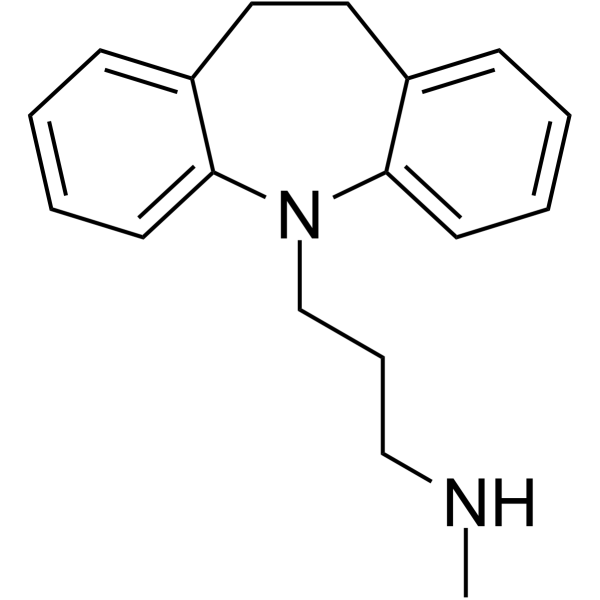 0 ImagesDesipramine is a first-generation tricyclic antidepressant. Desipramine selectively binds to norepinephrine transporter and blocks neuronal norepinephrine reuptake. Desipramine activates MAPK signaling via ERK1/2, JNK, and p38, represses NF-κB and AP-1 activity, and induces apoptosis via ROS elevation, mitochondrial membrane potential reduction, and intracellular calcium increase. Desipramine also shows anyi-inflammatory activity, inhibiting TNF-α production. Desipramine can be used for the research of hepatocellular cancer, inflammation, and neurological diseases.
-
7-O-Galloyl-D-sedoheptulose
 0 ImagesCat. No.: HY-N16527CAS No.: 233690-85-27-O-Galloyl-D-sedoheptulose is an orally effective polyphenolic compound. 7-O-Galloyl-D-sedoheptulose lowers the serum levels of glucose, leptin, insulin, C-peptide, resistin, TNF-α, IL-6, and increases the serum level of adiponectin. 7-O-Galloyl-D-sedoheptulose significantly reduces the levels of ROS and lipid peroxidation products (TBARS) by down-regulating the protein expression of NADPH oxidase subunit Nox-4 and p22phox. 7-O-Galloyl-D-sedoheptulose down-regulates NF-κB and related pro-inflammatory factors (COX-2, iNOS), inhibits the phosphorylation of JNK and the activity of its downstream AP-1. 7-O-Galloyl-D-sedoheptulose reduces the expression of TGF-β1 and fibronectin, indicating its potential in anti-tissue fibrosis. 7-O-Galloyl-D-sedoheptulose can be used for the study of type 2 diabetes and its hepatic and pancreatic complications.
-
FTO-IN-17
 0 ImagesCat. No.: HY-183325CAS No.: 1434867-98-7FTO-IN-17 is an orally active and brain-penetrant FTO (m6A RNA demethylase) inhibitor with an IC50 of 1.1 μM. FTO-IN-17 stably binds the FTO catalytic pocket. FTO-IN-17 protects against Aβ1-42-induced toxicity while increasing global m6A levels and dampening pro-inflammatory gene (CXCL10, TNF-α) expression. FTO-IN-17 ameliorates anxiety-like behavior and rescues hippocampal-dependent spatial, recognition memory and neuroinflammation in Alzheimer's disease mice models.
-
FXR agonist 17
 0 ImagesCat. No.: HY-182026CAS No.: 3107769-23-0FXR agonist 17 is an orally active, steroidal FXR agonist with EC50 values of 42.2 nM (TR-FRET) and 176.4 nM (luciferase reporter assay), respectively. FXR agonist 17 activates TGR5 (EC50 = 2.6 μM) but does not activate hMRGPRX4. FXR agonist 17 exerts anti-inflammatory, hepatoprotective and antifibrotic effects, improves the non-alcoholic steatohepatitis (NAFLD) activity score and reduces the severity of liver fibrosis. FXR agonist 17 can be used for the research of NAFLD, cholestatic liver disease and liver fibrosis.
-
CRX 527
 0 ImagesCat. No.: HY-155801CAS No.: 216014-14-1CRX 527 is a TLR4 agonist. CRX 527 activates the MyD88-dependent, TRIF-dependent, and TRAF6/NF-κB signaling pathways downstream of TLR4, mimics lipid A, and regulates antigen processing and presentation by dendritic cells. CRX 527 stimulates innate immune responses and enhances vaccine efficacy. CRX 527 maintains the structural integrity of hematopoietic tissues, spleen and intestine, alleviates radiation-induced damage, preserves intestinal homeostasis, and inhibits apoptosis, inflammatory responses, oxidative stress and DNA damage. CRX 527 can be used in the research of acute radiation syndrome, melanoma, HPV-related tumors and intracerebral hemorrhage.
-
CZEN-002
 0 ImagesCat. No.: HY-P10693CAS No.: 942626-41-7CZEN-002 is a derivative of alpha-melanocyte-stimulating hormone that has anti-inflammatory and antibacterial properties, inhibiting the production of TNF-α.
-
BCMA72-80
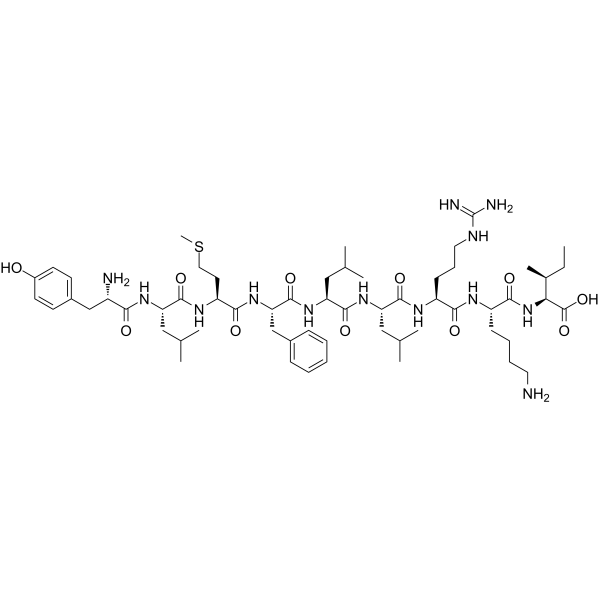 0 ImagesCat. No.: HY-P1700CAS No.: 2293841-58-2BCMA72-80 is a HLA-A2-specific B-cell maturation antigen (BCMA) peptide, with great affinity to HLA-A2, used in the research of multiple myeloma or other B-cell maturation antigen expressing tumors.
-
Antileishmanial agent-44
 0 ImagesCat. No.: HY-184214Antileishmanial agent-44 is a histone deacetylase inhibitor targeting Leishmania donovani Sir2, with an IC50 of 0.652 μM against amastigotes. Antileishmanial agent-44 elevates ROS levels to induce oxidative stress, which causes mitochondrial membrane potential depolarization, cytochrome c release, phosphatidylserine externalization and DNA fragmentation, triggers apoptosis-like cell death, and arrests the cell cycle. Antileishmanial agent-44 upregulates the expression of Th1-type cytokines and NO in macrophages, reshapes host immune responses to eliminate intracellular parasites. Antileishmanial agent-44 inhibits parasites in infected golden hamsters in vivo. Antileishmanial agent-44 can be used for the research of visceral leishmaniasis.
-
XmAb5485
 0 ImagesCat. No.: HY-P991555XmAb5485 is an Fc-engineered humanized anti-CD40 monoclonal antibody with high affinity to Fc-γ receptors. XmAb5485 induces potent antibody-dependent cell-mediated cytotoxicity (ADCC) and antibody-dependent cellular phagocytosis (ADCP) against tumor cells. XmAb5485 inhibits proliferation and induces apoptosis of tumor cells. XmAb5485 shows highly cytotoxic against lymphoma, leukemia and multiple myeloma cell lines as well as primary cancer cells.
-
COX-2-IN-66
 0 ImagesCat. No.: HY-183288COX-2-IN-66 is a cyclooxygenase-2 (COX-2) inhibitor with an IC50 of 8.43 μM. COX-2-IN-66 reduces release of pro-inflammatory cytokines IL-6 and TNF-α. COX-2-IN-66 exhibits acceptable cellular tolerability, with cytokine-modulating concentrations remaining below its cytotoxic threshold. COX-2-IN-66 can be used for the research of inflammation.




