



TNF Receptor Inhibitor
-
PDE4-IN-10
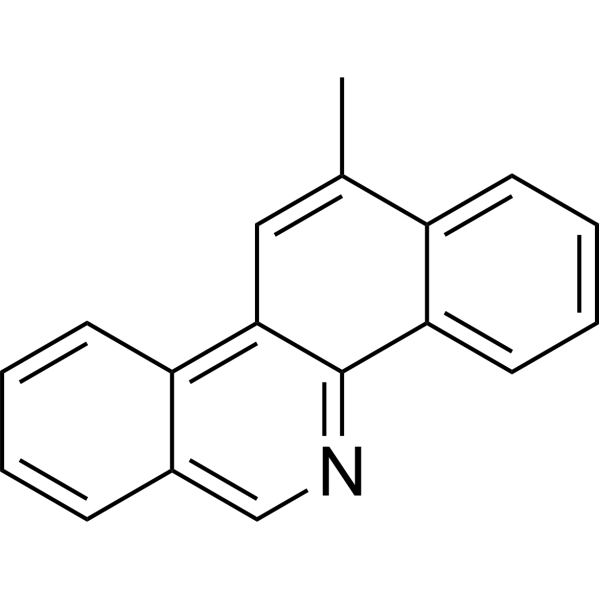 0 ImagesCat. No.: HY-147950CAS No.: 2413564-66-4
PDE4-IN-10 (compound 7a) is a potent PDE4 inhibitor, with an IC50 of 7.01 μM for PDE4B. PDE4-IN-10 shows selectivity, microsomal stability, inhibition of TNF-α and no major toxicities in vitro.
-
1,4-Dicaffeoylquinic acid (Standard)
 0 Images
1,4-Dicaffeoylquinic acid (Standard) (1,4-DCQA (Standard)) is the analytical standard of 1,4-Dicaffeoylquinic acid (HY-N0358). This product is intended for research and analytical applications. 1,4-Dicaffeoylquinic acid (1,4-DCQA) is a phenylpropanoid compound that can be isolated from Xanthii fructus and an inhibitor of xanthine oxidase (IC50: 7.36 μM). 1,4-Dicaffeoylquinic acid has anti-inflammatory activity and can inhibit the production of TNF-α induced by LPS (HY-D1056).
-
Anti-Mouse CD70 Antibody (TAN 1-7)
 0 ImagesCat. No.: HY-P991809
Anti-Mouse CD70 Antibody (TAN 1-7) reacts with the mouse CD70. Anti-Mouse CD70 Antibody (TAN 1-7) is a non-depleting antibody which blocks the CD70-CD27 interaction. Recommend Isotype Controls: Rat IgG2a kappa, Isotype Control (HY-P990679).
-
PF-05230905
 0 ImagesCat. No.: HY-P991407Synonyms: ATN-192
PF-05230905 is a human monoclonal antibody (mAb) targeting TNFSF2/TNFa. PF-05230905 can be used in Rheumatoid arthritis research.
-
BMAP-27
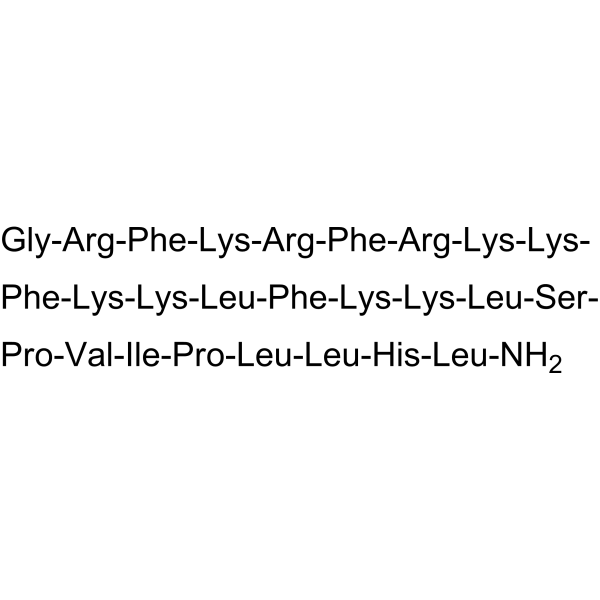 0 ImagesCat. No.: HY-P5286CAS No.: 184870-30-2
BMAP-27 is a cationic amphipathic α-helical antimicrobial peptide with anticancer activity. BMAP-27 disrupts the integrity and permeability of cell membranes, leading to the leakage of intracellular DNA, proteins and alkaline phosphatase. BMAP-27 increases intracellular ROS levels and reduces plasma endotoxin and TNF-α concentrations. BMAP-27 can be used in studies related to Salmonella infection, breast cancer, lung cancer and obstructive jaundice.
-
SKF 104351
 0 ImagesCat. No.: HY-105480CAS No.: 111908-94-2
SKF 104351 is an orally active cytokine suppressive anti-inflammatory drug. SKF 104351 can inhibit TNF-α production.
-
1-(2,5-Dihydroxyphenyl)-3-hydroxybutan-1-one
 0 ImagesCat. No.: HY-N19110CAS No.: 1083202-40-7
1-(2,5-Dihydroxyphenyl)-3-hydroxybutan-1-one is an inhibitor of iNOS and COX-2. 1-(2,5-Dihydroxyphenyl)-3-hydroxybutan-1-one inhibits LPS-induced excessive production of NO and PGE2, as well as the mRNA expression of pro-inflammatory cytokines TNF-α, IL-1β, IL-6 and IL-12. 1-(2,5-Dihydroxyphenyl)-3-hydroxybutan-1-one can be used in inflammation-related research.
-
CT-133
 0 ImagesCat. No.: HY-160844CAS No.: 2417155-47-4
CT-133 is a selective and potent CRTH2 Receptor antagonist, with a Ki value of 2.2 nM. The Ki value for the DP1 receptor is greater than 3800 nM. CT-133 inhibits neutrophil migration induced by PGD2 (HY-101988). CT-133 significantly alleviates lung inflammation and improves lung function impairment in a mouse model of acute lung injury (ALI) induced by cigarette smoke. CT-133 effectively inhibits the excessive expression of pro-inflammatory cytokines (TNF-α, IL-1β, and IL-6) and chemokines (KC), and reverses the inhibition of the anti-inflammatory factor IL-10. CT-133 can be used for the study of ALI.
-
Arucadiol
 0 ImagesCat. No.: HY-134028CAS No.: 105037-85-2
Arucadiol is a rosane-type diterpenoid anti-inflammatory agent. 5 μM Arucadiol significantly inhibits LPS-induced TNF-α, IL-1β, and IL-8 production (inhibition rates of 39.8%, 44.4%, and 34.5%, respectively). Arucadiol exerts its anti-inflammatory activity by inhibiting the mRNA and protein expression of inflammatory cytokines and can be used in research on inflammation-related cardiovascular diseases such as atherosclerosis. Arucadiol can be naturally extracted from the roots of Salvia miltiorrhiza var. alba.
-
DPP-4-IN-8
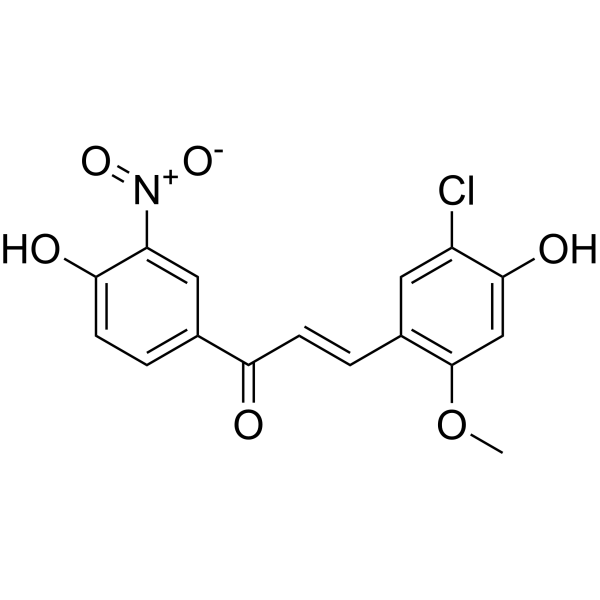 0 ImagesCat. No.: HY-155027
DPP-4-IN-8 (compound 27) is a potent and selective DPP4 (dipeptidyl peptidase 4) inhibitor, with a Ki of 0.96 μM. DPP-4-IN-8 blocks the dipeptidase activity of DPP4 in both Caco-2 and HepG-2 cells. DPP-4-IN-8 also dose-dependently suppresses the expression levels of the chemokines tumor necrosis factor-α (TNF-α), interleukin-6 (IL-6), and interleukin-1β (IL-1β).
-
sEH-IN-21
 0 ImagesCat. No.: HY-176554CAS No.: 3084814-46-7
sEH-IN-21 is an orally active sEH inhibitor with IC50s of 0.1 nM for hsEH and msEH. sEH-IN-21 potently inhibits NF-κB signaling pathways. sEH-IN-21 shows a strong anti-inflammatory activity, decreases the release of IL-6 and TNF-α and maintained the integrity of the intestinal barrier. sEH-IN-21 can be used for the study of inflammatory bowel disease (IBD).
-
Sinulatumolin E
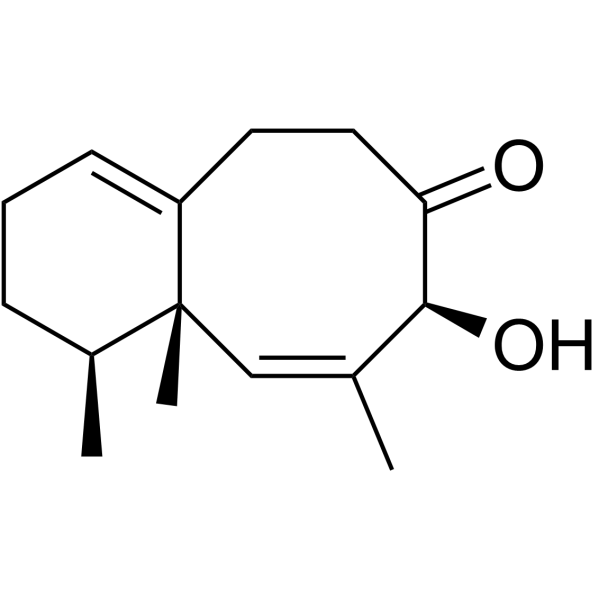 0 ImagesCat. No.: HY-N10448CAS No.: 2570255-85-3
Sinulatumolin E (compound 6), a terpenoid, displays significant TNF-α inhibitory activity with an IC50 of 3.6 μM. Sinulatumolin E (compound 6) exhibits anti-inflammatory activity.
-
Iso-AS601245 TFA
 0 ImagesCat. No.: HY-10612ACAS No.: 1644386-60-6
Iso-AS601245 TFA is an orally active JNK inhibitor, with IC50 values of 0.15 μM, 0.22 μM and 0.07 μM against JNK1, JNK2 and JNK3, respectively. Iso-AS601245 TFA reduces plasma TNF-α levels in mice and inhibits IL-2 secretion in activated T cells. Iso-AS601245 TFA alleviates adjuvant-induced rheumatoid arthritis in mice. Iso-AS601245 TFA can be used in studies related to rheumatoid arthritis.
-
DCLK1-IN-6
 0 ImagesCat. No.: HY-178776
DCLK1-IN-6 (Compound 12n) is a Doublecortin-like kinase 1 (DCLK1) inhibitor with an IC50 of 58 nM. DCLK1-IN-6 significantly inhibits DCLK1 enzyme activity and its mediated inflammatory pathway. DCLK1-IN-6 has remarkable anti-inflammatory activity and significantly alleviates symptoms in acute lung injury (ALI) and sepsis mouse models. DCLK1-IN-6 can be used for acute inflammation diseases research.
-
Papiliocin
 0 ImagesCat. No.: HY-P11093
Papiliocin is a potent peptide antibiotic with both anti-inflammatory and antibacterial activities. Papiliocin is primarily active against Gram-negative bacteria. Papiliocin exhibits strong anti-inflammatory activity against cell, exerting its anti-inflammatory activity by inhibiting the production of NO and the secretion of TNF-α and MIP-2. Papiliocin participates in the innate defense response mechanism by inhibiting the Toll-like receptor pathway and NF-κB. Papiliocin induces apoptosis in fungal cells and increases the total level of intracellular ROS. Papiliocin acts as an effective antiseptic peptide in sepsis models. Papiliocin is useful in anti-inflammatory and antibacterial research.
-
7-O-Methyl glabranin
 0 ImagesCat. No.: HY-N19816CAS No.: 75291-75-7
7-O-Methyl glabranin is a flavonoid compound and also an inhibitor of LPS-induced TNF-α and IL-1β production. 7-O-Methyl glabranin can be used in the research of diseases such as inflammation.
-
HDAC6-IN-80
 0 ImagesCat. No.: HY-182777CAS No.: 3118852-74-4
HDAC6-IN-80 is an orally active, selective HDAC6 inhibitor with an IC50 of 8.5 nM. HDAC6-IN-80 inhibits lipopolysaccharide-induced microglial activation, reduces the levels of iNOS, COX-2, TNF-α and IL-6, and alleviates sensory hypersensitivity behaviors. HDAC6-IN-80 can be used for the research of inflammatory pain and chemotherapy-induced peripheral neuropathy.
-
NF-κB-IN-20
 0 ImagesCat. No.: HY-175833
NF-κB-IN-20 is an orally active NF-κB inhibitor. NF-κB-IN-20 directly binds to the Keap1 protein, activating the Keap1/Nrf2/HO-1 antioxidant pathway, and simultaneously inhibiting the NF-κB inflammatory pathway, thereby synergistically reducing oxidative stress and inflammatory responses. NF-κB-IN-20 M11 inhibits the expression of IL-6, IL-1β, and TNF-α, significantly reduces the level of ROS, and restores the mitochondrial membrane potential. NF-κB-IN-20 can be used for the study of acute lung injury (ALI).
-
Nerelimomab
 0 ImagesCat. No.: HY-P99753CAS No.: 162774-06-3Synonyms: BAYX1351
Nerelimomab (BAYX1351) is an anti-TNF-α antibody. Nerelimomab can be used for research of sepsis.
-
RIPK1-IN-32
 0 ImagesCat. No.: HY-175007
RIPK1-IN-32 is a RIPK inhibitor with anti-inflammatory activity. RIPK1-IN-32 inhibits nitric oxide (NO) release with an IC50 of 3.26 μM. RIPK1-IN-32 significantly alleviates acute liver injury associated with sepsis through the RIPK1/NF-κB/MAPK pathway, therefore preventing the nuclear translocation of p65 and c-fos, which results in reduced expression of TNF-α and IL-6. RIPK1-IN-32 can be used for the study of acute liver injury and sepsis.



