



Drug Derivative
Drug derivative
Drug derivatives are derived from parent compounds. They replace or add atoms and groups through chemical reactions to optimize the various properties of the parent compound and reduce side effects. The application of drug derivatives provides a diverse compound library for drug research and development and accelerates the discovery of new drugs. For example, urea derivatives Glibenclamide can prolong the blood sugar-lowering effect of anti-diabetic drugs.
References:
- [1]. Vardanyan RS, et al. Fentanyl-related compounds and derivatives: current status and future prospects for pharmaceutical applications. Future Med Chem. 2014 Mar;6(4):385-412.x
- [2]. Ghosh AK, et al. Urea Derivatives in Modern Drug Discovery and Medicinal Chemistry. J Med Chem. 2020 Mar 26;63(6):2751-2788.x
All Product Categories
-
Drug Derivative Inhibitors
(12)
View all products
-
Drug Derivative Agonist
(1)
View all products
-
Drug Derivative Activator
(1)
View all products
-
Drug Derivative Chemical
(1)
View all products
-
Drug Derivative Inducer
(1)
View all products
-
Drug Derivative Controls
(38)
View all products
-
Drug Derivative Substrate
(1)
View all products
-
Drug Derivative Related Products (4062)
Related Products (4062)

-
TH301
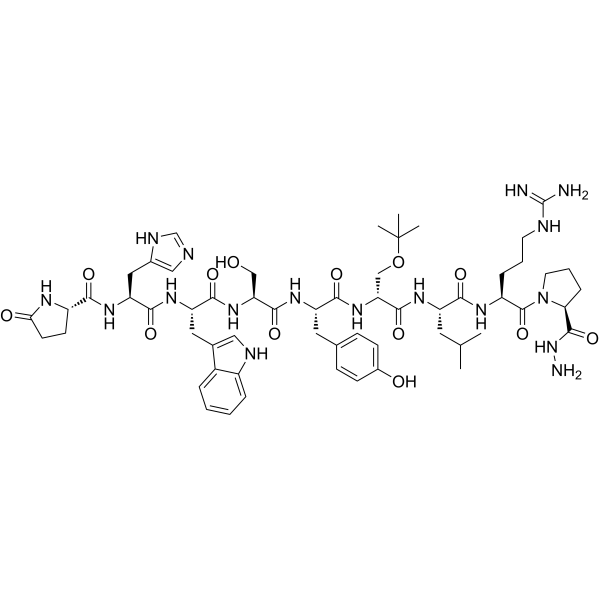
 0 ImagesCat. No.: HY-134192CAS No.: 450338-32-6TH301 is a Phenylpyrazole derivative. TH301 selectively stabilize CRY2. TH301 dose-dependently prolongs circadian period.
-
CB 966
 0 ImagesCat. No.: HY-117638CAS No.: 128312-71-0CB 966 a Vitamin D3 (HY-15398) analogue, is an immunosuppressant. CB 966 delays rejection of allogeneic skin grafts in mice. CB 966 moderately increases serum calcium levels. CB 966 can be used for the research of allogeneic skin graft rejection.
-
cis-LY393053
 0 ImagesCat. No.: HY-123253CAS No.: 394735-81-0cis-LY393053 is an active compound.
-
Antifungal agent 180
 0 ImagesCat. No.: HY-189372CAS No.: 3117572-66-1Antifungal agent 180 is a pyrazole-oxadiazole-linked 1,2,4-triazole derivative and a broad-spectrum antifungal agent. Antifungal agent 180 disrupts fungal cellular homeostasis through multiple pathways, damaging the integrity of fungal hyphal cell membranes, increasing membrane permeability, and causing leakage of intracellular nucleic acids and proteins; it induces hyphal shrinkage, collapse, and organelle disintegration; and it causes widespread dysregulation of sterol/lipid metabolism, carbohydrate utilization, mitochondrial respiration, and stress response pathways at both the transcriptomic and proteomic levels. Antifungal agent 180 exhibits protective and curative efficacy against rice blast in vivo. Antifungal agent 180 can be used in research on rice blast and gray mold.
-
Lycorine methiodide
 0 ImagesCat. No.: HY-137052CAS No.: 15069-99-5Synonyms: N-Methyllycorine iodide
-
Mukurozioside IIb
 0 ImagesCat. No.: HY-N19872CAS No.: 103001-34-9Mukurozioside IIb is a sesquiterpene glycoside found in S. mukorossi and Sapindus rarak. Mukurozioside IIb can be used for the research of breast cancer.
-
Ceftizoxime alapivoxil
 0 ImagesCat. No.: HY-W780717CAS No.: 135821-54-4Synonyms: AS-924 free baseCeftizoxime alapivoxil AS-924 (free base) is an orally active prodrug of Ceftizoxime (HY-B1596). Ceftizoxime alapivoxil exhibits potent inhibitory effect against gram-positive and gram-negative bacteria. Ceftizoxime alapivoxil can be used for the research of bacterial infection.
-
Stacofylline hydrochloride
 0 ImagesCat. No.: HY-106412ACAS No.: 138472-18-1Synonyms: S 9977Stacofylline hydrochloride (S 9977), a Xanthine (HY-W017389) derivative, is a potent AChE inhibitor with an IC50 of 5-50 nM. Stacofylline shows anti-amnesic and promnesic activities.
-
1,3-Dibromo-1,3-dichloroacetone
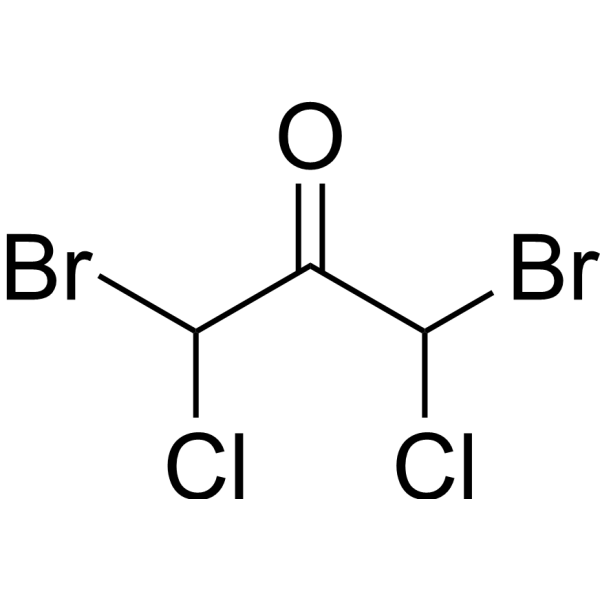 0 ImagesCat. No.: HY-133627CAS No.: 62874-84-41,3-Dibromo-1,3-dichloroacetone is a halogenated ozone-chlorine and ozone chloramine disinfection byproducts (DBPs) at elevated bromide levels when chlorine or chloramine is used as a secondary disinfectant.
-
Quercetin-3-O-[α-L-rhamnose-(1→2)-β-D-glucopyranosyl]-5-O-β-D-glucopyranoside
![Quercetin-3-O-[α-L-rhamnose-(1→2)-β-D-glucopyranosyl]-5-O-β-D-glucopyranoside](https://file.medchemexpress.com/product_pic/hy-n18374.gif "Click to View Quercetin-3-O-[α-L-rhamnose-(1→2)-β-D-glucopyranosyl]-5-O-β-D-glucopyranoside Product Detail") 0 ImagesCat. No.: HY-N18374Quercetin-3-O--5-O-β-D-glucopyranoside is a flavone glycoside found in the seeds of Impatiens balsamina L.
0 ImagesCat. No.: HY-N18374Quercetin-3-O--5-O-β-D-glucopyranoside is a flavone glycoside found in the seeds of Impatiens balsamina L.

-
Paclitaxel octadecanedioate
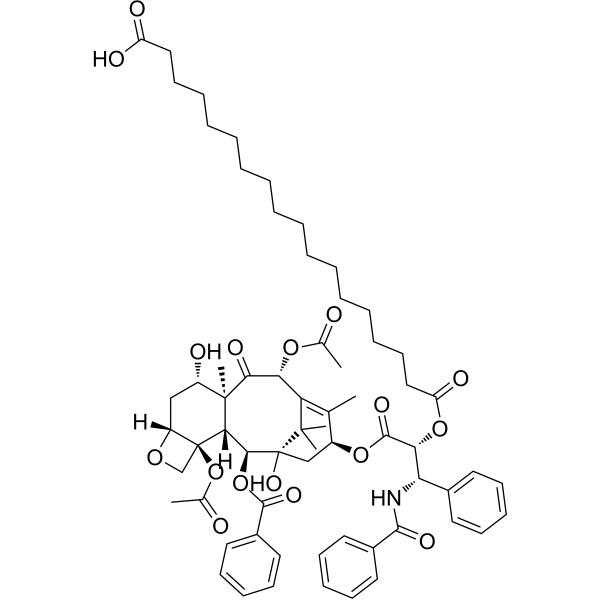 0 ImagesCat. No.: HY-139248CAS No.: 2089211-45-8Paclitaxel octadecanedioate (compound PTX-FA18) is comprised of Paclitaxel (HY-B0015) conjugated to 1,18-octadecanedioic acid (HY-W005178). Paclitaxel octadecanedioate mixed with human serum albumin (HAS) is cytotoxic to HT-1080, PANC-1, HT-29 and Hela cells (IC50s = 12, 2.48, 8.62, and 64.42 nM, respectively).
-
Podophyllol
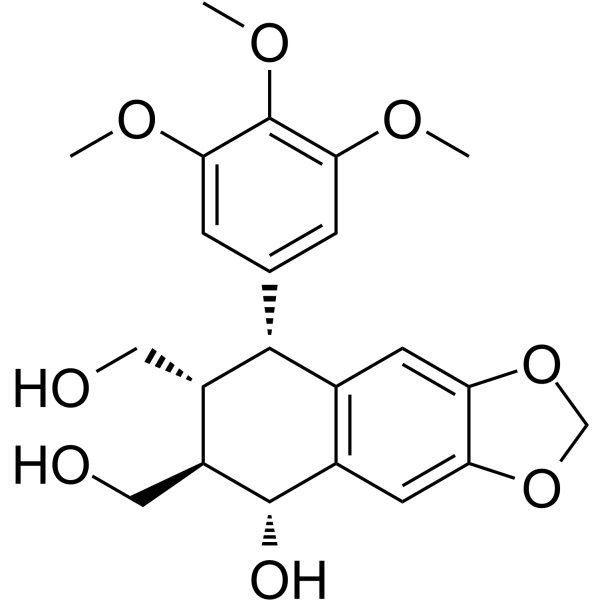 0 ImagesCat. No.: HY-N7685CAS No.: 78339-51-2Podophyllol, a derivative of podophyllotoxin esters, has antitumor activity.
-
N-Fornzyl-annonain
 0 ImagesCat. No.: HY-N17420CAS No.: 83459-45-4N-Formzyl-annonain is an N-acylaporphine alkaloid that occurs in the stems of Tinospora crispa (Menispermaceae).
-
Angeflorin
 0 ImagesCat. No.: HY-N2869CAS No.: 57498-69-8Angeflorin is a natural flavonoid.
-
Lup-20(29)-ene-2α,3α-diol
 0 ImagesCat. No.: HY-N17096CAS No.: 55476-83-0Lup-20(29)-ene-2α,3α-diol is a natural triterpene.
-
1-(1,3-Diphenylpropan-2-yl)pyrrolidine hydrochloride
 0 ImagesCat. No.: HY-W035404CAS No.: 102009-66-51-(1,3-Diphenylpropan-2-yl)pyrrolidine hydrochloride is structurally similar to known dissociative anesthetics.
-
Zolasartan
 0 ImagesCat. No.: HY-101680CAS No.: 145781-32-4Synonyms: GR-117289Zolasartan is an active compound.
-
BKM1740
 0 ImagesCat. No.: HY-113704CAS No.: 1070966-97-0BKM1740 is an active compound.



