



NMDA Receptor
NMDA receptor (NMDAR) ionotropic glutamate receptors support synaptogenesis, synaptic maturation, long-term plasticity, neuronal network activity, and cognition[1]. Mechanistically, NMDARs act as glutamate-gated, calcium-permeable ion channels that mediate synaptic transmission and underpin learning and memory[2]. Their activation requires coordinated agonist binding, with glutamate binding GluN2 and glycine or D-serine binding GluN1[3]. In disease contexts, abnormal NMDAR-mediated signaling is associated with neurological and psychiatric disorders, while NMDAR dysfunction is implicated in seizure and ischemia models[1][2]. Anti-NMDA receptor encephalitis further links receptor-targeting antibodies with rapidly progressive neuropsychiatric disease mechanisms and experimental models[4]. Compared with related NMDA receptor isoforms, subunit composition creates receptor subtypes with distinct biophysical, pharmacological, and signaling properties[5]. Therefore, GluN2A, GluN2B, GluN2C, GluN2D, and GluN3-containing receptors should be separated in experimental design when subtype-specific function, synaptic plasticity, or disease signaling is tested[5]. For experimental applications, agonists and inhibitors provide mechanistic tools because agonists stabilize ligand-binding-domain gating arrangements, whereas competitive antagonists disrupt receptor activation[2]. D-serine also provides a useful ligand model because it binds GluN1, interacts with GluN2A, and can inhibit NMDAR current at high concentration[3].
References:
- [1]. Dupuis JP, et al. NMDA receptor functions in health and disease: Old actor, new dimensions. Neuron. 2023 Aug 2;111(15):2312-2328. [Content Brief]
- [2]. Zhu S, et al. Mechanism of NMDA Receptor Inhibition and Activation. Cell. 2016 Apr 21;165(3):704-14. [Content Brief]
- [3]. Yovanno RA, et al. Excitatory and inhibitory D-serine binding to the NMDA receptor. Elife. 2022 Oct 27;11:e77645. [Content Brief]
- [4]. Dalmau J, et al. An update on anti-NMDA receptor encephalitis for neurologists and psychiatrists: mechanisms and models. Lancet Neurol. 2019 Nov;18(11):1045-1057. [Content Brief]
- [5]. Paoletti P, et al. NMDA receptor subunit diversity: impact on receptor properties, synaptic plasticity and disease. Nat Rev Neurosci. 2013 Jun;14(6):383-400. [Content Brief]
All Product Categories
-
NMDA Receptor Inhibitors
(28)
View all products
-
NMDA Receptor Agonists
(45)
View all products
-
NMDA Receptor Antagonists
(119)
View all products
-
NMDA Receptor Activators
(5)
View all products
-
NMDA Receptor Modulators
(14)
View all products
-
NMDA Receptor MDM2 Inhibitor
(1)
View all products
-
NMDA Receptor Control
(1)
View all products
-
NMDA Receptor Ligands
(2)
View all products
-
NMDA Receptor Related Products (240)
Related Products (240)

-
L-Aspartic acid-1,4-13C2,15N
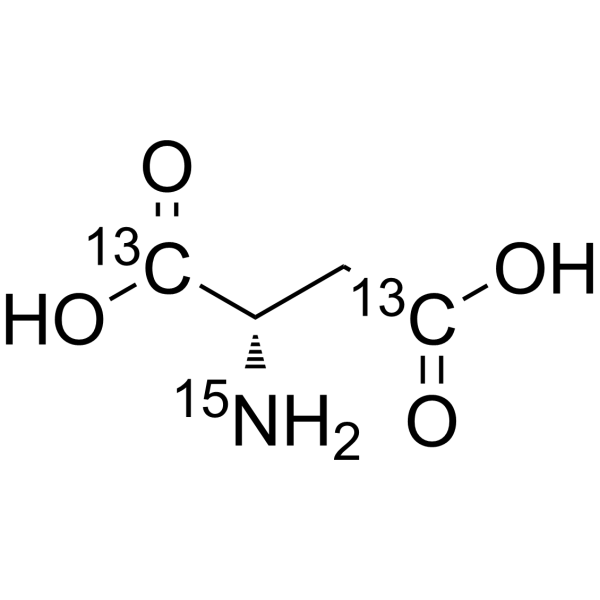 0 ImagesCat. No.: HY-N0666S7CAS No.: 2483830-03-9L-Aspartic acid-1,4-13C2,15N is the 15N, 13C-labeled L-Aspartic acid (HY-N0666). L-Aspartic acid is a NMDA receptor agonist and acidic amino acid. L-Aspartic acid has no independent analgesic activity. L-Aspartic acid can antagonize the analgesic effects of D-Aspartic acid and Morphine. L-Aspartic acid regulates polymorph transformation, crystal growth/aggregation and nucleation processes of calcium carbonate, and can serve as a biomineralization template. L-Aspartic acid promotes burst firing of central neurons. L-Aspartic acid can be used in studies related to cerebral ischemia and epilepsy.
-
NMDAR modulator 3
 0 ImagesCat. No.: HY-187147CAS No.: 342379-28-6NMDAR modulator 3 is a subunit-selective NMDA receptor potentiator targeting NMDAR receptors containing NR2C/NR2D subunits. NMDAR modulator 3 can be used for the research of schizophrenia, parkinson's disease, cognitive disorders, depression, neuropathic pain, stroke, traumatic brain injury, epilepsy, neurodegeneration.
-
L-AP5
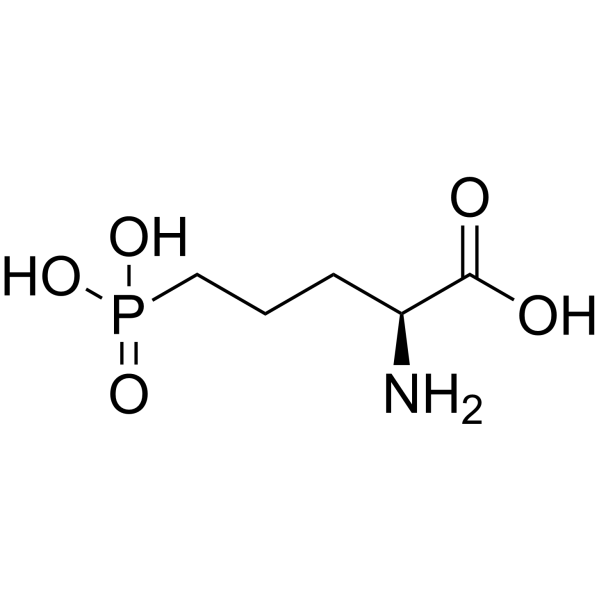 0 ImagesCat. No.: HY-100714BCAS No.: 79055-67-7Synonyms: L-APV; L-2-Amino-5-phosphonovaleric acidL-AP5 (L-APV; L-2-Amino-5-phosphonovaleric acid) is an NMDA antagonist and is the isomer of D-AP5 (HY-100714A). L-AP5 shows a relatively weak amino acid and synaptic blocking activity.
-
GPI-3000
 0 ImagesCat. No.: HY-105450CAS No.: 144301-37-1GPI-3000 is a NMDA receptor antagonist. GPI-3000 can ameliorate metabolic injury and shows neuroprotective effect. GPI-3000 can be used for the researches of metabolic and neurological disease.
-
Bupivacaine hydrochloride monohydrate
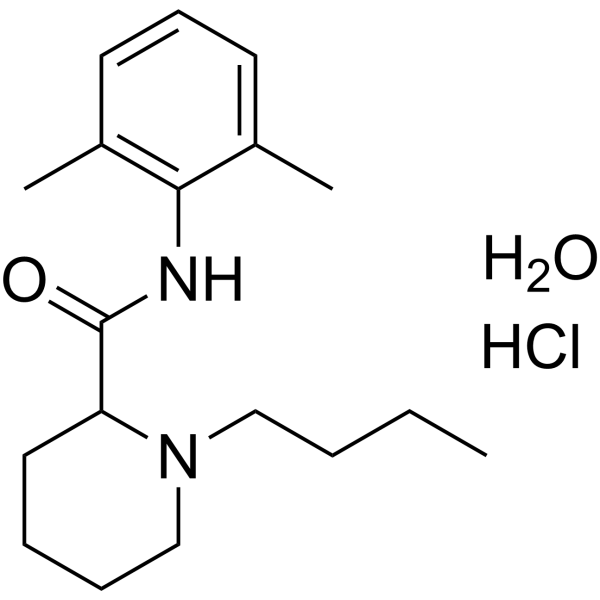 0 ImagesCat. No.: HY-W415121CAS No.: 73360-54-0Bupivacaine hydrochloride monohydrate is a NMDA receptor inhibitor. Bupivacaine hydrochloride monohydrate can block sodium, L-calcium, and potassium channels. Bupivacaine hydrochloride monohydrate potently blocks SCN5A channels with the IC50 of 69.5 μM. Bupivacaine hydrochloride monohydrate can be used for the research of chronic pain.
-
cis-ACPD
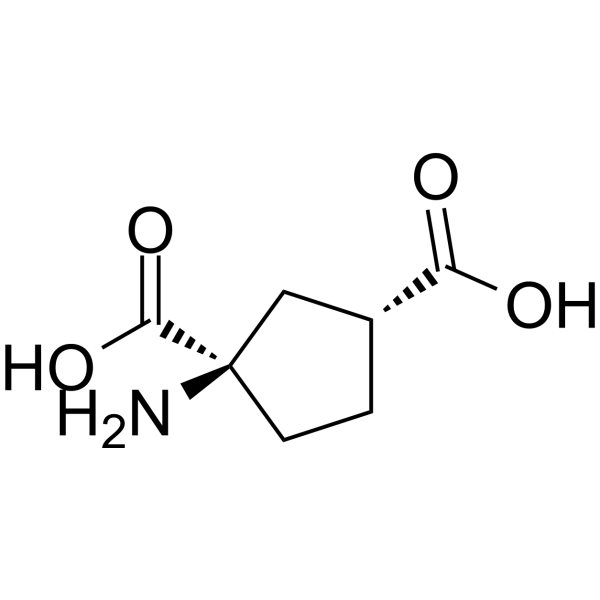 0 ImagesCat. No.: HY-19434ACAS No.: 477331-06-9cis-ACPD is a potent agonist of NMDA receptor, with an IC50 of 3.3 μM. cis-ACPD is also a selective agonist of group II mGluR, with EC50s of 13 μM and 50 μM for mGluR2 and mGluR4, respectively.
-
SePP
 0 ImagesCat. No.: HY-181828CAS No.: 3118902-53-4SePP is a blood-brain barrier-permeable NMDAR antagonist and dopamine/norepinephrine reuptake inhibitor, with a Ki of 28.7 nM for rat NMDAR. SePP exerts anticonvulsant effects. SePP can be used in research related to fragile X syndrome.
-
NMDA receptor antagonist 5
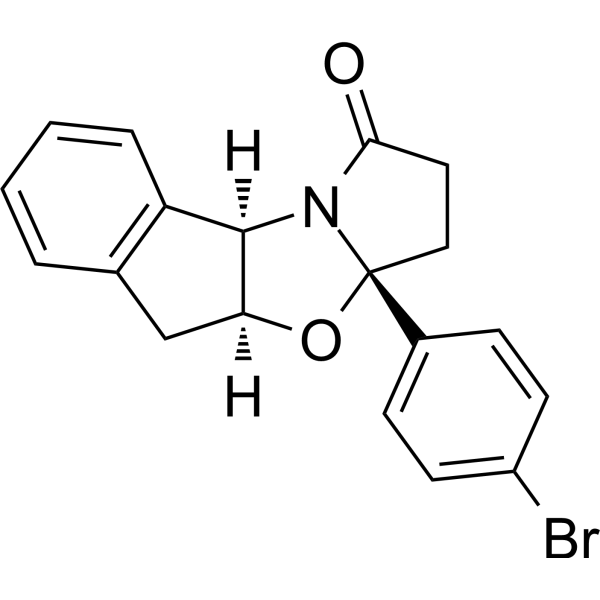 0 ImagesCat. No.: HY-146101CAS No.: 2415998-36-4NMDA receptor antagonist 5 (Compound 10e) is a potent, brain permeable and non-toxic NMDA receptor antagonist. NMDA receptor antagonist 5 can be used for neurological disorder research.
-
Dynorphin A (1-10)
 0 ImagesCat. No.: HY-P1594CAS No.: 79994-24-4Dynorphin A (1-10) an endogenous opioid neuropeptide, binds to extracellular loop 2 of the κ-opioid receptor. Dynorphin A (1-10) also blocks NMDA-activated current with an IC50 of 42.0 μM.
-
GluN2B-NMDAR antagonist-2
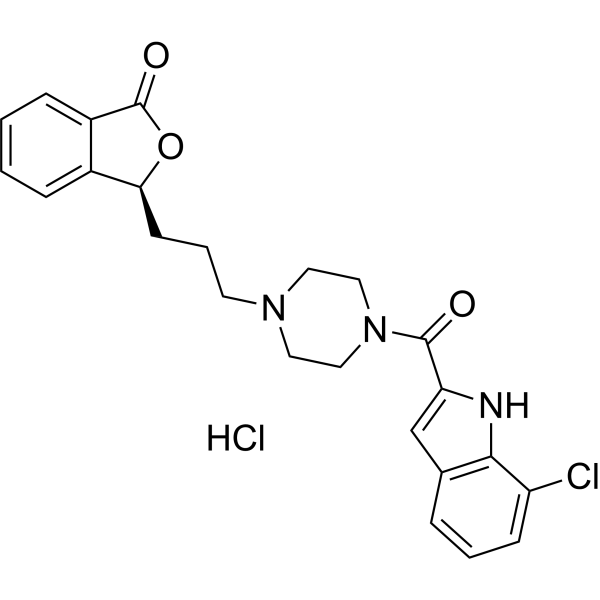 0 ImagesCat. No.: HY-157936CAS No.: 3034593-10-4GluN2B-NMDAR antagonist-2 (compound S-58) is a potent, selective and cross the blood-brain barrier NMDAR-GluN2B antagonist with an IC50 value of 74.01, nM. GluN2B-NMDAR antagonist-2 shows mild cytotoxicity. GluN2B-NMDAR antagonist-2 decreases the cerebral infarction rates and neurologic deficit scores. GluN2B-NMDAR antagonist-2 has the potential for the research of stroke.
-
Conantokin G
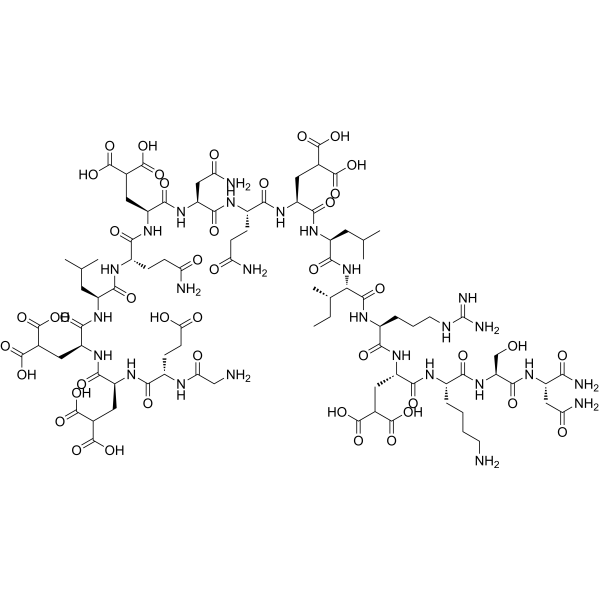 0 ImagesCat. No.: HY-P1293CAS No.: 93438-65-4Conantokin G, a 17-amino-acid peptide, is a potent, selective and competitive antagonist of N-methyl-D-aspartate (NMDA) receptors. Conantokin G inhibits NMDA-evoked currents in murine cortical neurons with an IC50 of 480 nM. Conantokin G has neuroprotective properties.
-
DL-AP7
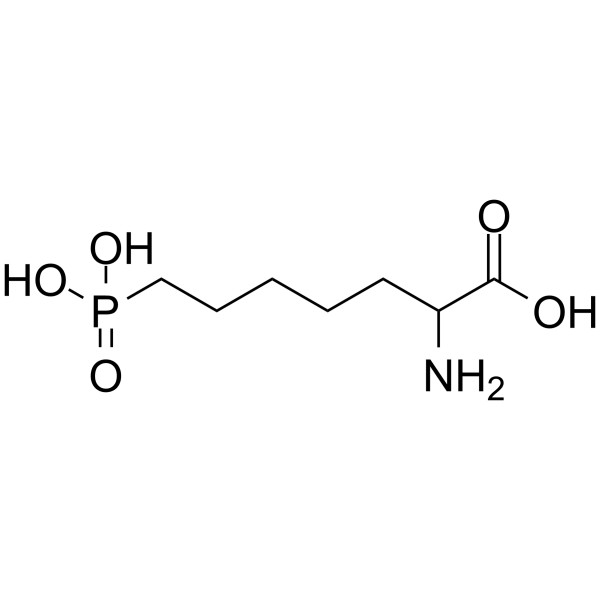 0 ImagesCat. No.: HY-100782CAS No.: 85797-13-3Synonyms: 2-APH; 2-Amino-7-phosphonoheptanoic acidDL-AP7 is a competitive NMDA antagonist and an anticonvulsant. DL-AP7 blocks the NMDA-induced convulsions and impairs learning performance in a passive avoidance task in mice.
-
Tat-NR2Baa TFA
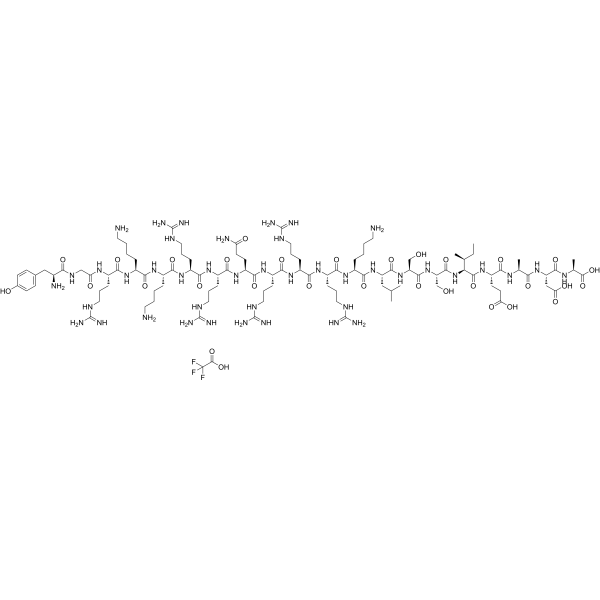 0 ImagesCat. No.: HY-P2307ATat-NR2BAA TFA is the control peptide of Tat-NR2B9c (HY-P0117), inactive. The sequence of Tat-NR2BAA TFA is similar to Tat-NR2B9c, but it has a double-point mutation in the COOH terminal tSXV motif, making it incapable of binding PSD-95. Tat-NR2B9c is a membrane-permeant peptide and disrupts PSD-95/NMDAR binding, correlate with uncoupling NR2B- and/or NR2A-type NMDARs from PSD-95.
-
NMDAR blocker 1
 0 ImagesCat. No.: HY-131691CAS No.: 76991-05-4NMDAR blocker 1 is an NMDA receptor channel blocker with an IC50 of 5.0 μM. NMDAR blocker 1 exhibits fast on-off blockade kinetics and strong voltage dependence, and does not compete with glutamate or glycine. NMDAR blocker 1 prevents glutamate/NMDA-induced intracellular Ca2+ overload, modulates the glutamate-nitric oxide-cGMP pathway. NMDAR blocker 1 prevents in vitro excitotoxic neurodegeneration of cultured cerebellar and hippocampal neurons. NMDAR blocker 1 attenuates excitotoxic insult in an mouse model of hyperammonemia-induced excitotoxicity. NMDAR blocker 1 can be used for the research of neurodegenerative diseases.
-
Caramiphen (edisylate)
 0 ImagesCaramiphen edisylate (Parpanil edisylate) is an anticholinergic agent with NMDA receptor antagonist activity. Caramiphen edisylate can be used to inhibit diseases related to cholinergic neurotransmission. Caramiphen edisylate exerts its pharmacological effects by blocking cholinergic effects.
-
Procyclidine
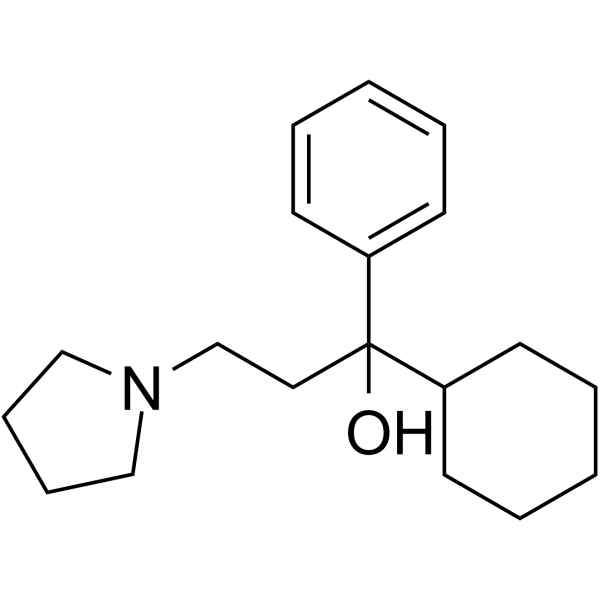 0 ImagesProcyclidine (Tricyclamol; (±)-Procyclidine), an anticholinergic agent, is a muscarinic receptor antagonist that also has the properties of an N-methyl-D-aspartate (NMDA) antagonist. Procyclidine can be used in studies of Parkinson's disease and related psychiatric disorders such as Soman-induced epilepsy.
-
GV-196771A
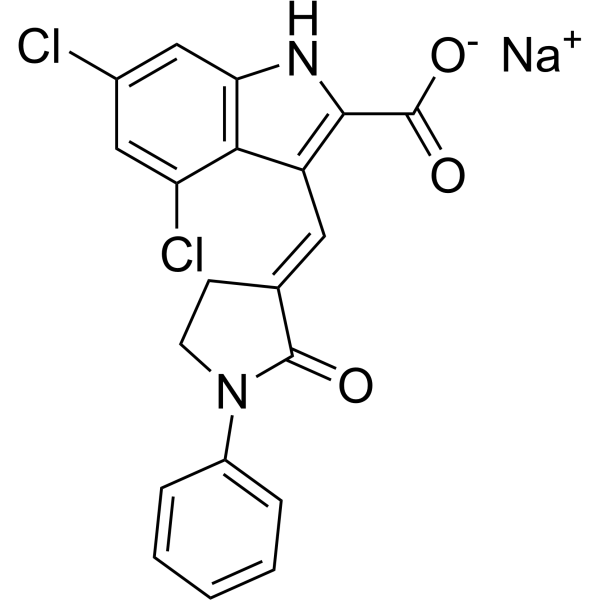 0 ImagesCat. No.: HY-19243CAS No.: 166974-23-8GV-196771A is the sodium salt form of GV196771, is an NMDA receptor antagonist.
-
MDAR-IN-1
 0 ImagesCat. No.: HY-172884MDAR IN-1 (Compound 5m) is a brain-penetrant inhibitor of acetylcholinesterase (AChE) and antagonist of the GluN1/GluN2B subtype of NMDAR receptor. MDAR IN-1 effectively inhibits AChE activity, enhances cholinergic neurotransmission, and blocks NMDAR, reducing excitatory neurotoxicity. MDAR IN-1 is promising for research of Alzheimer's disease.
-
CGP 31358
 0 ImagesCat. No.: HY-120524CAS No.: 125652-47-3CGP 31358 is an anticonvulsant agent that binds to a site on the NMDA receptor complex that is coupled to both the transmitter recognition site and to the channel domain. CGP 31358 inhibits the binding of L-Glutamate to the NMDA receptor complex with an IC50 of 53 μM.
-
LY 233053
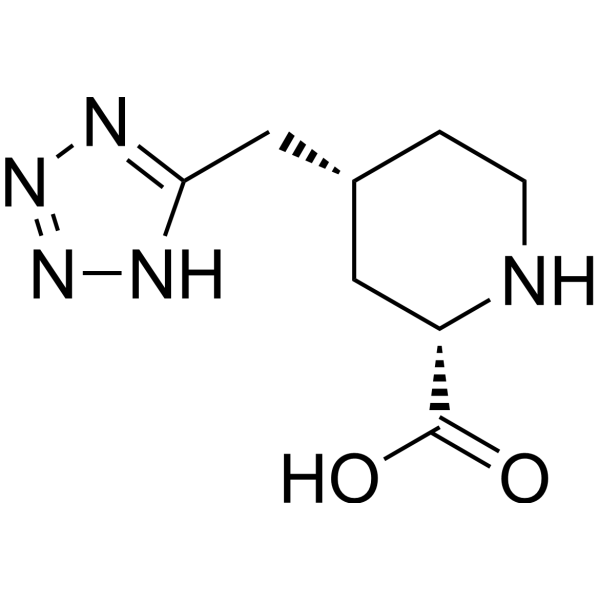 0 ImagesCat. No.: HY-107710CAS No.: 125546-04-5LY 233053 is a potent and competitive NMDA-receptor antagonist with anticonvulsant and antiepileptic efficacy.



