



Molecular Glues
Protein degradation agents based on the ubiquitin-proteasome pathway include a part of molecular glues. Molecular glues are a class of small molecule compounds that can induce or stabilize the interaction between proteins. If one of the protein is ubiquitin ligase, molecular glue can cause another protein to undergo ubiquitin modification and degradation through the proteasome pathway, which is similar to PROTAC. However, these molecules are classified as ligand for E3 ligase as functional molecules in subsequent classification. Older drugs, thalidomide, lenalidomide, and pomalidomide, together with CC-90009 and CC-92480 reported later all belong to this category.
All Product Categories
-
Molecular Glues Related Products (372)
Related Products (372)

-
Related Compound Screening Libraries (1)
-
PRLX-93936
 0 ImagesPRLX-93936 is a molecular Glues that binds to and reprograms the TRIM21 ubiquitin ligase to degrade nuclear pore complexes. PRLX-93936 binds to TRIM21, forms a ternary complex with TRIM21 and NUP98, and mediates the ubiquitination and proteasomal degradation of NUP98 and other nuclear pore complex proteins. PRLX-93936 induces the loss of short-lived cytoplasmic mRNA transcripts, triggers cancer cell apoptosis (Apoptosis), and inhibits the activated Ras pathway. PRLX-93936 inhibits HIF-1 under hypoxic conditions (IC50 = 0.09 μM in cell-based reporter gene assay). PRLX-93936 suppresses tumor growth in mouse models and improves survival rates in mouse models of multiple myeloma. PRLX-93936 is applicable to research related to pancreatic cancer and multiple myeloma.
-
Rapamycin (GMP)
 0 ImagesCat. No.: HY-10219GCAS No.: 53123-88-9Synonyms: Sirolimus (GMP); AY-22989 (GMP); NSC 226080 (GMP)Rapamycin (Sirolimus) (GMP) is Rapamycin (HY-10219) produced by using GMP guidelines. GMP small molecules works appropriately as an auxiliary reagent for cell therapy manufacture. Rapamycin (Sirolimus; AY 22989) is a potent and specific blood-brain barrier-transmissible mTOR inhibitor with an IC50 of 0.1 nM in HEK293 cells. Rapamycin is a molecular glue that binds FKBP12 and mTOR proteins together, thereby inhibiting mTOR kinase activity. Rapamycin binds to FKBP12 and specifically acts as an allosteric inhibitor of mTORC1. Rapamycin is an autophagy activator, an immunosuppressant.
-
BTX161
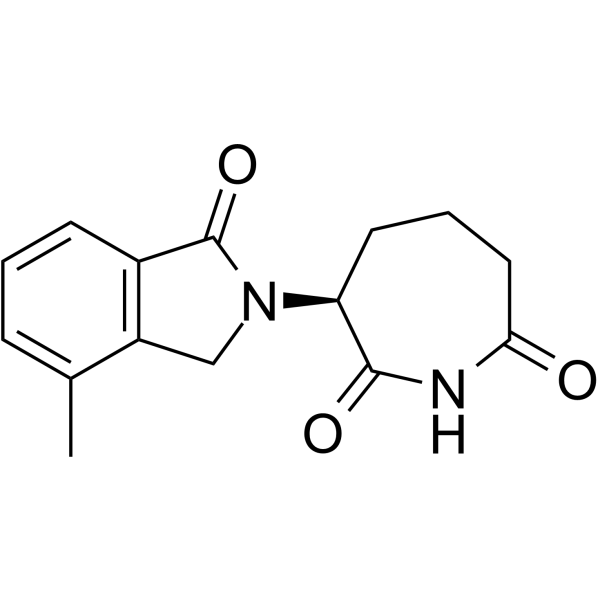 0 ImagesBTX161, a Thalidomide (HY-14658) analog, is a molecular glue degrader targeting CK1α. BTX161 recruits CK1α and the CK1α-FAM83 complex to the Cul4ACRBN E3 ligase complex, thereby driving ubiquitination and proteasomal degradation. BTX161 reduces FAM83G abundance through CK1α-FAM83G co-stability, slightly decreases FAM83H levels, but has no effect on the expression of FAM83B. BTX161 activates DNA damage response (DDR) and upregulates Wnt target genes including MYC. BTX161 can be used in research related to colorectal cancer, type b myelomonocytic leukemia and acute myeloid leukemia.
-
BRD4 degrader-3
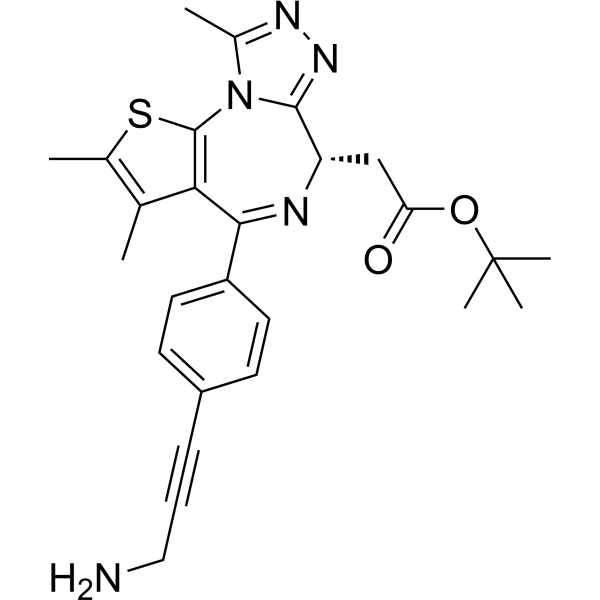 0 ImagesBRD4 degrader-3 is a molecular glue degrader targeting BRD4, with binding activity towards the BD1 and BD2 domains of BRD4. BRD4 degrader-3 regulates the activity of BRD4. BRD4 degrader-3 inhibits MYC expression in cancer cells. BRD4 degrader-3 suppresses cell proliferation. BRD4 degrader-3 can be used in research related to acute myeloid leukemia and prostate cancer.
-
MG-HuR2
 0 ImagesMG-HuR2 is a molecular glue degrader targeting HuR (ELAVL1) with a Kd of 0.2018 μM. MG-HuR2 recruits the E3 ubiquitin ligase RNF126 and induces proteasome-dependent degradation of HuR. MG-HuR2 exhibits a unique biphasic degradation profile. MG-HuR2 reduces the expression of HuR and its downstream targets Bcl2/FOXQ1, inhibits breast cancer cell proliferation, enhances cytotoxicity and apoptosis (apoptosis), and suppresses the growth of 3D breast cancer tumor spheres. MG-HuR2 can be used in studies related to breast cancer and HuR-targeted protein degradation.
-
DS02312223
 0 ImagesSynonyms: D223DS02312223 (D223) is a molecular glue that promotes the binding of RAS to PI3Kα, with a Kd of 0.76 μM for p110α. DS02312223 increases the binding affinity between GTP-bound KRAS (KRAS-GMPPNP) and p110α by nearly three orders of magnitude (KD = 0.017 μM). DS02312223 stimulates the translocation of GLUT4 to the plasma membrane. DS02312223 promotes glucose uptake in the absence of insulin. DS02312223 can be used in diabetes research.
-
dCeMM4
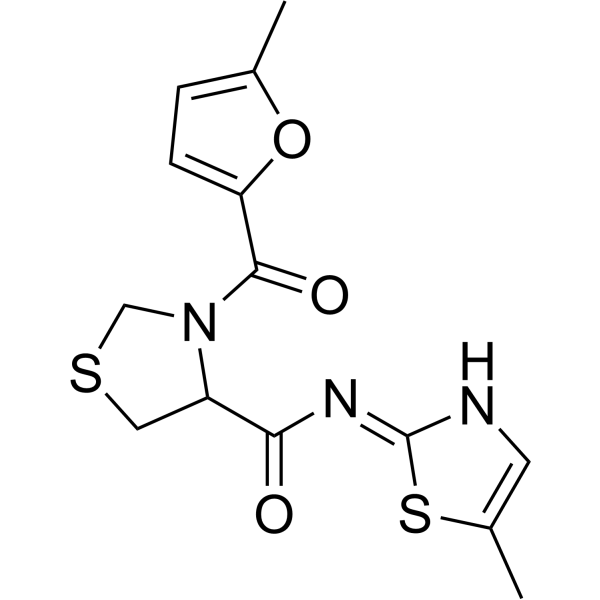 0 ImagesdCeMM4 is a Cyclin K Molecular glue degrader. dCeMM4 mediates the direct interaction between CDK12:cyclin K and the CRL4B ligase complex, thereby driving the ubiquitination and proteasomal degradation of Cyclin K. dCeMM4 induces Apoptosis without cell cycle phase-specific arrest. dCeMM4 exhibits synergistic activity with DNA damage inducers, and a correlation exists between Cyclin K degradation and cellular sensitivity. dCeMM4 can be used in studies related to T-cell malignancies.
-
MMH1
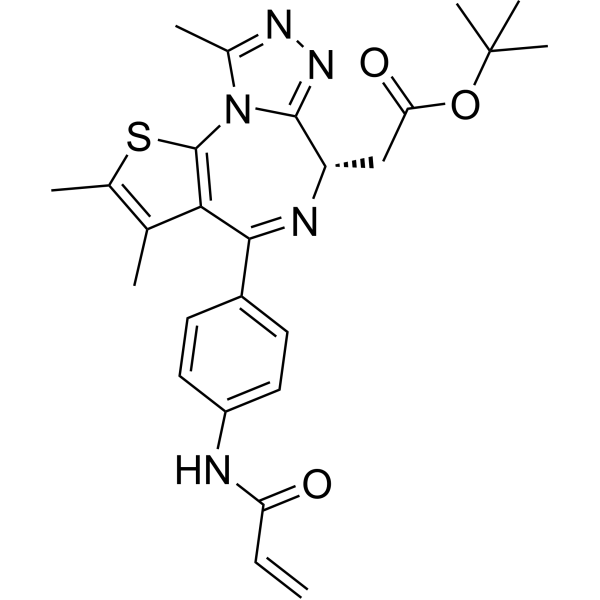 0 ImagesMMH1 is a novel BRD4 molecular glue degrader. MMH1 functions by recruiting the CUL4 DCAF16 ligase to the second bromodomain of BRD4 (BRD4 BD2). MMH1 binds to the JQ1-binding site of BRD4 BD2, acts as a template to covalently modify Cys58 of DCAF16, stabilizes the BRD4-DCAF16 ternary complex, and thereby promotes BRD4 degradation via the CRL4DCAF16 ubiquitin ligase pathway. Using BRD4 BD2 as a structural template, MMH1 covalently modifies Cys87 of GAK and induces the GAK-BRD4 BD2 interaction. Through its covalent mechanism, MMH1 exhibits sustained BRD4 degradation activity, and shows selective degradation activity for BRD4 BD2 over BRD4 BD1.
-
S234984
 0 ImagesCat. No.: HY-172762Purity: 99.46%S234984 is a molecular glue degrader. S234984 forms a stable ternary complex with wild-type KBTBD4 E3 ligase and HDAC2 to drive neomorphic ubiquitination and degradation of CoREST1 and LSD1. S234984 can be used for the research of medulloblastoma.
-
Chloroquinoxaline sulfonamide
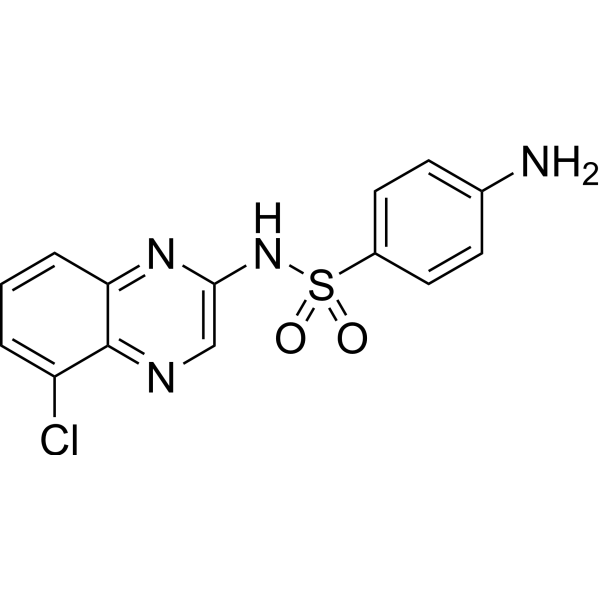 0 ImagesSynonyms: Chloroquinoxaline; NSC-339004Chloroquinoxaline sulfonamide (Chloroquinoxaline), a structural analogue of sulfaquinoxaline, is a topoisomerase II alpha/beta poison. Chloroquinoxaline sulfonamide is used to control coccidiosis in poultry, rabbit, sheep, and cattle. Antitumor activity.
-
NEK7 degrader-1
 0 ImagesNEK7 degrader-1 is a NEK7 molecular glue degrader with a DC50 of 9 nM. NEK7 degrader-1 dose-dependently inhibits caspase-1 activity and IL-Ιβ release in macrophages in response to NLRP3 inflammasome activation. NEK7 degrader-1 can be used for autoinflammatory and autoimmune disorders like multiple sclerosis, neurodegeneraive diseases like Alzheimer's disease and cardiovascular and melabolic disorders like pericarditis and Type 2 diabetes research.
-
LYG-409
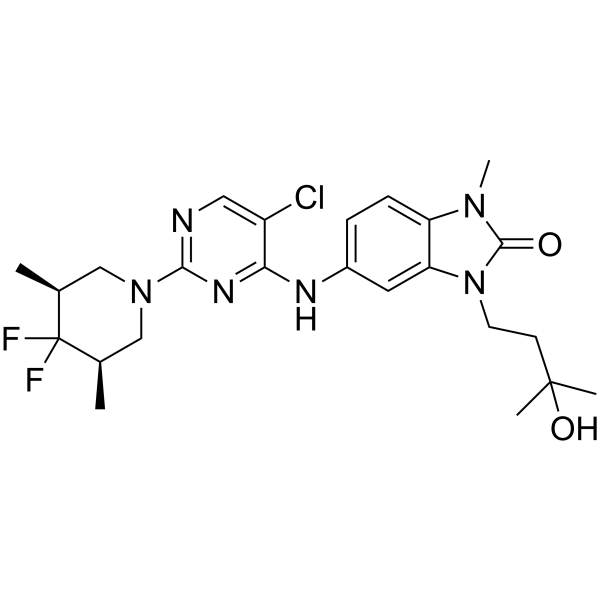
 0 ImagesLYG-409 is a highly potent, selective, and orally active GSPT1 molecular glue degrader. LYG-409 induces GSPT1 degradation in KG-1 cells with a DC50 of 7.87 nM. LYG-409 binds to Cereblon with an IC50 of 191 nM, promotes the formation of the CRBN-GSPT1 ternary complex, and induces proteasome-dependent degradation of GSPT1. LYG-409 exhibits broad antiproliferative and GSPT1-degrading activities in a variety of hematologic and solid tumor cells. LYG-409 can be used for studies related to GSPT1-targeted protein degradation, acute myeloid leukemia, and prostate cancer.
-
G-6599
 0 ImagesG-6599 is a covalent molecular glue degrader targeting SMARCA2/SMARCA4, with DC50 values of 0.017 nM and 0.057 nM against SMARCA2 and SMARCA4 in SW1573 cells, respectively. G-6599 exhibits proteome selectivity for SMARCA2, SMARCA4, and PBRM1. G-6599 induces the assembly of the SMARCA2-FBXO22 ternary complex, enabling ubiquitination and proteasomal degradation of both proteins via the ubiquitin-proteasome pathway without the need for biotransformation. G-6599 shows antiproliferative effects in relevant cancer cell models. G-6599 can be used for research on androgen-dependent prostate cancer and SMARCA4-mutant non-small cell lung cancer.
-
AMPTX-1
 0 ImagesAMPTX-1 is a selective, orally active, covalent reversible BRD9 molecular glue degrader with a DC50 of 0.05 nM. AMPTX-1 selectively recruits BRD9 to the E3 ligase DCAF16. AMPTX-1 forms a ternary complex with BRD9 and a reversible covalent adduct with Cys58 on the surface of DCAF16. AMPTX-1 mediates BRD9 degradation via the proteasome and Cullin RING E3 ligase pathways. AMPTX-1 can be used in the research of solid tumors and hematological malignancies.
-
Rapamycin-d3
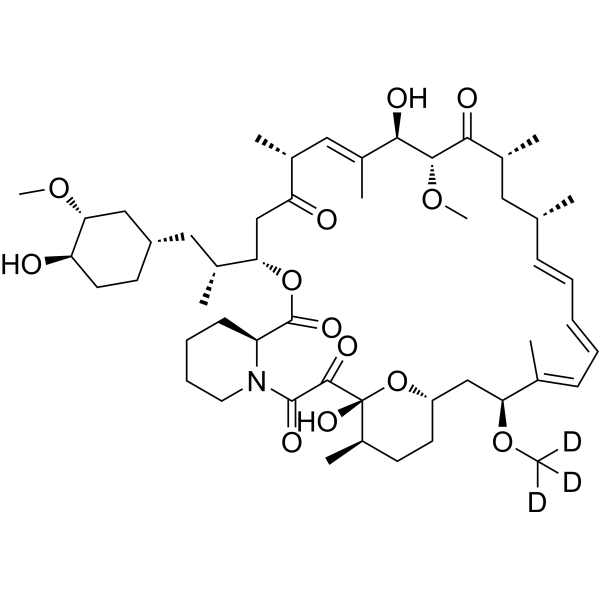 0 ImagesCat. No.: HY-10219SCAS No.: 392711-19-2Synonyms: Sirolimus-d3; AY-22989-d3; NSC 226080-d3Rapamycin-d3 (Sirolimus-d3; AY-22989-d3; NSC 226080-d3) is the deuterated-labeled Rapamycin (HY-10219). Rapamycin (Sirolimus; AY 22989) is a potent and specific blood-brain barrier-transmissible mTOR inhibitor with an IC50 of 0.1 nM in HEK293 cells. Rapamycin is a molecular glue that binds FKBP12 and mTOR proteins together, thereby inhibiting mTOR kinase activity. Rapamycin binds to FKBP12 and specifically acts as an allosteric inhibitor of mTORC1. Rapamycin is an autophagy activator, an immunosuppressant.
-
ZLY025
 0 ImagesZLY025 is a potent and orally active CCNK molecular glue degrader with an DC50 of 42.7 nM. ZLY025 exhibits broad-spectrum antiproliferative activity against various tumor cells with IC50 values ranging from 0.08 to 2.45 μM. ZLY025 can induce cells apoptosis and G1 phase arrest. ZLY025 can be used for the research of cancer, such as lung cancer.
-
Sontigidomide
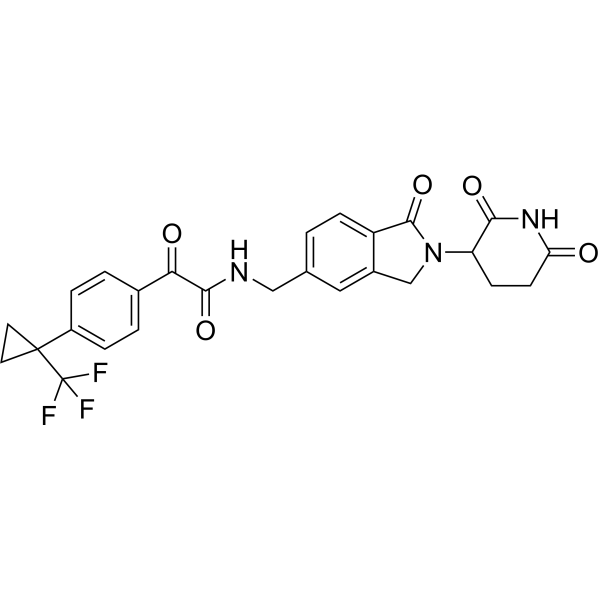 0 ImagesSontigidomide is a protein molecular glue degrader that can effectively degrade IKZF1/3 and GSPT1 proteins. Sontigidomide can be used to study inflammatory and immune system diseases. GSPT1/IKZF1/3 Molecular Glue Degrader
-
DEG-35
 0 ImagesDEG-35 is a CRBN-dependent, dual IKZF2 and CK1α molecule glue degrader, with DC50 values of 1.4 nM and 4.4 nM for CK1α and IKZF2, respectively. DEG-35 activates the p53 apoptosis pathway. DEG-35 can be used in the research for Acute Myeloid Leukemia (AML).
-
Cyclin K degrader 1
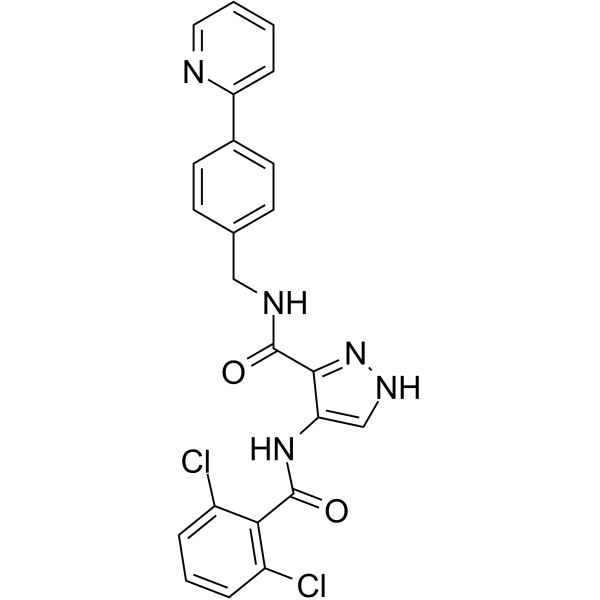 0 ImagesCyclin K degrader 1 is a molecular glue degrader derived from the pan-CDK inhibitor AT-7519 (HY-50940), with potent Cyclin K degrading activity and a DC50 of 21 nM. Cyclin K degrader 1 binds to CDK12, mediates the formation of a CDK12-DDB1 ternary protein complex, recruits the E3 ubiquitin ligase complex, and induces ubiquitination and proteasomal degradation of Cyclin K. Cyclin K degrader 1 can be used in the research of various Cyclin K-related diseases such as cancer.



