



Reactive Oxygen Species (ROS) Activator
-
PROTAC GPX4 degrader-3
 0 ImagesCat. No.: HY-161930
PROTAC GPX4 degrader-3 is a glutathione peroxidase 4 (GPX4) PROTAC degrader with a DC50 of 0.019 μM in HT1080 cells. PROTAC GPX4 degrader-3 degrades GPX4 primarily via the ubiquitin-proteasome system (UPS) in a dose- and time-dependent manner. PROTAC GPX4 degrader-3 induces lipid peroxidation (LPO) and ROS accumulation, thereby triggering ferroptosis (ferroptosis). PROTAC GPX4 degrader-3 exhibits in vitro anti-tumor activity against cancer cells. PROTAC GPX4 degrader-3 can be used in the research of fibrosarcoma, triple-negative breast cancer, and renal cell carcinoma.
-
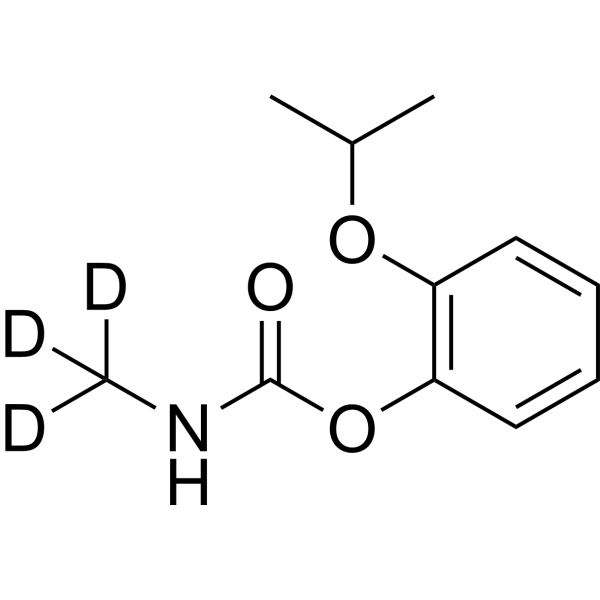
Propoxur-d3
 0 ImagesCat. No.: HY-B0916SCAS No.: 1219798-56-7
Propoxur-d3 is the deuterated form of Propoxur (HY-B0916). Propoxur is a reversible, competitive, orally active AChE inhibitor that can cross the blood-brain barrier. Propoxur inhibits AChE activity to induce neurotoxicity, while promoting MMP-2 expression and enhancing tumor cell migration and invasion by inducing intracellular ROS generation and activating the ERK/Nrf2 signaling pathway. On the one hand, Propoxur inhibits AChE, leading to acetylcholine accumulation and causing neurological dysfunction; on the other hand, it promotes Nrf2 nuclear translocation through ROS-dependent ERK1/2 phosphorylation, and upregulates MMP-2 and other invasion-related proteins. Propoxur is also a carbamate insecticide used to combat turf, forestry, and household pests.
-
Actein (Standard)
 0 ImagesCat. No.: HY-N6872RCAS No.: 18642-44-9
Actein (Standard) is the analytical standard of Actein. This product is intended for research and analytical applications. Actein, a triterpene glycoside, shows an inhibitory effect on cancer cells, which is isolated from the rhizomes of Cimicifuga foetida. Actein suppresses cell proliferation, induces autophagy and apoptosis through promoting ROS/JNK activation, and blunting AKT pathway in bladder cancer. Actein has little toxicity in vivo.
-
MAPK-IN-3
 0 ImagesCat. No.: HY-169412CAS No.: 2848599-79-9
MAPK-IN-3 (Compound 4a) is an anti-proliferative agent that shows particularly strong inhibitory effects on KYSE 30, HCT 116, and HGC 27, with IC50 values of 0.57 μM, 3.27 μM, and 2.28 μM, respectively. MAPK-IN-3 blocks the cell cycle via a p53-dependent mechanism and induces cell apoptosis through a p53-independent mechanism. MAPK-IN-3 downregulates the expression of cell cycle-related proteins like Cyclin D1 and cyclin B1, upregulates pro-apoptotic proteins such as cleaved PARP, cleaved caspase-7, and cleaved caspase-9, and reduces the expression of anti-apoptotic proteins like Bcl-2. Additionally, MAPK-IN-3 increases the intracellular level of ROS in KYSE 30 cells and upregulates the expression of members of the MAPK signaling pathway associated with ROS, such as p-ERK, p-p38 and p-JNK.
-
Triphenyltin(IV) diisopropyl dithiocarbamate
 0 ImagesCat. No.: HY-180782
Triphenyltin(IV) diisopropyl dithiocarbamate (Compound OC2) is an anti-leukemia agent. Triphenyltin(IV) diisopropyl dithiocarbamate exhibits extremely strong cytotoxicity towards Jurkat cells, with an IC₅₀ value of 0.1 μM. Triphenyltin(IV) diisopropyl dithiocarbamate causes DNA damage, which subsequently leads to mitochondrial dysfunction, a large amount of ROS production, and ultimately results in the activation of the mitochondrial apoptosis pathway (involving the activation of Caspase-9/-3) and the G0/G1 phase cell cycle arrest, all of which jointly lead to the death of leukemia cells.
-
PARP1-IN-44
 0 ImagesCat. No.: HY-178032
PARP1-IN-44, an Olaparib (HY-10162) derivative, is an orally active PARP1 inhibitor (IC50 = 0.6 nM), and also inhibits PARP2 (IC50 = 1.0 nM) and PARP7 (IC50 = 7.5 nM). PARP1-IN-44 has selective antiproliferative activity against BRCA-deficient cancer cells with minimal toxicity to normal cells. PARP1-IN-44 induces G2/M phase arrest, promotes apoptosis, elevates ROS levels, disrupts mitochondrial membrane potential. PARP1-IN-44 suppresses PARylation while increasing γH2AX accumulation. PARP1-IN-44 activates the cGAS-STING pathway, upregulating IFN-β and CXCL10 expression. PARP1-IN-44 enhancing CD8+ T cell infiltration in a CT26 tumor mouse model, demonstrating robust in vivo antitumor efficacy.
-
Anticancer agent 296
 0 ImagesCat. No.: HY-181087
Anticancer agent 296 is a potent anticancer agent that activates the PERK-eIF2α-CHOP signaling pathway to induce endoplasmic reticulum stress, thereby regulating caspase and Bcl-2 family proteins, ultimately leading to apoptosis. Anticancer agent 296 increases intracellular levels of reactive oxygen species (ROS), reduces mitochondrial membrane potential, and promotes Ca2+ release. Anticancer agent 296 suppresses cell colony formation and S-phase cell proliferation, and induces autophagy. Anticancer agent 296 is applicable for research on non-small cell lung cancer (NSCLC).
-
FMP
 0 ImagesCat. No.: HY-168877
FMP is a Platinum(IV) complexe. FMP significantly upregulates the expression of γ-H2AX and p53. FMP increases the production of ROS. FMP markedly upregulates the expressions of Apoptosis-related proteins (DR5, Fas, caspase-8, Cyt-c, caspase-3, cleaved-PARP1, Bax). FMP shows antiproliferative activity against breast cancer.
-
FBIN-11
 0 ImagesCat. No.: HY-180821CAS No.: 3069350-93-9
FBIN-11 (Compound 9k) is an anticancer agent. FBIN-11 induces Apoptosis mainly by increasing ROS. FBIN-11 decreases MMP. FBIN-11 exhibits anticancer effects against non-small cell lung cancer, liver cancer, and triple-negative breast cancer.
-
Vidarabine phosphate (Standard)
 0 ImagesCat. No.: HY-B0277ARCAS No.: 29984-33-6Synonyms: ara-AMP (Standard); ara-A 5'-monophosphate (Standard)
Vidarabine phosphate (ara-AMP; ara-A 5'-monophosphate) (Standard) is the analytical standard of Vidarabine phosphate. This product is intended for research and analytical applications. Vidarabine phosphate is a purine nucleoside antiviral agent and a prodrug of Vidarabine (HY-B0277). Vidarabine phosphate is rapidly converted into the antiviral active Vidarabine in vivo, which selectively inhibits viral DNA polymerase and cellular ribonucleotide reductase, thereby blocking viral replication. Vidarabine phosphate also exhibits antifungal activity, induces late-stage cellular apoptosis, and causes cell cycle arrest. Vidarabine phosphate can be used in research related to severe chronic active Epstein-Barr virus (EBV) infection, herpes infection, and candidiasis.
-
Anticancer agent 292
 0 ImagesCat. No.: HY-180825
Anticancer agent 292 (Compound P4) is a photosensitizer for anti-melanoma. Anticancer agent 292 shows good biocompatibility under dark conditions and, upon illumination, induces apoptosis and partial necrosis in B16-F10 cells by disrupting the lysosomal membrane. Anticancer agent 292 not only directly kills tumor cells through the generation of reactive oxygen species (ROS), but also induces immune-prone cell death (ICD), thereby generating anti-tumor immune effects. Anticancer agent 292 can be used in the research of photodynamic therapy for melanoma.
-
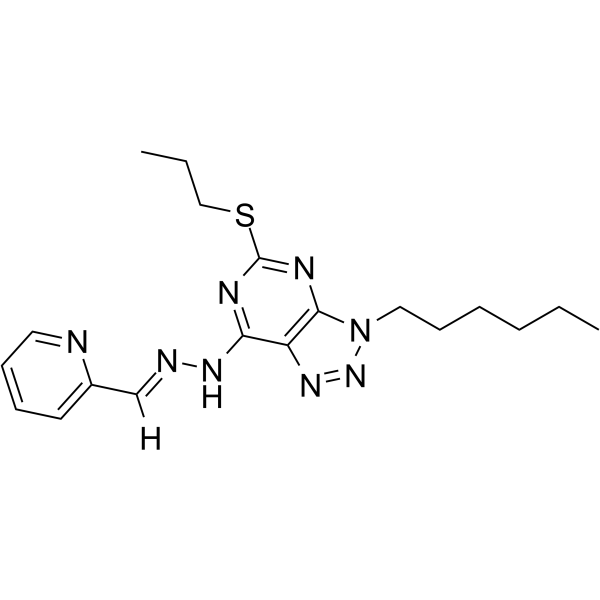
Anticancer agent 69
 0 ImagesCat. No.: HY-146170
Anticancer agent 69 (Compound 34), a potent and selective anticancer agent , potently and selectively inhibits human prostate cancer cell line PC3 (IC50=26 nM). Anticancer agent 69 increases ROS level, down-regulates EGFR and induces apoptosis.
-
PACA
 0 ImagesCat. No.: HY-116202CAS No.: 1431724-30-9
PACA is an enhancer of nerve growth factor-induced neurite outgrowth, enhancing nerve growth factor (NGF)-induced neurite outgrowth and attenuating 6-hydroxydopamine (6-OHDA)-induced toxicity by activating the Nrf2/HO-1 pathway. PACA has neuroprotective and neurogenic activities. PACA can be used to improve dopaminergic neuron loss and motor dysfunction in MPTP mouse models of Parkinson's disease and MPP+-induced neurons.
-
Myrislignan-13C,d2
 0 ImagesCat. No.: HY-N0608S
Myrislignan-13C,d2 is the 13C, d2 deuterated-labeled Myrislignan (HY-N0608). Myrislignan is a PI3K/AKT/NF-κB inhibitor that can cross the blood-brain barrier. Myrislignan exerts anticancer activity by inducing apoptosis and ferroptosis. Myrislignan inhibits the replication and invasion of Toxoplasma gondii; it induces reactive oxygen species (ROS) imbalance, autophagy, and the death of Toxoplasma gondii tachyzoites. Myrislignan inhibits mitochondrial function and ERK1/2 phosphorylation to improve ovariectomy-induced osteoporosis. Myrislignan can be used in studies related to gastric cancer, glioblastoma, osteoporosis, and toxoplasmosis.
-
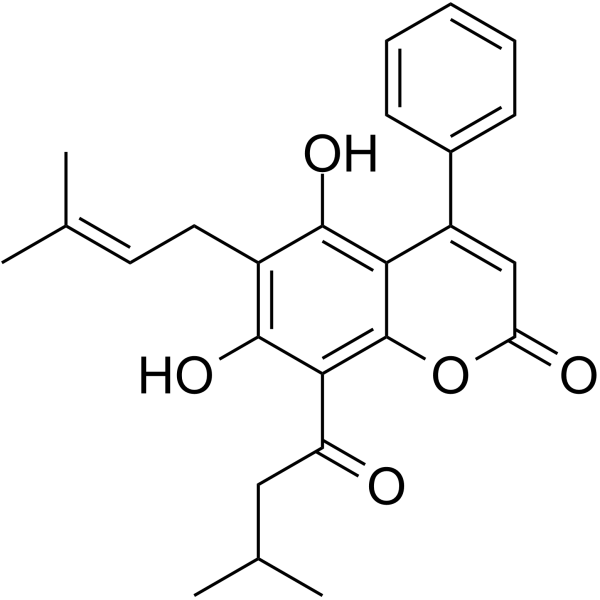
Mammea A/BA
 0 Images
Mammea A/BA has potent activity against Trypanosoma cruzi (T. cruzi). Mammea A/BA induces mitochondrial dysfunction, reactive oxygen species (ROS) production and DNA fragmentation, and increases number of acidic vacuoles. Mammea A/BA can induce apoptosis, autophagy and necrosis. Mammea A/BA can be used for researching chagas disease.
-
Topoisomerase I-IN-18
 0 ImagesCat. No.: HY-178373
Topoisomerase I-IN-18, a derivative of Thiosemicarbazide (HY-Y0032), is a Topoisomerase I inhibitor. Topoisomerase I-IN-18 can disrupt DNA synthesis and transcription. Topoisomerase I-IN-18 inhibits tumor cell proliferation by inducing S-phase cell cycle arrest. Topoisomerase I-IN-18 can enhance mitochondria-mediated apoptosis, suppress cell migration, and increase intracellular Reactive Oxygen Species (ROS) levels. Topoisomerase I-IN-18 can increase p53 protein expression, γH2AX phosphorylation, upregulate Bax expression, downregulate Bcl-2 expression, and activate the caspase cascade. Topoisomerase I-IN-18 can be used for the study of lung cancer.
-
PARP1/EZH2-IN-1
 0 ImagesCat. No.: HY-179386
PARP1/EZH2-IN-1 is a selective PARP1 and EZH2 dual inhibitor. PARP1/EZH2-IN-1 has IC50s of 28 nM, 414 nM and 74 nM for PARP1, PARP2 and EZH2, respectively. PARP1/EZH2-IN-1 inhibits the proliferation and migration of TNBC cells (triple-negative breast Cancer cells). PARP1/EZH2-IN-1 induces PANoptosis (Apoptosis, Pyroptosis and Necroptosis), increases the level of reactive oxygen species (ROS), and activates related inflammatory pathways. PARP1/EZH2-IN-1 can be used in triple-negative breast cancer research.
-
Luciferase activator-1
 0 ImagesCat. No.: HY-163470CAS No.: 315703-95-8
Luciferase activator-1 (Compound D2) is an activator for luciferase, which increases the luciferase activity up 1.04 fold (at the concentration of 50 nM).
-
1,3-Bis(isothiocyanatomethyl)benzene
 0 ImagesCat. No.: HY-176923CAS No.: 28170-90-3
1,3-Bis (isothiocyanatomethyl) benzene is an isothiocyanate compound and also a plant regulator with stomatal closure-inducing activity. 1,3-Bis (isothiocyanatomethyl) benzene increases the production of ROS and NO in guard cells. 1,3-Bis (isothiocyanatomethyl) benzene can inhibit plant diseases caused by pathogens invading through plant stomata, including grape downy mildew, cucumber downy mildew and wheat leaf rust. 1,3-Bis (isothiocyanatomethyl) benzene can be used in studies related to grape downy mildew, cucumber downy mildew and wheat leaf rust.
-
NPD926
 0 ImagesCat. No.: HY-122006CAS No.: 384361-79-9
NPD926 is a small molecule that targets glutathione and induces cancer cell death. NPD926 causes cellular glutathione depletion and subsequent generation of reactive oxygen species (ROS), thereby sensitizing fibroblasts to Xc- system inhibitors. NPD926 is a ROS inducer with anticancer activity..



