



Conivaptan-d4
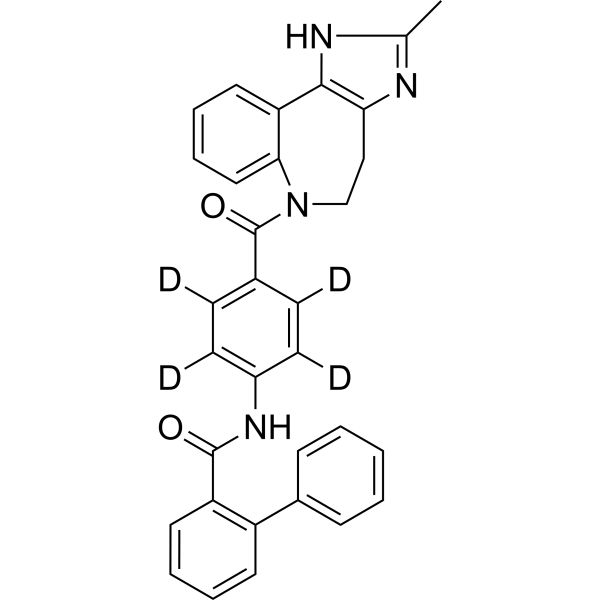
Conivaptan-d4 (YM 087-d4) is the deuterated-labeled Conivaptan (HY-18347). Conivaptan (YM 087 free base) is an orally active dual vasopressin V1a/V2 receptor antagonist with Ki values of 0.48 nM and 3.04 nM for vasopressin V1a receptor and V2 receptor, respectively. Conivaptan competitively and reversibly blocks vasopressin-mediated antidiuresis, vasoconstriction, and cellular hypertrophy, while inhibiting CYP3A4. Conivaptan inhibits vasopressin-induced intracellular calcium, cAMP, and mitogen-activated kinase activation in vascular smooth muscle cells and cardiomyocytes. Conivaptan induces water diuresis while improving hemodynamics in heart failure models, reducing left ventricular end-diastolic pressure, vascular resistance, and organ weight. Conivaptan is used for research on hyponatremia and congestive heart failure.
Nur für Forschungszwecke. Wir verkaufen nicht an Patienten.
- CAS. Nr.: 1129433-63-1
- Formel: C32H22D4N4O2
- Molecular Weight:502.60
-
Speicherung:
Please store the product under the recommended conditions in the Certificate of Analysis.

To place orders, for customer services and technical support, please contact: MedChemExpress USA
Tel: 609-228-6898 E-mail: [email protected] [email protected]


-
 Biologische Aktivität
-
Chemical Information
- Protokoll
- Reinheit & Dokumentation
- Verweise
-
 Help & FAQs


-

HY-W040255
1-Palmitoyl-2-glutaryl-sn-glycero-3-phosphocholineOxidized Phospholipid -
HY-N3002
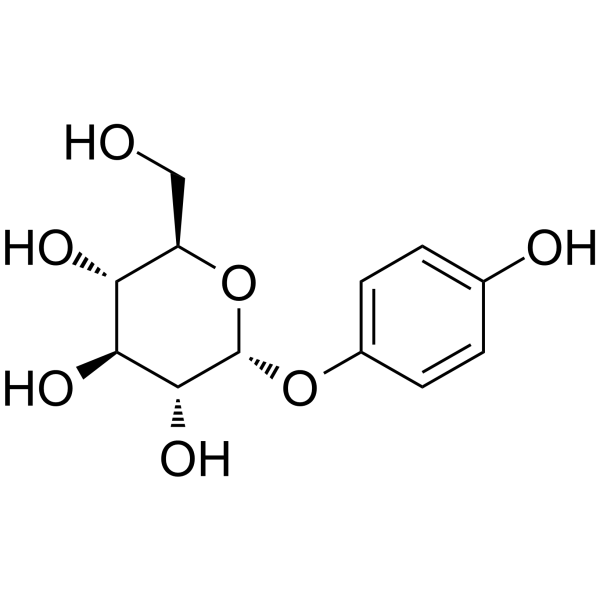
α-ArbutinTyrosinase Inhibitor -
HY-108496S
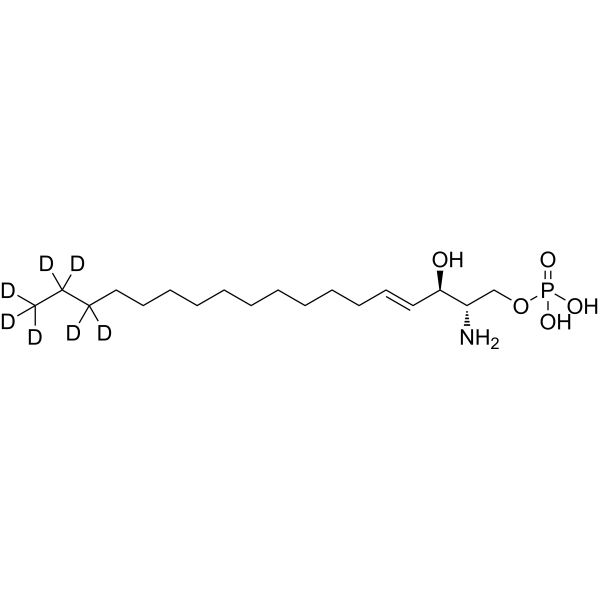
Sphingosine-1-phosphate-d7Stable Isotope -
HY-B2130A
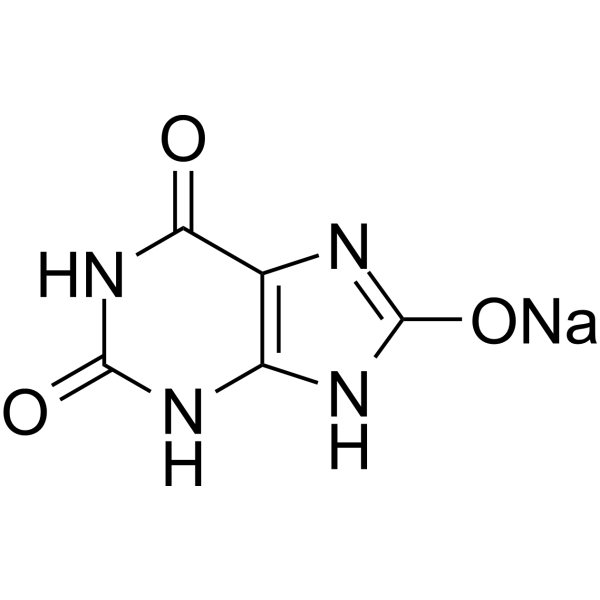
Uric acid sodiumOxygen Radical Scavenger -

HY-N3002R
α-Arbutin (Standard)Tyrosinase Inhibitor -
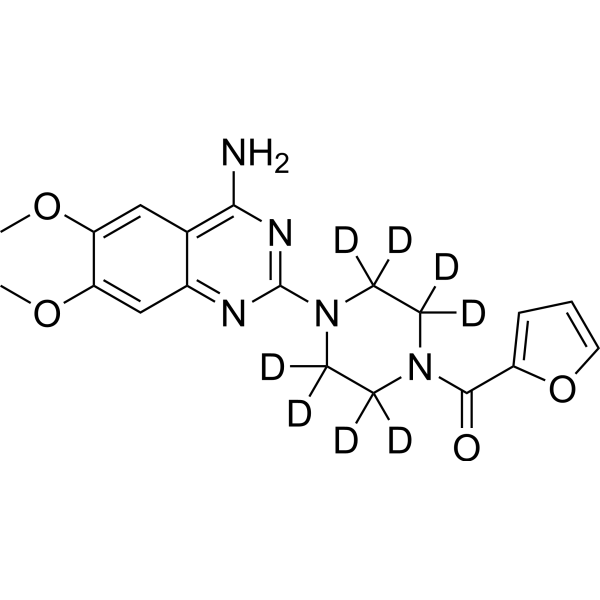
HY-B0193S
Prazosin-d8Stable Isotope -
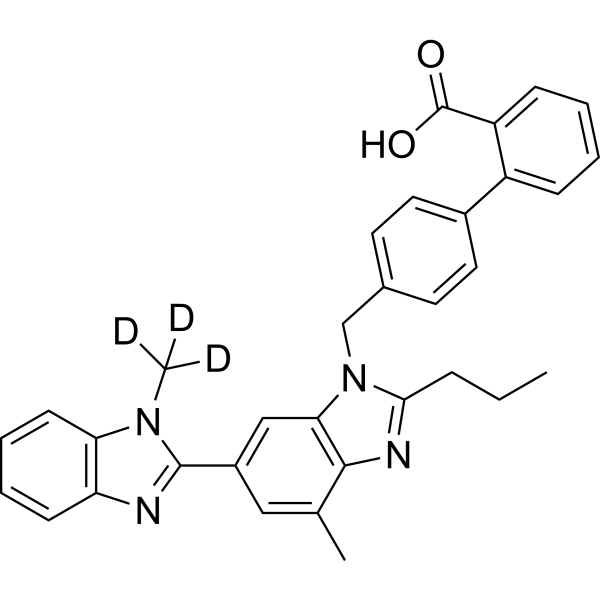
HY-13955S
Telmisartan-d3Stable Isotope -
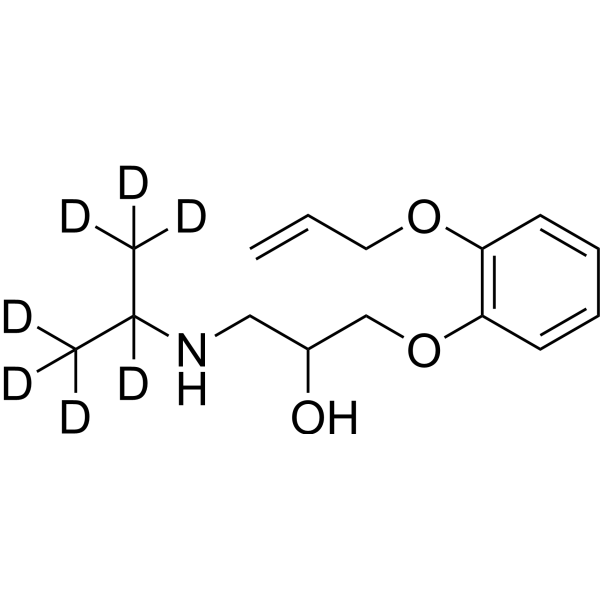
HY-B1486AS
Oxprenolol-d7Stable Isotope -

HY-B2130AR
Uric acid sodium (Standard)Reference Standard -
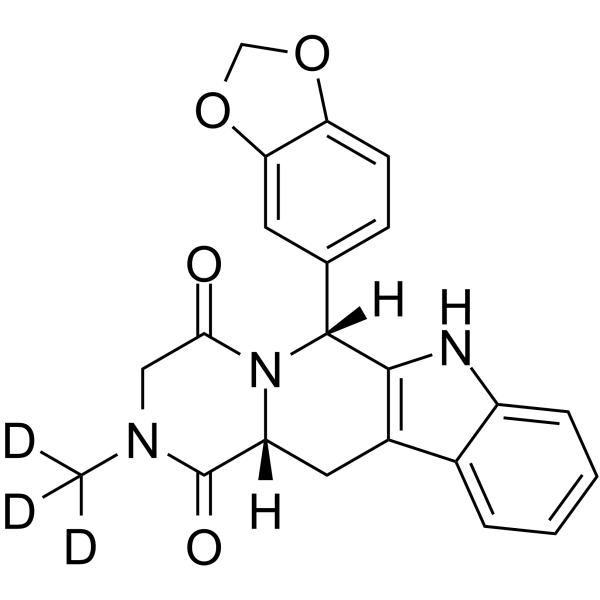
HY-90009S
Tadalafil-d3Stable Isotope -
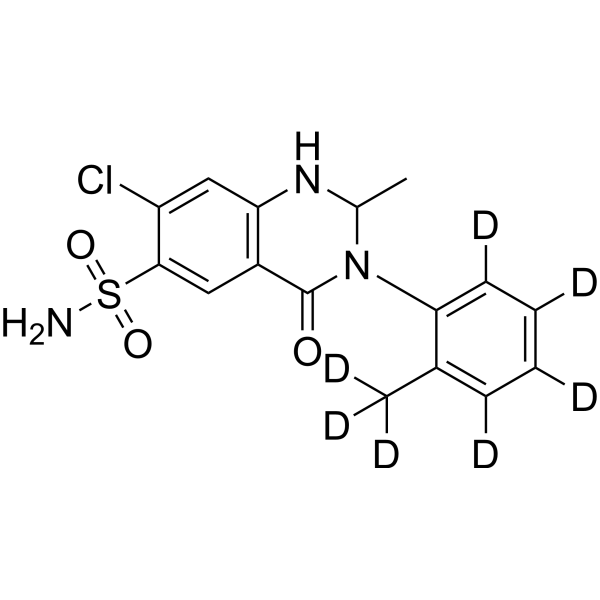
HY-B0209S
Metolazone-d7Stable Isotope -
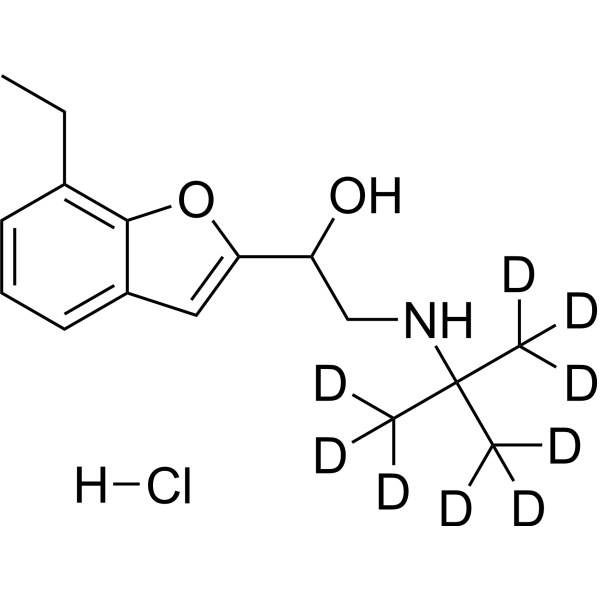
HY-105124S
Bufuralol-d9 hydrochlorideStable Isotope
Alle Vasopressin Receptor Isoform-spezifische Produkte anzeigen
More

Biologische Aktivität
Beschreibung
IC50 & Target
[1]|
V1a Receptor 0.48 nM (Ki) |
V2 Receptor 3.04 nM (Ki) |
CYP3A4 |
Anwendung
1. This compound can be used as a tracer
2. This compound can be used as an internal standard for quantitative analysis by NMR, GC-MS, or LC-MS.


Chemical Information
-
CAS. Nr. 1129433-63-1
-
Molecular Weight 502.60
-
Formel C32H22D4N4O2
-
SMILES
O=C(C1=C([2H])C([2H])=C(NC(C2=C(C3=CC=CC=C3)C=CC=C2)=O)C([2H])=C1[2H])N4C5=CC=CC=C5C6=C(N=C(C)N6)CC4
-
Synonyms
YM 087-d4
-
Versand
Room temperature in continental US; may vary elsewhere.
-
Speicherung
Please store the product under the recommended conditions in the Certificate of Analysis.


Reinheit & Dokumentation
Verweise

Calculators
Konzentration (Stammlösung) × Volumen (Stammlösung) = Konzentration (Ziellösung) × Volumen (Ziellösung)


Conivaptan-d4 Related Classifications
HY-129511 Related Classifications
 Powered by Bioz
Keywords