



Meloxicam
Based on 16 publication(s) in Google Scholar
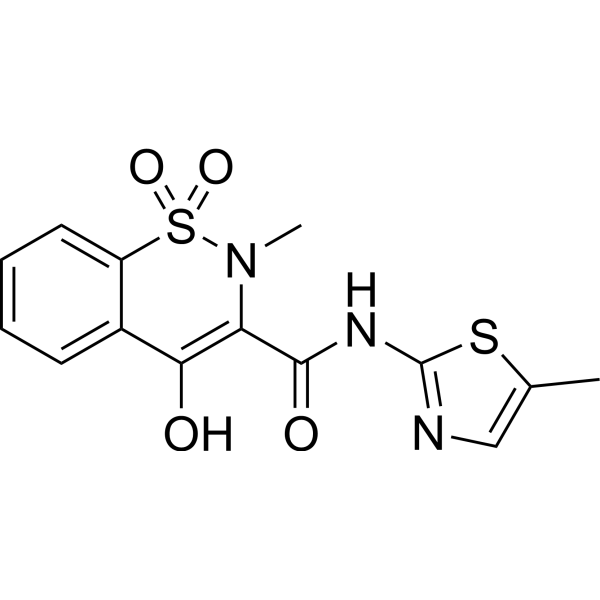
Meloxicam is a non-steroidal antiinflammatory agent that can pass through the blood-brain barrier, inhibits COX activity, with IC50s of 0.49 μM and 36.6 μM for COX-2 and COX-1, respectively.
Nur für Forschungszwecke. Wir verkaufen nicht an Patienten.
- Reinheit : 99.59%
- CAS. Nr.: 71125-38-7
- Formel: C14H13N3O4S2
- Molecular Weight:351.41
-
Speicherung:Powder -20°C, 3 years , 4°C, 2 years ; In solvent -80°C, 2 years , -20°C, 1 year

To place orders, for customer services and technical support, please contact: MedChemExpress USA
Tel: 609-228-6898 E-mail: [email protected] [email protected]


-
 Biologische Aktivität
-
Chemical Information
-
Lösungsmittel & Löslichkeit
- Reinheit & Dokumentation
- Verweise
-
 Help & FAQs


-
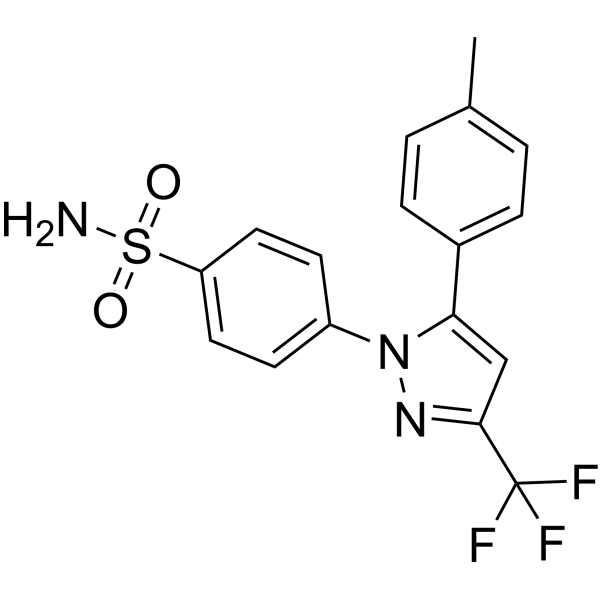
HY-14398
CelecoxibCOX-2inhibitor -
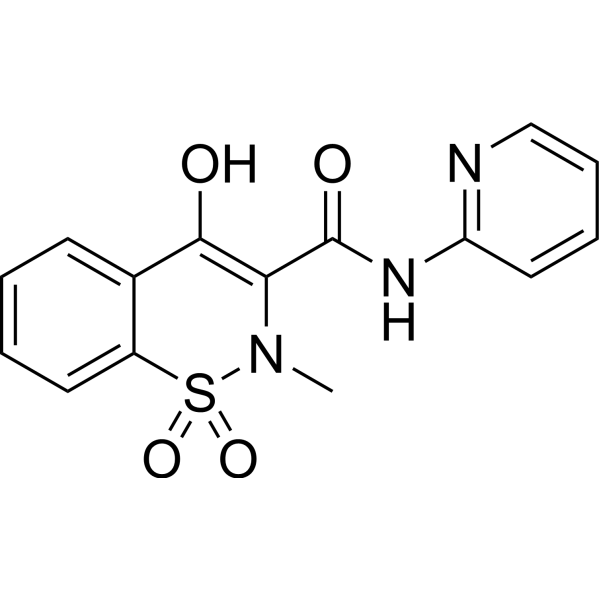
HY-B0253
PiroxicamCOX Inhibitor -
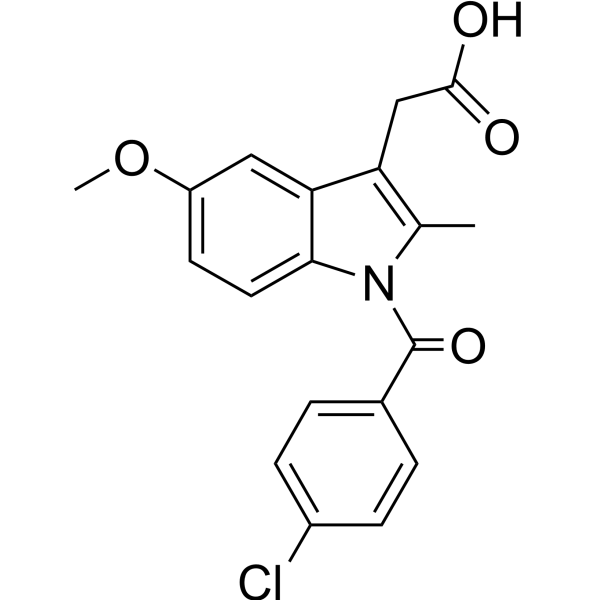
HY-14397
IndomethacinCOX1/2 Inhibitor -
HY-14648
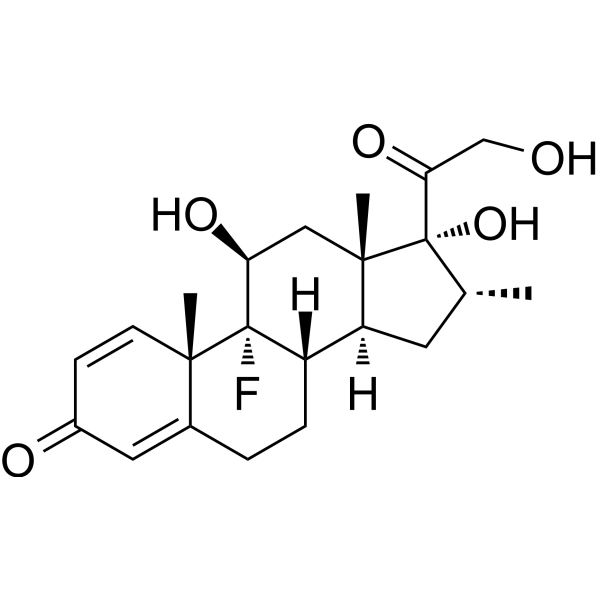
DexamethasoneGR Agonist -
HY-78131
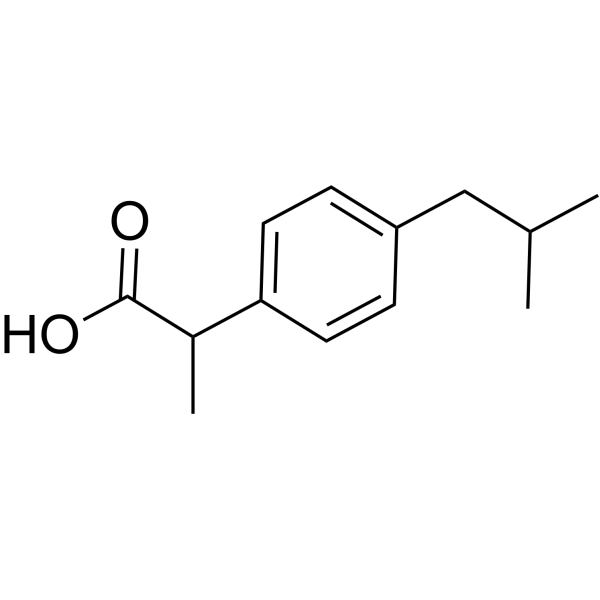
IbuprofenCOX-1 Inhibitor -
HY-15030
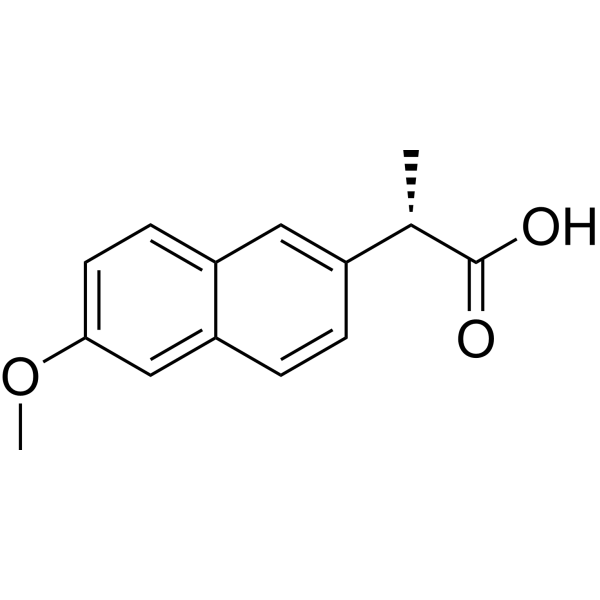
NaproxenCOX Inhibitor -
HY-B0405
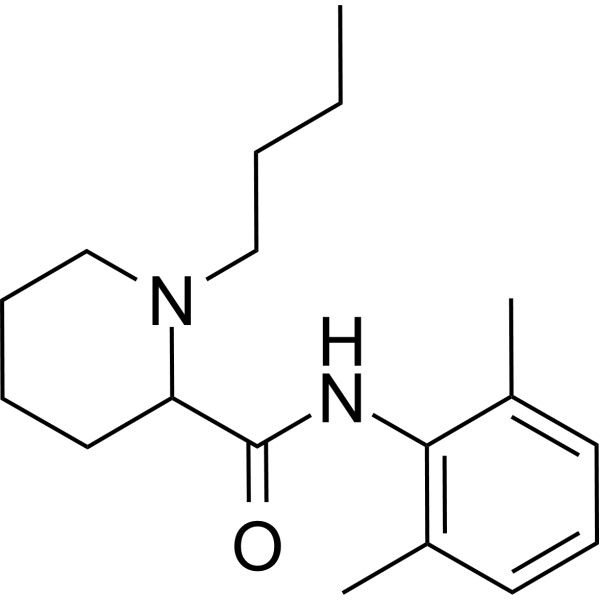
BupivacaineNMDA Receptor Inhibitor -
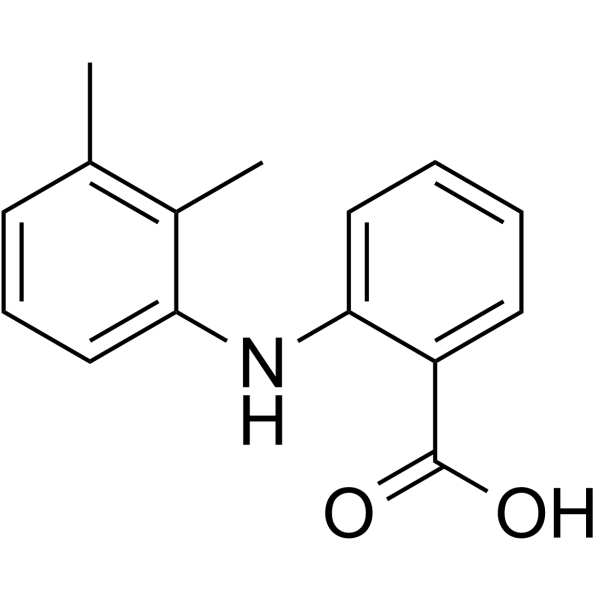
HY-B0574
Mefenamic acidCOX Inhibitor -
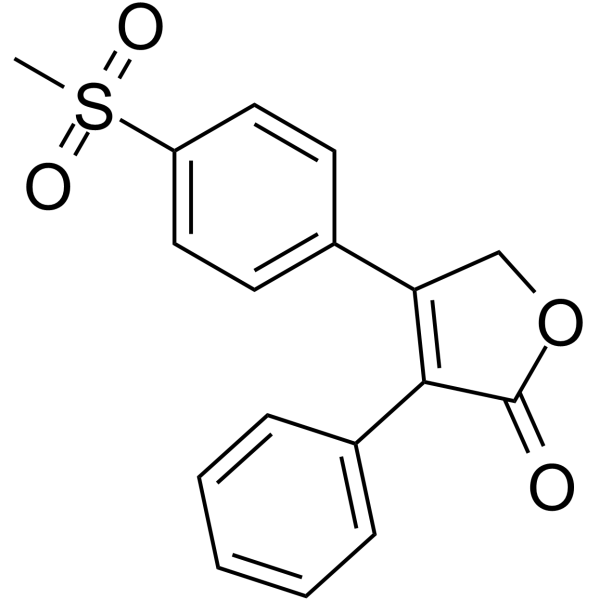
HY-17372
Rofecoxib -
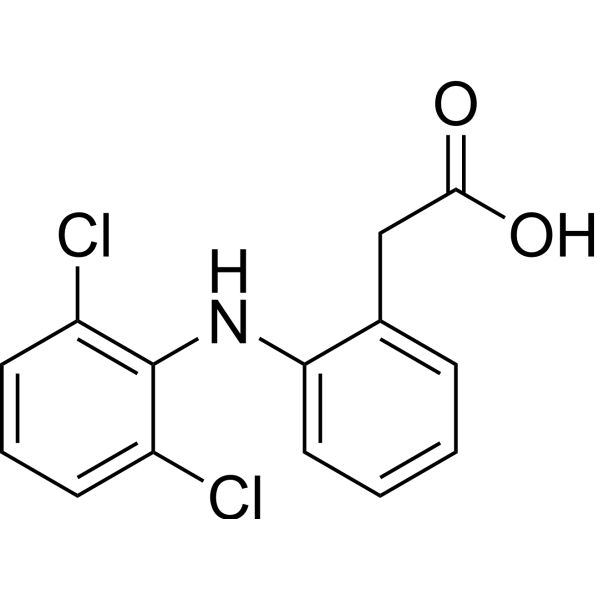
HY-15036
DiclofenacCOX Inhibitor -
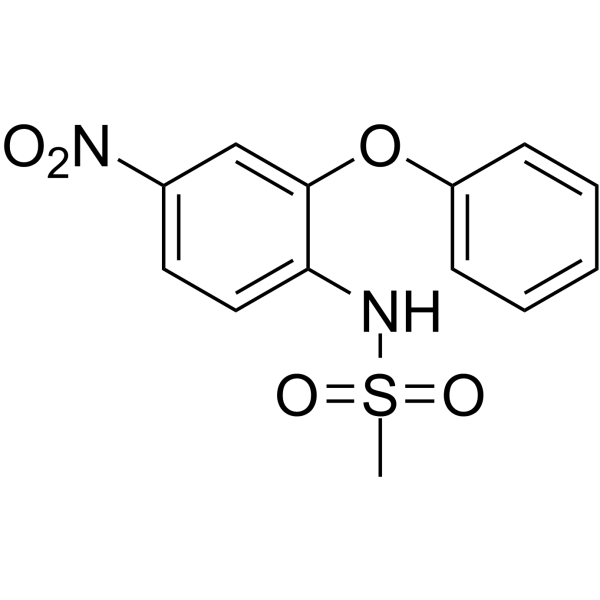
HY-B0363
NimesulideCOX Inhibitor -

HY-B0261R
Meloxicam (Standard)COX Inhibitor
Publications Citing Use of MedChemExpress (MCE) Meloxicam
More- Adv Funct Mater. 2025 Apr 21.
- Exp Mol Med. 2026 Aug;58(8):2746-2761.
- Neuron. 2024 Nov 6;112(21):3651-3664.e8. [Abstract]
- ACS Environ Au. 2025 Aug 5;5(6):573-582. [Abstract]
- Emerg Contam. 2026 Feb 23.
- Anal Chem. 2025 Jun 3;97(21):11099-11109. [Abstract]
- Biochem Pharmacol. 2024 Nov:229:116532. [Abstract]
- Int Immunopharmacol. 2026 Jan 1;168(Pt 2):115861. [Abstract]
- Chem Biol Interact. 2021 Apr 1:338:109425. [Abstract]
- Sci Rep. 2025 Jul 9;15(1):24614. [Abstract]
- Sci Rep. 2025 Jul 9;15(1):24789. [Abstract]
- Naunyn Schmiedebergs Arch Pharmacol. 2024 May;397(5):3313-3329. [Abstract]
- JOR Spine. 2023 Oct 18;7(1):e1290. [Abstract]
- Biotechnol Bioeng. 2021 Dec;118(12):4687-4698. [Abstract]
- Cell Transplant. 2025 Jan-Dec:34:9636897251376125. [Abstract]
- J Mol Neurosci. 2026 Jul 11;76(3):112.
 Customer Validation & Images

-
Cell Proliferation/Viability Assay
-
Bio/Physico-chemical Assay


Biologische Aktivität
Beschreibung
IC50 & Target
[1]|
COX-2 0.49 μM (IC50) |
COX-1 36.6 μM (IC50) |
MMP-2 |
In Vitro
Meloxicam (Compound 5) is a non-steroidal antiinflammatory agent, inhibits COX activity, with IC50s of 0.49 μM and 36.6 μM for COX-2 and COX-1, respectively[1]. Meloxicam inhibits COX+ tumor cells, but shows no cytotoxicity on CF41.Mg or MDCK cells at 0.25-25 μg/mL. Furthermore, Meloxicam in combination with doxorubicin, has no synergistic effect on CF41.Mg cells. Meloxicam (0.25 μg/mL) decreases CF41.Mg cell migration and invasion, induces decrease in MMP-2 expression, and increases β-catenin phophorylation in CF41.Mg cells, but does not affect the CF41.Mg cell apoptosis[2].
MedChemExpress (MCE) has not independently confirmed the accuracy of these methods. They are for reference only.
In Vivo
MedChemExpress (MCE) has not independently confirmed the accuracy of these methods. They are for reference only.
Clinical Trial
| NCT Number | Sponsor | Condition | Start Date |
Phase

|
|---|---|---|---|---|
| NCT01329991 | 2011-05 | PHASE1 |


Chemical Information
-
CAS. Nr. 71125-38-7
-
Appearance Solid
-
Molecular Weight 351.41
-
Formel C14H13N3O4S2
-
Color Light yellow to green yellow
-
SMILES
O=C(C1=C(O)C2=CC=CC=C2S(N1C)(=O)=O)NC3=NC=C(C)S3
-
Versand
Room temperature in continental US; may vary elsewhere.
-
Speicherung
Powder -20°C 3 years 4°C 2 years In solvent -80°C 2 years -20°C 1 year


Publications (16)
-
Journal Impact Factor
-
Most Recent
-
-
-
Neuron
2024 Nov 6;112(21):3651-3664.e8. PMID: 39241779 -
ACS Environ Au
Machine Learning-Assisted Recognition of Environmental Sulfur-Containing Chemicals in Nontargeted Mass Spectrometry Analysis of Inadequate Mass Resolution. [Abstract]2025 Aug 5;5(6):573-582. PMID: 41277996 -
-
Anal Chem
Exposome-Scale Investigation of Cl-/Br-Containing Chemicals Using High-Resolution Mass Spectrometry, Multistage Machine Learning, and Cloud Computing. [Abstract]2025 Jun 3;97(21):11099-11109. PMID: 40401576 -
Biochem Pharmacol
Transcriptome sequencing analysis reveals the molecular regulatory mechanism of myocardial hypertrophy induced by angiotensin II. [Abstract]2024 Nov:229:116532. PMID: 39270943 -
Int Immunopharmacol
Lactate-mediated Ran lactylation at lysine 123 promotes astrocytes polarization after oxygen-glucose deprivation/reoxygenation. [Abstract]2026 Jan 1;168(Pt 2):115861. PMID: 41275824 -
Chem Biol Interact
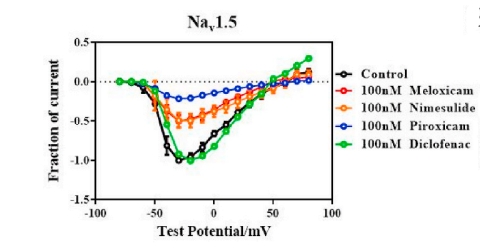
Regulatory effects of non-steroidal anti-inflammatory drugs on cardiac ion channels Nav1.5 and Kv11.1. [Abstract]2021 Apr 1:338:109425. PMID: 33617802
Meloxicam purchased from MedChemExpress. Usage Cited in: Chem Biol Interact. 2021 Apr 1:338:109425. [Abstract]
Effects of NSAIDs on hNav1.5. Effect of NSAIDs on the I–V relationship of hNav1.5 in CHO cells. I–V relationships of hNav1.5 were evoked by 100 nM of NSAIDs .
-
Sci Rep
The key regulation of LncRNA MALAT during reprogramming of primary mouse hepatocytes into insulin producing cells. [Abstract]2025 Jul 9;15(1):24614. PMID: 40634357 -
Sci Rep
Dermal papilla cells-conditioned medium attenuates oxidative stress-induced senescence via ferroptosis inhibition. [Abstract]2025 Jul 9;15(1):24789. PMID: 40634437 -
Naunyn Schmiedebergs Arch Pharmacol
Analysis of the mechanism of curcumin against osteoarthritis using metabolomics and transcriptomics. [Abstract]2024 May;397(5):3313-3329. PMID: 37938371
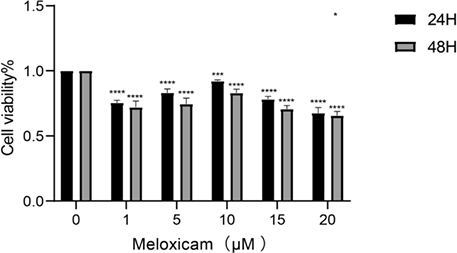
Meloxicam purchased from MedChemExpress. Usage Cited in: Naunyn Schmiedebergs Arch Pharmacol. 2024 May;397(5):3313-3329. [Abstract]
Meloxicam (0, 1, 5, 10, 15, 20 μM; 24, 48 h) shows the highest cell viability in human articular chondrocytes at 10 μM.
-
JOR Spine
M1 macrophage-derived oncostatin M induces osteogenic differentiation of ligamentum flavum cells through the JAK2/STAT3 pathway. [Abstract]2023 Oct 18;7(1):e1290. PMID: 38222812 -
Biotechnol Bioeng
An integrated biomimetic array chip for establishment of collagen-based 3D primary human hepatocyte model for prediction of clinical drug-induced liver injury. [Abstract]2021 Dec;118(12):4687-4698. PMID: 34478150 -
Cell Transplant
Adipose-derived stem cells inhibit dendritic cell migration by secreting tumor necrosis factor-α-stimulated gene 6 to improve the allogeneic skin transplantation survival rate in mice. [Abstract]2025 Jan-Dec:34:9636897251376125. PMID: 41108126 -


Lösungsmittel & Löslichkeit
In Vitro:
DMSO : 10 mg/mL (28.46 mM; Need ultrasonic; Hygroscopic DMSO has a significant impact on the solubility of product, please use newly opened DMSO)
H2O : < 0.1 mg/mL (insoluble)
Please refer to the solubility information to select the appropriate solvent. Once prepared, please aliquot and store the solution to prevent product inactivation from repeated freeze-thaw cycles.
Storage method and period of stock solution: -80°C, 2 years; -20°C, 1 year. When stored at -80°C, please use it within 2 years. When stored at -20°C, please use it within 1 year.
Please refer to the solubility information to select the appropriate solvent. Once prepared, please aliquot and store the solution to prevent product inactivation from repeated freeze-thaw cycles.
Storage method and period of stock solution: -80°C, 2 years; -20°C, 1 year. When stored at -80°C, please use it within 2 years. When stored at -20°C, please use it within 1 year.
Konzentration (Stammlösung) × Volumen (Stammlösung) = Konzentration (Ziellösung) × Volumen (Ziellösung)
In Vivo:
Select the appropriate dissolution method based on your experimental animal and administration route.
- For the following dissolution methods, please ensure to first prepare a clear stock solution using an In Vitro approach and then sequentially add co-solvents:
- To ensure reliable experimental results, the clarified stock solution can be appropriately stored based on storage conditions. As for the working solution for In Vivo experiments, it is recommended to prepare freshly and use it on the same day.
- The percentages shown for the solvents indicate their volumetric ratio in the final prepared solution. If precipitation or phase separation occurs during preparation, heat and/or sonication can be used to aid dissolution.
Add each solvent one by one: 10% DMSO 40% PEG300 5% Tween-80 45% Saline
Solubility: ≥ 1 mg/mL (2.85 mM); Clear solution
This protocol yields a clear solution of ≥ 1 mg/mL (saturation unknown).
Taking 1 mL working solution as an example, add 100 μL DMSO stock solution (10.0 mg/mL) to 400 μL PEG300, and mix evenly; then add 50 μL Tween-80 and mix evenly; then add 450 μL Saline to adjust the volume to 1 mL.
Preparation of Saline: Dissolve 0.9 g sodium chloride in ddH₂O and dilute to 100 mL to obtain a clear Saline solution.
In Vivo Dissolution Calculator
Please enter the basic information of animal experiments:
-
-
-
-
Recommended: Prepare an additional quantity of animals to account for potential losses during experiments.
Please enter your animal formula composition:
-
%DMSO +
Recommended: Keep the proportion of DMSO in working solution below 2% if your animal is weak.
-
%+
-
+%Tween-80 + +
-
%Saline +
The co-solvents required include: DMSO, . All of co-solvents are available by MedChemExpress (MCE). , Tween 80. All of co-solvents are available by MedChemExpress (MCE).
Working solution concentration: 0.22 mg/mL
Method for preparing stock solution: mg drug dissolved in μL DMSO. Stock solution concentration: mg/mL.
1. Take μL DMSO stock solution;
2. Add μL .
μL , mix evenly;
3. Then add μL Tween 80, mix evenly;
4. Then add μL
Please ensure that the stock solution in the first step is dissolved to a clear state, and add co-solvents in sequence. You can use ultrasonic heating (ultrasonic cleaner, recommended frequency 20-40 kHz), vortexing, etc. to assist dissolution.


Reinheit & Dokumentation
-
Data Sheet (282 KB)
-
SDS (644 KB)
- English - EN (644 KB)
- Français - FR (644 KB)
- Deutsch - DE (644 KB)
- Norwegian - NO (644 KB)
- Español - ES (644 KB)
- Swedish - SV (644 KB)
- Italian - IT (644 KB)
- Korean - KR (644 KB)
- Portuguese - PT (644 KB)
-
Handling Instructions (2659 KB)
Verweise
[1]. Lazer ES, et al. Effect of structural modification of enol-carboxamide-type nonsteroidal antiinflammatory drugs on COX-2/COX-1 selectivity. J Med Chem. 1997 Mar 14;40(6):980-9. [Content Brief]
[2]. Iturriaga MP, et al. Meloxicam decreases the migration and invasion of CF41.Mg canine mammary carcinoma cells. Oncol Lett. 2017 Aug;14(2):2198-2206. [Content Brief]
[3]. Fikry EM, et al. Rutin and meloxicam attenuate paw inflammation in mice: Affecting sorbitol dehydrogenase activity. J Biochem Mol Toxicol. 2018 Feb;32(2). [Content Brief]


Complete Stock Solution Preparation Table
Please refer to the solubility information to select the appropriate solvent. Once prepared, please aliquot and store the solution to prevent product inactivation from repeated freeze-thaw cycles.
Storage method and period of stock solution: -80°C, 2 years; -20°C, 1 year. When stored at -80°C, please use it within 2 years. When stored at -20°C, please use it within 1 year.
| Optional Solvent | Concentration Solvent Mass | 1 mg | 5 mg | 10 mg | 25 mg |
|---|---|---|---|---|---|
| DMSO | 1 mM | 2.8457 mL | 14.2284 mL | 28.4568 mL | 71.1420 mL |
| 5 mM | 0.5691 mL | 2.8457 mL | 5.6914 mL | 14.2284 mL | |
| 10 mM | 0.2846 mL | 1.4228 mL | 2.8457 mL | 7.1142 mL | |
| 15 mM | 0.1897 mL | 0.9486 mL | 1.8971 mL | 4.7428 mL | |
| 20 mM | 0.1423 mL | 0.7114 mL | 1.4228 mL | 3.5571 mL | |
| 25 mM | 0.1138 mL | 0.5691 mL | 1.1383 mL | 2.8457 mL |


Meloxicam Related Classifications
HY-B0261 Related Classifications
 Powered by Bioz