



Vitamin K

Based on 1 Customer Validation
Vitamin K, the blood-clotting vitamin, is important for the function of numerous proteins within the body, such as the coagulation factors, osteocalcin and matrix-Gla protein.
Nos produits utilisent uniquement pour la recherche. Nous ne vendons pas aux patients.
- Pureté : 98.0%
- CAS No.: 12001-79-5
-
Stockage:Pure form -20°C, 3 years , 4°C, 2 years ; In solvent -80°C, 6 months , -20°C, 1 month


To place orders, for customer services and technical support, please contact: MedChemExpress USA
Tel: 609-228-6898 E-mail: [email protected] [email protected]


-
 Activité biologique
-
Chemical Information
-
Solvant et solubilité
- Pureté et documentation
- Références
-
 Help & FAQs


-

HY-B1342
Vitamin A -
HY-B2156
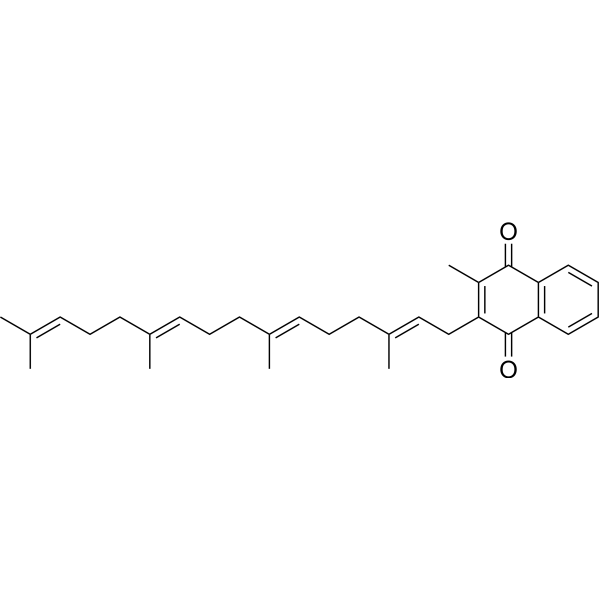
Menaquinone-4Endogenous Metabolite -
HY-B0315
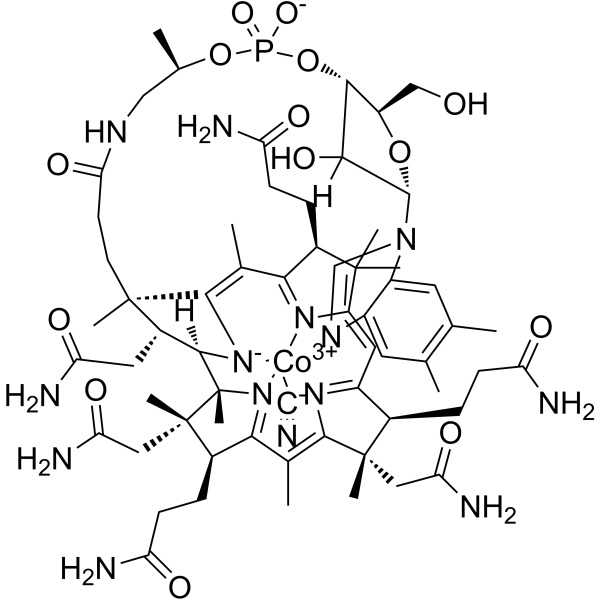
Vitamin B12Endogenous Metabolite -
HY-15398
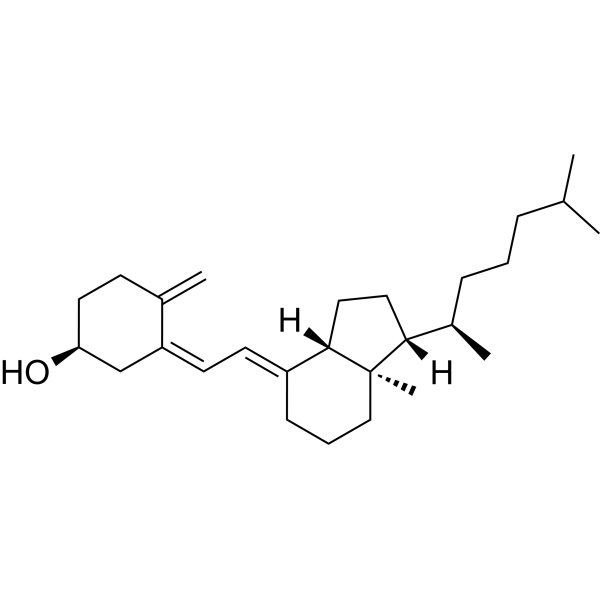
Vitamin D3Vitamin -
HY-B0143
NiacinB3 vitamin -
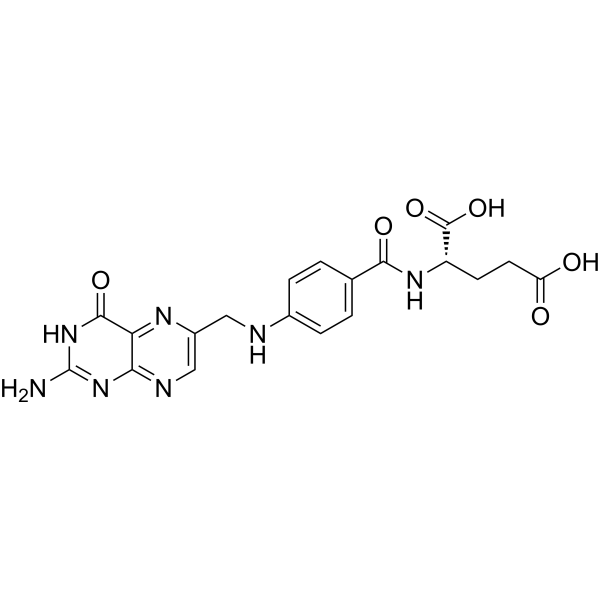
HY-16637
Folic acidB complex -
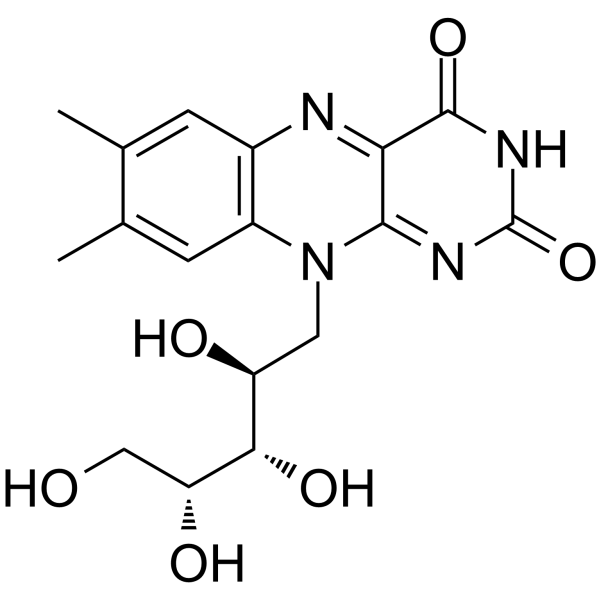
HY-B0456
RiboflavinVitamin B2 -
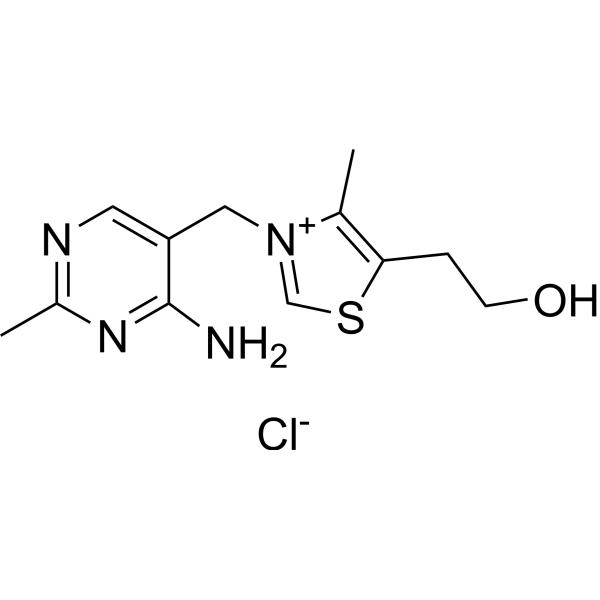
HY-A0100
Thiamine monochlorideNeuronal Effect Enhancer -
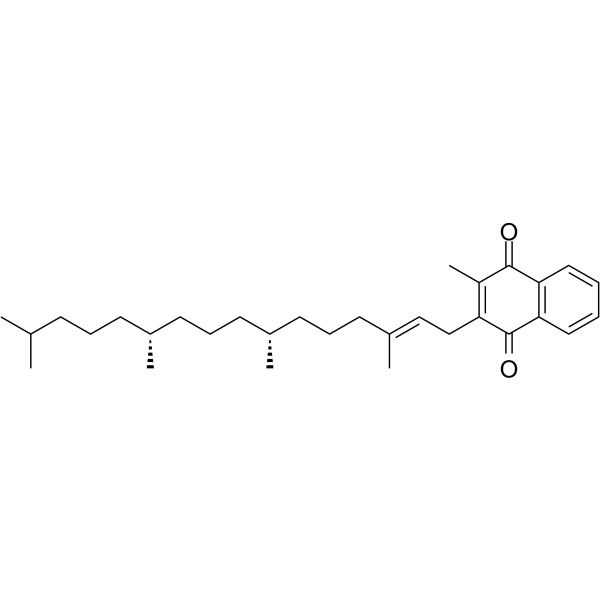
HY-N0684
Vitamin K1Endogenous Metabolite -
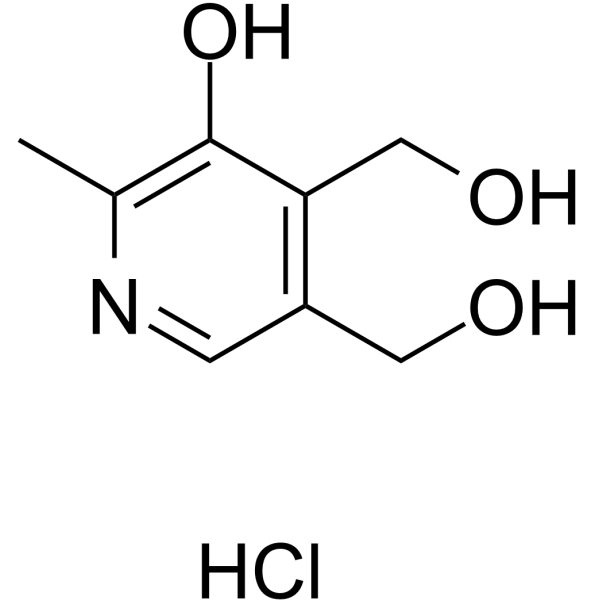
HY-N0682
Pyridoxine hydrochloridePyridine Derivative -
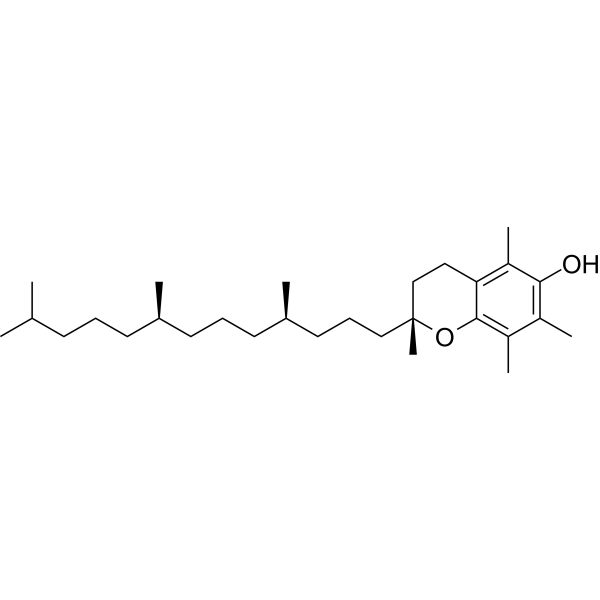
HY-N0683
α-Vitamin EAntioxidant -
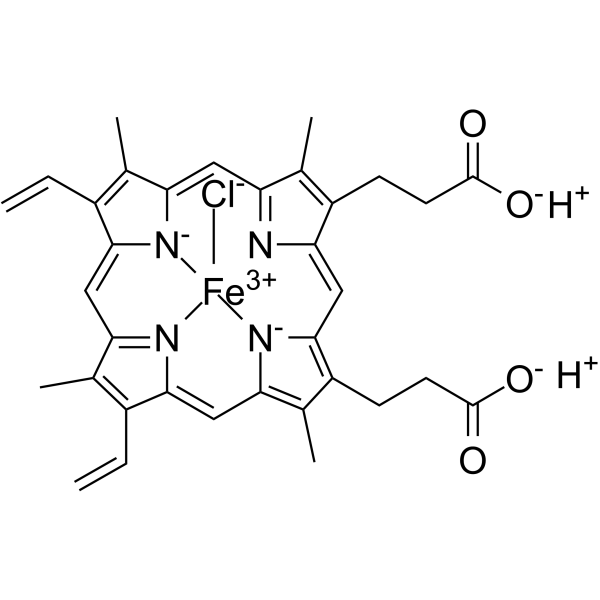
HY-19424
HeminHeme Oxygenase-1 Inducer
Voir tous les produits spécifiques à Isoform Endogenous Metabolite
More

Activité biologique
Description
IC50 & Target
|
Microbial Metabolite |
In Vitro
Phylloquinone (vitamin K1) and Menaquinones (vitamin K2) are the two naturally occurring forms of vitamin K. Phylloquionone is the major dietary source of vitamin K and is found at highest concentrations in green leafy vegetables[1]. Vitamin K2 (menaquinone) is found in small amounts in chicken, butter, egg yolks, cheese and fermented soyabeans. Vitamin K1 and vitamin K2 are required for the γ-glutamyl carboxylation of all vitamin K-dependent proteins[2]. Vitamin K has important actions in the nervous system. Vitamin K contributes to the biological activation of proteins Gas6 and protein S, ligands for the receptor tyrosine kinases of the TAM family (Tyro3, Axl, and Mer). In brain, vitamin K also participates in the synthesis of sphingolipids, an important class of lipids present in high concentrations in brain cell membranes[3].
MedChemExpress (MCE) has not independently confirmed the accuracy of these methods. They are for reference only.
In Vivo
MedChemExpress (MCE) has not independently confirmed the accuracy of these methods. They are for reference only.
Essai clinique
| NCT Number | Sponsor | Condition | Start Date |
Phase

|
|---|---|---|---|---|
| NCT01329991 | 2011-05 | PHASE1 |


Chemical Information
-
CAS No. 12001-79-5
-
Appearance Liquid (Density: 0.984 g/cm3)
-
Color Light yellow to yellow
-
SMILES
[Vitamin K]
-
Structure Classification
-
Initial Source
-
Livraison
Room temperature in continental US; may vary elsewhere.
-
Stockage
Pure form -20°C 3 years 4°C 2 years In solvent -80°C 6 months -20°C 1 month


Solvant et solubilité
In Vitro:
DMSO : 100 mg/mL (Need ultrasonic; Hygroscopic DMSO has a significant impact on the solubility of product, please use newly opened DMSO)
In Vivo:
Select the appropriate dissolution method based on your experimental animal and administration route.
- For the following dissolution methods, please ensure to first prepare a clear stock solution using an In Vitro approach and then sequentially add co-solvents:
- To ensure reliable experimental results, the clarified stock solution can be appropriately stored based on storage conditions. As for the working solution for In Vivo experiments, it is recommended to prepare freshly and use it on the same day.
- The percentages shown for the solvents indicate their volumetric ratio in the final prepared solution. If precipitation or phase separation occurs during preparation, heat and/or sonication can be used to aid dissolution.
Add each solvent one by one: 10% DMSO 40% PEG300 5% Tween-80 45% Saline
Solubility: ≥ 2.5 mg/mL; Clear solution
This protocol yields a clear solution of ≥ 2.5 mg/mL (saturation unknown).
Taking 1 mL working solution as an example, add 100 μL DMSO stock solution (25.0 mg/mL) to 400 μL PEG300, and mix evenly; then add 50 μL Tween-80 and mix evenly; then add 450 μL Saline to adjust the volume to 1 mL.
Preparation of Saline: Dissolve 0.9 g sodium chloride in ddH₂O and dilute to 100 mL to obtain a clear Saline solution.
In Vivo Dissolution Calculator
Please enter the basic information of animal experiments:
-
-
-
-
Recommended: Prepare an additional quantity of animals to account for potential losses during experiments.
Please enter your animal formula composition:
-
%DMSO +
Recommended: Keep the proportion of DMSO in working solution below 2% if your animal is weak.
-
%+
-
+%Tween-80 + +
-
%Saline +
The co-solvents required include: DMSO, . All of co-solvents are available by MedChemExpress (MCE). , Tween 80. All of co-solvents are available by MedChemExpress (MCE).
Working solution concentration: 0.22 mg/mL
Method for preparing stock solution: mg drug dissolved in μL DMSO. Stock solution concentration: mg/mL.
1. Take μL DMSO stock solution;
2. Add μL .
μL , mix evenly;
3. Then add μL Tween 80, mix evenly;
4. Then add μL
Please ensure that the stock solution in the first step is dissolved to a clear state, and add co-solvents in sequence. You can use ultrasonic heating (ultrasonic cleaner, recommended frequency 20-40 kHz), vortexing, etc. to assist dissolution.


Pureté et documentation
-
Fiche technique (270 KB)
-
SDS (252 KB)
- English - EN (252 KB)
- Français - FR (252 KB)
- Deutsch - DE (252 KB)
- Norwegian - NO (252 KB)
- Español - ES (252 KB)
- Swedish - SV (252 KB)
- Italian - IT (252 KB)
- Korean - KR (252 KB)
- Portuguese - PT (252 KB)
-
Instruction de manipulation (2659 KB)
Références
[1]. Manna P, et al. Beneficial role of vitamin K supplementation on insulin sensitivity, glucose metabolism, and the reduced risk of type 2 diabetes: A review. Nutrition. 2016 Jul-Aug;32(7-8):732-9. [Content Brief]
[2]. DiNicolantonio JJ, et al. The health benefits of vitamin K. Open Heart. 2015 Oct 6;2(1):e000300. [Content Brief]
[3]. Ferland G, et al. Vitamin K, an emerging nutrient in brain function. Biofactors. 2012 Mar-Apr;38(2):151-7. [Content Brief]
[4]. Bügel S, et al. Vitamin K and bone health. Proc Nutr Soc. 2003 Nov;62(4):839-43. [Content Brief]

Calculators
Concentration (start) × Volume (start) = Concentration (final) × Volume (final)


Vitamin K Related Classifications
HY-B2172 Related Classifications
 Powered by Bioz