



Gallic acid-d2

Based on 1 Customer Validation
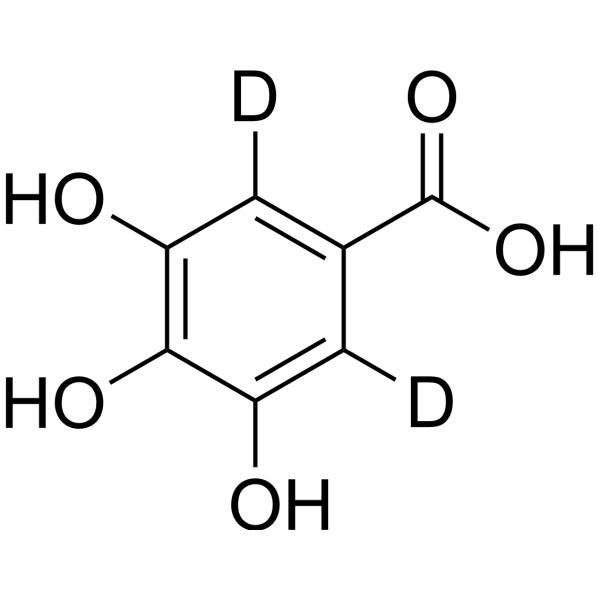
Gallic acid-d2 is the deuterium labeled Gallic acid. Gallic acid (3,4,5-Trihydroxybenzoic acid) is a natural polyhydroxyphenolic compound and an free radical scavenger to inhibit cyclooxygenase-2 (COX-2). Gallic acid has various activities, such as antimicrobial, antioxidant, antimicrobial, anti-inflammatory, and anticance activities.
Nur für Forschungszwecke. Wir verkaufen nicht an Patienten.
- Reinheit : 99.59%
- CAS. Nr.: 294660-92-7
- Formel: C7H4D2O5
- Molecular Weight:172.13
-
Speicherung:Powder -20°C, 3 years , 4°C, 2 years ; In solvent -80°C, 6 months , -20°C, 1 month

To place orders, for customer services and technical support, please contact: MedChemExpress USA
Tel: 609-228-6898 E-mail: [email protected] [email protected]


-
 Biologische Aktivität
-
Chemical Information
- Protokoll
- Reinheit & Dokumentation
- Verweise
-
 Help & FAQs


-
HY-N1428S1
Citric acid-13C6Stable Isotope -
HY-N0666S8
L-Aspartic acid-d3Stable Isotope -
HY-19759
SRT 2183SIRT1 Activator -
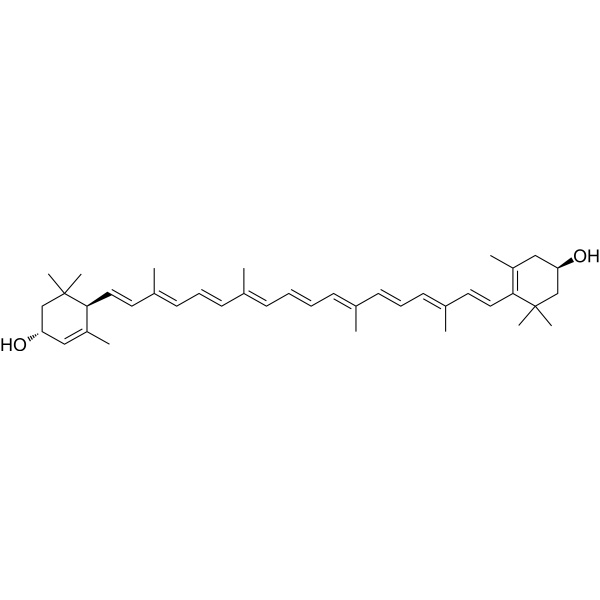
HY-N6947
LuteinAnti-inflammatory Agent -
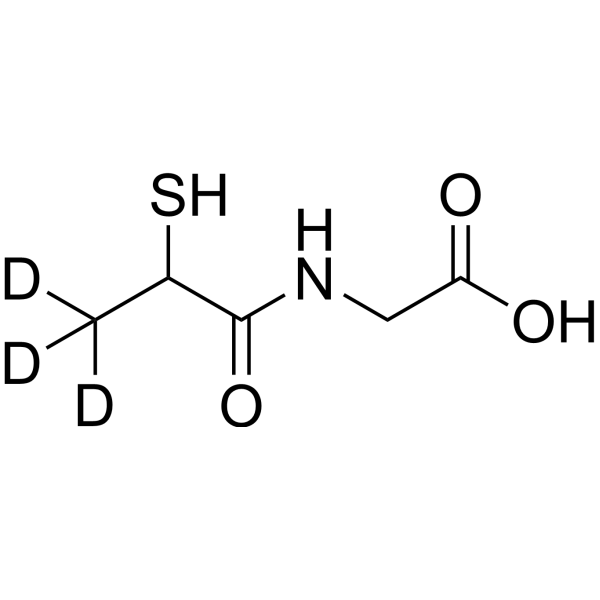
HY-B0373S1
Tiopronin-d3Stable Isotope -
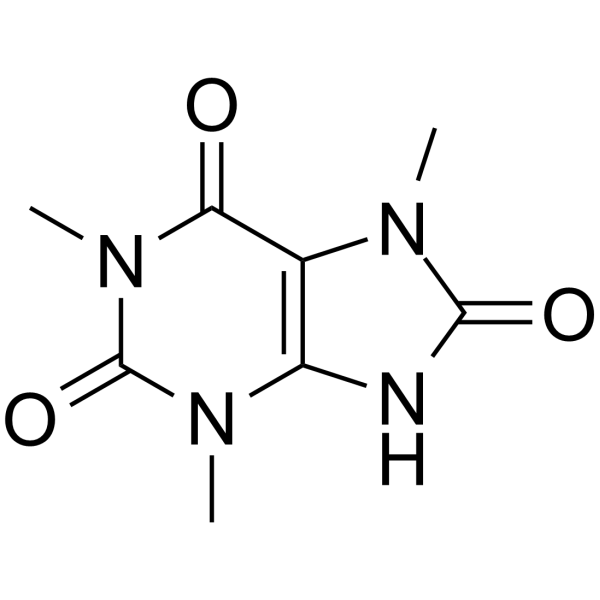
HY-113327
1,3,7-Trimethyluric acidCaffeine Metabolite -
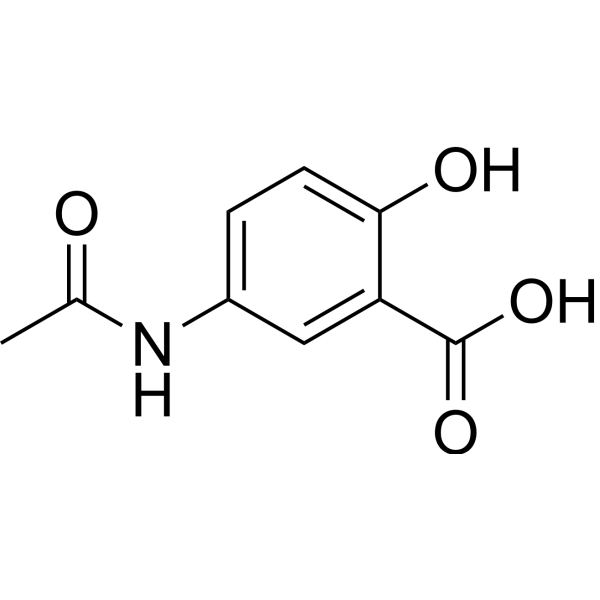
HY-66008
N-Acetyl mesalazine5-Aminosalicylic Acid Metabolite -
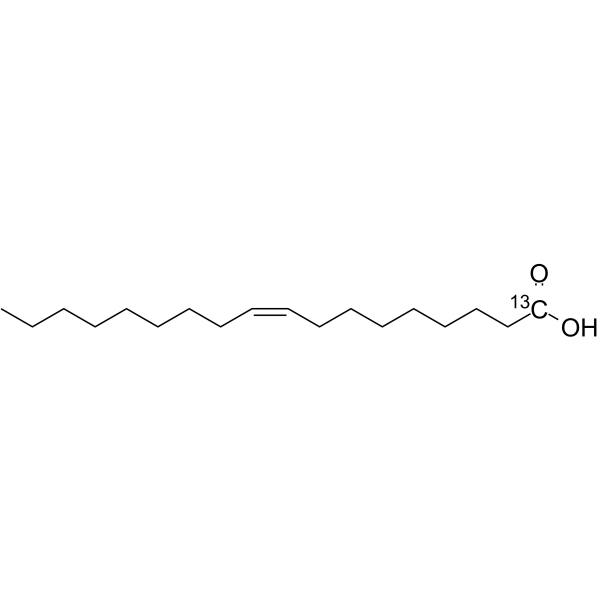
HY-N1446S
Oleic acid-13CStable Isotope -
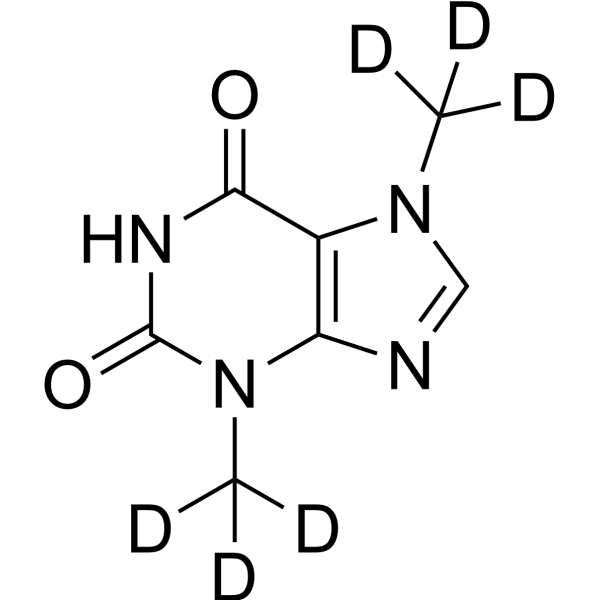
HY-N0138S
Theobromine-d6Stable Isotope -
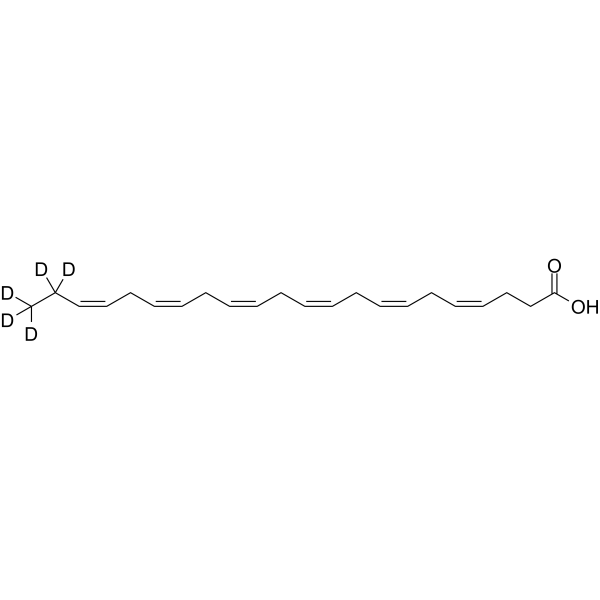
HY-B2167S
Docosahexaenoic acid-d5Stable Isotope -

HY-B0464S
Hydralazine-d4 hydrochlorideStable Isotope -
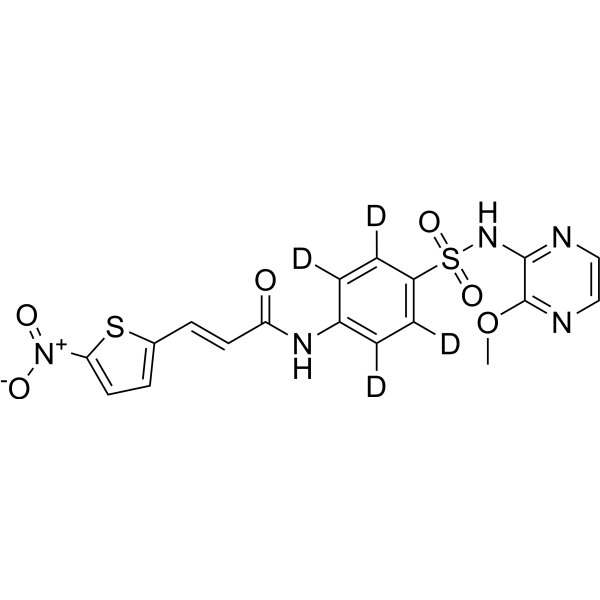
HY-100573S
Necrosulfonamide-d4Stable Isotope
Alle Endogenous Metabolite Isoform-spezifische Produkte anzeigen
More

Biologische Aktivität
Beschreibung
In Vitro
Stable heavy isotopes of hydrogen, carbon, and other elements have been incorporated into drug molecules, largely as tracers for quantitation during the drug development process. Deuteration has gained attention because of its potential to affect the pharmacokinetic and metabolic profiles of drugs[1].
MedChemExpress (MCE) has not independently confirmed the accuracy of these methods. They are for reference only.
Anwendung
1. This compound can be used as a tracer
2. This compound can be used as an internal standard for quantitative analysis by NMR, GC-MS, or LC-MS.


Chemical Information
-
CAS. Nr. 294660-92-7
-
Unlabeled CAS 149-91-7
-
Appearance Solid
-
Molecular Weight 172.13
-
Formel C7H4D2O5
-
Color White to off-white
-
SMILES
OC(C1=C([2H])C(O)=C(C(O)=C1[2H])O)=O
-
Synonyms
3,4,5-Trihydroxybenzoic acid-d2
-
Versand
Room temperature in continental US; may vary elsewhere.
-
Speicherung
Powder -20°C 3 years 4°C 2 years In solvent -80°C 6 months -20°C 1 month


Reinheit & Dokumentation
-
Data Sheet (272 KB)
-
SDS (393 KB)
- English - EN (393 KB)
- Français - FR (393 KB)
- Deutsch - DE (393 KB)
- Norwegian - NO (393 KB)
- Español - ES (393 KB)
- Swedish - SV (393 KB)
- Italian - IT (393 KB)
- Korean - KR (393 KB)
- Portuguese - PT (393 KB)
-
Handling Instructions (2659 KB)
Verweise
[1]. Russak EM, et al. Impact of Deuterium Substitution on the Pharmacokinetics of Pharmaceuticals. Ann Pharmacother. 2019 Feb;53(2):211-216. [Content Brief]
[2]. Amaravani M, et al. COX-2 structural analysis and docking studies with gallic acid structural analogues. Springerplus. 2012 Dec;1(1):58. [Content Brief]
[3]. Bak EJ, et al. Gallic acid improves glucose tolerance and triglyceride concentration in diet-induced obesity mice. Scand J Clin Lab Invest. 2013 Dec73(8):607-14. [Content Brief]
[4]. Cheng Y, et al. Plant Natural Products Calycosin and Gallic Acid Synergistically Attenuate Neutrophil Infiltration and Subsequent Injury in Isoproterenol-Induced Myocardial Infarction: A Possible Role for Leukotriene B4 12-Hydroxydehydrogenase? Oxid Med Cell Longev. 20152015:434052. [Content Brief]

Calculators
Konzentration (Stammlösung) × Volumen (Stammlösung) = Konzentration (Ziellösung) × Volumen (Ziellösung)


Gallic acid-d2 Related Classifications
HY-N0523S Related Classifications
 Powered by Bioz