



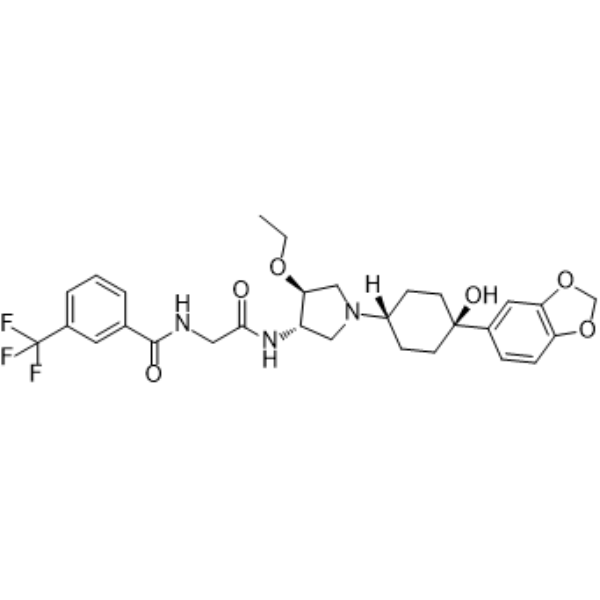
JNJ-41443532

Based on 1 Customer Validation
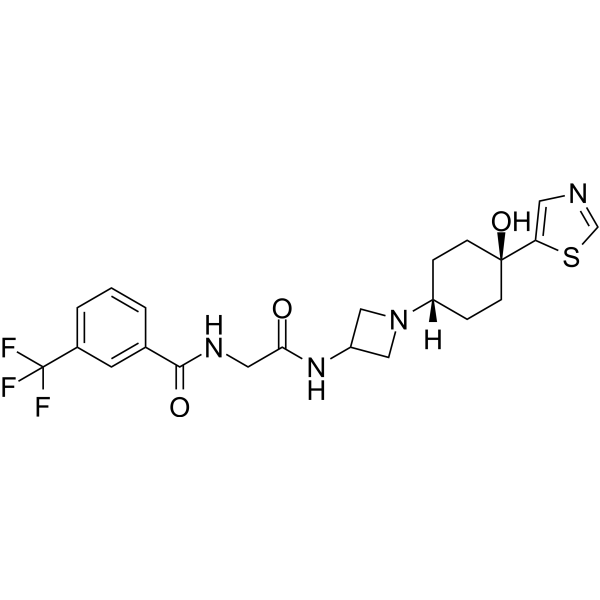
JNJ-41443532 (CCR2 antagonist 5) is a selective, orally active hCCR2 inhibitor with good binding affinity (IC50=37 nM) and potent functional antagonism (chemotaxis IC50=30 nM). JNJ-41443532 displays a Ki of 9.6 µM for mCCR2 binding. JNJ-41443532 can be used in the research of inflammatory disease.
Nur für Forschungszwecke. Wir verkaufen nicht an Patienten.
- Reinheit : 99.65%
- CAS. Nr.: 1228650-83-6
- Formel: C22H25F3N4O3S
- Molecular Weight:482.52
-
Speicherung:Powder -20°C, 3 years , 4°C, 2 years ; In solvent -80°C, 6 months , -20°C, 1 month

To place orders, for customer services and technical support, please contact: MedChemExpress USA
Tel: 609-228-6898 E-mail: [email protected] [email protected]


-
 Biologische Aktivität
-
Chemical Information
-
Lösungsmittel & Löslichkeit
- Protokoll
- Reinheit & Dokumentation
- Verweise
-
 Help & FAQs


-
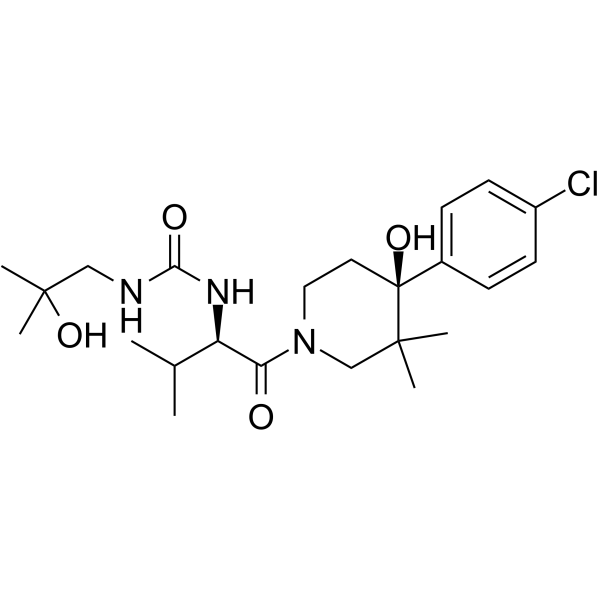
HY-15546
BMS-817399CCR1 Antagonist -
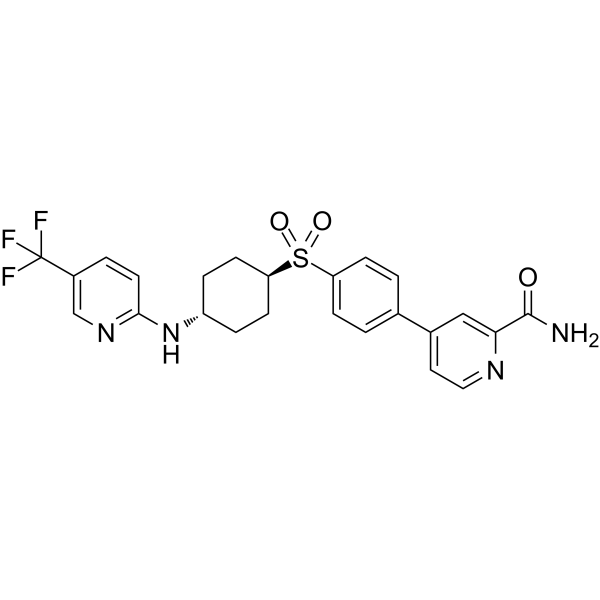
HY-112701
CCR6 inhibitor 1CCR Inhibitor -
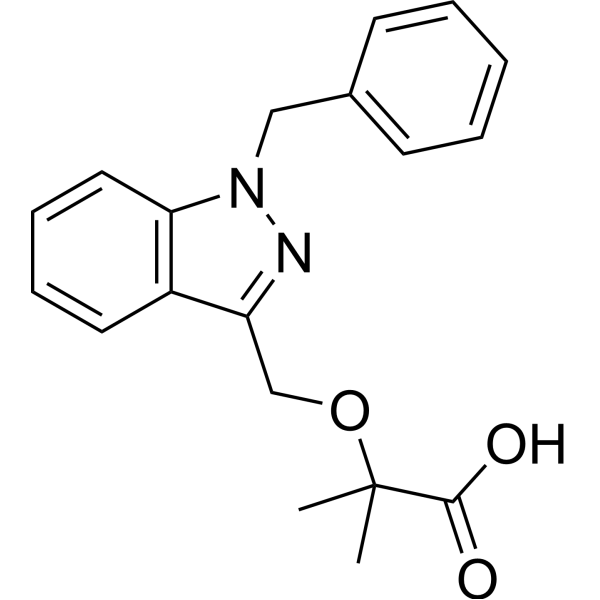
HY-B0498
BindaritMCP/CCL Inhibitor -
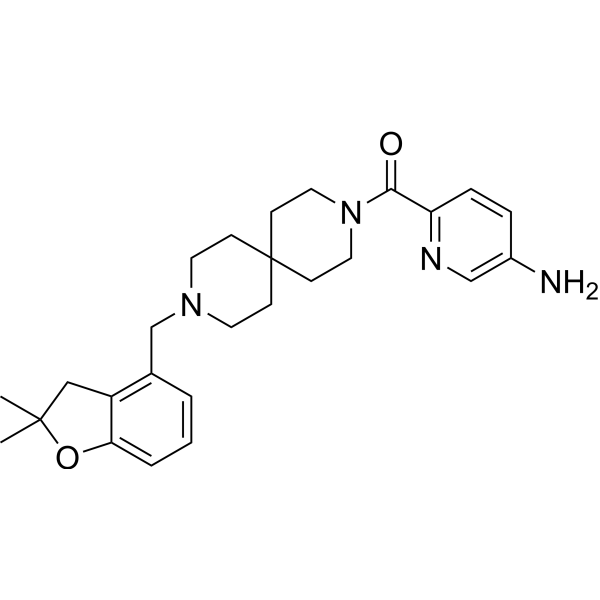
HY-119217
AZ084CCR8 Allosteric Antagonist -
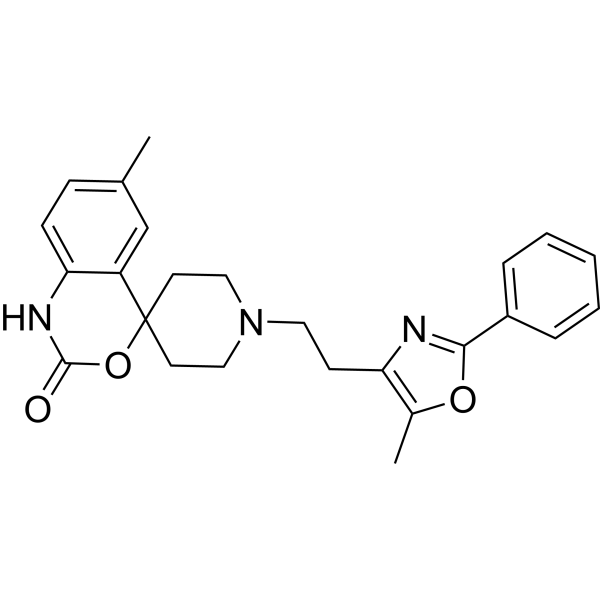
HY-15418
RS 504393CCR2 Antagonist -
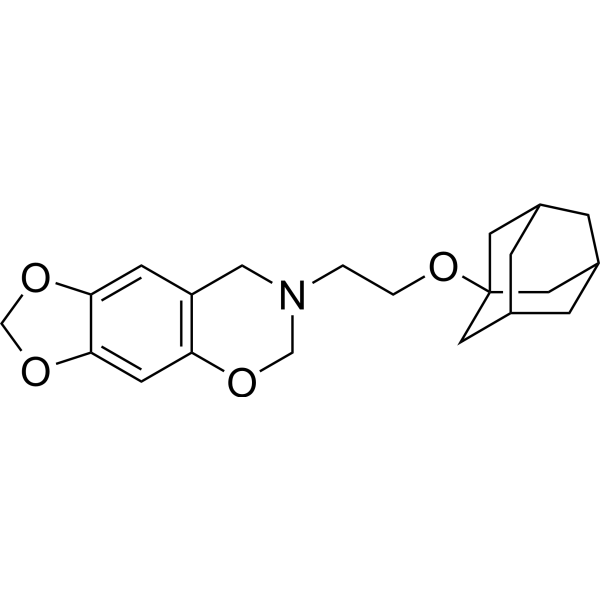
HY-122219
R243CCR8 Antagonist -
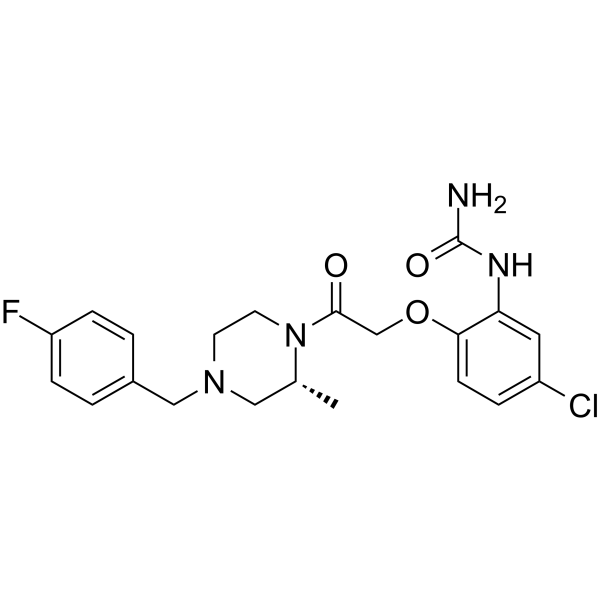
HY-12080
BX471CCR1 Antagonist -
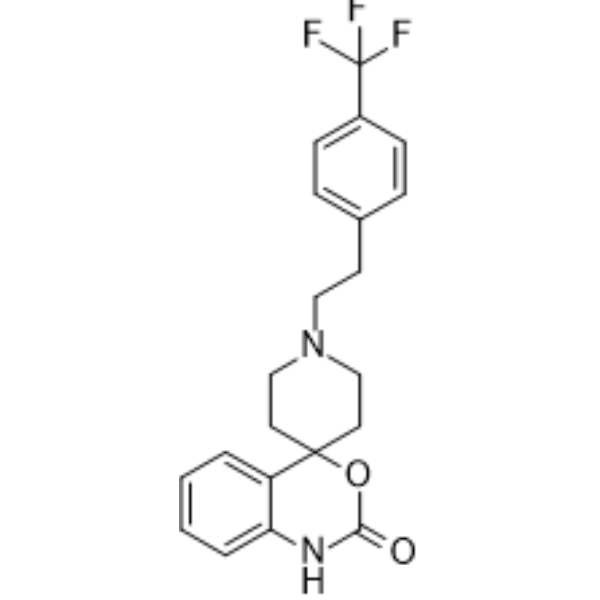
HY-18611A
AbaucinCCR Antagonist -
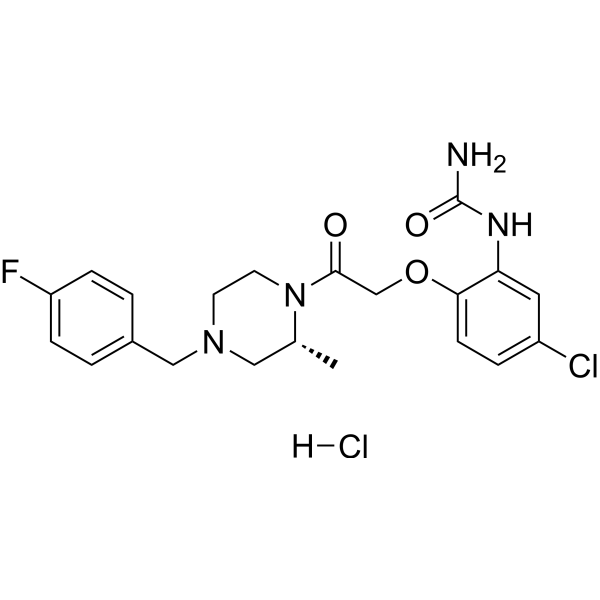
HY-12080A
BX471 hydrochlorideCCR Antagonist -
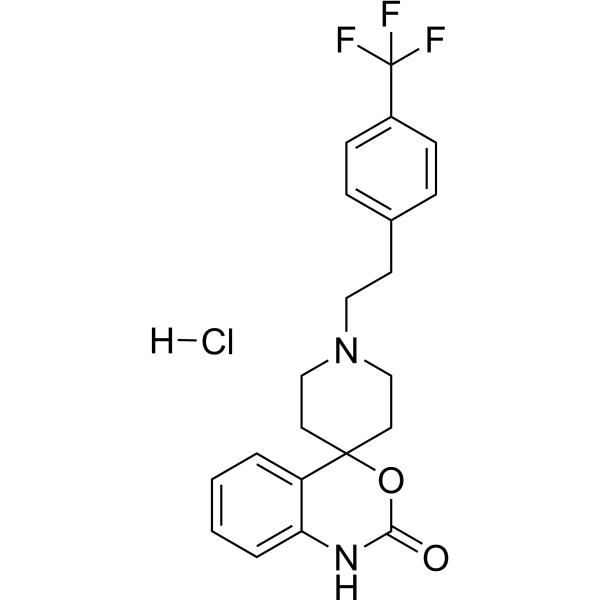
HY-18611
Abaucin hydrochlorideCCR2antagonist -
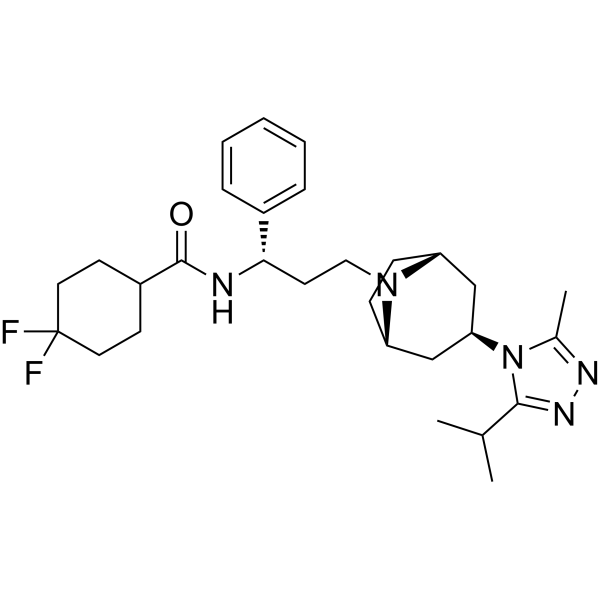
HY-13004
MaravirocCCR5 Antagonist -
HY-50674
INCB3344CCR2 Antagonis


Biologische Aktivität
Beschreibung
IC50 & Target
[1]|
hCCR2 37 nM (IC50) |
mCCR2 9.6 μM (Ki) |
Cellular Effect
|
Cell Line

|
Type | Value | Description | References |
|---|---|---|---|---|
| HEK293 | IC50 |
>50 μM
Compound: 8d
|
Displacement of [3H]-astemizole from human ERG expressed in HEK293 cells after 1 hr by scintillation counting analysis
Displacement of [3H]-astemizole from human ERG expressed in HEK293 cells after 1 hr by scintillation counting analysis
|
[PMID: 24900425] |
| THP-1 | IC50 |
30 nM
Compound: 8d
|
Antagonist activity against CCR2 in human THP-1 cells assessed as inhibition of MCP-1 induced chemotaxis after 3 hrs
Antagonist activity against CCR2 in human THP-1 cells assessed as inhibition of MCP-1 induced chemotaxis after 3 hrs
|
[PMID: 24900425] |
| THP-1 | IC50 |
37 nM
Compound: 8d
|
Displacement of [125I]-MCP-1 from CCR2 in human THP-1 cells after 2 hrs by microplate scintillation and luminescence counter analysis
Displacement of [125I]-MCP-1 from CCR2 in human THP-1 cells after 2 hrs by microplate scintillation and luminescence counter analysis
|
[PMID: 24900425] |
In Vivo
JNJ-41443532 has good CV safety profile. It does not induce dose-dependent or notable effects on most cardiohemodynamic, functional respiratory and electrophysiological parameters up to 10 mg/kg (i.v.) with plasma level at 70 µM in an anesthetized dog[1].
JNJ-41443532 has amendable oral bioavailability in dogs and primates. Pharmacokinetic parameters (p.o.)[1]:
| Species | Dose (mg/kg) |
Cmax (ng/mL) |
AUClast (h*ng/mL) |
Oral bioavailability (%) |
| dogs | 6.7 | 1617 | 5887 | 70.2 |
| non-human primates | 7.2 | 740 | 3061 | 25.4 |
| mice | 10 | 74 | 204 | 19 |
| rats | 10 | 100 | 416 | 15.3 |
MedChemExpress (MCE) has not independently confirmed the accuracy of these methods. They are for reference only.
Clinical Trial
| NCT Number | Sponsor | Condition | Start Date |
Phase
|
|---|---|---|---|---|
| NCT01329991 | Plexxikon| | 2011-05 | PHASE1 |


Chemical Information
-
CAS. Nr. 1228650-83-6
-
Appearance Solid
-
Molecular Weight 482.52
-
Formel C22H25F3N4O3S
-
Color White to off-white
-
SMILES
O=C(CNC(C1=CC(C(F)(F)F)=CC=C1)=O)NC2CN(C2)[C@](CC3)([H])CC[C@@]3(C4=CN=CS4)O
-
Synonyms
CCR2 antagonist 5
-
Versand
Room temperature in continental US; may vary elsewhere.
-
Speicherung
Powder -20°C 3 years 4°C 2 years In solvent -80°C 6 months -20°C 1 month


Lösungsmittel & Löslichkeit
In Vitro:
DMSO : 100 mg/mL (207.25 mM; Need ultrasonic; Hygroscopic DMSO has a significant impact on the solubility of product, please use newly opened DMSO)
Please refer to the solubility information to select the appropriate solvent. Once prepared, please aliquot and store the solution to prevent product inactivation from repeated freeze-thaw cycles.
Storage method and period of stock solution: -80°C, 6 months; -20°C, 1 month. When stored at -80°C, please use it within 6 months. When stored at -20°C, please use it within 1 month.
Please refer to the solubility information to select the appropriate solvent. Once prepared, please aliquot and store the solution to prevent product inactivation from repeated freeze-thaw cycles.
Storage method and period of stock solution: -80°C, 6 months; -20°C, 1 month. When stored at -80°C, please use it within 6 months. When stored at -20°C, please use it within 1 month.
Konzentration (Stammlösung) × Volumen (Stammlösung) = Konzentration (Ziellösung) × Volumen (Ziellösung)
In Vivo:
Select the appropriate dissolution method based on your experimental animal and administration route.
- For the following dissolution methods, please ensure to first prepare a clear stock solution using an In Vitro approach and then sequentially add co-solvents:
- To ensure reliable experimental results, the clarified stock solution can be appropriately stored based on storage conditions. As for the working solution for In Vivo experiments, it is recommended to prepare freshly and use it on the same day.
- The percentages shown for the solvents indicate their volumetric ratio in the final prepared solution. If precipitation or phase separation occurs during preparation, heat and/or sonication can be used to aid dissolution.
Add each solvent one by one: 10% DMSO 40% PEG300 5% Tween-80 45% Saline
Solubility: ≥ 2.5 mg/mL (5.18 mM); Clear solution
This protocol yields a clear solution of ≥ 2.5 mg/mL (saturation unknown).
Taking 1 mL working solution as an example, add 100 μL DMSO stock solution (25.0 mg/mL) to 400 μL PEG300, and mix evenly; then add 50 μL Tween-80 and mix evenly; then add 450 μL Saline to adjust the volume to 1 mL.
Preparation of Saline: Dissolve 0.9 g sodium chloride in ddH₂O and dilute to 100 mL to obtain a clear Saline solution.
Add each solvent one by one: 10% DMSO 90% (20% SBE-β-CD in Saline)
Solubility: ≥ 2.5 mg/mL (5.18 mM); Clear solution
This protocol yields a clear solution of ≥ 2.5 mg/mL (saturation unknown).
Taking 1 mL working solution as an example, add 100 μL DMSO stock solution (25.0 mg/mL) to 900 μL 20% SBE-β-CD in Saline, and mix evenly.
Preparation of 20% SBE-β-CD in Saline (4°C, storage for one week): 2 g SBE-β-CD powder is dissolved in 10 mL Saline, completely dissolve until clear.
In Vivo Dissolution Calculator
Please enter the basic information of animal experiments:
-
-
-
-
Recommended: Prepare an additional quantity of animals to account for potential losses during experiments.
Please enter your animal formula composition:
-
%DMSO +
Recommended: Keep the proportion of DMSO in working solution below 2% if your animal is weak.
-
%+
-
+%Tween-80 + +
-
%Saline +
The co-solvents required include: DMSO, . All of co-solvents are available by MedChemExpress (MCE). , Tween 80. All of co-solvents are available by MedChemExpress (MCE).
Working solution concentration: 0.22 mg/mL
Method for preparing stock solution: mg drug dissolved in μL DMSO. Stock solution concentration: mg/mL.
1. Take μL DMSO stock solution;
2. Add μL .
μL , mix evenly;
3. Then add μL Tween 80, mix evenly;
4. Then add μL
Please ensure that the stock solution in the first step is dissolved to a clear state, and add co-solvents in sequence. You can use ultrasonic heating (ultrasonic cleaner, recommended frequency 20-40 kHz), vortexing, etc. to assist dissolution.

Protokoll
-
Cell Cytotoxicity Assay
Cytotoxicity assays are usually based on the assessment of cell membrane damage, which can also be indirectly detected by measuring cell viability. Detection methods include MTT assay, CKK-8 assay, LDH assay and ATP assay, etc.
-
Cell migration
Cell migration is a method that plays an important role in wound healing, cell differentiation, embryonic development, etc.
-
Chemotaxis Gradient Chamber Assay 1
The chemotaxis gradient chamber assay is based on the principle of observing directional cell migration in response to a stable, linear or quasi-linear concentration gradient of a chemoattractant formed between two fluid reservoirs separated by a narrow observation chamber. Cells placed within the chamber respond to the gradient by polarized movement toward higher chemoattractant concentrations, allowing quantification of chemotactic behavior in real time under microscopy. The classic Zigmond chamber design enables simultaneous visualization of gradient formation and individual cell trajectories, making it suitable for studying leukocyte chemotaxis and other motile cell types in vitro.
-
Under-Agarose Cell Migration Assay
The under-agarose cell migration assay is a classical in vitro chemotaxis method designed to evaluate directed cell movement through a semi-solid agarose matrix toward soluble chemoattractant gradients, enabling visualization and quantification of leukocyte or motile cell migration in a confined 2D-like environment. In this system, cells and chemoattractants are placed in separate wells cut into an agarose gel, allowing diffusion-driven gradient formation that guides directional migration, which is typically assessed by measuring migration distance, cell morphology changes, and accumulation toward the chemoattractant source. This assay has been widely used to study neutrophil and leukocyte chemotaxis as a simple alternative to filter-based migration systems and allows direct microscopic observation of migrating cells under near-physiological confinement conditions.
-
Transwell/Boyden Chamber Migration Assay
The Transwell/Boyden chamber migration assay measures cell movement through a porous membrane separating an upper and lower chamber, usually after a chemoattractant gradient is established by placing cells in the upper chamber and chemoattractant-containing medium in the lower chamber. The readout is generated by quantifying cells that traverse the membrane and appear on the lower membrane surface or in the lower chamber, depending on whether the cell type is adherent or non-adherent. This assay reflects chemotactic or haptotactic migration rather than matrix invasion unless an extracellular-matrix barrier is added to the membrane.
-
Research Protocol for Inflammation-related Diseases
The NLRP3 inflammasome is a cytosolic innate immune signaling platform that integrates priming signals and danger-signal activation to promote caspase-1 activation, maturation of IL-1β and IL-18, and gasdermin D-mediated pyroptotic cell death. The core experimental logic is to determine whether inflammatory disease phenotypes are driven by increased NLRP3 expression, ASC-containing inflammasome assembly, caspase-1 cleavage, GSDMD cleavage, and extracellular release of IL-1β/IL-18 rather than by nonspecific cell injury alone. The pathway is strongly linked to inflammation-related disease phenotypes because monosodium urate crystals activate NALP3/NLRP3 inflammasome signaling in gout-like crystal inflammation, cholesterol crystals activate NLRP3 inflammasomes in atherogenesis models, and DSS-induced intestinal inflammation has been reported to involve NLRP3 inflammasome activity. However, experimental colitis studies also show context-dependent protective effects of NLRP3 inflammasome co
-
Chemotaxis Gradient Chamber Assay 2
Chemotaxis gradient chamber assays measure directional cell migration in response to a soluble chemical gradient by imaging cells as they move across a defined observation region; the readout is generated from time-lapse cell trajectories, displacement toward the gradient, forward migration index, trajectory plots, rose/polar plots, and statistical tests of non-random directionality. The Dunn chamber is a direct-viewing glass chamber in which cells migrate across a bridge between control and chemoattractant wells, allowing observation of cells in a linear concentration gradient; related direct-viewing formats include the Insall chamber, which supports defined unidirectional gradients and high numerical-aperture microscopy, and the μ-Slide Chemotaxis chamber, which supports long-term live-cell imaging and gradient characterization with fluorescent dye.


Reinheit & Dokumentation
-
Data Sheet (272 KB)
-
SDS (251 KB)
- English - EN (251 KB)
- Français - FR (251 KB)
- Deutsch - DE (251 KB)
- Norwegian - NO (251 KB)
- Español - ES (251 KB)
- Swedish - SV (251 KB)
- Italian - IT (251 KB)
- Korean - KR (251 KB)
- Portuguese - PT (251 KB)
-
Handling Instructions (2659 KB)
Verweise


Complete Stock Solution Preparation Table
Please refer to the solubility information to select the appropriate solvent. Once prepared, please aliquot and store the solution to prevent product inactivation from repeated freeze-thaw cycles.
Storage method and period of stock solution: -80°C, 6 months; -20°C, 1 month. When stored at -80°C, please use it within 6 months. When stored at -20°C, please use it within 1 month.
| Optional Solvent | Concentration Solvent Mass | 1 mg | 5 mg | 10 mg | 25 mg |
|---|---|---|---|---|---|
| DMSO | 1 mM | 2.0725 mL | 10.3623 mL | 20.7245 mL | 51.8113 mL |
| 5 mM | 0.4145 mL | 2.0725 mL | 4.1449 mL | 10.3623 mL | |
| 10 mM | 0.2072 mL | 1.0362 mL | 2.0725 mL | 5.1811 mL | |
| 15 mM | 0.1382 mL | 0.6908 mL | 1.3816 mL | 3.4541 mL | |
| 20 mM | 0.1036 mL | 0.5181 mL | 1.0362 mL | 2.5906 mL | |
| 25 mM | 0.0829 mL | 0.4145 mL | 0.8290 mL | 2.0725 mL | |
| 30 mM | 0.0691 mL | 0.3454 mL | 0.6908 mL | 1.7270 mL | |
| 40 mM | 0.0518 mL | 0.2591 mL | 0.5181 mL | 1.2953 mL | |
| 50 mM | 0.0414 mL | 0.2072 mL | 0.4145 mL | 1.0362 mL | |
| 60 mM | 0.0345 mL | 0.1727 mL | 0.3454 mL | 0.8635 mL | |
| 80 mM | 0.0259 mL | 0.1295 mL | 0.2591 mL | 0.6476 mL | |
| 100 mM | 0.0207 mL | 0.1036 mL | 0.2072 mL | 0.5181 mL |


JNJ-41443532 Related Classifications
HY-13499 Related Classifications
 Powered by Bioz