



MOTS-c (human)
Based on 1 publication(s) in Google Scholar
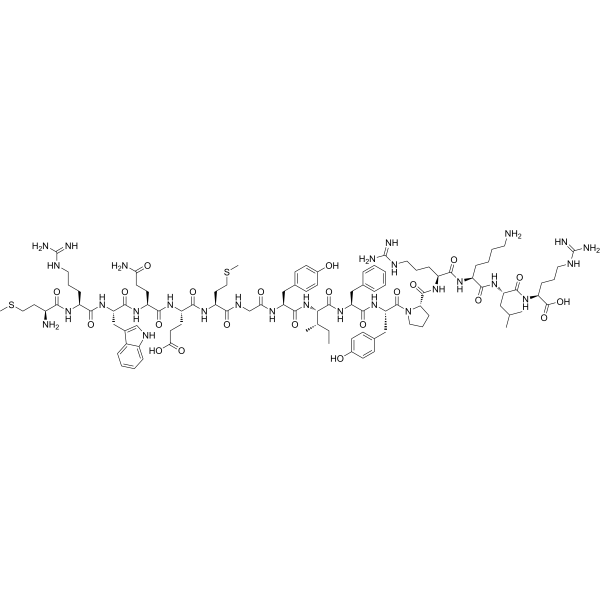
MOTS-c (human) is a mitochondrial-derived peptide that modulates the AMPK/PGC-1α pathway to enhance insulin sensitivity. MOTS-c (human) inhibits the folate cycle and de novo purine synthesis, increases AICAR levels to activate AMPK, and then regulates the Nrf2/Keap1 antioxidant pathway and inhibits the NF-κB inflammatory pathway, while promoting mitochondrial biogenesis and energy metabolism. MOTS-c (human) has the effects of improving glucose and lipid metabolism, anti-oxidative stress, anti-inflammatory and neuroprotection, and can be used in the study of type 2 diabetes, traumatic brain injury, inflammatory diseases and aging-related metabolic disorders.
For research use only. We do not sell to patients.
- Purity : 99.90%
- CAS No.: 1627580-64-6
- Formula: C101H152N28O22S2
- Molecular Weight:2174.59
-
Storage:
Sealed storage, away from moisture.
Powder -80°C, 2 years , -20°C, 1 year* In solvent : -80°C, 6 months; -20°C, 1 month (sealed storage, away from moisture)

To place orders, for customer services and technical support, please contact: MedChemExpress USA
Tel: 609-228-6898 E-mail: [email protected] [email protected]


-
 Biological Activity
-
Chemical Information
-
Solvent & Solubility
- Protocols
- Purity & Documentation
- References
-
 Help & FAQs


-
HY-105174
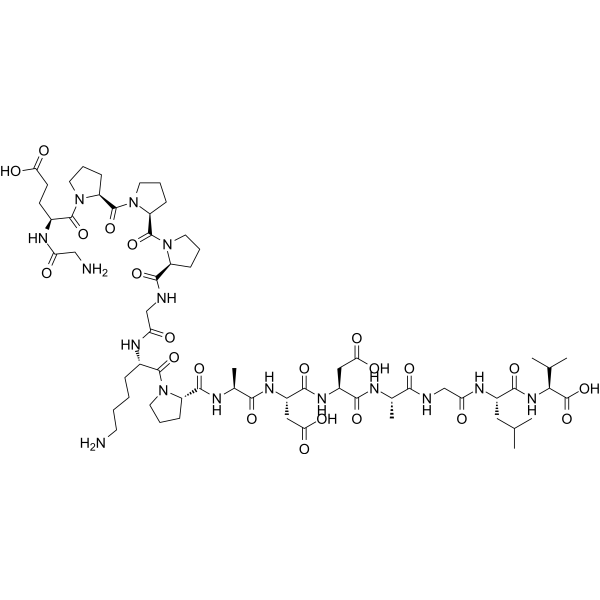
BPC 157Gastric Pentadecapeptide -
HY-13417
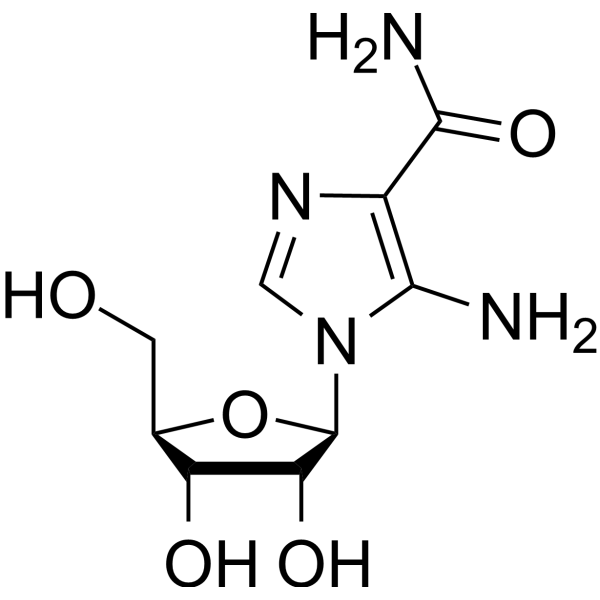
AICARAMPK Activator -
HY-50662
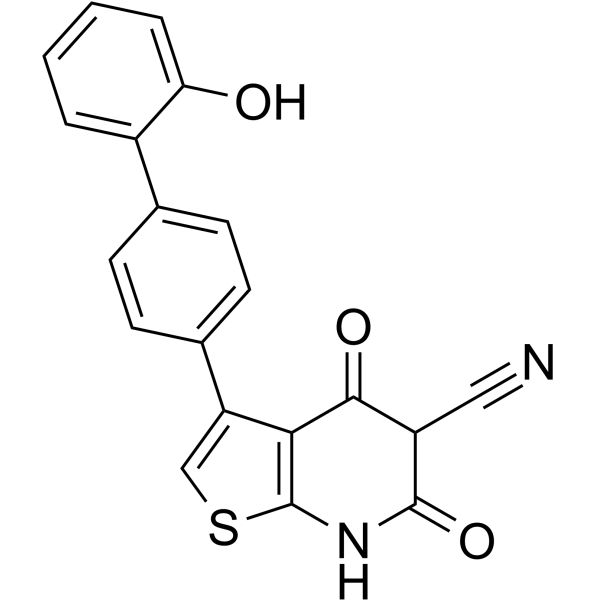
A-769662AMPK Activator -
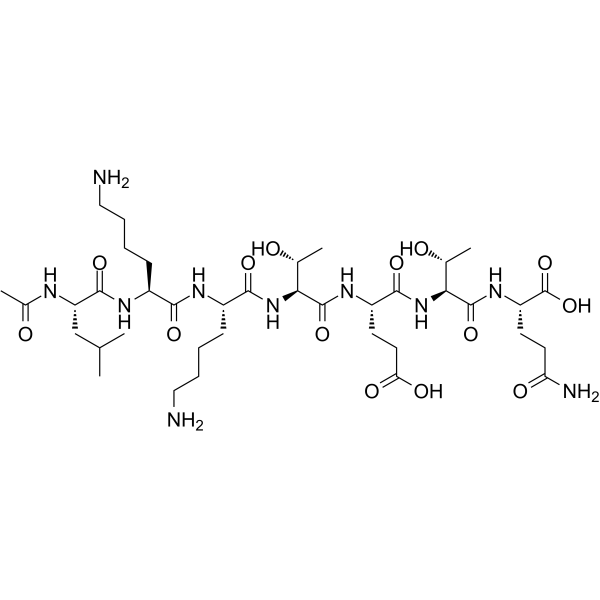
HY-P0170
TB500Thymosin β 4 Synthetic Molecule -
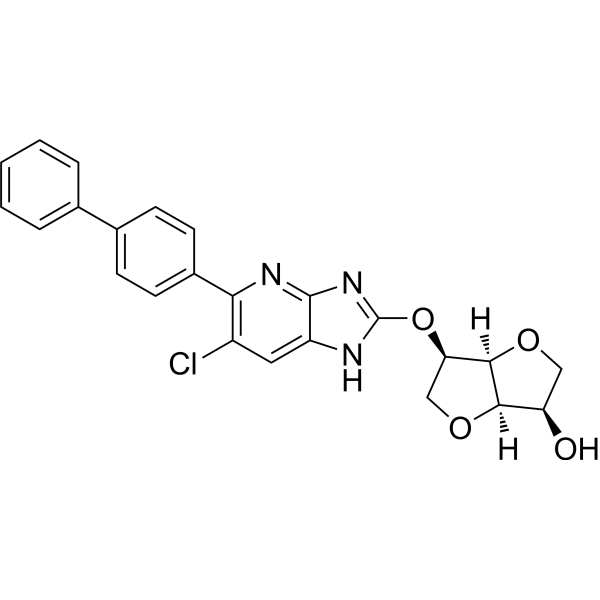
HY-111363
MK8722AMPK Activator -
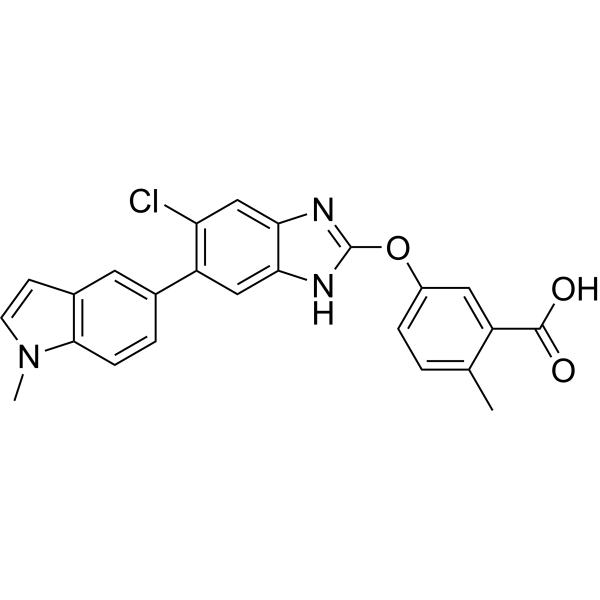
HY-112769
EX229AMPK Activator -
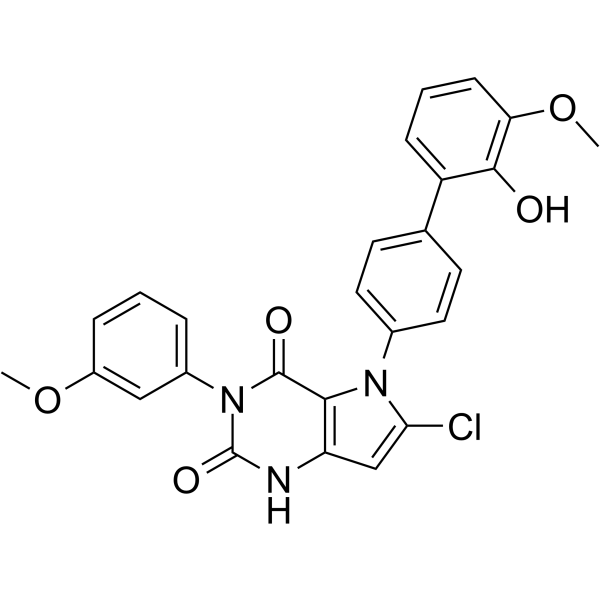
HY-100548
GSK621AMPK Activator -
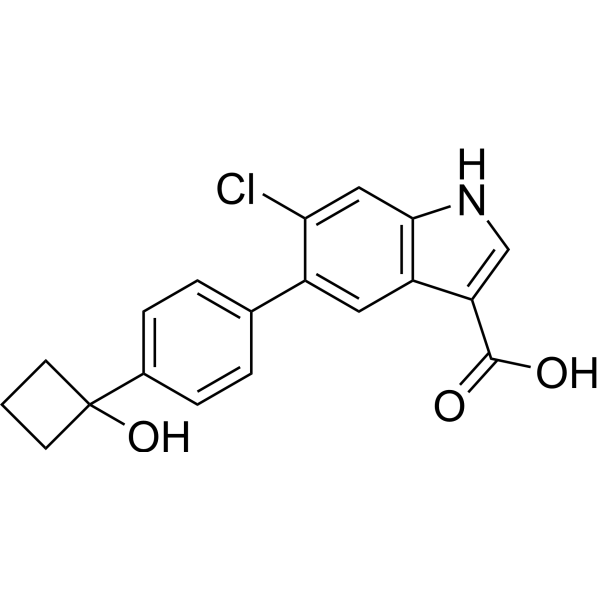
HY-103683
PF-06409577AMPK Activator -
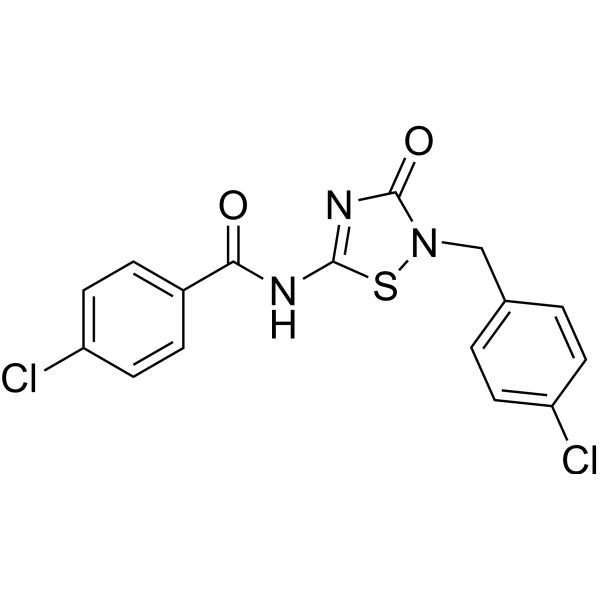
HY-112233
O-304AMPK Activator -
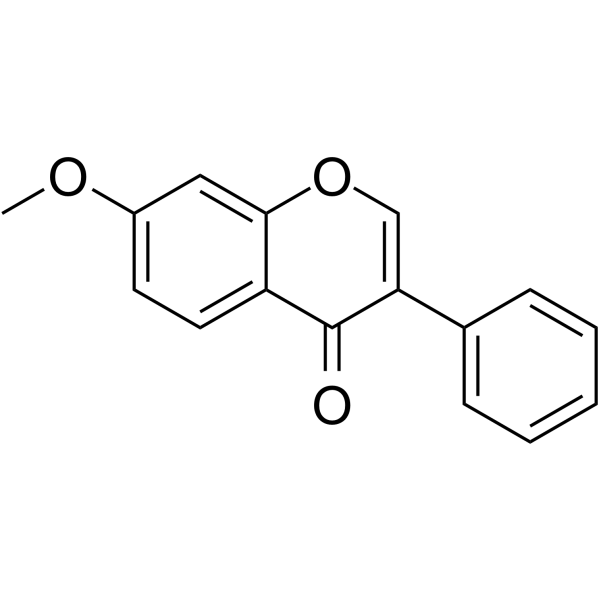
HY-N6631
7-MethoxyisoflavoneAMPK Activator -
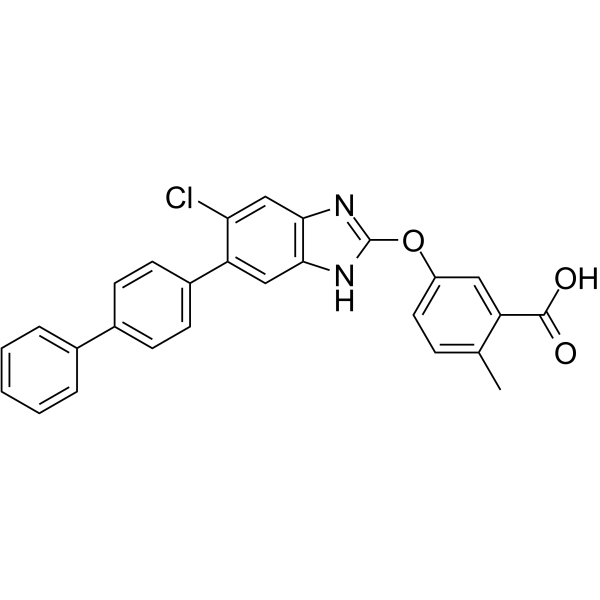
HY-107988
MK-3903AMPK Activator -
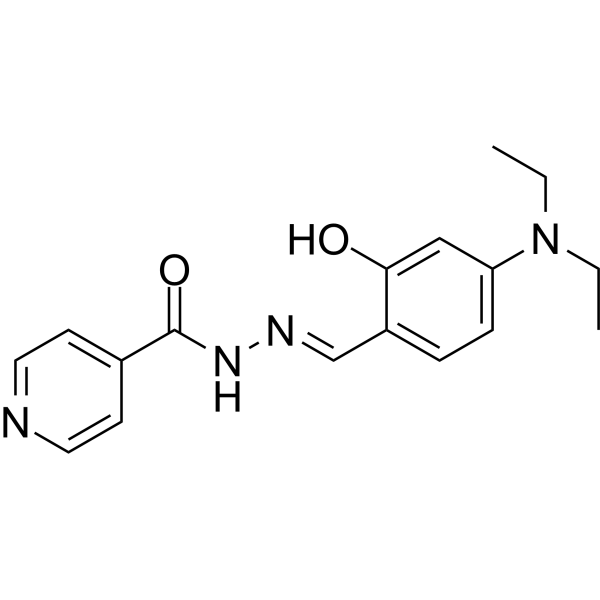
HY-103238
RSVA405AMPK Activator
Publications Citing Use of MedChemExpress (MCE) MOTS-c (human)
MoreAll AMPK Isoforms
More

Biological Activity
Description
IC50 & Target
|
GLUT4 |
AMPK |
AICAR |
In Vitro
Recent advances in high-resolution sequencing have led to the discovery of unique peptides derived from the mitochondrial genome. Eight peptides have been identified: humanin, the mitochondrial open reading frame of 12S tRNA-c (MOTS-c), and six small peptides (humanin-like peptides (SHLP1-6)). All of these peptides are released from mitochondria into the cytoplasm and are associated with extended lifespan and cell viability, reduced apoptosis, and other beneficial functions[1].
MOTS-c (human) (10 μM; 24-72 h) activates AMPK (Thr172 phosphorylation) and the expression of downstream antioxidant proteins Nrf2 and Keap1, and inhibits the phosphorylation of MAPKs (ERK, JNK, P38) in HEK293 cells[2].
MedChemExpress (MCE) has not independently confirmed the accuracy of these methods. They are for reference only.
-
Cell Line:HEK293 cells
-
Concentration:10 μM
-
Incubation Time:24-72 h
-
Result:Significantly increased phosphorylation of AMPK at Thr172 and protein levels of Nrf2 and Keap1, while reducing phosphorylation of ERK, JNK, and P38.
Resulted activation of AMPK by densitometric quantification, with a 2-fold increase in p-AMPK/AMPK ratio compared to control.
Attenuated these effects by co-treatment with the AMPK inhibitor.
In Vivo
MOTS-c (human) (5 mg/kg; ip; twice daily; 4 days) can reduce inflammation associated with obesity and insulin resistance by recruiting IL-6 and TNF-α in an acute treatment model in male CD-1 mice[2].
MOTS-c (human) (50 mg/kg; ip; once a day; single dose) can reduce paw licking time and inhibit the expression of spinal p-ERK/p-JNK/p-P38 and c-fos in the formalin inflammation model of male ICR mice, exerting anti-nociceptive and anti-inflammatory effects[3].
MOTS-c (human) (0.5 mg/kg; ip; once a day; 8 weeks) can reduce fasting blood glucose, glycosylated serum protein and blood lipid levels, improve myocardial ultrastructural damage and activate myocardial AMPK/Nrf2 antioxidant pathway[4] in the male Sprague-Dawley rat type 2 diabetes model[4].
MedChemExpress (MCE) has not independently confirmed the accuracy of these methods. They are for reference only.
-
Animal Model:Male C57BL/6 mice (6-8-week-old) with controlled-cortical impact (CCI)-induced traumatic brain injury model[2]
-
Dosage:25 mg/kg, 50 mg/kg (saline)
-
Administration:Intraperitoneal injection, once daily, for 21 days starting 1 hour post-injury
-
Result:At 50 mg/kg, MOTS-c reduced neurological severity scores (NSS) by 45% and improved rotarod performance (latency increased by 50%) compared to injured controls.
Brain tissue analysis showed reduced HMGB1 expression (30% decrease), TLR4/NF-κB pathway inhibition, and lower pro-inflammatory cytokines (TNF-α, IL-6) in the ipsilateral cortex.
OBB-NC formulation (3 mg/kg) showed comparable effects with enhanced BBB penetration.
-
Animal Model:Male ICR mice (25-30 g, 6-week-old) with Formalin-induced paw inflammation model[3]
-
Dosage:50 mg/kg (saline)
-
Administration:Intraperitoneal injection, 1 hour before formalin challenge, single dose
-
Result:Significantly reduced licking time in the late phase (phase II, 11-40 min) by 60% compared to vehicle controls.
Immunohistochemistry revealed decreased c-fos positive cells (40% reduction) in the spinal dorsal horn, with Western blot confirming suppressed phosphorylation of ERK (Thr202/Tyr204), JNK (Thr183/Tyr185), and P38 (Thr180/Tyr182) by 30-50%.
The AMPK inhibitor Compound C abolished these effects.
-
Animal Model:Male Sprague-Dawley rats (220-240 g, 7-week-old) with high-fat diet/streptozotocin-induced type 2 diabetes model[4]
-
Dosage:0.5 mg/kg (saline)
-
Administration:Intraperitoneal injection, once daily, for 8 weeks
-
Result:Significantly decreased fasting blood glucose (FBG) by 35%, HOMA-IR by 40%, and plasma triglycerides (TG)/total cholesterol (TC) by 25-30% compared to diabetic controls.
Reduced mitochondrial swelling and cristae damage, with increased SOD/GSH activity and upregulated p-AMPK, Nrf2, and Keap1 protein expression in the heart.
Combined with exercise, MOTS-c further enhanced glucose disposal and attenuated oxidative stress (MDA reduction by 50%).


Chemical Information
-
CAS No. 1627580-64-6
-
Appearance Solid
-
Molecular Weight 2174.59
-
Formula C101H152N28O22S2
-
Color White to off-white
-
Sequence
Met-Arg-Trp-Gln-Glu-Met-Gly-Tyr-Ile-Phe-Tyr-Pro-Arg-Lys-Leu-Arg
-
Sequence Shortening
MRWQEMGYIFYPRKLR
-
Shipping
Room temperature in continental US; may vary elsewhere.
-
Storage
Sealed storage, away from moisture
Powder -80°C 2 years -20°C 1 year * In solvent : -80°C, 6 months; -20°C, 1 month (sealed storage, away from moisture)


Publications (1)
-
Journal Impact Factor
-
Most Recent


Solvent & Solubility
In Vitro:
H2O : ≥ 100 mg/mL (45.99 mM)
* "≥" means soluble, but saturation unknown.
Please refer to the solubility information to select the appropriate solvent. Once prepared, please aliquot and store the solution to prevent product inactivation from repeated freeze-thaw cycles.
Storage method and period of stock solution: -80°C, 6 months; -20°C, 1 month (sealed storage, away from moisture). When stored at -80°C, please use it within 6 months. When stored at -20°C, please use it within 1 month.
* Note: If you choose water as the stock solution, please dilute it to the working solution, then filter and sterilize it with a 0.22 μm filter before use.
Please refer to the solubility information to select the appropriate solvent. Once prepared, please aliquot and store the solution to prevent product inactivation from repeated freeze-thaw cycles.
Storage method and period of stock solution: -80°C, 6 months; -20°C, 1 month (sealed storage, away from moisture). When stored at -80°C, please use it within 6 months. When stored at -20°C, please use it within 1 month.
* Note: If you choose water as the stock solution, please dilute it to the working solution, then filter and sterilize it with a 0.22 μm filter before use.
Concentration (start) × Volume (start) = Concentration (final) × Volume (final)


Purity & Documentation
-
Data Sheet (289 KB)
-
SDS (254 KB)
- English - EN (254 KB)
- Français - FR (254 KB)
- Deutsch - DE (254 KB)
- Norwegian - NO (254 KB)
- Español - ES (254 KB)
- Swedish - SV (254 KB)
- Italian - IT (254 KB)
- Korean - KR (254 KB)
- Portuguese - PT (254 KB)
-
Handling Instructions (2659 KB)
References
[1]. Mohtashami Z, et al. MOTS-c, the Most Recent Mitochondrial Derived Peptide in Human Aging and Age-Related Diseases. Int J Mol Sci. 2022 Oct 9;23(19):11991. [Content Brief]
[2]. Lee C, et al. The mitochondrial-derived peptide MOTS-c promotes metabolic homeostasis and reduces obesity and insulin resistance. Cell Metab. 2015 Mar 3;21(3):443-54. [Content Brief]
[3]. Yin X, et al. The intraperitoneal administration of MOTS-c produces antinociceptive and anti-inflammatory effects through the activation of AMPK pathway in the mouse formalin test. Eur J Pharmacol. 2020 Mar 5;870:172909. [Content Brief]
[4]. Tang M, et al. The role of MOTS-c-mediated antioxidant defense in aerobic exercise alleviating diabetic myocardial injury. Sci Rep. 2023 Nov 13;13(1):19781. [Content Brief]


Complete Stock Solution Preparation Table
Please refer to the solubility information to select the appropriate solvent. Once prepared, please aliquot and store the solution to prevent product inactivation from repeated freeze-thaw cycles.
Storage method and period of stock solution: -80°C, 6 months; -20°C, 1 month (sealed storage, away from moisture). When stored at -80°C, please use it within 6 months. When stored at -20°C, please use it within 1 month.
| Optional Solvent | Concentration Solvent Mass | 1 mg | 5 mg | 10 mg | 25 mg |
|---|---|---|---|---|---|
| H2O | 1 mM | 0.4599 mL | 2.2993 mL | 4.5986 mL | 11.4964 mL |
| 5 mM | 0.0920 mL | 0.4599 mL | 0.9197 mL | 2.2993 mL | |
| 10 mM | 0.0460 mL | 0.2299 mL | 0.4599 mL | 1.1496 mL | |
| 15 mM | 0.0307 mL | 0.1533 mL | 0.3066 mL | 0.7664 mL | |
| 20 mM | 0.0230 mL | 0.1150 mL | 0.2299 mL | 0.5748 mL | |
| 25 mM | 0.0184 mL | 0.0920 mL | 0.1839 mL | 0.4599 mL | |
| 30 mM | 0.0153 mL | 0.0766 mL | 0.1533 mL | 0.3832 mL | |
| 40 mM | 0.0115 mL | 0.0575 mL | 0.1150 mL | 0.2874 mL |
* Note: If you choose water as the stock solution, please dilute it to the working solution, then filter and sterilize it with a 0.22 μm filter before use.


MOTS-c (human) Related Classifications
HY-P2048 Related Classifications
 Powered by Bioz