



Esculin
Based on 5 publication(s) in Google Scholar
Esculin is a fluorescent coumarin glucoside, the active ingredient in ash bark. Esculin has antidiabetic effects, improves cognitive impairment in experimental diabetic nephropathy (DN) via the MAPK signaling pathway, and exerts antioxidant stress and anti-inflammatory effects. Esculin also has anticancer, antibacterial, antiviral, neuroprotective, antithrombotic, and therapeutic properties for eye diseases.
Para uso exclusivo en investigación. No vendemos a pacientes.
- Pureza : 99.85%
- No. CAS: 531-75-9
- Fòrmula: C15H16O9
- Peso molecular:340.28
-
Almacenamiento:Powder -20°C, 3 years , 4°C, 2 years ; In solvent -80°C, 2 years , -20°C, 1 year

To place orders, for customer services and technical support, please contact: MedChemExpress USA
Tel: 609-228-6898 E-mail: [email protected] [email protected]


-
 Actividad biológica
-
Chemical Information
-
Solvente y solubilidad
- Protocolo
- Pureza y Documentación
- Referencias
-
 Help & FAQs


-
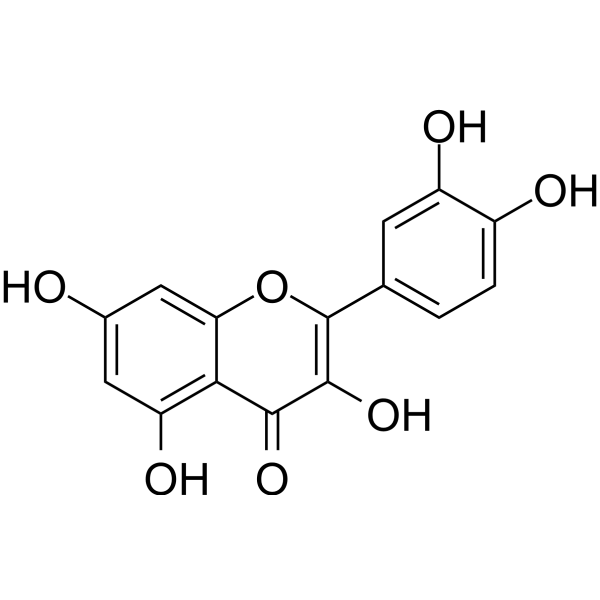
HY-18085
QuercetinFlavonoid Antioxidant -
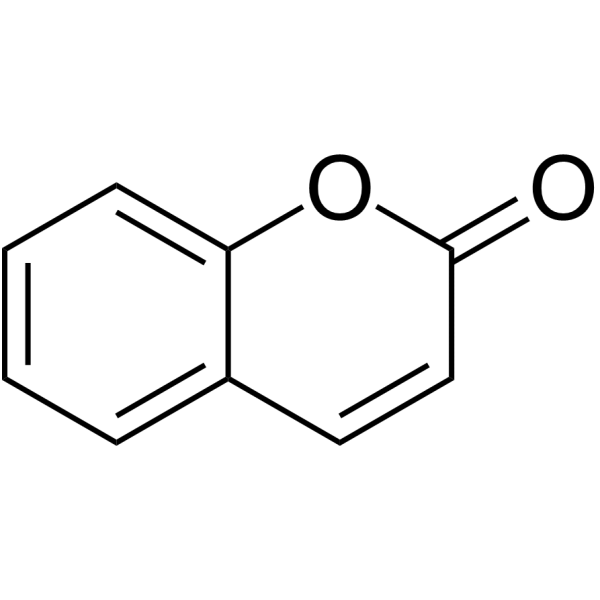
HY-N0709
CoumarinAnti-inflammatory Agent -
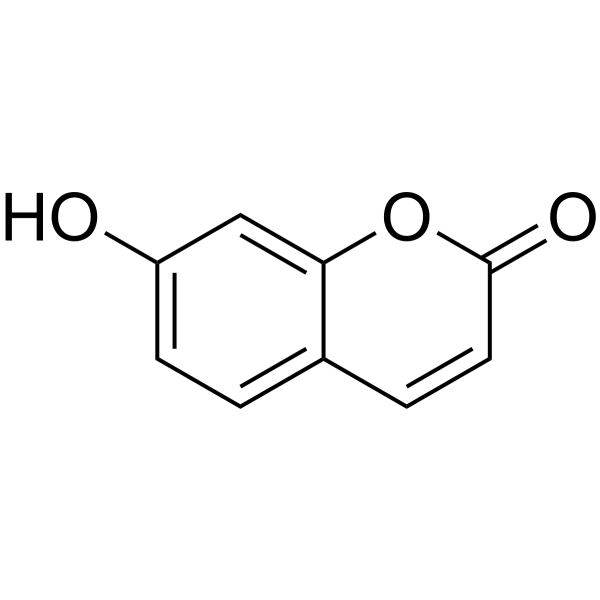
HY-N0573
UmbelliferoneFluorescence Probe -
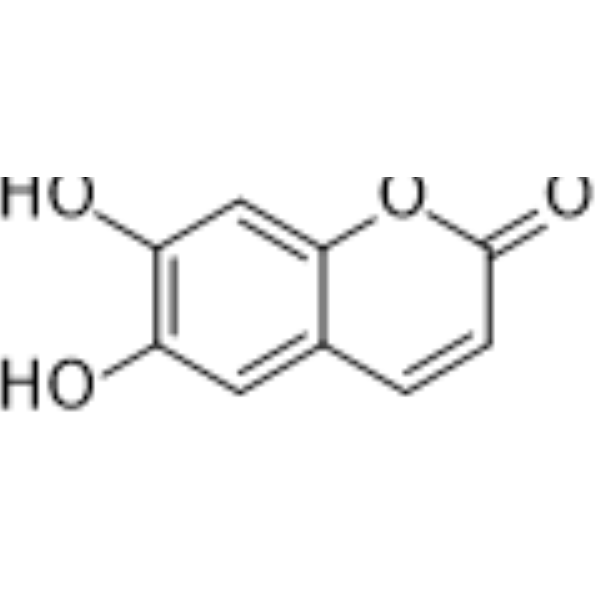
HY-N0284
EsculetinPI3K Inhibitor -
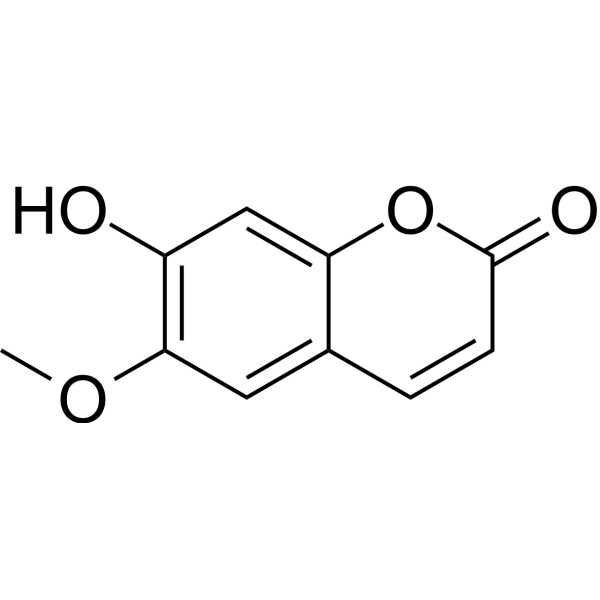
HY-N0342
ScopoletinCholinesterase (ChE) Inhibitor -
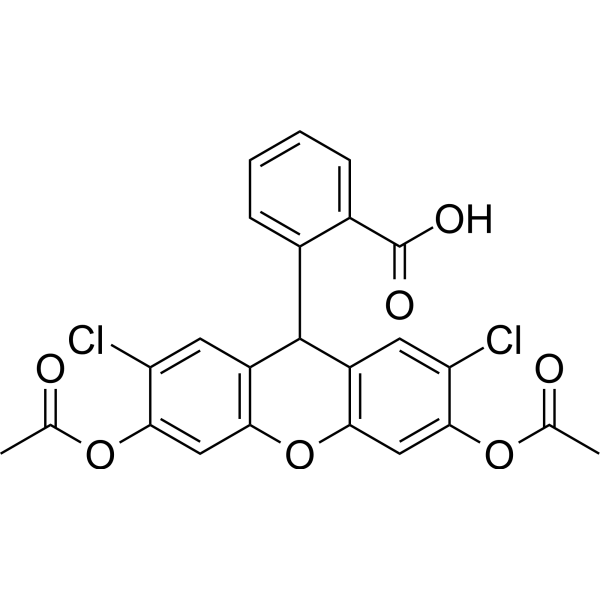
HY-D0940
H2DCFDAROS-Sensitive Probe -
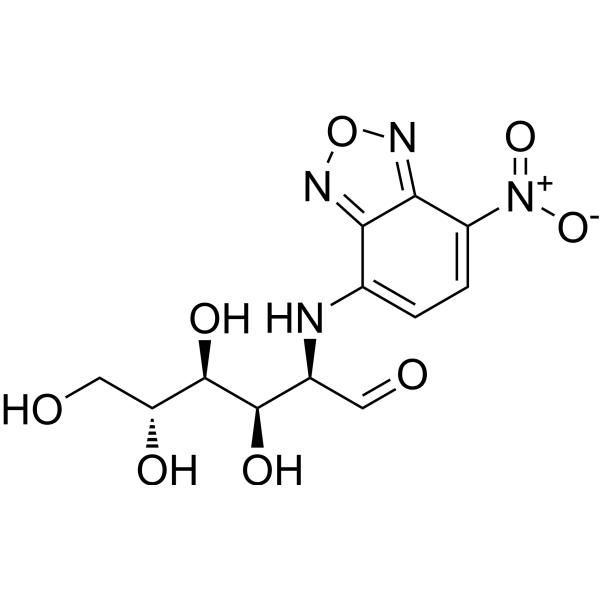
HY-116215
2-NBDGFluorescent Indicator -
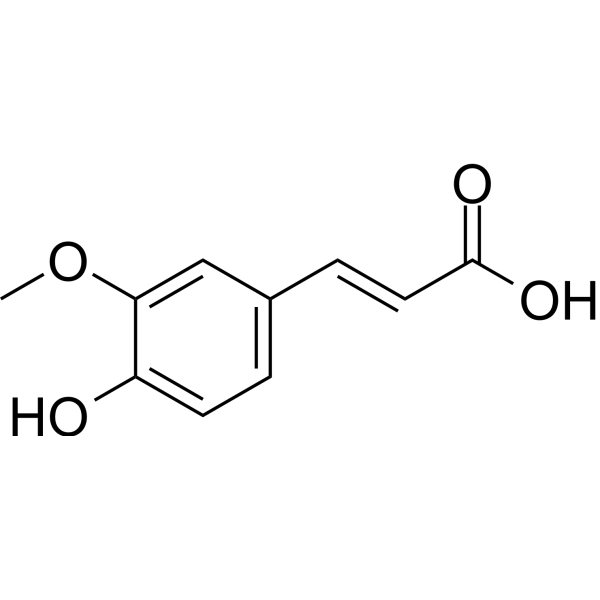
HY-N0060
Ferulic acidFGFR1 Inhibitor -
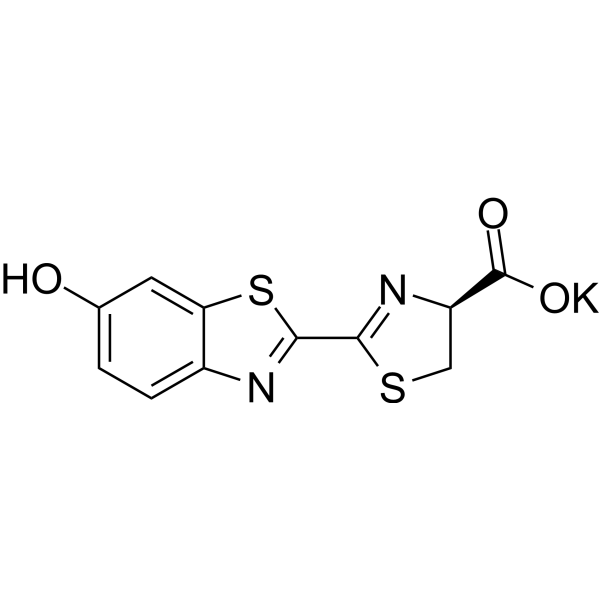
HY-12591B
D-Luciferin potassiumSubstrate for Luciferase -
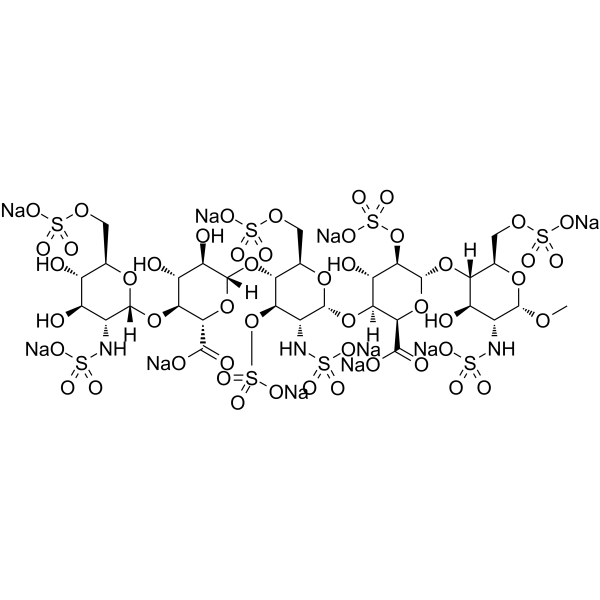
HY-B0597
Fondaparinux sodiumFactor Xa Inhibitor -
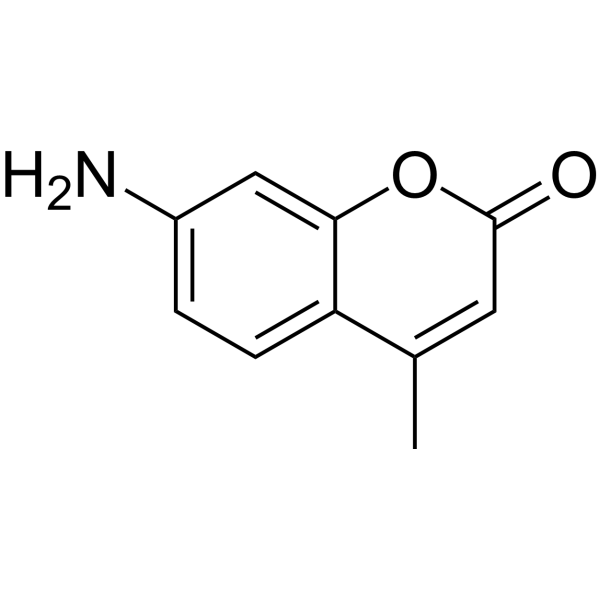
HY-D0027
7-Amino-4-methylcoumarinFluorescent Probe -
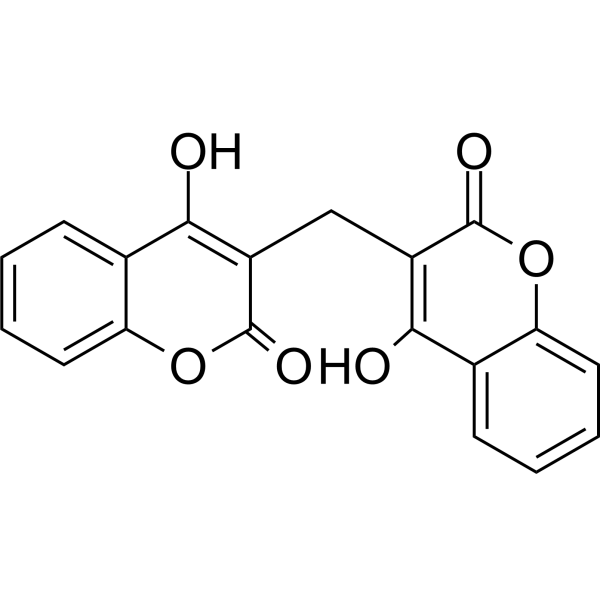
HY-N0645
DicoumarolPDHK Inhibitor
Publications Citing Use of MedChemExpress (MCE) Esculin
More Customer Validation & Images

-
Cell Proliferation/Viability Assay

-
IF

-
Flow Cytometry

-
WB

-
IHC


Actividad biológica
Descripciòn
IC50 & Target
[2]|
p38 MAPK |
In Vitro
Esculin (100 μM; 2-8 h) has antiviral activity agasint White spot syndrome virus (WSSV) monomer in Litopenaeus vannamei larvae, with a safe concentration of 100 μM[4].
Esculin (200 μM, 400 μM, 600 μM; 4 h or 2 h) is a chemical protectant of red blood cells, protecting them from oxidative damage. Esculin inhibits the increase of markers of oxidative stress (such as protein and lipid oxidation) induced by Bioallethrin (HY-122376) (50-200 μM; 4 h or 2 h) in red blood cells and lymphocytes, and restores reduced free amino groups. The ratio of reduced glutathione to oxidized glutathione is also increased[5].
MedChemExpress (MCE) has not independently confirmed the accuracy of these methods. They are for reference only.
In Vivo
MedChemExpress (MCE) has not independently confirmed the accuracy of these methods. They are for reference only.


Chemical Information
-
No. CAS 531-75-9
-
Appearance Solid
-
Peso molecular 340.28
-
Fòrmula C15H16O9
-
Color White to off-white
-
SMILES
O=C1C=CC2=CC(O[C@H]3[C@@H]([C@H]([C@@H]([C@@H](CO)O3)O)O)O)=C(O)C=C2O1
-
Structure Classification
-
Initial Source
-
Envío
Room temperature in continental US; may vary elsewhere.
-
Almacenamiento
Powder -20°C 3 years 4°C 2 years In solvent -80°C 2 years -20°C 1 year


Publications (5)
-
Journal Impact Factor
-
Most Recent
-
Phytomedicine
Aesculin suppresses the NLRP3 inflammasome-mediated pyroptosis via the Akt/GSK3β/NF-κB pathway to mitigate myocardial ischemia/reperfusion injury. [Abstract]2021 Nov:92:153687. PMID: 34482222 -
Int Immunopharmacol
Esculin suppresses the PERK-eIF2α-CHOP pathway by enhancing SIRT1 expression in oxidative stress-induced rat chondrocytes, mitigating osteoarthritis progression in a rat model. [Abstract]2024 May 10:132:112061. PMID: 38608474
Esculin purchased from MedChemExpress. Usage Cited in: Int Immunopharmacol. 2024 May 10:132:112061. [Abstract]
The viability of TBHP-treated (60 μM) chondrocytes after Esculin (0, 50, 100, 200, 300, 400, 500, 600 μM) treatment.
Esculin purchased from MedChemExpress. Usage Cited in: Int Immunopharmacol. 2024 May 10:132:112061. [Abstract]
Apoptotic chondrocytes were identified through TUNEL fluorescence immunocytochemistry treated with Esculin (300 μM).
Esculin purchased from MedChemExpress. Usage Cited in: Int Immunopharmacol. 2024 May 10:132:112061. [Abstract]
Flow cytometry was employed to assess chondrocyte apoptosis, with Annexin V and PI fluorescence labeling for detection treated with Esculin (300 μM).
Esculin purchased from MedChemExpress. Usage Cited in: Int Immunopharmacol. 2024 May 10:132:112061. [Abstract]
The protein levels of Bcl2, Bax, and cleaved caspase3 were measured by western blot treated with Esculin (300 μM).
Esculin purchased from MedChemExpress. Usage Cited in: Int Immunopharmacol. 2024 May 10:132:112061. [Abstract]
IHC staining was performed to assess the expression of cleaved caspase3, CHOP, and SIRT1 treated with Esculin (200, 400 μg/kg, knee joints injection).
-
Plant Methods
Regulating bulb dormancy release and flowering in lily through chemical modulation of intercellular communication. [Abstract]2023 Nov 28;19(1):136. PMID: 38012626 -
Comput Biol Chem
Integrated strategy of serum metabolomics, network pharmacology and experimental validation on revealing the bioactive metabolites and mechanism of Lycium ruthenicum Murr. against colorectal carcinoma. [Abstract]2025 Oct 15;120(Pt 2):108721. PMID: 41105991 -
Plant Direct
Evaluation of pathways to the C-glycosyl isoflavone puerarin in roots of kudzu ( Pueraria montana lobata). [Abstract]2022 Sep 2;6(9):e442. PMID: 36091880


Solvente y solubilidad
In Vitro:
DMSO : 100 mg/mL (293.88 mM; Need ultrasonic; Hygroscopic DMSO has a significant impact on the solubility of product, please use newly opened DMSO)
Please refer to the solubility information to select the appropriate solvent. Once prepared, please aliquot and store the solution to prevent product inactivation from repeated freeze-thaw cycles.
Storage method and period of stock solution: -80°C, 2 years; -20°C, 1 year. When stored at -80°C, please use it within 2 years. When stored at -20°C, please use it within 1 year.
Please refer to the solubility information to select the appropriate solvent. Once prepared, please aliquot and store the solution to prevent product inactivation from repeated freeze-thaw cycles.
Storage method and period of stock solution: -80°C, 2 years; -20°C, 1 year. When stored at -80°C, please use it within 2 years. When stored at -20°C, please use it within 1 year.
Concentration (start) × Volume (start) = Concentration (final) × Volume (final)
In Vivo:
Select the appropriate dissolution method based on your experimental animal and administration route.
- For the following dissolution methods, please ensure to first prepare a clear stock solution using an In Vitro approach and then sequentially add co-solvents:
- To ensure reliable experimental results, the clarified stock solution can be appropriately stored based on storage conditions. As for the working solution for In Vivo experiments, it is recommended to prepare freshly and use it on the same day.
- The percentages shown for the solvents indicate their volumetric ratio in the final prepared solution. If precipitation or phase separation occurs during preparation, heat and/or sonication can be used to aid dissolution.
Add each solvent one by one: 10% DMSO 40% PEG300 5% Tween-80 45% Saline
Solubility: ≥ 2.5 mg/mL (7.35 mM); Clear solution
This protocol yields a clear solution of ≥ 2.5 mg/mL (saturation unknown).
Taking 1 mL working solution as an example, add 100 μL DMSO stock solution (25.0 mg/mL) to 400 μL PEG300, and mix evenly; then add 50 μL Tween-80 and mix evenly; then add 450 μL Saline to adjust the volume to 1 mL.
Preparation of Saline: Dissolve 0.9 g sodium chloride in ddH₂O and dilute to 100 mL to obtain a clear Saline solution.
Add each solvent one by one: 10% DMSO 90% (20% SBE-β-CD in Saline)
Solubility: ≥ 2.5 mg/mL (7.35 mM); Clear solution
This protocol yields a clear solution of ≥ 2.5 mg/mL (saturation unknown).
Taking 1 mL working solution as an example, add 100 μL DMSO stock solution (25.0 mg/mL) to 900 μL 20% SBE-β-CD in Saline, and mix evenly.
Preparation of 20% SBE-β-CD in Saline (4°C, storage for one week): 2 g SBE-β-CD powder is dissolved in 10 mL Saline, completely dissolve until clear.
In Vivo Dissolution Calculator
Please enter the basic information of animal experiments:
-
-
-
-
Recommended: Prepare an additional quantity of animals to account for potential losses during experiments.
Please enter your animal formula composition:
-
%DMSO +
Recommended: Keep the proportion of DMSO in working solution below 2% if your animal is weak.
-
%+
-
+%Tween-80 + +
-
%Saline +
The co-solvents required include: DMSO, . All of co-solvents are available by MedChemExpress (MCE). , Tween 80. All of co-solvents are available by MedChemExpress (MCE).
Working solution concentration: 0.22 mg/mL
Method for preparing stock solution: mg drug dissolved in μL DMSO. Stock solution concentration: mg/mL.
1. Take μL DMSO stock solution;
2. Add μL .
μL , mix evenly;
3. Then add μL Tween 80, mix evenly;
4. Then add μL
Please ensure that the stock solution in the first step is dissolved to a clear state, and add co-solvents in sequence. You can use ultrasonic heating (ultrasonic cleaner, recommended frequency 20-40 kHz), vortexing, etc. to assist dissolution.


Pureza y Documentación
-
Ficha de datos (278 KB)
-
SDS (393 KB)
- English - EN (393 KB)
- Français - FR (393 KB)
- Deutsch - DE (393 KB)
- Norwegian - NO (393 KB)
- Español - ES (393 KB)
- Swedish - SV (393 KB)
- Italian - IT (393 KB)
- Korean - KR (393 KB)
- Portuguese - PT (393 KB)
-
Instrucciones de manejo (2659 KB)
Referencias
[1]. Knox K, et al. The Coumarin Glucoside, Esculin, Reveals Rapid Changes in Phloem-Transport Velocity in Response to Environmental Cues. Plant Physiol. 2018 Oct;178(2):795-807. [Content Brief]
[2]. Song Y, et al. Esculin ameliorates cognitive impairment in experimental diabetic nephropathy and induces anti-oxidative stress and anti-inflammatory effects via the MAPK pathway. Mol Med Rep. 2018 May;17(5):7395-7402. [Content Brief]
[3]. Li CX, et al. Phytother Res. 2022 Jun;36(6):2434-2448. [Content Brief]
[4]. Li W, et al. Gastroprotective effect of esculin on ethanol-induced gastric lesion in mice. Fundam Clin Pharmacol. 2017 Apr;31(2):174-184. [Content Brief]
[5]. Arif A, et al. Esculin protects human blood cells from bioallethrin-induced toxicity: An ex vivo study. Pestic Biochem Physiol. 2023 Apr;191:105375. [Content Brief]
[6]. Shan LP, et al. Antiviral activity of esculin against white spot syndrome virus: A new starting point for prevention and control of white spot disease outbreaks in shrimp seedling culture. J Fish Dis. 2022 Jan;45(1):59-68. [Content Brief]


Complete Stock Solution Preparation Table
Please refer to the solubility information to select the appropriate solvent. Once prepared, please aliquot and store the solution to prevent product inactivation from repeated freeze-thaw cycles.
Storage method and period of stock solution: -80°C, 2 years; -20°C, 1 year. When stored at -80°C, please use it within 2 years. When stored at -20°C, please use it within 1 year.
| Optional Solvent | Concentration Solvent Mass | 1 mg | 5 mg | 10 mg | 25 mg |
|---|---|---|---|---|---|
| DMSO | 1 mM | 2.9388 mL | 14.6938 mL | 29.3876 mL | 73.4689 mL |
| 5 mM | 0.5878 mL | 2.9388 mL | 5.8775 mL | 14.6938 mL | |
| 10 mM | 0.2939 mL | 1.4694 mL | 2.9388 mL | 7.3469 mL | |
| 15 mM | 0.1959 mL | 0.9796 mL | 1.9592 mL | 4.8979 mL | |
| 20 mM | 0.1469 mL | 0.7347 mL | 1.4694 mL | 3.6734 mL | |
| 25 mM | 0.1176 mL | 0.5878 mL | 1.1755 mL | 2.9388 mL | |
| 30 mM | 0.0980 mL | 0.4898 mL | 0.9796 mL | 2.4490 mL | |
| 40 mM | 0.0735 mL | 0.3673 mL | 0.7347 mL | 1.8367 mL | |
| 50 mM | 0.0588 mL | 0.2939 mL | 0.5878 mL | 1.4694 mL | |
| 60 mM | 0.0490 mL | 0.2449 mL | 0.4898 mL | 1.2245 mL | |
| 80 mM | 0.0367 mL | 0.1837 mL | 0.3673 mL | 0.9184 mL | |
| 100 mM | 0.0294 mL | 0.1469 mL | 0.2939 mL | 0.7347 mL |


Esculin Related Classifications
HY-N0188 Related Classifications
 Powered by Bioz