



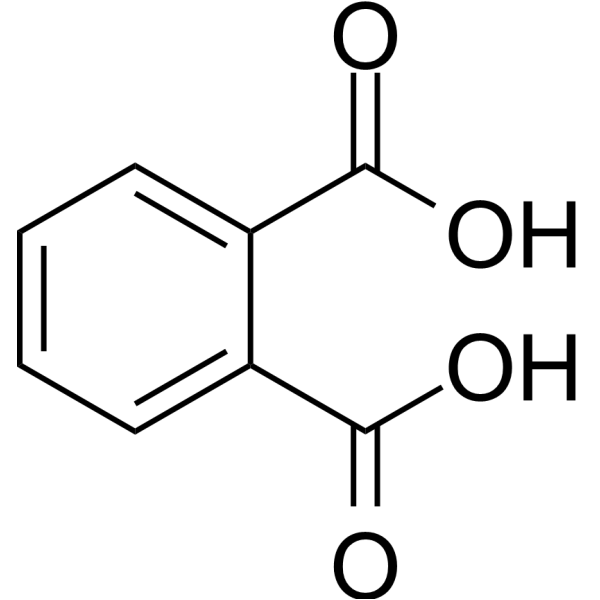
Phthalic acid
Based on 2 publication(s) in Google Scholar
Phthalic acid is the final common metabolite of phthalic acid esters (PAEs). Phthalic acid can be used for the synthesis of synthetic agents, such as isophthalic acid (IPA), and terephthalic acid (TPA). Phthalic acid has applications in the preparation of phthalate ester plasticizers. Phthalic acid exhibits mutagenic effect and causes genetic damage in mammalian germ cells.
Para uso exclusivo en investigación. No vendemos a pacientes.
- Pureza : 99.94%
- No. CAS: 88-99-3
- Fòrmula: C8H6O4
- Peso molecular:166.13
-
Almacenamiento:
Store at room temperature 3 years.
In solvent -80°C, 2 years , -20°C, 1 year

To place orders, for customer services and technical support, please contact: MedChemExpress USA
Tel: 609-228-6898 E-mail: [email protected] [email protected]


-
 Actividad biológica
-
Chemical Information
-
Solvente y solubilidad
- Protocolo
- Pureza y Documentación
- Referencias
-
 Help & FAQs


-
HY-10585
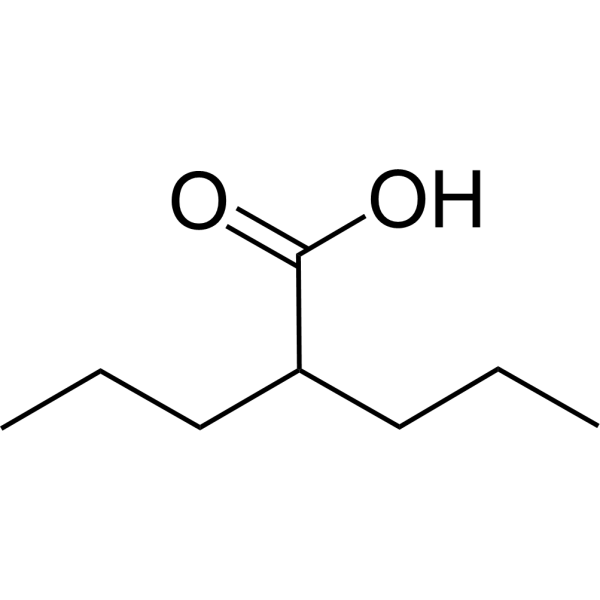
Valproic acidHDAC Inhibitor -
HY-W013636
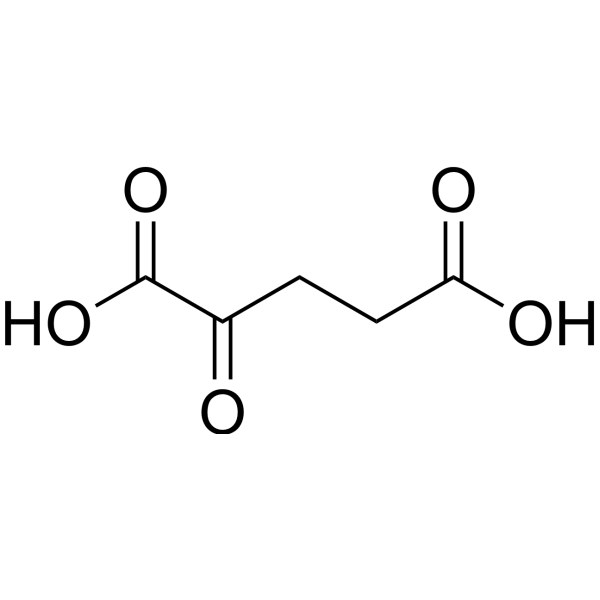
2-Ketoglutaric acidKrebs Cycle Intermediate -
HY-15689
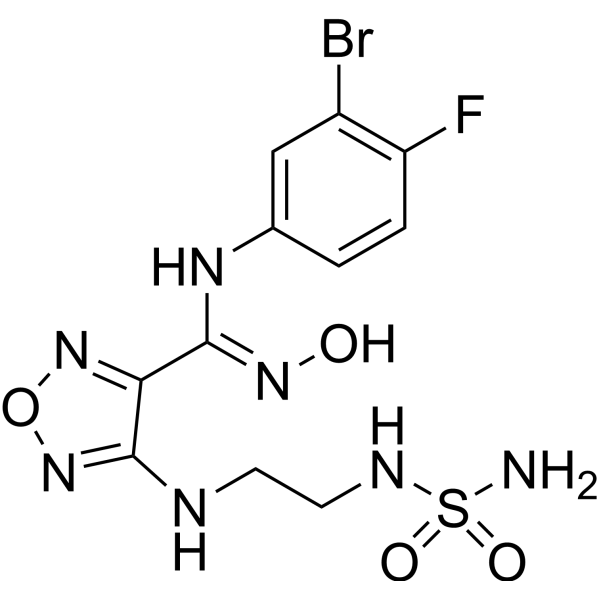
EpacadostatIDO1 Inhibitor -
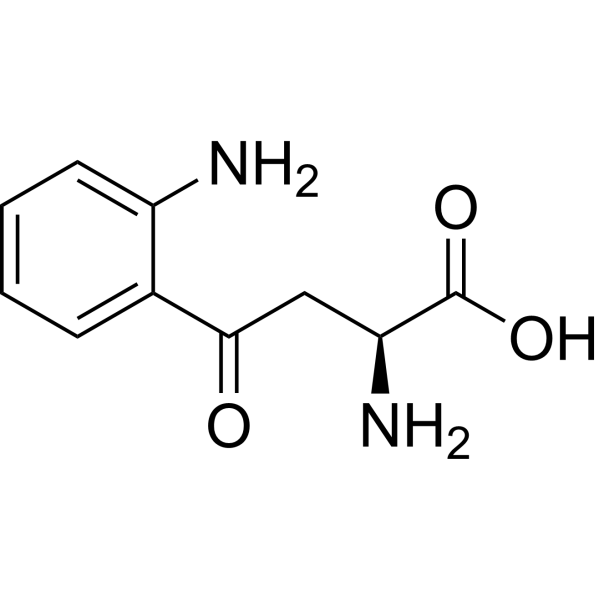
HY-104026
L-KynurenineAryl Hydrocarbon Receptor Agonist -
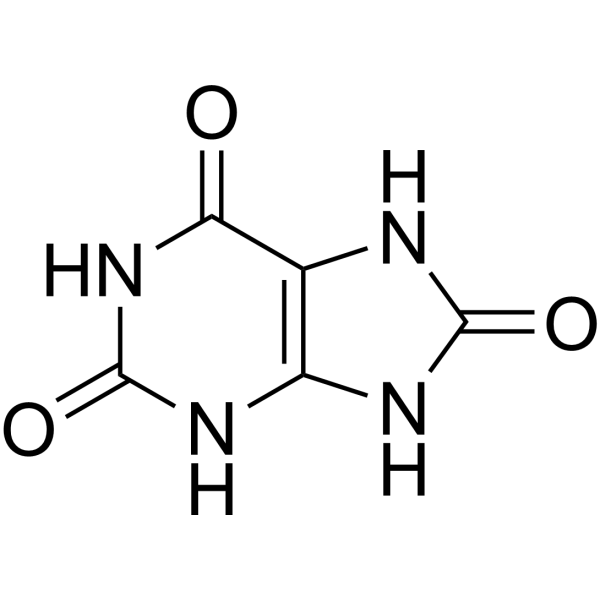
HY-B2130
Uric acidOxygen Radical Scavenger -
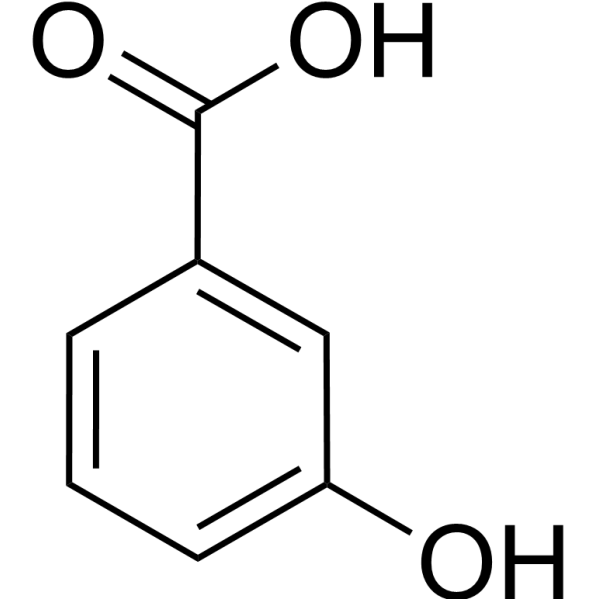
HY-W004049
3-Hydroxybenzoic acidendogenous metabolite -
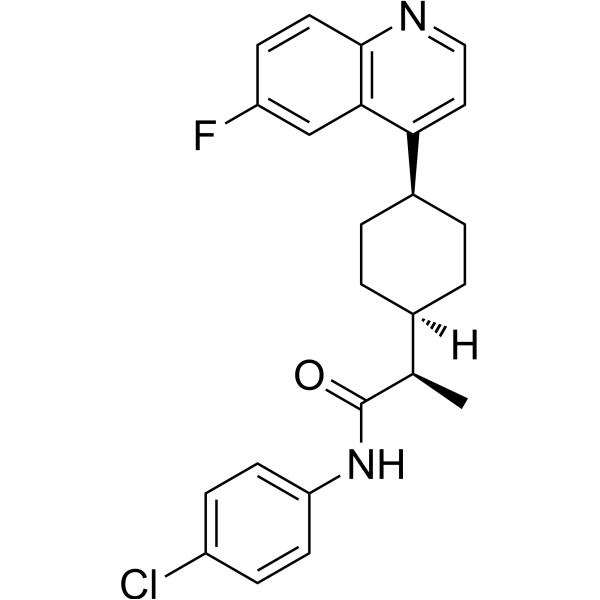
HY-101560
LinrodostatIDO1 Inhibitor -
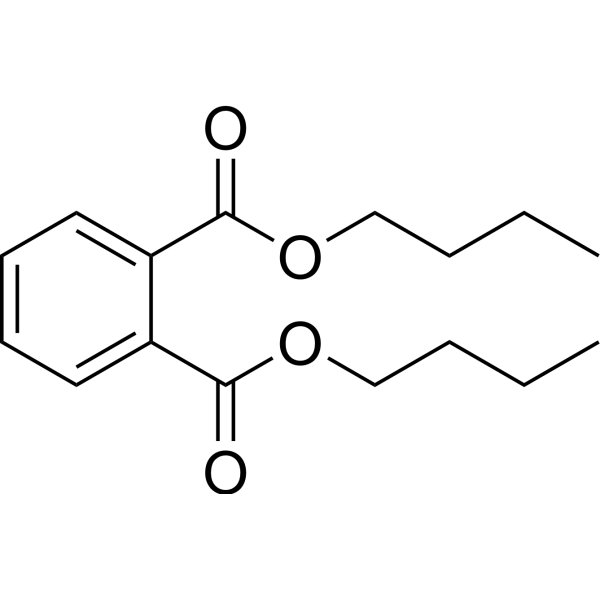
HY-Y0304
Dibutyl phthalatePlasticizer -

HY-I0508R
Phthalic acid (Standard)Metabolite -
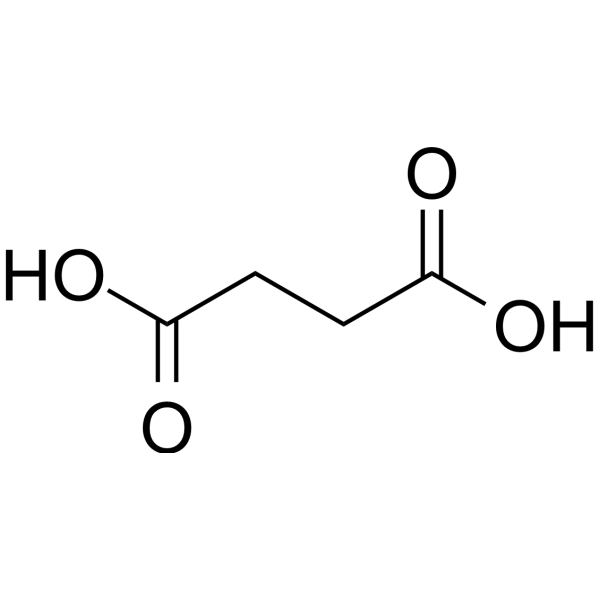
HY-N0420
Succinic acidFood Additive, Platform chemical -
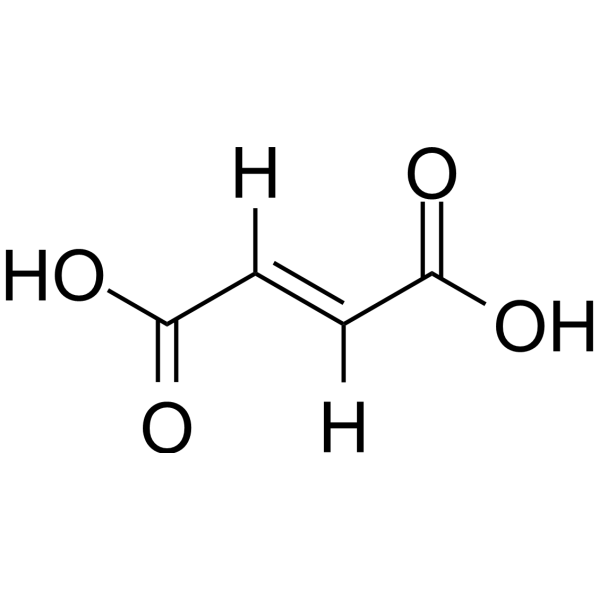
HY-W015883
Fumaric acidAnti-inflammatory agent -

HY-N0420R
Succinic acid (Standard)Food Additive, Platform chemical
Publications Citing Use of MedChemExpress (MCE) Phthalic acid
More

Actividad biológica
Descripciòn
IC50 & Target
IC50: metabolite of PAEs[1]
In Vitro
Phthalic acid mimics the effects of estradiol (IC50=89 nM, Ki=66 nM), modulates the release of PGE2, and enhances intracellular cAMP concentrations in WISH cells[2].
Phthalic acid (1 mM, 5-15 days) releases ROS, increases the levels of MDA and H2O2, causes cell damage, leading to plants inhibition during apple replant[4].
MedChemExpress (MCE) has not independently confirmed the accuracy of these methods. They are for reference only.
In Vivo
MedChemExpress (MCE) has not independently confirmed the accuracy of these methods. They are for reference only.
-
Animal Model:Swiss albino mouse models[3]
-
Dosage:40-80 mg/kg, or 50-300 mg/kg
-
Administration:ip, once a day for 5 days or ip, single dose
-
Result:Decreased the number of pregnant females, increased the number of dead implants per female. Caused sperm head abnormalities.


Chemical Information
-
No. CAS 88-99-3
-
Appearance Solid
-
Peso molecular 166.13
-
Fòrmula C8H6O4
-
Color White to off-white
-
SMILES
OC(C1=CC=CC=C1C(O)=O)=O
-
Structure Classification
-
Initial Source
-
Envío
Room temperature in continental US; may vary elsewhere.
-
Almacenamiento
Store at room temperature 3 years
In solvent -80°C 2 years -20°C 1 year


Publications (2)
-
Journal Impact Factor
-
Most Recent
-
Theranostics
Kartogenin hydrolysis product 4-aminobiphenyl distributes to cartilage and mediates cartilage regeneration. [Abstract]2019 Sep 21;9(24):7108-7121. PMID: 31695756 -


Solvente y solubilidad
In Vitro:
DMSO : 100 mg/mL (601.94 mM; Need ultrasonic; Hygroscopic DMSO has a significant impact on the solubility of product, please use newly opened DMSO)
Please refer to the solubility information to select the appropriate solvent. Once prepared, please aliquot and store the solution to prevent product inactivation from repeated freeze-thaw cycles.
Storage method and period of stock solution: -80°C, 2 years; -20°C, 1 year. When stored at -80°C, please use it within 2 years. When stored at -20°C, please use it within 1 year.
Please refer to the solubility information to select the appropriate solvent. Once prepared, please aliquot and store the solution to prevent product inactivation from repeated freeze-thaw cycles.
Storage method and period of stock solution: -80°C, 2 years; -20°C, 1 year. When stored at -80°C, please use it within 2 years. When stored at -20°C, please use it within 1 year.
Concentration (start) × Volume (start) = Concentration (final) × Volume (final)
In Vivo:
Select the appropriate dissolution method based on your experimental animal and administration route.
- For the following dissolution methods, please ensure to first prepare a clear stock solution using an In Vitro approach and then sequentially add co-solvents:
- To ensure reliable experimental results, the clarified stock solution can be appropriately stored based on storage conditions. As for the working solution for In Vivo experiments, it is recommended to prepare freshly and use it on the same day.
- The percentages shown for the solvents indicate their volumetric ratio in the final prepared solution. If precipitation or phase separation occurs during preparation, heat and/or sonication can be used to aid dissolution.
Add each solvent one by one: 10% DMSO 40% PEG300 5% Tween-80 45% Saline
Solubility: ≥ 2.5 mg/mL (15.05 mM); Clear solution
This protocol yields a clear solution of ≥ 2.5 mg/mL (saturation unknown).
Taking 1 mL working solution as an example, add 100 μL DMSO stock solution (25.0 mg/mL) to 400 μL PEG300, and mix evenly; then add 50 μL Tween-80 and mix evenly; then add 450 μL Saline to adjust the volume to 1 mL.
Preparation of Saline: Dissolve 0.9 g sodium chloride in ddH₂O and dilute to 100 mL to obtain a clear Saline solution.
Add each solvent one by one: 10% DMSO 90% (20% SBE-β-CD in Saline)
Solubility: ≥ 2.5 mg/mL (15.05 mM); Clear solution
This protocol yields a clear solution of ≥ 2.5 mg/mL (saturation unknown).
Taking 1 mL working solution as an example, add 100 μL DMSO stock solution (25.0 mg/mL) to 900 μL 20% SBE-β-CD in Saline, and mix evenly.
Preparation of 20% SBE-β-CD in Saline (4°C, storage for one week): 2 g SBE-β-CD powder is dissolved in 10 mL Saline, completely dissolve until clear.
In Vivo Dissolution Calculator
Please enter the basic information of animal experiments:
-
-
-
-
Recommended: Prepare an additional quantity of animals to account for potential losses during experiments.
Please enter your animal formula composition:
-
%DMSO +
Recommended: Keep the proportion of DMSO in working solution below 2% if your animal is weak.
-
%+
-
+%Tween-80 + +
-
%Saline +
The co-solvents required include: DMSO, . All of co-solvents are available by MedChemExpress (MCE). , Tween 80. All of co-solvents are available by MedChemExpress (MCE).
Working solution concentration: 0.22 mg/mL
Method for preparing stock solution: mg drug dissolved in μL DMSO. Stock solution concentration: mg/mL.
1. Take μL DMSO stock solution;
2. Add μL .
μL , mix evenly;
3. Then add μL Tween 80, mix evenly;
4. Then add μL
Please ensure that the stock solution in the first step is dissolved to a clear state, and add co-solvents in sequence. You can use ultrasonic heating (ultrasonic cleaner, recommended frequency 20-40 kHz), vortexing, etc. to assist dissolution.


Pureza y Documentación
-
Ficha de datos (292 KB)
-
SDS (416 KB)
- English - EN (416 KB)
- Français - FR (416 KB)
- Deutsch - DE (416 KB)
- Norwegian - NO (416 KB)
- Español - ES (416 KB)
- Swedish - SV (416 KB)
- Italian - IT (416 KB)
- Korean - KR (416 KB)
- Portuguese - PT (416 KB)
-
Instrucciones de manejo (2659 KB)
Referencias
[1]. Du Yeon Bang, et al.Toxicological Characterization of Phthalic Acid. Toxicol Res 2011;27:191−203
[2]. Pavan B, et al., Phthalic acid mimics 17beta-estradiol actions in WISH cells. Toxicol Lett. 2001 Jan 3;118(3):157-64. [Content Brief]
[3]. Jha AM, et al., Germ cell mutagenicity of phthalic acid in mice. Mutat Res. 1998 Dec 3;422(2):207-12. [Content Brief]
[4]. Bai R, et al., Phthalic acid induces oxidative stress and alters the activity of some antioxidant enzymes in roots of Malus prunifolia. J Chem Ecol. 2009 Apr;35(4):488-94. [Content Brief]


Complete Stock Solution Preparation Table
Please refer to the solubility information to select the appropriate solvent. Once prepared, please aliquot and store the solution to prevent product inactivation from repeated freeze-thaw cycles.
Storage method and period of stock solution: -80°C, 2 years; -20°C, 1 year. When stored at -80°C, please use it within 2 years. When stored at -20°C, please use it within 1 year.
| Optional Solvent | Concentration Solvent Mass | 1 mg | 5 mg | 10 mg | 25 mg |
|---|---|---|---|---|---|
| DMSO | 1 mM | 6.0194 mL | 30.0969 mL | 60.1938 mL | 150.4846 mL |
| 5 mM | 1.2039 mL | 6.0194 mL | 12.0388 mL | 30.0969 mL | |
| 10 mM | 0.6019 mL | 3.0097 mL | 6.0194 mL | 15.0485 mL | |
| 15 mM | 0.4013 mL | 2.0065 mL | 4.0129 mL | 10.0323 mL | |
| 20 mM | 0.3010 mL | 1.5048 mL | 3.0097 mL | 7.5242 mL | |
| 25 mM | 0.2408 mL | 1.2039 mL | 2.4078 mL | 6.0194 mL | |
| 30 mM | 0.2006 mL | 1.0032 mL | 2.0065 mL | 5.0162 mL | |
| 40 mM | 0.1505 mL | 0.7524 mL | 1.5048 mL | 3.7621 mL | |
| 50 mM | 0.1204 mL | 0.6019 mL | 1.2039 mL | 3.0097 mL | |
| 60 mM | 0.1003 mL | 0.5016 mL | 1.0032 mL | 2.5081 mL | |
| 80 mM | 0.0752 mL | 0.3762 mL | 0.7524 mL | 1.8811 mL | |
| 100 mM | 0.0602 mL | 0.3010 mL | 0.6019 mL | 1.5048 mL |


Phthalic acid Related Classifications
HY-I0508 Related Classifications
 Powered by Bioz