



TH10785
Based on 3 publication(s) in Google Scholar
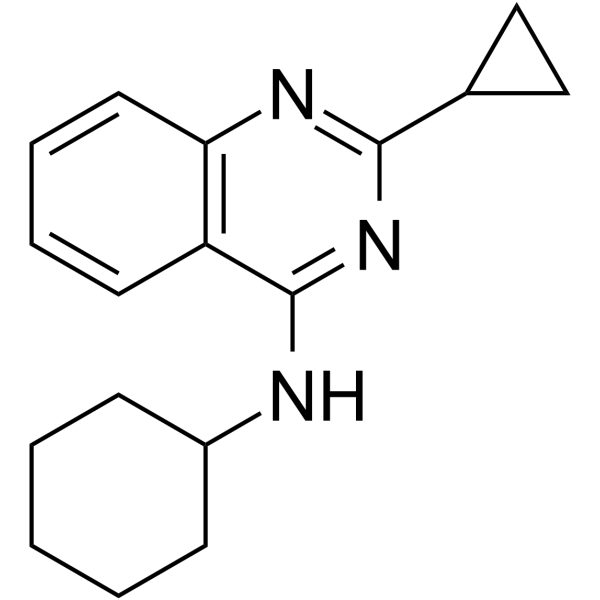
TH10785 is a DNA glycosylase 1 (OGG1) activator, TH10785 can interact with the phenylalanine-319 and glycine-42 amino acids of OGG1 and increase the enzyme activity, generates β, δ-lyase enzymatic function. TH10785 can control the catalytic activity mediated by a nitrogen base within its molecular structure. TH10785 can be used for the research of various diseases and aging connected with DNA oxidative lesions.
Para uso exclusivo en investigación. No vendemos a pacientes.
- Pureza : 99.93%
- No. CAS: 1002801-51-5
- Fòrmula: C17H21N3
- Peso molecular:267.37
-
Almacenamiento:Powder -20°C, 3 years ; In solvent -80°C, 6 months , -20°C, 1 month

To place orders, for customer services and technical support, please contact: MedChemExpress USA
Tel: 609-228-6898 E-mail: [email protected] [email protected]


-
 Actividad biológica
-
Chemical Information
-
Solvente y solubilidad
- Pureza y Documentación
- Referencias
-
 Help & FAQs


-
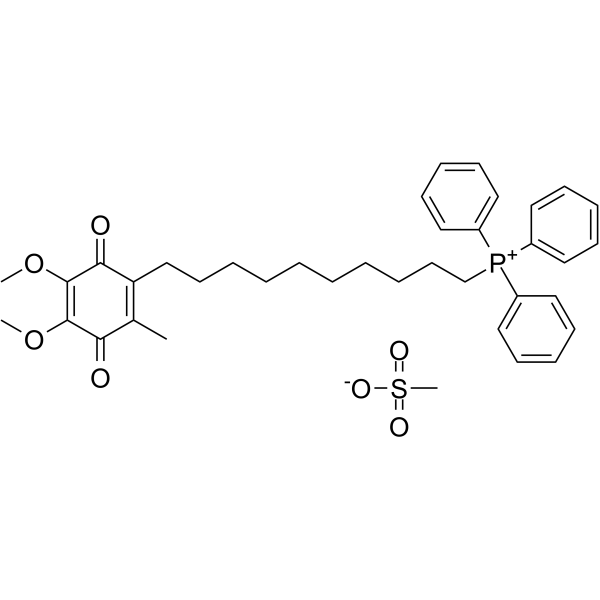
HY-100116A
Mitoquinone mesylateAntioxidant -
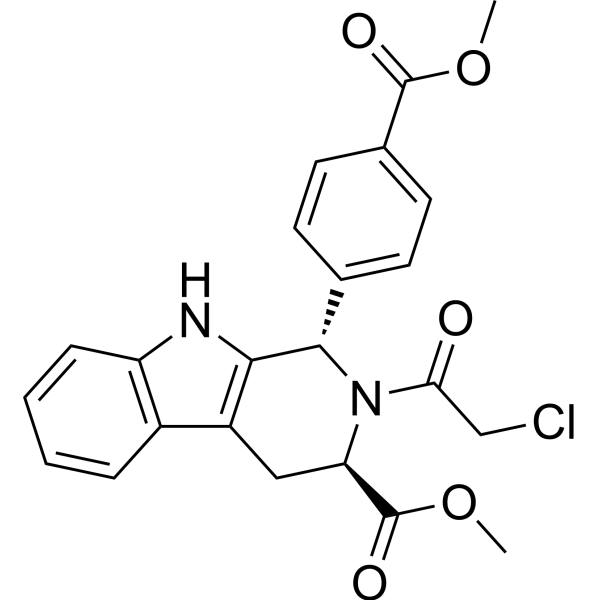
HY-100218A
RSL3GPX4 Inhibitor -
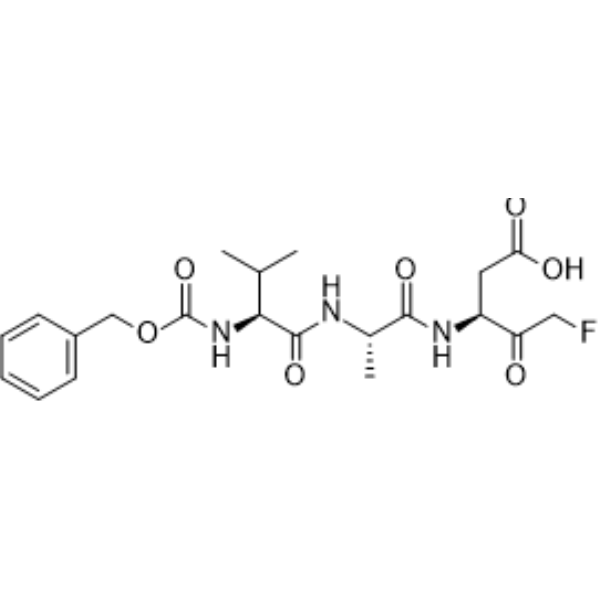
HY-16658B
Z-VAD-FMKPan-Caspase Inhibitor -
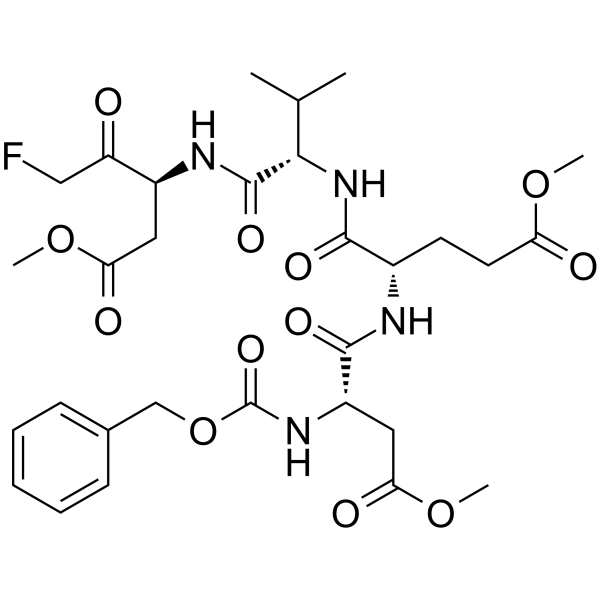
HY-12466
Z-DEVD-FMKCaspase-3 Inhibitor -
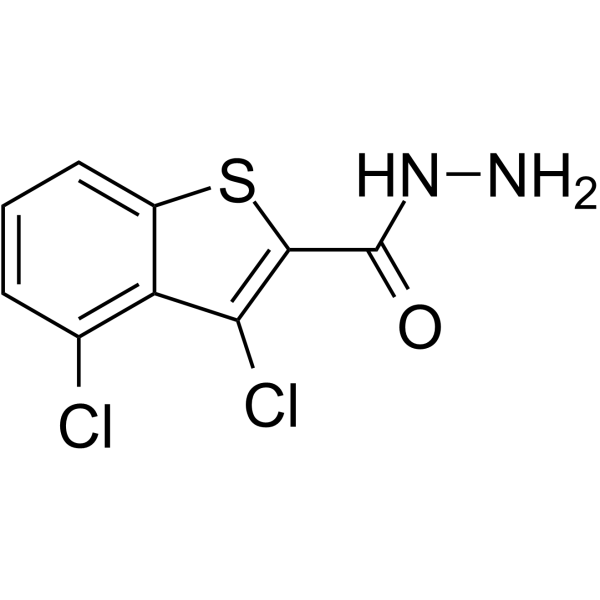
HY-112902
OGG1-IN-08OGG1 Inhibitor -
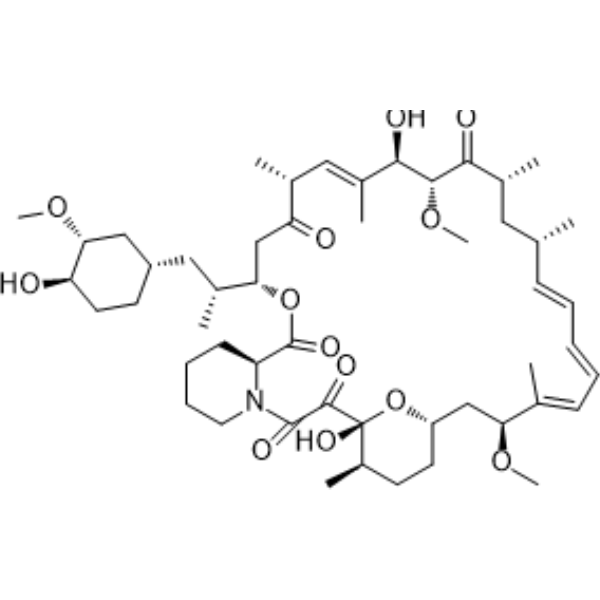
HY-10219
RapamycinmTOR Inhibitor -
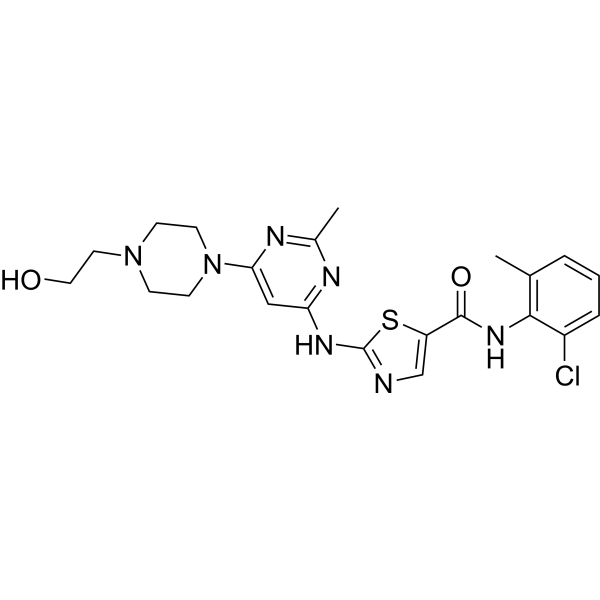
HY-10181
DasatinibSrc/Bcr-Abl Inhibitor -
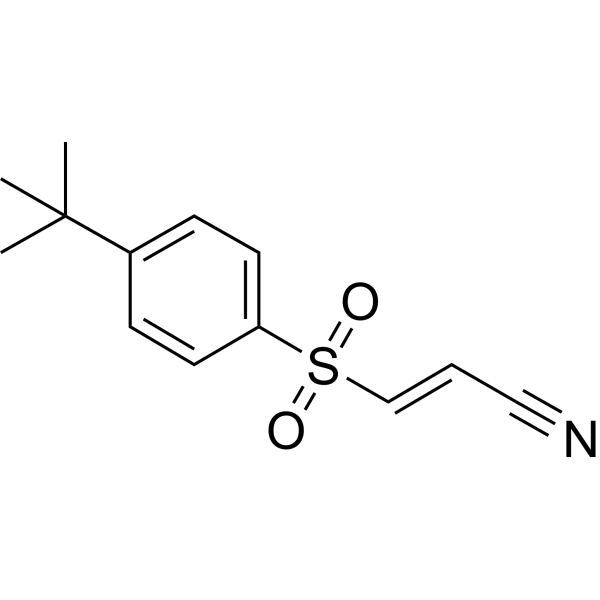
HY-10257
BAY 11-7085NF-κB Activation Inhibitor -
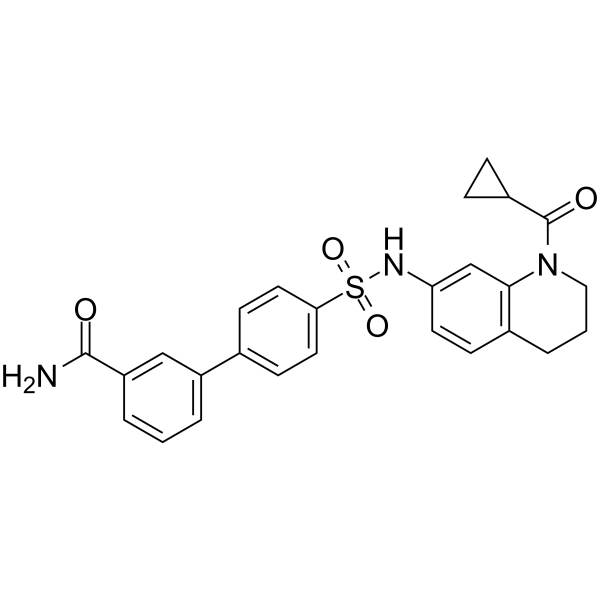
HY-139056
SU0268OGG1 Inhibitor
Publications Citing Use of MedChemExpress (MCE) TH10785
More Customer Validation & Images

-
Bio/Physico-chemical Assay

-
WB

-
Cell Imaging/Staining

-
In Vivo Efficacy Study

-
In Vivo Efficacy Study

Ver todos los productos específicos de isoformas DNA/RNA Synthesis
More

Actividad biológica
Descripciòn
IC50 & Target
OGG1 (KD=5.5 μM)[1]
In Vitro
TH10785 (6.25 μM, 30 min) induces a de novo β, δ-elimination in vitro, allowing for AP sites as new substrates[1].
TH10785 (10 μM, 0-2 min) allows OGG1 to increase DNA repair by addressing AP sites[1].
TH10785 (0-20 μM, 72 h) induces OGG1 β, δ-lyase activity shifts cells toward PNKP1 dependence[1].
TH10785 (2 μM) has affinity to OGG1 (KD=5.5 μM) increased when adding an AP site analog containing double-stranded DNA (KD=1.3 μM)[1].
MedChemExpress (MCE) has not independently confirmed the accuracy of these methods. They are for reference only. .
-
Cell Line:U2OS cells
-
Concentration:0-20 μM
-
Incubation Time:72 hours
-
Result:Reduced combination with PNKP1 inhibition for TH10785.
-
Cell Line:U2OS cells
-
Concentration:0.65 μM; 10 μM
-
Incubation Time:30 min; 24 h
-
Result:Caused an up-regulation of members of the DDR through β, δ-elimination in combination with PNKP1 inhibition and APE1-independent de novo β, δ-elimination of AP sites by OGG1 in the presence of TH10785.
-
Cell Line:U2OS cells
-
Concentration:10 μM
-
Incubation Time:1 h
-
Result:Decreased oxidative damage in guanine-rich regions of the genome.
-
Cell Line:U2OS OGG1-GFP cells
-
Concentration:1 μM
-
Incubation Time:0-2 min
-
Result:Ecruited more OGG1 to laser-damaged sites.


Chemical Information
-
No. CAS 1002801-51-5
-
Appearance Solid
-
Peso molecular 267.37
-
Fòrmula C17H21N3
-
Color White to off-white
-
SMILES
C1(N=C(C2CC2)N=C3NC4CCCCC4)=C3C=CC=C1
-
Envío
Room temperature in continental US; may vary elsewhere.
-
Almacenamiento
Powder -20°C 3 years In solvent -80°C 6 months -20°C 1 month


Publications (3)
-
Journal Impact Factor
-
Most Recent
-
Research (Wash D C)
Mitochondrial 8-Oxoguanine DNA Glycosylase 1-Mitochondrial Permeability Transition Pore Axis Drives Mitochondrial DNA Escape and Accelerates Osteoarthritis Progression. [Abstract]2026 Apr 15:9:1235. PMID: 41993093 -
-
Invest Ophthalmol Vis Sci
Targeted Activation of OGG1 Inhibits Paraptosis in Lens Epithelial Cells of Early Age-Related Cortical Cataract. [Abstract]2025 Jan 2;66(1):29. PMID: 39804629
TH10785 purchased from MedChemExpress. Usage Cited in: Invest Ophthalmol Vis Sci. 2025 Jan 2;66(1):29. [Abstract]
The addition of the OGG1 activator TH10785 significantly increased OGG1’s recruitment to sites of DNA damage.
TH10785 purchased from MedChemExpress. Usage Cited in: Invest Ophthalmol Vis Sci. 2025 Jan 2;66(1):29. [Abstract]
TH10785 significantly inhibited the protein levels of GRP78, p-ERK, and p-P38 under H2O2 treatment, while increasing the level of ALIX.
TH10785 purchased from MedChemExpress. Usage Cited in: Invest Ophthalmol Vis Sci. 2025 Jan 2;66(1):29. [Abstract]
TH10785 (10 µM) also effectively reduced the elevated cellular ROS levels in LECs induced by treatment with 50 µM H2O2.
TH10785 purchased from MedChemExpress. Usage Cited in: Invest Ophthalmol Vis Sci. 2025 Jan 2;66(1):29. [Abstract]
Effects of TH10785 on ROS-induced paraptosis and vacuoles in rat lens. Rat lenses were subjected to control, H2O2 (50 µM), and H2O2 (50 µM) with TH10785 (10 µM) medium for 5 days. Representative images of cultured rat lenses and the percentage of lens opacity in the control, H2O2, and H2O2 + TH10785 groups.
TH10785 purchased from MedChemExpress. Usage Cited in: Invest Ophthalmol Vis Sci. 2025 Jan 2;66(1):29. [Abstract]
TEM showed that TH10785 treatment alleviated the dilated ER in LECs under H2O2 stress.


Solvente y solubilidad
In Vitro:
DMSO : ≥ 100 mg/mL (374.01 mM; Hygroscopic DMSO has a significant impact on the solubility of product, please use newly opened DMSO)
* "≥" means soluble, but saturation unknown.
Please refer to the solubility information to select the appropriate solvent. Once prepared, please aliquot and store the solution to prevent product inactivation from repeated freeze-thaw cycles.
Storage method and period of stock solution: -80°C, 6 months; -20°C, 1 month. When stored at -80°C, please use it within 6 months. When stored at -20°C, please use it within 1 month.
Please refer to the solubility information to select the appropriate solvent. Once prepared, please aliquot and store the solution to prevent product inactivation from repeated freeze-thaw cycles.
Storage method and period of stock solution: -80°C, 6 months; -20°C, 1 month. When stored at -80°C, please use it within 6 months. When stored at -20°C, please use it within 1 month.
Concentration (start) × Volume (start) = Concentration (final) × Volume (final)
In Vivo:
Select the appropriate dissolution method based on your experimental animal and administration route.
- For the following dissolution methods, please ensure to first prepare a clear stock solution using an In Vitro approach and then sequentially add co-solvents:
- To ensure reliable experimental results, the clarified stock solution can be appropriately stored based on storage conditions. As for the working solution for In Vivo experiments, it is recommended to prepare freshly and use it on the same day.
- The percentages shown for the solvents indicate their volumetric ratio in the final prepared solution. If precipitation or phase separation occurs during preparation, heat and/or sonication can be used to aid dissolution.
Add each solvent one by one: 10% DMSO 40% PEG300 5% Tween-80 45% Saline
Solubility: ≥ 2.5 mg/mL (9.35 mM); Suspended solution
This protocol yields a suspended solution of ≥ 2.5 mg/mL (saturation unknown). Suspended solution can be used for oral and intraperitoneal injection.
Taking 1 mL working solution as an example, add 100 μL DMSO stock solution (25.0 mg/mL) to 400 μL PEG300, and mix evenly; then add 50 μL Tween-80 and mix evenly; then add 450 μL Saline to adjust the volume to 1 mL.
Preparation of Saline: Dissolve 0.9 g sodium chloride in ddH₂O and dilute to 100 mL to obtain a clear Saline solution.
Add each solvent one by one: 10% DMSO 90% (20% SBE-β-CD in Saline)
Solubility: ≥ 2.5 mg/mL (9.35 mM); Clear solution
This protocol yields a clear solution of ≥ 2.5 mg/mL (saturation unknown).
Taking 1 mL working solution as an example, add 100 μL DMSO stock solution (25.0 mg/mL) to 900 μL 20% SBE-β-CD in Saline, and mix evenly.
Preparation of 20% SBE-β-CD in Saline (4°C, storage for one week): 2 g SBE-β-CD powder is dissolved in 10 mL Saline, completely dissolve until clear.
In Vivo Dissolution Calculator
Please enter the basic information of animal experiments:
-
-
-
-
Recommended: Prepare an additional quantity of animals to account for potential losses during experiments.
Please enter your animal formula composition:
-
%DMSO +
Recommended: Keep the proportion of DMSO in working solution below 2% if your animal is weak.
-
%+
-
+%Tween-80 + +
-
%Saline +
The co-solvents required include: DMSO, . All of co-solvents are available by MedChemExpress (MCE). , Tween 80. All of co-solvents are available by MedChemExpress (MCE).
Working solution concentration: 0.22 mg/mL
Method for preparing stock solution: mg drug dissolved in μL DMSO. Stock solution concentration: mg/mL.
1. Take μL DMSO stock solution;
2. Add μL .
μL , mix evenly;
3. Then add μL Tween 80, mix evenly;
4. Then add μL
Please ensure that the stock solution in the first step is dissolved to a clear state, and add co-solvents in sequence. You can use ultrasonic heating (ultrasonic cleaner, recommended frequency 20-40 kHz), vortexing, etc. to assist dissolution.


Pureza y Documentación
-
Ficha de datos (281 KB)
-
SDS (251 KB)
- English - EN (251 KB)
- Français - FR (251 KB)
- Deutsch - DE (251 KB)
- Norwegian - NO (251 KB)
- Español - ES (251 KB)
- Swedish - SV (251 KB)
- Italian - IT (251 KB)
- Korean - KR (251 KB)
- Portuguese - PT (251 KB)
-
Instrucciones de manejo (2659 KB)
Referencias


Complete Stock Solution Preparation Table
Please refer to the solubility information to select the appropriate solvent. Once prepared, please aliquot and store the solution to prevent product inactivation from repeated freeze-thaw cycles.
Storage method and period of stock solution: -80°C, 6 months; -20°C, 1 month. When stored at -80°C, please use it within 6 months. When stored at -20°C, please use it within 1 month.
| Optional Solvent | Concentration Solvent Mass | 1 mg | 5 mg | 10 mg | 25 mg |
|---|---|---|---|---|---|
| DMSO | 1 mM | 3.7401 mL | 18.7007 mL | 37.4014 mL | 93.5034 mL |
| 5 mM | 0.7480 mL | 3.7401 mL | 7.4803 mL | 18.7007 mL | |
| 10 mM | 0.3740 mL | 1.8701 mL | 3.7401 mL | 9.3503 mL | |
| 15 mM | 0.2493 mL | 1.2467 mL | 2.4934 mL | 6.2336 mL | |
| 20 mM | 0.1870 mL | 0.9350 mL | 1.8701 mL | 4.6752 mL | |
| 25 mM | 0.1496 mL | 0.7480 mL | 1.4961 mL | 3.7401 mL | |
| 30 mM | 0.1247 mL | 0.6234 mL | 1.2467 mL | 3.1168 mL | |
| 40 mM | 0.0935 mL | 0.4675 mL | 0.9350 mL | 2.3376 mL | |
| 50 mM | 0.0748 mL | 0.3740 mL | 0.7480 mL | 1.8701 mL | |
| 60 mM | 0.0623 mL | 0.3117 mL | 0.6234 mL | 1.5584 mL | |
| 80 mM | 0.0468 mL | 0.2338 mL | 0.4675 mL | 1.1688 mL | |
| 100 mM | 0.0374 mL | 0.1870 mL | 0.3740 mL | 0.9350 mL |


TH10785 Related Classifications
HY-147313 Related Classifications
 Powered by Bioz