



Mupirocin
Based on 1 publication(s) in Google Scholar
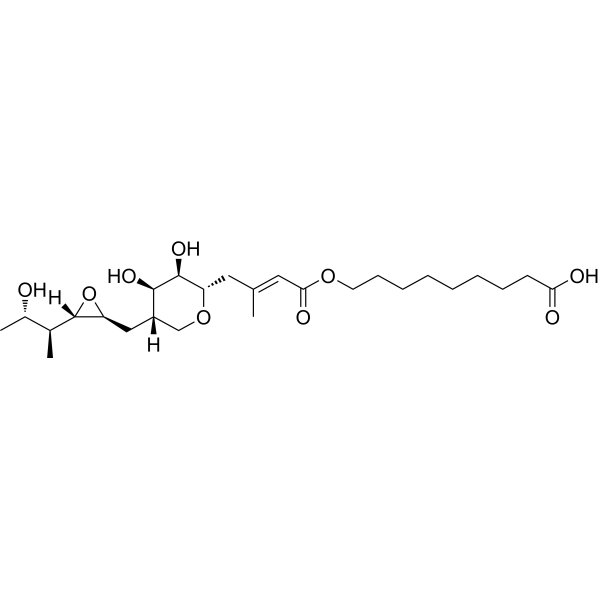
Mupirocin is an antibiotic. Mupirocin inhibits bacterial isoleucyl-tRNA synthetase, blocking protein synthesis. Mupirocin has high activity against Gram-positive bacteria such as Staphylococcus and Streptococcus, as well as some Gram-negative bacteria (such as Haemophilus influenzae). Mupirocin can be used in the research of diseases such as skin infections (such as MRSA infections) and chronic sinusitis.
For research use only. We do not sell to patients.
- Purity : 98.01%
- CAS No.: 12650-69-0
- Formula: C26H44O9
- Molecular Weight:500.62
-
Storage:Powder -20°C, 3 years , 4°C, 2 years ; In solvent -80°C, 2 years , -20°C, 1 year

To place orders, for customer services and technical support, please contact: MedChemExpress USA
Tel: 609-228-6898 E-mail: [email protected] [email protected]


-
 Biological Activity
-
Chemical Information
-
Solvent & Solubility
- Protocols
- Purity & Documentation
- References
-
 Help & FAQs


-
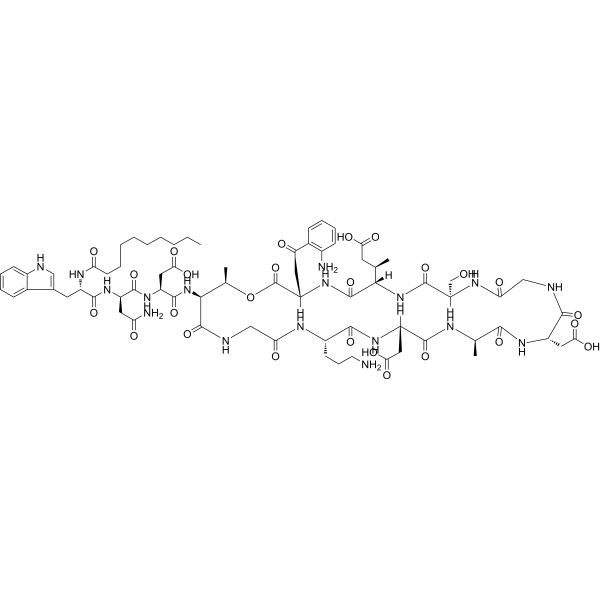
HY-B0108
DaptomycinBacterial Inhibitor -
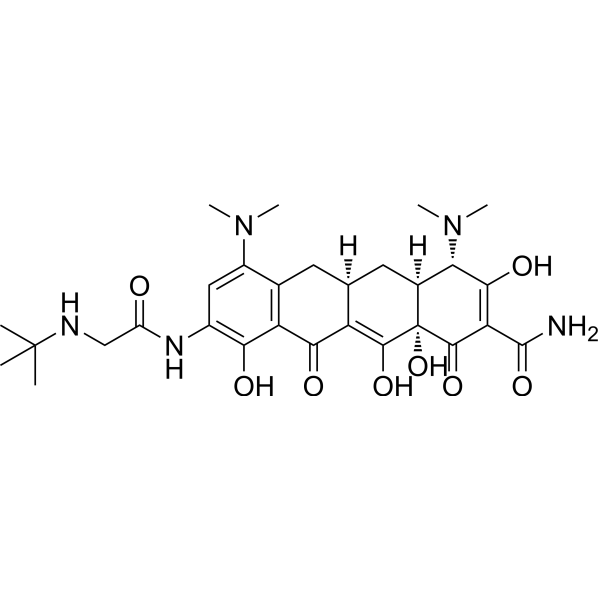
HY-B0117
TigecyclineBacterial Inhibitor -
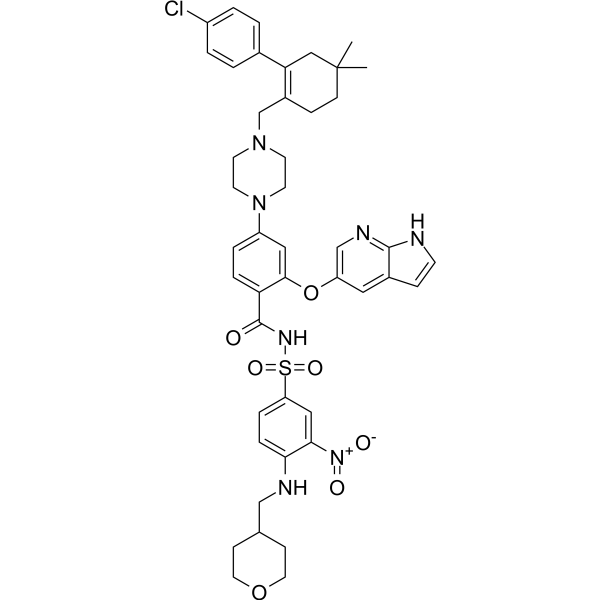
HY-15531
VenetoclaxBCL-2 Inhibitor -
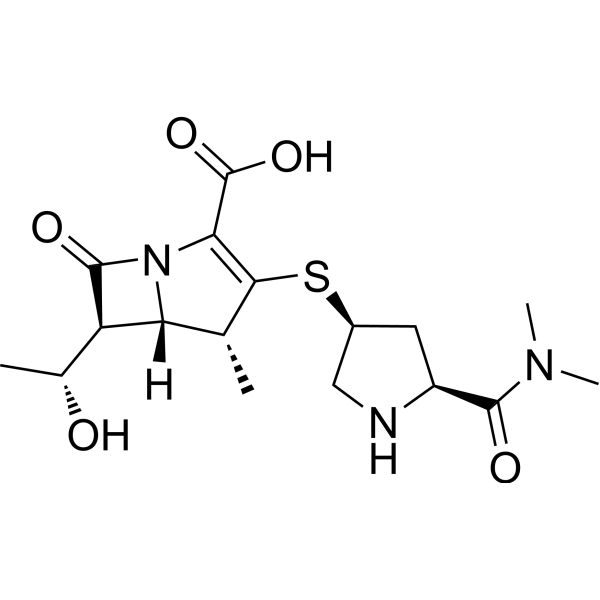
HY-13678
MeropenemAntimicrobial Agent -
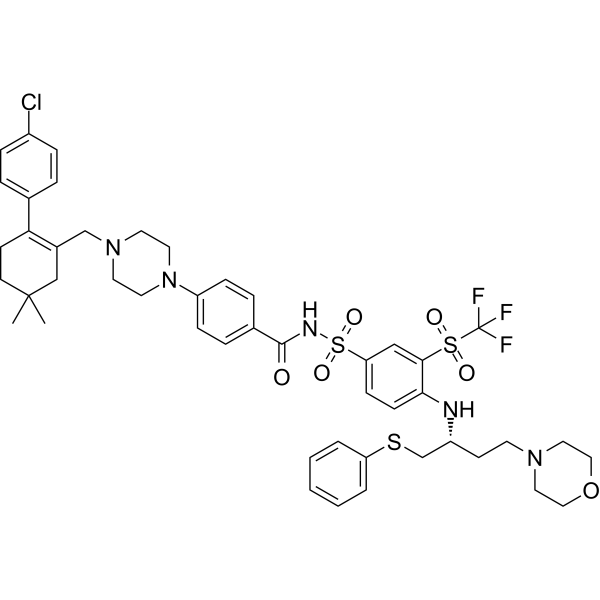
HY-10087
NavitoclaxBcl-2 Inhibitor -

HY-10219
RapamycinmTOR Inhibitor -
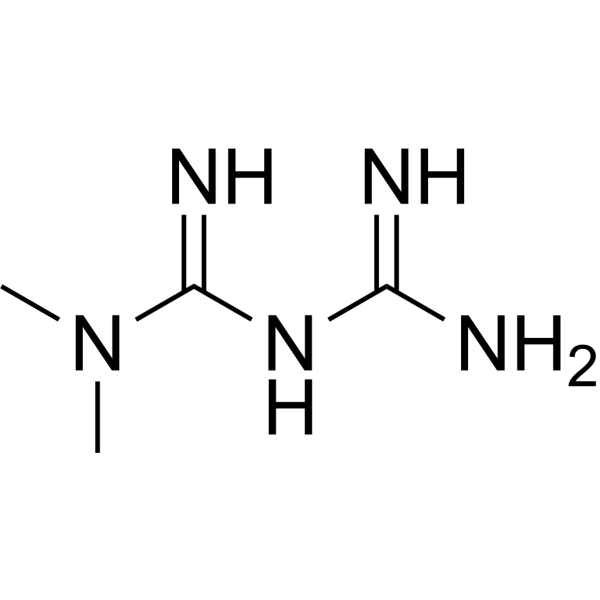
HY-B0627
MetforminAntihyperglycemic Agent -
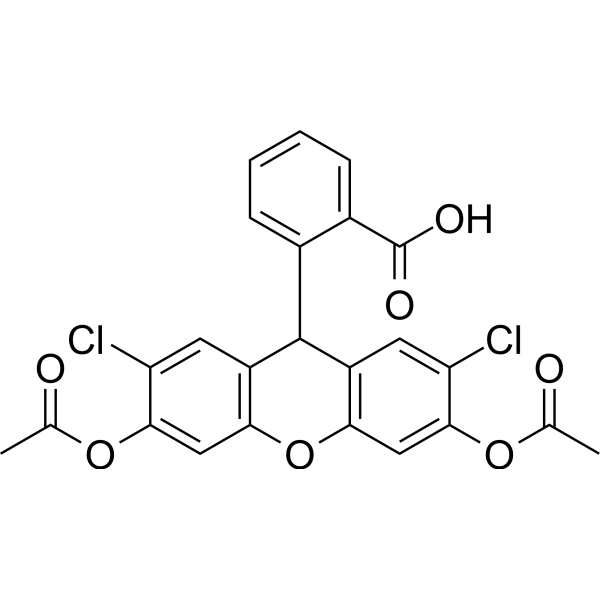
HY-D0940
H2DCFDAROS-Sensitive Probe -
HY-10222
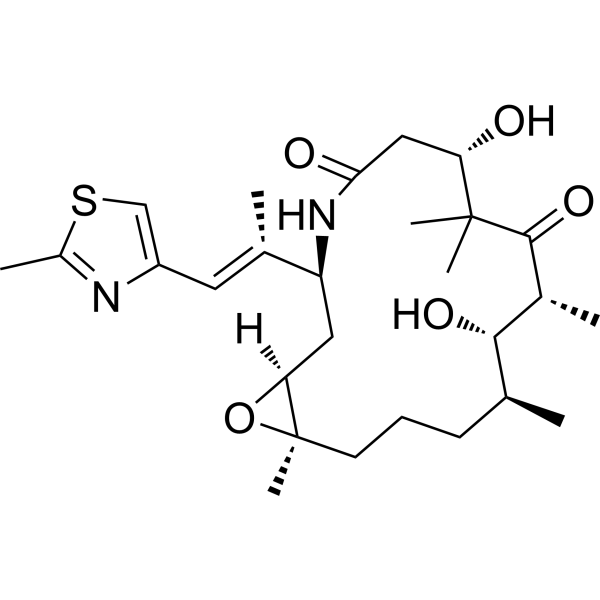
IxabepiloneMicrotubule Inhibitor -

HY-Y0320
Dimethyl sulfoxide, meets analytical specification of Ch.P.Aprotic Solvent -
HY-17362
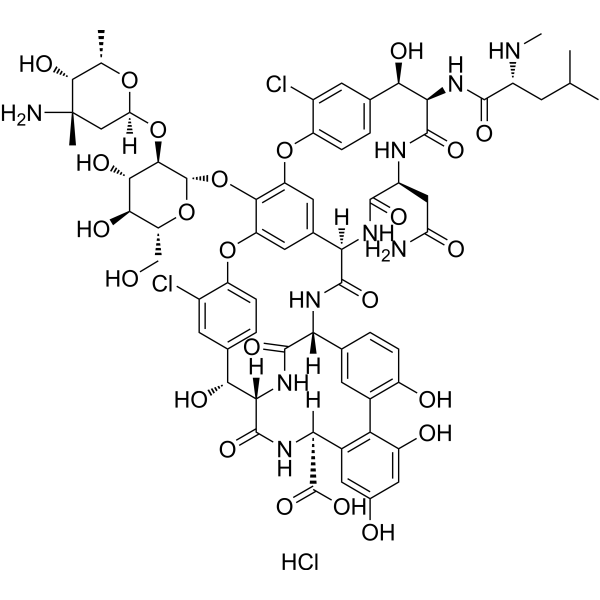
Vancomycin hydrochlorideAntibiotic -

HY-W040193
DSPCLiposome Compound
Publications Citing Use of MedChemExpress (MCE) Mupirocin
MoreAll Antibiotic Isoforms
More

Biological Activity
Description
In Vitro
Mupirocin inhibits staphylococci and streptococci (except group D streptococci), with a MIC of ≤0.5 μg/mL[1].
Mupirocin (0.1-0.2 mM; 18 h) significantly increases wound closure and proliferation of human keratinocytes (HaCat) and enhances production of growth factors like HGF and PDGF-AA[4].
Mupirocin (≤125 μg/mL) reduces biofilm mass by greater than 90% in all S. aureus isolates[5].
MedChemExpress (MCE) has not independently confirmed the accuracy of these methods. They are for reference only. Further protocols information, click here.
-
Cell Line:Staphylococcus aureus
-
Concentration:0-100 μM/mL
-
Incubation Time:24, 48 hours
-
Result:Resulted in a 90 to 99% reduction at 24 h, with MIC values ranged from 0.12-1.0 μM/mL and MBC values ranged from 4.0-32 μM/mL at 48 h.
In Vivo
MedChemExpress (MCE) has not independently confirmed the accuracy of these methods. They are for reference only.
-
Animal Model:Female BALB/c mice (10-12 weeks old) with superficial skin wound infection induced by MRSA USA300[3]
-
Dosage:2%
-
Administration:Topical application to the lesion area, twice daily, for 3 days or 6 days
-
Result:Reduced bacterial loads in the skin lesions by 2.0 log CFU after 3 days of treatment.
Reduced bacterial loads in the skin lesions by 5.1 log CFU after 6 days of treatment.


Chemical Information
-
CAS No. 12650-69-0
-
Appearance Solid
-
Molecular Weight 500.62
-
Formula C26H44O9
-
Color White to off-white
-
SMILES
O[C@@H]1[C@@](CO[C@@H](C/C(C)=C/C(OCCCCCCCCC(O)=O)=O)[C@@H]1O)([H])C[C@H]2[C@@]([C@@H](C)[C@@H](O)C)([H])O2
-
Synonyms
BRL-4910A; Pseudomonic acid
-
Structure Classification
-
Initial Source
Pseudomonas fluorescens
-
Shipping
Room temperature in continental US; may vary elsewhere.
-
Storage
Powder -20°C 3 years 4°C 2 years In solvent -80°C 2 years -20°C 1 year


Publications (1)
-
Journal Impact Factor
-
Most Recent
-
Microbiol Spectr
Antimicrobial efficacy of Bifidobacterium longum FB1-4 cell-free supernatant against MRSA: insights into mechanisms and food matrix application. [Abstract]2026 Apr 7;14(4):e0099125. PMID: 41769981


Solvent & Solubility
In Vitro:
DMSO : ≥ 100 mg/mL (199.75 mM; Hygroscopic DMSO has a significant impact on the solubility of product, please use newly opened DMSO)
* "≥" means soluble, but saturation unknown.
Please refer to the solubility information to select the appropriate solvent. Once prepared, please aliquot and store the solution to prevent product inactivation from repeated freeze-thaw cycles.
Storage method and period of stock solution: -80°C, 2 years; -20°C, 1 year. When stored at -80°C, please use it within 2 years. When stored at -20°C, please use it within 1 year.
Please refer to the solubility information to select the appropriate solvent. Once prepared, please aliquot and store the solution to prevent product inactivation from repeated freeze-thaw cycles.
Storage method and period of stock solution: -80°C, 2 years; -20°C, 1 year. When stored at -80°C, please use it within 2 years. When stored at -20°C, please use it within 1 year.
Concentration (start) × Volume (start) = Concentration (final) × Volume (final)
In Vivo:
Select the appropriate dissolution method based on your experimental animal and administration route.
- For the following dissolution methods, please ensure to first prepare a clear stock solution using an In Vitro approach and then sequentially add co-solvents:
- To ensure reliable experimental results, the clarified stock solution can be appropriately stored based on storage conditions. As for the working solution for In Vivo experiments, it is recommended to prepare freshly and use it on the same day.
- The percentages shown for the solvents indicate their volumetric ratio in the final prepared solution. If precipitation or phase separation occurs during preparation, heat and/or sonication can be used to aid dissolution.
Add each solvent one by one: 10% DMSO 40% PEG300 5% Tween-80 45% Saline
Solubility: ≥ 2.5 mg/mL (4.99 mM); Clear solution
This protocol yields a clear solution of ≥ 2.5 mg/mL (saturation unknown).
Taking 1 mL working solution as an example, add 100 μL DMSO stock solution (25.0 mg/mL) to 400 μL PEG300, and mix evenly; then add 50 μL Tween-80 and mix evenly; then add 450 μL Saline to adjust the volume to 1 mL.
Preparation of Saline: Dissolve 0.9 g sodium chloride in ddH₂O and dilute to 100 mL to obtain a clear Saline solution.
Add each solvent one by one: 10% DMSO 90% (20% SBE-β-CD in Saline)
Solubility: ≥ 2.5 mg/mL (4.99 mM); Clear solution
This protocol yields a clear solution of ≥ 2.5 mg/mL (saturation unknown).
Taking 1 mL working solution as an example, add 100 μL DMSO stock solution (25.0 mg/mL) to 900 μL 20% SBE-β-CD in Saline, and mix evenly.
Preparation of 20% SBE-β-CD in Saline (4°C, storage for one week): 2 g SBE-β-CD powder is dissolved in 10 mL Saline, completely dissolve until clear.
In Vivo Dissolution Calculator
Please enter the basic information of animal experiments:
-
-
-
-
Recommended: Prepare an additional quantity of animals to account for potential losses during experiments.
Please enter your animal formula composition:
-
%DMSO +
Recommended: Keep the proportion of DMSO in working solution below 2% if your animal is weak.
-
%+
-
+%Tween-80 + +
-
%Saline +
The co-solvents required include: DMSO, . All of co-solvents are available by MedChemExpress (MCE). , Tween 80. All of co-solvents are available by MedChemExpress (MCE).
Working solution concentration: 0.22 mg/mL
Method for preparing stock solution: mg drug dissolved in μL DMSO. Stock solution concentration: mg/mL.
1. Take μL DMSO stock solution;
2. Add μL .
μL , mix evenly;
3. Then add μL Tween 80, mix evenly;
4. Then add μL
Please ensure that the stock solution in the first step is dissolved to a clear state, and add co-solvents in sequence. You can use ultrasonic heating (ultrasonic cleaner, recommended frequency 20-40 kHz), vortexing, etc. to assist dissolution.

Protocols
-
Gram Staining of Tissue Sections
Gram staining of tissue sections is a histochemical technique used to differentiate Gram-positive and Gram-negative bacteria within histological specimens based on differences in bacterial cell wall structure and dye retention, adapted from classical bacteriological Gram staining into tissue-compatible “histological Gram stain” variants. In tissue applications, modifications of the Brown-Hopps and Brown-Brenn methods are commonly used to improve differentiation of microorganisms embedded within host connective tissue and to reduce overstaining or loss of Gram-negative signal, which are known limitations of earlier approaches. The principle relies on crystal violet-iodine complex retention in Gram-positive organisms and subsequent decolorization and counterstaining steps that allow contrast visualization of Gram-negative organisms against tissue background.


Purity & Documentation
-
Data Sheet (271 KB)
-
SDS (393 KB)
- English - EN (393 KB)
- Français - FR (393 KB)
- Deutsch - DE (393 KB)
- Norwegian - NO (393 KB)
- Español - ES (393 KB)
- Swedish - SV (393 KB)
- Italian - IT (393 KB)
- Korean - KR (393 KB)
- Portuguese - PT (393 KB)
-
Handling Instructions (2659 KB)
References
[1]. Sutherland R, et al. Antibacterial activity of mupirocin (pseudomonic acid), a new antibiotic for topical use. Antimicrob Agents Chemother. 1985 Apr;27(4):495-8. [Content Brief]
[2]. Parenti MA, et al. Mupirocin: a topical antibiotic with a unique structure and mechanism of action. Clin Pharm. 1987 Oct;6(10):761-70. [Content Brief]
[3]. Vingsbo Lundberg C, et al. Efficacy of topical and systemic antibiotic treatment of meticillin-resistant Staphylococcus aureus in a murine superficial skin wound infection model. Int J Antimicrob Agents. 2013 Sep. 42(3):272-5. [Content Brief]
[4]. Twilley D, et al. Mupirocin Promotes Wound Healing by Stimulating Growth Factor Production and Proliferation of Human Keratinocytes. Front Pharmacol. 2022 Apr 11;13:862112. [Content Brief]
[5]. Ha KR, et al. In vitro activity of mupirocin on clinical isolates of Staphylococcus aureus and its potential implications in chronic rhinosinusitis. Laryngoscope. 2008 Mar;118(3):535-40. [Content Brief]
[6]. Gilbart J, et al. High-level mupirocin resistance in Staphylococcus aureus: evidence for two distinct isoleucyl-tRNA synthetases. Antimicrob Agents Chemother. 1993 Jan;37(1):32-8. [Content Brief]


Complete Stock Solution Preparation Table
Please refer to the solubility information to select the appropriate solvent. Once prepared, please aliquot and store the solution to prevent product inactivation from repeated freeze-thaw cycles.
Storage method and period of stock solution: -80°C, 2 years; -20°C, 1 year. When stored at -80°C, please use it within 2 years. When stored at -20°C, please use it within 1 year.
| Optional Solvent | Concentration Solvent Mass | 1 mg | 5 mg | 10 mg | 25 mg |
|---|---|---|---|---|---|
| DMSO | 1 mM | 1.9975 mL | 9.9876 mL | 19.9752 mL | 49.9381 mL |
| 5 mM | 0.3995 mL | 1.9975 mL | 3.9950 mL | 9.9876 mL | |
| 10 mM | 0.1998 mL | 0.9988 mL | 1.9975 mL | 4.9938 mL | |
| 15 mM | 0.1332 mL | 0.6658 mL | 1.3317 mL | 3.3292 mL | |
| 20 mM | 0.0999 mL | 0.4994 mL | 0.9988 mL | 2.4969 mL | |
| 25 mM | 0.0799 mL | 0.3995 mL | 0.7990 mL | 1.9975 mL | |
| 30 mM | 0.0666 mL | 0.3329 mL | 0.6658 mL | 1.6646 mL | |
| 40 mM | 0.0499 mL | 0.2497 mL | 0.4994 mL | 1.2485 mL | |
| 50 mM | 0.0400 mL | 0.1998 mL | 0.3995 mL | 0.9988 mL | |
| 60 mM | 0.0333 mL | 0.1665 mL | 0.3329 mL | 0.8323 mL | |
| 80 mM | 0.0250 mL | 0.1248 mL | 0.2497 mL | 0.6242 mL | |
| 100 mM | 0.0200 mL | 0.0999 mL | 0.1998 mL | 0.4994 mL |


Mupirocin Related Classifications
HY-B0958 Related Classifications
 Powered by Bioz