



Nalidixic acid
Based on 3 publication(s) in Google Scholar
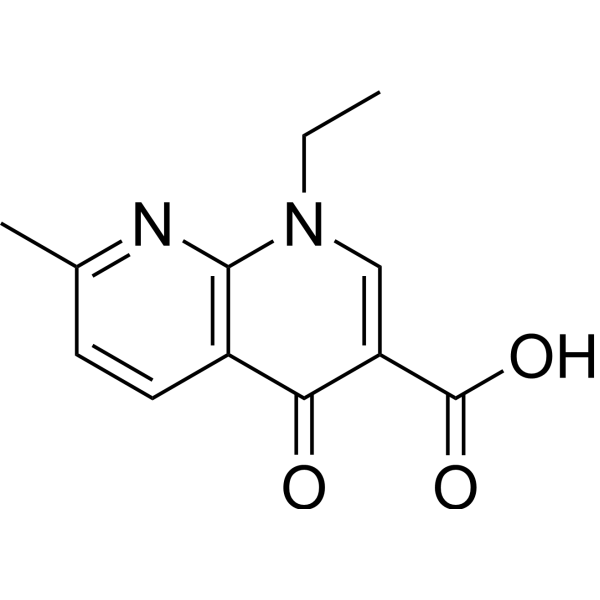
Nalidixic acid, a quinolone antibiotic, is effective against both gram-positive and gram-negative bacteria. Nalidixic acid acts in a bacteriostatic manner in lower concentrations and is bactericidal in higher concentrations. Nalidixic acid inhibits a subunit of DNA gyrase and topoisomerase IV and reversibly blocks DNA replication in susceptible bacteria.
For research use only. We do not sell to patients.
- Purity : 99.97%
- CAS No.: 389-08-2
- Formula: C12H12N2O3
- Molecular Weight:232.24
-
Storage:Powder -20°C, 3 years , 4°C, 2 years ; In solvent -80°C, 6 months , -20°C, 1 month

To place orders, for customer services and technical support, please contact: MedChemExpress USA
Tel: 609-228-6898 E-mail: [email protected] [email protected]


-
 Biological Activity
-
Chemical Information
-
Solvent & Solubility
- Protocols
- Purity & Documentation
- References
-
 Help & FAQs


-
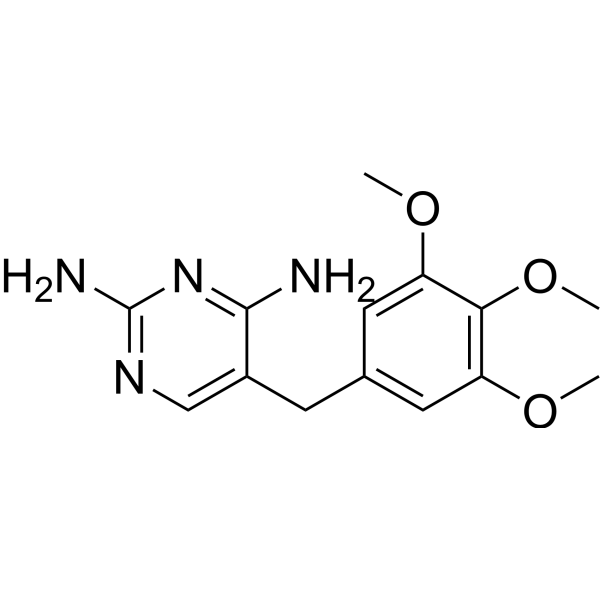
HY-B0510
TrimethoprimBacteriostatic Antibiotic -
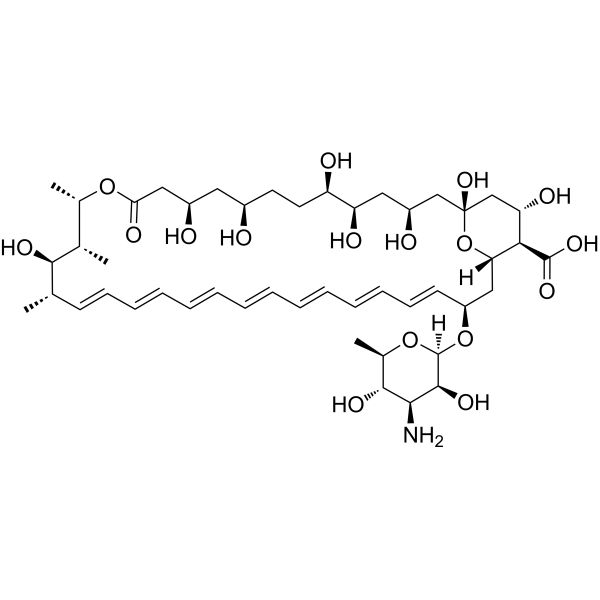
HY-B0221
Amphotericin BAntifungal Agent -
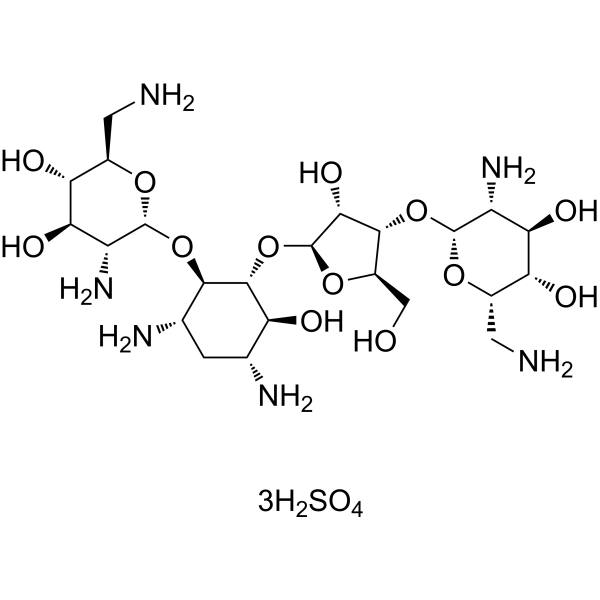
HY-B0470
Neomycin sulfatePhospholipase C Inhibitor, Angiogenesis Modulator -
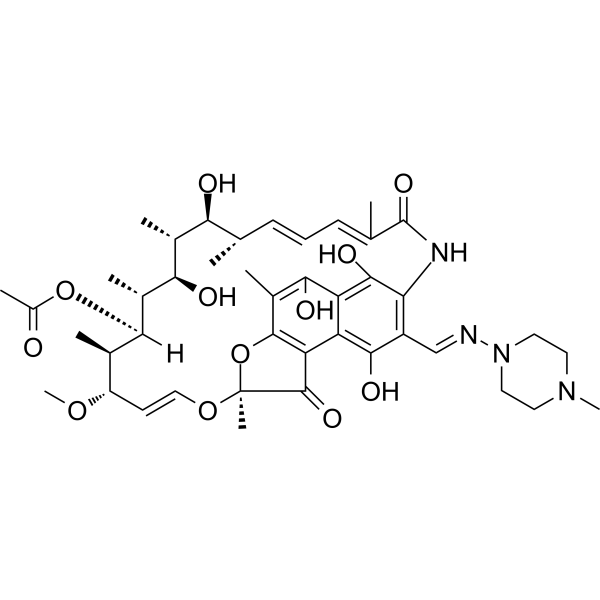
HY-B0272
RifampicinAntivirus Agent -
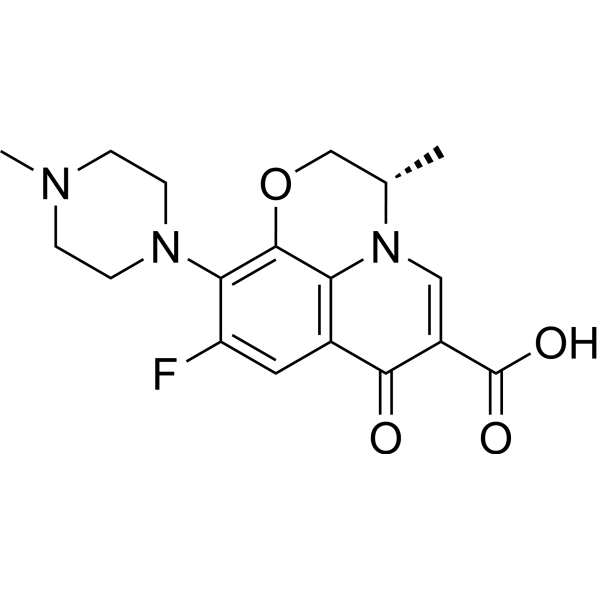
HY-B0330
LevofloxacinDNA Gyrase/Topoisomerase Inhibitor -
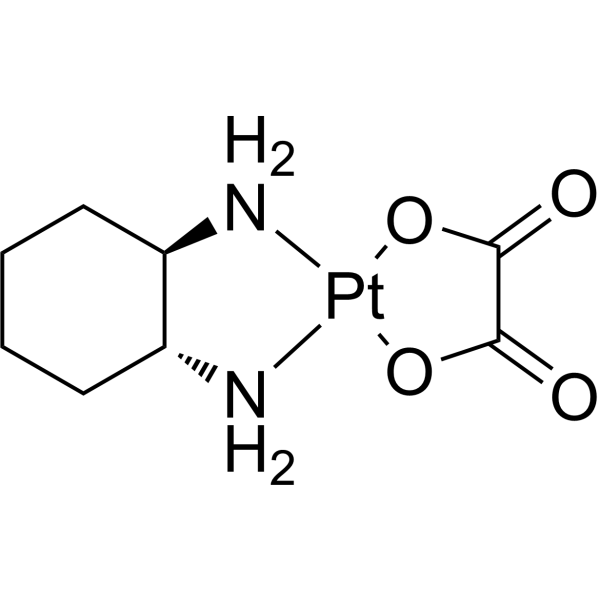
HY-17371
OxaliplatinDNA Synthesis Inhibitor -
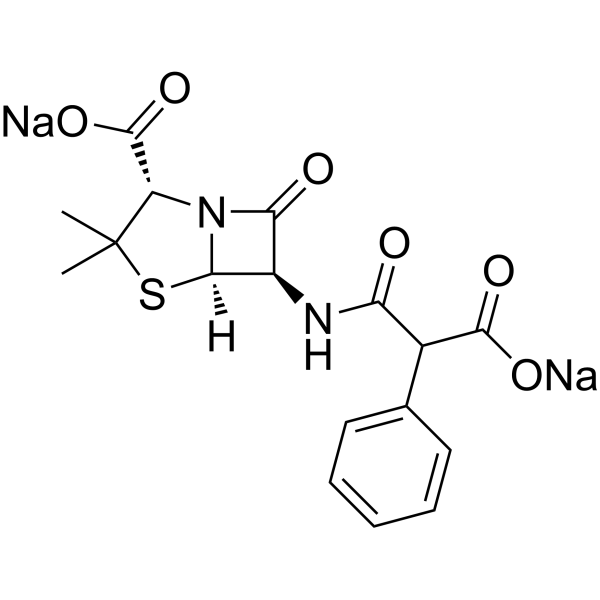
HY-B0525A
Carbenicillin disodiumAntibiotic -

HY-B0398R
Nalidixic acid (Standard)Antibiotic -
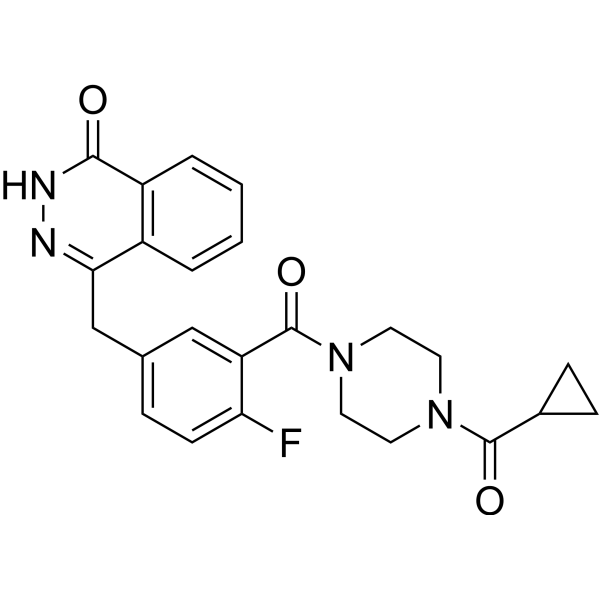
HY-10162
OlaparibPARP Inhibitor -
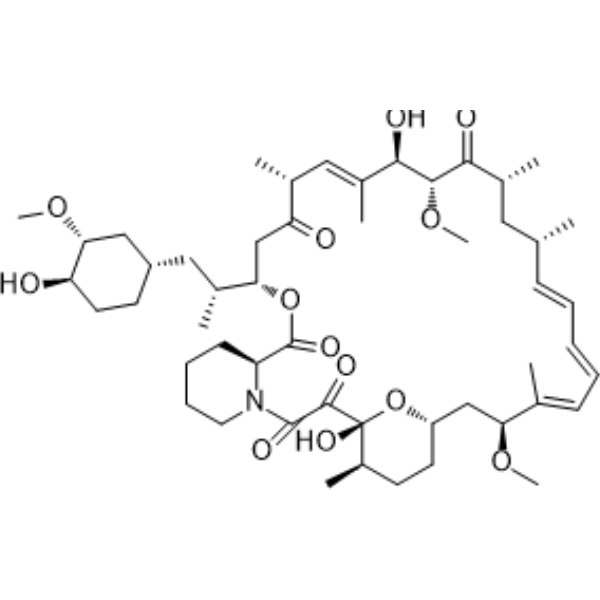
HY-10219
RapamycinmTOR Inhibitor -
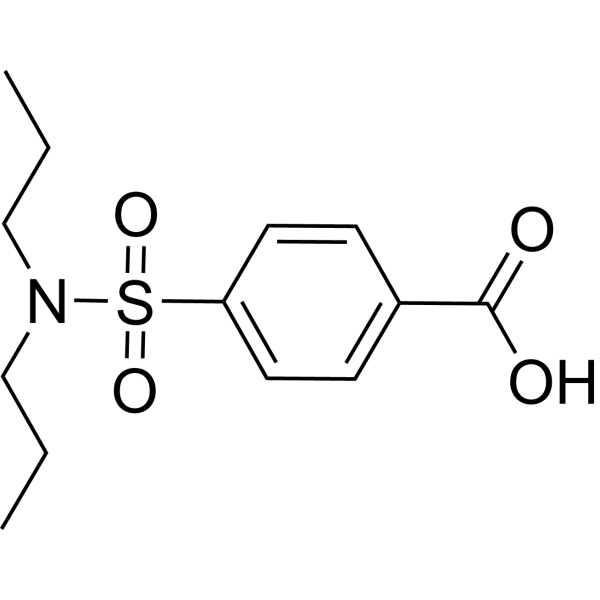
HY-B0545
ProbenecidBacterial Inhibitor -
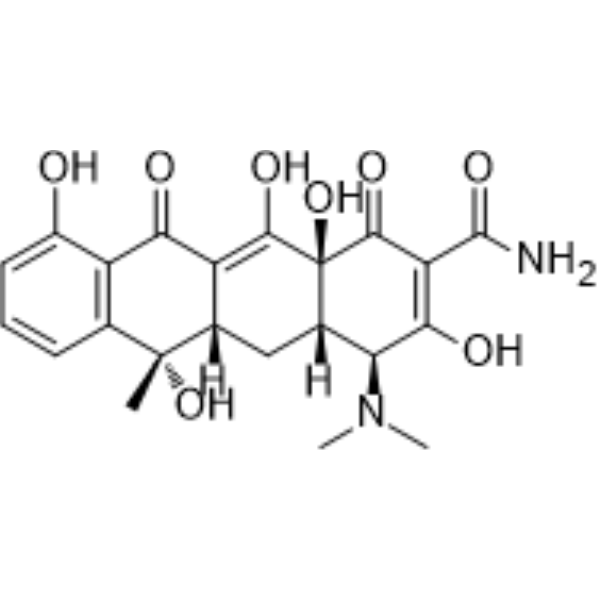
HY-A0107
TetracyclineAntibiotic
Publications Citing Use of MedChemExpress (MCE) Nalidixic acid
More Customer Validation & Images

-
Bio/Physico-chemical Assay

-
Bio/Physico-chemical Assay

All Antibiotic Isoforms
MoreAll Topoisomerase Isoforms
More

Biological Activity
Description
IC50 & Target
[1]|
Quinolone |
Topoisomerase |
In Vitro
Nalidixic acid is against a variety of microorganisms, it is against with Escherichia coli, Pasteurella spp., Klebsiella pneuiiioniae, Aerobacter aeroyenes, Proteus spp., Salmonella spp., Shigella spp. and Brucella spp. with MIC values of 5.0-12.5 μg/ml, 0.5-2.5 μg/ml, 0.8-25.0 μg/ml, 1.0-25.0 μg/ml, 1.25-30.0 μg/ml, 8-3.2 μg/ml, and 7.5-10.0 μg/ml, respectively[1].
MedChemExpress (MCE) has not independently confirmed the accuracy of these methods. They are for reference only. Further protocols information, click here.
In Vivo
MedChemExpress (MCE) has not independently confirmed the accuracy of these methods. They are for reference only.


Chemical Information
-
CAS No. 389-08-2
-
Appearance Solid
-
Molecular Weight 232.24
-
Formula C12H12N2O3
-
Color White to light yellow
-
SMILES
O=C(C1=CN(CC)C2=C(C=CC(C)=N2)C1=O)O
-
Structure Classification
-
Initial Source
Streptomyces sp.
-
Shipping
Room temperature in continental US; may vary elsewhere.
-
Storage
Powder -20°C 3 years 4°C 2 years In solvent -80°C 6 months -20°C 1 month


Publications (3)
-
Journal Impact Factor
-
Most Recent
-
Nature
2025 Jul;643(8070):192-200. PMID: 39695227 -
Food Res Int
Prevalence, plasmid transmission, and chromosomal integration of blaCTX-M genes in Salmonella isolated from retail chicken and pork meats in China. [Abstract]2026 Aug 31:238:119421. PMID: 42215089 -
J Biol Chem
Mitochondrial pyruvate carrier inhibitors improve metabolic parameters in diet-induced obese mice. [Abstract]2022 Feb;298(2):101554. PMID: 34973337
Nalidixic acid purchased from MedChemExpress. Usage Cited in: J Biol Chem. 2022 Feb;298(2):101554. [Abstract]
Nalidixic acid sodium salt (10 μM) inhibited pyruvate-stimulated mitochondrial respiration.
Nalidixic acid purchased from MedChemExpress. Usage Cited in: J Biol Chem. 2022 Feb;298(2):101554. [Abstract]
Nalidixic acid sodium salt (10 μM) inhibited glucose production by isolated mice hepatocytes.


Solvent & Solubility
In Vitro:
0.1 M NaOH : 10 mg/mL (43.06 mM; Need ultrasonic)
DMSO : 6 mg/mL (25.84 mM; Need ultrasonic; Hygroscopic DMSO has a significant impact on the solubility of product, please use newly opened DMSO)
H2O : < 0.1 mg/mL (insoluble)
Please refer to the solubility information to select the appropriate solvent. Once prepared, please aliquot and store the solution to prevent product inactivation from repeated freeze-thaw cycles.
Storage method and period of stock solution: -80°C, 6 months; -20°C, 1 month. When stored at -80°C, please use it within 6 months. When stored at -20°C, please use it within 1 month.
Please refer to the solubility information to select the appropriate solvent. Once prepared, please aliquot and store the solution to prevent product inactivation from repeated freeze-thaw cycles.
Storage method and period of stock solution: -80°C, 6 months; -20°C, 1 month. When stored at -80°C, please use it within 6 months. When stored at -20°C, please use it within 1 month.
Concentration (start) × Volume (start) = Concentration (final) × Volume (final)
In Vivo:
Select the appropriate dissolution method based on your experimental animal and administration route.
- For the following dissolution methods, please ensure to first prepare a clear stock solution using an In Vitro approach and then sequentially add co-solvents:
- To ensure reliable experimental results, the clarified stock solution can be appropriately stored based on storage conditions. As for the working solution for In Vivo experiments, it is recommended to prepare freshly and use it on the same day.
- The percentages shown for the solvents indicate their volumetric ratio in the final prepared solution. If precipitation or phase separation occurs during preparation, heat and/or sonication can be used to aid dissolution.
In Vivo Dissolution Calculator
Please enter the basic information of animal experiments:
-
-
-
-
Recommended: Prepare an additional quantity of animals to account for potential losses during experiments.
Please enter your animal formula composition:
-
%DMSO +
Recommended: Keep the proportion of DMSO in working solution below 2% if your animal is weak.
-
%+
-
+%Tween-80 + +
-
%Saline +
The co-solvents required include: DMSO, . All of co-solvents are available by MedChemExpress (MCE). , Tween 80. All of co-solvents are available by MedChemExpress (MCE).
Working solution concentration: 0.22 mg/mL
Method for preparing stock solution: mg drug dissolved in μL DMSO. Stock solution concentration: mg/mL.
1. Take μL DMSO stock solution;
2. Add μL .
μL , mix evenly;
3. Then add μL Tween 80, mix evenly;
4. Then add μL
Please ensure that the stock solution in the first step is dissolved to a clear state, and add co-solvents in sequence. You can use ultrasonic heating (ultrasonic cleaner, recommended frequency 20-40 kHz), vortexing, etc. to assist dissolution.

Protocols
-
PCNA Immunodetection Proliferation Assay
PCNA immunodetection measures proliferative activity by detecting proliferating cell nuclear antigen, a nuclear protein associated with DNA polymerase δ function and DNA replication. The assay readout is the proportion of PCNA-positive nuclei among total counted cells, but PCNA labeling is not identical to BrdU labeling because PCNA can mark late G1/early S-associated replication competence and may persist beyond active DNA synthesis depending on fixation and extraction conditions.
-
Gram Staining of Tissue Sections
Gram staining of tissue sections is a histochemical technique used to differentiate Gram-positive and Gram-negative bacteria within histological specimens based on differences in bacterial cell wall structure and dye retention, adapted from classical bacteriological Gram staining into tissue-compatible “histological Gram stain” variants. In tissue applications, modifications of the Brown-Hopps and Brown-Brenn methods are commonly used to improve differentiation of microorganisms embedded within host connective tissue and to reduce overstaining or loss of Gram-negative signal, which are known limitations of earlier approaches. The principle relies on crystal violet-iodine complex retention in Gram-positive organisms and subsequent decolorization and counterstaining steps that allow contrast visualization of Gram-negative organisms against tissue background.


Purity & Documentation
-
Data Sheet (274 KB)
-
SDS (418 KB)
- English - EN (418 KB)
- Français - FR (418 KB)
- Deutsch - DE (418 KB)
- Norwegian - NO (418 KB)
- Español - ES (418 KB)
- Swedish - SV (418 KB)
- Italian - IT (418 KB)
- Korean - KR (418 KB)
- Portuguese - PT (418 KB)
-
Handling Instructions (2659 KB)
References


Complete Stock Solution Preparation Table
Please refer to the solubility information to select the appropriate solvent. Once prepared, please aliquot and store the solution to prevent product inactivation from repeated freeze-thaw cycles.
Storage method and period of stock solution: -80°C, 6 months; -20°C, 1 month. When stored at -80°C, please use it within 6 months. When stored at -20°C, please use it within 1 month.
| Optional Solvent | Concentration Solvent Mass | 1 mg | 5 mg | 10 mg | 25 mg |
|---|---|---|---|---|---|
| DMSO / 0.1 M NaOH | 1 mM | 4.3059 mL | 21.5295 mL | 43.0589 mL | 107.6473 mL |
| 5 mM | 0.8612 mL | 4.3059 mL | 8.6118 mL | 21.5295 mL | |
| 10 mM | 0.4306 mL | 2.1529 mL | 4.3059 mL | 10.7647 mL | |
| 15 mM | 0.2871 mL | 1.4353 mL | 2.8706 mL | 7.1765 mL | |
| 20 mM | 0.2153 mL | 1.0765 mL | 2.1529 mL | 5.3824 mL | |
| 25 mM | 0.1722 mL | 0.8612 mL | 1.7224 mL | 4.3059 mL | |
| 0.1 M NaOH | 30 mM | 0.1435 mL | 0.7176 mL | 1.4353 mL | 3.5882 mL |
| 40 mM | 0.1076 mL | 0.5382 mL | 1.0765 mL | 2.6912 mL |


Nalidixic acid Related Classifications
HY-B0398 Related Classifications
 Powered by Bioz