



Mequitazine

Based on 1 Customer Validation
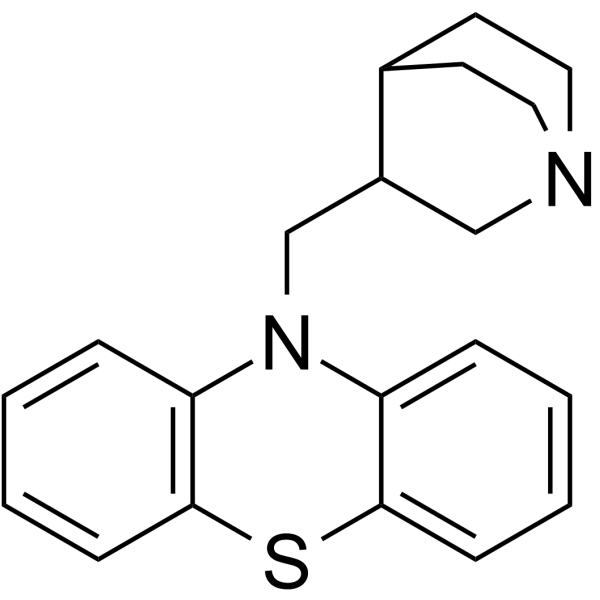
Mequitazine is a potent, and long-acting histamine H1 antagonist.
For research use only. We do not sell to patients.
- Purity : 99.97%
- CAS No.: 29216-28-2
- Formula: C20H22N2S
- Molecular Weight:322.47
-
Storage:Powder -20°C, 3 years , 4°C, 2 years ; In solvent -80°C, 2 years , -20°C, 1 year

To place orders, for customer services and technical support, please contact: MedChemExpress USA
Tel: 609-228-6898 E-mail: [email protected] [email protected]


-
 Biological Activity
-
Chemical Information
-
Solvent & Solubility
- Purity & Documentation
- References
-
 Help & FAQs


-
HY-17043
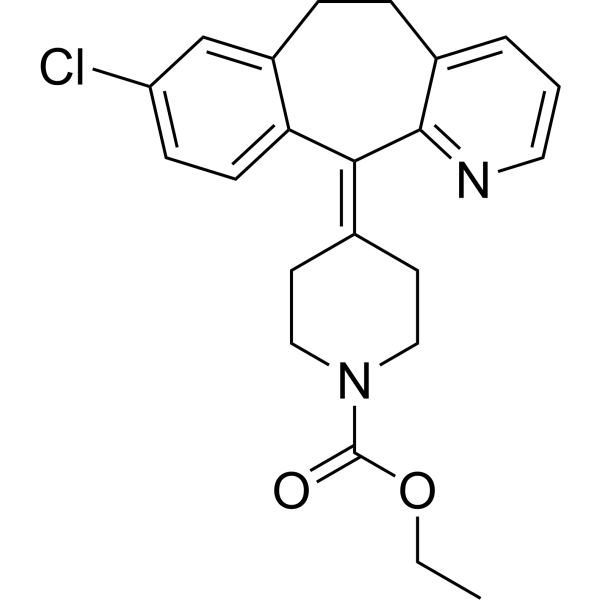
LoratadineInfluenza Virus Inhibitor -

HY-B2168R
Mequitazine (Standard)Histamine H1 Antagonist -
HY-B0539
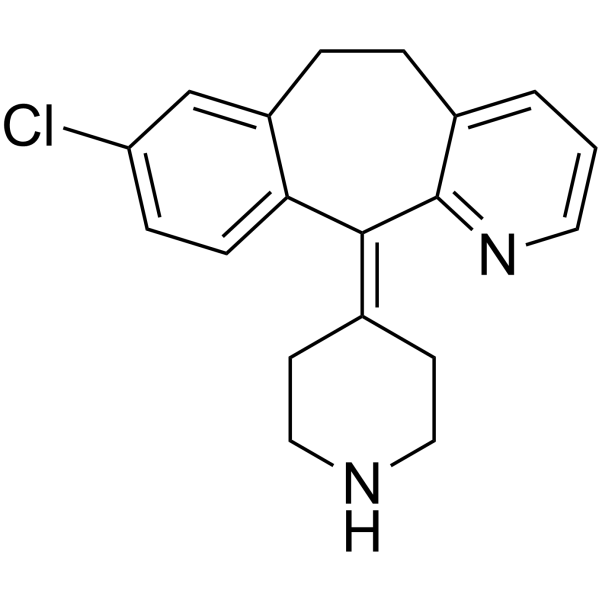
DesloratadineH1-Receptor Antagonist -
HY-B0462
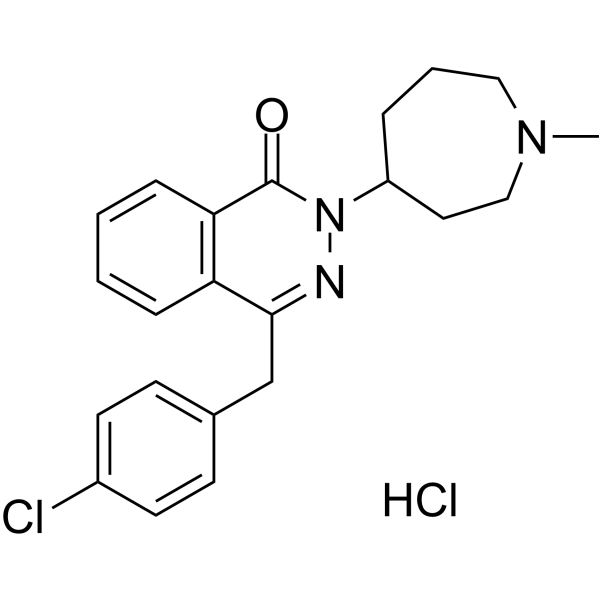
Azelastine hydrochlorideHistamine 1 Antagonist -
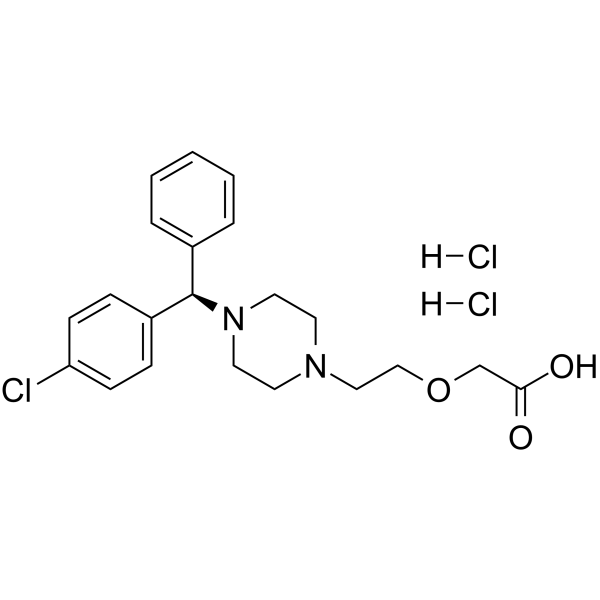
HY-W010841
Levocetirizine dihydrochloride -
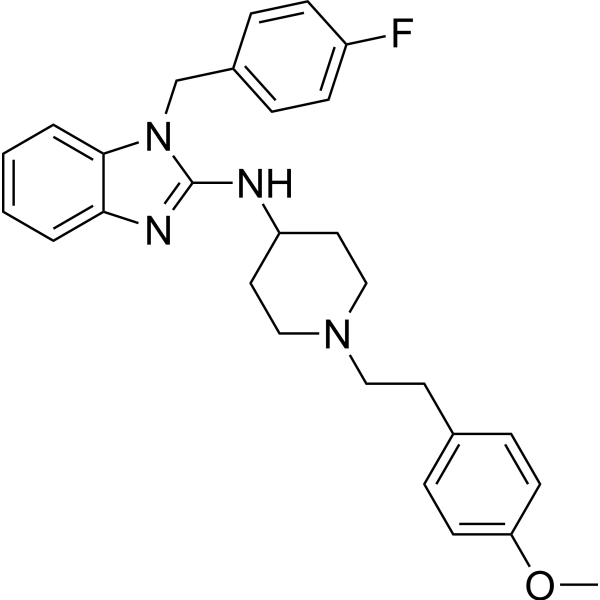
HY-12532
AstemizoleH1 Receptor Antagonist -
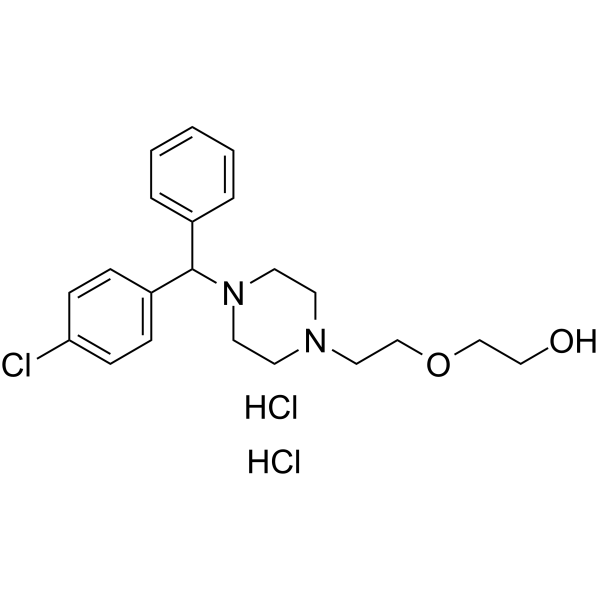
HY-B0548A
Hydroxyzine dihydrochlorideAntihistamine Agent -
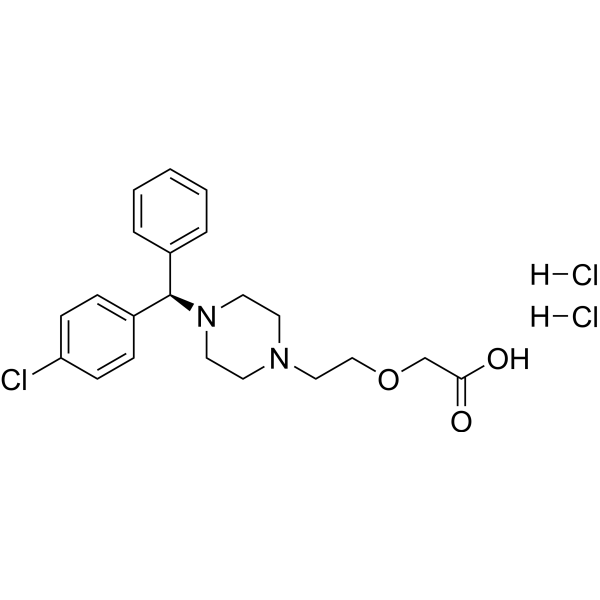
HY-W010841R
Levocetirizine dihydrochloride (Standard) -
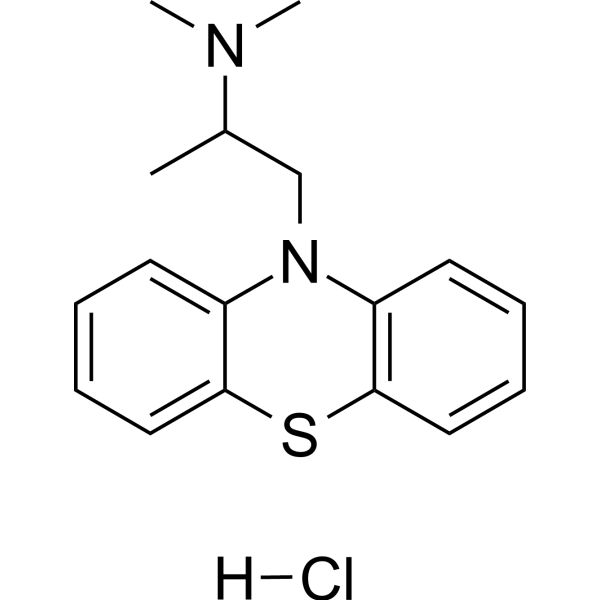
HY-B0781
Promethazine hydrochlorideHistamine Receptor Antagonist -

HY-17043R
Loratadine (Standard)Influenza Virus Inhibitor -
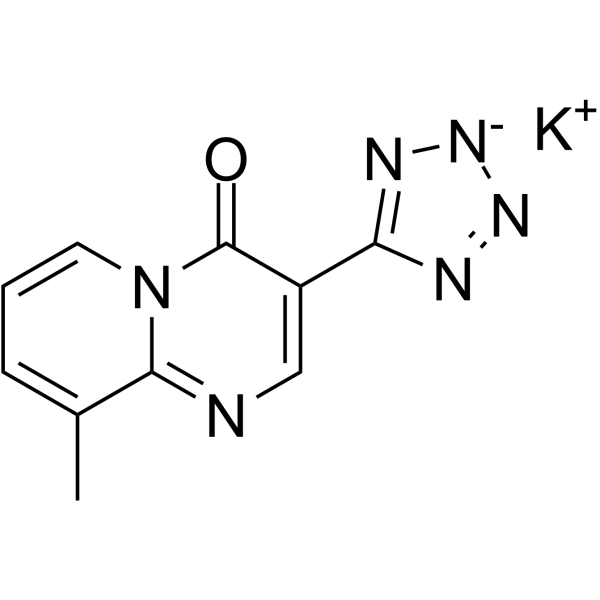
HY-B0538A
Pemirolast potassiumHistamine H1 Antagonist -
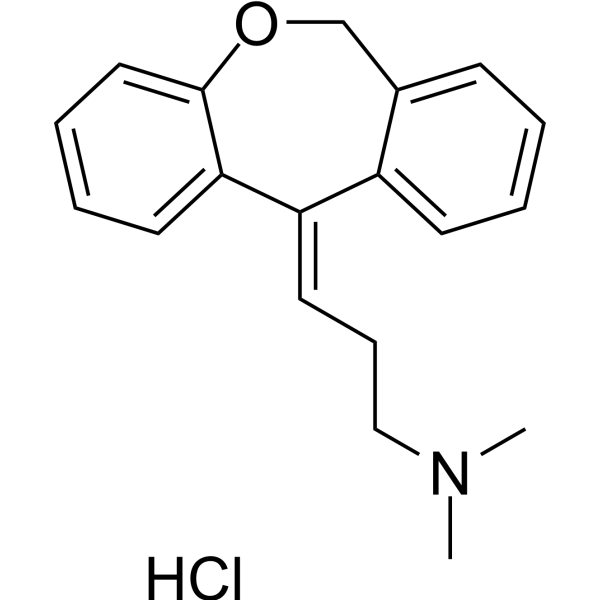
HY-B0725
Doxepin HydrochlorideAntidepressant
All Histamine Receptor Isoforms
More

Biological Activity
Description
Cellular Effect
|
Cell Line

|
Type | Value | Description | References |
|---|---|---|---|---|
| Vero | CC50 |
27.34 μM
Compound: Mequitazine
|
Cell viability measured by CellTiter-Glo assay in Vero cells at MOI 0.05 after 72hr
Cell viability measured by CellTiter-Glo assay in Vero cells at MOI 0.05 after 72hr
|
10.1101/2020.03.20.999730 |
| Vero | IC50 |
7.28 μM
Compound: Mequitazine
|
Antiviral activity against SARS-CoV-2 (viral titer) measured by plaque assay in Vero cells at MOI 0.0125 after 24 hr
Antiviral activity against SARS-CoV-2 (viral titer) measured by plaque assay in Vero cells at MOI 0.0125 after 24 hr
|
10.1101/2020.03.20.999730 |
In Vitro
Mequitazine is a potent H1-receptors selective antihistaminic drug widely studied and used for allergic disorders such as hay fever and urticaria[1]. Mequitazine demonstrates significant bactericidal effects against all the tested clinical isolates including Ps. aeruginosa. Its effect against the Gram-positive isolates is more pronounced[2].
MedChemExpress (MCE) has not independently confirmed the accuracy of these methods. They are for reference only.
In Vivo
MedChemExpress (MCE) has not independently confirmed the accuracy of these methods. They are for reference only.


Chemical Information
-
CAS No. 29216-28-2
-
Appearance Solid
-
Molecular Weight 322.47
-
Formula C20H22N2S
-
Color White to off-white
-
SMILES
C12=CC=CC=C1N(CC3CN4CCC3CC4)C5=C(C=CC=C5)S2
-
Synonyms
LM-209
-
Shipping
Room temperature in continental US; may vary elsewhere.
-
Storage
Powder -20°C 3 years 4°C 2 years In solvent -80°C 2 years -20°C 1 year


Solvent & Solubility
In Vitro:
DMSO : 50 mg/mL (155.05 mM; Need ultrasonic; Hygroscopic DMSO has a significant impact on the solubility of product, please use newly opened DMSO)
Please refer to the solubility information to select the appropriate solvent. Once prepared, please aliquot and store the solution to prevent product inactivation from repeated freeze-thaw cycles.
Storage method and period of stock solution: -80°C, 2 years; -20°C, 1 year. When stored at -80°C, please use it within 2 years. When stored at -20°C, please use it within 1 year.
Please refer to the solubility information to select the appropriate solvent. Once prepared, please aliquot and store the solution to prevent product inactivation from repeated freeze-thaw cycles.
Storage method and period of stock solution: -80°C, 2 years; -20°C, 1 year. When stored at -80°C, please use it within 2 years. When stored at -20°C, please use it within 1 year.
Concentration (start) × Volume (start) = Concentration (final) × Volume (final)
In Vivo:
Select the appropriate dissolution method based on your experimental animal and administration route.
- For the following dissolution methods, please ensure to first prepare a clear stock solution using an In Vitro approach and then sequentially add co-solvents:
- To ensure reliable experimental results, the clarified stock solution can be appropriately stored based on storage conditions. As for the working solution for In Vivo experiments, it is recommended to prepare freshly and use it on the same day.
- The percentages shown for the solvents indicate their volumetric ratio in the final prepared solution. If precipitation or phase separation occurs during preparation, heat and/or sonication can be used to aid dissolution.
Add each solvent one by one: 10% DMSO 40% PEG300 5% Tween-80 45% Saline
Solubility: ≥ 2.5 mg/mL (7.75 mM); Clear solution
This protocol yields a clear solution of ≥ 2.5 mg/mL (saturation unknown).
Taking 1 mL working solution as an example, add 100 μL DMSO stock solution (25.0 mg/mL) to 400 μL PEG300, and mix evenly; then add 50 μL Tween-80 and mix evenly; then add 450 μL Saline to adjust the volume to 1 mL.
Preparation of Saline: Dissolve 0.9 g sodium chloride in ddH₂O and dilute to 100 mL to obtain a clear Saline solution.
Add each solvent one by one: 10% DMSO 90% (20% SBE-β-CD in Saline)
Solubility: ≥ 2.5 mg/mL (7.75 mM); Clear solution
This protocol yields a clear solution of ≥ 2.5 mg/mL (saturation unknown).
Taking 1 mL working solution as an example, add 100 μL DMSO stock solution (25.0 mg/mL) to 900 μL 20% SBE-β-CD in Saline, and mix evenly.
Preparation of 20% SBE-β-CD in Saline (4°C, storage for one week): 2 g SBE-β-CD powder is dissolved in 10 mL Saline, completely dissolve until clear.
In Vivo Dissolution Calculator
Please enter the basic information of animal experiments:
-
-
-
-
Recommended: Prepare an additional quantity of animals to account for potential losses during experiments.
Please enter your animal formula composition:
-
%DMSO +
Recommended: Keep the proportion of DMSO in working solution below 2% if your animal is weak.
-
%+
-
+%Tween-80 + +
-
%Saline +
The co-solvents required include: DMSO, . All of co-solvents are available by MedChemExpress (MCE). , Tween 80. All of co-solvents are available by MedChemExpress (MCE).
Working solution concentration: 0.22 mg/mL
Method for preparing stock solution: mg drug dissolved in μL DMSO. Stock solution concentration: mg/mL.
1. Take μL DMSO stock solution;
2. Add μL .
μL , mix evenly;
3. Then add μL Tween 80, mix evenly;
4. Then add μL
Please ensure that the stock solution in the first step is dissolved to a clear state, and add co-solvents in sequence. You can use ultrasonic heating (ultrasonic cleaner, recommended frequency 20-40 kHz), vortexing, etc. to assist dissolution.


Purity & Documentation
-
Data Sheet (280 KB)
-
SDS (479 KB)
- English - EN (479 KB)
- Français - FR (479 KB)
- Deutsch - DE (479 KB)
- Norwegian - NO (479 KB)
- Español - ES (479 KB)
- Swedish - SV (479 KB)
- Italian - IT (479 KB)
- Korean - KR (479 KB)
- Portuguese - PT (479 KB)
-
Handling Instructions (2659 KB)
References
[1]. Gonnot V, et al. Expedient synthesis of mequitazine an antihistaminic drug by palladium catalyzed allylic alkylation of sodium phenothiazinate. Chem Pharm Bull (Tokyo). 2009 Nov;57(11):1300-2. [Content Brief]
[2]. El-Nakeeb MA, et a. In vitro antibacterial activity of some antihistaminics belonging to different groups against multi-drug resistant clinical isolates. Braz J Microbiol. 2011 Jul;42(3):980-91. [Content Brief]
[3]. Martinez-Mir I, et al. Antihistaminic and anticholinergic activities of mequitazine in comparison with clemizole. J Pharm Pharmacol. 1988 Sep;40(9):655-6. [Content Brief]
[4]. Satake N, et al. Possible mechanisms of vasoinhibitory effects of mequitazine, an antiallergic agent, on the contractions of isolated rat aorta induced by K+, phenylephrine, 5-hydroxytryptamine, and Ca2+. J Cardiovasc Pharmacol. 1994 Apr;23(4):669-73. [Content Brief]


Complete Stock Solution Preparation Table
Please refer to the solubility information to select the appropriate solvent. Once prepared, please aliquot and store the solution to prevent product inactivation from repeated freeze-thaw cycles.
Storage method and period of stock solution: -80°C, 2 years; -20°C, 1 year. When stored at -80°C, please use it within 2 years. When stored at -20°C, please use it within 1 year.
| Optional Solvent | Concentration Solvent Mass | 1 mg | 5 mg | 10 mg | 25 mg |
|---|---|---|---|---|---|
| DMSO | 1 mM | 3.1011 mL | 15.5053 mL | 31.0106 mL | 77.5266 mL |
| 5 mM | 0.6202 mL | 3.1011 mL | 6.2021 mL | 15.5053 mL | |
| 10 mM | 0.3101 mL | 1.5505 mL | 3.1011 mL | 7.7527 mL | |
| 15 mM | 0.2067 mL | 1.0337 mL | 2.0674 mL | 5.1684 mL | |
| 20 mM | 0.1551 mL | 0.7753 mL | 1.5505 mL | 3.8763 mL | |
| 25 mM | 0.1240 mL | 0.6202 mL | 1.2404 mL | 3.1011 mL | |
| 30 mM | 0.1034 mL | 0.5168 mL | 1.0337 mL | 2.5842 mL | |
| 40 mM | 0.0775 mL | 0.3876 mL | 0.7753 mL | 1.9382 mL | |
| 50 mM | 0.0620 mL | 0.3101 mL | 0.6202 mL | 1.5505 mL | |
| 60 mM | 0.0517 mL | 0.2584 mL | 0.5168 mL | 1.2921 mL | |
| 80 mM | 0.0388 mL | 0.1938 mL | 0.3876 mL | 0.9691 mL | |
| 100 mM | 0.0310 mL | 0.1551 mL | 0.3101 mL | 0.7753 mL |


Mequitazine Related Classifications
HY-B2168 Related Classifications
 Powered by Bioz