



Pamidronate disodium
Based on 1 publication(s) in Google Scholar
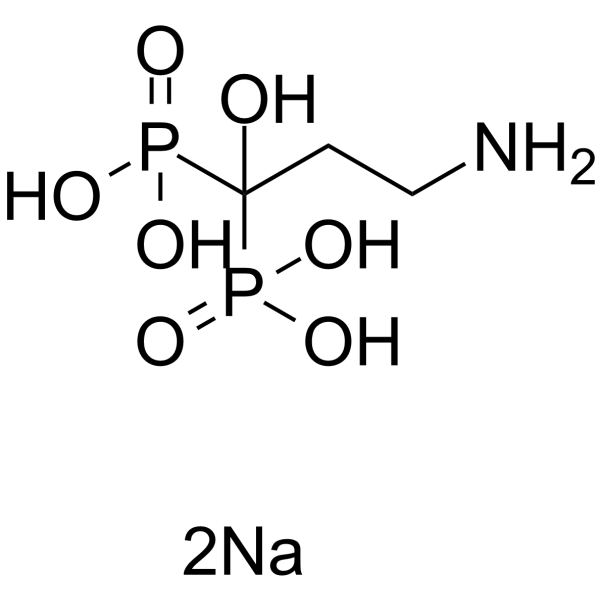
Pamidronate disodium (CGP 23339A), the second-generation nitrogen-containing bisphosphonate, is an inhibitor of bone loss. Pamidronate disodium significantly inhibits subchondral bone loss in early osteoarthritis by upregulating the expression of osteoprotegerin in cartilage and subchondral bone, and inhibiting the expression of RANKL and MMP-9 in both tissues, as well as TLR-4 in cartilage, thereby alleviating cartilage degeneration. Additionally, Pamidronate disodium can inhibit the signaling of Wnt and β-catenin, and is applicable for research on osteoporosis and osteosarcoma.
For research use only. We do not sell to patients.
- Purity : 99.92%
- CAS No.: 57248-88-1
- Formula: C3H9NNa2O7P2
- Molecular Weight:279.03
-
Storage:
4°C, sealed storage, away from moisture
* In solvent : -80°C, 6 months; -20°C, 1 month (sealed storage, away from moisture)

To place orders, for customer services and technical support, please contact: MedChemExpress USA
Tel: 609-228-6898 E-mail: [email protected] [email protected]


-
 Biological Activity
-
Chemical Information
-
Solvent & Solubility
- Protocols
- Purity & Documentation
- References
-
 Help & FAQs


-
HY-11101
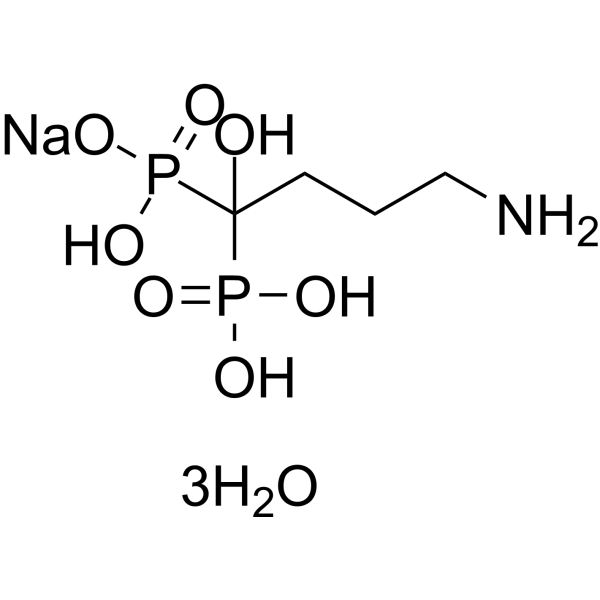
Alendronate sodium hydrateNitrogen-Containing Bisphosphonate -
HY-10181
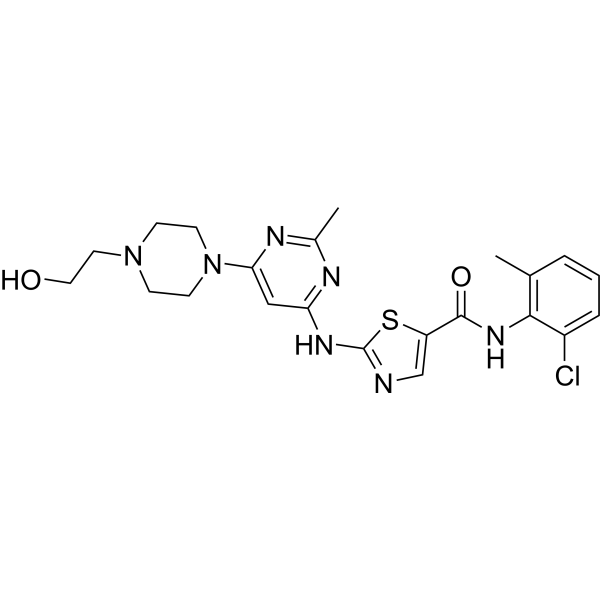
DasatinibSrc/Bcr-Abl Inhibitor -
HY-13777
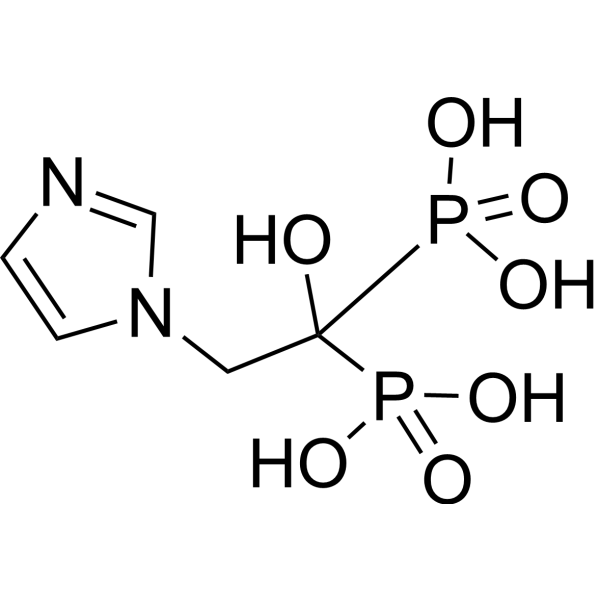
Zoledronic AcidAnti-resorptive Agant -
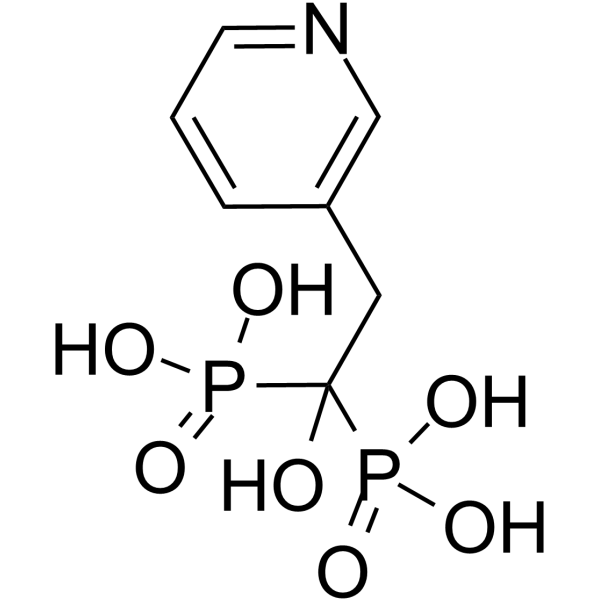
HY-B0148
Risedronic acidAnti-resorption Agent -
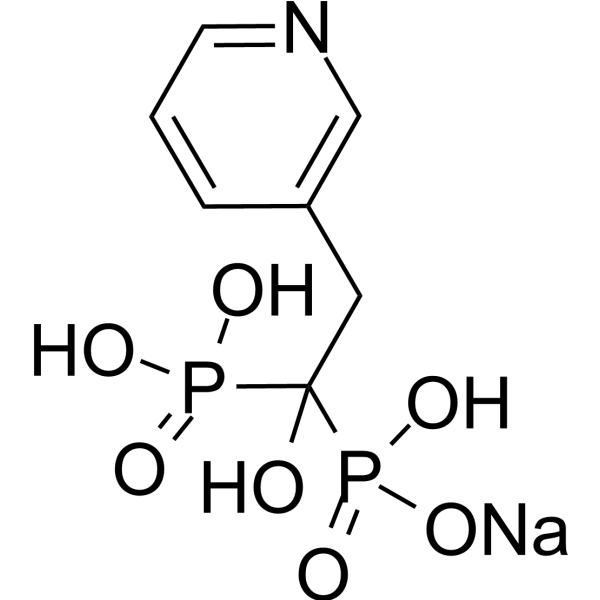
HY-B0119
Risedronic acid sodiumAnti-resorption Agent -
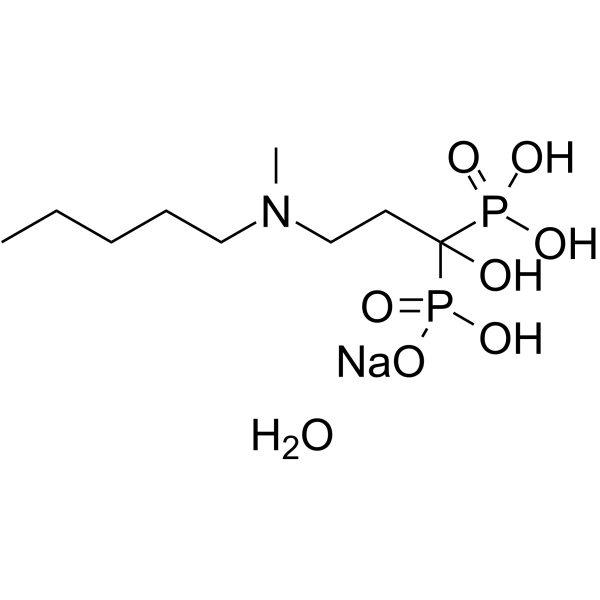
HY-B0515
Ibandronate Sodium MonohydrateFPP synthase Inhibitor -
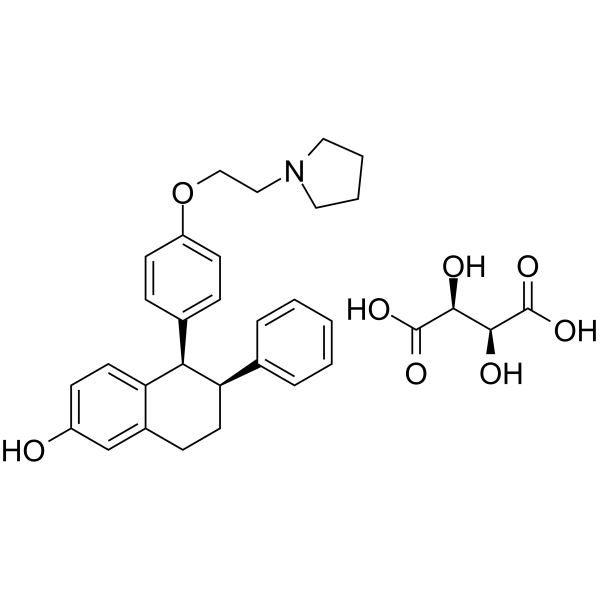
HY-A0038
Lasofoxifene tartrateEstrogen Receptor Modulator -
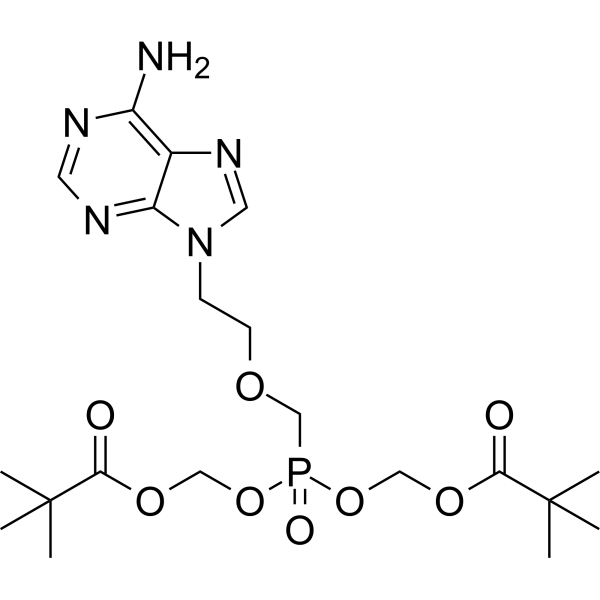
HY-B0255
Adefovir dipivoxilAdefovir Prodrug -
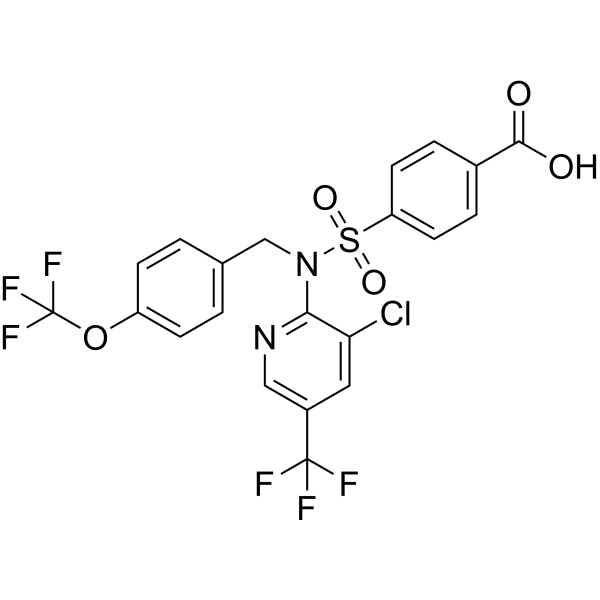
HY-18662
RQ-00203078TRPM8 Antagonist -
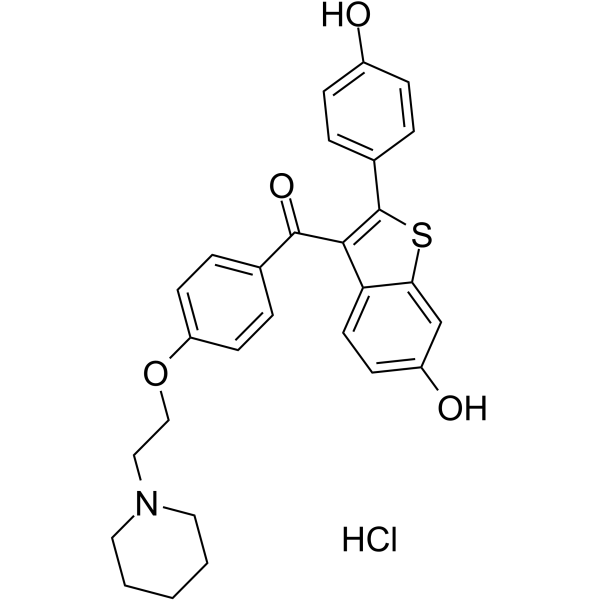
HY-13738A
Raloxifene hydrochlorideEstrogen Receptor Modulator -
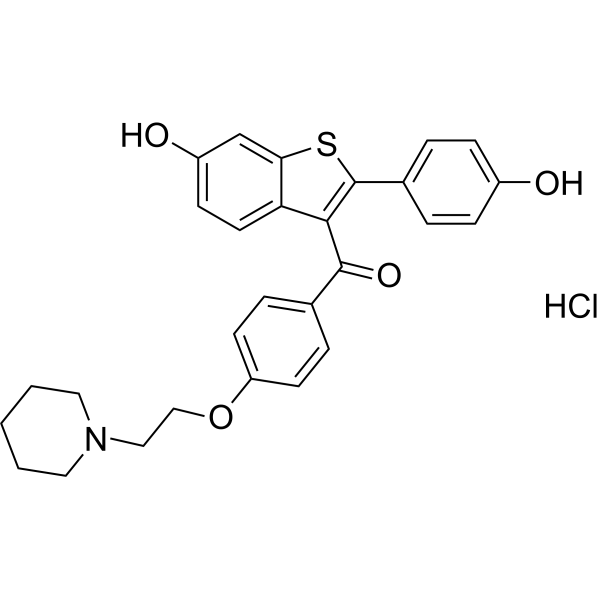
HY-13738AR
Raloxifene hydrochloride (Standard) -
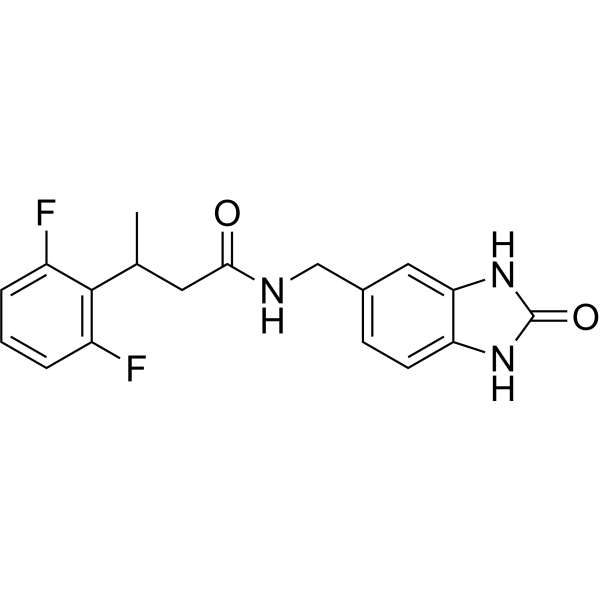
HY-153910
AGPS-IN-1AGPS Binder
Publications Citing Use of MedChemExpress (MCE) Pamidronate disodium
More

Biological Activity
Description
Cellular Effect
|
Cell Line

|
Type | Value | Description | References |
|---|---|---|---|---|
| T-cell | EC50 |
2.21 μM
Compound: Pamidronate
|
Mean effective concentration of compound was determined in stimulating Vgamma9 / Vdelta2 T cell
Mean effective concentration of compound was determined in stimulating Vgamma9 / Vdelta2 T cell
|
[PMID: 12657258] |
In Vitro
Pamidronate disodium (0.001-1000 µM, 72 h) inhibits the cell viability of osteosarcoma cells POS, HMPOS and COS31, exhibits no cytotoxicity to fibroblasts[1].
MedChemExpress (MCE) has not independently confirmed the accuracy of these methods. They are for reference only. Further protocols information, click here.
-
Cell Line:POS, HMPOS and COS31
-
Concentration:0.001-1000 µM
-
Incubation Time:72 h
-
Result:Inhibited the cell viability.
In Vivo
MedChemExpress (MCE) has not independently confirmed the accuracy of these methods. They are for reference only.
-
Animal Model:Anterior cruciate ligament transection (ACLT)-induced osteoarthritis in rabbits[3]
-
Dosage:3 mg/kg
-
Administration:ear vein injection, once monthly for 14 weeks
-
Result:Increased bone volume fraction (BV/TV), trabecular thickness (TbTh) and trabecular number (TbN).
Reduced the erosion of cartilage surface, increase the content of chondrocytes and matrix.


Chemical Information
-
CAS No. 57248-88-1
-
Appearance Solid
-
Molecular Weight 279.03
-
Formula C3H9NNa2O7P2
-
Color White to off-white
-
SMILES
OP(C(O)(P(O)(O[Na])=O)CCN)(O[Na])=O
-
Synonyms
CGP 23339A
-
Shipping
Room temperature in continental US; may vary elsewhere.
-
Storage
4°C, sealed storage, away from moisture
* In solvent : -80°C, 6 months; -20°C, 1 month (sealed storage, away from moisture)


Publications (1)
-
Journal Impact Factor
-
Most Recent
-
Cell Rep Methods
RECOVER identifies synergistic drug combinations in vitro through sequential model optimization. [Abstract]2023 Oct 23;3(10):100599. PMID: 37797618


Solvent & Solubility
In Vitro:
H2O : 50 mg/mL (179.19 mM; ultrasonic and warming and heat to 60°C)
Please refer to the solubility information to select the appropriate solvent. Once prepared, please aliquot and store the solution to prevent product inactivation from repeated freeze-thaw cycles.
Storage method and period of stock solution: -80°C, 6 months; -20°C, 1 month (sealed storage, away from moisture). When stored at -80°C, please use it within 6 months. When stored at -20°C, please use it within 1 month.
* Note: If you choose water as the stock solution, please dilute it to the working solution, then filter and sterilize it with a 0.22 μm filter before use.
Please refer to the solubility information to select the appropriate solvent. Once prepared, please aliquot and store the solution to prevent product inactivation from repeated freeze-thaw cycles.
Storage method and period of stock solution: -80°C, 6 months; -20°C, 1 month (sealed storage, away from moisture). When stored at -80°C, please use it within 6 months. When stored at -20°C, please use it within 1 month.
* Note: If you choose water as the stock solution, please dilute it to the working solution, then filter and sterilize it with a 0.22 μm filter before use.
Concentration (start) × Volume (start) = Concentration (final) × Volume (final)

Protocols
-
RNA extraction experimental
By lysing cells, releasing RNA, and removing impurities such as proteins and DNA, high-purity RNA products are finally obtained. The commonly used traditional method is the guanidine isothiocyanate/phenol/chloroform method (Trizol), which is suitable for a variety of animal materials including animal tissues, microorganisms, cultured cells, etc., and most plant materials.
-
Mitochondrial membrane-potential fluorescent assay
Mitochondrial membrane potential fluorescent assays estimate ΔΨm in living cells using lipophilic cationic dyes such as TMRM, TMRE, rhodamine 123, and JC-1, which accumulate in mitochondria according to membrane polarization; loss of signal after FCCP or CCCP treatment is interpreted as mitochondrial depolarization. TMRM/TMRE and rhodamine 123 are commonly used for semi-quantitative live-cell microscopy or flow cytometry, while JC-1 can report a shift from red aggregate fluorescence to green monomer fluorescence during depolarization; interpretation requires controls because dye concentration, quenching mode, cell type, dye efflux, and mitochondrial mass can affect fluorescence independently of ΔΨm.
-
Mitochondrial membrane-potential and mitochondrial mass staining
Mitochondrial membrane potential staining measures the electrochemical polarization across the mitochondrial inner membrane in live cells using lipophilic cationic fluorescent probes; early rhodamine-based work showed that selective mitochondrial dye accumulation is lost when the mitochondrial transmembrane potential is dissipated. JC-1 reports mitochondrial polarization by shifting from green monomer fluorescence to red J-aggregate fluorescence as dye concentration increases within energized mitochondria; therefore, the red/green fluorescence ratio is used as a relative readout of mitochondrial membrane potential. TMRE or TMRM staining provides a single-channel relative readout because these cationic rhodamine esters accumulate in polarized mitochondria, and lower fluorescence indicates reduced mitochondrial polarization when acquisition and dye-loading conditions are controlled. Mitochondrial mass staining is commonly performed with MitoTracker Green FM or related MitoTracker dyes as


Purity & Documentation
-
Data Sheet (279 KB)
-
SDS (396 KB)
- English - EN (396 KB)
- Français - FR (396 KB)
- Deutsch - DE (396 KB)
- Norwegian - NO (396 KB)
- Español - ES (396 KB)
- Swedish - SV (396 KB)
- Italian - IT (396 KB)
- Korean - KR (396 KB)
- Portuguese - PT (396 KB)
-
Handling Instructions (2659 KB)
References
[1]. Ashton JA, et al. Investigation of the effect of pamidronate disodium on the in vitro viability of osteosarcoma cellsfrom dogs. Am J Vet Res. 2005 May;66(5):885-91. [Content Brief]
[2]. Xu Y, et al. Pamidronate Disodium Leads to Bone Necrosis via Suppression of Wnt/β-Catenin Signaling in Human Bone Marrow Mesenchymal Stem Cells In Vitro. J Oral Maxillofac Surg. 2017 Mar 22. [Content Brief]
[3]. Lv Y, et al. Effects of pamidronate disodium on the loss of osteoarthritic subchondral bone and the expression of cartilaginous and subchondral osteoprotegerin and RANKL in rabbits. BMC Musculoskelet Disord. 2014 Nov 6;15:370. [Content Brief]


Complete Stock Solution Preparation Table
Please refer to the solubility information to select the appropriate solvent. Once prepared, please aliquot and store the solution to prevent product inactivation from repeated freeze-thaw cycles.
Storage method and period of stock solution: -80°C, 6 months; -20°C, 1 month (sealed storage, away from moisture). When stored at -80°C, please use it within 6 months. When stored at -20°C, please use it within 1 month.
| Optional Solvent | Concentration Solvent Mass | 1 mg | 5 mg | 10 mg | 25 mg |
|---|---|---|---|---|---|
| H2O | 1 mM | 3.5838 mL | 17.9192 mL | 35.8384 mL | 89.5961 mL |
| 5 mM | 0.7168 mL | 3.5838 mL | 7.1677 mL | 17.9192 mL | |
| 10 mM | 0.3584 mL | 1.7919 mL | 3.5838 mL | 8.9596 mL | |
| 15 mM | 0.2389 mL | 1.1946 mL | 2.3892 mL | 5.9731 mL | |
| 20 mM | 0.1792 mL | 0.8960 mL | 1.7919 mL | 4.4798 mL | |
| 25 mM | 0.1434 mL | 0.7168 mL | 1.4335 mL | 3.5838 mL | |
| 30 mM | 0.1195 mL | 0.5973 mL | 1.1946 mL | 2.9865 mL | |
| 40 mM | 0.0896 mL | 0.4480 mL | 0.8960 mL | 2.2399 mL | |
| 50 mM | 0.0717 mL | 0.3584 mL | 0.7168 mL | 1.7919 mL | |
| 60 mM | 0.0597 mL | 0.2987 mL | 0.5973 mL | 1.4933 mL | |
| 80 mM | 0.0448 mL | 0.2240 mL | 0.4480 mL | 1.1200 mL | |
| 100 mM | 0.0358 mL | 0.1792 mL | 0.3584 mL | 0.8960 mL |
* Note: If you choose water as the stock solution, please dilute it to the working solution, then filter and sterilize it with a 0.22 μm filter before use.


Pamidronate disodium Related Classifications
HY-B0012A Related Classifications
 Powered by Bioz