



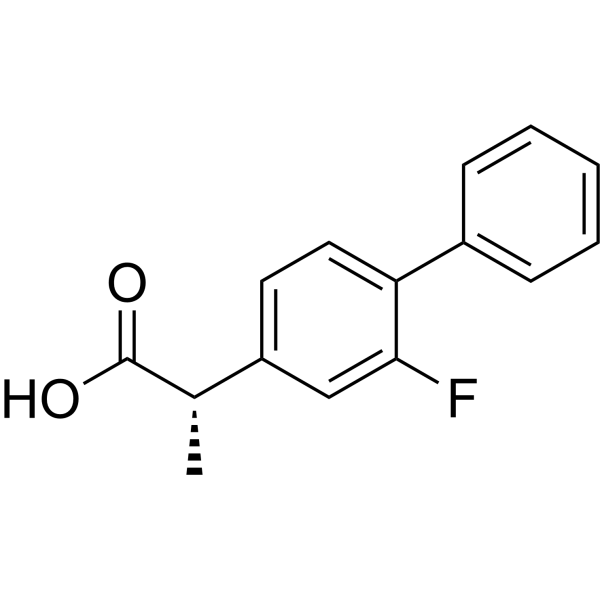
(S)-Flurbiprofen
Based on 2 publication(s) in Google Scholar
(S)-Flurbiprofen is an active enantiomer of Flurbiprofen, with IC50 values of 0.48 μM and 0.47 μM for COX-1 and COX-2, respectively.
Nos produits utilisent uniquement pour la recherche. Nous ne vendons pas aux patients.
- Pureté : 99.88%
- CAS No.: 51543-39-6
- Formule: C15H13FO2
- Masse moléculaire:244.26
-
Stockage:Powder -20°C, 3 years , 4°C, 2 years ; In solvent -80°C, 2 years , -20°C, 1 year

To place orders, for customer services and technical support, please contact: MedChemExpress USA
Tel: 609-228-6898 E-mail: [email protected] [email protected]


-
 Activité biologique
-
Chemical Information
-
Solvant et solubilité
- Pureté et documentation
- Références
-
 Help & FAQs


-
HY-10291
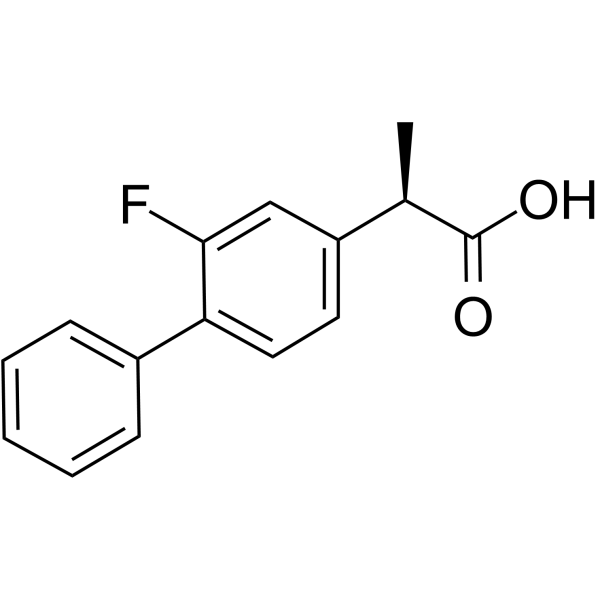
TarenflurbilEnantiomer of Flurbiprofen -
HY-10582S1
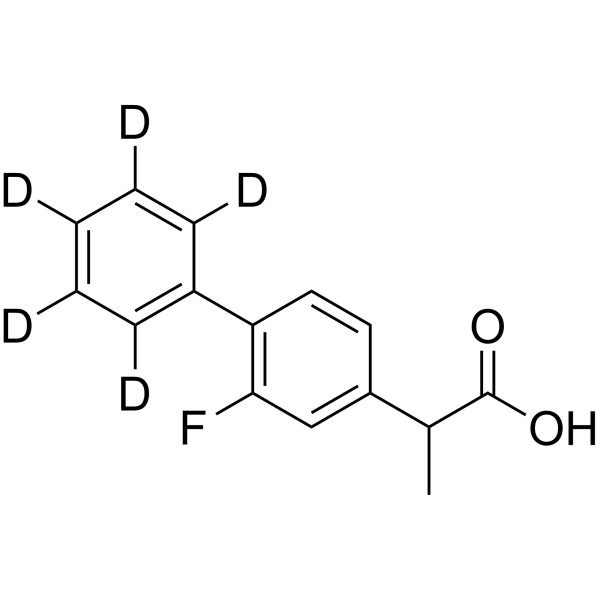
Flurbiprofen-d5Stable Isotope -

HY-15123R
(S)-Flurbiprofen (Standard)COX Inhibitor -
HY-13913
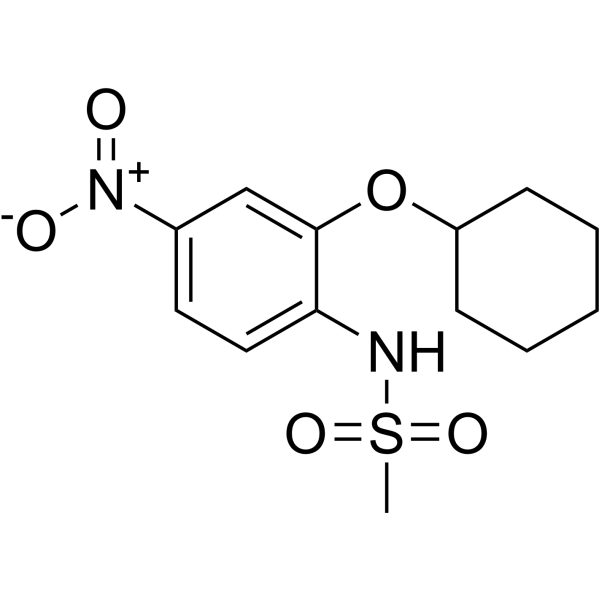
NS-398COX-2 Inhibitor -
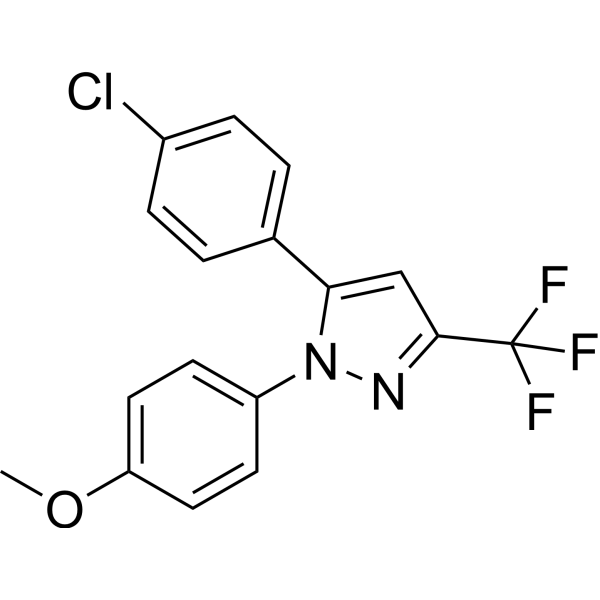
HY-59105
SC-560COX-1 Inhibitor -
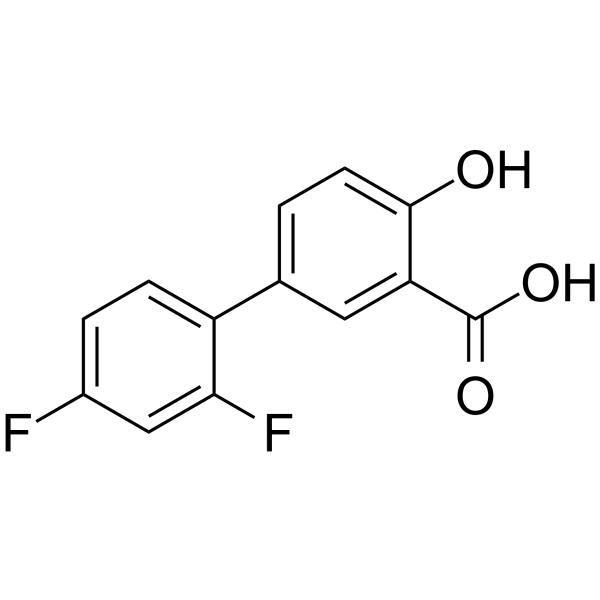
HY-18342
DiflunisalCOX Inhibitor -
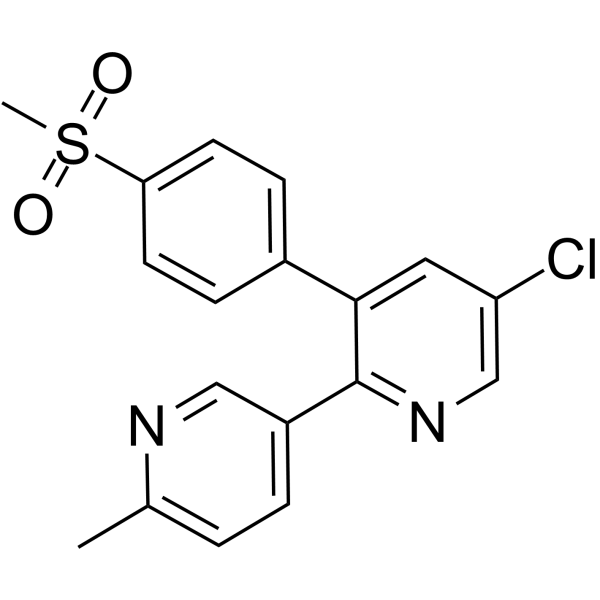
HY-15321
EtoricoxibCOX-2 Inhibitor -
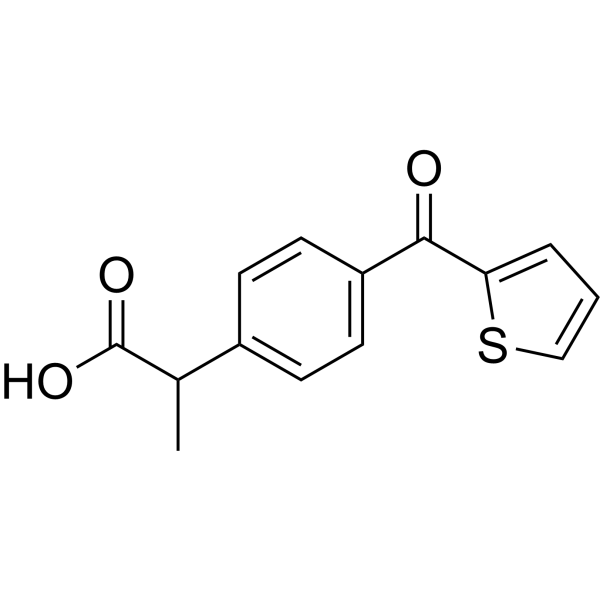
HY-B0270
SuprofenPGE synthase Inhibitor -
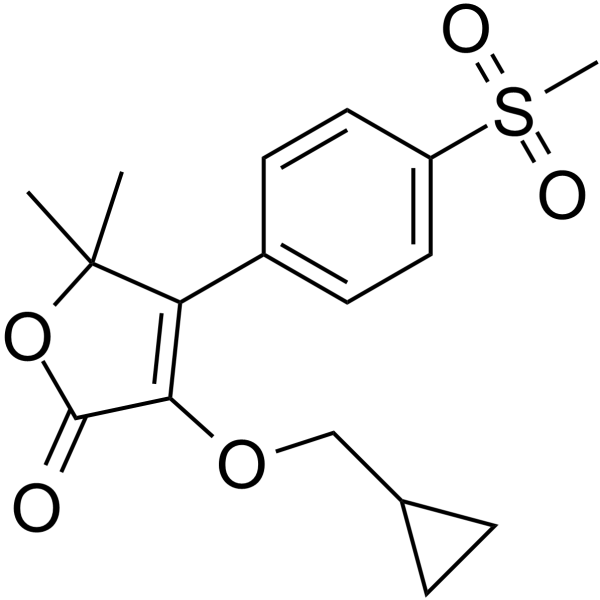
HY-14670
FirocoxibCOX-2 Inhibitor -
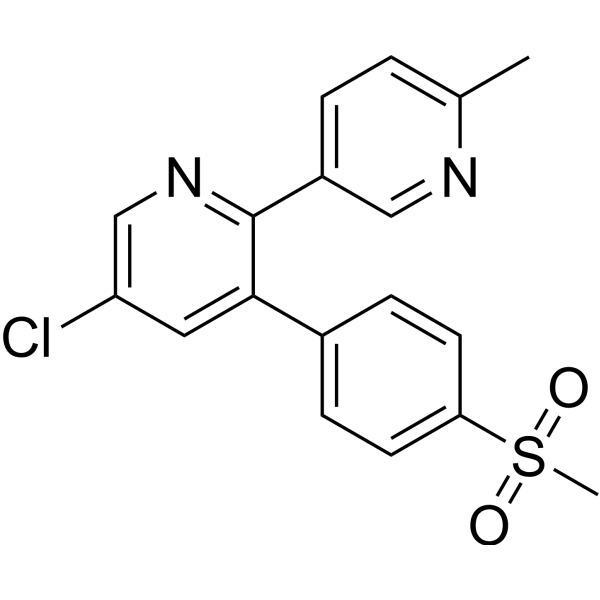
HY-15321R
Etoricoxib (Standard)COX-2 Inhibitor -
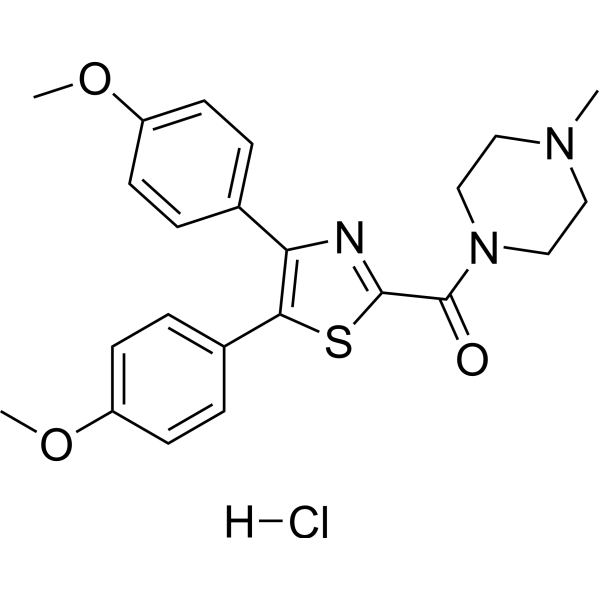
HY-103386
FR122047COX-1 Inhibitor -
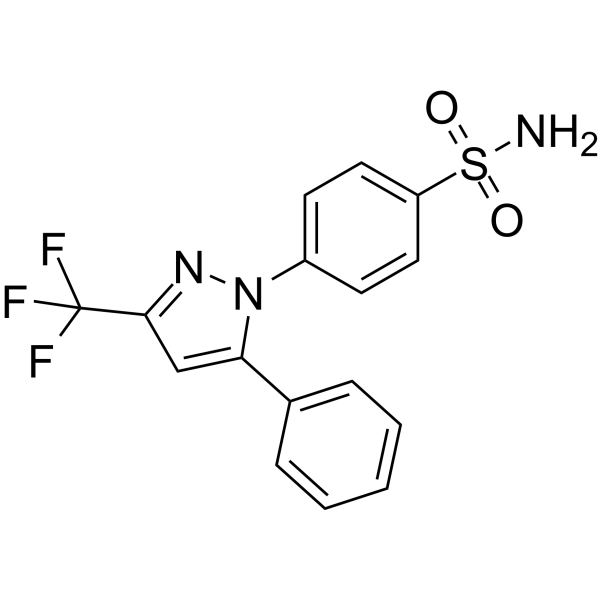
HY-118139
Desmethyl CelecoxibCOX-2 Inhibitor
Publications Citing Use of MedChemExpress (MCE) (S)-Flurbiprofen
More

Activité biologique
Description
IC50 & Target
[1]|
COX-1 0.48 μM (IC50) |
COX-2 0.47 μM (IC50) |
In Vitro
(S)-Flurbiprofen (10–7 M) results in a total suppression of basal and stimulated PGE2 release in rat skin[2].
MedChemExpress (MCE) has not independently confirmed the accuracy of these methods. They are for reference only. .
Essai clinique
| NCT Number | Sponsor | Condition | Start Date |
Phase

|
|---|---|---|---|---|
| NCT01329991 | Plexxikon| | 2011-05 | PHASE1 |


Chemical Information
-
CAS No. 51543-39-6
-
Appearance Solid
-
Masse moléculaire 244.26
-
Formule C15H13FO2
-
Color White to off-white
-
SMILES
O=C(O)[C@@H](C)C1=CC=C(C2=CC=CC=C2)C(F)=C1
-
Synonyms
Esflurbiprofen
-
Livraison
Room temperature in continental US; may vary elsewhere.
-
Stockage
Powder -20°C 3 years 4°C 2 years In solvent -80°C 2 years -20°C 1 year


Publications (2)
-
Journal Impact Factor
-
Most Recent
-
Acta Pharmacol Sin
Esflurbiprofen exerts a fast-onset antidepressant effect by blocking SERT-nNOS interaction. [Abstract]2025 Oct 9. PMID: 41068287 -
J Phys Chem B
Variation of Activation Volume as an Indicator of the Difference in Clusterization Phenomenon Induced by H-Bonding and F-Π Stacking Interactions in Enantiomers and a Racemate of Flurbiprofen. [Abstract]2024 Apr 25;128(16):4021-4032. PMID: 38608273


Solvant et solubilité
In Vitro:
DMSO : 100 mg/mL (409.40 mM; Need ultrasonic; Hygroscopic DMSO has a significant impact on the solubility of product, please use newly opened DMSO)
Please refer to the solubility information to select the appropriate solvent. Once prepared, please aliquot and store the solution to prevent product inactivation from repeated freeze-thaw cycles.
Storage method and period of stock solution: -80°C, 2 years; -20°C, 1 year. When stored at -80°C, please use it within 2 years. When stored at -20°C, please use it within 1 year.
Please refer to the solubility information to select the appropriate solvent. Once prepared, please aliquot and store the solution to prevent product inactivation from repeated freeze-thaw cycles.
Storage method and period of stock solution: -80°C, 2 years; -20°C, 1 year. When stored at -80°C, please use it within 2 years. When stored at -20°C, please use it within 1 year.
Concentration (start) × Volume (start) = Concentration (final) × Volume (final)
In Vivo:
Select the appropriate dissolution method based on your experimental animal and administration route.
- For the following dissolution methods, please ensure to first prepare a clear stock solution using an In Vitro approach and then sequentially add co-solvents:
- To ensure reliable experimental results, the clarified stock solution can be appropriately stored based on storage conditions. As for the working solution for In Vivo experiments, it is recommended to prepare freshly and use it on the same day.
- The percentages shown for the solvents indicate their volumetric ratio in the final prepared solution. If precipitation or phase separation occurs during preparation, heat and/or sonication can be used to aid dissolution.
Add each solvent one by one: 10% DMSO 90% (20% SBE-β-CD in Saline)
Solubility: ≥ 2.5 mg/mL (10.23 mM); Clear solution
This protocol yields a clear solution of ≥ 2.5 mg/mL (saturation unknown).
Taking 1 mL working solution as an example, add 100 μL DMSO stock solution (25.0 mg/mL) to 900 μL 20% SBE-β-CD in Saline, and mix evenly.
Preparation of 20% SBE-β-CD in Saline (4°C, storage for one week): 2 g SBE-β-CD powder is dissolved in 10 mL Saline, completely dissolve until clear.
In Vivo Dissolution Calculator
Please enter the basic information of animal experiments:
-
-
-
-
Recommended: Prepare an additional quantity of animals to account for potential losses during experiments.
Please enter your animal formula composition:
-
%DMSO +
Recommended: Keep the proportion of DMSO in working solution below 2% if your animal is weak.
-
%+
-
+%Tween-80 + +
-
%Saline +
The co-solvents required include: DMSO, . All of co-solvents are available by MedChemExpress (MCE). , Tween 80. All of co-solvents are available by MedChemExpress (MCE).
Working solution concentration: 0.22 mg/mL
Method for preparing stock solution: mg drug dissolved in μL DMSO. Stock solution concentration: mg/mL.
1. Take μL DMSO stock solution;
2. Add μL .
μL , mix evenly;
3. Then add μL Tween 80, mix evenly;
4. Then add μL
Please ensure that the stock solution in the first step is dissolved to a clear state, and add co-solvents in sequence. You can use ultrasonic heating (ultrasonic cleaner, recommended frequency 20-40 kHz), vortexing, etc. to assist dissolution.


Pureté et documentation
-
Fiche technique (281 KB)
-
SDS (419 KB)
- English - EN (419 KB)
- Français - FR (419 KB)
- Deutsch - DE (419 KB)
- Norwegian - NO (419 KB)
- Español - ES (419 KB)
- Swedish - SV (419 KB)
- Italian - IT (419 KB)
- Korean - KR (419 KB)
- Portuguese - PT (419 KB)
-
Instruction de manipulation (2659 KB)
Références
[1]. A Carabaza, et al. Stereoselective Inhibition of Inducible Cyclooxygenase by Chiral Nonsteroidal Antiinflammatory Drugs. J Clin Pharmacol. 1996 Jun;36(6):505-12. [Content Brief]
[2]. B Averbeck, et al. Inflammatory Mediators Do Not Stimulate CGRP Release if Prostaglandin Synthesis Is Blocked by S(+)-flurbiprofen in Isolated Rat Skin. Inflamm Res. 2003 Dec;52(12):519-23. [Content Brief]


Complete Stock Solution Preparation Table
Please refer to the solubility information to select the appropriate solvent. Once prepared, please aliquot and store the solution to prevent product inactivation from repeated freeze-thaw cycles.
Storage method and period of stock solution: -80°C, 2 years; -20°C, 1 year. When stored at -80°C, please use it within 2 years. When stored at -20°C, please use it within 1 year.
| Optional Solvent | Concentration Solvent Mass | 1 mg | 5 mg | 10 mg | 25 mg |
|---|---|---|---|---|---|
| DMSO | 1 mM | 4.0940 mL | 20.4700 mL | 40.9400 mL | 102.3500 mL |
| 5 mM | 0.8188 mL | 4.0940 mL | 8.1880 mL | 20.4700 mL | |
| 10 mM | 0.4094 mL | 2.0470 mL | 4.0940 mL | 10.2350 mL | |
| 15 mM | 0.2729 mL | 1.3647 mL | 2.7293 mL | 6.8233 mL | |
| 20 mM | 0.2047 mL | 1.0235 mL | 2.0470 mL | 5.1175 mL | |
| 25 mM | 0.1638 mL | 0.8188 mL | 1.6376 mL | 4.0940 mL | |
| 30 mM | 0.1365 mL | 0.6823 mL | 1.3647 mL | 3.4117 mL | |
| 40 mM | 0.1023 mL | 0.5117 mL | 1.0235 mL | 2.5587 mL | |
| 50 mM | 0.0819 mL | 0.4094 mL | 0.8188 mL | 2.0470 mL | |
| 60 mM | 0.0682 mL | 0.3412 mL | 0.6823 mL | 1.7058 mL | |
| 80 mM | 0.0512 mL | 0.2559 mL | 0.5117 mL | 1.2794 mL | |
| 100 mM | 0.0409 mL | 0.2047 mL | 0.4094 mL | 1.0235 mL |


(S)-Flurbiprofen Related Classifications
HY-15123 Related Classifications
 Powered by Bioz