



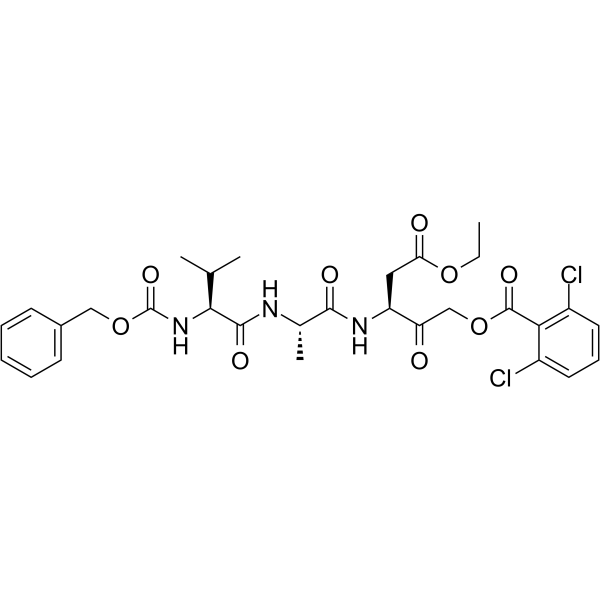
SDZ 224-015

Based on 1 Customer Validation
SDZ 224-015 is an orally active inhibitor of the interleukin-1 beta (IL-1β) converting enzyme and caspase-1. SDZ 224-015 possesses anti-COVID-19 activity, targeting Mpro (IC50 of 30 nM).
For research use only. We do not sell to patients.
- Purity : 96.05%
- CAS No.: 161511-45-1
- Formula: C30H35Cl2N3O9
- Molecular Weight:652.52
-
Storage:
-20°C, sealed storage, away from moisture and light
* In solvent : -80°C, 6 months; -20°C, 1 month (sealed storage, away from moisture and light)

To place orders, for customer services and technical support, please contact: MedChemExpress USA
Tel: 609-228-6898 E-mail: [email protected] [email protected]


-
 Biological Activity
-
Chemical Information
-
Solvent & Solubility
- Protocols
- Purity & Documentation
- References
-
 Help & FAQs


-
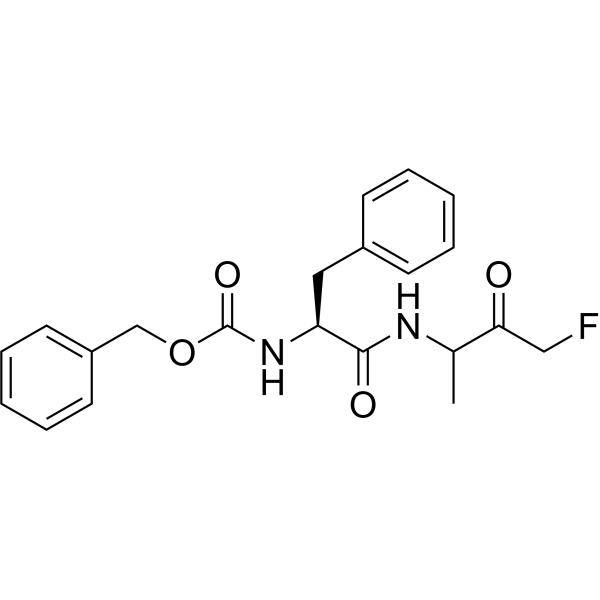
HY-P0109A
Z-FA-FMKCathepsin B/L Inhibitor -
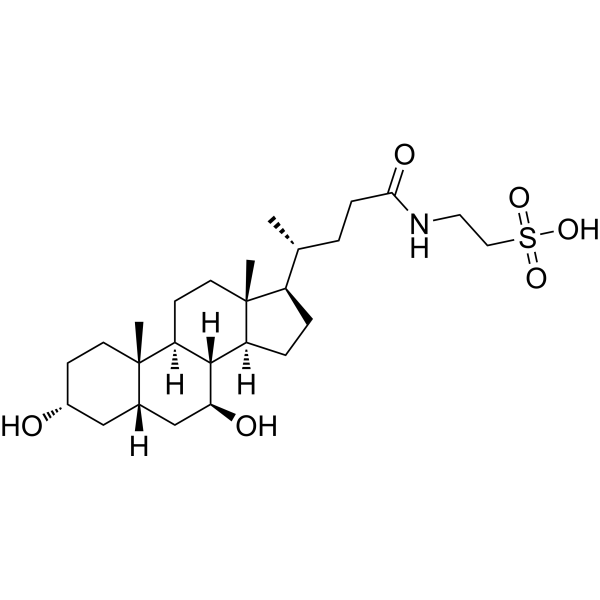
HY-19696
TauroursodeoxycholateEndoplasmic Reticulum Stress Inhibitor -
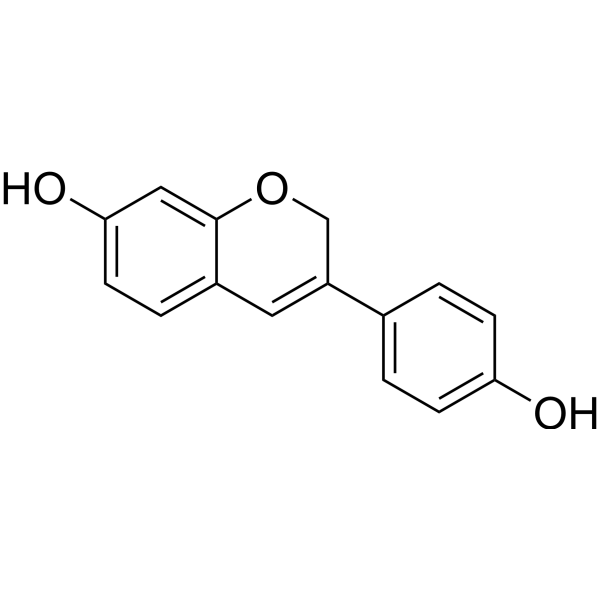
HY-13721
PhenoxodiolAnticancer Agent -

HY-19696R
Tauroursodeoxycholate (Standard)Endoplasmic Reticulum Stress Inhibitor -
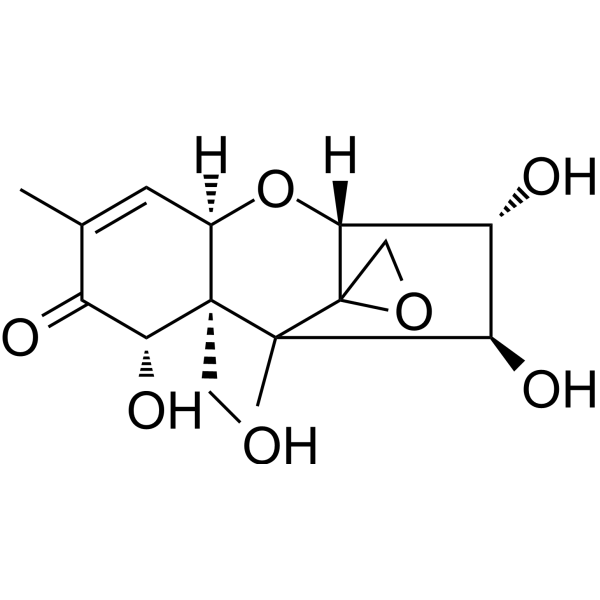
HY-N6801
NivalenolTrichothecene Mycotoxin -
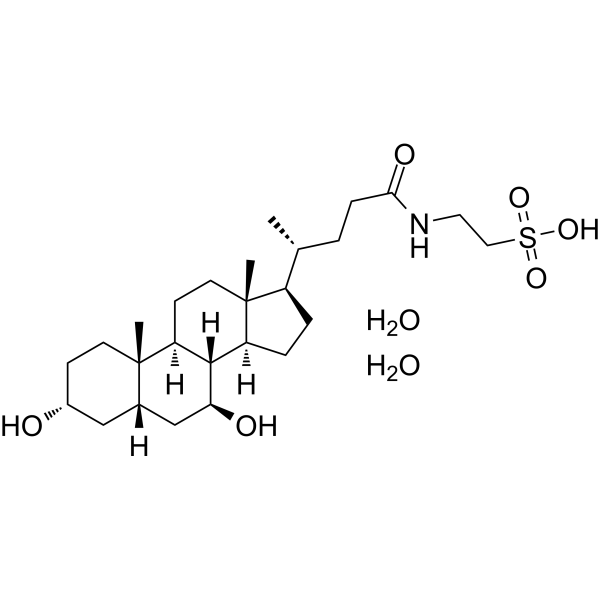
HY-19696B
Tauroursodeoxycholate dihydrateTaurine Conjugate Of Ursodeoxycholic Acid -

HY-N0905
Ginsenoside Rh4 -
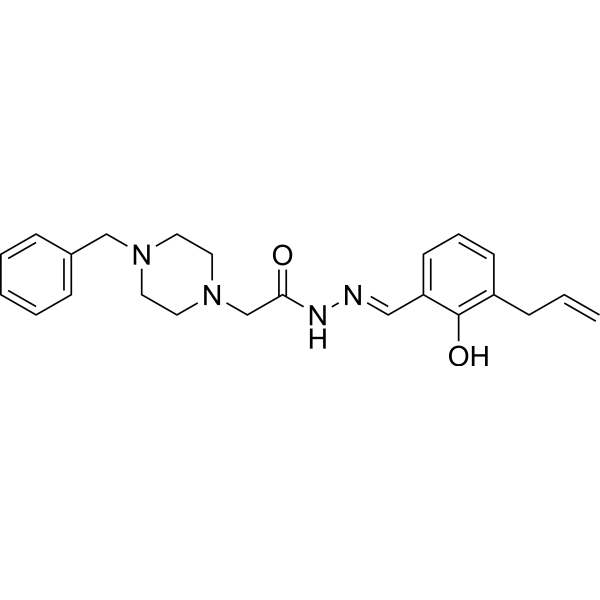
HY-13523
PAC-1Caspase Activator -
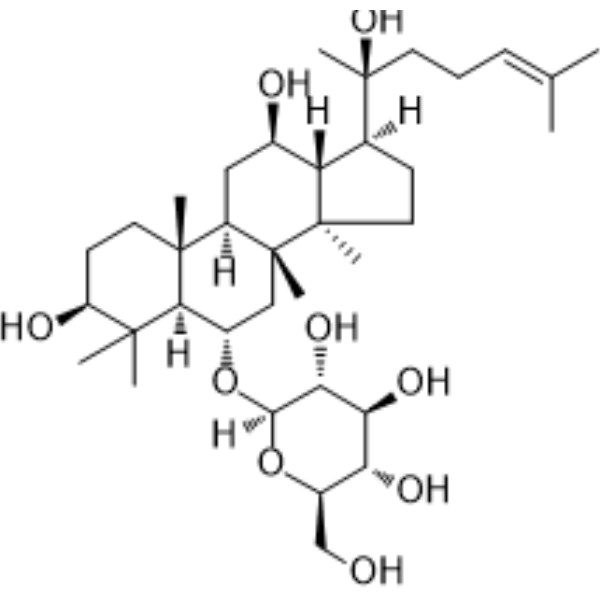
HY-N0604
Ginsenoside Rh1Endogenous Metabolite -
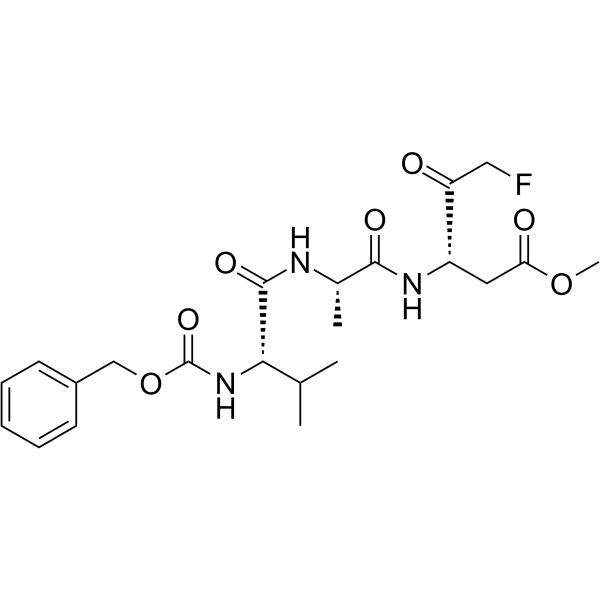
HY-16658
Z-VAD(OMe)-FMKPan-caspase Inhibitor -
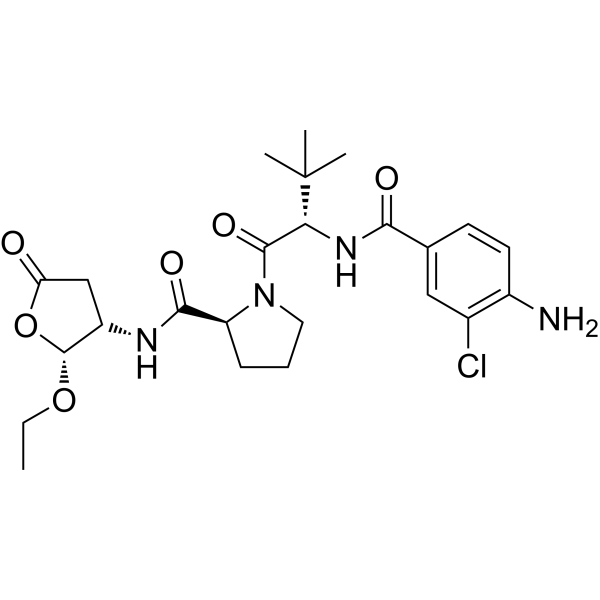
HY-13205
BelnacasanCaspase-1 Inhibitor -
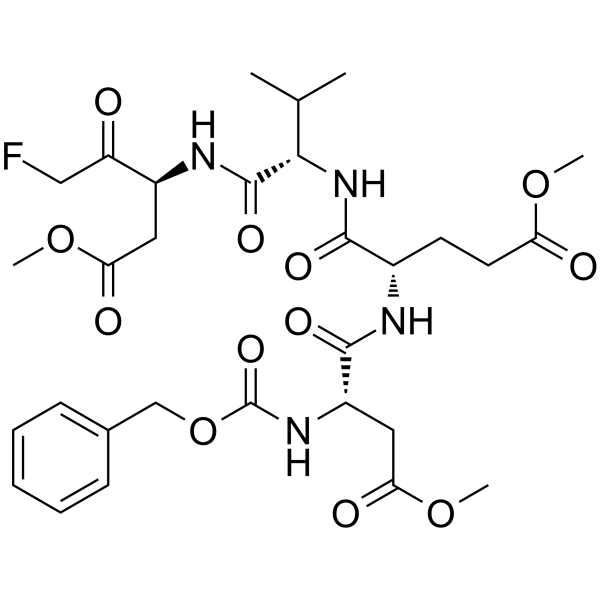
HY-12466
Z-DEVD-FMKCaspase-3 Inhibitor
All Caspase Isoforms
More

Biological Activity
Description
In Vivo
SDZ 224-015 (0.2-5 mg/kg, p.o.) displays analgesic activity in the Randall-Selitto yeast-inflamed paw pressure test, significant at a dose of 1 mg/kg[2].
MedChemExpress (MCE) has not independently confirmed the accuracy of these methods. They are for reference only.


Chemical Information
-
CAS No. 161511-45-1
-
Appearance Solid
-
Molecular Weight 652.52
-
Formula C30H35Cl2N3O9
-
Color White to off-white
-
SMILES
O=C(OCC1=CC=CC=C1)N[C@@H](C(C)C)C(N[C@@H](C)C(N[C@@H](CC(OCC)=O)C(COC(C2=C(C=CC=C2Cl)Cl)=O)=O)=O)=O
-
Shipping
Room temperature in continental US; may vary elsewhere.
-
Storage
-20°C, sealed storage, away from moisture and light
* In solvent : -80°C, 6 months; -20°C, 1 month (sealed storage, away from moisture and light)


Solvent & Solubility
In Vitro:
DMSO : 100 mg/mL (153.25 mM; Need ultrasonic; Hygroscopic DMSO has a significant impact on the solubility of product, please use newly opened DMSO)
Please refer to the solubility information to select the appropriate solvent. Once prepared, please aliquot and store the solution to prevent product inactivation from repeated freeze-thaw cycles.
Storage method and period of stock solution: -80°C, 6 months; -20°C, 1 month (sealed storage, away from moisture and light). When stored at -80°C, please use it within 6 months. When stored at -20°C, please use it within 1 month.
Please refer to the solubility information to select the appropriate solvent. Once prepared, please aliquot and store the solution to prevent product inactivation from repeated freeze-thaw cycles.
Storage method and period of stock solution: -80°C, 6 months; -20°C, 1 month (sealed storage, away from moisture and light). When stored at -80°C, please use it within 6 months. When stored at -20°C, please use it within 1 month.
Concentration (start) × Volume (start) = Concentration (final) × Volume (final)
In Vivo:
Select the appropriate dissolution method based on your experimental animal and administration route.
- For the following dissolution methods, please ensure to first prepare a clear stock solution using an In Vitro approach and then sequentially add co-solvents:
- To ensure reliable experimental results, the clarified stock solution can be appropriately stored based on storage conditions. As for the working solution for In Vivo experiments, it is recommended to prepare freshly and use it on the same day.
- The percentages shown for the solvents indicate their volumetric ratio in the final prepared solution. If precipitation or phase separation occurs during preparation, heat and/or sonication can be used to aid dissolution.
In Vivo Dissolution Calculator
Please enter the basic information of animal experiments:
-
-
-
-
Recommended: Prepare an additional quantity of animals to account for potential losses during experiments.
Please enter your animal formula composition:
-
%DMSO +
Recommended: Keep the proportion of DMSO in working solution below 2% if your animal is weak.
-
%+
-
+%Tween-80 + +
-
%Saline +
The co-solvents required include: DMSO, . All of co-solvents are available by MedChemExpress (MCE). , Tween 80. All of co-solvents are available by MedChemExpress (MCE).
Working solution concentration: 0.22 mg/mL
Method for preparing stock solution: mg drug dissolved in μL DMSO. Stock solution concentration: mg/mL. * In solvent : -80°C, 6 months; -20°C, 1 month (sealed storage, away from moisture and light)
1. Take μL DMSO stock solution;
2. Add μL .
μL , mix evenly;
3. Then add μL Tween 80, mix evenly;
4. Then add μL
Please ensure that the stock solution in the first step is dissolved to a clear state, and add co-solvents in sequence. You can use ultrasonic heating (ultrasonic cleaner, recommended frequency 20-40 kHz), vortexing, etc. to assist dissolution.

Protocols
-
Cell Cytotoxicity Assay
Cytotoxicity assays are usually based on the assessment of cell membrane damage, which can also be indirectly detected by measuring cell viability. Detection methods include MTT assay, CKK-8 assay, LDH assay and ATP assay, etc.
-
Apoptosis Solutions
Apoptosis is a regulated, generally non-lytic cell-death pathway that removes unwanted, damaged, infected, or abnormal cells through coordinated morphological changes, caspase activation, DNA fragmentation, and membrane remodeling. The intrinsic apoptosis pathway is controlled mainly by mitochondrial outer membrane permeabilization, BCL-2 family proteins, cytochrome c release, apoptosome formation, caspase-9 activation, and downstream executioner caspase-3/7 activation. The extrinsic apoptosis pathway is initiated by death receptors such as Fas, TNFR, and TRAIL receptors, which recruit adaptor proteins and activate caspase-8 before engaging executioner caspases or mitochondrial amplification through BID cleavage. Apoptosis is linked to many phenotypes, including cancer cell killing, tissue homeostasis, immune regulation, neurodegeneration, infection response, and treatment-induced cytotoxicity; unresolved questions include how apoptosis interacts with necroptosis, pyroptosis, ferroptos
-
Pyroptosis Solutions
Pyroptosis is a lytic inflammatory cell-death pathway executed by gasdermin pores, most classically through inflammasome-mediated activation of caspase-1, cleavage of gasdermin D, membrane pore formation, LDH release, and secretion of IL-1β and IL-18. The canonical pathway is commonly modeled by priming cells with an inflammatory signal such as LPS to induce pro-IL-1β and inflammasome components, followed by an activation signal such as ATP or nigericin to activate NLRP3, ASC speck formation, caspase-1 cleavage, GSDMD cleavage, cytokine release, and pyroptotic membrane rupture. The non-canonical pathway is triggered when cytosolic LPS activates mouse caspase-11 or human caspase-4/5, leading to GSDMD cleavage and pyroptosis, and this can secondarily activate NLRP3-dependent IL-1β release. Pyroptosis is linked to inflammatory injury, infection, cancer, liver disease, ocular disease, placental inflammation, and other disease phenotypes, but unresolved questions include which gasdermin fam


Purity & Documentation
-
Data Sheet (271 KB)
-
SDS (252 KB)
- English - EN (252 KB)
- Français - FR (252 KB)
- Deutsch - DE (252 KB)
- Norwegian - NO (252 KB)
- Español - ES (252 KB)
- Swedish - SV (252 KB)
- Italian - IT (252 KB)
- Korean - KR (252 KB)
- Portuguese - PT (252 KB)
-
Handling Instructions (2659 KB)
References
[1]. Martin A Redhead, et al. Bispecific repurposed medicines targeting the viral and immunological arms of COVID-19. Sci Rep. 2021 Jun 24;11(1):13208. [Content Brief]
[2]. P R Elford, et al. Reduction of inflammation and pyrexia in the rat by oral administration of SDZ 224-015, an inhibitor of the interleukin-1 beta converting enzyme. Br J Pharmacol. 1995 Jun;115(4):601-6. [Content Brief]


Complete Stock Solution Preparation Table
Please refer to the solubility information to select the appropriate solvent. Once prepared, please aliquot and store the solution to prevent product inactivation from repeated freeze-thaw cycles.
Storage method and period of stock solution: -80°C, 6 months; -20°C, 1 month (sealed storage, away from moisture and light). When stored at -80°C, please use it within 6 months. When stored at -20°C, please use it within 1 month.
| Optional Solvent | Concentration Solvent Mass | 1 mg | 5 mg | 10 mg | 25 mg |
|---|---|---|---|---|---|
| DMSO | 1 mM | 1.5325 mL | 7.6626 mL | 15.3252 mL | 38.3130 mL |
| 5 mM | 0.3065 mL | 1.5325 mL | 3.0650 mL | 7.6626 mL | |
| 10 mM | 0.1533 mL | 0.7663 mL | 1.5325 mL | 3.8313 mL | |
| 15 mM | 0.1022 mL | 0.5108 mL | 1.0217 mL | 2.5542 mL | |
| 20 mM | 0.0766 mL | 0.3831 mL | 0.7663 mL | 1.9157 mL | |
| 25 mM | 0.0613 mL | 0.3065 mL | 0.6130 mL | 1.5325 mL | |
| 30 mM | 0.0511 mL | 0.2554 mL | 0.5108 mL | 1.2771 mL | |
| 40 mM | 0.0383 mL | 0.1916 mL | 0.3831 mL | 0.9578 mL | |
| 50 mM | 0.0307 mL | 0.1533 mL | 0.3065 mL | 0.7663 mL | |
| 60 mM | 0.0255 mL | 0.1277 mL | 0.2554 mL | 0.6386 mL | |
| 80 mM | 0.0192 mL | 0.0958 mL | 0.1916 mL | 0.4789 mL | |
| 100 mM | 0.0153 mL | 0.0766 mL | 0.1533 mL | 0.3831 mL |


SDZ 224-015 Related Classifications
HY-141622 Related Classifications
 Powered by Bioz