



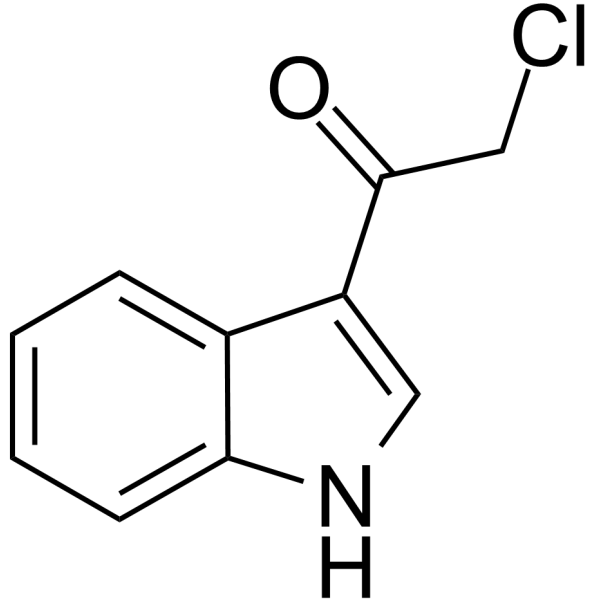
3CAI
Based on 4 publication(s) in Google Scholar
3CAI is a potent and specific AKT1 and AKT2 inhibitor.
For research use only. We do not sell to patients.
- Purity : 98.32%
- CAS No.: 28755-03-5
- Formula: C10H8ClNO
- Molecular Weight:193.63
-
Storage:Powder -20°C, 3 years , 4°C, 2 years ; In solvent -80°C, 2 years , -20°C, 1 year

To place orders, for customer services and technical support, please contact: MedChemExpress USA
Tel: 609-228-6898 E-mail: [email protected] [email protected]


-
 Biological Activity
-
Chemical Information
-
Solvent & Solubility
- Purity & Documentation
- References
-
 Help & FAQs


-
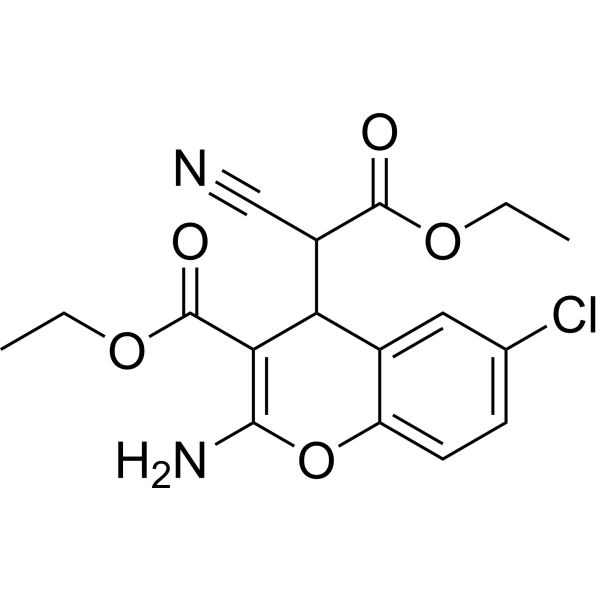
HY-18749
SC79Akt Activator -
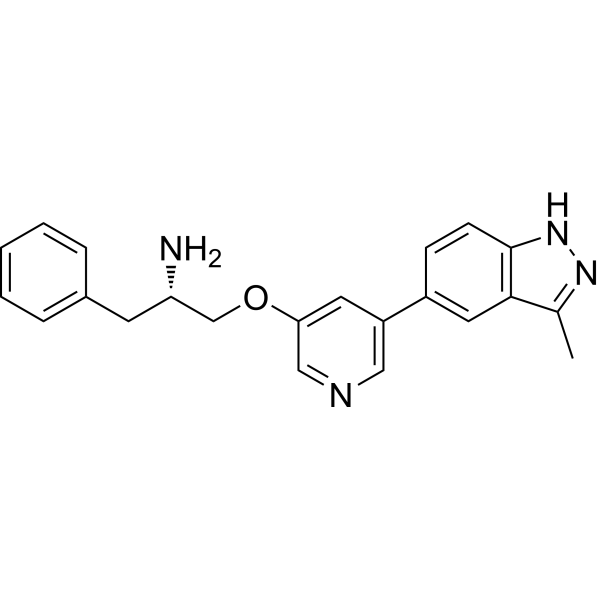
HY-13254
A-674563Akt1 Inhibitor -
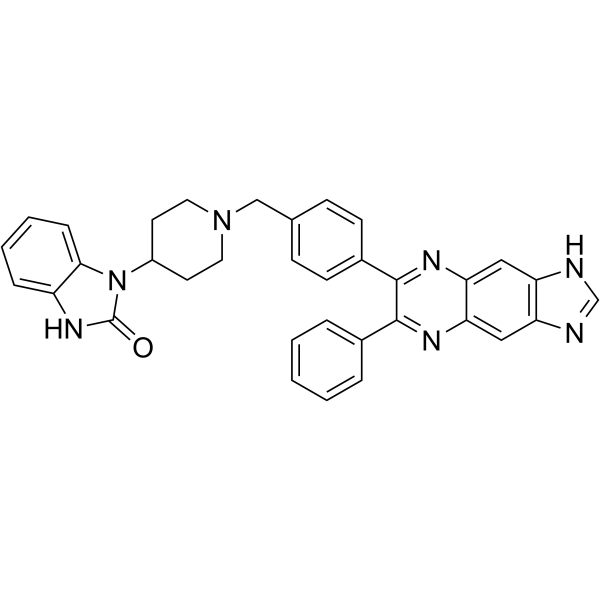
HY-10355
AKT inhibitor VIIIAKT Inhibitor -
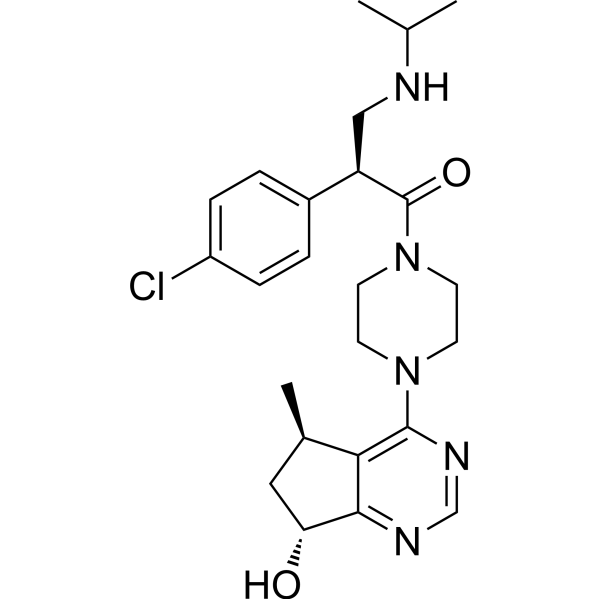
HY-15186
IpatasertibPan-Akt Inhibitor -
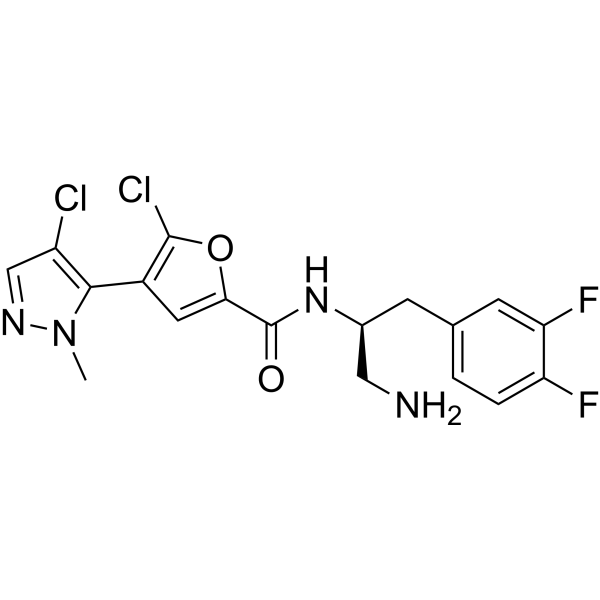
HY-15965
UprosertibAkt Inhibitor -
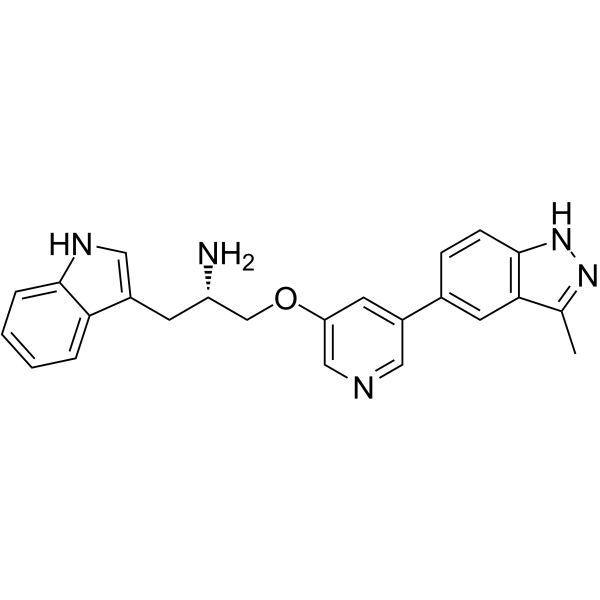
HY-10425
Rizavasertibpan-Akt Inhibitor -
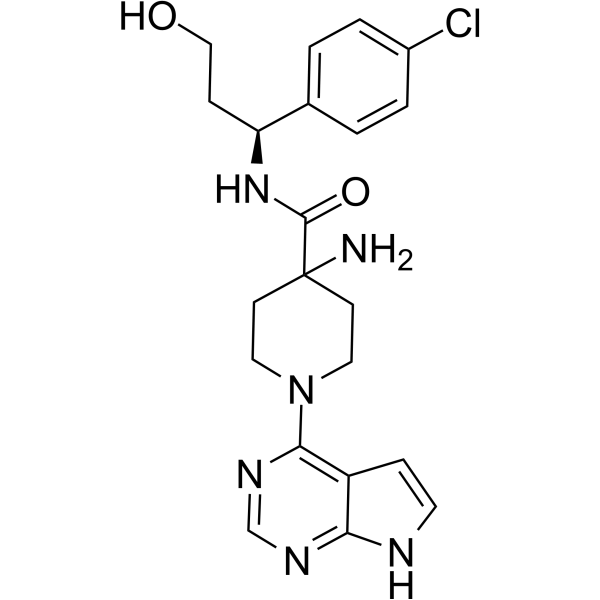
HY-15431
CapivasertibAkt Inhibitor -
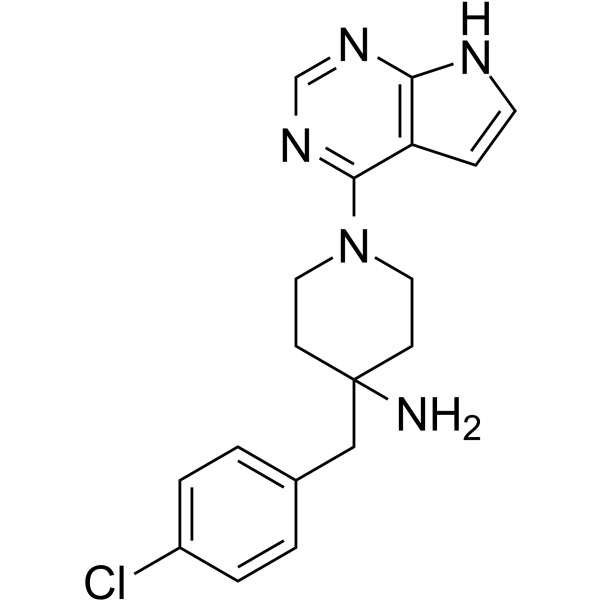
HY-13260
CCT128930AKT Inhibitor -
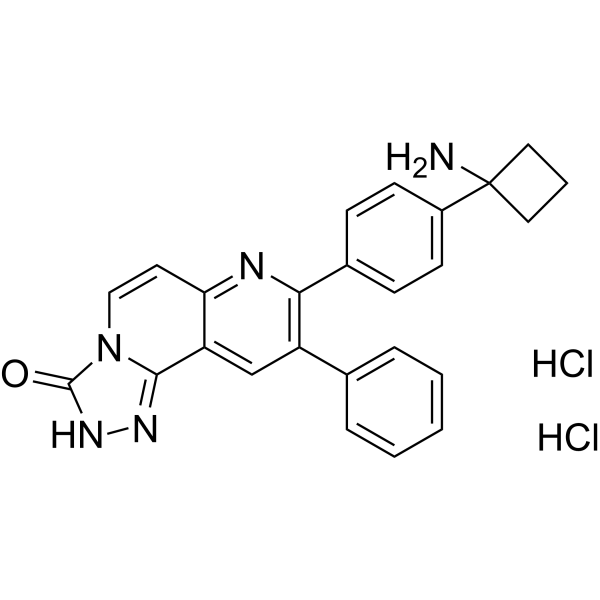
HY-10358
MK-2206 dihydrochlorideAllosteric Akt Inhibitor -
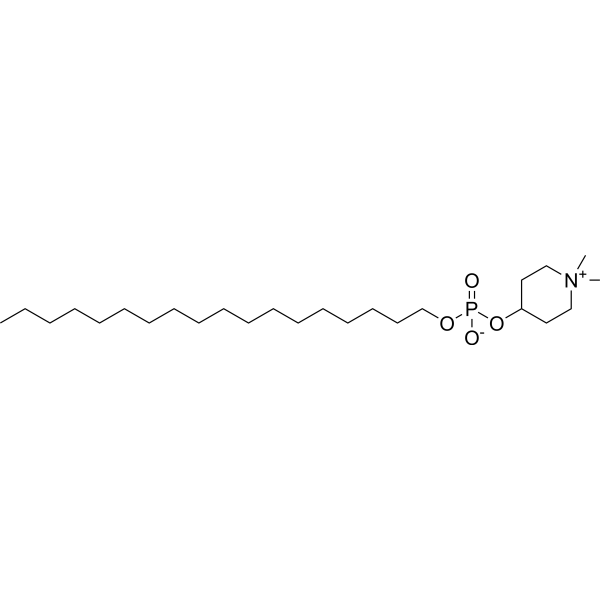
HY-50909
PerifosineAkt Inhibitor -
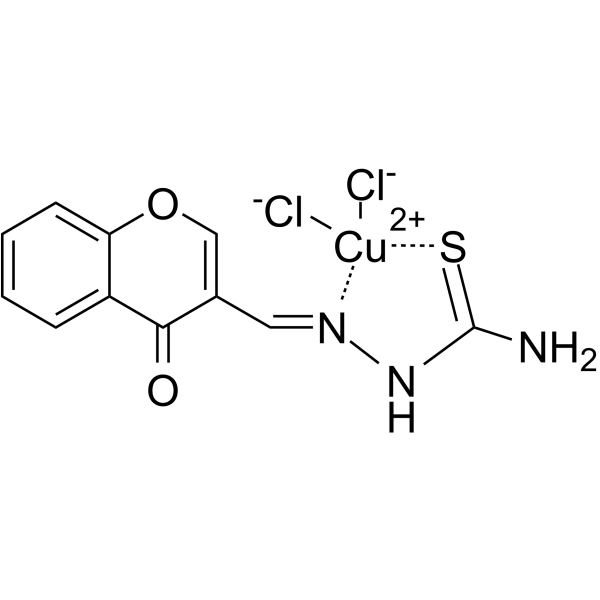
HY-15369
FPA-124Akt Inhibitor -
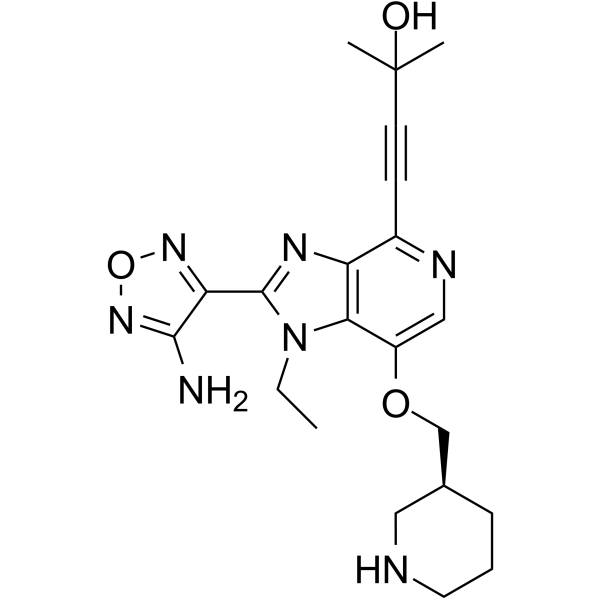
HY-10249
GSK-690693Akt Inhibitor
Publications Citing Use of MedChemExpress (MCE) 3CAI
More

Biological Activity
Description
IC50 & Target
[1]|
Akt1 |
Akt2 |
In Vitro
3CAI is a potential inhibitor of AKT. Based on these screening data, the effect of 3CAI on the kinase activities of AKT1, MEK1, JNK1, ERK1 and TOPK is tested using in vitro kinase assays. The results show that 3CAI (1 μM) suppresses only AKT1 kinase activity and the other kinases tested are not affected by 3CAI. 3CAI is a much more potent AKT1 inhibitor than PI3K (60% inhibition at 1 vs 10 μM, respectively). 3CAI substantially suppresses AKT1 activity as well as AKT2 activity in a dose dependent manner. 3CAI inhibits down-stream targets of AKT and induces apoptosis. AKT-mediated phosphorlyation site of mTOR (Ser2448) and GSK3β (Ser9) are substantially decreased by 3CAI in a time-dependent manner. Furthermore, pro-apoptotic marker proteins p53 and p21 are also upregulated by 3CAI after 12 or 24 h of treatment. HCT116 and HT29 colon cancer cells are seeded on 6 cm dishes in 1% FBS/McCoy's 5A (HCT116) with 3CAI (4 μM), I3C or the AKT inhibitor and then incubated for 4 days. Results show that the number of apoptotic cells is significantly increased by 3CAI in HCT116 and HT29 colon cancer cells compared with untreated control cells[1].
MedChemExpress (MCE) has not independently confirmed the accuracy of these methods. They are for reference only. .
In Vivo
MedChemExpress (MCE) has not independently confirmed the accuracy of these methods. They are for reference only.


Chemical Information
-
CAS No. 28755-03-5
-
Appearance Solid
-
Molecular Weight 193.63
-
Formula C10H8ClNO
-
Color Off-white to pink
-
SMILES
O=C(CCl)C1=CNC2=CC=CC=C12
-
Shipping
Room temperature in continental US; may vary elsewhere.
-
Storage
Powder -20°C 3 years 4°C 2 years In solvent -80°C 2 years -20°C 1 year


Publications (4)
-
Journal Impact Factor
-
Most Recent
-
Autophagy
Impaired degradation of PLCG1 by chaperone-mediated autophagy promotes cellular senescence and intervertebral disc degeneration. [Abstract]2025 Feb;21(2):352-373. PMID: 39212196 -
Chin Med J (Engl)
Cell softness reveals tumorigenic potential via ITGB8/AKT/glycolysis signaling in a mice model of orthotopic bladder cancer. [Abstract]2024 Jan 20;137(2):209-221. PMID: 37390491 -
Int J Mol Sci
Leucine Zipper Downregulated in Cancer-1 Interacts with Clathrin Adaptors to Control Epidermal Growth Factor Receptor (EGFR) Internalization and Gefitinib Response in EGFR-Mutated Non-Small Cell Lung Cancer. [Abstract]2024 Jan 23;25(3):1374. PMID: 38338651 -


Solvent & Solubility
In Vitro:
DMSO : 250 mg/mL (1291.12 mM; Need ultrasonic; Hygroscopic DMSO has a significant impact on the solubility of product, please use newly opened DMSO)
Please refer to the solubility information to select the appropriate solvent. Once prepared, please aliquot and store the solution to prevent product inactivation from repeated freeze-thaw cycles.
Storage method and period of stock solution: -80°C, 2 years; -20°C, 1 year. When stored at -80°C, please use it within 2 years. When stored at -20°C, please use it within 1 year.
Please refer to the solubility information to select the appropriate solvent. Once prepared, please aliquot and store the solution to prevent product inactivation from repeated freeze-thaw cycles.
Storage method and period of stock solution: -80°C, 2 years; -20°C, 1 year. When stored at -80°C, please use it within 2 years. When stored at -20°C, please use it within 1 year.
Concentration (start) × Volume (start) = Concentration (final) × Volume (final)
In Vivo:
Select the appropriate dissolution method based on your experimental animal and administration route.
- For the following dissolution methods, please ensure to first prepare a clear stock solution using an In Vitro approach and then sequentially add co-solvents:
- To ensure reliable experimental results, the clarified stock solution can be appropriately stored based on storage conditions. As for the working solution for In Vivo experiments, it is recommended to prepare freshly and use it on the same day.
- The percentages shown for the solvents indicate their volumetric ratio in the final prepared solution. If precipitation or phase separation occurs during preparation, heat and/or sonication can be used to aid dissolution.
Add each solvent one by one: 10% DMSO 40% PEG300 5% Tween-80 45% Saline
Solubility: ≥ 2.08 mg/mL (10.74 mM); Clear solution
This protocol yields a clear solution of ≥ 2.08 mg/mL (saturation unknown).
Taking 1 mL working solution as an example, add 100 μL DMSO stock solution (20.8 mg/mL) to 400 μL PEG300, and mix evenly; then add 50 μL Tween-80 and mix evenly; then add 450 μL Saline to adjust the volume to 1 mL.
Preparation of Saline: Dissolve 0.9 g sodium chloride in ddH₂O and dilute to 100 mL to obtain a clear Saline solution.
In Vivo Dissolution Calculator
Please enter the basic information of animal experiments:
-
-
-
-
Recommended: Prepare an additional quantity of animals to account for potential losses during experiments.
Please enter your animal formula composition:
-
%DMSO +
Recommended: Keep the proportion of DMSO in working solution below 2% if your animal is weak.
-
%+
-
+%Tween-80 + +
-
%Saline +
The co-solvents required include: DMSO, . All of co-solvents are available by MedChemExpress (MCE). , Tween 80. All of co-solvents are available by MedChemExpress (MCE).
Working solution concentration: 0.22 mg/mL
Method for preparing stock solution: mg drug dissolved in μL DMSO. Stock solution concentration: mg/mL.
1. Take μL DMSO stock solution;
2. Add μL .
μL , mix evenly;
3. Then add μL Tween 80, mix evenly;
4. Then add μL
Please ensure that the stock solution in the first step is dissolved to a clear state, and add co-solvents in sequence. You can use ultrasonic heating (ultrasonic cleaner, recommended frequency 20-40 kHz), vortexing, etc. to assist dissolution.


Purity & Documentation
-
Data Sheet (284 KB)
-
SDS (393 KB)
- English - EN (393 KB)
- Français - FR (393 KB)
- Deutsch - DE (393 KB)
- Norwegian - NO (393 KB)
- Español - ES (393 KB)
- Swedish - SV (393 KB)
- Italian - IT (393 KB)
- Korean - KR (393 KB)
- Portuguese - PT (393 KB)
-
Handling Instructions (2659 KB)
References


Complete Stock Solution Preparation Table
Please refer to the solubility information to select the appropriate solvent. Once prepared, please aliquot and store the solution to prevent product inactivation from repeated freeze-thaw cycles.
Storage method and period of stock solution: -80°C, 2 years; -20°C, 1 year. When stored at -80°C, please use it within 2 years. When stored at -20°C, please use it within 1 year.
| Optional Solvent | Concentration Solvent Mass | 1 mg | 5 mg | 10 mg | 25 mg |
|---|---|---|---|---|---|
| DMSO | 1 mM | 5.1645 mL | 25.8224 mL | 51.6449 mL | 129.1122 mL |
| 5 mM | 1.0329 mL | 5.1645 mL | 10.3290 mL | 25.8224 mL | |
| 10 mM | 0.5164 mL | 2.5822 mL | 5.1645 mL | 12.9112 mL | |
| 15 mM | 0.3443 mL | 1.7215 mL | 3.4430 mL | 8.6075 mL | |
| 20 mM | 0.2582 mL | 1.2911 mL | 2.5822 mL | 6.4556 mL | |
| 25 mM | 0.2066 mL | 1.0329 mL | 2.0658 mL | 5.1645 mL | |
| 30 mM | 0.1721 mL | 0.8607 mL | 1.7215 mL | 4.3037 mL | |
| 40 mM | 0.1291 mL | 0.6456 mL | 1.2911 mL | 3.2278 mL | |
| 50 mM | 0.1033 mL | 0.5164 mL | 1.0329 mL | 2.5822 mL | |
| 60 mM | 0.0861 mL | 0.4304 mL | 0.8607 mL | 2.1519 mL | |
| 80 mM | 0.0646 mL | 0.3228 mL | 0.6456 mL | 1.6139 mL | |
| 100 mM | 0.0516 mL | 0.2582 mL | 0.5164 mL | 1.2911 mL |


3CAI Related Classifications
HY-16666 Related Classifications
 Powered by Bioz