
344 Results for "

Imaging probe

" in MedChemExpress (MCE) Product Catalog:
Products (344)

344 Results for "Imaging probe" in MCE Product Catalog:

Cat. No.: HY-D3109
CAS No.: 148043-22-5
Target:  

Fluorescent Dye

Research Areas:  

Others

pH-Ap-1 is a fluorescent probe used for ratiometric monitoring of pH fluctuations during autophagy in living cells, and it can detect intracellular pH changes in the autophagy process. For fluorescence detection of pH-Ap-1, its excitation wavelength is 475 nm, with an emission wavelength of 538 nm under alkaline conditions and 645 nm under acidic conditions. For intracellular imaging, excitation is performed at 488 nm: the emission light ranging from 500-550 nm is collected via the green channel corresponding to 538 nm, while the emission light ranging from 625-750 nm is collected via the red channel corresponding to 645 nm. pH-Ap-1 exhibits excellent photostability and chemical stability .
loading...
    loading...
Cat. No.: HY-D3123
Target:  

Fluorescent Dye

Research Areas:  

Cardiovascular Disease

Ac-MtFluNox is a mitochondria-targeted Fluorescent probe that can be used for the selective detection of labile Fe (II). Ac-MtFluNox can enter living cells, where intracellular esterases cleave its acetyl protecting group to generate activated MtFluNox. Ac-MtFluNox functions through an Fe (II)-mediated deoxygenation mechanism of its amine N-oxide group, which eliminates the fluorescence quenching effect and oxidizes Fe (II) to Fe (III) to deplete the catalytically active Fe (II) pool. A FITC filter set (excitation 465-500 nm, emission 516-556 nm) is used for live-cell imaging. Ac-MtFluNox can be applied to studies related to myocardial ferroptosis .
loading...
    loading...
Cat. No.: HY-D3192
CAS No.: 2028316-07-4
CDy11 is a fluorescent probe and amyloid-binding dye (λex=590 nm; λem=612 nm), with a Ka of 29 μM for Pseudomonas aeruginosa Fap. CDy11 specifically recognizes amyloid fibrils in bacterial biofilms and exhibits significantly enhanced fluorescence upon binding to the target. CDy11 shows no staining effect on amyloid-deficient mutant strains, planktonic cells or protein monomers. CDy11 supports in vivo imaging of Pseudomonas aeruginosa biofilms in mouse implant and corneal infection models. CDy11 is widely used in studies of Staphylococcus aureus biofilm infections, dental caries, and Pseudomonas aeruginosa-associated implant and corneal infections .
loading...
    loading...
Cat. No.: HY-D3443
Target:  

Fluorescent Dye

Research Areas:  

Cancer

NR-HOCl-TFMU is a HOCl-gated phosphonite fluorescent probe based on the Nebraska Red scaffold. NR-HOCl-TFMU undergoes HOCl-triggered oxidative ring-opening of the spirocyclic thioether and phosphonite hydrolysis to synchronously release the near-infrared reporter group NR666-MSA (Ex 666 nm/Em 698 nm) and the cargo TFMU (Ex 405 nm/Em 510 nm) . NR-HOCl-TFMU enables HOCl-selective fluorescence imaging and cargo release monitoring in vitro, in live cells and in vivo, and exerts gated selective cytotoxicity in HOCl-positive cells. NR-HOCl-TFMU can be used for studies related to acute myeloid leukemia .
loading...
    loading...
Cat. No.: HY-DY1111
CAS No.: 1539318-40-5
Target:  

DNA Stain

Research Areas:  

Neurological Disease

DFHBI-2T solution is a membrane-permeable, RNA aptamer-activated fluorescent probe (Ex/Em=500 nm/523 nm), with a Kd value of 1300 nM for the RNA aptamer Spinach2. DFHBI-2T solution binds to Spinach2, converting the fluorophore to a fluorescent state, stabilizing its planar structure to facilitate the radiative fluorescence decay pathway, and forming a complex with red-shifted excitation and emission peaks. DFHBI-2T solution can be used for RNA imaging in live cells. It is also applicable to research related to fragile X-associated tremor/ataxia syndrome .
Solvent and concentration: DMSO: 5 mM
loading...
    loading...
Cat. No.: HY-DY1120
Research Areas:  

Cancer

ZY-2 (solution) is a fluorescent probe targeting pyruvate kinase M2 (PKM2) with an excitation wavelength of 419 nm. ZY-2 (solution) significantly activates purified PKM2 protein. ZY-2 (solution) exhibits enhanced fluorescence emission in low-polarity or high-viscosity environments. ZY-2 (solution) enables highly sensitive and selective fluorescence imaging of PKM2 in live PKM2-positive cancer cells, with no significant side effects on cell viability within its effective concentration range. ZY-2 (solution) can be used for cervical cancer research .
Solvent and concentration: DMSO: 10 mM
loading...
    loading...
Cat. No.: HY-W011696
CAS No.: 112-90-3
Synonyms: cis-1-Amino-9-octadecene, 80-90%
Oleylamine, 80-90% (cis-1-Amino-9-octadecene, 80-90%) is a multifunctional reagent used for metal ion coordination and nanoparticle surface modification, and acts as a solvent, surfactant and reducing agent in the synthesis of metal oxide nanoparticles. Oleylamine, 80-90% regulates nanoparticle morphology, magnetization intensity and water proton relaxation rate via thiol-ene "click" reaction, and enhances the colloidal stability of nanoparticles in organic reagents. Oleylamine, 80-90% is mainly used in research and applications in fields such as nanomaterial synthesis, biomedical imaging (MRI contrast agents, fluorescent probes), cancer cell targeting and drug delivery .
loading...
    loading...
Cat. No.: HY-W400925
CAS No.: 1481447-40-8
Target:  

Fluorescent Dye

Research Areas:  

Cancer

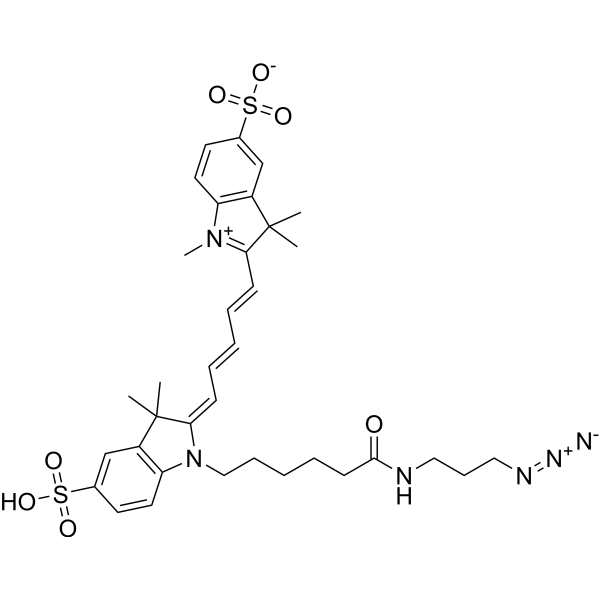
Sulfo-Cy5-N3 is an azide-functionalized sulfonated cyanine 5 Fluorescent dye and also serves as click chemistry coupling reagent. Sulfo-Cy5-N3 undergoes copper (I)-catalyzed azide-alkyne cycloaddition with alkyne-functionalized antibody constructs and peptide probes for site-selective fluorescent labeling. Sulfo-Cy5-N3 also acts as an emission dye for STORM super-resolution imaging. Sulfo-Cy5-N3 is applicable to the study of HER2-positive breast cancer .
loading...
    loading...
Cat. No.: HY-D3120
CAS No.: 2246946-53-0
Target:  

Fluorescent Dye

Research Areas:  

Others

LysoAIE2 is a Fluorescent probe for lysosomal viscosity detection and live-cell imaging. Its detection mechanism relies on the aggregation-induced emission effect: it exhibits only weak fluorescence in non-viscous media; in viscous environments, restricted intramolecular motion inhibits non-radiative energy dissipation pathways, thereby significantly enhancing fluorescence intensity. It achieves specific targeting of lysosomes through the proton acceptor property of its indole ring structure, while its hydroxyl group endows it with excellent water solubility. This probe is basically unaffected by microenvironmental polarity and pH within the range of pH 4.0 to pH 8.0, which avoids interference from these factors in viscosity measurement. LysoAIE2 has an emission wavelength of 570 nm. It can be used to monitor lysosomal viscosity changes during processes such as Dexamethasone (HY-14648)-induced lysosomal migration and starvation-induced mitophagy in live cells; at concentrations up to 40 μM, cell viability remains above 80%, demonstrating excellent biocompatibility .
loading...
    loading...
Cat. No.: HY-D3187
CAS No.: 2484831-02-7
HMRef-αMan is a substrate-based green fluorescent probe (Ex/Em=465 nm/515 nm) targeting MAN2C1 (α-mannosidase). HMRef-αMan can be specifically cleaved by MAN2C1 to generate a highly fluorescent product, which thus gets activated to produce green fluorescence in malignant breast tissues, benign lesions and living cancer cells. The signal intensity of HMRef-αMan is directly correlated with MAN2C1 activity, and it can effectively detect tiny breast cancer lesions with a diameter of less than 1 mm. When used in combination with the red-emitting γ-glutamyl transpeptidase (GGT) probe gGlu-2OMe SiR600 (HY-D3188), HMRef-αMan enables precise optical differentiation of breast tissue types via a dual-color imaging strategy. HMRef-αMan has been widely used in the research of breast diseases such as breast cancer, fibroadenoma, phyllodes tumor and various types of papilloma .
loading...
    loading...
Cat. No.: HY-176834
CAS No.: 110925-86-5
Target:  

GLUT

Research Areas:  

Cancer

3-Deoxy-3-fluoro-D-fructose (Compound 12) is a derivative of 2,5-Anhydro-D-mannitol. 3-Deoxy-3-fluoro-D-fructose is a selective probe of Hexose transporter 5 (GLUT5). 3-Deoxy-3-fluoro-D-fructose inhibits the transport of D-fructose labeled with 14C by GLUT5 with IC50s of 1.16 and 2.37 µM in EMT-6 and MCF-7 cells. 3-Deoxy-3-fluoro-D-fructose can be used for positron emission tomography (PET) imaging of cancers .
loading...
    loading...
Cat. No.: HY-DY1089
CAS No.: 797785-10-5
Di-4-ANEPPDHQ (solution) is a polarity-sensitive membrane probe with a doubly positive charge that can be used to visualize membrane microdomains in living Arabidopsis cells. Di-4-ANEPPDHQ produces a fluorescence spectrum shift by changing the polarity of the lipid environment after embedding into the cell membrane, thereby quantifying the degree of lipid accumulation. The excitation wavelength of Di-4-ANEPPDHQ is 488 nm, and the emission wavelengths are 560 nm and 650 nm in the liquid ordered and disordered phases, respectively. Di-4-ANEPPDHQ is often used for fluorescence imaging studies of membrane microstructure, lipid order, and membrane tension response in living cells[1][2][3].
Solvent and concentration: DMSO: 5 mM
loading...
    loading...
Cat. No.: HY-D3440
Target:  

Fluorescent Dye

Research Areas:  

Others

CDPP-2PF6 is a dicationic aggregation-induced emission (AIE) fluorescent probe used for imaging of cell membranes, migrasomes, and PIP2 lipid vesicles, as well as for long-term imaging of cell membranes and migrasomes. CDPP-2PF6 relies on electrostatic and hydrophobic interactions to achieve dual-mode membrane anchoring, with the PF6 - counterion enhancing lipophilicity and generating fluorescence through restriction of intramolecular motion (RIM). When CDPP-2PF6 accumulates in phosphoinositide-rich membrane regions, RIM suppresses non-radiative decay pathways. Due to the electrostatic interaction between the positively charged core of CDPP-2PF6 and the high negative charge density of PIP2, CDPP-2PF6 exhibits a strong preferential affinity for phosphatidylinositol 4,5-bisphosphate (PIP2). The fluorescence localization of CDPP-2PF6 depends on intact lipid microdomain structures and enables real-time tracking of membrane remodeling processes (Ex/Em = 450/760 nm) .
loading...
    loading...
Cat. No.: HY-165426
CAS No.: 3031522-14-9
Research Areas:  

Inflammation/Immunology

HB-230 is a Transglutaminase-2 (TG2) (human IC50 = 4.9 μM) inhibitor and a selective fluorescent imaging probe for active TG2 localization. HB-230 modifies TG2 Cys277 to sustain the enzyme open conformation. HB-230 forms a ternary complex with TG2 and α2-macroglobulin, undergoes receptor-mediated endocytosis, and trafficks directly to lysosomes without early/late endosome fusion. HB-230 exhibits TG2 activity-dependent and α2-macroglobulin-dependent uptake. HB-230 can be used for the research of celiac disease, (Ex/Em = 649/665 nm) .
loading...
    loading...
Cat. No.: HY-D0920
CAS No.: 166196-17-4
TOTO-3 is a cyanine nucleic acid intercalating fluorescent probe that binds to both RNA and DNA (Ex=642 nm, Em=660 nm). TOTO-3 cannot enter intact cells, but can penetrate cells with permeabilized plasma membranes, staining cytoplasmic RNA and nucleoli to distinguish intact cells from damaged ones. TOTO-3 is taken up by macrophages in an ultrasound-independent manner. TOTO-3 accumulates in tumor cells via ultrasound-mediated enhancement of plasma membrane permeability. TOTO-3 supports optical imaging for real-time assessment of plasma membrane integrity, nucleic acid detection, and monitoring of ultrasound-mediated intracellular delivery processes. TOTO-3 is applicable to studies related to rectal cancer .
loading...
    loading...
Cat. No.: HY-D1991
CAS No.: 906664-68-4
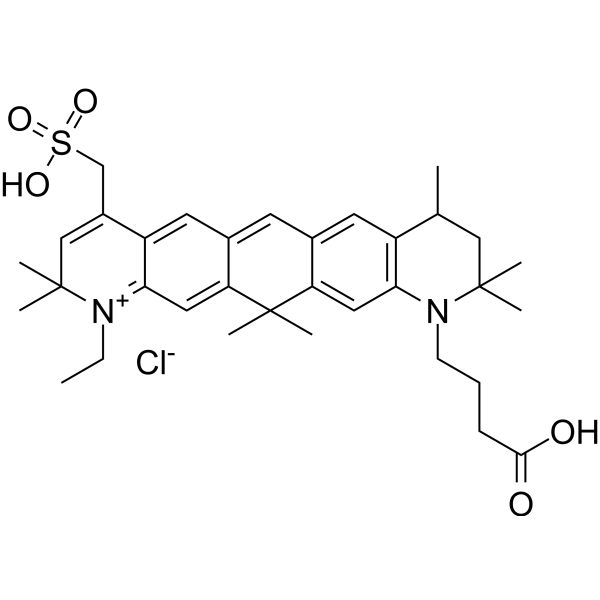
ATTO 647 is a carborhodamine fluorophore and imaging tracer with photostable properties. ATTO 647 serves as a fluorescent probe to investigate cell membrane structure and diffusion characteristics. When conjugated with wheat germ agglutinin, ATTO 647 specifically binds to N-acetyl-β-D-glucosamine and sialic acid residues on membrane glycoproteins, enabling single-molecule tracing of glycoprotein diffusion. ATTO 647 exhibits highly stable fluorescence properties with significantly reduced blinking in mounting media such as ROXS (AA/MV) and ROXS (TX/TQ), whereas its brightness properties vary in Ibidi-MM and Vectashield. ATTO 647 can also be used to label histone H2B-GFP in fixed cells for confocal microscopy photobleaching experiments .
loading...
    loading...
Cat. No.: HY-D3108
CAS No.: 2569032-08-0
Target:  

Fluorescent Dye

Research Areas:  

Others

BV-1 is a fluorescent probe for viscosity detection and imaging in living cells. BV-1 can be used to detect changes in intracellular viscosity and mitochondrial viscosity in living cells. BV-1 responds to environmental viscosity via a molecular rotor mechanism. In a low-viscosity environment, the centrally located unsaturated structure induces a twisted intramolecular charge transfer (TICT) state and promotes non-radiative transitions, resulting in fluorescence quenching; when viscosity increases, molecular rotation is restricted, the TICT state is attenuated, and fluorescence is enhanced with a red shift. BV-1 can be used for real-time monitoring of changes in cytoplasmic viscosity and the viscosity increase during cell apoptosis. Ex/Em = 480/570 nm .
loading...
    loading...
Cat. No.: HY-D3189
CAS No.: 2370825-44-6
5GluAF-2MeTG is an activatable fluorescent probe targeting the glutamate carboxypeptidase (CP) activity of PSMA (Ex/Em=490/500-600 nm). After being hydrolyzed by PSMA, 5GluAF-2MeTG releases a cell membrane-permeable fluorescent product, and achieves fluorescence activation by disrupting donor-excited photoinduced electron transfer (d-PeT). 5GluAF-2MeTG enables fluorescence imaging of live PSMA-expressing prostate cancer cells in vitro and visualizes the carboxypeptidase activity of PSMA. 5GluAF-2MeTG can be used to detect prostate cancer regions in preclinical excised tissue specimens .
loading...
    loading...
Cat. No.: HY-D3351
CAS No.: 2668963-61-7
Target:  

Fluorescent Dye

Research Areas:  

Inflammation/Immunology

PNO1 is a fluorescent probe for pulmonary fibrosis detection. The detection mechanism of PNO1 relies on sensing upregulated nitric oxide (NO) in the pulmonary fibrosis (PF) microenvironment. PNO1 contains an aniline group that reacts with NO or its derivatives under acidic conditions to form an N-nitrosylated intermediate, which is subsequently converted into a diazonium salt and undergoes deamination, eliminating the intramolecular electron transfer quenching effect and triggering a fluorescence turn-on response. The excitation wavelength of PNO1 includes 545 nm in in vitro solution studies, while an excitation range of 520-550 nm is used for cell, tissue and in vivo imaging; its emission wavelength centers at 572 nm in the unreacted state, and shifts to 559 nm with enhanced fluorescence intensity upon binding to NO. PNO1 can be used for pulmonary fibrosis research .
loading...
    loading...
Cat. No.: HY-P10792A
Target:  

EGFR

Research Areas:  

Cancer

HYNIC-H6F is a SPECT imaging probe with binding specificity for human epidermal growth factor receptor 2 (HER2) domain II (IC50 = 11 nM). HYNIC-H6F accumulates in HER2-positive breast cancer xenografts via receptor-mediated uptake, while shows low uptake in HER2-negative breast cancer xenografts. HYNIC-H6F enables non-invasive detection of HER2-positive breast cancer in mouse models and allows evaluation of HER2 expression levels without blocking interference. HYNIC-H6F can be used in breast cancer-related research .
loading...
    loading...

