
377 Results for "

dipeptide

" in MedChemExpress (MCE) Product Catalog:
Products (377)

377 Results for "dipeptide" in MCE Product Catalog:

Cat. No.: HY-W800622
CAS No.: 2055024-58-1
Target:  

ADC Linkers

Research Areas:  

Cancer

Fmoc-PEG4-Val-Cit-PAB-OH is an enzyme-cleavable ADC linker featuring a Boc-protected amine, a hydrophilic PEG spacer, and a Val-Cit-PAB dipeptide. The benzylic alcohol on the PAB can be used to attach with reactive groups such as PNP for conjugation with drug payloads. The Fmoc protecting group may be removed with piperidine to reveal a primary amine which may be used in coupling reactions to form amides. The Val-Cit-PAB is cleaved by cellular proteases for efficient release of payloads to the cell.
loading...
    loading...
Cat. No.: HY-W800623
CAS No.: 2055024-57-0
Target:  

ADC Linkers

Research Areas:  

Cancer

Fmoc-PEG6-Val-Cit-PAB-OH is an enzyme-cleavable ADC linker featuring a Boc-protected amine, a hydrophilic PEG spacer, and a Val-Cit-PAB dipeptide. The benzylic alcohol on the PAB can be used to attach with reactive groups such as PNP for conjugation with drug payloads. The Fmoc protecting group may be removed with piperidine to reveal a primary amine which may be used in coupling reactions to form amides. The Val-Cit-PAB is cleaved by cellular proteases for efficient release of payloads to the cell.
loading...
    loading...
Cat. No.: HY-W800624
CAS No.: 2055024-55-8
Target:  

ADC Linkers

Research Areas:  

Cancer

Boc-PEG2-Val-Cit-PAB-OH is an enzyme-cleavable ADC linker featuring a Boc-protected amine, a hydrophilic PEG spacer, and a Val-Cit-PAB dipeptide. The benzylic alcohol on the PAB can be used to attach with reactive groups such as PNP for conjugation with drug payloads. The Boc protecting group may be removed with acid to reveal a primary amine which may be used in coupling reactions to form amides. The Val-Cit-PAB is cleaved by cellular proteases for efficient release of payloads to the cell.
loading...
    loading...
Cat. No.: HY-W800625
CAS No.: 2055024-54-7
Target:  

ADC Linkers

Research Areas:  

Cancer

Boc-PEG4-Val-Cit-PAB-OH is an enzyme-cleavable ADC linker featuring a Boc-protected amine, a hydrophilic PEG spacer, and a Val-Cit-PAB dipeptide. The benzylic alcohol on the PAB can be used to attach with reactive groups such as PNP for conjugation with drug payloads. The Boc protecting group may be removed with acid to reveal a primary amine which may be used in coupling reactions to form amides. The Val-Cit-PAB is cleaved by cellular proteases for efficient release of payloads to the cell.
loading...
    loading...
Cat. No.: HY-114613
CAS No.: 1123071-24-8
D-Trp-Aib is a dipeptide and amyloid-β inhibitor with a Kd of 29.6 nM. D-Trp-Aib triggers formation of non-toxic, non-β-sheet, amorphous amyloid β clusters from misfolded amyloid β monomers and toxic amyloid β oligomers, and reduces toxic amyloid β1-42 deposits. D-Trp-Aib inhibits amyloid fibril formation of α‑synuclein, IAPP and calcitonin. D-Trp-Aib can be used for the research of Alzheimer's disease .
loading...
    loading...
Cat. No.: HY-126584S
Synonyms: Val-val-13C10,15N2
H-Val-Val-OH- 13C10, 15N2 TFA (Val-val- 13C10, 15N2) is the 13C- and 15N-labeled H-Val-Val-OH (HY-126584). H-VAL-VAL-OH (Val-val) is a dipeptide in which two valine (Val) residues are linked by an amide bond. H-VAL-VAL-OH can be used for the synthesis of some important compounds such as Poststatin (HY-125432) .
loading...
    loading...
Cat. No.: HY-141460
CAS No.: 24787-73-3
Synonyms: Ile-Ala; L-Isoleucyl-L-alanine
Research Areas:  

Others

H-Ile-Ala-OH (Ile-Ala; L-Isoleucyl-L-alanine) is a linear aliphatic dipeptide and self-reactive cyclization reagent that self-assembles into amorphous films or spherical structures from specific solvents. H-Ile-Ala-OH also serves as a precursor for the synthesis of the cyclic peptide cyclo (L-isoleucyl-L-alanine) (HY-N9251). H-Ile-Ala-OH undergoes solid-state cyclization when heated above 206 °C, and its initiation temperature is closely related to the size of side-chain substituents .
loading...
    loading...
Cat. No.: HY-W009602R
CAS No.: 3918-87-4
Synonyms: Phe-ala (Standard)
Phenylalanylalanine (Standard) (Phe-ala (Standard)) is the analytical standard of Phenylalanylalanine (HY-W009602). This product is intended for research and analytical applications. Phenylalanylalanine is an enkephalinase inhibitor and belongs to the class of dipeptides. Phenylalanylalanine inhibits dipeptidyl carboxypeptidase-mediated enkephalin degradation by cleaving the Gly3-Phe4 bond, and when co-administered with Leu-enkephalin, it produces analgesic effects with a synergistic enhancement, which can be reversed by Naloxone (HY-17417A). Phenylalanylalanine can be used in pain-related research .
loading...
    loading...
Cat. No.: HY-156197
CAS No.: 2454045-15-7
Purity:  97.2%
Research Areas:  

Metabolic Disease

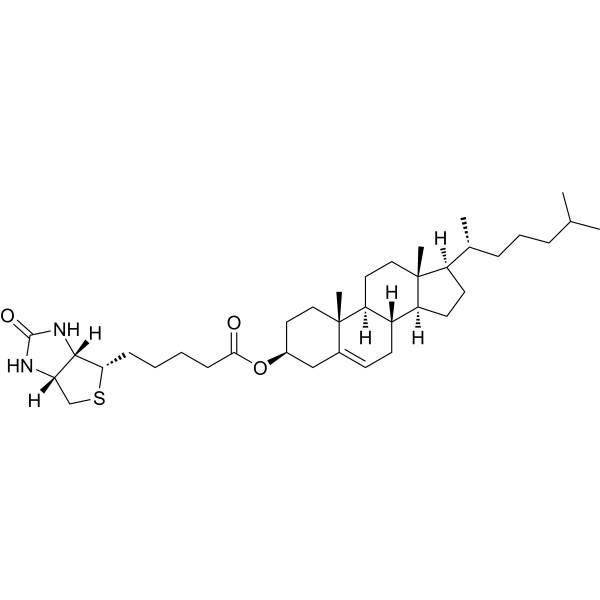
Biotin-cholesterol is a biotinylated form of Cholesterol (HY-N0322). Biotin-cholesterol is a liver-targeting ligand (linking cholesterol and biotin via a Gly-Lys dipeptide linker), as well as an enhancer of the component activity of streptavidin-mediated siRNA nanocomplexes. Biotin-cholesterol promotes receptor-mediated endocytosis of the relevant siRNA nanocomplexes, protects siRNA from serum degradation, enables efficient siRNA delivery, and drives target gene silencing. Biotin-cholesterol shows no cytotoxicity in hepatic stellate cells. Biotin-cholesterol can be used in the research of alcoholic liver fibrosis .
loading...
    loading...
Cat. No.: HY-P99238
CAS No.: 2095467-30-2

Target:  

ADC Antibodies

Research Areas:  

Inflammation/Immunology Cancer

Rolinsatamab is a IgG1κ type chimeric antibody targeting to PRLR (prolactin receptor). Rolinsatamab can be conjugated with pyrrolobenzodiazepine (PDB) dimer SGD-1882 (HY-101127) via a cleavable maleimidocaproyl type linker, to form an antibody-drug conjugate, Rolinsatamab talirine. One Rolinsatamab talirine has an average of 2 site-specific drug attachment engineered cysteines (S239C). The linker equips the valine-alanine dipeptide, as cathepsine B cleavage site. on an average of 2 site-specific drug attachment engineered cysteines (S239C) .
loading...
    loading...
Cat. No.: HY-W002304
CAS No.: 4042-36-8
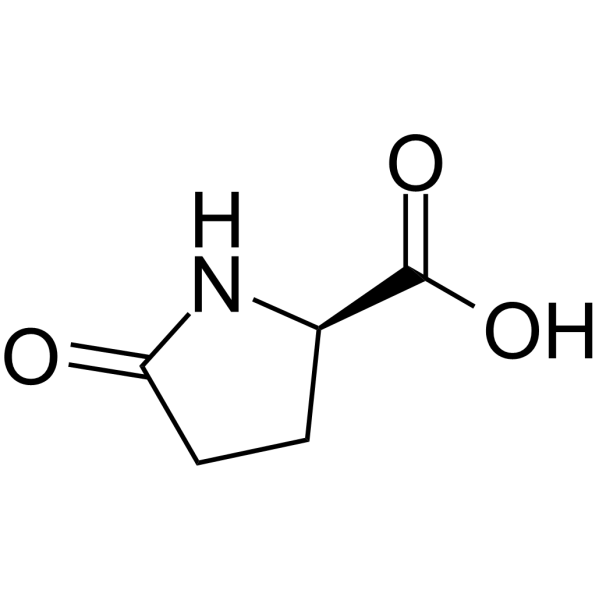
(R)-5-Oxopyrrolidine-2-carboxylic acid is a cyclic derivative of D-glutamate, as well as a heterocyclic structural unit and a precursor of cyclic imino acids. (R)-5-Oxopyrrolidine-2-carboxylic acid acts as an intermediate in the synthesis of dipeptide hybrids with antibacterial activity and the synthesis of Δ-1-pyrroline-5-carboxylic acid (P5C). (R)-5-Oxopyrrolidine-2-carboxylic acid is applicable to research related to organic synthesis .
loading...
    loading...
Cat. No.: HY-113110
CAS No.: 19246-18-5
Purity:  99.96%
Synonyms: L-Cysteinylglycine; Cys-Gly; H-Cys-Gly-OH
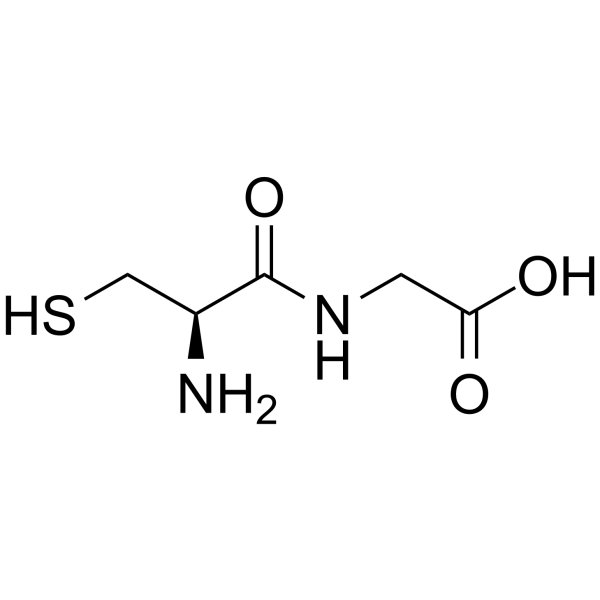
Cysteinylglycine (L-Cysteinylglycine; Cys-Gly) is a dipeptide formed by the peptide bond linkage between cysteine (Cysteine) and glycine (Glycine). Cysteinylglycine is an important metabolic intermediate in the human body, mainly derived from the degradation of glutathione (GSH). Cysteinylglycine reduces ferric iron to ferrous iron, drives the redox cycle of iron, generates reactive oxygen species (ROS), stimulates oxidative reactions, induces lipid peroxidation of human plasma LDL lipoproteins, and causes oxidative damage to DNA bases. Cysteinylglycine can be used as a biomarker to evaluate ischemic heart disease, breast cancer and other conditions .
loading...
    loading...
Cat. No.: HY-113110A
CAS No.: 1100364-95-1
Purity:  99.76%
Synonyms: L-Cysteinylglycine TFA; Cys-Gly TFA; H-Cys-Gly-OH TFA
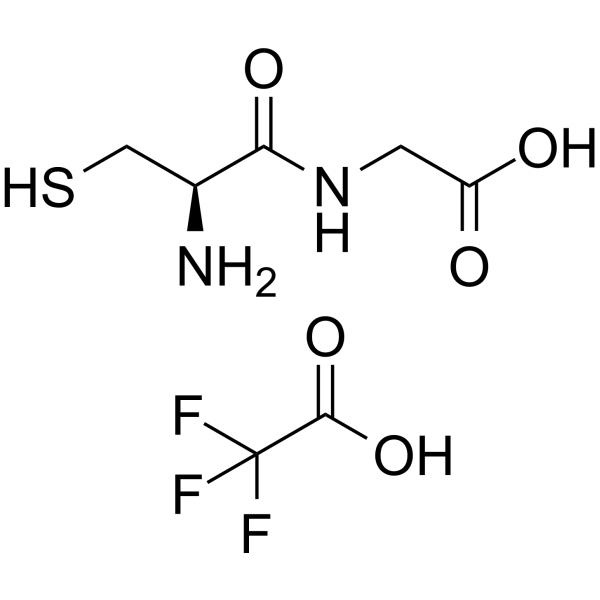
Cysteinylglycine (L-Cysteinylglycine; Cys-Gly) TFA is a dipeptide formed by the peptide bond connection of cysteine and glycine. Cysteinylglycine TFA is an important metabolic intermediate in the human body, mainly derived from the degradation of glutathione (GSH). Cysteinylglycine TFA can reduce trivalent iron to divalent iron, driving the redox cycle of iron, generating reactive oxygen species (ROS), stimulating oxidative reactions, inducing lipid peroxidation in human plasma LDL lipoproteins, and causing oxidative damage to DNA base. Cysteinylglycine TFA can be used as a biomarker to assess ischemic heart disease and breast cancer, etc [1][2][3][4].
loading...
    loading...
Cat. No.: HY-137527
CAS No.: 24570-39-6
Target:  

Bacterial

Research Areas:  

Infection

Ac-Lys (Ac)-D-Ala-D-Ala-OH is a synthetic dipeptide analog that mimics the terminal structure of bacterial peptidoglycan chains. Ac-Lys (Ac)-D-Ala-D-Ala-OH serves as a molecular decoy to investigate the mechanism of action of Vancomycin-class antibiotics, and also acts as an affinity chromatography ligand for purifying proteins that bind to Vancomycin. Ac-Lys (Ac)-D-Ala-D-Ala-OH reduces the activity of Vancomycin against susceptible enterococci. Ac-Lys (Ac)-D-Ala-D-Ala-OH is applicable to the research of Vancomycin-resistant enterococcal infections .
loading...
    loading...
Cat. No.: HY-101283R
CAS No.: 1435265-06-7
HCH6-1 (Standard) is the analytical standard of HCH6-1 (HY-101283). This product is intended for research and analytical applications. HCH6-1 is a potent and competitive dipeptide antagonist of Formyl peptide receptor 1 (FPR1). HCH6-1 inhibits chemotaxis, superoxide anion generation, and elastase release in human neutrophils specifically activated by fMLF (an FPR1 agonist). HCH6-1 has protective effects against acute lung injury (ALI) in vivo and can be used for the research of FPR1-involved inflammatory lung diseases .
loading...
    loading...
Cat. No.: HY-113110R
CAS No.: 19246-18-5
Synonyms: L-Cysteinylglycine (Standard); Cys-Gly (Standard); H-Cys-Gly-OH (Standard)
Cysteinylglycine (Standard) is the analytical standard of Cysteinylglycine. This product is intended for research and analytical applications. Cysteinylglycine is a dipeptide formed by the peptide bond linkage between cysteine (Cysteine) and glycine (Glycine). Cysteinylglycine is an important metabolic intermediate in the human body, mainly derived from the degradation of glutathione (GSH). Cysteinylglycine reduces ferric iron to ferrous iron, drives the redox cycle of iron, generates reactive oxygen species (ROS), stimulates oxidative reactions, induces lipid peroxidation of human plasma LDL lipoproteins, and causes oxidative damage to DNA bases. Cysteinylglycine can be used as a biomarker to evaluate ischemic heart disease, breast cancer and other conditions .
loading...
    loading...
Cat. No.: HY-184849
CAS No.: 7219-59-2
Research Areas:  

Others

Glu-Arg is a dipeptide linked by L-glutamic acid and L-arginine. Glu-Arg contributes to the construction of the hydrophobic network and maintenance of stability of mouse cAMP-dependent protein kinase; it acts as a core hub connecting the activation segment and the GHI subdomain in eukaryotic protein kinases, and promotes signal transmission between elements and within enzymes. As a salt bridge, Glu-Arg regulates the formation and unfolding rates of α-helices, and its optimized spatial conformation is conducive to the stability and folding rate of α-helices. Glu-Arg induces concentration-dependent intracellular calcium changes in cultured human fungiform taste bud cells .
loading...
    loading...
Cat. No.: HY-N13356
CAS No.: 5652-48-2
Synonyms: gamma-Glutamylthreonine; H-γ-Glu-Thr-OH; γ-Glu-Thr
L-gamma-Glutamyl-L-threonine (gamma-Glutamylthreonine; H-γ-Glu-Thr-OH; γ-Glu-Thr) is a dipeptide obtained through the formal condensation of the L-glutamic acid side chain carboxyl group and the L-threonine amino group. L-gamma-Glutamyl-L-threonine is present in high concentrations in human urine and exhibits antibacterial activity against Gram-negative bacterial. L-gamma-Glutamyl-L-threonine is also a flavor compound. Gamma-Glutamylthreonine is a metabolite catalyzed by γ-glutamyl transpeptidase and is associated with immune regulation. Gamma-Glutamylthreonine can be used in research on inflammation and bacterial infections .
loading...
    loading...
Cat. No.: HY-P4610
CAS No.: 19653-76-0
Target:  

GLP Receptor

Research Areas:  

Metabolic Disease

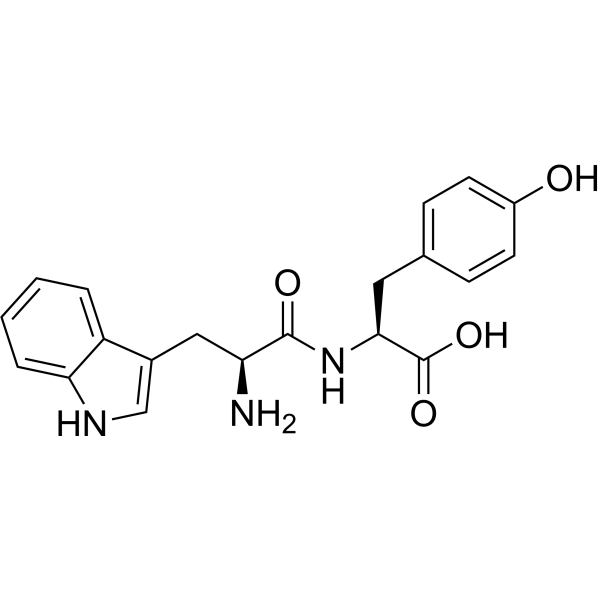
H-Trp-Tyr-OH is an orally active tryptophan-tyrosine dipeptide with blood-brain barrier permeability. H-Trp-Tyr-OH exerts physiological regulatory effects by stimulating enteroendocrine cells to secrete glucagon-like peptide GLP-1. In mouse models of tauopathies, H-Trp-Tyr-OH inhibits tau phosphorylation, reduces the level of neurofibrillary tangles, increases dopamine turnover, upregulates synapsin expression, and elevates cecal short-chain fatty acid levels, thereby improving behavioral deficits and extending lifespan. H-Trp-Tyr-OH can be used in research related to impaired glucose tolerance and tauopathies .
loading...
    loading...
Cat. No.: HY-Y0912
CAS No.: 94790-37-1
Synonyms: N-HBTU
Research Areas:  

Inflammation/Immunology

HBTU (N-HBTU) is a guanidinium-based peptide coupling reagent and immunological sensitizer. HBTU can be used in combination with bases such as DIPEA (HY-130142) to complete coupling reactions, with HOBt and TMU as by-products. HBTU is a standard reagent in automated solid-phase peptide synthesis, particularly for the Fmoc/tBu strategy, which effectively promotes coupling steps, but it is not suitable for sterically hindered amino acids or dipeptide derivatives. HBTU can induce rhinitis, dermatitis, bronchial asthma and severe allergic reactions. HBTU can be used to study the pathogenesis of allergic reactions, occupational rhinitis, allergic contact dermatitis and bronchial asthma .
loading...
    loading...

