39 Results for "

Rtk Inhibitors

" in MedChemExpress (MCE) Product Catalog:
Products (39)

39 Results for "Rtk Inhibitors" in MCE Product Catalog:

Cat. No.: HY-50751R
CAS No.: 796967-16-3
Synonyms: ABT-869 (Standard); AL-39324 (Standard)
Linifanib (Standard) is the analytical standard of Linifanib. This product is intended for research and analytical applications. Linifanib (ABT-869) is a potent and orally active multi-target inhibitor of VEGFR and PDGFR family with IC50s of 4, 3, 66, and 4 nM for KDR, FLT1, PDGFRβ, and FLT3, respectively. Linifanib shows prominent antitumor activity. Linifanib has much less activity against unrelated RTKs, soluble tyrosine kinases, or serine/threonine kinases. Linifanib is a specific miR-10b inhibitor that blocks miR-10b biogenesis .
loading...
    loading...
Cat. No.: HY-50905R
CAS No.: 405169-16-6
Synonyms: CHIR-258 (Standard); TKI258 (Standard)
Research Areas:  

Cancer

Dovitinib (Standard) is the analytical standard of Dovitinib. This product is intended for research and analytical applications. Dovitinib (CHIR-258) is an orally active, potent multi-targeted tyrosine kinase (RTK) inhibitor with IC50s of 1, 2, 36, 8/9, 10/13/8, 27/210 nM for FLT3, c-Kit, CSF-1R, FGFR1/FGFR3, VEGFR1/VEGFR2/VEGFR3 and PDGFRα/PDGFRβ, respectively. Dovitinib has potent antitumor activity .
loading...
    loading...
Cat. No.: HY-13892
CAS No.: 852433-84-2
Synonyms: CHIR-258 dilactic acid; TKI258 dilactic acid
Target:  

VEGFR

Research Areas:  

Cancer

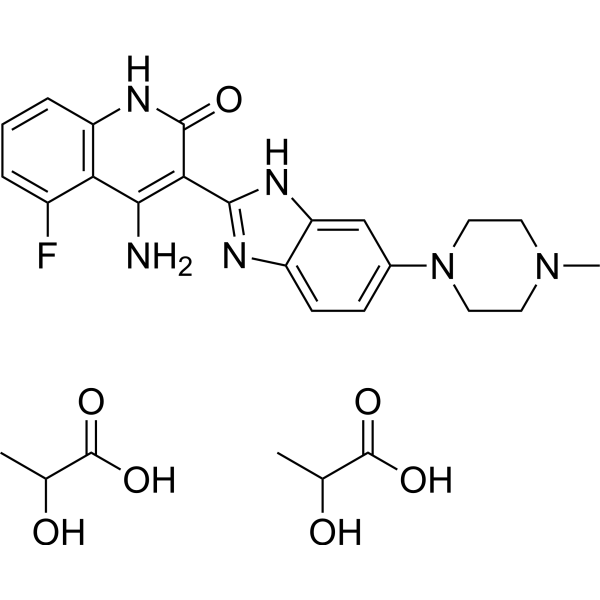
Dovitinib (dilactic acid) is an orally active inhibitor of VEGF kinase. Dovitinib (dilactic acid) inhibits receptor tyrosine kinases (RTKs) involved in solid and hematologic cancers and tumor angiogenesis .
loading...
    loading...
Cat. No.: HY-W007977
CAS No.: 183322-18-1
Target:  

Drug Intermediate

Research Areas:  

Cancer

4-Chloro-6,7-bis(2-methoxyethoxy)quinazoline (Compound 11 and 15) is a building block and synthetic intermediate, which can be used as a precursor in the synthesis of receptor tyrosine kinase (RTK) inhibitors, dual RTK and histone deacetylase (HDAC) inhibitors, and anticancer agents. 4-Chloro-6,7-bis(2-methoxyethoxy)quinazoline can also be used to synthesize EGFR inhibitors, including Erlotinib (HY-50896), with antiproliferative activity .
loading...
    loading...
Cat. No.: HY-113876
CAS No.: 10130-23-1
Target:  

PDGFR

Research Areas:  

Cancer

2-Methyl-3-phenylquinoxaline (compound 38) is a potent platelet-derived growth factor receptor tyrosine kinase (PDGF-RTK) inhibitor with modest inhibitory activity against PDGFR kinase in intact cells (IC50 greater than 100 μM) .
loading...
    loading...
Cat. No.: HY-146471
CAS No.: 2418549-32-1
Target:  

EGFR Apoptosis

Research Areas:  

Cancer

EGFR-IN-51 (Compound 6) is a potent EGFR inhibitor with IC50 values of 0.493, 102.60 and 461.63 µM against EGFR, EGFR L858R-TK and EGFR T790M-TK, respectively. EGFR-IN-51 shows cytotoxic activity against cancer cell lines and induces apoptosis .
loading...
    loading...
Cat. No.: HY-112417
CAS No.: 347155-76-4
Purity:  99.30%
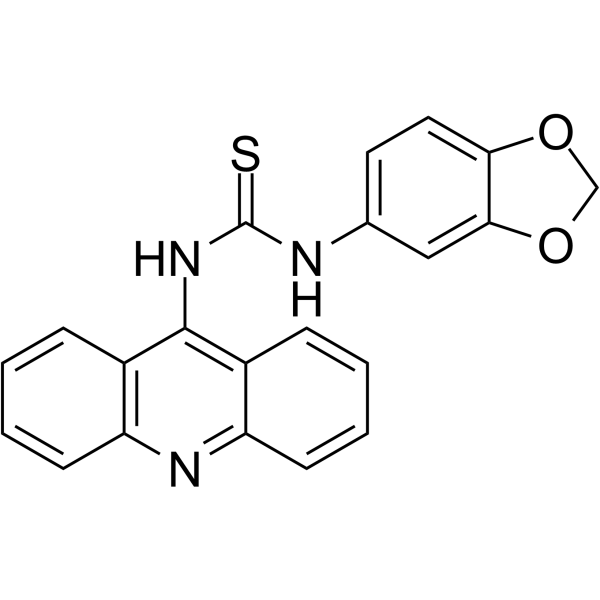
Ki11502 is a multi-targeted receptor tyrosine kinase (RTK) inhibitor that selectively inhibits the activity of PDGF β/α receptors with IC50 values less than 10 nM. Ki11502 selectively inhibits PDGF β receptor phosphorylation, proliferation, and proteoglycan synthesis in human vascular smooth muscle cells. Ki11502 can induce Apoptosis) and exhibits profound antiproliferative effects on select subsets of leukemia, including those with Imatinib (HY-15463) resistant mutations. Ki11502 is highly suitable for studying the role of PDGF in vascular diseases, particularly the role of proteoglycans in atherosclerosis .
loading...
    loading...
Cat. No.: HY-169514
CAS No.: 128889-33-8
Target:  

Trk Receptor

Research Areas:  

Cancer

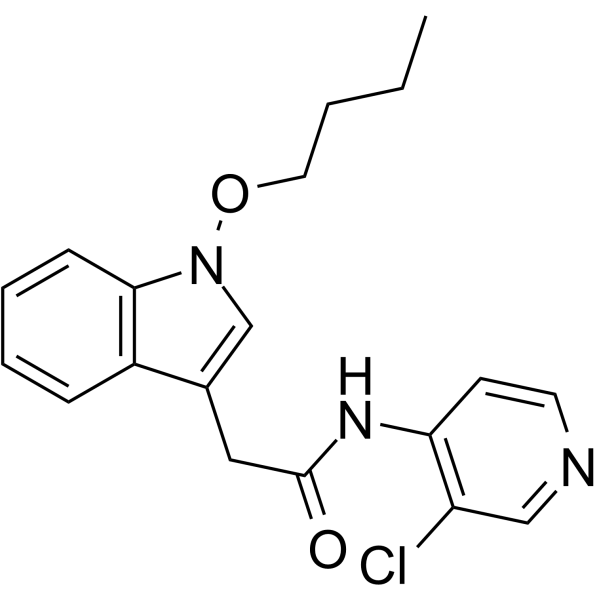
TrkA-IN-8 (Compound 2) is a TrkA inhibitor with a Kd value of 3.3 µM. RTKs-IN-1 exhibits concentration-dependent inhibition of cell proliferation in lung cancer cell lines. RTKs-IN-1 holds potential for research in non-small cell lung cancer .
loading...
    loading...
Cat. No.: HY-169869
CAS No.: 1980821-53-1
Target:  

Raf

Research Areas:  

Cancer

Pan-Raf/RTK inhibitor 1 (compound I-16) is a potent pan-Raf inhibitor with IC50 values of 3.49 nM (BRaf V600E), 8.86 nM (ARaf), 5.78 nM (BRaf WT), and 1.65 nM (CRaf). Pan-Raf/RTK inhibitor 1 exhibits antiproliferative activities against various cancer cell lines and can be utilized in cancer research .
loading...
    loading...
Cat. No.: HY-146365
CAS No.: 2132412-77-0
Target:  

DNA/RNA Synthesis HIV

Research Areas:  

Infection Inflammation/Immunology

HIV-1 inhibitor-30 (compound 10i) is a potent HIV-1 inhibitor with an EC50 value of 40 nM and an IC50 value of 80 nM for HIV-1 RT DNA polymerase. HIV-1 inhibitor-30 has highly antiretroviral activity against seven non-nucleoside reverse transcriptase inhibitor (NNRTI)-resistant HIV-1 strains (RT-K103N; RT-Y181C; RT-K103N,Y181C; RT-L100I,K103N; RT-Y188L; RT-K103N,G190A; RT-K103N,V108I) with IC50s of 0.04~1.42 μM. HIV-1 inhibitor-30 can be used for researching AIDS .
loading...
    loading...
Cat. No.: HY-19471
CAS No.: 1010440-84-2
Research Areas:  

Cancer

(rac)-ZK-304709 is an isoform of ZK-304709 and is an orally active multi-targeted tumor growth inhibitor that inhibits multiple cell cycle-dependent kinases (CDKs), vascular endothelial growth factor receptor kinases (VEGF-RTKs), and platelet-derived growth factor receptor kinase β (PDGF-RTKβ). (rac)-ZK-304709 can dose-dependently inhibit the proliferation and colony formation of neuroendocrine tumor (NET) cells. (rac)-ZK-304709 directly acts on NET cells by inducing G2 cell cycle arrest and apoptosis, while reducing the expression of MCL1, survivin, and HIF1α. (rac)-ZK-304709 effectively controls tumor growth by inducing apoptosis and inhibiting tumor-induced angiogenesis, and may become a potential agent for inhibiting NET .
loading...
    loading...
Cat. No.: HY-164427
CAS No.: 2411321-35-0
Target:  

SHP2 ERK

Research Areas:  

Cancer

SHP2-IN-31 is a SHP2 inhibitor, with IC50s of 13 nM (Wild-type SHP2), >10000 nM (SHP1), >10000 nM (SHP2 E76K) . SHP2-IN-31 inhibits pERK in a panel of tumor cells. SHP2-IN-31 inhibits tumor growth in RTK/KRAS-driven xenograft models .
loading...
    loading...
Cat. No.: HY-144424
CAS No.: 2700265-62-7
Target:  

Trk Receptor

Research Areas:  

Cancer

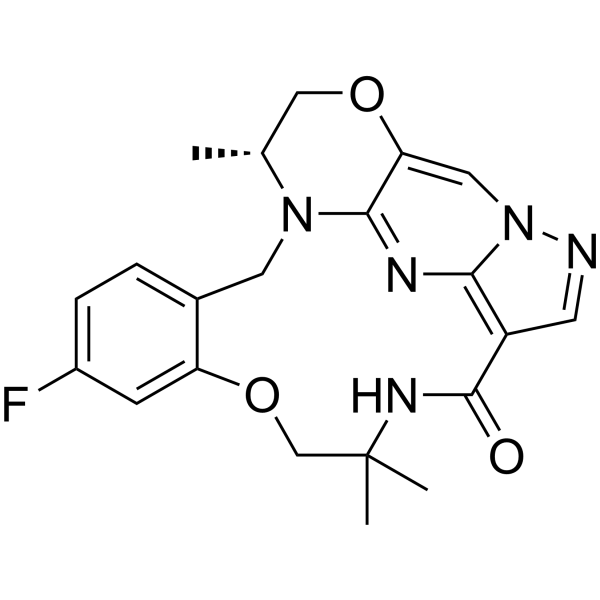
Trk-IN-11 (Compound 14h) is a potent inhibitor of TRK (IC50 = 1.4, 1.8 nM, against TrkA, TrkA G595R, respectively). As a receptor tyrosine kinase (RTK), tropomyosin receptor kinase (Trk) is a key agent target in solid tumors. Trk-IN-11 has the potential for the research of cancer disease .
loading...
    loading...
Cat. No.: HY-146472
CAS No.: 454436-75-0
Target:  

EGFR Apoptosis

Research Areas:  

Cancer

EGFR-IN-52 (Compound 4) is a potent EGFR inhibitor with IC50 values of 0.358, 86.02 and 432.67 µM against EGFR, EGFR L858R-TK and EGFR T790M-TK, respectively. EGFR-IN-52 shows cytotoxic activity against cancer cell lines and induces apoptosis .
loading...
    loading...
Cat. No.: HY-144423
CAS No.: 2700265-61-6
Target:  

Trk Receptor

Research Areas:  

Cancer

Trk-IN-10 (Compound 14j) is a potent inhibitor of TRK (IC50 = 0.86, 6.92 nM, against TrkA, TrkA G595R, respectively). As a receptor tyrosine kinase (RTK), tropomyosin receptor kinase (Trk) is a key agent target in solid tumors. Trk-IN-10 (IC50 = 350 nM against ALK) has a higher selectivity of Trk inhibition, which may be of great significance for reducing toxicity .
loading...
    loading...
Cat. No.: HY-10330AR
CAS No.: 874819-74-6
Synonyms: SU11654 phosphate (Standard); PHA 291639E phosphate (Standard)
Research Areas:  

Cancer

Toceranib phosphate (Standard) is the analytical standard of Toceranib phosphate (HY-10330A). This product is intended for research and analytical applications. Toceranib phosphate (SU11654 phosphate) is an orally active receptor tyrosine kinase (RTK) inhibitor, and it potently inhibits PDGFR, VEGFR, and Kit with Kis of 5 and 6 nM for PDGFRβ and Flk-1/KDR, respectively. Toceranib phosphate (SU11654 phosphate) has antitumor and antiangiogenic activity, and used in the treatment of canine mast cell tumors .
loading...
    loading...
Cat. No.: HY-10330R
CAS No.: 356068-94-5
Synonyms: SU11654 (Standard); PHA 291639E (Standard)
Research Areas:  

Cancer

Toceranib (Standard) is the analytical standard of Toceranib (HY-10330). This product is intended for research and analytical applications. Toceranib phosphate (SU11654 phosphate) is an orally active receptor tyrosine kinase (RTK) inhibitor, and it potently inhibits PDGFR, VEGFR, and Kit with Kis of 5 and 6 nM for PDGFRβ and Flk-1/KDR, respectively. Toceranib phosphate (SU11654 phosphate) has antitumor and antiangiogenic activity, and used in the treatment of canine mast cell tumors .
loading...
    loading...
Cat. No.: HY-189075
CAS No.: 2843690-50-4
Target:  

SHP2 ERK p38 MAPK EGFR Ras

Research Areas:  

Cancer

I-0436650 is an orally active SHP2 inhibitor with an IC50 of 4 nM and a Kd value of 0.3 nM. I-0436650 binds allosterically to the channel between the C-SH2, N-SH2 and PTP catalytic domains, locking the protein in an inactive closed conformation. I-0436650 potently inhibits ERK phosphorylation and suppresses MAPK pathway activity. I-0436650 exhibits antiproliferative activity in EGFR- and RAS-dependent cells. I-0436650 can be used in the research of RAS-driven cancers, EGFR-mutated cancers and RTK-driven cancers .
loading...
    loading...
Cat. No.: HY-L015
1,149 compounds

The PI3K/Akt/mTOR pathway controls many cellular processes that are important for the formation and progression of cancer, including apoptosis, transcription, translation, metabolism, angiogenesis, and cell cycle progression. Every major node of this signaling network is activated in a wide range of human tumors. Mechanisms for the pathway activation include activation of receptor tyrosine kinases (RTKs) upstream of PI3K, mutation or amplification of PIK3CA encoding p110α catalytic subunit of PI3K, mutation or loss of PTEN tumor suppressor gene, and mutation or amplification of Akt1. Once the pathway is activated, signaling through Akt can stimulate a series of substrates including mTOR which is involved in protein synthesis. Thus, inhibition of this pathway is an attractive concept for cancer prevention and/or therapy. Currently some mTOR inhibitors are approved for several indications, and there are several novel PI3K/Akt/mTOR inhibitors in clinical trials.

MCE owns a unique collection of 1,149 compounds that can be used for PI3K/Akt/mTOR pathway research. PI3K/Akt/mTOR Compound Library also acts as a useful tool for anti-cancer drug discovery.

