
281 Results for "

Transcriptome sequencing analyses

" in MedChemExpress (MCE) Product Catalog:
Products (281)

281 Results for "Transcriptome sequencing analyses" in MCE Product Catalog:

1
1 Cited Publications
Cat. No.: HY-K0607

MCE Modified Safranin O–Fast Green Cartilage Staining Kit through an optimized staining system, cartilage matrix and bone tissue in histological sections can be clearly distinguished. This method provides high staining contrast, good sensitivity, simple operation, and good reproducibility, and is widely used for cartilage morphology observation, studies of cartilage injury and degeneration, osteochondral tissue development research, and related histological analyses.

loading...
    loading...
1
1 Cited Publications
Cat. No.: HY-128036B
CAS No.: 72029-21-1
Purity:  99.93%
Synonyms: 2',3'-Dideoxyadenosine 5'-triphosphate trisodium
Target:  

DNA/RNA Synthesis HIV

Research Areas:  

Infection

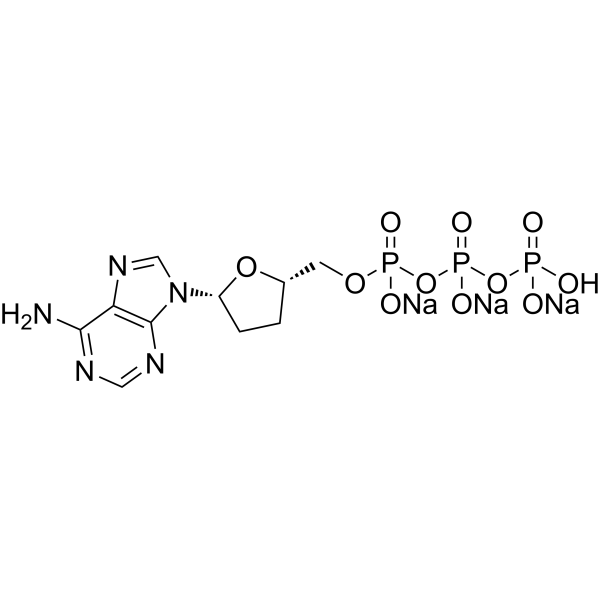
ddATP (2',3'-Dideoxyadenosine 5'-triphosphate) trisodium, an active metabolite of 2',3'-dideoxyinosine, is a chain-elongating inhibitor of DNA polymerase. ddATP trisodium can be used for Sanger method for DNA sequencing and research of virus infection .
loading...
    loading...
1
1 Cited Publications
Cat. No.: HY-W113081
CAS No.: 6741-73-7
Synonyms: 1-(4-Thio-beta-D-ribofuranosyl)uracil
Research Areas:  

Others

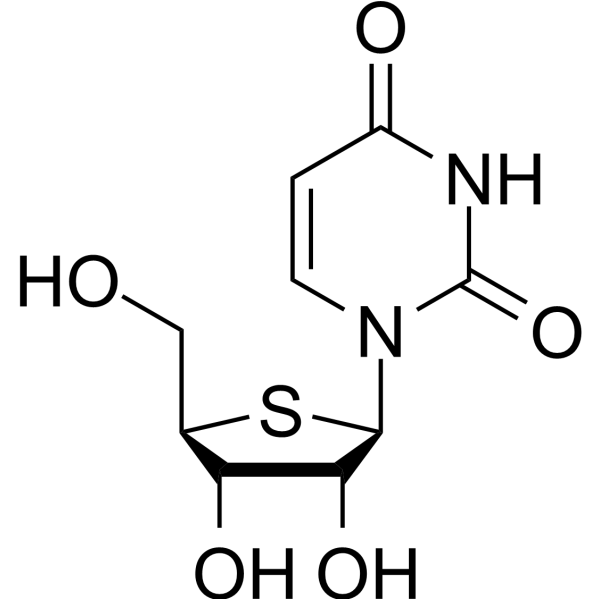
4′-Thiouridine (1-(4-Thio-beta-D-ribofuranosyl)uracil) is a thio analog of thymidine. 4′-Thiouridine can be used to synthesize 4'-thionucleosides with antiviral and anticancer activities. 4′-Thiouridine can be used for RNA-sequencing .
loading...
    loading...
1
1 Cited Publications
Cat. No.: HY-D0017S
CAS No.: 1276379-68-0
Synonyms: DNSCl-d6
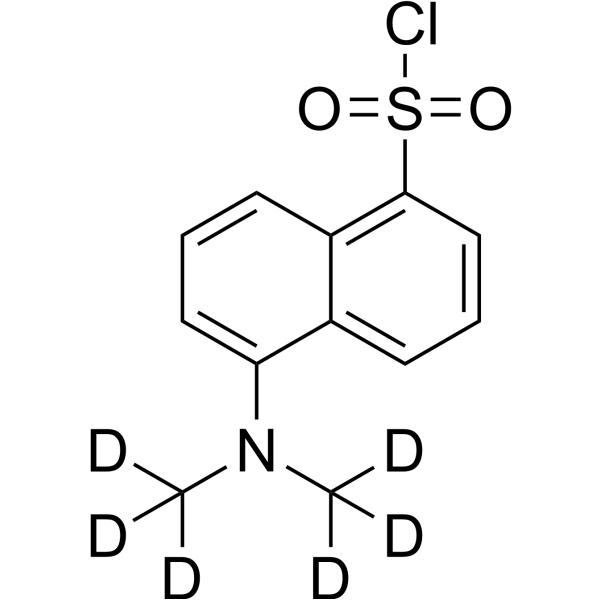
Dansyl chloride-d6 is the deuterium labeled Dansyl chloride (HY-D0017). Dansyl chloride is a reagent that produces stable blue or blue-green fluorescent sulfonamide adducts in the reaction of aliphatic and aromatic amines with primary amino groups, and is widely used for modified amino acids, protein sequencing and amino acid analysis .
loading...
    loading...
1
1 Cited Publications
Cat. No.: HY-148865
CAS No.: 2379889-82-2
Purity:  99.86%
Research Areas:  

Others

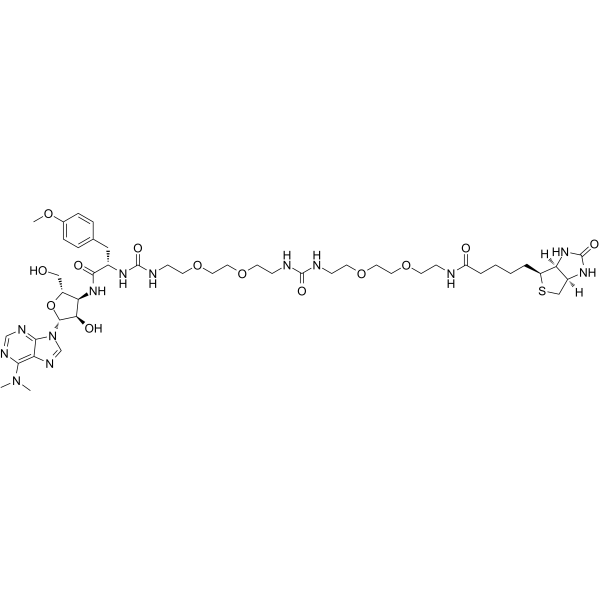
Puromycin-bis (PEG2-amide)-Biotin (Compound 3P) is a binding molecule. Puromycin-bis (PEG2-amide)-Biotin binds to ribosome-RNA complexes within single cells. Puromycin-bis (PEG2-amide)-Biotin is used for single-cell translatome sequencing .
loading...
    loading...
1
1 Cited Publications
Cat. No.: HY-W035091
CAS No.: 16903-35-8
Tetrachloroauric acid is an Au (III) compound and bilayer disruptor that can be used to damage red blood cells. Tetrachloroauric acid specifically disrupts the bilayer structure of representative phospholipids (dimyristoylphosphatidylcholine and dimyristoylphosphatidylethanolamine) in human red blood cell membranes, and induces morphological changes in intact human red blood cells. Tetrachloroauric acid causes downregulation of MT I-II and GFAP expression in the mouse brain following chronic treatment. Tetrachloroauric acid is being used in studies related to neurotoxicity and hematotoxicity, including analyses of human red blood cells and molecular models of red blood cell membranes, as well as immunohistochemical evaluation of the mouse brain .
loading...
    loading...
1
1 Cited Publications
Cat. No.: HY-D0945
CAS No.: 2650-17-1
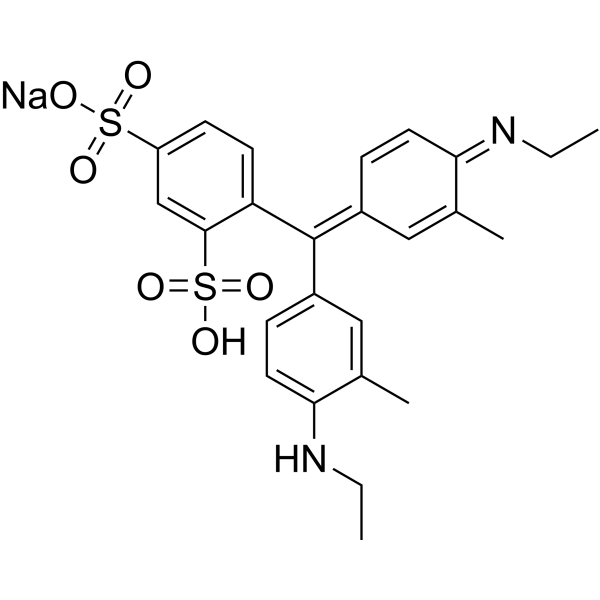
Xylene Cyanol FF is an acid triphenylmethane dye. Xylene Cyanol FF can be used for histochemical staining of hemoglobin peroxidase or as a tracking dye for DNA sequencing in electrophoresis. Xylene Cyanol FF will be catalyzed by Fe and Al to accelerate oxidation under the addition of double oxidant hydrogen peroxide and potassium periodate. Xylene Cyanol FF thus enables the spectrophotometric determination of Fe and Al in the solution to be tested .
loading...
    loading...
1
1 Cited Publications
Cat. No.: HY-142035
CAS No.: 58160-95-5
Purity:  99.70%
N-Propargylglycine is a brain-penetrant and orally active PRODH inhibitor. N-Propargylglycine covalently modifies enzyme-bound FAD and active site lysine, causing enzyme structural distortion, protein decay, and irreversible inhibition of proline and 4-hydroxyproline catabolism. N-Propargylglycine induces UPRmt, upregulates mitochondrial chaperones and YME1L1, enhances mitochondrial proteostasis, blocks astrocytic L-proline consumption, and abolishes L-proline’s ATP-maintaining and viability-protective effects. N-Propargylglycine stimulates neural processes, increases brain proline, hydroxyproline, and sarcosine levels, partially normalizes Huntington’s disease whole brain transcriptomes. N-Propargylglycine reduces hyperoxaluria, prevents calcium oxalate stone formation, reduces kidney tubular damage, and restores weight and survival in Grhpr knockout mice. N-Propargylglycine can be used for the research of breast cancer, neurodegenerative disorders, Huntington’s disease, and primary hyperoxaluria type 2 .
loading...
    loading...
1
1 Cited Publications
Cat. No.: HY-112582A
CAS No.: 1428903-59-6
Synonyms: 1-Methylpseudouridine-5′-triphosphate
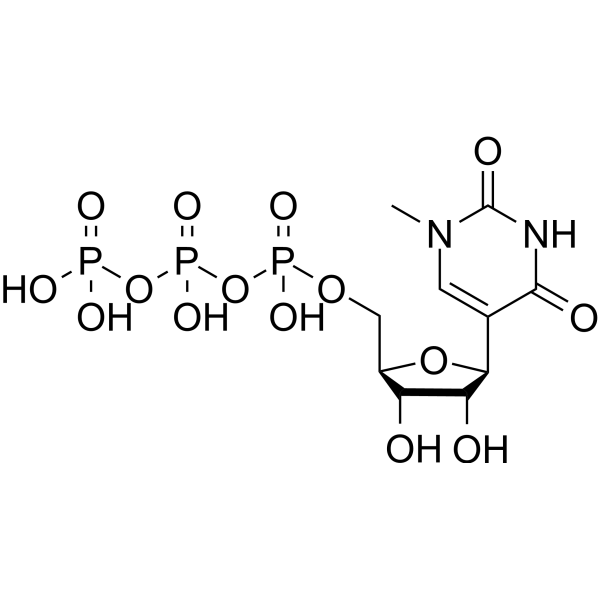
N1-Methylpseudouridine-5′-triphosphate (1-Methylpseudouridine-5′-triphosphate) is a nucleobase-modified nucleotide, used for synthesizing mRNA with reduced immunogenicity and improved stability.
loading...
    loading...
1
1 Cited Publications
Cat. No.: HY-112582C
CAS No.: 3056945-59-3
Purity:  99.70%
Synonyms: 1-Methylpseudouridine-5′-triphosphate trisodium; N1-Me-Pseudo UTP trisodium; N1-Methyl-Pseudo-UTP trisodium
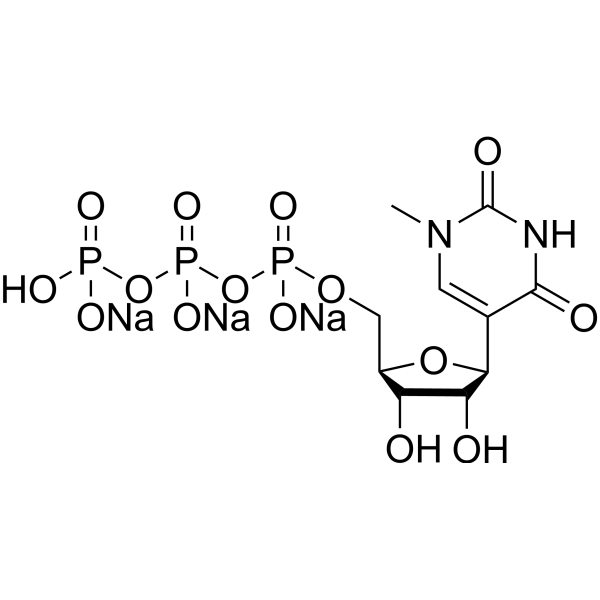
N1-Methylpseudouridine-5′-triphosphate (1-Methylpseudouridine-5′-triphosphate) trisodium solution (100 mM) is a nucleobase-modified nucleotide. N1-Methylpseudouridine-5′-triphosphate (1-Methylpseudouridine-5′-triphosphate) trisodium solution (100 mM) is used for synthesizing mRNA with reduced immunogenicity and improved stability .
loading...
    loading...
1
1 Cited Publications
Cat. No.: HY-114365
CAS No.: 108320-87-2
Purity:  99.95%
Synonyms: UDP-N-acetyl-D-galactosamine disodium
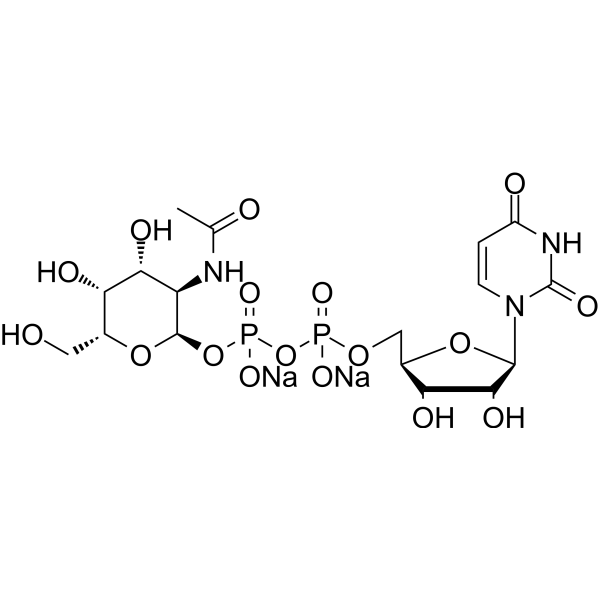
UDP-GalNAc (UDP-N-acetyl-D-galactosamine) disodium is a sugar nucleotide and a substrate for EpsC115. EpsC115 is a mutant with N-terminal residues 1-115 deleted from the exopolymeric substance (EPS). UDP-GalNAc disodium is a donor substrate for many N-acetylgalactosaminyltransferases, which transfer GalNAc from nucleotide sugars to sugar or peptide acceptors. UDP-GalNAc disodium provides a sugar group donor for glycosylation reactions. UDP-GalNAc disodium can be used in cancer research, such as colorectal and breast cancer .
loading...
    loading...
1
1 Cited Publications
Cat. No.: HY-141567A
Purity:  ≥98.0%
Synonyms: Pseudo-UTP trisodium solution (100 mM)
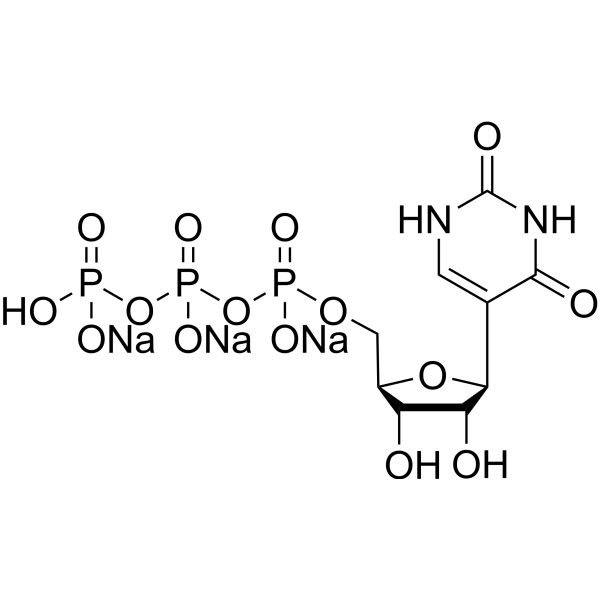
Pseudouridine 5'-triphosphate (Pseudo-UTP) trisodium solution (100 mM) is a modified ribonucleoside triphosphate and uracil base-modified UTP derivative. Pseudouridine 5'-triphosphate trisodium solution (100 mM) enhances translational properties and stability of mRNA, reduces innate immune responses in mammalian cells, and inhibits signal-dependent transcription termination of vaccinia virus early gene transcription while supporting transcription elongation. Pseudouridine 5'-triphosphate trisodium solution (100 mM) can be used for the research of vaccinia virus infection .
loading...
    loading...
1
1 Cited Publications
Cat. No.: HY-145934A
CAS No.: 1611490-64-2
Purity:  99.74%
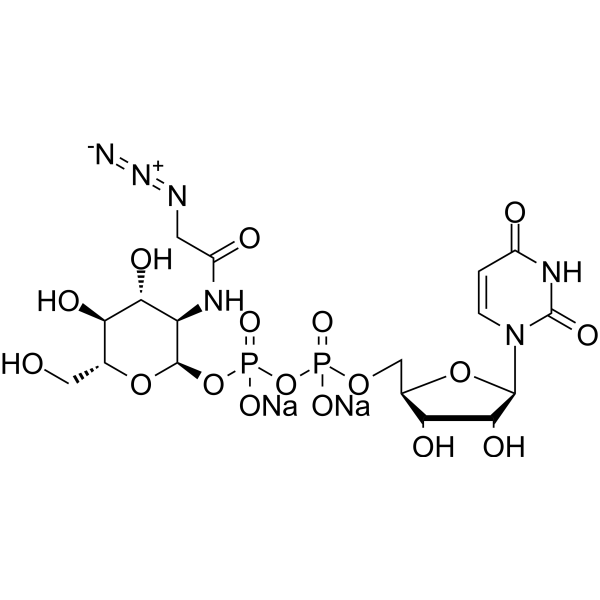
UDP-GlcNAz disodium is the analogue of UDP-GlcNAc disodium (HY-112174). UDP-GlcNAc disodium is the donor substrate of many N-acetylgalactosaminyltransferases, enzymes which transfer GlcNAc from the nucleotide sugar to a saccharide or peptide acceptor. UDP-GlcNAc disodium is a click chemistry reagent, it contains an Azide group and can undergo copper-catalyzed azide-alkyne cycloaddition reaction (CuAAc) with molecules containing Alkyne groups. It can also undergo strain-promoted alkyne-azide cycloaddition (SPAAC) reactions with molecules containing DBCO or BCN groups .
loading...
    loading...
1
1 Cited Publications
Cat. No.: HY-15620
CAS No.: 188247-01-0
Purity:  98.90%
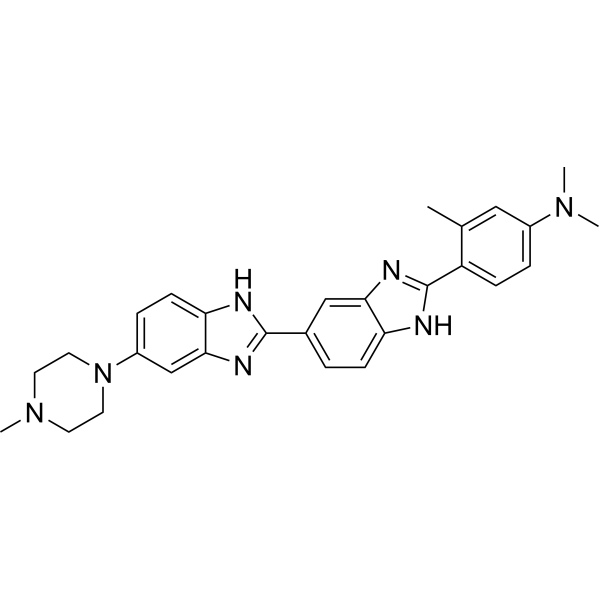
Methylproamine is a DNA-binding radioprotector, acts by repair of transient radiation-induced oxidative species on DNA. Methylproamine also protects against ionizing radiation by preventing DNA double-strand breaks .
loading...
    loading...
1
1 Cited Publications
Cat. No.: HY-156262
DEPC-Treated Water is ultrapure water that has been sterilized by high temperature and high pressure and does not contain nuclease. It can avoid contamination by non-specific endonucleases and exonucleases and does not affect RNase activity .
loading...
    loading...
1
1 Cited Publications
Cat. No.: HY-34619
CAS No.: 27126-76-7
[Hydroxy(tosyloxy)iodo]benzene is a versatile reagent for the mild oxidation of aryl iodides at the iodine atom by ligand transfer. [Hydroxy(tosyloxy)iodo]benzene is an effective reagent for the one-step conversion of ketones to the corresponding α-tosyloxy ketones. [Hydroxy(tosyloxy)iodo]benzene is also a Bronsted acid and is expected to catalyze the enolization of ketones .
loading...
    loading...
1
1 Cited Publications
Cat. No.: HY-60194
CAS No.: 34160-40-2
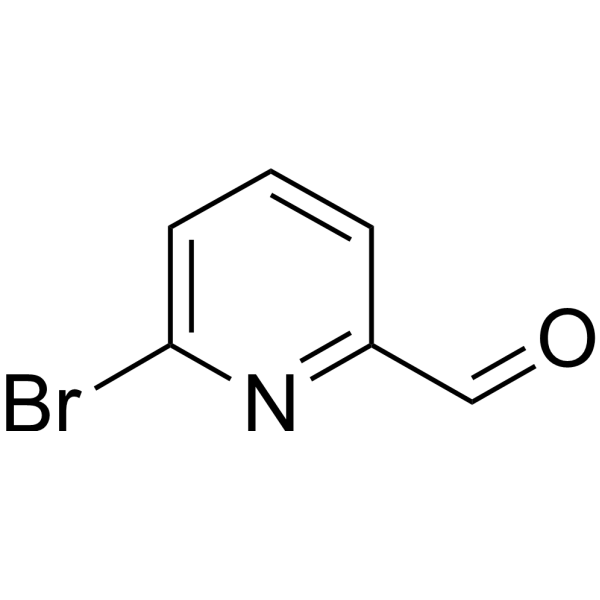
6-Bromo-2-pyridinecarboxaldehyde is a biochemical reagent that can be used as a biological material or organic compound for life science related research.
loading...
    loading...
1
1 Cited Publications
Cat. No.: HY-W008661
CAS No.: 93919-41-6
Synonyms: dGTP trisodium solution (100 mM); 2'-Deoxyguanosine-5'-triphosphate trisodium solution (100 mM)
Target:  

DNA/RNA Synthesis

Research Areas:  

Others

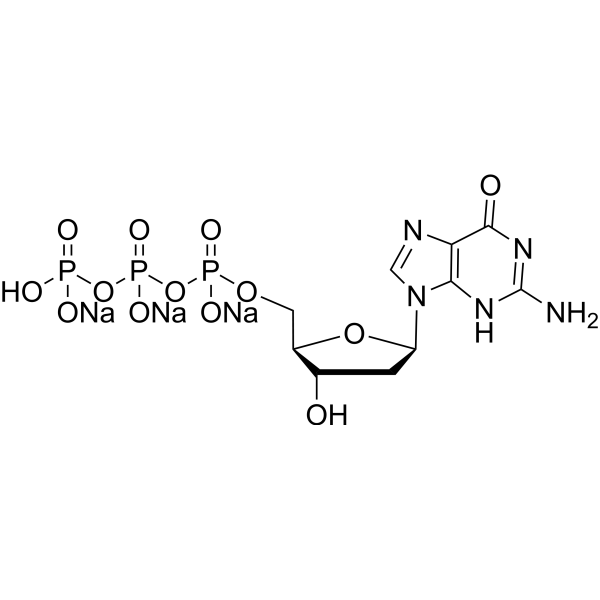
Deoxyguanosine triphosphate (dGTP) trisodium solution (100 mM) is a nucleotide precursor in cells for DNA synthesis. Deoxyguanosine triphosphate trisodium is used in reverse transcription-polymerase chain reaction (RT-PCR) for DNA amplification .
loading...
    loading...
1
1 Cited Publications
Cat. No.: HY-W011152
CAS No.: 13085-50-2
Synonyms: dCMP disodium
2'-Deoxycytidine-5'-monophosphoric acid disodium (dCMP disodium) is an endogenous metabolite .
loading...
    loading...
Cat. No.: HY-139912
CAS No.: 769933-15-5
Purity:  99.63%
Research Areas:  

Others

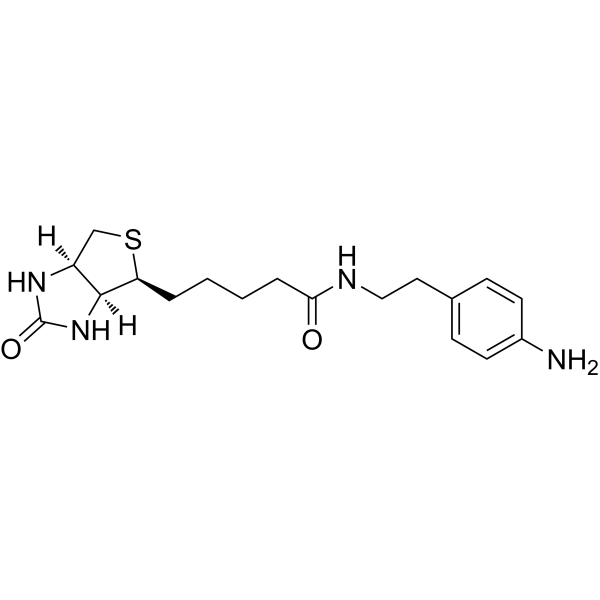
Biotin-aniline is a probe with substantially high reactivity towards RNA and DNA. Biotin-aniline is also a novel APEX2 substrate. Biotin-aniline can label proteins via miniSOG. Biotin-aniline emerges as more efficient probe for capturing subcellular transcriptome in living cells with high spatial specificity .
loading...
    loading...