

604 Results for "

SCO2 mutations

" in MedChemExpress (MCE) Product Catalog:
Products (604)

604 Results for "SCO2 mutations" in MCE Product Catalog:

Cat. No.: HY-131328S
Synonyms: LOXO-305-13C,d3
Pirtobrutinib- 13C,d3 (LOXO-305- 13C,d3) is the deuterated, 13C-labeled Pirtobrutinib (HY-131328). Pirtobrutinib (LOXO-305), a highly selective and non-covalent next generation BTK inhibitor, inhibits diverse BTK C481 substitution mutations. Pirtobrutinib causes regression of BTK-dependent lymphoma tumors in mouse xenograft models. Pirtobrutinib is also more than 300-fold selective for BTK versus 370 other kinases tested and shows no significant inhibition of non-kinase off-targets at 1 μM .
loading...
    loading...
Cat. No.: HY-132604
CAS No.: 2175009-08-0
Synonyms: ARO-AAT
Research Areas:  

Metabolic Disease

Fazirsiran (ARO-AAT) is a second-generation RNAi agent. Fazirsiran consistes of a cholesterol-conjugated RNAi trigger (chol-RNAi) to selectively reduce Alpha1-antitrypsin (AAT) synthesis and a melittin-derived peptide conjugated to N-acetylgalactosamine (NAG) formulated as the excipient EX1 to promote endosomal escape of the chol-RNAi in hepatocytes . Fazirsiran can be used in the study of Alpha-1 Antitrypsin Deficiency (AATD) liver disease. Alpha-1 antitrypsin deficiency (AATD) is caused by mutations in the alpha-1 antitrypsin (SERPINA1) gene.
loading...
    loading...
Cat. No.: HY-145743
CAS No.: 1111233-06-7
Research Areas:  

Cancer

CP-17 is a potent and selective IDH2/R140Q inhibitor with an IC50 of 40.75 nM. CP-17 exhibits excellent selectivity of >55-fold against the wild-type IDH2. CP-17 exhibits robust D-2-HG suppression activity in TF-1 (IDH2/R140Q) cells and reverses the cellular differentiation block induced by the R140Q mutation. CP-17 can be used for acute myeloid leukemia (AML) research .
loading...
    loading...
Cat. No.: HY-148409
CAS No.: 352693-80-2
Purity:  99.58%
Research Areas:  

Cancer

MMRi62, a ferroptosis inducer targeting MDM2-MDM4 (negative regulators of tumor suppressor p53). MMRi62 shows a P53-independent pro-apoptotic activity against pancreatic ductal adenocarcinoma (PDAC) cells and induce autophagy. MMRi62 inducesferroptosis, resulting in a increase of reactive oxygen and lysosomal degradation of ferritin heavy chain (FTH1). MMRi62 also leads to proteasomal degradation of mutant p53, also inhibits orthotopic xenograft PDAC mouse model in vivo with high frequency mutation characteristics of KRAS and TP53.12 [2].
loading...
    loading...
Cat. No.: HY-162460
CAS No.: 3056077-07-4
Target:  

ERK

Research Areas:  

Cancer

ERK1/2 inhibitor 10 (Compound 36c) is a potent ERK1 and ERK2 inhibitor (IC50: 0.11 and 0.08 nM respectively). ERK1/2 inhibitor 10 inhibits ERK1/2 and blocks the phosphorylation expression of their downstream substrates p90RSK and c-Myc. ERK1/2 inhibitor 10 induces cell apoptosis and incomplete autophagy-related cell death. ERK1/2 inhibitor 10 shows potent antitumor efficacy against triple-negative breast cancer and colorectal cancer models harboring BRAF and RAS mutations .
loading...
    loading...
Cat. No.: HY-164503
CAS No.: 2085843-51-0
Synonyms: NEP010
Target:  

EGFR

Research Areas:  

Cancer

Neptinib (NEP010) is an orally active derivative of Afatinib (HY-10261) that has stronger antitumor activity than Afatinib (HY-10261) by improving pharmacokinetics. Neptinib has a significant inhibitory effect on tumor growth in mouse non-small cell lung cancer models with different EGFR mutations. Neptinib has a certain inhibitory effect on the EGFR kinase family, with IC50 values ??of 0.24 nM, 7.25 nM, 0.46 nM and 1.79 nM for EGFR wt, EGFR L858R/T790M, EGFR L858R and EGFR T790M, respectively .
loading...
    loading...
Cat. No.: HY-174371
CAS No.: 3032576-92-1
INNO-220 is an orally active, CRBN-dependent molecular glue degrader targeting CK1α. INNO-220 induces cell cycle arrest at G0/G1 phase and triggers apoptosis by degrading CK1α. INNO-220 disrupts the assembly and function of the CARD11/BCL10/MALT1 complex, thereby inhibiting NF-κB signaling in stimulated T cells and lymphoma cells that harbor an activating mutation in CARD11. INNO-220 provides a new direction for lymphoma research.
loading...
    loading...
Cat. No.: HY-174384
CAS No.: 3082125-66-1
Research Areas:  

Cancer

MET Transcription-IN-1 (Compound C3) is an orally active MET transcription inhibitor. MET Transcription-IN-1 can efficiently bind and stabilize the G-quadruplex in the MET promoter region, thereby inhibiting c-Met expression. MET Transcription-IN-1 can also overcome drug resistance caused by specific c-Met mutations. MET Transcription-IN-1 is capable of inhibiting tumor cell proliferation, migration, and invasion, as well as inducing cell cycle arrest and apoptosis. MET Transcription-IN-1 has antitumor activity, and can be used in the research of tumors such as non-small cell lung cancer .
loading...
    loading...
Cat. No.: HY-174437
CAS No.: 3047195-48-9
Target:  

FLT3 Apoptosis

Research Areas:  

Cancer

FLT3-IN-32 is a potent and orally active FLT3 inhibitor. FLT3-IN-32 shows high selectivity for FLT3 and efficiently inhibits FLT3-activating mutations and induces apoptosis. FLT3-IN-32 shows good tolerability in non-tumor bearing mice. FLT3-IN-32 demonstrates outstanding anti-tumor efficacy in MV4-11 bearing NOD/SCID mice, prolonging the survival noticeably. FLT3-IN-32 can be used for the research of acute myeloid leukemia .
loading...
    loading...
Cat. No.: HY-175473
CAS No.: 898168-15-5
Target:  

FLT3 Apoptosis

Research Areas:  

Cancer

HI042 is a FMS-like Tyrosine Kinase 3 (FLT3) inhibitor. HI042 shows IC50 values of 0.62 μM for MOLM-13, 0.33 μM for MV4-11, and 0.89 μM for OCI-AML3 cells. HI042 selectively reduces the viability of FLT3-internal tandem duplication (FLT3-|TD) mutations-positive cell lines, induces apoptosis, disrupts cell cycle progression, and diminishes the clonogenic potential. HI042 can be used for the research of acute myeloid leukemia (AML) .
loading...
    loading...
Cat. No.: HY-181780
CAS No.: 2489327-91-3
Target:  

Trk Receptor

Research Areas:  

Cancer

TRK-IN-34 is an orally active TRKand TRKC mutant kinase inhibitor, with IC50 values of 0.75 nM and 0.96 nM against TRKA G595R and TRKA G667C, respectively. TRK-IN-34 inhibits the kinase activities of TRKA G595R and TRKA G667C at the functional level. TRK-IN-34 inhibits the proliferation of TRKA-transfected cells, exerts tumor growth-inhibitory effects and achieves partial tumor regression in xenograft models. TRK-IN-34 can be used to study TRK inhibitor-resistant cancers driven by the TRKA G667C mutation .
loading...
    loading...
Cat. No.: HY-185173
CAS No.: 1309389-73-8
Target:  

TRP Channel

Research Areas:  

Others

(E)-3-Benzodioxol-5-yl-N,N-diphenyl-2-propenamide is a chemically synthesized flavoring substance and can be found in toothpaste products. (E)-3-Benzodioxol-5-yl-N,N-diphenyl-2-propenamide is non-genotoxic, shows no genotoxic activity in bacterial reverse mutation and in vitro mammalian cell micronucleus assays. (E)-3-Benzodioxol-5-yl-N,N-diphenyl-2-propenamide does not induce prenatal developmental toxicity in rats .
loading...
    loading...
Cat. No.: HY-E70289
Synonyms: Bovin B4GALT1 (Y289L)
Target:  

Glycosyltransferase

Research Areas:  

Cancer

Bovin beta-1,4-galactosyltransferase 1 (Y289L) (Bovin B4GALT1 (Y289L)) is a mutated form of bovine-derived galactosyltransferase with a mutation at the Y289L genetic site. Bovin beta-1,4-galactosyltransferase 1 can label O-GlcNAcylated proteins with an N-azidoacetylgalactosamine (GalNAz) group. This labeling method allows for the specific, unbiased, and global labeling of O-GlcNAcylated proteins. After labeling, the appended azide group can react with a wide variety of alkyne-modified chemical probes, facilitating multiple downstream analyses .
loading...
    loading...
Cat. No.: HY-P990091
CAS No.: 2756228-76-7
Synonyms: SAR445088
Riliprubart (SAR445088) is a selective anti-C1s humanized IgG4 monoclonal antibody with mutations that enhance its binding to the neonatal Fc receptor. Riliprubart blocks activation of the classical complement pathway, prevents the formation of the C3 convertase C4b2a, and inhibits complement-mediated hemolytic activity. Riliprubart can be used in research related to classical complement-mediated diseases, cold agglutinin disease, and chronic inflammatory demyelinating polyneuropathy. For the isotype control of Riliprubart, refer to Human IgG4 (S228P) kappa, Isotype Control (HY-P99003) [2] .
loading...
    loading...
Cat. No.: HY-P991155
CAS No.: 2988886-91-3
Synonyms: JNJ-79635322; JNJ-5322
Target:  

CD3 TNF Receptor

Research Areas:  

Cancer

Ramantamig (JNJ-79635322) is a humanized monoclonal antibody targeting human CD3ε, GPRC5D, and TNFRSF17 (BCMA). Ramantamig binds to BCMA and GPRC5D on multiple myeloma cells, binds to CD3ε on T cells, forms immunological synapses, and enables T-cell-mediated cytotoxicity. Ramantamig activates T cells concomitantly with inducing myeloma cell cytotoxicity, with no nonspecific T-cell activation in the absence of target myeloma cells. Ramantamig carries mutations to reduce interaction with Fc receptors and disrupt protein A binding of monomeric and homodimerized chains. Ramantamig can be used for the research of multiple myeloma .
loading...
    loading...
Cat. No.: HY-P992396

Target:  

c-Met/HGFR

Research Areas:  

Cancer

KTN0073 is a high-affinity MET receptor tyrosine kinase inhibitor. KTN0073 can be used in studies related to non-small cell lung cancer and human cancers driven by HGF, MET amplification, or exon 14 mutation. KTN0073 binds to the Sema/PSI domain to block the HGF-MET interaction, and induces ubiquitination and degradation of oncogenic MET receptors via an HGF-independent pathway, thereby inhibiting MET-dependent signal transduction. KTN0073 exhibits significant antitumor activity in vivo, and its tumor suppressive activity is superior to that of the IgG1 subtype when grafted to the IgG2 constant region [2].
loading...
    loading...
Cat. No.: HY-Z7733
CAS No.: 72956-44-6
Synonyms: Desmethylcarvedilol; BM-14242
Target:  

Calcium Channel

Research Areas:  

Metabolic Disease

O-Desmethylcarvedilol (Desmethylcarvedilol) is an active metabolite of the non-selective β-adrenergic receptor (β-AR) antagonist Carvedilol (HY-B0006). O-Desmethylcarvedilol inhibits store-overload-induced calcium release in HEK293 cells expressing the ryanodine receptor 2 (RyR2) R4496C (RyR2 R4496C) mutation (IC50 = 7.62 µM). O-Desmethylcarvedilol reduces increases in heart rate and prevents decreases in diastolic blood pressure induced by Isoproterenol (HY-B0468) in conscious rabbits (ED50s = 32 and 5 µg/kg, respectively) [2].
loading...
    loading...
Cat. No.: HY-100424
CAS No.: 1202041-71-1
Target:  

PI3K Akt

Research Areas:  

Cancer

PI3K-IN-63 is a selective PI3Kα inhibitor with a Ki of 0.35 nM against human targets. PI3K-IN-63 inhibits the phosphorylation of AKT at the S473 site in cellular assays. PI3K-IN-63 reduces the viability of non-small cell lung cancer cell lines carrying PIK3CA mutations. PI3K-IN-63 can be used in studies related to non-small cell lung cancer .
loading...
    loading...
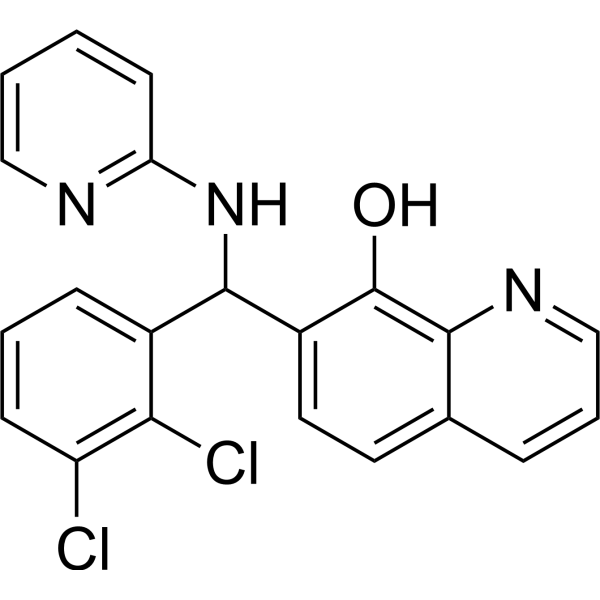
Cat. No.: HY-112823R
CAS No.: 1899921-05-1
Synonyms: HS-10296 (Standard)
Research Areas:  

Cancer

Almonertinib (Standard) is the analytical standard of Almonertinib. This product is intended for research and analytical applications. Almonertinib (HS-10296) is an orally available, irreversible, third-generation EGFR tyrosine kinase inhibitor with high selectivity for EGFR-sensitizing and T790M resistance mutations. Almonertinib shows great inhibitory activity against T790M, T790M/L858R and T790M/Del19 (IC50: 0.37, 0.29 and 0.21 nM, respectively), and is less effective against wild type (3.39 nM). Almonertinib is used for the research of the non-small cell lung cancer [2].
loading...
    loading...
Cat. No.: HY-115465
CAS No.: 908510-73-6
Target:  

DNA/RNA Synthesis

Research Areas:  

Cancer

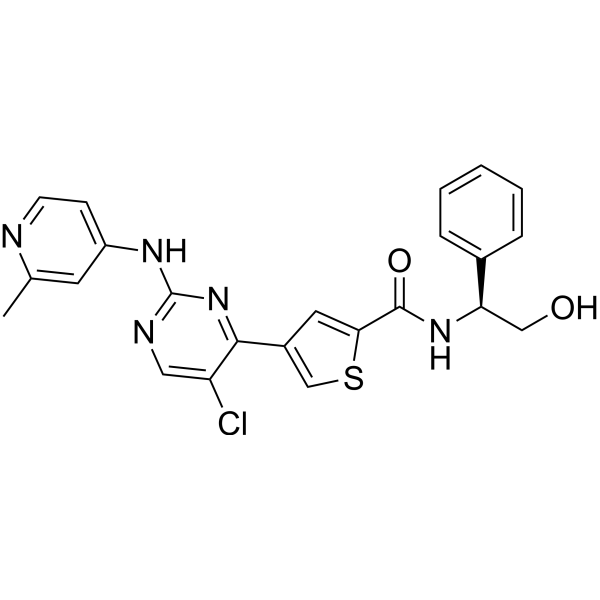
Rev1-CT/RIR PPI-IN-1 (Compound 1) is a thiophene-based compound. Rev1-CT/RIR PPI-IN-1 can specifically disrupt the protein-protein interaction between Rev1-CT and RIR, with an IC50 value of 2.5 µM. Rev1-CT/RIR PPI-IN-1 can enhance chemosensitivity and reduce the mutation rate in Cisplatin (HY-17394)-sensitive HT-1080 cells. Rev1-CT/RIR PPI-IN-1 can be used for tumor research .
loading...
    loading...

