2510 Results for "

ESKAPEE bacteria

" in MedChemExpress (MCE) Product Catalog:
Products (2510)

2510 Results for "ESKAPEE bacteria" in MCE Product Catalog:

25
25 Cited Publications
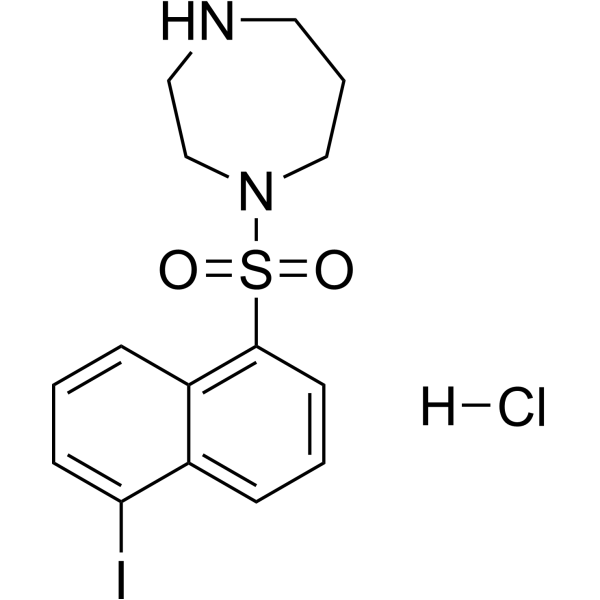
Cat. No.: HY-15417
CAS No.: 110448-33-4
Purity:  99.60%
ML-7 hydrochloride is a selective and highly specific myosin light chain kinase (MLCK) inhibitor that acts as a trabecular meshwork (TM) relaxant. ML-7 hydrochloride enhances Quinocetone (HY-123581)-induced phosphorylation of ERK, p38 MAPK and JNK, attenuates Akt activation, and promotes apoptosis of hepatocellular carcinoma cells. ML-7 hydrochloride reduces Th2 cytokine secretion by inhibiting MLCK, while alleviating smooth muscle hyperplasia and collagen deposition . As a non-antibiotic adjuvant, ML-7 hydrochloride restores the sensitivity of drug-resistant bacteria to Tigecycline (HY-B0117) . ML-7 hydrochloride can be used in research related to glaucoma, hepatocellular carcinoma, asthma, and Klebsiella pneumoniae infection .
loading...
    loading...
22
22 Cited Publications
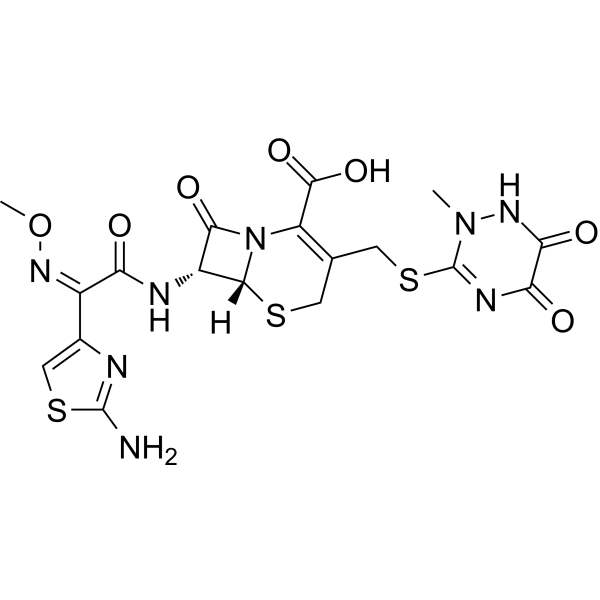
Cat. No.: HY-B0712
CAS No.: 73384-59-5
Synonyms: Ro 13-9904 free acid
Ceftriaxone (Ro 13-9904 free acid) is a broad spectrum β-lactam third-generation cephalosporin antibiotic, which has good antibacterial activity against a variety of gram-negative and positive bacteria. Ceftriaxone is a covalent inhibitor of GSK3β with IC50 value of 0.78 μM. Ceftriaxone is an inhibitor of Aurora B. Ceftriaxone has anti-inflammatory, antitumor and antioxidant activities. Ceftriaxone can be used in the study of bacterial infections and meningitis .
loading...
    loading...
22
22 Cited Publications
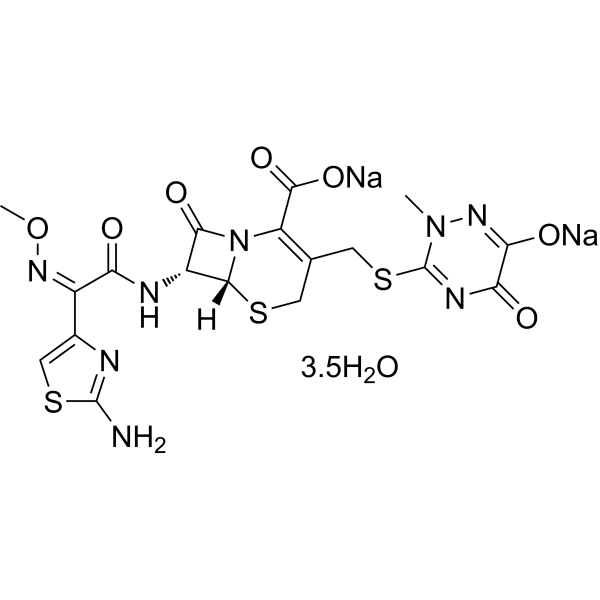
Cat. No.: HY-B0712A
CAS No.: 104376-79-6
Synonyms: Ro 13-9904 sodium hydrate
Research Areas:  

Infection Cancer

Ceftriaxone sodium hydrate (Ro 13-9904 sodium hydrate) is a broad spectrum β-lactam third-generation cephalosporin antibiotic, which has good antibacterial activity against a variety of gram-negative and positive bacteria. Ceftriaxone sodium hydrate is a covalent inhibitor of GSK3β with IC50 value of 0.78 μM. Ceftriaxone sodium hydrate is an inhibitor of Aurora B. Ceftriaxone sodium hydrate has anti-inflammatory, antitumor and antioxidant activities. Ceftriaxone sodium hydrate can be used in the study of bacterial infections and meningitis .
loading...
    loading...
22
22 Cited Publications
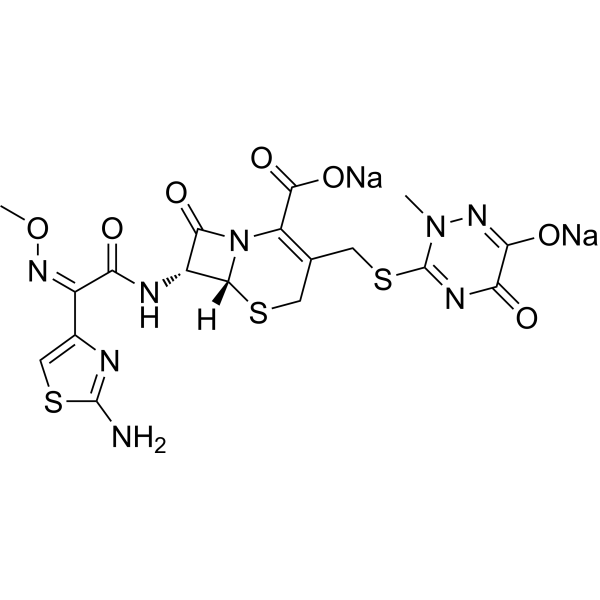
Cat. No.: HY-B0712B
CAS No.: 74578-69-1
Synonyms: Ro 13-9904
Ceftriaxone sodium salt (Ro 13-9904) is a broad spectrum β-lactam third-generation cephalosporin antibiotic, which has good antibacterial activity against a variety of gram-negative and positive bacteria. Ceftriaxone sodium salt is a covalent inhibitor of GSK3β with IC50 value of 0.78 μM. Ceftriaxone sodium salt is an inhibitor of Aurora B. Ceftriaxone sodium salt has anti-inflammatory, antitumor and antioxidant activities. Ceftriaxone sodium salt can be used in the study of bacterial infections and meningitis .
loading...
    loading...
20
20 Cited Publications
Cat. No.: HY-17381
CAS No.: 57852-57-0
Synonyms: 4-Demethoxydaunorubicin hydrochloride
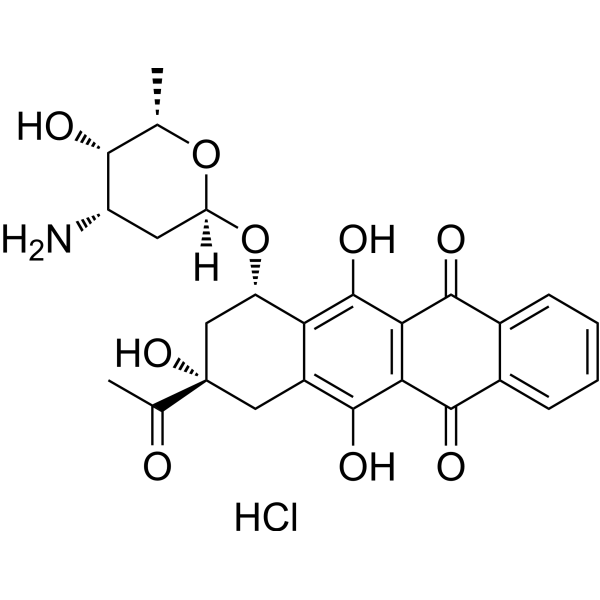
Idarubicin hydrochloride is an anthracycline antileukemic agent. It inhibits the topoisomerase II interfering with the replication of DNA and RNA transcription. Idarubicin hydrochloride inhibits the growth of bacteria and yeasts.
loading...
    loading...
20
20 Cited Publications
Cat. No.: HY-17381A
CAS No.: 58957-92-9
Synonyms: 4-Demethoxydaunorubicin
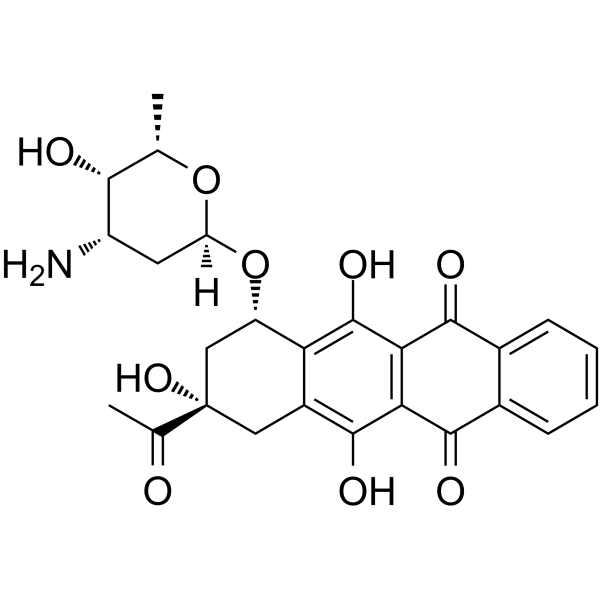
Idarubicin is an orally active and potent anthracycline antileukemic agent. Idarubicin inhibits the topoisomerase II interfering with the replication of DNA and RNA transcription. Idarubicin shows induction of DNA damage. Idarubicin inhibits DNA synthesis and of c-myc expression. Idarubicin inhibits the growth of bacteria and yeasts .
loading...
    loading...
20
20 Cited Publications
Cat. No.: HY-12326A
CAS No.: 2734909-87-4
Synonyms: Cyclic diadenylate disodium; Cyclic-di-AMP disodium
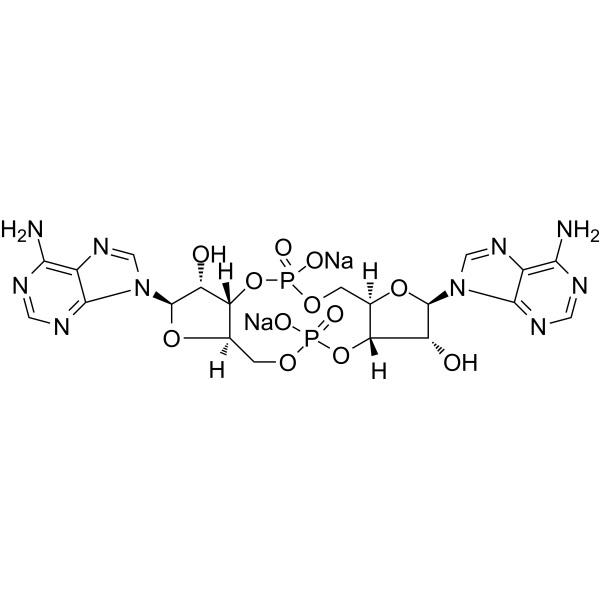
c-di-AMP (Cyclic diadenylate) sodium is a STING agonist, which binds to the transmembrane protein STING thereby activating the TBK3-IRF3 signaling pathway, subsequently triggering the production of type I IFN and TNF. c-di-AMP sodium is also a bacterial second messenger, which regulates cell growth, survival, and virulence, primarily within Gram-positive bacteria, and also regulates host immune response. c-di-AMP sodium acts as a potent mucosal adjuvant stimulating both humoral and cellular responses .
loading...
    loading...
20
20 Cited Publications
Cat. No.: HY-12326B
Purity:  99.36%
Synonyms: Cyclic diadenylate diammonium; Cyclic-di-AMP diammonium
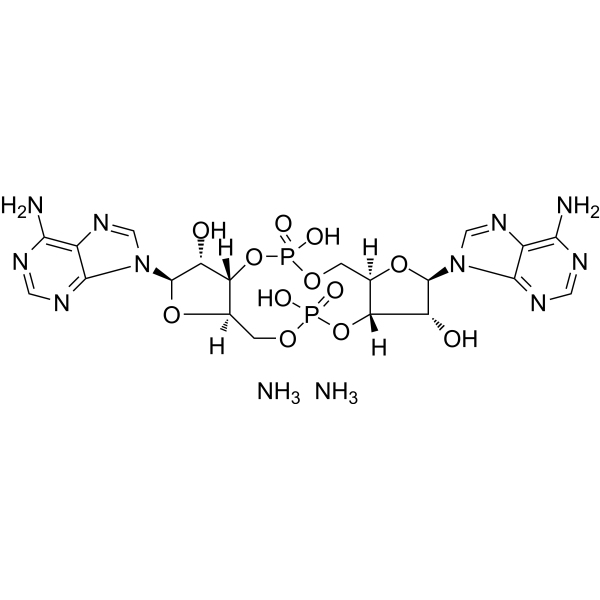
c-di-AMP diammonium is a STING agonist, which binds to the transmembrane protein STING thereby activating the TBK3-IRF3 signaling pathway, subsequently triggering the production of type I IFN and TNF. c-di-AMP diammonium is also a bacterial second messenger, which regulates cell growth, survival, and virulence, primarily within Gram-positive bacteria, and also regulates host immune response. c-di-AMP diammonium acts as a potent mucosal adjuvant stimulating both humoral and cellular responses .
loading...
    loading...
19
19 Cited Publications
Cat. No.: HY-B0616
CAS No.: 123171-59-5
Research Areas:  

Infection

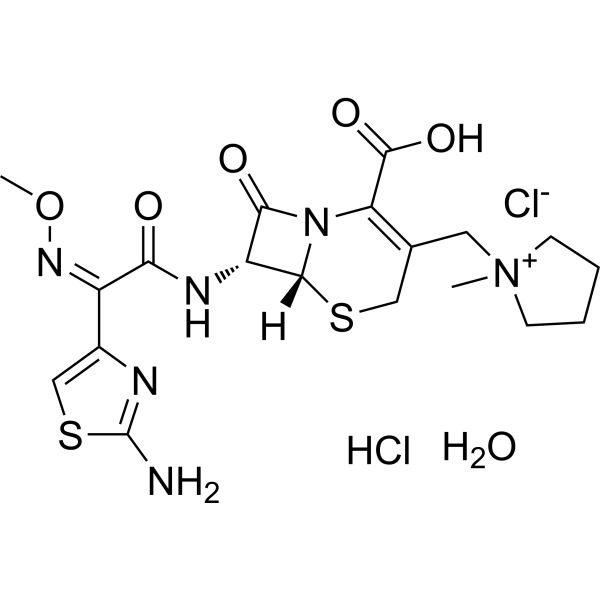
Cefepime (BMY-28142) Dihydrochloride Monohydrate is a broad-spectrum, blood-brain barrier-permeable cephalosporin antibiotic with hPON1 inhibitory activity, with an IC50 of 21.115 mM and a Ki of 35.092 mM. Cefepime Dihydrochloride Monohydrate inhibits hPON1 via a non-competitive mechanism and blocks GABAA receptors. Cefepime Dihydrochloride Monohydrate penetrates the outer membrane of Gram-negative bacteria, inhibits the growth of Gram-positive and Gram-negative bacteria, and does not induce the production of β-lactamase .
loading...
    loading...
19
19 Cited Publications
Cat. No.: HY-B0692
CAS No.: 88040-23-7
Synonyms: BMY-28142
Research Areas:  

Infection

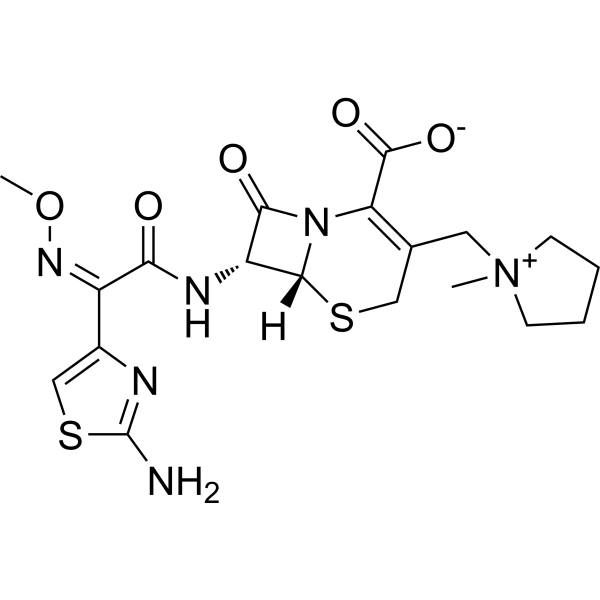
Cefepime (BMY-28142) is a broad-spectrum, blood-brain barrier-permeable cephalosporin antibiotic with hPON1 inhibitory activity, with an IC50 of 21.115 mM and a Ki of 35.092 mM. Cefepime inhibits hPON1 via a non-competitive mechanism and blocks GABAA receptors. Cefepime penetrates the outer membrane of Gram-negative bacteria, inhibits the growth of Gram-positive and Gram-negative bacteria, and does not induce the production of β-lactamase .
loading...
    loading...
19
19 Cited Publications
Cat. No.: HY-109124
CAS No.: 1613267-49-4
Purity:  98.45%
Synonyms: VNRX-5133
Research Areas:  

Infection

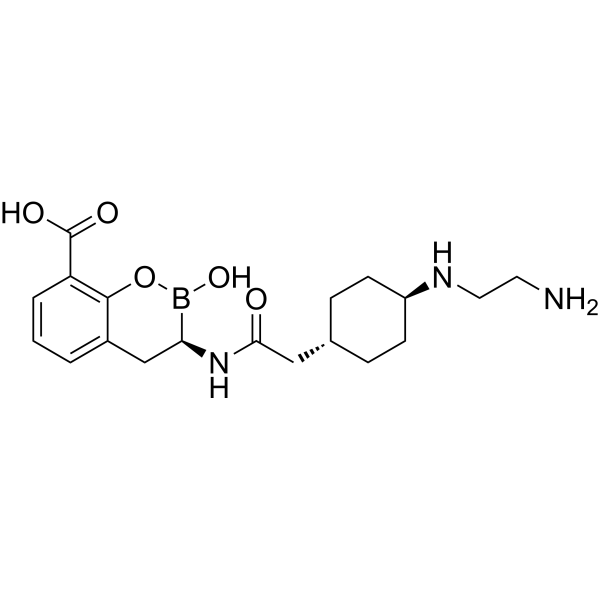
Taniborbactam (VNRX-5133) is a reversible and selective boronic acid-containing pan-spectrum β-lactamase inhibitor with IC50s of 8-530 nM. Taniborbactam has IC50s of 30 nM, 32 nM, 42 nM, 20 nM for KPC-2, AmpC, OXA-48, and VIM-2. Taniborbactam is against Gram-negative bacteria .
loading...
    loading...
19
19 Cited Publications
Cat. No.: HY-109124A
CAS No.: 2244235-49-0
Purity:  99.97%
Synonyms: VNRX-5133 hydrochloride
Research Areas:  

Infection

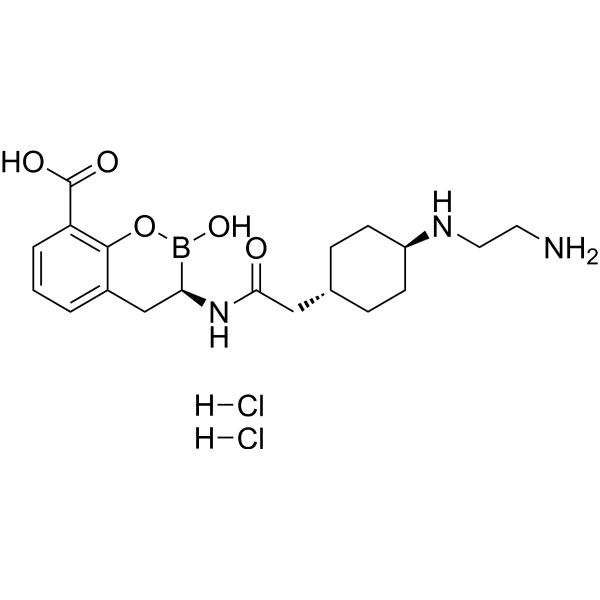
Taniborbactam hydrochloride (VNRX-5133 hydrochloride) is a reversible and selective boronic acid-containing pan-spectrum β-lactamase inhibitor with IC50s of 8-530 nM. Taniborbactam hydrochloride has IC50s of 30 nM, 32 nM, 42 nM, 20 nM for KPC-2, AmpC, OXA-48, and VIM-2. Taniborbactam hydrochloride is against Gram-negative bacteria .
loading...
    loading...
19
19 Cited Publications
Cat. No.: HY-17395
CAS No.: 78628-80-5
Synonyms: TDT 067 hydrochloride
Research Areas:  

Infection

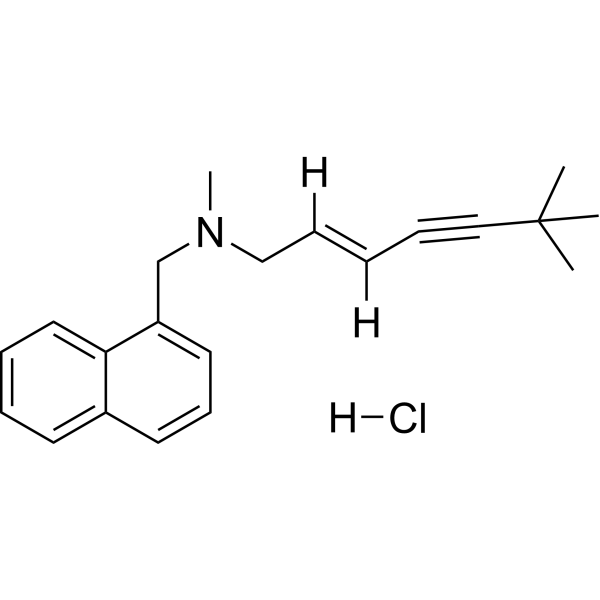
Terbinafine hydrochloride (TDT 067 hydrochloride) is an orally active and potent antifungal agent. Terbinafine hydrochloride is a potent non-competitive inhibitor of squalene epoxidase from Candida, with a Ki of 30 nM. Terbinafine hydrochloride also shows antibacterial activity against certain Gram-positive and Gram-negative bacteria . Terbinafine hydrochloride is a click chemistry reagent, it contains an Alkyne group and can undergo copper-catalyzed azide-alkyne cycloaddition (CuAAc) with molecules containing Azide groups.
loading...
    loading...
19
19 Cited Publications
Cat. No.: HY-17395A
CAS No.: 91161-71-6
Synonyms: TDT 067
Research Areas:  

Infection

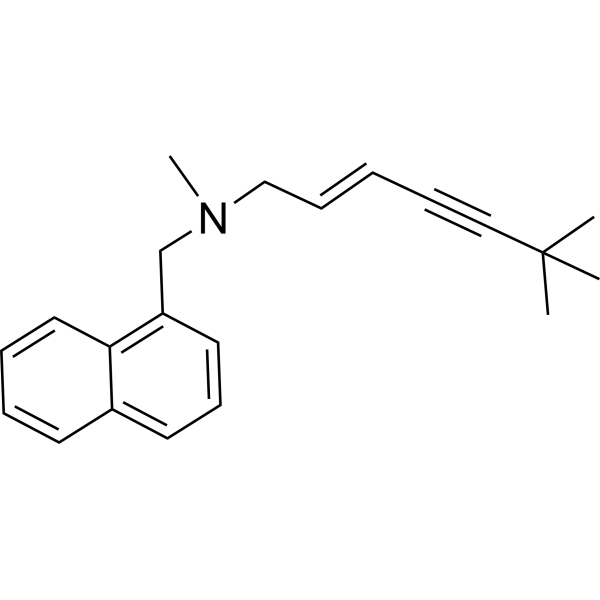
Terbinafine (TDT 067) is an orally active and potent antifungal agent. Terbinafine is a potent non-competitive inhibitor of squalene epoxidase from Candida, with a Ki of 30 nM. Terbinafine also shows antibacterial activity against certain Gram-positive and Gram-negative bacteria . Terbinafine is a click chemistry reagent, it contains an Alkyne group and can undergo copper-catalyzed azide-alkyne cycloaddition (CuAAc) with molecules containing Azide groups.
loading...
    loading...
17
17 Cited Publications
Cat. No.: HY-K1002

MCE NP-40 Lysis Buffer is a relatively mild reliable buffers used to lyse cells from animal, plant tissue and fungi, bacteria etc.

loading...
    loading...
17
17 Cited Publications
Cat. No.: HY-B0217
CAS No.: 55981-09-4
Synonyms: NTZ; NSC 697855
Research Areas:  

Infection Cancer

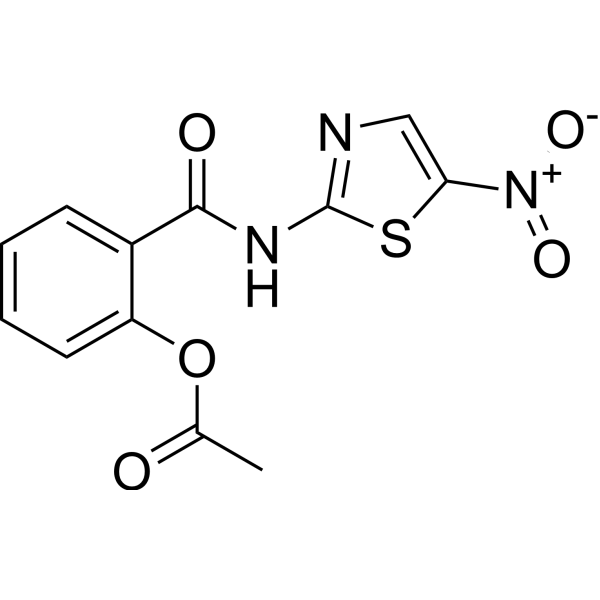
Nitazoxanide (NTZ), an anthelmintic agent, exhibits a broad spectrum of activities against a wide variety of helminths, protozoa, and enteric bacteria infecting animals and humans. Nitazoxanide inhibits Giardia lamblia trophozoite proliferation in axenic culture with an IC50 of 2.4 μM . Nitazoxanide can be used for the research of parasitic gastroenteritis. Nitazoxanide shows anti-Japanese encephalitis virus (JEV) activity in a mouse model .
loading...
    loading...
17
17 Cited Publications
Cat. No.: HY-103311
CAS No.: 11103-72-3
Purity:  ≥97.0%
Synonyms: Ammoniated ruthenium oxychloride
Target:  

Calcium Channel

Research Areas:  

Cardiovascular Disease

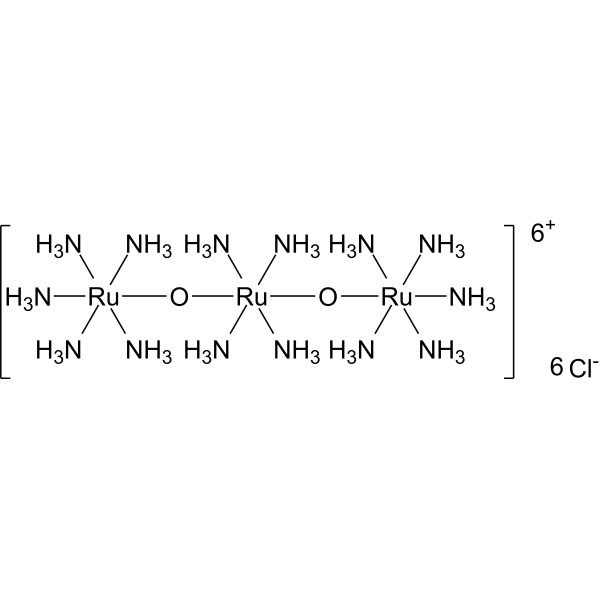
Ruthenium red (Ammoniated ruthenium oxychloride) is a polycationic dye widely used for electron microscopy (EM) of cells, tissues and vegetative bacteria. Ruthenium red strongly reacts with phospholipids and fatty acids and binds to acidic mucopolysaccharides. Ruthenium red is a L-type calcium current (ICa) blocker. When using Ruthenium Red to stain plant tissue sections affected by pathogens, the breakdown of mucilaginous substances by the pathogens prevents them from taking up the stain, whereas the cell walls of healthy tissue stain red .
loading...
    loading...
16
16 Cited Publications
Cat. No.: HY-W016420
CAS No.: 26016-99-9
Synonyms: MK-0955 sodium
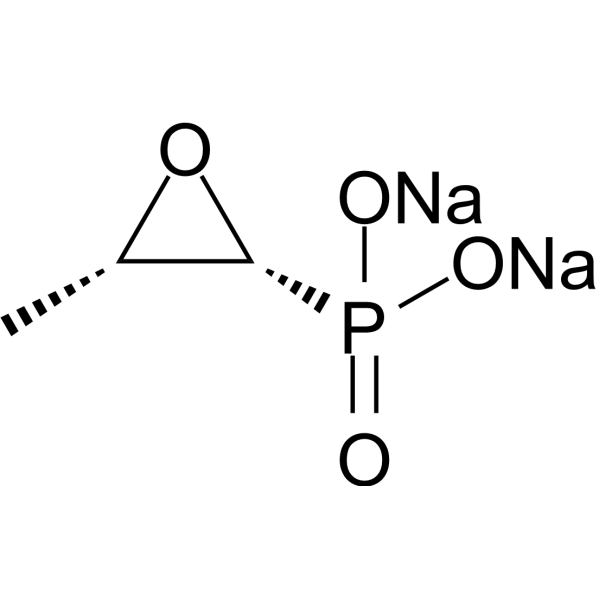
Fosfomycin (MK-0955) sodium is a blood-brain barrier penetrating, broad-spectrum antibiotic by irreversibly inhibiting an early stage in cell wall synthesis. Fosfomycin sodium shows both in vivo and in vitro activity against a wide range of bacteria, including multidrug-resistant (MDR), extensively drug-resistant (XDR), and pan-drug-resistant (PDR) bacteria .
loading...
    loading...
16
16 Cited Publications
Cat. No.: HY-B0609
CAS No.: 78964-85-9
Synonyms: MK-0955 tromethamine
Target:  

Bacterial Antibiotic

Research Areas:  

Infection Cancer

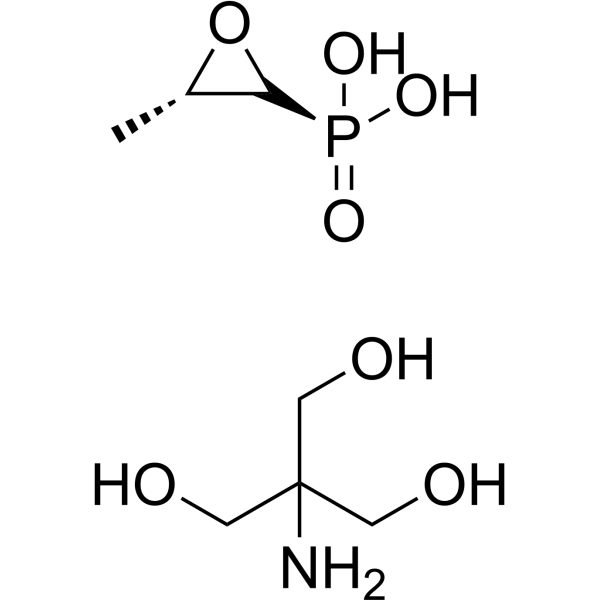
Fosfomycin (MK-0955) tromethamine is a blood-brain barrier penetrating, broad-spectrum antibiotic by irreversibly inhibiting an early stage in cell wall synthesis. Fosfomycin tromethamine shows both in vivo and in vitro activity against a wide range of bacteria, including multidrug-resistant (MDR), extensively drug-resistant (XDR), and pan-drug-resistant (PDR) bacteria .
loading...
    loading...
16
16 Cited Publications
Cat. No.: HY-B1075
CAS No.: 26016-98-8
Synonyms: MK-​0955 calcium
Target:  

Bacterial Antibiotic

Research Areas:  

Infection Cancer

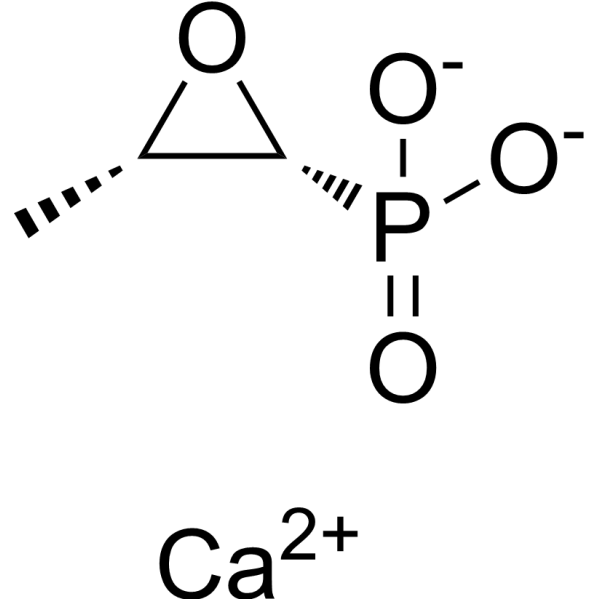
Fosfomycin (MK-0955) calcium is a blood-brain barrier penetrating, broad-spectrum antibiotic by irreversibly inhibiting an early stage in cell wall synthesis. Fosfomycin calcium shows both in vivo and in vitro activity against a wide range of bacteria, including multidrug-resistant (MDR), extensively drug-resistant (XDR), and pan-drug-resistant (PDR) bacteria .
loading...
    loading...

