107 Results for "

Th2

" in MedChemExpress (MCE) Product Catalog:
Products (107)

107 Results for "Th2" in MCE Product Catalog:

Cat. No.: HY-N15846
CAS No.: 2489675-55-8
VSA 1, a semisynthetic QS-21 (HY-101092) analog, is a saponin adjuvant. VSA 1 potentiates antigen-specific IgG1 and IgG2a immune responses in BALB/c mice, indicating a mixed Th1/Th2 immune response. VSA 1 significantly improves vaccine efficacy after primary immunization and enhances homologous protection .
loading...
    loading...
Cat. No.: HY-174642
Target:  

mRNA

Research Areas:  

Inflammation/Immunology

Human IL12A mRNA encodes the human interleukin 12A (IL12A) protein, a subunit of a cytokine that acts on T and natural killer cells, and has a broad array of biological activities. IL12A is required for the T-cell-independent induction of interferon (IFN)-gamma, and is important for the differentiation of both Th1 and Th2 cells.
loading...
    loading...
Cat. No.: HY-W010520R
CAS No.: 2682-20-4
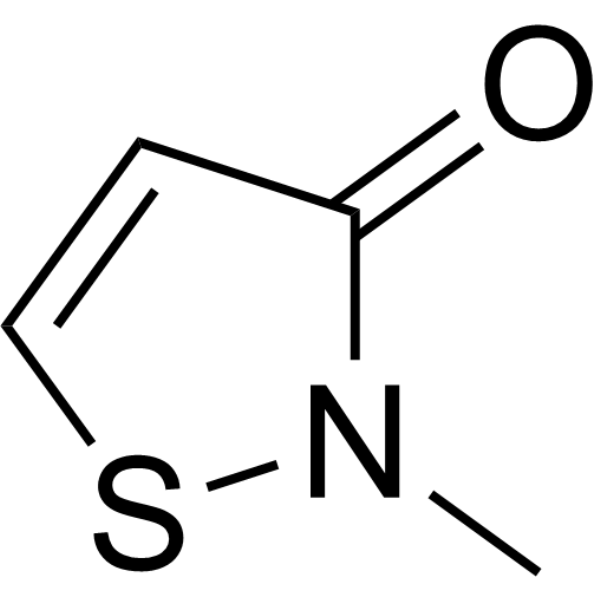
Methylisothiazolinone (Standard) is the analytical standard of Methylisothiazolinone. Methylothiazolinone is a fungicide and preservative, as well as a sensitizer. Methylisothiazolinone can activate matrix metalloproteinases (MMPs) in human bronchial epithelial cells to induce cell apoptosis and inflammatory response. Methylisothiazolinone can promote the development of atopic dermatitis in mice by disrupting Th2/Th17 related immune responses. Methylisothiazolinone can cause mitochondrial damage in the endothelium of rat cerebral blood vessels [2] .
loading...
    loading...
Cat. No.: HY-178966
CAS No.: 3027712-31-5
Target:  

STING

Research Areas:  

Infection Inflammation/Immunology

STING agonist-48 is a potent STING agonist that exhibits STING-dependent activity in vitro (EC50 = 4.02 μM). STING agonist-48 prefers to bind with the transmembrane domain (TMD) over the cytosolic cyclic dinucleotide (CDN) domain. STING agonist-48 shows adjuvant efficacy, enhancing IgG and Th1/Th2 cytokine responses in humanized STING mice. STING agonist-48 can be used for the study of inflammation-related diseases .
loading...
    loading...
Cat. No.: HY-117573
CAS No.: 1438280-73-9
1Z105 is an orally active TLR4/MD2 agonist, immunostimulant and vaccine adjuvant. 1Z105 activates NF-κB via the MyD88/TRIF pathway in a CD14-independent manner, with EC50 values of 0.63 µM and 0.77 µM for inducing IL-6 and IL-12 in mBMDCs, respectively. 1Z105 promotes dendritic cell maturation, antigen uptake and cross-presentation; when used alone, it induces Th2-IgG1, while combined with the TLR7 agonist 1V270, it synergistically induces balanced Th1/Th2 responses and provides low-reactogenic protection against homologous, heterologous and heterosubtypic influenza. 1Z105 prevents LPS (HY-D1056A1)- and galactosamine-induced liver injury as well as autoantibody-driven arthritis in mice. 1Z105 can be used in studies related to influenza virus infection, inflammation, and LPS/galactosamine-induced liver injury [2] .
loading...
    loading...
Cat. No.: HY-W795993
CAS No.: 10245-44-0
Research Areas:  

Inflammation/Immunology

TJU103 is a CD4 inhibitor. TJU103 inhibits autoreactive CD4 + T cells by disrupting the function of the CD4 during activation. TJU103 decreases mononuclear cell infiltration in brain and spinal cord tissue of experimental allergic encephalomyelitis (EAE) mice model. TJU103 downregulates Th1 and Th2 cytokine levels in response to proteolipid protein epitope 139-151 (PLPe) and exhibits inhibitory effects both after the appearance of EAE symptoms and upon rechallenge with Ag. TJU103 can be used for autoimmune diseases like EAE and sclerosis (MS) research .
loading...
    loading...
Cat. No.: HY-178240
CAS No.: 102141-11-7
rel-(1S,2R)-Dihydro bupropion is a metabolite of bupropion. rel-(1S,2R)-Dihydro bupropion can promote endogenous IL-10 production and inhibit Th1 cytokines (IL-12 and TNF-α). rel-(1S,2R)-Dihydro bupropion can induce immune response transition from Th1 to Th2. rel-(1S,2R)-Dihydro bupropion can be used for research on inflammatory conditions .
loading...
    loading...
Cat. No.: HY-N6636R
CAS No.: 4630-07-3
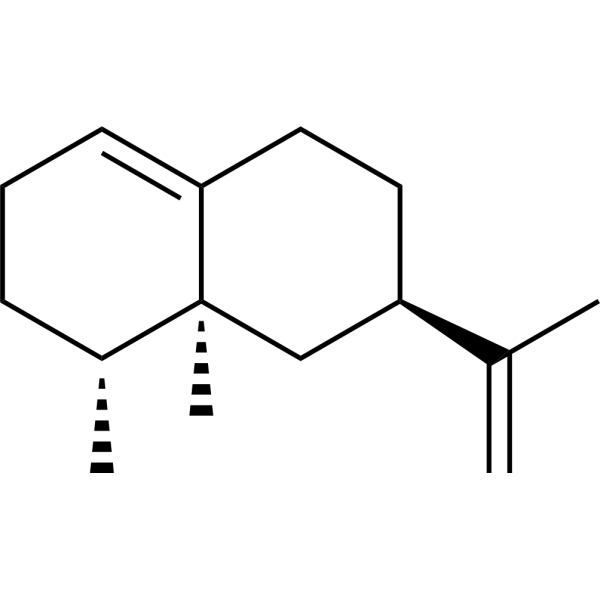
Valencene (Standard) is the analytical standard of Valencene. This product is intended for research and analytical applications. Valencene is a sesquiterpene that can be isolated from Cyperus rotundus. Valencene possesses antiallergic, antimelanogenesis, anti-infammatory, and antioxidant activitivies. Valencene inhibits the exaggerated expression of Th2 chemokines and proinflammatory chemokines through blockade of the NF-κB pathway. Valencene inhibits the production and expression of proinflammatory cytokines IL-1β and IL-6 in LPS-stimulated RAW 264.7 cells. Valencene can reduce atopic dermatitis symptoms and recover decreased expression of filaggrin in DNCB-sensitized mouse model [2] .
loading...
    loading...
Cat. No.: HY-18234B
CAS No.: 24365-47-7
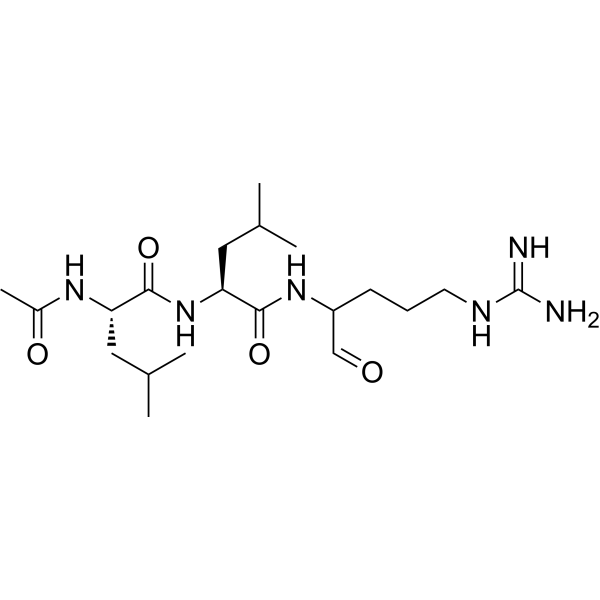
Leupeptin Ac-LL is a broad-spectrum protease inhibitor . By inhibiting the activation of the PTEN/PI3K/Akt/NF-κB/ERK1/2/p38 signaling pathway, Leupeptin Ac-LL significantly reduces LPS-induced NO and ROS production, mitochondrial membrane potential hyperpolarization, phagocytic activity, pro-inflammatory cytokine release, and M1 polarization in mouse peritoneal macrophages, and reverses autophagic flux impairment. It also decreases Concanavalin A (HY-P2149)-induced proliferation index of mouse splenic lymphocytes and the Th1/IL-10 and Th2/IL-10 cytokine ratios, thereby modulating innate and adaptive immune responses. Leupeptin Ac-LL inhibits blood coagulation and tumorigenesis in mouse skin. Leupeptin Ac-LL can be used in research on chronic inflammatory diseases and skin tumorigenesis [2] .
loading...
    loading...
Cat. No.: HY-119038
CAS No.: 109376-83-2
ML-7 is a selective and highly specific myosin light chain kinase (MLCK) inhibitor that acts as a trabecular meshwork (TM) relaxant. ML-7 enhances Quinocetone (HY-123581)-induced phosphorylation of ERK, p38 MAPK and JNK, attenuates Akt activation, and promotes apoptosis of hepatocellular carcinoma cells. ML-7 reduces Th2 cytokine secretion by inhibiting MLCK, while alleviating smooth muscle hyperplasia and collagen deposition . As a non-antibiotic adjuvant, ML-7 restores the sensitivity of drug-resistant bacteria to Tigecycline (HY-B0117) . ML-7 can be used in research related to glaucoma, hepatocellular carcinoma, asthma, and Klebsiella pneumoniae infection [2] .
loading...
    loading...
Cat. No.: HY-143885
CAS No.: 2734918-37-5
Target:  

JAK

Research Areas:  

Inflammation/Immunology

JAK1/TYK2-IN-3 is a potent, selective and orally active dual TYK2/JAK1 inhibitor with IC50 values of 6 and 37 nM, respectively. JAK1/TYK2-IN-3 also shows selectively relative to JAK2 (IC50=140 nM) and JAK3 (IC50=362 nM). JAK1/TYK2-IN-3 shows anti-inflammatory effect by regulating the expression of related TYK2/JAK1-regulated genes, as well as the formation of Th1, Th2, and Th17 cells .
loading...
    loading...
Cat. No.: HY-W017982A
CAS No.: 55965-84-9
Synonyms: CMI/MI (2.0-2.5% in water)
CMIT/MIT (2.0-2.5% in water) (CMI/MI (2.0-2.5% in water)) is a mixture of CMIT and MIT, and is also a preservative and skin sensitizer. CMIT/MIT (2.0-2.5% in water) increases the levels of phosphorylated ERK1/2, p38, JNK1/2, p53, p21 and Bax, decreases the level of Bcl-2, and activates the Nrf-2/HO-1 signaling pathway. CMIT/MIT (2.0-2.5% in water) increases LDH release and lipid peroxidation levels, impairs antioxidant defense capacity, promotes pro-inflammatory cytokine release, induces apoptosis, triggers cell cycle arrest, exhibits neurotoxicity in neuroblastoma cells, and causes dysregulation of Th2/Th17 immune responses. CMIT/MIT (2.0-2.5% in water) can be used in studies related to allergy, atopic dermatitis and lung injury [2] .
loading...
    loading...
Cat. No.: HY-18234AR
CAS No.: 103476-89-7
Leupeptin hemisulfate (Standard) is the analytical standard of Leupeptin hemisulfate (HY-18234A ). This product is intended for research and analytical applications. Leupeptin hemisulfate is a broad-spectrum protease inhibitor . By inhibiting the activation of the PTEN/PI3K/Akt/NF-κB/ERK1/2/p38 signaling pathway, Leupeptin hemisulfate significantly reduces LPS-induced NO and ROS production, mitochondrial membrane potential hyperpolarization, phagocytic activity, pro-inflammatory cytokine release, and M1 polarization in mouse peritoneal macrophages, and reverses autophagic flux impairment. It also decreases Concanavalin A (HY-P2149)-induced proliferation index of mouse splenic lymphocytes and the Th1/IL-10 and Th2/IL-10 cytokine ratios, thereby modulating innate and adaptive immune responses. Leupeptin hemisulfate inhibits blood coagulation and tumorigenesis in mouse skin. Leupeptin hemisulfate can be used in research on chronic inflammatory diseases and skin tumorigenesis [2] .
loading...
    loading...
Cat. No.: HY-116890
CAS No.: 916046-55-4
Research Areas:  

Inflammation/Immunology

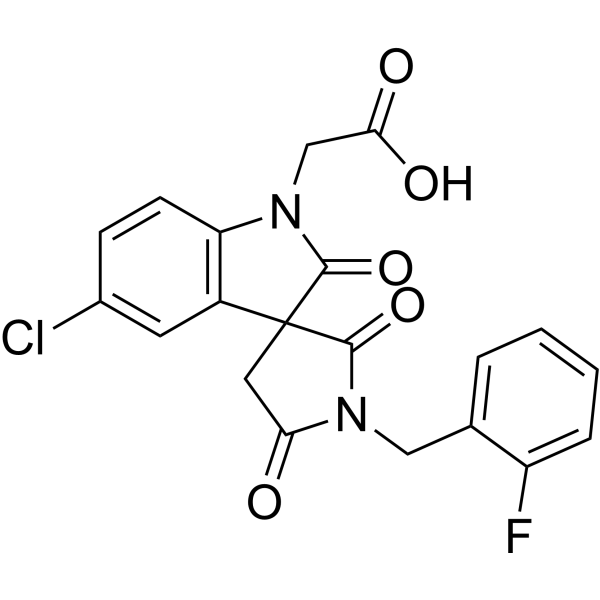
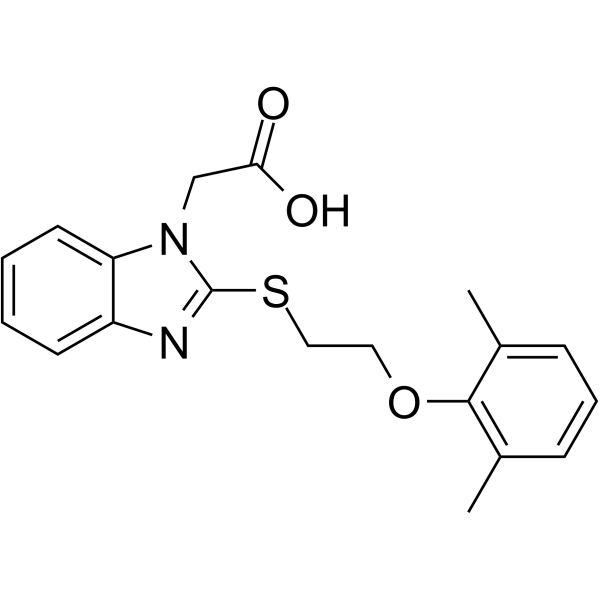
CRTh2 antagonist 4 (compound 58) is an inhibitor (IC50: 212 nM) of TH2 lymphocyte (CRTH2 or DP2) receptor with high binding affinity (Ki= 37 nM). CRTh2 antagonist 4 can be used in the study of severe allergic diseases .
loading...
    loading...
Cat. No.: HY-174603
Target:  

mRNA

Research Areas:  

Inflammation/Immunology

Human IL4R mRNA encodes the human interleukin 4 receptor (IL4R) protein, a type I transmembrane protein that can bind interleukin 4 and interleukin 13 to regulate IgE production. IL4R also can bind interleukin 4 to promote differentiation of Th2 cells.
loading...
    loading...
Cat. No.: HY-174607
Target:  

mRNA

Research Areas:  

Inflammation/Immunology

Human IL33 mRNA encodes the human interleukin 33 (IL33) protein, a cytokine that binds to the IL1RL1/ST2 receptor. IL33 is involved in the maturation of Th2 cells and the activation of mast cells, basophils, eosinophils and natural killer cells.
loading...
    loading...
Cat. No.: HY-174639
Target:  

mRNA

Research Areas:  

Inflammation/Immunology

Human IL13 mRNA encodes the human interleukin 13 (IL13) protein, an immunoregulatory cytokine produced primarily by activated Th2 cells. IL13 is involved in several stages of B-cell maturation and differentiation and is found to be critical to the pathogenesis of allergen-induced asthma but operates through mechanisms independent of IgE and eosinophils.
loading...
    loading...
Cat. No.: HY-P991467

Target:  

Interleukin Related

Research Areas:  

Inflammation/Immunology

RG-7258 is a human monoclonal antibody (mAb) targeting CRLF2. RG-7258 blocks dendritic cell activation and mast cell cytokine release. RG-7258 reduces Th2 inflammation in a non-human primate model of allergic lung inflammation. RG-7258 can be used in asthma research .
loading...
    loading...
Cat. No.: HY-135773
CAS No.: 312928-72-6
CRTh2 antagonist 3 is a potent chemoattractant receptor-homologous molecule expressed on Th2 cells (CRTh2) antagonist . CRTh2 antagonist 3 enhances the activity of PDK1 toward a short peptide substrate, with an EC50 of 2 μM and a Kd of 8.4 μM. CRTh2 antagonist 3 has the potential for cardiovascular inflammation [2].
loading...
    loading...
Cat. No.: HY-N0594R
CAS No.: 14259-55-3
Deacetylasperulosidic Acid (Standard) is the analytical standard of Deacetylasperulosidic Acid. This product is intended for research and analytical applications. Deacetylasperulosidic Acid is an orally active antioxidant. Deacetylasperulosidic Acid exerts a definite in vivo antioxidant effect and alleviates oxidative stress injury by enhancing SOD activity. In atopic dermatitis models, Deacetylasperulosidic Acid corrects Th2-skewed immune imbalance and reduces allergy-related factors; in immunosuppression models, it activates cellular immunity, enhances NK cell activity and IL-2 production. Deacetylasperulosidic Acid can be used in the research of atopic dermatitis.
loading...
    loading...

