224 Results for "

cholinergic eeceptor

" in MedChemExpress (MCE) Product Catalog:
Products (224)

224 Results for "cholinergic eeceptor" in MCE Product Catalog:

Cat. No.: HY-B1120S
CAS No.: 1219795-39-7
Synonyms: Temefos-d12
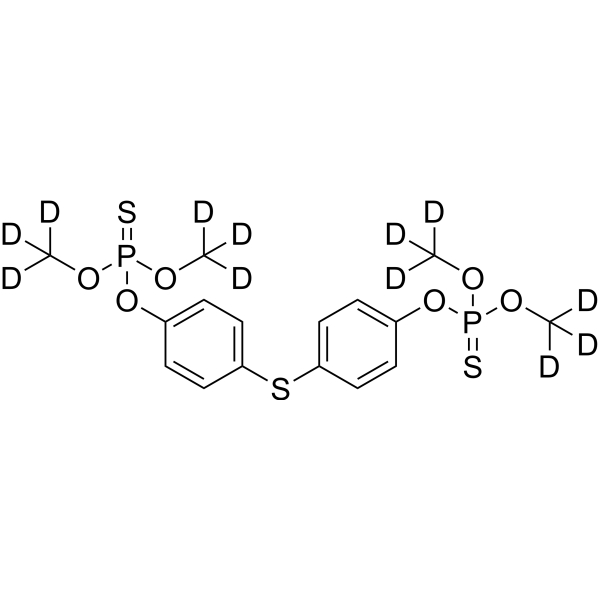
Temephos-d12 is the deuterium labeled Temephos. Temephos (Temefos) is an orally active, blood-brain barrier-permeable organophosphate insecticide and AChE inhibitor. By irreversibly inhibiting AChE to induce cholinergic overactivation, Temephos effectively blocks larval development of Aedes aegypti (yellow fever mosquito) and Aedes albopictus (Asian tiger mosquito), and is commonly used in studies related to Dengue Virus, Zika Virus and other relevant pathogens. Temephos exhibits genotoxicity and neurodevelopmental toxicity, and may also cause liver injury, reproductive system abnormalities and cholinergic poisoning symptoms in mammals. Temephos tends to accumulate in adipose tissues and aquatic organisms, and is excreted via feces after metabolism through oxidation and hydrolysis. Note that CYP-mediated metabolic detoxification may reduce the actual larvicidal efficacy of Temephos against some mosquito species. Temephos can be used in research related to dengue fever, Zika virus disease, chikungunya and dracunculiasis .
loading...
    loading...
Cat. No.: HY-P11313
Synonyms: Rat chromogranin A367–387
Target:  

nAChR Akt

Research Areas:  

Cardiovascular Disease

Catestatin (rat) (Rat chromogranin A367–387) is a potent, reversible, noncompetitive, and noncooperative nicotinic cholinergic antagonist derived from chromogranin A (A367-387). Catestatin (rat) inhibits norepinephrine release in rat PC12 pheochromocytoma cells (IC50 = 1.2 μM), and blocks desensitization of norepinephrine release (IC50 = 0.62 μM). Catestatin (rat) exerts antiadrenergic effects through the endothelial PI3K-AKT-eNOS pathway in rat papillary muscles and isolated cardiomyocytes. Catestatin (rat) maintains mitochondrial membrane potential in I/R cardiomyocytes and increases phosphorylation of AKT at S473, GSK3β at S9, PLB at T17, and eNOS at S1179. Catestatin (rat) reverses desensitization of 22Na + uptake. Catestatin (rat) can be used for the study of nicotinic cholinergic receptor regulation and catecholamine release control mechanisms .
loading...
    loading...
Cat. No.: HY-123934
CAS No.: 2220141-46-6
Target:  

P-glycoprotein

Research Areas:  

Neurological Disease

VU6007477 is a brain-penetrant, selective M1 positive allosteric modulator (PAM) with an EC50 value of 230 nM. VU6007477 is also a human P-glycoprotein (P-gp) substrate with moderate permeability. VU6007477 displays improved central nervous system (CNS) penetration over the hydroxylated congeners. VU6007477 a pyranyl amide derivative, which is promising for research of robust cholinergic seizure activity .
loading...
    loading...
Cat. No.: HY-124920
CAS No.: 2032-65-7
Synonyms: Mercaptodimethur
Methiocarb (Mercaptodimethur) is an orally active carbamate insecticide. Methiocarb exerts dose-dependent toxic effects on onions. In addition to inhibiting acetylcholinesterase to induce cholinergic excitation, Methiocarb can induce lipid peroxidation in liver, kidney, brain and testicular tissues and alter reduced glutathione levels by generating ROS. Methiocarb can be used for agricultural pest control and research on oxidative stress-related cellular damage in mammals .
loading...
    loading...
Cat. No.: HY-128855
CAS No.: 147025-53-4
Purity:  98.75%
Synonyms: WAL 2014 FU free base
Target:  

mAChR

Research Areas:  

Neurological Disease

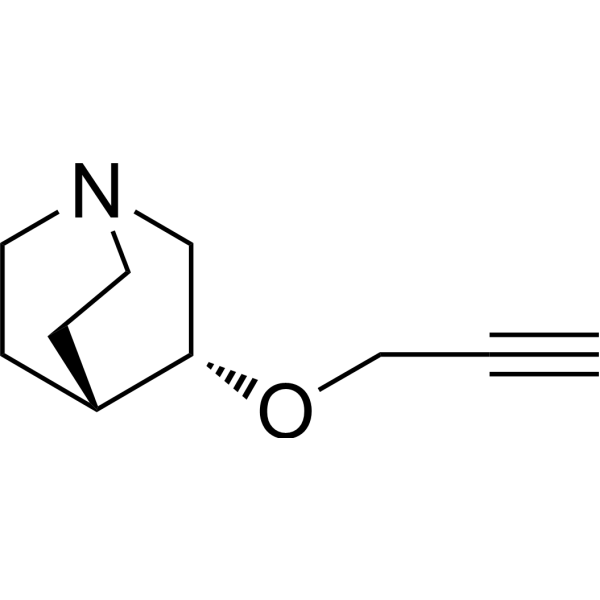
Talsaclidine (WAL 2014 FU) is an orally active, blood-brain barrier-permeable muscarinic M1 receptor agonist. Talsaclidine activates the sympathetic nervous system and promotes adrenal catecholamine release in vivo. Talsaclidine exhibits extensive tissue distribution, kidney-dominant excretion and brain penetration properties, and it can be used in studies related to cholinergic signaling, cognitive function and Alzheimer's disease .
loading...
    loading...
Cat. No.: HY-159718
Research Areas:  

Inflammation/Immunology

NLRP3-IN-46 (Compound 3k) activates neuro-immunomodulatory cholinergic anti-inflammatory pathway, and thus inhibits NLRP3 inflammasome activation. NLRP3-IN-46 inhibits Uric acid sodium (HY-B2130A)-induced IL-1β production in THP-1 cells, and can be used in gouty arthritis research .
loading...
    loading...
Cat. No.: HY-172884
Research Areas:  

Neurological Disease

MDAR IN-1 (Compound 5m) is a brain-penetrant inhibitor of acetylcholinesterase (AChE) and antagonist of the GluN1/GluN2B subtype of NMDAR receptor. MDAR IN-1 effectively inhibits AChE activity, enhances cholinergic neurotransmission, and blocks NMDAR, reducing excitatory neurotoxicity. MDAR IN-1 is promising for research of Alzheimer's disease .
loading...
    loading...
Cat. No.: HY-174257
CAS No.: 2408134-22-3
Research Areas:  

Inflammation/Immunology

RCD405 is a bronchodilator. RCD405 exerts relaxant effects by acting directly on human airway smooth muscle (hASM) with an EC50 value of 12 μM for histamine-induced contractions and 45.71 μM for carbachol-induced contractions. RCD405 inhibits cholinergic and histaminergic tone and reduces electrically stimulated (EFS)-induced contractions. RCD405 is promising for research of asthma and chronic obstructive pulmonary disease (COPD) .
loading...
    loading...
Cat. No.: HY-B1266R
CAS No.: 57-64-7
Synonyms: Eserine salicylate (Standard)
Physostigmine (salicylate) (Standard) is the analytical standard of Physostigmine (salicylate). This product is intended for research and analytical applications. Physostigmine salicylate (Eserine salicylate) is a reversible acetylcholinesterase (AChE) inhibitor. Physostigmine salicylate crosses the blood-brain barrier and stimulates central cholinergic neurotransmission. Physostigmine salicylate can reverse memory deficits in transgenic mice with Alzheimer's disease. Physostigmine salicylate is also an antidote for anticholinergic poisoning .
loading...
    loading...
Cat. No.: HY-B1339A
CAS No.: 77-19-0
Synonyms: Dicycloverine
Target:  

mAChR

Research Areas:  

Neurological Disease

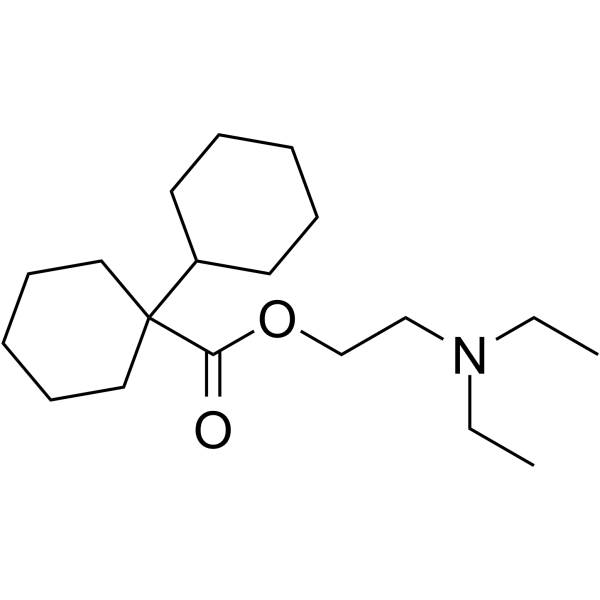
Dicyclomine (Dicycloverine) is a potent and orally active muscarinic cholinergic receptors antagonist. Dicyclomine (Dicycloverine) shows high affinity for muscarinic M1 receptor subtype (Ki=5.1 nM) and M2 receptor subtype (Ki=54.6 nM) in brush-border membrane and basal plasma membranes, respectively . Dicyclomine is an antispasmodic agent and relieves smooth muscle spasm of the gastrointestinal tract in vivo .
loading...
    loading...
Cat. No.: HY-N0801
CAS No.: 22338-71-2
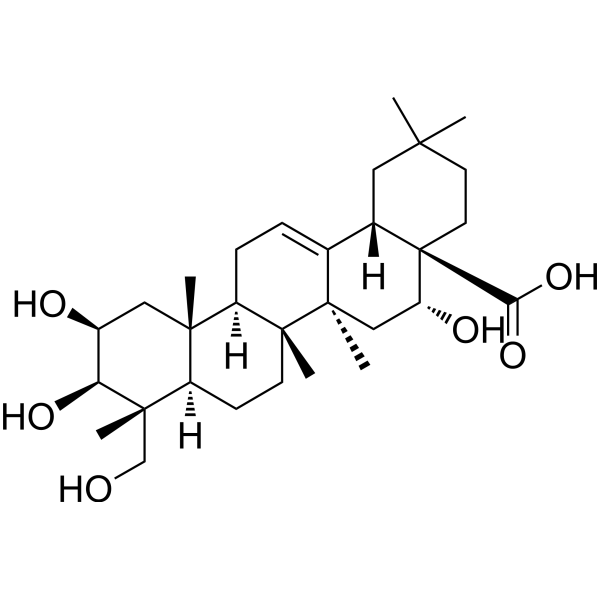
Polygalacic acid, is a triterpene, isolated from the root of Polygala tenuifolia Willd. Polygalacic acid inhibits MMP expression. Polygalacic acid may have a therapeutic effect in Osteoarthritis (OA) treatment . Polygalacic acid exerts a significant neuroprotective effect on cognitive impairment, PA improves cholinergic system reactivity by inhibiting acetylcholinesterase (AChE) activity, increasing choline acetyltransferase (ChAT) activity, and elevating levels of acetylcholine (Ach) in the hippocampus and frontal cortex .
loading...
    loading...
Cat. No.: HY-165600A
CAS No.: 56-97-3
Synonyms: TMB-4
Target:  

Cholinesterase (ChE)

Research Areas:  

Others

Trimedoxime (TMB-4) is a blood-brain barrier-permeable cholinesterase reactivator . Trimedoxime reactivates cholinesterase inhibited by paraoxon, sarin, tabun and other agents, restricts the breakdown of acetylcholine and alleviates excessive cholinergic stimulation. Trimedoxime reduces mortality and prolongs survival time. Trimedoxime exhibits reactivation efficacy against AChE in rat tissues. Trimedoxime can be used in research related to organophosphate (paraoxon) poisoning and tabun poisoning .
loading...
    loading...
Cat. No.: HY-184935
Neuroprotective agent 18 is a potent neuroprotective agent. Neuroprotective agent 18 inhibits the activity of NF-κB thereby significantly downregulating the expression of downstream pro-inflammatory mediators (TNF-α, IL-6) and inflammatory enzymes (COX-2) in the hippocampus. Neuroprotective agent 18 binds to AChE thereby partially inhibiting it and modulating cholinergic neurotransmission. Neuroprotective agent 18 can be used in research on Alzheimer's disease .
loading...
    loading...
Cat. No.: HY-P704012
Purity:  ≥ 90%, as determined by reducing SDS-PAGE.
Synonyms: CHRM2; M2 Muscarinic Acetylcholine Receptor; cholinergic Receptor Muscarinic 2; Muscarinic Acetylcholine Receptor; Acetylcholine Receptor, Muscarinic 2; 7TM Receptor; Muscarinic Acetylcholine Receptor M2; HM2; Muscarinic M2 Receptor
Species:  
Human
Source:  
E. coli
loading...
    loading...
Cat. No.: HY-105327R
CAS No.: 164724-79-2
P11149 (Standard) is the analytical standard of P11149 (HY-105327). This product is intended for research and analytical applications. P11149 is a competitive, BBB-penetarated weakly, orally active and selective inhibitor of AChE. P11149 exhibits an IC50 of 1.3 μM for rat BChE/AChE. P11149, a Galanthamine derivative, demonstrates central cholinergic activity, behavioral efficacy and safety. P11149 is used in the study for Alzheimer's disease .
loading...
    loading...
Cat. No.: HY-135483A
CAS No.: 178419-42-6
Purity:  ≥99.0%
Target:  

nAChR

Research Areas:  

Neurological Disease

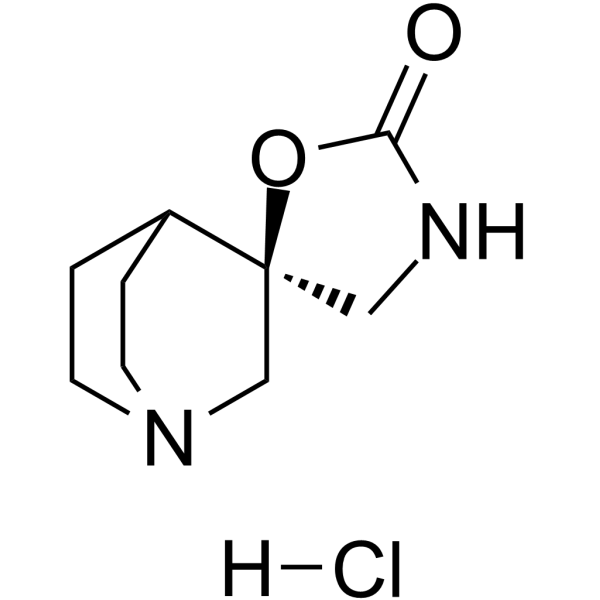
AR-R17779 hydrochloride is a potent and selective full agonist of nAChR, with Kis of 92 and 16000 nM for α7 and α4β2 subtype, respectively. AR-R17779 hydrochloride can improve learning and memory in rats. AR-R17779 hydrochloride also has anxiolytic activity. AR-R17779 hydrochloride can reduce inflammation by activating antiinflammatory cholinergic (vagal) pathways .
loading...
    loading...
Cat. No.: HY-P3960
CAS No.: 85541-78-2
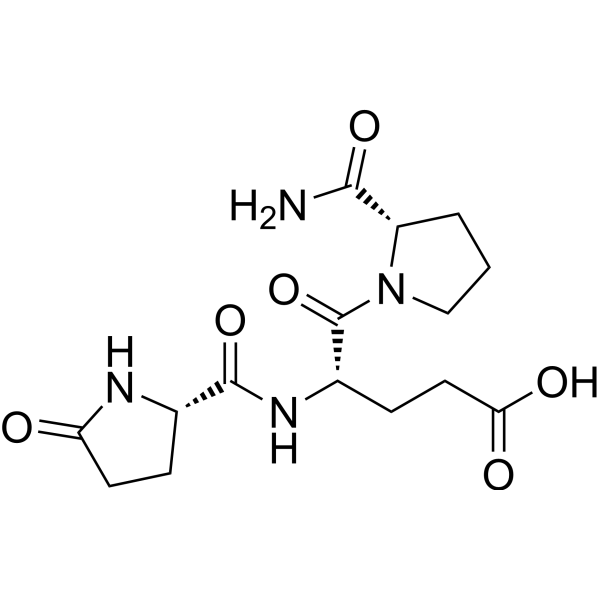
(Glu2)-TRH, a metabolically stable analogue of Thyrotropin-releasing hormone (TRH; HY-P0002), is a negative modulator for the cholinergic effect of TRH in the mouse brain. (Glu2)-TRH significantly attenuates TRH-induced hippocampal extracellular acetylcholine release. (Glu2)-TRH is not metabolized by thyroliberinase. (Glu2)-TRH manifests neuroprotective, antidepressant, anticonvulsant in the CNS .
loading...
    loading...
Cat. No.: HY-W987949
CAS No.: 119737-52-9
Target:  

Others

Research Areas:  

Neurological Disease

Z-4105 is an orally active nootropic agent. Z-4105 reverses the amnesic effects of electroconvulsive shock (ECS) and methylazoxymethanol acetate (MAM), and improves learning and memory functions. Z-4105 enhances the activity of the brain cholinergic system without affecting other neurotransmitter systems. Z-4105 significantly alleviates neuropathic pain in rats. Z-4105 can be used in the research of neuropathic pain and brain dysfunction .
loading...
    loading...
Cat. No.: HY-100979
CAS No.: 21093-51-6
Purity:  98.04%
Synonyms: HDMPPA
Target:  

mAChR

Research Areas:  

Others

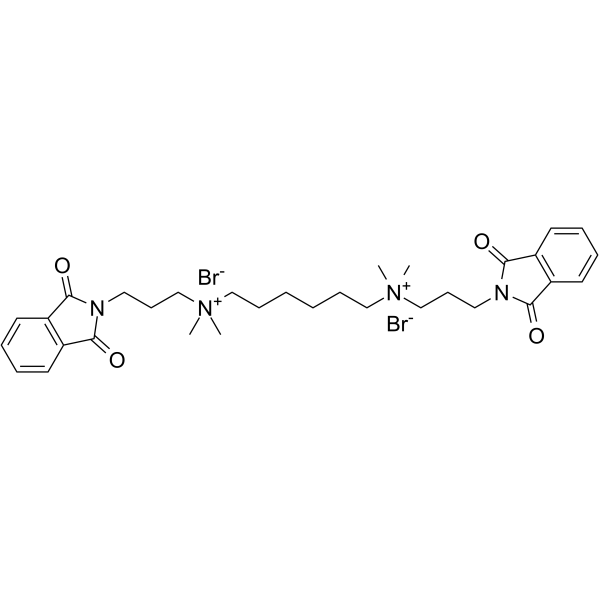
W-84 (dibromide) is a potent allosteric modulator of M2-cholinoceptors, which retards [ 3H]N-methylscopolamine dissociation. W-84 dibromide can stabilize cholinergic antagonist-receptor complexes. W-84 (dibromide) is a non-competitive muscarinic acetylcholine receptors antagonist with allosteric effects. W-84 (dibromide) protects over additively against an organophosphate-intoxication when applied in combination with atropine .
loading...
    loading...
Cat. No.: HY-120042
CAS No.: 23560-59-0
Research Areas:  

Others

Heptenophos is an inhibitor of AChE and plasma carboxylesterase (CES). By inhibiting AChE activity, Heptenophos causes the accumulation of acetylcholine at cholinergic synapses, thereby triggering typical symptoms of organophosphate poisoning. Heptenophos exhibits rapid lethal toxicity in male albino mice, but its toxic effects are effectively antagonized by obidoxime, and Memantine (HY-B0591) further enhances the detoxification efficacy of obidoxime. Therefore, Heptenophos is commonly used in studies related to the mechanism of organophosphate poisoning and detoxification strategies .
loading...
    loading...

