
1. Search Result
Search Result
Results for "

39

" in MedChemExpress (MCE) Product Catalog:

913

Inhibitors & Agonists

4

Fluorescent Dye

6

Biochemical Assay Reagents

66

Peptides

15

Inhibitory Antibodies

84

Natural
Products

93

Recombinant Proteins

39

Isotope-Labeled Compounds

76

Antibodies

5

Click Chemistry

70

Oligonucleotides

Cat. No. Product Name Target Research Areas Chemical Structure
  • HY-141659
    CMPD-39
    3 Publications Verification

    Mitophagy Deubiquitinase Neurological Disease
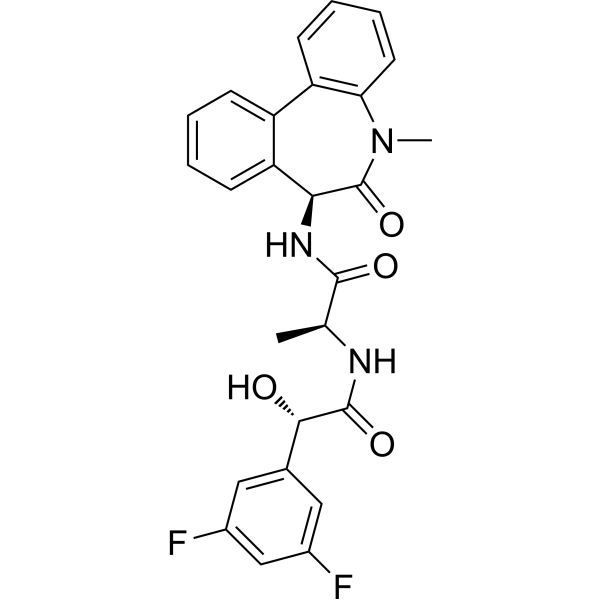
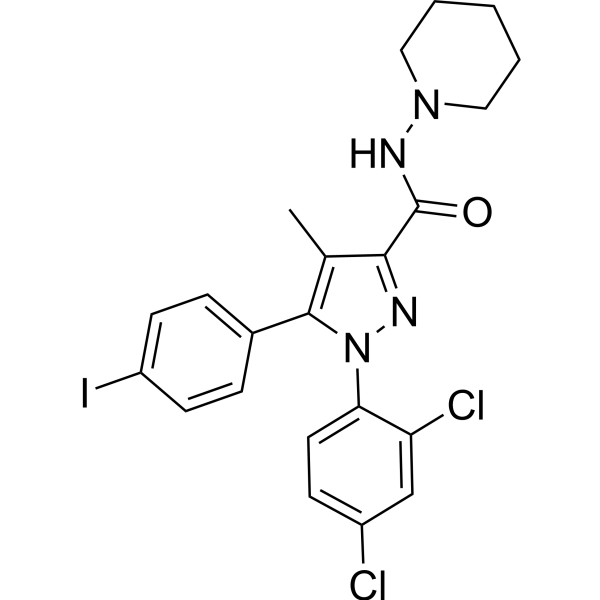
    CMPD-39 is a selective non-covalent inhibitor of the ubiquitin-specific protease USP30 (IC50=~20 nM), with high selectivity over other DUB family members (1-100 μM). CMPD-39 inhibits the deubiquitinating activity of USP30, enhances the ubiquitination of mitochondrial proteins TOMM20 and SYNJ2BP; thus, CMPD-39 promotes phosphoubuitin accumulation, thereby accelerating mitochondrial autophagy (mitophagy) and peroxisomal autophagy (pexophagy). CMPD-39 significantly restores impaired mitochondrial function in dopaminergic neurons derived from Parkinson's disease patients .
    CMPD-39
  • HY-126124
    AP39
    5+ Cited Publications

    Reactive Oxygen Species (ROS) Cardiovascular Disease Neurological Disease
    AP39 is a triphenylphosphonium derivatised anethole dithiolethione and mitochondria-targeting hydrogen sulfide (H2S) donor. AP39 increases intracellular H2S levels. AP39 exerts cytoprotective effects and maintains mitochondrial DNA integrity under oxidative stress conditions. AP39 protects against myocardial reperfusion injury in mice model and has the potential for Alzheimer's disease research .
    AP39
  • HY-174341

    Transmembrane Glycoprotein Cancer
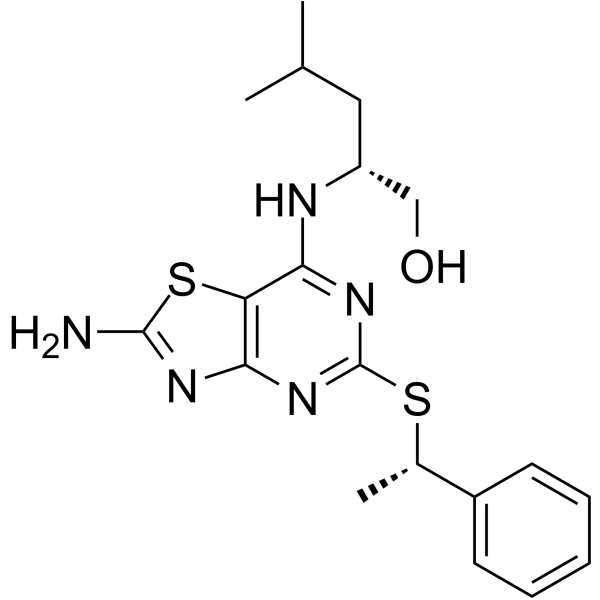
    CD39-IN-1 is a selective CD39 inhibitor with an IC50 value of 68.7 nM. CD39-IN-1 exerts antiproliferative effects on tumor cells and shows low toxicity to normal cell lines. CD39-IN-1 inhibits CD39-mediated eATP hydrolysis in the ATP-adenosine pathway. CD39-IN-1 is applicable for tumor-related research .
    CD39-IN-1
  • HY-157581

    EGFR PROTACs Cancer
    MS39 (compound 6) is a PROTAC targeting EGFR. MS39 reduces the expression of EGFR and downstream signaling in HCC-827 and H3255 cells. MS39 inhibits the proliferation of H3255 cells .
    MS39
  • HY-101868
    INF39
    10+ Cited Publications

    NOD-like Receptor (NLR) Inflammation/Immunology
    INF39 is an irreversible and noncytotoxic NLRP3 inhibitor.
    INF39
  • HY-168664

    PROTACs CDK Cancer
    CPD-39 is a potent and orally active CCND1 and CDK4 heterobifunctional PROTAC degrader. CPD-39 shows anti-proliferation. (Pink: ligand for target protein (HY-50767); black: linker (HY-20240); Blue: E3 ligase ligand (HY-168667)) .
    CPD-39
  • HY-120951
    PFM39
    1 Publications Verification

    Endonuclease Cancer
    PFM39, a Mirin analog, is a potent and selective MRE11 exonuclease inhibitor. PFM39 inhibits phosphate rotation for dsDNA exonuclease activity. PFM39 does not inhibit TmMre11 or human MRE11/MRN endonuclease activity .
    PFM39
  • HY-14462

    39-1B4

    Calcium Channel Cardiovascular Disease
    NP118809 is a potent N-type calcium channel blocker, with an IC50 of 0.11 μM; also less potently inhibits L-type calcium channel with an IC50 of 12.2 μM.
    NP118809
  • HY-P1603

    Adrenocorticotropic Hormone (22-39)

    Melanocortin Receptor Metabolic Disease
    ACTH (22-39) is an adrenocorticotropic hormone (ACTH) fragment. ACTH (22-39) is the 22-39 sequence of ACTH.
    ACTH (22-39)
  • HY-46871

    PROTAC Linkers Inflammation/Immunology
    3,9-Dimethyl-3,9-diazaspiro[5.5]undecane is a rigid PROTAC linker can be used in the synthesis of PROTACs, such as FIP22 (HY-175764). FIP22 is a potent and selective IRAK4 PROTAC degrader with anti- atopic dermatitis activity .
    3,9-Dimethyl-3,9-diazaspiro[5.5]undecane
  • HY-108678

    Oxytocin Receptor Vasopressin Receptor Neurological Disease
    TC OT 39 is a synthetic oxytocin analog, as well as a selective agonist of oxytocin receptor (OXTR, EC50=180 nM). TC OT 39 is also an Avprla vasopressin receptor antagonist with an Ki value of 330 nM. TC OT 39 exhibits sedative effects in mouse models .
    TC OT 39
  • HY-P1259A

    Proteasome Bacterial Inflammation/Immunology
    PR-39 TFA, a natural proline- and arginine-rich antibacterial peptide, is a noncompetitive, reversible and allosteric proteasome inhibitor. PR-39 TFAreversibly binds to the α7 subunit of the proteasome and blocks degradation of NF-κB inhibitor IκBα by the ubiquitin-proteasome pathway. PR-39 TFA stimulates angiogenesis, inhibits inflammatory responses and significant reduces myocardial infarct size in mice .
    PR-39 TFA
  • HY-160259

    PROTACs VEGFR Cardiovascular Disease
    VEGFR-2-IN-39 (PROTAC-5) is a PROTAC targeting VEGFR-2 (IC50: 208.6 nM). VEGFR-2-IN-39 has low toxicity.VEGFR-2-IN-39 inhibits the proliferation of EA.hy926, one of HUVECs, in a concentration-dependent manner, with an IC50 of 38.65 µM .
    VEGFR-2-IN-39
  • HY-157582

    EGFR Others
    MS39N (compound 27) is a negative control for MS39 that binds EGFR without inducing degradation .
    MS39N
  • HY-162325

    Aldose Reductase Mitochondrial Metabolism Apoptosis Mitophagy Metabolic Disease
    WJ-39 is an orally active aldose reductase (AR) inhibitor. WJ-39 improves tubular damage in diabetic nephropathy rats by activating PINK1/Parkin signaling, promoting mitophagy, and attenuating apoptosis .
    WJ-39
  • HY-19732

    Angiotensin Receptor Cardiovascular Disease Endocrinology
    BIBS 39 is a new nonpeptide angiotensin II (AII) receptor antagonist.
    BIBS 39
  • HY-P1739

    Melanocortin Receptor Neurological Disease
    ACTH (34-39) is an adrenocorticotropic hormone fragment. ACTH (34-39) can be used in the study of stress-related sleep disorders .
    ACTH (34-39)
  • HY-P10078

    Thyroid Hormone Receptor Apoptosis Endocrinology
    pTH (39-84) (human) is the C-terminal fragment of parathyroid hormone (PTH). pTH (39-84) (human) increases Apoptosis. pTH (39-84) (human) can stimulate osteoclast formation .
    pTH (39-84) (human)
  • HY-N8762

    Demethylmedicarpin

    Bacterial Others
    3,9-Dihydroxypterocarpan (Demethylmedicarpin) is a Steroids product that can be isolated from the herbs of Nerium indicum Mill. .
    3,9-Dihydroxypterocarpan
  • HY-P1259

    Proteasome Bacterial Inflammation/Immunology
    PR-39, a natural proline- and arginine-rich antibacterial peptide, is a noncompetitive, reversible and allosteric proteasome inhibitor. PR-39 reversibly binds to the α7 subunit of the proteasome and blocks degradation of NF-κB inhibitor IκBα by the ubiquitin-proteasome pathway. PR-39 stimulates angiogenesis, inhibits inflammatory responses and significant reduces myocardial infarct size in mice .
    PR-39
  • HY-141659A

    Mitophagy Deubiquitinase Neurological Disease
    (R)-CMPD-39 is the R enantiomer of CMPD-39 ( HY-141659 ). CMPD-39 is a selective non-covalent inhibitor of the ubiquitin-specific protease USP30 (IC50 =~20 nM), with high selectivity over other DUB family members (1-100 μM). CMPD-39 inhibits the deubiquitinating activity of USP30, enhances the ubiquitination of mitochondrial proteins TOMM20 and SYNJ2BP; thus, CMPD-39 promotes phosphoubuitin accumulation, thereby accelerating mitochondrial autophagy (mitophagy) and peroxisomal autophagy (pexophagy). CMPD-39 significantly restores impaired mitochondrial function in dopaminergic neurons derived from Parkinson's disease patients .
    (R)-CMPD-39
  • HY-P10851

    Apoptosis Inflammation/Immunology Cancer
    HVEM(14-39) is a B- and T-lymphocyte attenuator (BTLA) peptide inhibitor. HVEM (14-39) can be combined with BTLA with a KD of 0.102 μM. HVEM(14-39) enhances the activation and proliferation of T cells by regulating the expression of BTLA and HVEM in T cells, and promotes the transformation of cells into effector memory T cells. HVEM(14-39) inhibits tumor cell proliferation and promotes late apoptosis. HVEM(14-39) has immunomodulatory effects and can be used in the study of cancer .
    HVEM(14-39)
  • HY-P3691

    Neuropeptide Y Receptor Neurological Disease
    CART (1-39), Human, Rat is a neuropeptide consisting of 1-39 residues of the CART peptide. CART (1-39), Human, Rat is a rat satiety factor with potent appetite-suppressing activity and is closely associated with leptin and neuropeptide Y. CART (1-39), Human, Rat inhibits both normal and starvation-induced feeding. CART (1-39), Human, Rat can induce anxiety and stress-related behavior .
    CART (1-39), Human
  • HY-103308

    Potassium Channel Neurological Disease
    TRAM-39 is a selective blocker of intermediate conductance Ca2+-activated K+ (IKCa) channels. TRAM-39 inhibits KCa3.1 channel with an IC50 value of 60 nM. TRAM-39 can be used for the research of ataxia, epilepsy, memory disorders, schizophrenia and Parkinson’s disease .
    TRAM-39
  • HY-178801

    Succinate Dehydrogenase Fungal Infection
    SDH-IN-39 (Compound A16) is a SDH inhibitor, with an IC50 value of 6.83 μg/mL. SDH-IN-39 is also an antifungal agent. SDH-IN-39 shows antifungal activity against Rhizoctonia solani (EC50 of 1.49 μg/mL), G. zeae, C. gloeosporioides, S. sclerotiorum and M. oryzae .
    SDH-IN-39
  • HY-171959

    SHP2 Cancer
    SHP2-IN-39 (Example 63) is an inhibitor of SHP2 with an IC50 of 0.007 μM. SHP2-IN-39 can be used in the research of cancer .
    SHP2-IN-39
  • HY-178912

    Reactive Oxygen Species (ROS) Bacterial ClpP Infection Inflammation/Immunology
    Anti-MRSA agent 39 is an orally active ClpX modulator that binds Staphylococcus aureus caseinolytic protease X (SaClpX) with high affinity (Kd = 3.6 μM). Anti-MRSA agent 39 exerts antibacterial effects through temperature-dependent inhibition of cell division. Anti-MRSA agent 39 elicits profound metabolic dysregulation in methicillin-resistant Staphylococcus aureus (MRSA), manifesting as significantly reduced ATP levels, elevated reactive oxygen species (ROS), and decreased NAD+/NADH ratio, and accelerates bacterial lysis rates in MRSA ATCC 33591. Anti-MRSA agent 39 significantly increases the proportion of MRSA cells in the mitotic phase, and the cells exhibit obvious morphological abnormalities. Anti-MRSA agent 39 can be used for the study of invasive MRSA infections .
    Anti-MRSA agent 39
  • HY-170910

    HSP Cancer
    Hsp90-IN-39 (Compound 16t) is a HSP90 inhibitor with notable selectivity for the HSP90α isoform. Hsp90-IN-39 demonstrates significant antiproliferative activity in various cancer cell lines, including MCF-7, HCT116, SKBr3, K562, and A549. Hsp90-IN-39 holds potential for cancer research .
    Hsp90-IN-39
  • HY-180907

    PROTACs Cancer
    PROTAC USP39 Degrader-1 (compound USP39_PROTAC_V1) is a potent and selective PROTAC USP39 degrader. PROTAC USP39 Degrader-1 induces degradation of USP39 by recruiting the VHL E3 ligase via a hydroxyl-proline-containing ligand, forming a ternary complex with a Kd of 232 nM. PROTAC USP39 Degrader-1 degrades USP39 in a VHL-, proteasome-, and the neddylation pathway-dependent manner .
    PROTAC USP39 Degrader-1
  • HY-103545

    Gastric inhibitory peptide (1-39) (porcine)

    Insulin Receptor Metabolic Disease
    GIP (1-39) (Gastric inhibitory peptide (1-39) (porcine)) is an insulinotropic peptide that stimulats insulin secretion from rat pancreatic islets. GIP (1-39) at 100 nM was able to significantly increase intracellular Ca 2+ concentration ([Ca 2+]i), and capable of enhancing exocytosis .
    GIP (1-39)
  • HY-W823500

    GLP Receptor Metabolic Disease
    GLP-1R agonist 39 (Compound 7) is a potent GLP-1 receptor positive allosteric modulator. GLP-1R agonist 39 can be used for the research of obesity and type 2 diabetes .
    GLP-1R agonist 39
  • HY-175767

    PROTACs Epigenetic Reader Domain Cancer
    PROTAC BRD4 Degrader-39 is a selective targeting Bromodomain protein 4 (BRD4) degrader with an DC50 value of 24.66 nM. PROTAC BRD4 Degrader-39 conjugates BRD PROTAC (ARV-771) (HY-100972) with carbohydrate. PROTAC BRD4 Degrader-39 selectively delivers to tumor cells with high GLUT1 expression, followed by GSH-triggered release of ARV-771 and degrades BRD4. PROTAC BRD4 Degrader-39 can inhibit tumor growth and show no significant toxicity. PROTAC BRD4 Degrader-39 can be used for the research of cancer, such as breast cancer . (Structure Note: Pink: BRD4 ligand (HY-78695); Blue: VHL ligand (HY-112078); Black: (HY-42427); BRD4 ligand-Linker: (HY-42429))
    PROTAC BRD4 Degrader-39
  • HY-176484

    CDK Apoptosis Cancer
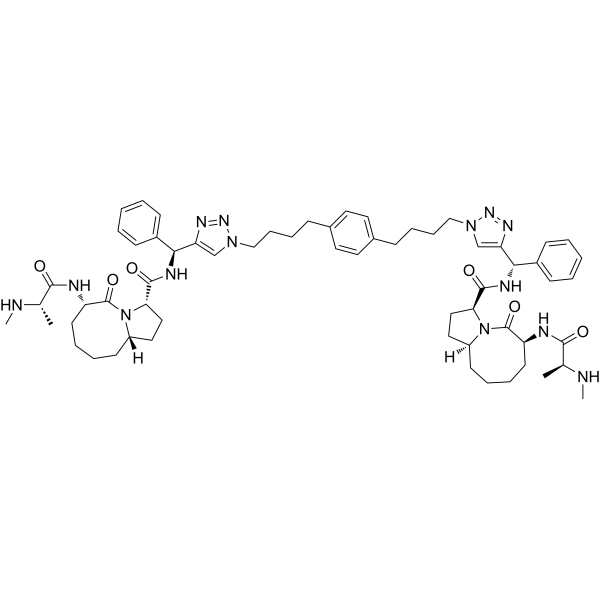
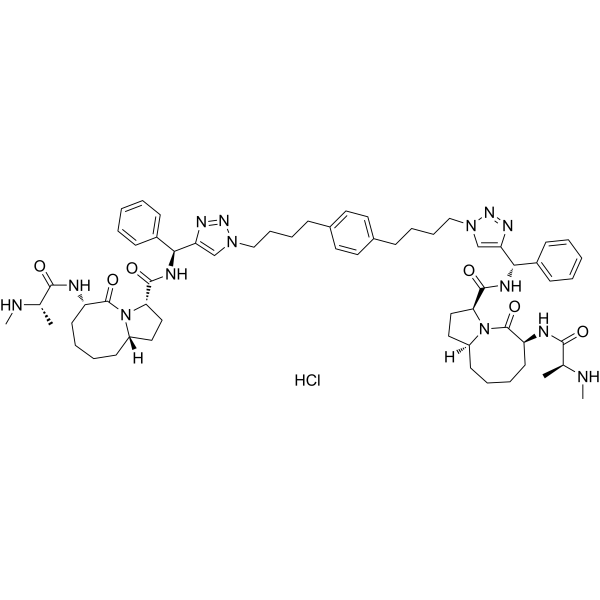
    CDK9-IN-39 (1-7a-B1) is an orally active cyclin-dependent kinase 9 (CDK9) inhibitor with an IC50 of 6.51 nM. CDK9-IN-39 induces cell apoptosis by inhibiting the phosphorylation of RNA polymerase II at Ser2 and can be used for study of colorectal cancer .
    CDK9-IN-39
  • HY-W067091

    Amino Acid Derivatives Others
    3-((((9H-Fluoren-9-yl)methoxy)carbonyl)(methyl)amino)propanoic acid is an alanine derivative .
    3-((((9H-Fluoren-9-yl)methoxy)carbonyl)(methyl)amino)propanoic acid
  • HY-116681

    Insecticide Infection
    Aflavarin is produced from cluster 39 expressed mainly in sclerotia. Aflavarin exhibits anti-insectan activity .
    Aflavarin
  • HY-149473

    Cholinesterase (ChE) Neurological Disease
    AChE-IN-39 (Compound 7c) is an AChE inhibitor (IC50: 0.058 μM). AChE-IN-39 has DPPH scavenging activity. AChE-IN-39 improves the cognitive impairment in AlCl3-induced amnesia animal model. AChE-IN-39 can be used for research of Alzheimer's disease .
    AChE-IN-39
  • HY-146364

    DNA/RNA Synthesis HIV Infection
    CI-39 is an antiviral natural product. CI-39 is an NNRTI (non-nucleoside reverse transcriptase inhibit) antiviral agent with an EC50 of 3.40 μM and an CC50 of >30 μM for wild type HIV-1. CI-39 inhibits HIV-1 RT DNA polymerase and ribonuclease H activitiessup .
    CI-39
  • HY-P5672

    Bacterial Infection
    Maximin 39 is an antimicrobial peptide derived from the toad brain. Maximin 39 is active against Staphylococcus aureus and Escherichia coli, with MIC values of 18.8, 37.5 μg/mL, respectively .
    Maximin 39
  • HY-155190

    Bacterial Infection
    Antitubercular agent-39 (Compound P1) is a potent antitubercular agent. Antitubercular agent-39 is active against drug-resistant strains and drug-susceptible clinical isolates. Antitubercular agent-39 inhibits Mtb strain H37Rv with a MIC less than 1 μM .
    Antitubercular agent-39
  • HY-146392

    HDAC Microtubule/Tubulin Apoptosis Cancer
    HDAC-IN-39 (compound 16c) is a potent HDAC inhibitor, with IC50 values of 1.07 μM (HDAC1), 1.47 μM (HDAC2), and 2.27 μM (HDAC3), respectively. HDAC-IN-39 also significantly inhibits microtubule polymerization. HDAC-IN-39 induces cell cycle arrest at the G2/M phase. HDAC-IN-39 displays promising anticancer activity against resistant cancer cells .
    HDAC-IN-39
  • HY-144056

    EGFR Cancer
    EGFR-IN-39 is a potent inhibitor of EGFR. EGFR-IN-39 is an anti-tumor agent with low toxic side effects. EGFR-IN-39 is an acrylamide derivative compound. Overexpression and mutation of the epidermal growth factor receptor (EGFR) has been clearly demonstrated to lead to uncontrollable cell growth and is associated with the progression of most cancer diseases, especially NSCLC. EGFR-IN-39 has the potential for the research of diseases associated with EGFR mutations (extracted from patent WO2021185348A1, compound 2) .
    EGFR-IN-39
  • HY-156703S

    HBV Infection
    HBV-IN-39-d3 (Example 14) is a deuterated HBV-IN-39 (Example 13). HBV-IN-39 is an HBV inhibitor. HBV-IN-39-d3 has better oral bioavailability than HBV-IN-39 .
    HBV-IN-39-d3
  • HY-151982

    Microtubule/Tubulin Cardiovascular Disease Cancer
    Tubulin polymerization-IN-39 is a tubulin polymerization inhibitor (IC50: 4.9 μM). Tubulin polymerization-IN-39 occupies the colchicine-binding site. Tubulin polymerization-IN-39 inhibits cancer cell proliferation .
    Tubulin polymerization-IN-39
  • HY-170887

    Keap1-Nrf2 Monoamine Oxidase Inflammation/Immunology
    MAO-B-IN-39 (compound11) is a selective monoamine oxidase B (MAO-B) inhibitor. MAO-B-IN-39 inhibits MAO-Bwith an IC50 of 3.61 μM. MAO-B-IN-39 demonstrates a potent NRF2 induction capacity. MAO-B-IN-39 exhibits potent anti-inflammatory and neuroprotective activity in OS (oxidative stress)-related in vitro models. MAO-B-IN-39 demonstrates high liver microsomal stability and favorable pharmacokinetics in mice. MAO-B-IN-39 is potential for Parkinson’s disease (PD) research .
    MAO-B-IN-39
  • HY-149520

    MAP4K Cancer
    HPK1-IN-39 (Compound 10n) is a selective HPK1 Inhibitor (IC50: 29 nM). HPK1-IN-39 inhibits the phosphorylation of SLP76. HPK1-IN-39 can be used for research of cancer immunotherapy .
    HPK1-IN-39
  • HY-172095

    Epigenetic Reader Domain Apoptosis Cancer
    BRD4 Inhibitor-39 (compound 12m) is an orally available BRD4 inhibitor with an IC50 value of 0.02 μM. BRD4 Inhibitor-39 induces apoptosis. BRD4 Inhibitor-39 has anti-tumor activity .
    BRD4 Inhibitor-39
  • HY-175782

    Toll-like Receptor (TLR) NF-κB p38 MAPK Inflammation/Immunology
    SMU-R39 is a TLR7 and TLR8 antagonist with IC50 values of 3.22 μM and 0.24 μM, respectively. SMU-R39 binds to recombinant mTLR7 protein (KD = 2.36 μM) and to recombinant hTLR8 protein (KD = 105 nM). SMU-R39 suppresses downstream NF-κB and MAPK signaling, and reduces secretion/transcription of pro-inflammatory cytokines (TNF-α, IL-1β, IL-6) in PBMCs and THP-1 cells. SMU-R39 demonstrates anti-inflammatory efficacy in Imiquimod (IMQ) (HY-B0180)-induced psoriasis mouse model. SMU-R39 can be used for the study of autoimmune diseases such as psoriasis .
    SMU-R39
  • HY-173373

    Ligands for Target Protein for PROTAC Androgen Receptor Cancer
    AR ligand-39, an androgen receptor (AR) ligand, is a PROTAC target protein ligand (Ligand for Target Protein for PROTAC). AR ligand-39 can be used for synthesis PROTAC AR Degrader-10 (HY-173372) .
    AR ligand-39
  • HY-129314

    Aldehyde Dehydrogenase (ALDH) Cancer
    CM-39 is a non-covalent and reversible inhibitor for aldehyde dehydrogenase 1A (ALDH1A) with an IC50 of 0.9 μM .
    CM-39
  • HY-170389

    Cholinesterase (ChE) Neurological Disease
    BChE-IN-39 (Compound 7c) is a selective inhibitor for butyrylcholinesterase (BChE) with an IC50 of 0.08 μM (IC50=3.98 μM for AChE). BChE-IN-39 downregulates the GSK-3β expression, inhibits the hyperphosphorylation of tau protein .
    BChE-IN-39

Inquiry Online

Your information is safe with us. * Required Fields.

Salutation


Country or Region *

Applicant Name *


Organization Name *

Department *


Email Address *


Product Name *

Cat. No.


Requested quantity *

Phone Number *


Remarks

Inquiry Online

Inquiry Information

Product Name:
Cat. No.:
Quantity:
MCE Japan Authorized Agent:

