1. Search Result
Search Result
Results for "

AQP4

" in MedChemExpress (MCE) Product Catalog:

18

Inhibitors & Agonists

4

Peptides

1

Inhibitory Antibodies

3

Natural
Products

4

Recombinant Proteins

3

Antibodies

3

Oligonucleotides

Targets Recommended:
Cat. No. Product Name Target Research Areas Chemical Structure
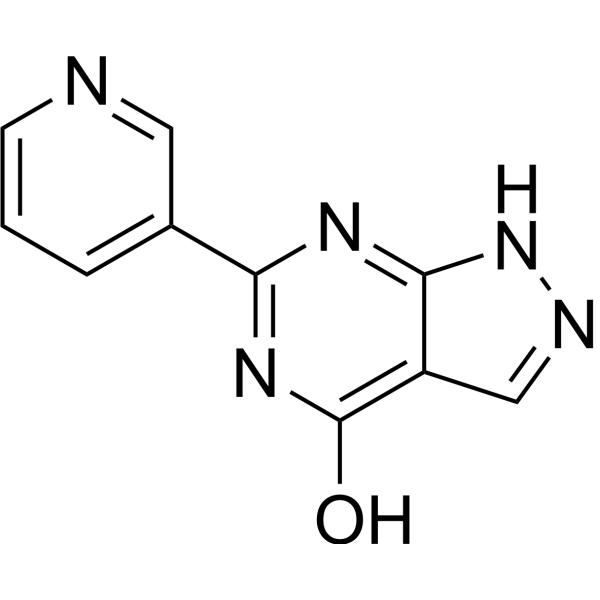
  • HY-W008574
    TGN-020
    Maximum Cited Publications
    21 Publications Verification

    PROTAC Linkers Inflammation/Immunology Cancer
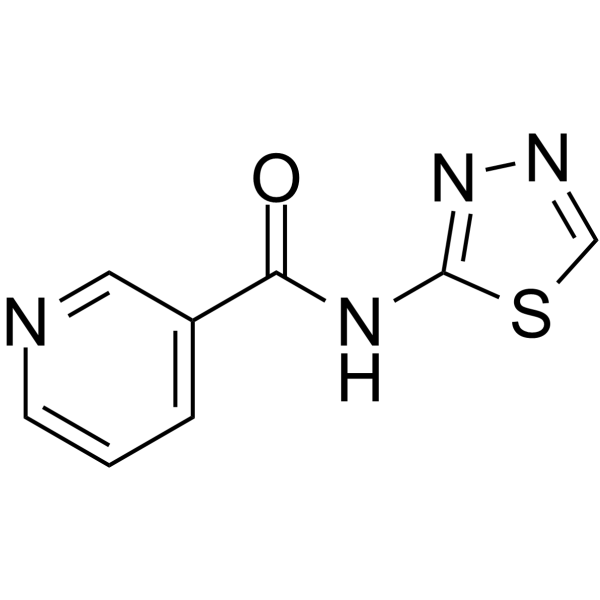
    TGN-020 is a selective Aquaporin 4 (AQP4) inhibitor with an IC50 of 3.1 μM . TGN-020 is an alkyl chain-based PROTAC linker that can be used in the synthesis of PROTACs .TGN-020 alleviates edema and inhibits glial scar formation after spinal cord compression injury in rats [4].
    TGN-020
  • HY-P10936A

    Aquaporin Neurological Disease Inflammation/Immunology
    AQP4 (201-220) TFA is an encephalitogenic epitope of AQP-4. AQP4 (201-220) TFA can induce experimental autoimmune encephalomyelitis (EAE) (characterized by midline lesions in the brain, retinal pathology, and lesions at the grey matter/white matter border zone in the spinal cord). AQP-4 is a target antigen in neuromyelitis optica .
    AQP4 (201-220) TFA
  • HY-W176557

    Aquaporin Neurological Disease
    TGN-073 is a aquaporin 4 (AQP4) modulator, as well as an orally available, blood-brain barrier-permeable agent. TGN-073 increases the uptake and distribution of brain MRI tracers in the brain parenchyma and reduces the levels of insoluble amyloid-β 40 and β 42. TGN-073 can be used in research related to Alzheimer's disease, dementia, traumatic brain injury and pain .
    TGN-073
  • HY-W008574A
    TGN-020 sodium
    Maximum Cited Publications
    21 Publications Verification

    PROTAC Linkers Inflammation/Immunology Cancer
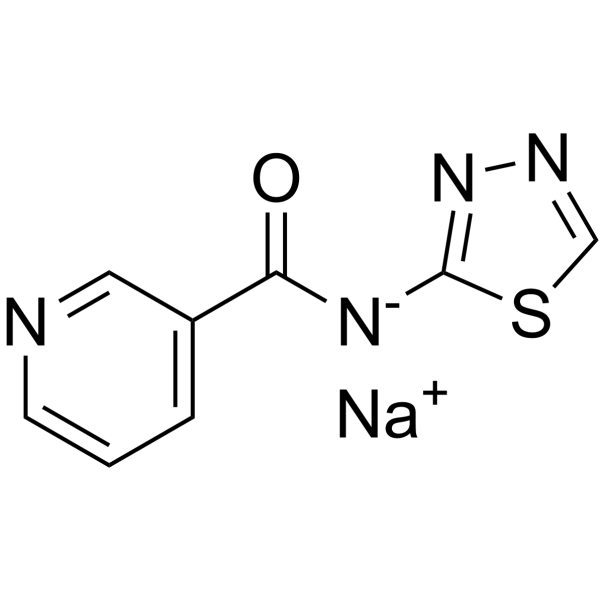
    TGN-020 sodium is a selective Aquaporin 4 (AQP4) inhibitor with an IC50 of 3.1 μM . TGN-020 sodium is an alkyl chain-based PROTAC linker that can be used in the synthesis of PROTACs . TGN-020 sodium alleviates edema and inhibits glial scar formation after spinal cord compression injury in rats [4].
    TGN-020 sodium
  • HY-115460
    AER-271
    1 Publications Verification

    Aquaporin Cardiovascular Disease Neurological Disease
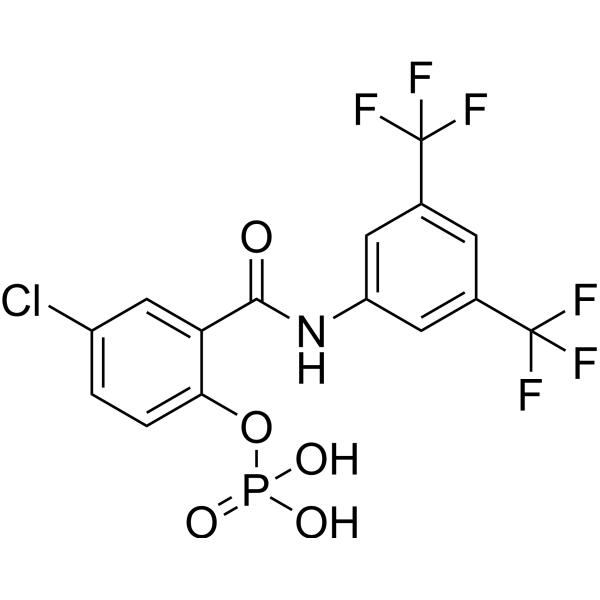
    AER-271, a phosphonate proagent derivative of AER-270, is an aquaporin-4 (AQP4) inhibitor for the research of acute ischemic stroke .
    AER-271
  • HY-P10936

    Aquaporin Neurological Disease Inflammation/Immunology
    AQP4 (201-220) is an encephalitogenic epitope of AQP-4. AQP4 (201-220) can induce experimental autoimmune encephalomyelitis (EAE) (characterized by midline lesions in the brain, retinal pathology, and lesions at the grey matter/white matter border zone in the spinal cord). AQP-4 is a target antigen in neuromyelitis optica .
    AQP4 (201-220)
  • HY-N4246

    Aquaporin PKC Akt PI3K Apoptosis Monoamine Oxidase Pregnane X Receptor (PXR) Cardiovascular Disease Neurological Disease Inflammation/Immunology Cancer
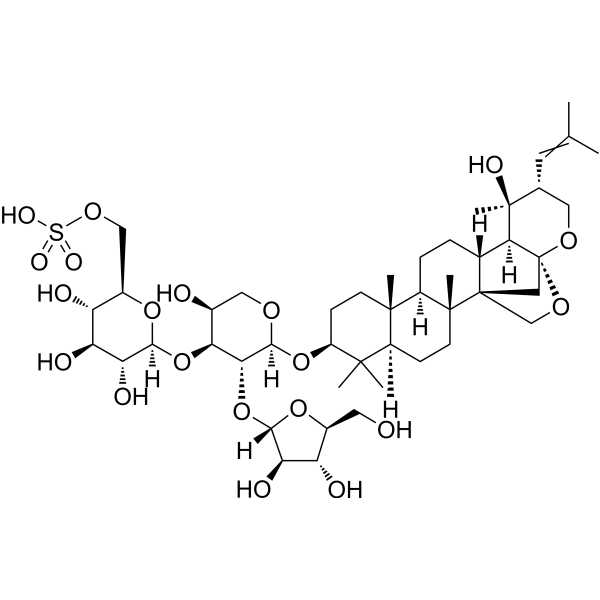
    Bacopaside I is an orally active aquaporin AQP1 inhibitor and PKC modulator with neuroprotective and anticancer activities. Bacopaside I specifically blocks the water channel and cGMP-gated ion channel activities of AQP1 without affecting AQP4, thereby inhibiting the migration of colon cancer cells expressing AQP1. Bacopaside I activates the Akt pathway by interacting with PI3K, specifically inhibits MAO-A, effectively alleviates neuron necrosis and apoptosis induced by oxygen-glucose deprivation, reduces oxidative stress, and regulates the surface expression of neuroreceptors. When combined with Bacopaside II (HY-N6016), Bacopaside I significantly reduces the viability, proliferation and invasion ability of breast cancer cells, and binds to the pregnane X receptor (PXR). Bacopaside I is applicable to the research of colon cancer, breast cancer, vascular dementia, cerebral ischemia and other related diseases [4].
    Bacopaside I
  • HY-N10756
    Hyp9
    3 Publications Verification

    TRP Channel Neurological Disease
    Hyp9 is a transient receptor potential canonical 6 (TRPC6)-specific agonist. Hyp9 can be used for the research of spinal cord injury (SCI) .
    Hyp9
  • HY-P10937

    Aquaporin Inflammation/Immunology
    AQP4 (205-215) is a fragment of Aquaporin-4 (AQP4). AQP4 is a neuromyelitis optica autoantigen that is upregulated and presented in B cells after engagement of CD40. AQP4 is associated with autoimmune inflammatory diseases of the central nervous system (CNS), neuromyelitis optica (NMO) .
    AQP4 (205-215)
  • HY-P10937A

    Aquaporin Inflammation/Immunology
    AQP4 (205-215) TFA is a fragment of Aquaporin-4 (AQP4). AQP4 is a neuromyelitis optica autoantigen that is upregulated and presented in B cells after engagement of CD40. AQP4 is associated with autoimmune inflammatory diseases of the central nervous system (CNS), neuromyelitis optica (NMO) .
    AQP4 (205-215) TFA
  • HY-RS00876

    Small Interfering RNA (siRNA) Others

    AQP4 Human Pre-designed siRNA Set A contains three designed siRNAs for AQP4 gene (Human), as well as a negative control, a positive control, and a FAM-labeled negative control.

    AQP4 Human Pre-designed siRNA Set A
    AQP4 Human Pre-designed siRNA Set A
  • HY-RS23136

    Small Interfering RNA (siRNA) Others

    Aqp4 Rat Pre-designed siRNA Set A contains three designed siRNAs for Aqp4 gene (Rat), as well as a negative control, a positive control, and a FAM-labeled negative control.

    Aqp4 Rat Pre-designed siRNA Set A
    Aqp4 Rat Pre-designed siRNA Set A
  • HY-157226

    Aquaporin Others
    ORI-TRN-002 is an AQP4 inhibitor with an IC50 value of 3μM. ORI-TRN-002 can be used in the research area of cerebral edema .
    ORI-TRN-002
  • HY-RS16702

    Small Interfering RNA (siRNA) Others

    Aqp4 Mouse Pre-designed siRNA Set A contains three designed siRNAs for Aqp4 gene (Mouse), as well as a negative control, a positive control, and a FAM-labeled negative control.

    Aqp4 Mouse Pre-designed siRNA Set A
    Aqp4 Mouse Pre-designed siRNA Set A
  • HY-P991869

    AQmabAM; rAb-53

    Aquaporin Neurological Disease
    Aquaporumab (AQmabAM) is an engineered human monoclonal IgG antibody. Aquaporumab is a selective inhibitor of aquaporin 4 (AQP4), binding tightly to AQP4 and competitively displacing AQP4-IgG from serum [1][2]. Aquaporumab significantly reduces neuromyelitis optica lesions in spinal cord slice cultures and in mice receiving intracerebral injection of AQP4-IgG and complement [1][2]. Aquaporumab can be used for research on neuromyelitis optica spectrum disorders [1][2]."}
    Aquaporumab
  • HY-18805

    N-Phenylnicotinamide

    Aquaporin Neurological Disease
    Nicotinanilide (N-Phenylnicotinamide) (Compound 12) is an aquaporin 4 (AQP4) inhibitor. Nicotinanilide can be used for research on diseases associated with AQP4 dysfunction, such as epilepsy and migraine .
    Nicotinanilide
  • HY-W017091

    Aquaporin Neurological Disease
    3-Phenoxy-1,2-propanediol (compound 15) is a weak aquaporin 4 (AQP4) inhibitor . 3-Phenoxy-1,2-propanediol is an important intermediate for pharmaceuticals .
    3-Phenoxy-1,2-propanediol
  • HY-N4246R

    Reference Standards PKC Akt PI3K Apoptosis Pregnane X Receptor (PXR) Monoamine Oxidase Aquaporin Neurological Disease
    Bacopaside I (Standard) is the analytical standard of Bacopaside I. This product is intended for research and analytical applications. Bacopaside I is an orally active aquaporin AQP1 inhibitor and PKC modulator with neuroprotective and anticancer activities. Bacopaside I specifically blocks the water channel and cGMP-gated ion channel activities of AQP1 without affecting AQP4, thereby inhibiting the migration of colon cancer cells expressing AQP1. Bacopaside I activates the Akt pathway by interacting with PI3K, specifically inhibits MAO-A, effectively alleviates neuron necrosis and apoptosis induced by oxygen-glucose deprivation, reduces oxidative stress, and regulates the surface expression of neuroreceptors. When combined with Bacopaside II (HY-N6016), Bacopaside I significantly reduces the viability, proliferation and invasion ability of breast cancer cells, and binds to the pregnane X receptor (PXR). Bacopaside I is applicable to the research of colon cancer, breast cancer, vascular dementia, cerebral ischemia and other related diseases [4] .
    Bacopaside I (Standard)

Inquiry Online

Your information is safe with us. * Required Fields.

Salutation


Country or Region *

Applicant Name *


Organization Name *

Department *


Email Address *


Product Name *

Cat. No.


Requested quantity *

Phone Number *


Remarks

Inquiry Online

Inquiry Information

Product Name:
Cat. No.:
Quantity:
MCE Japan Authorized Agent:

