Search Result
Results for "
ARv7
" in MedChemExpress (MCE) Product Catalog:
| Cat. No. |
Product Name |
Target |
Research Areas |
Chemical Structure |
-
- HY-148771
-
MTX-23
1 Publications Verification
PROTAC AR-V7 degrader-2
|
PROTACs
Androgen Receptor
Apoptosis
|
Cancer
|
|
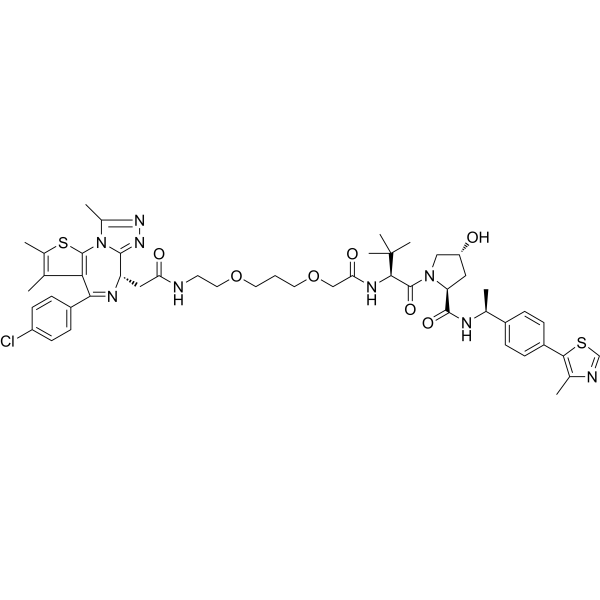
MTX-23 is an AR-based PROTAC. MTX-23 inhibits CaP cellular proliferation by degrading AR-V7 and AR-FL. MTX-23 induces apoptosis .
|
-
-
- HY-145479
-
|
|
PROTACs
Androgen Receptor
|
Cancer
|
|
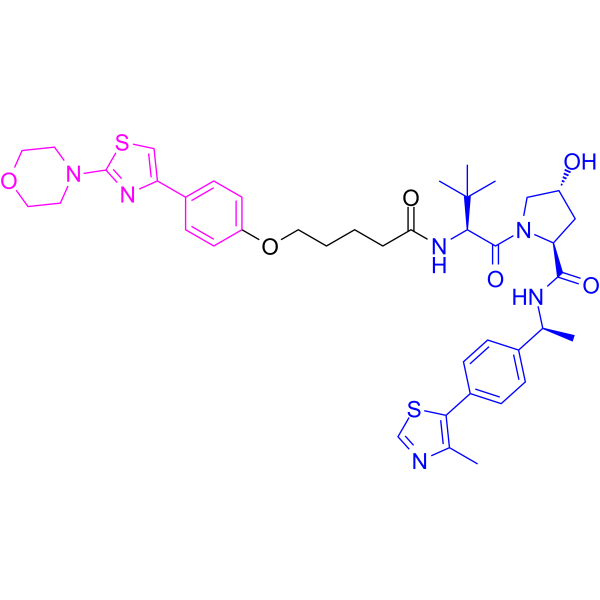
PROTAC AR-V7 degrader-1 is an orally active and selective AR-V7 PROTAC degrader with a DC50 of 0.32 μM (in 22Rv1 cells). PROTAC AR-V7 degrader-1 can inhibit the proliferation of tumor cells and exhibit anti-tumor activity. PROTAC AR-V7 degrader-1 can be used for the research of cancers such as prostate cancer .(Pink: VPC-14228 (HY-117669); Black: linker (HY-W041652); Blue: VHL Ligand (HY-112078))
|
-
-
- HY-153918
-
|
|
Androgen Receptor
|
Cancer
|
|
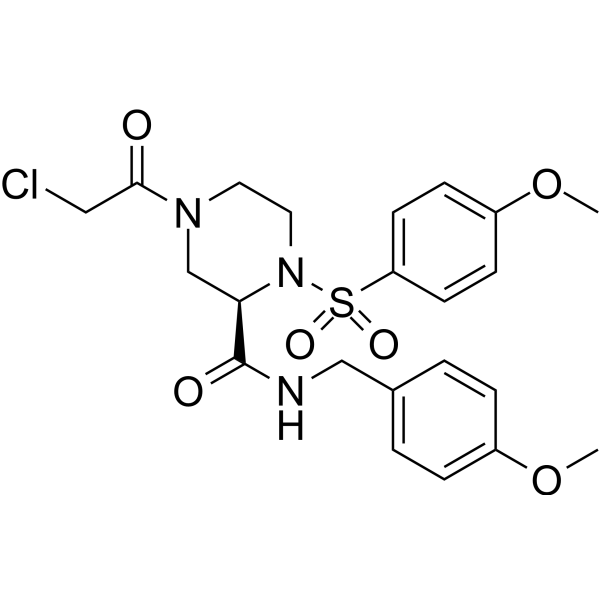
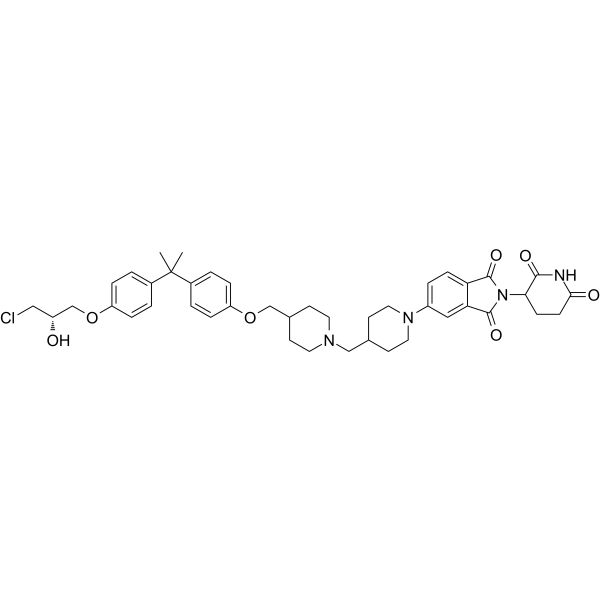
(R)-SKBG-1 is a covalent inhibitor targeting the RNA binding protein NONO. (R)-SKBG-1 can reduce the expression of androgen receptor (AR) and its splice variants, inhibiting cancer cell proliferation. (R)-SKBG-1 inhibits androgen receptor expression with IC50 of 3.1 μM and 5.5 μM for AR-FL mRNA and AR-V7 mRNA, respectively. (R)-SKBG-1 interferes with the gene regulatory network of cancer cells and inhibits cancer cell growth by stabilizing the interaction between NONO and mRNA. (R)-SKBG-1 can be used in the study of cancers related to NONO dysfunction, such as prostate cancer .
|
-
-
- HY-173626
-
|
|
Androgen Receptor
|
Cancer
|
|
EN1441 is a covalent degrader targeting the androgen receptor (AR) with an EC50 value of 4.2 μM and its truncated variant AR-V7. EN1441 selectively and potently degrades both AR and AR-V7 in androgen-independent prostate cancer cells. EN1441 is promising for research of androgen-independent prostate cancers .
|
-
-
- HY-123875A
-
|
EPI-506
|
Androgen Receptor
|
Cancer
|
|
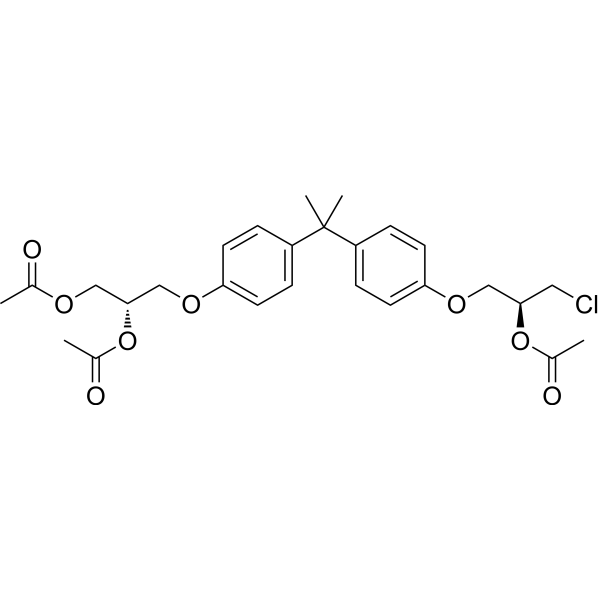
Ralaniten triacetate (EPI-506), the pro-agent of Ralaniten, is a first-in-class, orally active androgen receptor (AR) N-terminal domain (NTD) inhibitor. Ralaniten triacetate shows activity against both full length and resistance-related AR species, including AR-v7 .
|
-
-
- HY-161409
-
|
|
Androgen Receptor
Apoptosis
|
Cancer
|
|
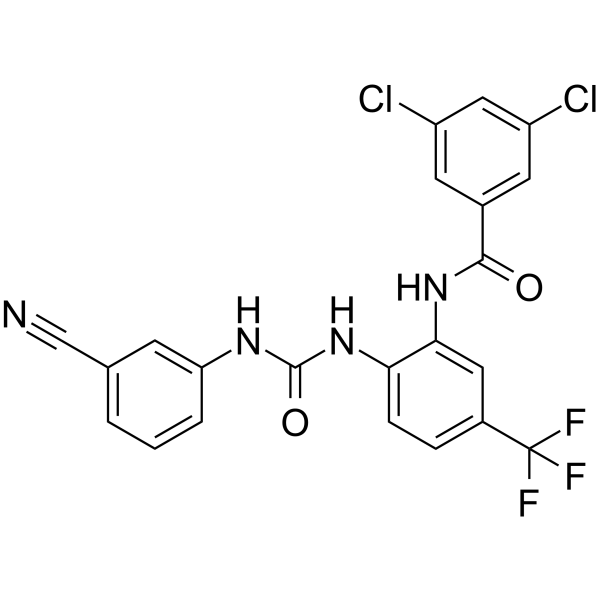
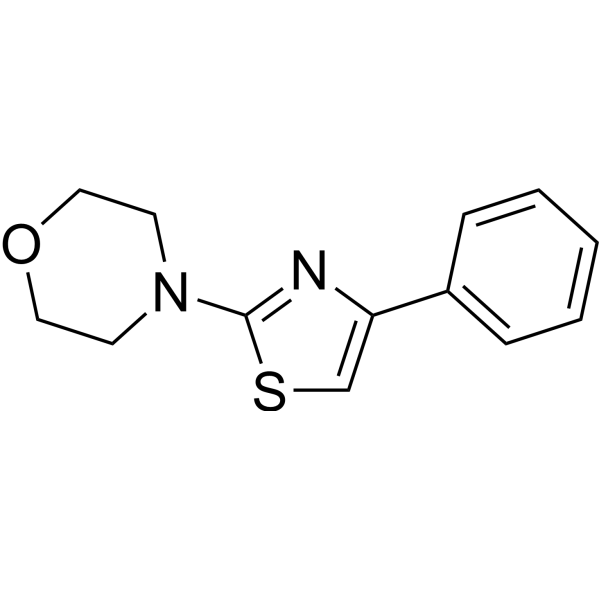
SC912 is an AR-V7 inhibitor (IC50 = 0.36 μM). SC912 possesses safety, potency and selectivity. SC912 binds directly to AR-FL and AR-V7 proteins, inhibites nuclear localization and chromatin binding capabilities. SC912 exerts anticancer activity through inhibition of proliferation, induction of cell cycle arrest and apoptosis .
|
-
-
- HY-162412
-
|
|
PROTACs
Adrenergic Receptor
Apoptosis
|
Cancer
|
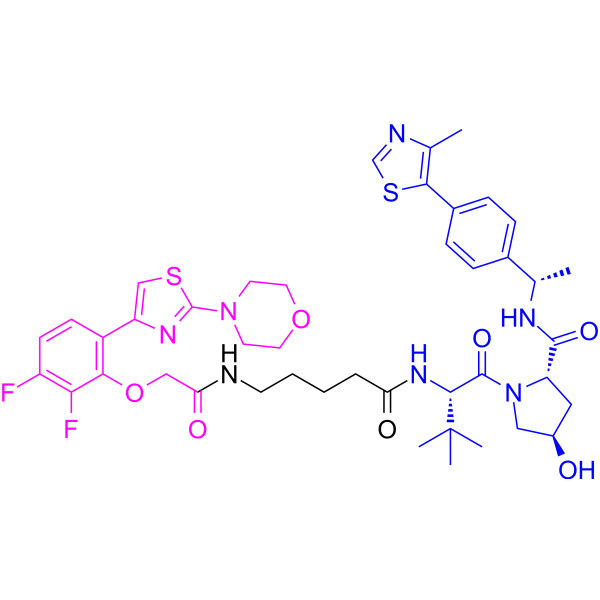
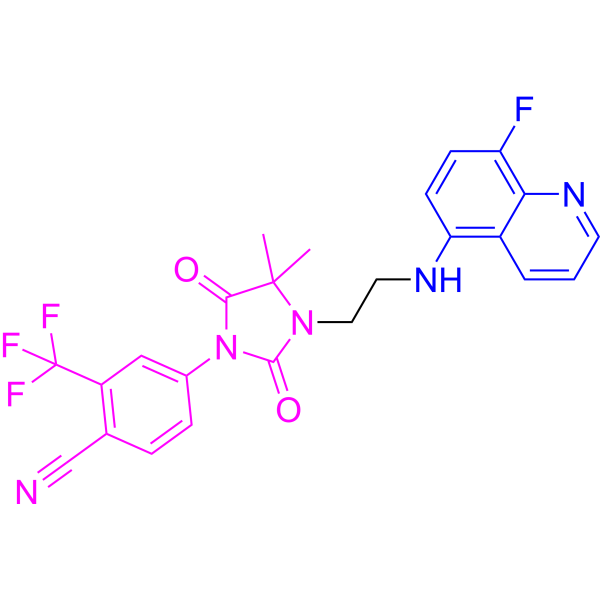
PROTAC AR/AR-V7 degrader-1 (27c) is a PROTAC-based and dual AR, AR-V7 degrader, with DC50 values of 2.67 and 2.64 μM for AR and AR-V7, respectively. PROTAC AR/AR-V7 degrader-1 (27c) induces apoptosis (Red: AR antagonist; Blue: E3 ligase ligand; Black: linker) .
|
-
-
- HY-145709
-
|
|
Androgen Receptor
|
Cancer
|
|
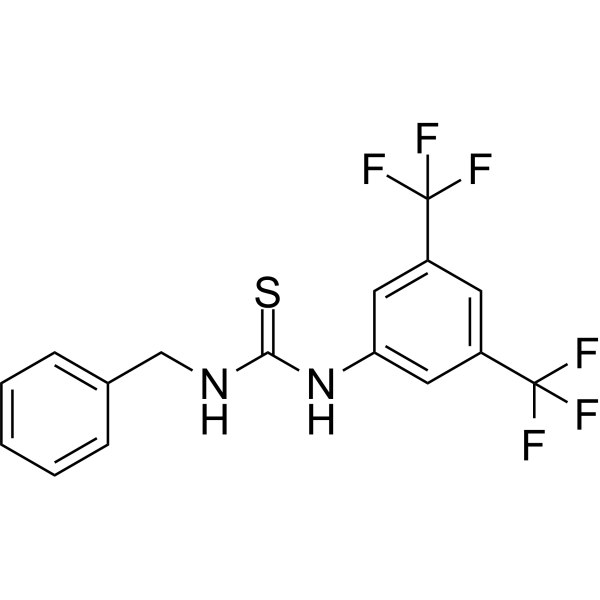
Ar-V7-IN-1 is a potent inhibitor of Ar-V7. Ar-V7-IN-1 inhibits the transcriptional activity of androgen receptor (AR) and the secretion of prostate-specific antigen (PSA) with an eGFP IC50 of 1232 nM and the PSA IC50 of 1391 μM. Ar-V7-IN-1 has the potential for the research of various indications, in particular cancers such as prostate cancer .
|
-
-
- HY-126076A
-
|
|
DNA/RNA Synthesis
|
Cancer
|
|
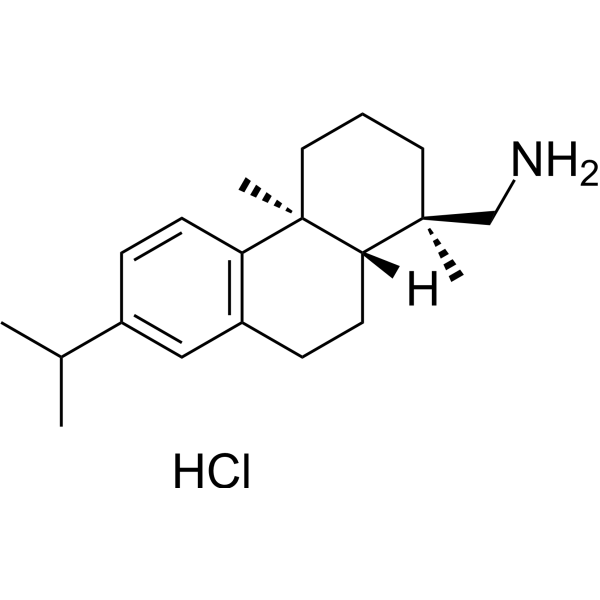
VPC-80051 is an inhibitor of hnRNP A1 splicing activity. VPC-80051 directly interacts with hnRNP A1 RBD and reduces AR-V7 messenger levels in 22Rv1 CRPC cell line. VPC-80051 can be used in prostate cancer research .
|
-
-
- HY-147291
-
|
|
c-Myc
PARP
Apoptosis
|
Cancer
|
|
VPC-70063 is a potent Myc-Max inhibitor with an IC50 value of 8.9 μM for Myc-Max transcriptional activity inhibition. VPC-70063 reduces UBE2C promotor activity and AR-V7 levels, and induces PARP cleavage. VPC-70063 induces apoptosis and blocks Myc-Max interactions with DNA. VPC-70063 can be used for researching anticancer .
|
-
-
- HY-149433
-
|
|
PROTACs
Androgen Receptor
Apoptosis
|
Cancer
|
|
BWA-522 is an orally active PROTAC degrader targeting full-length androgen receptor (AR-FL) and androgen receptor splice variant 7 (AR-V7). BWA-522 antagonizes the N-terminal domain (AR-NTD) of the androgen receptor, suppresses AR downstream signaling proteins and induces cancer cells apoptosis. BWA-522 inhibits tumor growth in LNCaP xenograft mouse model. BWA-522 can be used for the research of prostate cancer .
|
-
-
- HY-117669
-
|
|
Androgen Receptor
|
Cancer
|
|
VPC-14228 is an inhibitor that selectively targets androgen receptor DNA binding domain (AR-DBD). VPC-14228 inhibits the interaction between AR and DNA, thereby blocking AR-mediated transcriptional activation. VPC-14228 does not rely on nuclear localization inhibition, but rather inhibits the activity of full-length AR and splice variant AR-V7 by interfering with AR binding to chromatin. And VPC-14228 has high selectivity for other nuclear receptors such as ER and PR. VPC-14228 can be used in the study of prostate cancer [2].
|
-
-
- HY-170329
-
|
|
PROTACs
Androgen Receptor
Apoptosis
|
Cancer
|
|
PROTAC AR Degrader-8 is the PROTAC degrader for androgen receptor (AR) that degrades AR-FL with DC50s of 0.018 μM and 0.14 μM in 22Rv1 cell and LNCaP cell, degrades AR-V7 with DC50 of 0.026 μM in 22Rv1 cell. PROTAC AR Degrader-8 inhibits the proliferation of cancer cell 22Rv1 and LNCaP with IC50 values of 0.038 μM and 1.11 μM. PROTAC AR Degrader-8 arrests cell cycle at G2/M phase, induces apoptosis in 22Rv1 cell. PROTAC AR Degrader-8 exhibits anticancer efficacy in mouse and zebrafish model. PROTAC AR Degrader-8 can be used for the research of prostate cancer, castration-resistant prostate cancer .
|
-
-
- HY-164373
-
|
|
Androgen Receptor
Apoptosis
|
Cancer
|
|
SC428 is an androgen receptor (AR) inhibitor that targets the N-terminal domain. SC428 potently decrease the transactivation of (AR)-V7, (AR)v567es, as well as full-length ( AR ) (AR-FL) and its LBD mutants, substantially. SC428 inhibits androgen-stimulated (AR)-FL nuclear translocation, chromatin binding, and (AR) -regulated gene transcription. SC428 inhibits the proliferation of tumor cells in vitro. SC428 inhibits tumor cell growth by inducing apoptosis in mice transplanted with 22RV1 .
|
-
-
- HY-164552
-
|
|
Apoptosis
Androgen Receptor
|
Cancer
|
|
ZNU-IMB-Z15 (Compound Z15) is an antagonist of the androgen receptor (AR) and also a selective degrader of AR and ARV7. ZNU-IMB-Z15 can directly bind to the ligand-binding domain (LBD) and activation function-1 region of AR, and promote AR degradation through the proteasome pathway. ZNU-IMB-Z15 effectively inhibits the transcriptional activity of AR, AR mutants, and AR splice variants (ARVs), downregulating the mRNA and protein levels of AR downstream target genes, thereby overcoming the resistance to second-generation antiandrogen drugs induced by AR LBD mutations, AR amplification, and ARVs in castration-resistant prostate cancer (CRPC). ZNU-IMB-Z15 can inhibit the proliferation of AR-positive CRPC cell lines and induce their apoptosis, demonstrating anticancer activity both in vivo and in vitro .
|
-
-
- HY-W877989
-
|
|
Ligands for E3 Ligase
|
Cancer
|
|
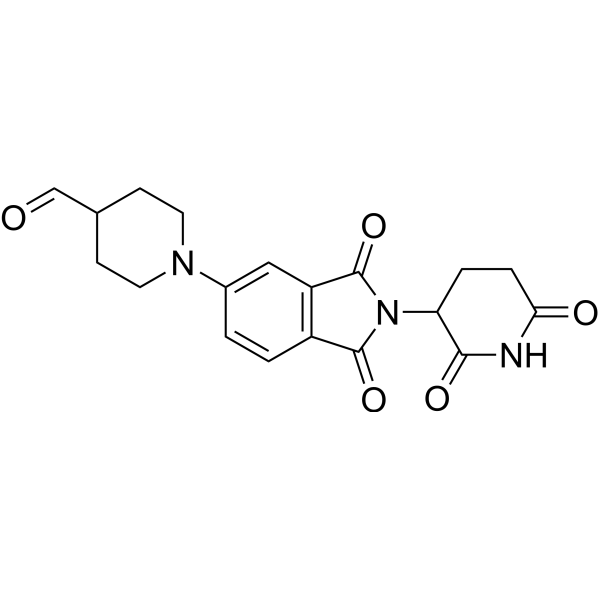
BWA-522 intermediate-1 is an intermediate in the synthesis of PROTAC BWA-522 (HY-149433) and serves as a ligand molecule for cereblon E3 ubiquitin ligase. BWA-522 is an orally active small molecule protein-targeting chimera (PROTAC) that has significant degradation effects on AR-FL and AR-V7 .
|
-
-
- HY-400766
-
|
|
Drug Intermediate
|
Cancer
|
|
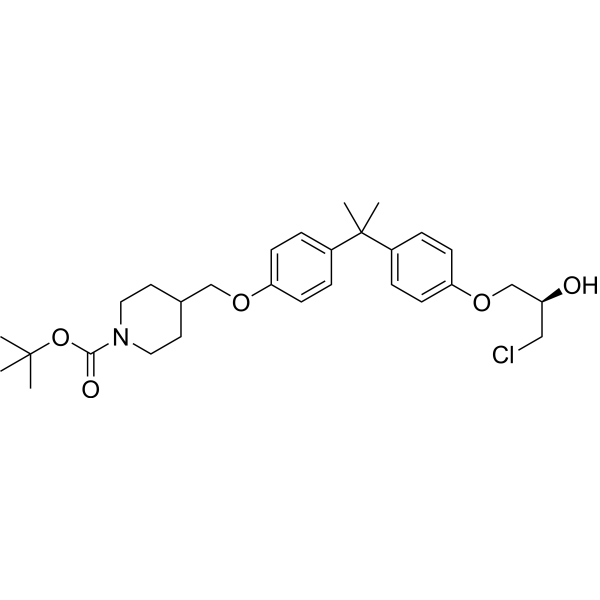
BWA-522 intermediate-2 is a BWA-522 intermediate. BWA-522 is an orally available small molecule protein-targeting chimera (PROTACs) with significant degradation effect on AR-FL and AR-V7 .
|
-
-
- HY-179056
-
|
|
PROTACs
PSMA
Androgen Receptor
HSP
Apoptosis
|
Cancer
|
|
Psa-AR is a PROTAC degrader targeting PSMA, with a Kd of 7.2 nM. Psa-AR exhibits strong degradation capabilities for AR, AR-V7, and HSP90, and induces cell apoptosis. Psa-AR demonstrates potent tumor suppressive activity in the 22Rv1 xenograft tumor model. Psa-AR can be used in the research of castration-resistant prostate cancer .
|
-
-
- HY-163940
-
|
|
Aldose Reductase
Androgen Receptor
|
Cancer
|
|
LX1 is an anti-prostate cancer compound that targets androgen receptor (AR), AR variants and steroidogenic enzyme AKR1C3. LX1 inhibits the enzymatic activity of AKR1C3, reduces the conversion of androstenedione to testosterone and reduces the expression of AR and AR-V7 and downregulates their target genes. LX1 overcomes the resistance of tumor cells to Enzalutamide (HY-70002), and the combination with Enzalutamide (HY-70002) further inhibits tumor growth .
|
-
-
- HY-169387
-
|
|
AUTOTACs
|
Cancer
|
|
YT 6-2-PEG3-C2-NH2 is the p62/SQSTM1 targeting, autophagy-targeting ligand-linker conjugate of AUTOTAC ATC-324 (HY-169385), which is an bivalent AR (Androgen Receptor) degrader. ATC-324 can reduce nuclear AR levels and downregulate target gene expression of AR and AR-v7, and also has a degradation effect on common AR mutants in PCa .
|
-
-
- HY-176067
-
|
|
Androgen Receptor
|
Cancer
|
|
LO-4-25 is a covalent degrader targeting the androgen receptor (AR) and its truncated variant AR-V7. LO-4-25 covalently binds to the E3 ubiquitin ligase CUL4 DCAF16, promoting the ubiquitination of AR and AR-V7, which subsequently are recognized and degraded by the proteasome, reducing the protein levels of AR and AR-V7 in cells. LO-4-25 is promising for research of androgen-independent prostate cancers .
|
-
-
- HY-149434
-
|
|
Androgen Receptor
PROTACs
Apoptosis
|
Cancer
|
|
PROTAC AR-NTD antagonist 1 (compound 18) is a small molecule protein-targeting chimera (PROTACs) targeting the Androgen Receptor AR-V7. PROTAC AR-NTD antagonist 1 antagonizes the N-terminal domain of AR (AR-NTD), degrades AR-V7 protein, and induces apoptosis in prostate cancer (PC) cells. The efficiencies of PROTAC AR-NTD antagonist 1 in degrading AR-V7 in VCaP cells were 62.2% (1 μM) and 71.1% (5 μM), respectively .
|
-
-
- HY-178938
-
|
|
Molecular Glues
Androgen Receptor
Caspase
Apoptosis
|
Endocrinology
Cancer
|
AR Degrader-3 is an orally active molecular glue that targets AR/ARV7 and induces the degradation of AR and ARV7 through the ubiquitin-proteasome pathway (UPP). AR Degrader-3 directly interacts with the ligand-binding domain (LBD) and the N-terminal domain (NTD) of AR. AR Degrader-3 effectively suppresses the transcriptional activity of wild-type AR (AR-WT), AR mutants, and ARV7. AR Degrader-3 downregulates the mRNA and protein levels of downstream AR target genes, thereby overcoming antiandrogen resistance mediated by ARV7 and AR point mutations. AR Degrader-3 induces apoptosis in Enzalutamide (HY-70002) (ENZa)-resistant cells and increases cleaved caspase-3 protein levels. AR Degrader-3 can be used for the study of castration-resistant prostate cancer (CRPC) .
|
-
-
- HY-W041652
-
|
|
ADC Linker
|
Cancer
|
|
5-Hydroxypentanoic acid is a PROTAC linker. 5-Hydroxypentanoic acid can be used in the synthesis of PROTAC AR-V7 degrader-1 (HY-145479) .
|
-
-
- HY-163609
-
|
|
PROTACs
Aldose Reductase
|
Cancer
|
|
PROTAC AKR1C3 degrader-1 (compound 5) is a potent AKR1C3 PROTAC degrader. PROTAC AKR1C3 degrader-1 decreases the protein expression of AKR1C3, AKR1C1/2, and ARv7. PROTAC AKR1C3 degrader-1 has the potential for the research of prostate cancer. (Blue:ubiquitin E3 ligase cereblon ligand (HY-A0003), Black: linker (HY-163647); Pink: AKR1C3 inhibitor (HY-163610)) .
|
-
-
- HY-149914
-
|
|
Androgen Receptor
|
Cancer
|
|
WCA-814 is an androgen receptor (AR) antagonist-Hsp90 inhibitor conjugate. WCA-814 induces the degradation of full-length and AR-V7. WCA-814 has cytotoxic effect in prostatic cancer cells (IC50: 171.2 nM, 26.5 nM for LNCaP, 22Rv1 cell) .
|
-
-
- HY-139104
-
|
|
DNA/RNA Synthesis
Apoptosis
|
Cancer
|
|
Thailanstatin D, an analogue of Thailanstatin A, is able to inhibit AR-V7 gene splicing by interfering the interaction between U2AF65 and SAP155 and preventing them from binding to polypyrimidine tract located between the branch point and the 3' splice site. Thailanstatin D exhibits a potent tumor inhibitory effect on human CRPC xenografts leading to cell apoptosis .
|
-
-
- HY-W854844B
-
|
|
Molecular Glues
E1/E2/E3 Enzyme
|
Cancer
|
|
JP-2-196 hydrochloride is a covalent molecular glue degrader targeting RNF126. JP-2-196 hydrochloride induces the formation of a ternary complex between RNF126 and target proteins (e.g., BRD4, AR-V7), promoting their ubiquitination and proteasomal degradation. JP-2-196 hydrochloride is promising for research of cancers (e.g., prostate cancer, leukemia) .
|
-
-
- HY-169388
-
|
|
AUTACs
|
Cancer
|
|
YT 6-2 is the p62/SQSTM1 targeting, autophagy-targeting ligand (ATL) of AUTOTAC ATC-324 (HY-169385), which is an bivalent AR (Androgen Receptor) degrader. ATC-324 can reduce nuclear AR levels and downregulate target gene expression of AR and AR-v7, and also has a degradation effect on common AR mutants in PCa .
|
-
-
- HY-163510
-
|
|
Androgen Receptor
|
Cancer
|
|
AR/AR-V7-IN-1 (Compound 20i) is an AR/ARV7 inhibitor (IC50 = 172.85 nM). AR/AR-V7-IN-1 potently inhibits cell growth with IC50 values of 4.87 and 2.07 μM in the LNCaP and 22RV1 cell lines, respectively. AR/AR-V7-IN-1 exhibits effective tumor growth inhibition in the 22RV1 xenograft study. AR/AR-V7-IN-1 can be used for the research of prostate cancer .
|
-
-
- HY-176048
-
|
|
Androgen Receptor
|
Cancer
|
|
ChEMBL22003 is a potential phase separation modulator of ARV7 that can bind to the ARV7 binding sites. ChEMBL22003 has potential for use in the research of prostate cancer .
|
-
-
- HY-169385
-
|
|
AUTOTACs
Androgen Receptor
|
Cancer
|
|
ATC-324 is an bivalent AR (Androgen Receptor) degrader based on the protein degradation technology platform AUTOphagy-TArgeting Chimera (AUTOTAC). ATC-324 induces the formation of AR/p62 complex, leading to autophagy-lysosomal degradation of AR. ATC-324 can reduce nuclear AR levels and downregulate target gene expression of AR and AR-v7, and also has a degradation effect on common AR mutants in PCa . ATC-324 is composed of target-binding ligand (TBL) Enzalutamide (HY-70002) and p62/SQSTM1 autophagy-targeting ligand (ATL) YT 6-2 analog-1 (HY-169386), connected by Boc-NH-PEG4-CH2CH2NH2 (HY-W008352). Among them, the active control of the target protein ligand is Enzalutamide carboxylic acid (HY-70002B), and the conjugate composed of the autophagy-targeting ligand and the linker is YT 6-2-PEG3-C2-NH2 (HY-169387).
|
-
-
- HY-170820
-
|
|
Molecular Glues
Bcl-2 Family
CDK
EGFR
HSP
Androgen Receptor
c-Myc
|
Cancer
|
|
XYD049 is a CRBN-based molecular glue degrader targeting GSPT1, with a DC50 of 19 nM. XYD049 mediates the formation of a ternary complex between CRBN and GSPT1, thereby triggering CRBN- and proteasome-dependent degradation of GSPT1. By degrading GSPT1, XYD049 downregulates castration-resistant prostate cancer (CRPC)-related oncogenes, including BCL2, CDK2, E2F3, EGFR, HSP90B1, TMPRSS2, AR, AR-V7, PSA and c-Myc. XYD049 inhibits cancer cell growth and suppresses tumor growth in mice. XYD049 can be used for research on castration-resistant prostate cancer. XYD049 consists of a linker (black part) NH2-C5-NH-Boc (HY-W004710), a CRBN-based E3 ligase ligand (blue part) Thalidomide 4-fluoride (HY-41547), and a target protein ligand (red part) GSPT1 ligand-1 (HY-170821), among which the E3 ligase ligand plus linker forms the conjugate E3 Ligase Ligand-linker Conjugate 158 (HY-170822) .
|
-
-
- HY-401056
-
|
|
Drug Intermediate
|
Cancer
|
|
BWA-522 intermediate-3 is a BWA-522 intermediate. BWA-522 is an orally available small molecule protein-targeting chimera (PROTACs) with significant degradation effect on AR-FL and AR-V7 .
|
-
-
- HY-176068
-
|
|
Androgen Receptor
|
Cancer
|
|
3-Cl-Pyridine-amide-acrylaldehyde-piperazine is a synthetic intermediate of LO-4-25 (HY-176067). LO-4-25 is an androgen receptor (AR) DNA binding domain ligand linked via a linker to the truncated fumaramide handle. LO-4-25 shows robust degradation of both AR and AR-V7 in 22Rv1 cells .
|
-
-
- HY-169386
-
|
|
AUTOTACs
|
Cancer
|
|
YT 6-2 analog-1 (compound 2-3) is the p62/SQSTM1 targeting, autophagy-targeting ligand (ATL) of AUTOTAC ATC-324 (HY-169385), which is an bivalent AR (Androgen Receptor) degrader. ATC-324 can reduce nuclear AR levels and downregulate target gene expression of AR and AR-v7, and also has a degradation effect on common AR mutants in PCa .
|
-
-
- HY-173559
-
|
|
Androgen Receptor
|
Cancer
|
|
AR antagonist 12 (compound 20i) is an orally active androgen receptor antagonist wiith IC50 values of 119.3 μM and 98.2 μM for wt-AR and AR-F877L,respectively. AR antagonist 12 induces a dose-dependent and time-dependent reduction in AR, AR-V7, and PSA protein levels. AR antagonist 1 shows anticancer activuty and can be used for the study of Enzalutamide (HY-70002)-resistant Prostate cancer .
|
-
-
- HY-403733B
-
|
|
Androgen Receptor
Prostaglandin Receptor
|
Cancer
|
|
(+)-JJ-450 is a non-competitive antagonist targeting the androgen receptor (AR) that inhibits AR nuclear localization and transcriptional activity in the absence of androgen. (+)-JJ-450 is less active than (-)-JJ-450 (HY-403733A) in inhibiting prostate-specific antigen (PSA) expression in LN95 cells, possibly because (+)-JJ-450 targets the ligand binding domain (LBD) of AR. (+)-JJ-450 inhibits the transcriptional activity of AR and its splice variants (e.g., ARv7) by promoting the degradation of unliganded AR in the nucleus and reducing the binding of AR to androgen response elements (AREs). (+)-JJ-450 can be used in castration-resistant prostate cancer (CRPC) studies that are resistant to enzalutamide (MDV3100) (HY-70003) .
|
-
-
- HY-182331
-
|
|
PROTACs
RAR/RXR
Androgen Receptor
Apoptosis
Caspase
MDM-2/p53
|
Cancer
|
|
WCF-598 is a RXRγ (Kd: 234.2 nM) PROTAC degrader. WCF-598 induces RXRγ degradation via the ubiquitin-proteasome pathway and binds directly to RXRγ. WCF-598 indirectly induces AR-V7 degradation, impairs the stability of the RXRγ-AR-V7 complex, downregulates AR-V7 levels, and inhibits the transcription of downstream target genes of AR-V7. WCF-598 induces tumor cell apoptosis, inhibits cell proliferation, activates the p53 signaling pathway, and suppresses cell cycle progression. WCF-598 can be used for the research of prostate cancer .
|
-
-
- HY-164371
-
|
|
Androgen Receptor
|
Cancer
|
|
(+)-JJ-74-138, a novel non-competitive androgen receptor (AR) antagonist, is capable of inhibiting Enzalutamide-resistant CRPC .
|
-
-
- HY-181727
-
|
|
Androgen Receptor
HSP
CDK
|
Cancer
|
|
AR/AR-V7 degrader-1 is an orally active AR and AR-V7 degrader. AR/AR-V7 degrader-1 disrupts the interaction between AR/AR-V7 and HSP90, leading to their ubiquitination and degradation in castration-resistant prostate cancer cells. AR/AR-V7 degrader-1 regulates the expression of cell cycle-related proteins in prostate cancer cells (downregulates CDK4, CDK6, Cyclin D1, Cyclin E1; upregulates P21) and induces G0/G1 phase arrest. AR/AR-V7 degrader-1 inhibits the proliferation and migration of prostate cancer cells. AR/AR-V7 degrader-1 suppresses the growth of castration-resistant prostate cancer tumors in nude mice and induces the degradation of AR and AR-V7 in tumor tissues. AR/AR-V7 degrader-1 is applicable to the research of castration-resistant prostate cancer .
|
-
-
- HY-183710
-
|
|
CDK
Androgen Receptor
c-Myc
Apoptosis
DNA/RNA Synthesis
|
Cancer
|
|
CDK9-IN-50 is a selective and orally active CDK9 inhibitor with an IC50 of 2.2 nM. CDK9-IN-50 targets a distinct CDK9-specific subpocket to disrupt RNA polymerase II Ser2 phosphorylation and downregulate short-lived oncoproteins, including AR-V7 and Myc. CDK9-IN-50 exhibits antiproliferative activity against cancer cells, induces apoptosis and induces tumor growth inhibition in CRPC orthotopic mice models. CDK9-IN-50 can be used for the research of cancer, such as prostate cancer .
|
-
-
- HY-171808
-
|
|
Androgen Receptor
PROTACs
Apoptosis
|
Cancer
|
|
ITRI-90 is an orally active androgen receptor (AR) PROTAC degrader. ITRI-90 effectively degrades both full-length AR (AR-FL) and the splice variant AR-V7 protein via the ubiquitin-proteasome system, thereby inhibiting AR transcriptional activity and the target gene expression. ITRI-90 significantly inhibits the proliferation of prostate cancer cells and induces apoptosis, include Enzalutamide-resistant growth cell. ITRI-90 exhibits favorable pharmacokinetic properties and demonstrates potent antitumor efficacy in vivo. ITRI-90 can be used for prostate cancer research .
|
-
| Cat. No. |
Product Name |
Category |
Target |
Chemical Structure |
Your information is safe with us. * Required Fields.
Inquiry Information
- Product Name:
- Cat. No.:
- Quantity:
- MCE Japan Authorized Agent:

