1. Search Result
Search Result
Results for "

Atg5

" in MedChemExpress (MCE) Product Catalog:

21

Inhibitors & Agonists

5

Natural
Products

1

Recombinant Proteins

1

Isotope-Labeled Compounds

9

Antibodies

4

Oligonucleotides

Cat. No. Product Name Target Research Areas Chemical Structure
  • HY-N0538

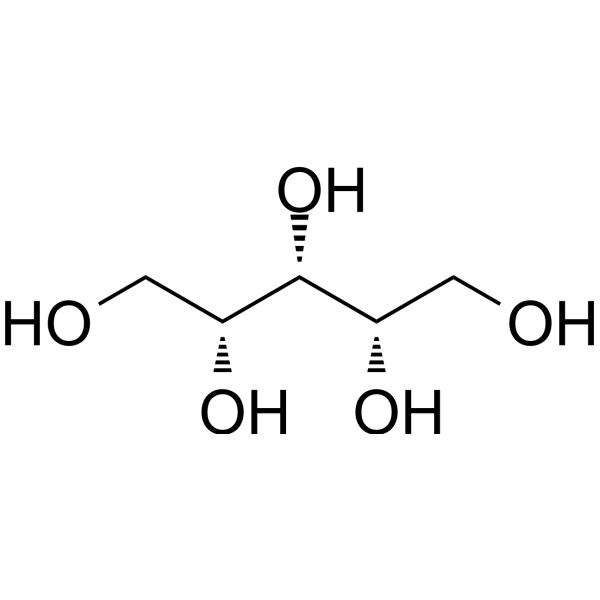
    Xylite

    Environmental Pollutants Endogenous Metabolite Bacterial Autophagy Atg7 Atg8/LC3 Metabolic Disease Cancer
    Xylitol can be classified as a polyol and sugar alcohol, exhibiting inhibitory activity on cancer cell proliferation. It induces autophagy (Autophagy) and cell death in A549 cells by activating the autophagy signaling pathway, as evidenced by the increased expression of LC3-II and Atg5-Atg12 upon Xylitol treatment. Additionally, Xylitol inhibits acetaldehyde production by Candida species, thereby reducing their carcinogenic potential. In vivo, Xylitol induces alterations in the gut microbiota of mice, which may enhance cholesterol accumulation and upregulate hepatic ChREBP, while also slowing tumor growth in the B16F10 melanoma C57BL/6 mouse model .
    Xylitol
  • HY-W018791
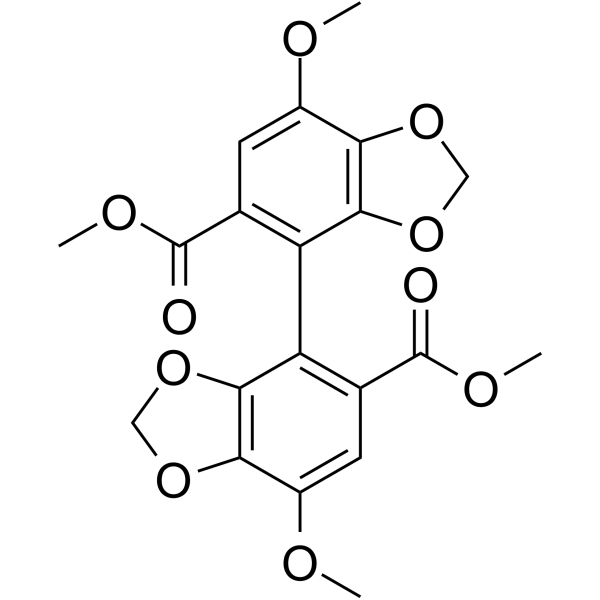
    Bifendate
    2 Publications Verification

    DDB

    HBV Autophagy Cytochrome P450 Atg8/LC3 p62 P-glycoprotein Infection Cardiovascular Disease Cancer
    Bifendate (DDB), extracted from Schisandrae chinensis, is an orally active anti-HBV agent against chronic hepatitis B. Bifendate inhibits ATG5-dependent autophagy and attenuates oleic acid-induced lipid accumulation with anti-oxidant properties in vitro. Bifendate can decrease alanine transaminase (ALT) level in mice. Bifendate attenuates hepatic steatosis in cholesterol/bile salt- and high-fat diet-induced hypercholesterolemia in mice. Bifendate potently increases the activity of cytochrome proteins (CYPs) and reverse P-gp-mediated multi-drug resistance (MDR) [5] .
    Bifendate
  • HY-N3415
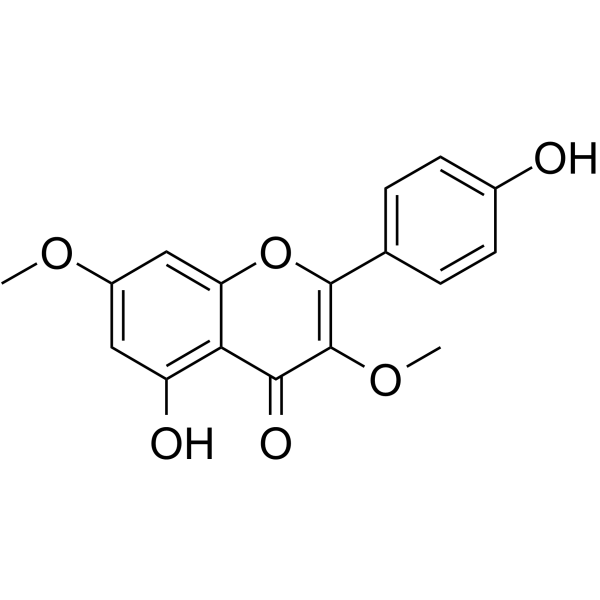
    Kumatakenin
    1 Publications Verification

    Apoptosis Autophagy Caspase Ferroptosis SARS-CoV Neurological Disease Inflammation/Immunology Cancer
    Kumatakenin is an orally active apoptosis inducer and autophagy inhibitor, with a Kd value of 2.94 μM for mouse ATG5. Kumatakenin increases the activities of caspase-3, caspase-8 and caspase-9, thereby inducing caspase-dependent apoptosis in ovarian cancer cells. Kumatakenin reduces the expression of chemokines and pro-oncogenic factors in ovarian cancer cells, and inhibits M2 macrophage polarization. Kumatakenin inactivates TRIM65 function, reduces the expression and stability of FASN, and thus inhibits the proliferation, migration, invasion and tumor progression of esophageal cancer cells. Kumatakenin interacts with ATG5 to reduce its protein level, decrease LC3 level, and reduce the number of autophagosomes in the hippocampus. Kumatakenin binds to Eno3 to upregulate its expression, reduce the stability and expression level of IRP1 mRNA, inhibit ferroptosis, alleviate intestinal inflammation, and restore epithelial barrier function. Kumatakenin enhances the efficacy of antibiotics against pathogenic bacteria, inhibits SARS-CoV-2 replication, and reduces cytokine production. Kumatakenin is applicable to research related to ovarian cancer, esophageal cancer, depression and colitis [5].
    Kumatakenin
  • HY-B0960
    Sulfabenzamide
    1 Publications Verification

    N-Sulfanilylbenzamide

    Bacterial Autophagy MDM-2/p53 Caspase PARP DNA-PK Akt Infection Cancer
    Sulfabenzamide (N-Sulfanilylbenzamide) is a sulfonamide antibacterial agent. Sulfabenzamide exhibit antibacterial activity against Staphylococcus aureus (ATCC 25923) and Escherichia coli (ATCC 8739). Sulfabenzamide can promote autophagic cell autophagy in breast cancer cells through p53/ DRAM pathway. Sulfabenzamide increases caspase-3 activity, deactivates PARP1 and DNA-PK, downregulates AKT1 and AKT2. Sulfabenzamide can be used for the researches of breast cancer and bacterial infections .
    Sulfabenzamide
  • HY-RS01152

    Small Interfering RNA (siRNA) Others

    ATG5 Human Pre-designed siRNA Set A contains three designed siRNAs for ATG5 gene (Human), as well as a negative control, a positive control, and a FAM-labeled negative control.

    ATG5 Human Pre-designed siRNA Set A
    ATG5 Human Pre-designed siRNA Set A
  • HY-167843

    Akt Autophagy PTEN Amyloid-β Antibiotic Bacterial Fungal Infection Neurological Disease
    Alborixin is a polycyclic polyether ionophore Antibiotic. Alborixin is isolated from cultures of Streptomyces albus. Alborixin induces Autophagy via PTEN-mediated inhibition of the AKT pathway, thereby clearing Amyloid-β. Alborixin exhibits activity against Gram-positive bacteria and fungi. Alborixin can be used in the research of Alzheimer's disease .
    Alborixin
  • HY-RS17532

    Small Interfering RNA (siRNA) Others

    Atg5 Mouse Pre-designed siRNA Set A contains three designed siRNAs for Atg5 gene (Mouse), as well as a negative control, a positive control, and a FAM-labeled negative control.

    Atg5 Mouse Pre-designed siRNA Set A
    Atg5 Mouse Pre-designed siRNA Set A
  • HY-RS23989

    Small Interfering RNA (siRNA) Others

    Atg5 Rat Pre-designed siRNA Set A contains three designed siRNAs for Atg5 gene (Rat), as well as a negative control, a positive control, and a FAM-labeled negative control.

    Atg5 Rat Pre-designed siRNA Set A
    Atg5 Rat Pre-designed siRNA Set A
  • HY-183731

    Autophagy Others
    ATG5 PPI-IN-1 (Compound 17b) is a ATG5 protein-protein interaction inhibitor, with an IC50 of 27.43 μM for the ATG5-ATG16L1 interaction and an IC50 of 14.88 μM for the ATG5-TECAIR interaction .
    ATG5 PPI-IN-1
  • HY-183732

    Autophagy Others
    ATG5 PPI-IN-2 (Compound 12f) is a selective inhibitor of ATG5-TECAIR protein-protein interaction, with a IC50 of 19.16 μM. ATG5 PPI-IN-2 also acts as an Autophagy inhibitor .
    ATG5 PPI-IN-2
  • HY-W018791R

    DDB (Standard)

    Reference Standards HBV Autophagy Cytochrome P450 Atg8/LC3 p62 P-glycoprotein Infection Cardiovascular Disease Cancer
    Bifendate (DDB), extracted from Schisandrae chinensis, is an orally active anti-HBV agent against chronic hepatitis B. Bifendate inhibits ATG5-dependent autophagy and attenuates oleic acid-induced lipid accumulation with anti-oxidant properties in vitro. Bifendate can decrease alanine transaminase (ALT) level in mice. Bifendate attenuates hepatic steatosis in cholesterol/bile salt- and high-fat diet-induced hypercholesterolemia in mice. Bifendate potently increases the activity of cytochrome proteins (CYPs) and reverse P-gp-mediated multi-drug resistance (MDR) [5] .
    Bifendate (Standard)
  • HY-151914

    Atg7 Autophagy Cancer
    Antitumor agent-82 (compound 6g) is a potent anti-tumor agent. Antitumor agent-82 shows anti-proliferative activity. Antitumor agent-82 induces cell Autophagy by the ATG5/ATG7 signaling pathway .
    Antitumor agent-82
  • HY-173133

    Autophagy Atg7 Cancer
    Antitumor agent-199 (Compound 4b) is an antitumor agent. Antitumor agent-199 exhibits significant antiproliferative activity against multiple tumor cell lines. Antitumor agent-199 can induce autophagy in cancer cells via the ATG5/ATG7 pathway and can be used in the study of cancer .
    Antitumor agent-199
  • HY-183730

    Autophagy Drug Derivative Others
    4E1RCat 17d (Compound 17d) is a derivative of the ATG5 inhibitor lead compound T1742. 4E1RCat 17d shows no activity against the interactions of ATG5-ATG16L1 and ATG5-TECAIR. 4E1RCat 17d induces Autophagy inhibition .
    4E1RCat 17d
  • HY-183736

    Others
    Autophagy-IN-12 (Compound 17e) is a autophagy inhibitor. Autophagy-IN-12 exhibits an IC50 value of >33 μM against the protein-protein interactions of ATG5-ATG16L1 and ATG5-TECAIR .
    Autophagy-IN-12
  • HY-170594

    Atg7 Autophagy Cancer
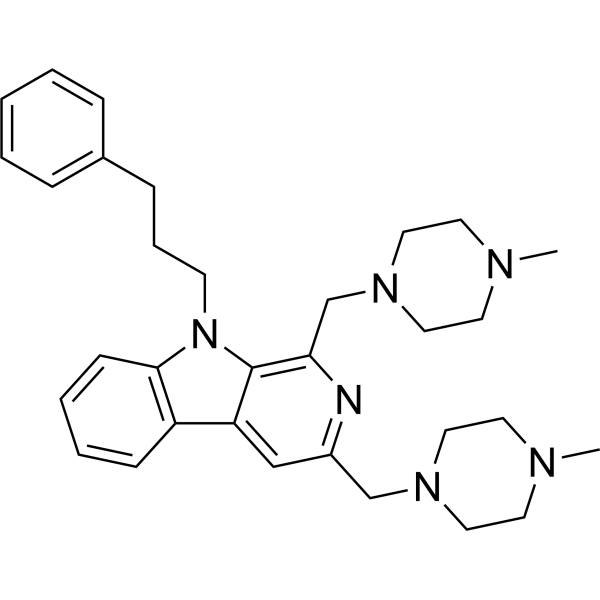
    Antitumor agent-192 (Compound 2f) is a β-carboline antitumor agent. Antitumor agent-192 induces autophagy in HCT116 cells via the ATG5/ATG7 pathway. Antitumor agent-192 has an IC50 of less than 5 μM for human tumor cell lines and significantly inhibits tumor development and reduces tumor weight in a mouse colorectal cancer model transplanted with allografts [1].
    Antitumor agent-192
  • HY-157548

    p62 Atg8/LC3 Autophagy Cancer
    Antitumor agent-133 (compound 4d) is a bis-isatin derivative, with activities against Huh1 (IC50=17.13 μM) and Huh7 (IC50=8.27 μM). Antitumor agent-133 induces cell autophagy and inhibits tumor growth through regulation of LC3BII, ATG5 and p62 proteins .
    Antitumor agent-133
  • HY-N4120

    Autophagy Metabolic Disease
    Valechlorine, an iridoid, is an autophagy enhancer. Valechlorine is effective in alleviating fatty liver by acting as an autophagy enhancer to break down lipid droplets. Valechlorine can be used for the study of nonalcoholic fatty liver disease (NAFLD) .
    Valechlorine
  • HY-W768347

    Xylite-13C5

    Isotope-Labeled Compounds Bacterial Autophagy Endogenous Metabolite Atg8/LC3 Atg7 Cancer
    Xylitol- 13C5 (Xylite- 13C5) is the 13C-labeled Xylitol (HY-N0538). Xylitol can be classified as a polyol and sugar alcohol, exhibiting inhibitory activity on cancer cell proliferation. It induces autophagy (Autophagy) and cell death in A549 cells by activating the autophagy signaling pathway, as evidenced by the increased expression of LC3-II and Atg5-Atg12 upon Xylitol treatment. Additionally, Xylitol inhibits acetaldehyde production by Candida species, thereby reducing their carcinogenic potential. In vivo, Xylitol induces alterations in the gut microbiota of mice, which may enhance cholesterol accumulation and upregulate hepatic ChREBP, while also slowing tumor growth in the B16F10 melanoma C57BL/6 mouse model .
    Xylitol-13C5
  • HY-179052

    Apoptosis Autophagy Bcl-2 Family Caspase Atg8/LC3 Atg7 CDK Reactive Oxygen Species (ROS) Cancer
    Apoptosis inducer 50 (Compound 5e) is an apoptosis inducer as well as an autophagy inducer agent. Apoptosis inducer 50 exhibits potent and selective anti-cancer activity against triple-negative breast cancer cells and metastatic colon cancer cells. Apoptosis inducer 50 upregulates the expression of pro-apoptotic proteins (Bax, Bim, cleaved Caspase-9) and downregulates the expression of the anti-apoptotic protein (BCL-XL). Apoptosis inducer 50 upregulates key autophagy markers such as Beclin-1 and ATG5, and enhances the conversion of LC3-I to LC3-II., Apoptosis inducer 50 arrests cancer cells in the G1/S phase by upregulating the expression of p21 and p27 while downregulating Cyclin D1. Apoptosis inducer 50 increases the level of ROS .
    Apoptosis inducer 50
  • HY-N13352

    Mitochondrial Metabolism STAT JAK Interleukin Related Atg7 Autophagy Pim Inflammation/Immunology Cancer
    Bufothionine is an alkaloid. Bufothionine can be isolated from Cinobufacini. Bufothionine induces mitochondria-mediated Apoptosis. Bufothionine significantly reduces serum IL-6 concentration, suppresses p-Stat3 tyr705, p-Stat3 ser727 and Jak2 expressions. Bufothionine upregulates Atg5, Atg7 and LC3Ⅱ expressions. Bufothionine induces Autophagy. Bufothionine suppresses PIM3 expression. Bufothionine relieves symptoms of H22-tumor-bearing mice and exerts anti-inflammation activity. Bufothionine exerts anti-cancer activities against gastric cancer .
    Bufothionine

Inquiry Online

Your information is safe with us. * Required Fields.

Salutation


Country or Region *

Applicant Name *


Organization Name *

Department *


Email Address *


Product Name *

Cat. No.


Requested quantity *

Phone Number *


Remarks

Inquiry Online

Inquiry Information

Product Name:
Cat. No.:
Quantity:
MCE Japan Authorized Agent:

