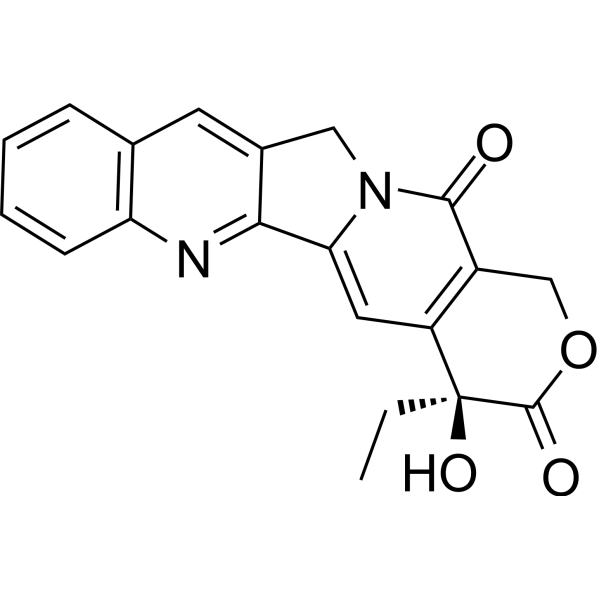


1. Search Result
Search Result
Results for "

Breast Cancer

" in MedChemExpress (MCE) Product Catalog:

2861

Inhibitors & Agonists

4

Screening Libraries

37

Fluorescent Dye

49

Biochemical Assay Reagents

129

Peptides

2

MCE Kits

127

Inhibitory Antibodies

408

Natural
Products

7

Recombinant Proteins

76

Isotope-Labeled Compounds

12

Antibodies

30

Click Chemistry

46

Oligonucleotides

1

GMP Molecules

Targets Recommended:
Cat. No. Product Name Target Research Areas Chemical Structure
  • HY-101120
    666-15
    55+ Cited Publications

    Epigenetic Reader Domain Cancer
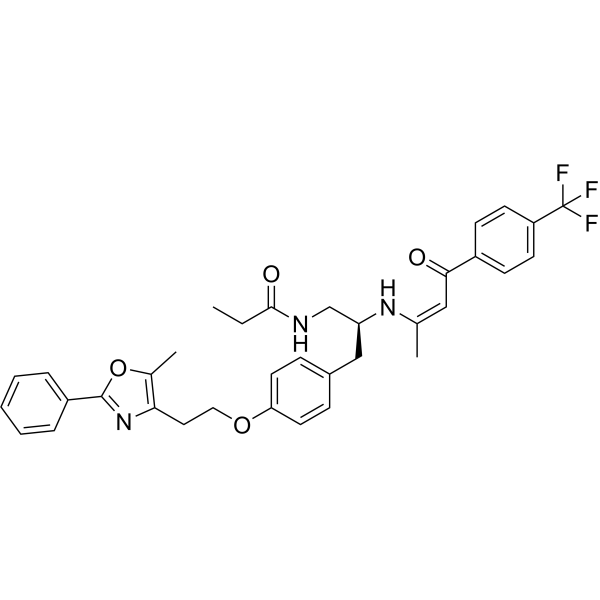
    666-15 is a potent and selective CREB inhibitor with an IC50 of 81 nM. 666-15 suppresses tumor growth in a breast cancer xenograft model .
    666-15
  • HY-13442
    Eribulin
    5+ Cited Publications

    B1939; E7389; ER-086526

    Microtubule/Tubulin Apoptosis ADC Payload Cancer
    Eribulin (E7389) is a microtubule targeting agent that is used for the research of metastatic breast cancer. Eribulin inhibits the proliferation of cancer cells by binding microtubule proteins and microtubules.
    Eribulin
  • HY-146064
    OPN-IN-1
    5+ Cited Publications

    Osteopontin Cancer
    OPN-IN-1 is an osteopontin (OPN) expression inhibitor. OPN-IN-1 has potential anti-breast cancer cell metastasis activity and can be used in the study of cancer .
    OPN-IN-1
  • HY-164202

    Antibody-Drug Conjugates (ADCs) Cancer
    ORM-5029 is a first-in-class human epidermal growth factor receptor 2 (HER2)-targeted antibody-drug conjugate (ADC) comprised of SMol006, a highly potent GSPT1 degrader, conjugated to Pertuzumab (HY-P9912). ORM-5029 exhibits robust efficacy across 14 HER2-positive breast cancer cell lines, with IC50 values ranging from 0.3 to 14.4 nM.ORM-5029 demonstrates anti-tumor activity in the BT474 xenograft model. ORM-5029 can be used for study of breast cancer .
    ORM-5029
  • HY-171830

    YX39-105

    PROTACs Tyrosinase Apoptosis Cancer
    MS105 (YX39-105) is an orally active and selective protein tyrosine kinase 6 (PTK6) (BRK) PROTAC degrader. MS105 recruits VHL E3 ligase via a VHL ligand moiety, promotes PTK6 ubiquitination and proteasomal degradation, inhibits the proliferation and migration of breast cancer cells, and induces apoptosis. MS105 shows potential for use in breast cancer research .
    MS105
  • HY-107967

    Fluorescent Dye Cancer
    Isosulfan blue is a blue dye for the identification of lymph vessels during lymphangiography. Isosulfan blueis is used during sentinel lymph node biopsies in breast cancer. Isosulfan blue is possible to have an allergic reaction during breast cancer operations .
    Isosulfan blue
  • HY-16395

    CGC-11047

    Drug Derivative Cancer
    PG-11047 (CGC-11047) is a polyamine analogue. PG-11047 can be used for the research of breast cancer .
    PG-11047
  • HY-148214

    CDK Cancer
    CDK2/4/6-IN-2 is a selective CDK2/4/6 inhibitor with IC50 values <1 μM. CDK2/4/6-IN-2 inhibits cells proliferation and phosphorylation of retinoblastoma protein at Ser807/811 in breast cancer cells. CDK2/4/6-IN-2 can be used for the research of cancer, such as breast cancer .
    CDK2/4/6-IN-2
  • HY-D2309

    Fluorescent Dye Photosensitizer Cancer
    IRDye700Dx Maleimide is a Photosensitizer. When conjugated with HER2 Affibody and activated by near-infrared light, IRDye700Dx Maleimide induces death in HER2-positive breast cancer cells without causing damage to HER2-negative breast cancer cells .
    IRDye700Dx (Maleimide)
  • HY-Y0519

    Endogenous Metabolite Neurological Disease Cancer
    Pyrimidine is a nitrogen-containing heterocyclic compound and endogenous metabolite. Pyrimidine derivatives can be used in pancreatic cancer, triple-negative breast cancer, colon carcinoma and neuron research .
    Pyrimidine
  • HY-N1180

    SARS-CoV Keap1-Nrf2 Infection
    Tanshinlactone is a compound found in Salvia miltiorrhiza with anti-coronavirus (CoV) and anti-tumor activities. Tanshinlactone induces methuocytic cell death (methuosis) by activating the NRF2 pathway, and selectively kills ER +, HER2 +/EGFR + breast cancer cells. Tanshinlactone is applicable to research related to breast cancer and coronavirus infections .
    Tanshinlactone
  • HY-100910

    CaMK Cancer
    W-13 hydrochloride is a calmodulin antagonist. W-13 hydrochloride can inhibit Tamoxifen (HY-13757A)-resistant human breast cancer cell growth .
    W-13 hydrochloride
  • HY-126899

    Microtubule/Tubulin Cancer
    TPI-287, a blood-brain barrier-permeable microtubule stabilizer, can significantly reduce metastatic colonization of breast cancer in the brain .
    TPI-287
  • HY-149266
    THK01
    1 Publications Verification

    ROCK Cancer
    THK01 is a potent ROCK2 inhibitor with IC50 values of 5.7 and 923 nM for ROCK2 and ROCK1, respectively. THK01 inhibits breast cancer metastasis through the ROCK2-STAT3 signaling pathway. THK01 can be used in research of breast cancer .
    THK01
  • HY-149324

    PROTACs Polo-like Kinase (PLK) Cancer
    SP27 is a PROTAC that can selective degrades PLK4, with a DC50 of 19.5 nM. SP27 can be used for the research of breast cancer .
    SP27
  • HY-159613

    Apoptosis Estrogen Receptor/ERR Inflammation/Immunology Cancer
    PELP1-IN-1 is a PELP1 inhibitor and an apoptosis inducer with no cytotoxic activity against non-cancer cell lines. PELP1-IN-1 targets wild-type, mutant and drug-resistant ER + breast cancer, and promotes PELP1 degradation through the proteasome pathway. As an analog of SMIP34 (HY-169903), PELP1-IN-1 is applicable to the research of estrogen receptor α-positive breast cancer .
    PELP1-IN-1
  • HY-147526

    Apoptosis Cancer
    RM-581, aminosteroid, is an orally active anticancer agent. RM-581 shows anticancer potency against pancreatic, breast, prostate, and ovarian cancers. RM-581 induces endoplasmic reticulum stress and apoptosis via disturbance of cancer cell cholesterol homeostasis. RM-581 can be used for the research of cancer, such as prostate cancer and breast cancer .
    RM-581
  • HY-148368

    Bcl-2 Family Apoptosis Cancer
    CYD-4-61 is a novel Bax activator used for breast cancer research. CYD-4-61 inhibits triple-negative breast cancer MDA-MB-231 and ER-positive breast cancer MCF-7 cell lines proliferation. CYD-4-61 activates Bax protein to induce cytochrome c release and regulate apoptotic biomarkers, leading to cancer cell apoptosis .
    CYD-4-61
  • HY-172664

    Drug Derivative Cancer
    Trabectedin derivative 2 (compound PL-12) is a trabectedin derivative that can be used in research on ovarian cancer, gastric cancer, and breast cancer .
    Trabectedin derivative 2
  • HY-19671

    SR-45023A; SR 9223i; SK&F-99085

    HMG-CoA Reductase (HMGCR) Apoptosis Cancer
    Apomine (SR-45023A) is an orally active antineoplastic agent that inhibits the mevalonate/isoprenoid pathway in cholesterol synthesis. Apomine can accelerate the degradation of 3-hydroxy-3-methylglutaryl-CoA reductase (HMGR). Apomine can also inhibit the growth of various types of cancer cells, including lung cancer, colon cancer, breast cancer, and skin cancer. Apomine is able to induce apoptosis in tumor cell lines derived from leukemia, colon cancer, liver cancer, ovarian cancer, and breast cancer .
    Apomine
  • HY-175846

    Drug Derivative Apoptosis Cancer
    TQFL13 is derivative of Thymoquinone (TQ) (HY-D0803) with potent anti-breast cancer activity. TQFL13 exhibits higher cytotoxicity against breast cancer cells (BT549, MDA-MB-231, 4T1). TQFL13 increases apoptosis and blocks the cell cycle at S and G2/G1 phases in breast cancer cells. TQFL13 shows dose-dependent anti-tumor efficacy in mouse breast cancer allograft model. TQFL13 can be used for the study of breast cancer .
    TQFL13
  • HY-122878

    HSP Cancer
    HS-131, a near infrared dye tethered Hsp90 inhibitor, is able to detect oncogene-driven breast cancers, including multiple different molecular subtypes of human breast cancers .
    HS-131
  • HY-176166

    mTOR PROTACs Autophagy Cancer
    PD-M6 is a mTOR PROTAC degrader (DC50: 4.8 μM). PD-M6 promotes ubiquitination and degradation of mTOR. PD-M6 downregulates MAPKAP1 and CASTOR1, and induces Autophagy. PD-M6 inhibits the proliferation of cervical cancer, breast cancer and liver cancer cell lines. PD-M6 can be used for the research of cervical cancer, breast cancer and liver cancer .
    PD-M6
  • HY-P11197

    Gap Junction Protein Cancer
    ACT1 is a peptide that targets endogenous Cx43 by stabilizing its activity at gap junctions. ACT1 stabilizes gap junction intercellular communication in breast cancer cells. ACT1 enhances the activity of Tamoxifen (HY-13757A) and Lapatinib (HY-50898) in breast cancer. ACT1 can be used for breast cancer research .
    ACT1
  • HY-P0237

    Kallikrein Cancer
    KKI-5 is a specific inhibitor of tissue kallikrein. KKI-5 can attenuate breast cancer cell invasion .
    KKI-5
  • HY-P10790

    Microtubule/Tubulin Cancer
    Breast cancer targeting peptide 18–4 is a KRT1 receptor-targeting peptide, with a Kd of 0.98 μM. The amino acid sequence of Breast cancer targeting peptide 18–4 is WxEAAYQrFL, and it is an analogue of P160 peptide (HY-P10789). When covalently conjugated with the anticancer peptide MccJ25, Breast cancer targeting peptide 18–4 significantly increases the cellular uptake of MccJ25 in breast cancer cells and enhances its anticancer activity. The covalent conjugate exhibits IC50 values of 14.2, 20, and 25 μM against MCF-7, MDA-MB-435, and MDA-MB-435-MDR cells, respectively .
    Breast cancer
 targeting peptide 18–4
  • HY-103043

    Others Cancer
    Pz 285 is an anti-cancer agent. Pz 285 shows significant inhibitory effect on the viability of MDA-MB-231 breast cancer cells, with an IC50 of 15.0 μM. Pz 285 exhibits remarkable antitumor effects in the mouse tumor xenograft model constructed with highly lung-metastatic MDA-MB-231 LM24 Her2+ breast cancer cells. Pz 285 can be used for the study of breast cancer, especially metastatic breast cancer .
    Pz 285
  • HY-174336

    Survivin Apoptosis Cancer
    Survivin-IN-1 (Compound II₃) is a potent Survivin (a member of the Inhibitor of Apoptosis Protein family) inhibitor with an IC50 value of 8.1 μM against human lung cancer A549 cells and 9.0 μM against breast cancer MCF-7 cells. Survivin-IN-1 reduces Survivin protein levels and induces tumor cell apoptosis. Survivin-IN-1 is promising for research of malignant tumors such as lung cancer and breast cancer .
    Survivin-IN-1
  • HY-178349

    P-glycoprotein Apoptosis Autophagy Cancer
    P-gp inhibitor 30 is a potent P-gp inhibitor that reverses multidrug resistance in breast cancer by sensitizing resistant cells to Doxorubicin (ADM) (HY-15142). P-gp inhibitor 30 promotes apoptosis, induces autophagy, and suppresses proliferation, migration, and invasion of drug-resistant breast cancer cells when combined with ADM. P-gp inhibitor 30 inhibits breast tumor growth both in vitro and in vivo. P-gp inhibitor 30 can be used for drug-resistant breast cancer research .
    P-gp inhibitor 30
  • HY-W698951

    Org4094

    Drug Metabolite Cancer
    3a-Hydroxytibolone is a Tibolone (HY-123047) metabolite. 3a-Hydroxytibolone can be used in the research of breast cancer .
    3a-Hydroxytibolone
  • HY-P2166

    MMP Cancer
    MMP3 inhibitor 3 is an inhibitor of MMP3. MMP3 inhibitor 3 can used to study breast cancer .
    MMP3 inhibitor 3
  • HY-122703

    Epigenetic Reader Domain Cancer
    BETi-211 is an orally active BET inhibitor (Ki: <1 nM). BETi-211 inhibits growth of triple-negative breast cancers (TNBC) cell lines with IC50 < 1 μM. BETi-211 degrades BET proteins and suppress tumor growth in xenograft breast tumors .
    BETi-211
  • HY-156419

    PARP Cancer
    PARP7-IN-16 (compound 36) is a potent, selective and orally active inhibitor of PARP-1/2/7, with IC50s of 0.94, 0.87 and 0.21 nM, respectively. PARP7-IN-16 can be used for the research of breast cancer and prostate cancer .
    PARP7-IN-16
  • HY-175981

    Drug Derivative Cancer
    Paclitaxel-bromothiophene is a semisynthetic taxane analogue of Paclitaxel (HY-B0015). Paclitaxel-bromothiophene exhibits potent antiproliferative activity against 4-T1 breast cancer cells, with an IC50 value of 15.18 nM. Paclitaxel-bromothiophene shows high binding affinity to C5aR1 (Kd = 19.4 μM). Paclitaxel-bromothiophene demonstrates excellent anti-tumor efficacy in 4-T1 breast cancer-bearing mice. Paclitaxel-bromothiophene can be used for the study of breast cancer .
    Paclitaxel-bromothiophene
  • HY-149469

    BCRP Cancer
    BCRP/ABCG2-IN-1 is the inhibitor of breast cancer resistance protein (BCRP/ABCG2), with IC50 of 5.98 μM, that can be used in multidrug resistance of breast cancer .
    3,7,2',4'-Tetramethoxy-5-hydroxyflavone
  • HY-106839

    Estrogen Receptor/ERR Metabolic Disease Cancer
    NKS-01 is a selective estrogen receptor modulator. NKS-01 can be used for the research of cancer, such as estrogen receptor-positive breast cancer .
    NKS-01
  • HY-163309

    Bcl-2 Family Cancer
    Bcl-2-IN-19 (compound 27) is a potent Bcl-2 inhibitor for targeting breast cancer .
    Bcl-2-IN-19
  • HY-116904

    Apoptosis Akt Cancer
    Anticancer agent 253 (Compound 26) has anti-cancer activity against breast cancer cells, with IC50s of 6 μM (MCF-7), 10 μM (MDA-MB-231) and 6.4 μM (4T1 cells). Anticancer agent 253 arrests cell cycle and induces mitochondria-mediated apoptosis in cancer cells. Anticancer agent 253 inhibits Akt phosphorylation in human breast and prostate cancer .
    Anticancer agent 253
  • HY-153909

    Drug-Linker Conjugates for ADC Cancer
    SMP-33693 is a Drug-Linker Conjugate for ADC with a low payload shedding rate and has in vivo tumor inhibitory effects on ovarian cancer, gastric cancer, and breast cancer .
    SMP-33693
  • HY-153908

    Drug-Linker Conjugates for ADC Cancer
    SMP-93566 is a kind of antibody-drug conjugates (ADCs) with a low payload shedding rate and has in vivo tumor inhibitory effects on ovarian cancer, gastric cancer, and breast cancer .
    SMP-93566
  • HY-169063

    Estrogen Receptor/ERR Cancer
    ZINC05925939 is an estrogen receptor beta (ESR2) inhibitor that can be used in breast cancer research .
    ZINC05925939
  • HY-125575

    Carbonic Anhydrase Cancer
    FC11409B is an ureido-sulfamate carbonic anhydrase IX (CAIX) inhibitor. FC11409B inhibits proliferation and migration of breast cancer cell lines in both hypoxic (0.5% O2) and normoxic conditions (21% O2). FC11409B also inhibits 3D spheroid of breast cancer subtypes invasion. FC11409B is promising for research of breast and ovarian cancers .
    FC11409B
  • HY-162292

    PI3K Kinesin Cancer
    Anticancer agent 190 (compound 3e) is an inhibitor targeting KSP (Kinesin) and PI3Kδ with activity against breast cancer .
    Anticancer agent 190
  • HY-N8293

    Others Cancer
    Eupalinolide I inhibits the viability of breast cancer cells. Eupalinolide I can be isolated from Eupatorium lindleyanum .
    Eupalinolide I
  • HY-151564

    Others Cancer
    Anticancer agent 85 (compound 6j) is an anticancer agent that shows good cytotoxicity against MCF7 cells. Anticancer agent 85 can be used in breast cancer and other cancer studies .
    Anticancer agent 85
  • HY-153907

    Drug-Linker Conjugates for ADC Cancer
    SMP-88480 is an Antibody-Drug Conjugates (ADCs). SMP-88480 is stable in mouse, monkey and human plasma and has in vivo tumor inhibitory effects on ovarian cancer, gastric cancer, and breast cancer .
    SMP-88480
  • HY-79315

    Estrogen Receptor/ERR Others
    6-Dehydronandrolone acetate is a starting material for synthesis of Fulvestrant. Fulvestrant is an estrogen receptor antagonist that can be used for the research of breast cancer .
    6-Dehydronandrolone acetate
  • HY-N3800

    Others Cancer
    Eichlerialactone is a sesquiterpene compound isolated from Chisocheton penduliflorus. Eichlerialactone is weakly cytotoxic to breast cancer cells .
    Eichlerialactone
  • HY-153943

    DNA-PK Cancer
    DNA-PK-IN-10 is a DNA-PK inhibitor. DNA-PK-IN-10 can be used for the research of breast cancer and non-small cell lung cancer .
    DNA-PK-IN-10
  • HY-N1823

    Apoptosis Metabolic Disease Inflammation/Immunology Cancer
    Pygenic acid A is a natural compound that can be found in Prunella vulgaris. Pygenic acid A induces apoptosis in metastatic breast cancer cells. Pygenic acid A can be used for the research of diabetes, inflammatory diseases, and cancers .
    Pygenic acid A

Inquiry Online

Your information is safe with us. * Required Fields.

Salutation


Country or Region *

Applicant Name *


Organization Name *

Department *


Email Address *


Product Name *

Cat. No.


Requested quantity *

Phone Number *


Remarks

Inquiry Online

Inquiry Information

Product Name:
Cat. No.:
Quantity:
MCE Japan Authorized Agent:

