Search Result
Results for "
Disodium
" in MedChemExpress (MCE) Product Catalog:
89
Biochemical Assay Reagents
69
Isotope-Labeled Compounds
| Cat. No. |
Product Name |
Target |
Research Areas |
Chemical Structure |
-
- HY-F0001
-
|
Disodium NADH
|
Endogenous Metabolite
|
Metabolic Disease
|
|
NADH disodium salt (Disodium NADH) is an orally active reduced coenzyme. NADH disodium salt is a donor of ADP-ribose units in ADP-ribosylaton reactions and a precursor of cyclic ADP-ribose. NADH disodium salt plays a role as a regenerative electron donor in cellular energy metabolism, including glycolysis, β-oxidation and the tricarboxylic acid (TCA) cycle .
|
-
-
- HY-B0345A
-
|
Adenosine 5'-triphosphate Disodium salt; Disodium adenosine triphosphate
|
Endogenous Metabolite
|
Metabolic Disease
Inflammation/Immunology
Cancer
|
|
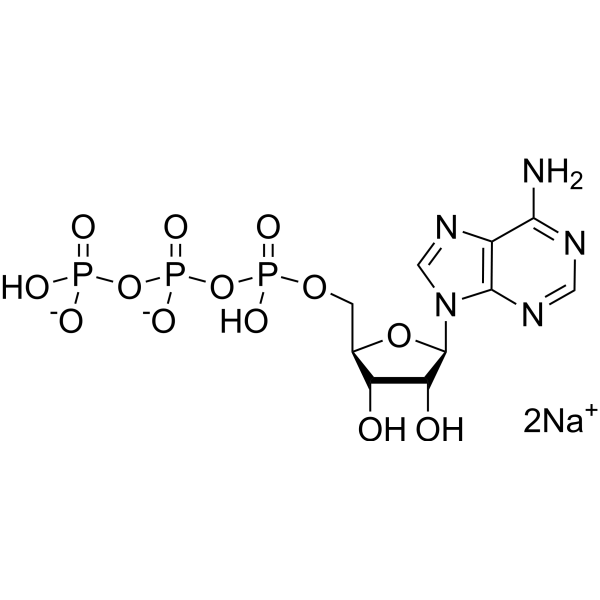
ATP disodium salt (Adenosine 5'-triphosphate disodium salt) is a central component of energy storage and metabolism in vivo, provides the metabolic energy to drive metabolic pumps and serves as a coenzyme in cells. ATP disodium salt is an important endogenous signaling molecule in immunity and inflammation .
|
-
-
- HY-W015410
-
|
|
Endogenous Metabolite
|
Inflammation/Immunology
|
|
Disodium succinate is an anti-anxiety agent with oral activity. Disodium succinate is the salt form of Succinic acid. Disodium succinate is an intermediate product of the tricarboxylic acid cycle. Disodium succinate is an important platform chemical. Disodium succinate can be used as surfactant, additive, ion chelating agent, flavoring agent and other applications in chemical, pharmaceutical and food fields .
|
-
-
- HY-10820A
-
|
LY231514 Disodium
|
Antifolate
Autophagy
Apoptosis
|
Cancer
|
|
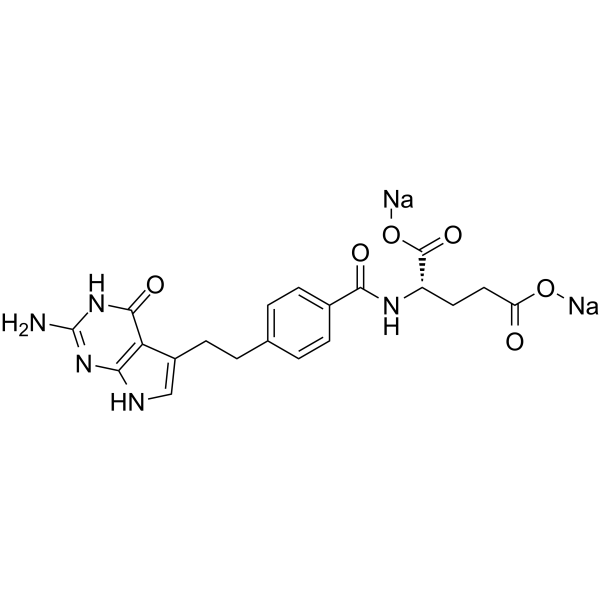
Pemetrexed disodium (LY231514 disodium) is an antifolate, the Kis of the pentaglutamate of Pemetrexed disodium are 1.3, 7.2, and 65 nM for inhibits thymidylate synthase (TS), dihydrofolate reductase (DHFR), and glycinamide ribonucleotide formyltransferase (GARFT), respectively .
|
-
-
- HY-B0320A
-
|
Cromoglycate Disodium; Cromoglicic acid Disodium; FPL-670
|
GSK-3
NF-κB
Amyloid-β
|
Neurological Disease
Metabolic Disease
Inflammation/Immunology
Cancer
|
|
Cromolyn (Cromoglycate) disodium is an orally active GSK-3β inhibitor with an IC50 of 2.0 μM. Cromolyn disodium is also a mast cell stabilizer that can inhibit the release of mediators from mast cells, regulate reflex bronchoconstriction, and reduce non-specific bronchial hyperreactivity, and Cromolyn disodium can be used in the research of bronchial asthma. In addition, Cromolyn disodium has multiple activities such as anti-inflammatory, anti-allergic, anti-histamine, anti-cancer, and neuroprotective effects .
|
-
-
- HY-B2176A
-
|
Adenosine-5'-triphosphate Disodium trihydrate
|
Endogenous Metabolite
|
Metabolic Disease
Inflammation/Immunology
Cancer
|
|
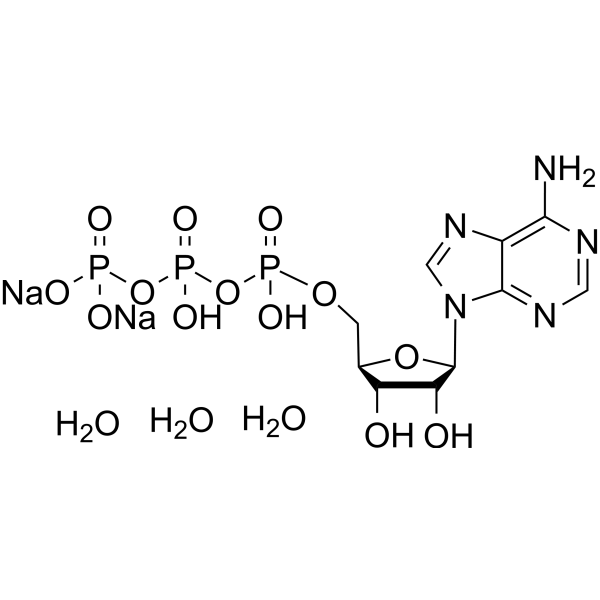
ATP disodium trihydrate (Adenosine 5'-triphosphate disodium trihydrate) is a central component of energy storage and metabolism in vivo. ATP disodium trihydrate provides the metabolic energy to drive metabolic pumps and serves as a coenzyme in cells. ATP disodium trihydrate is an important endogenous signaling molecule in immunity and inflammation .
|
-
-
- HY-100196A
-
|
PQQ Disodium salt; Methoxatin Disodium salt
|
Endogenous Metabolite
|
Inflammation/Immunology
|
|
Pyrroloquinoline quinone disodium salt, a redox co-factor, is an anionic, redox-cycling orthoquinone. Pyrroloquinoline quinone disodium salt is isolated from cultures of methylotropic bacteria and tissues of mammals. Pyrroloquinoline quinone disodium salt is an essential nutrient for mammals and is important for immune function .
|
-
-
- HY-Y0682A
-
|
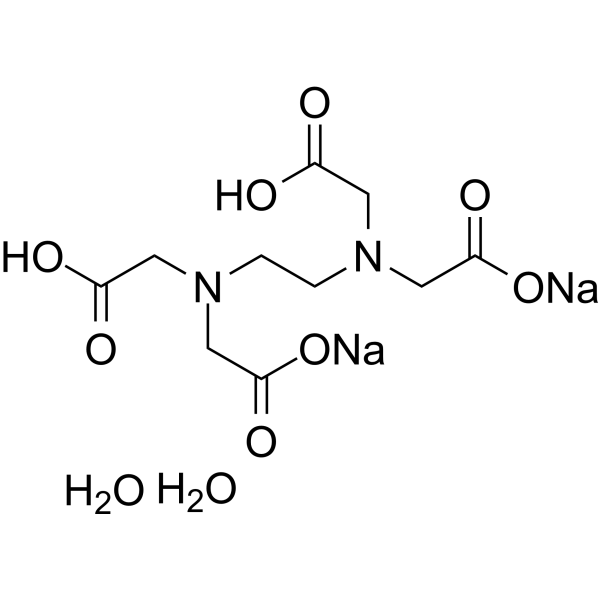
EDTA Disodium dihydrate
|
Environmental Pollutants
Biochemical Assay Reagents
Bacterial
SOD
|
Cardiovascular Disease
Neurological Disease
Cancer
|
|
Ethylenediaminetetraacetic acid (EDTA) disodium dehydrate is a kind of metal chelating agent (binds to bivalent and trivalent metal cations, including calcium). Ethylenediaminetetraacetic acid disodium dehydrate has antibacterial, anti-inflammatory, antioxidant, anti-hypercalcemia and anticoagulant activities. Ethylenediaminetetraacetic acid disodium dehydrate decreases the metal ion-catalyzed oxidative damage to proteins, and allows maintenance of reducing environment during protein purification. Ethylenediaminetetraacetic acid disodium dehydrate can alleviate the liver fibrosis. Ethylenediaminetetraacetic acid disodium dehydrate can be used for coronary artery disease and neural system disease research .
|
-
-
- HY-14519A
-
|
Amethopterin Disodium; CL14377 Disodium; WR19039 Disodium
|
Antifolate
DNA/RNA Synthesis
ADC Payload
Apoptosis
Bacterial
|
Inflammation/Immunology
Cancer
|
|
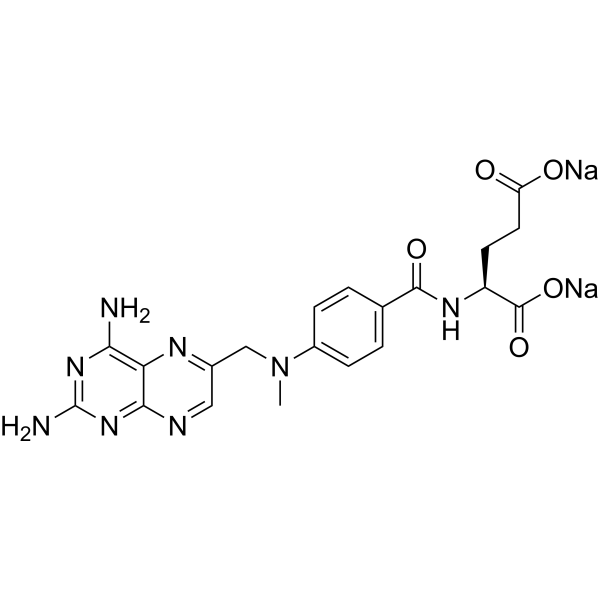
Methotrexate (Amethopterin) disodium, an antimetabolite and antifolate agent, inhibits the enzyme dihydrofolate reductase, thereby preventing the conversion of folic acid into tetrahydrofolate, and inhibiting DNA synthesis. Methotrexate disodium, also an immunosuppressant and antineoplastic agent, is used for the research of rheumatoid arthritis and a number of different cancers (such as acute lymphoblastic leukemia) .
|
-
-
- HY-F0002A
-
|
Disodium NADP
|
Endogenous Metabolite
|
Metabolic Disease
Inflammation/Immunology
Cancer
|
|
NADP disodium salt is the disodium salt form of NADP (HY-113325). NADP is a coenzyme involved in cellular electron transfer reactions in biological metabolism, which is alternately oxidized (NADP+) and reduced (NADPH), and can maintain cellular redox homeostasis and regulate many biological events, including cellular metabolism. NADPH is a universal electron donor that provides reducing ability for synthetic metabolic reactions and redox balance. NADPH plays a multifunctional role in regulating inflammation, redox homeostasis, and synthetic metabolism processes .
|
-
-
- HY-D0885B
-
|
Disodium creatine phosphate
|
Endogenous Metabolite
MAP3K
Akt
Mitochondrial Metabolism
ERK
Apoptosis
ROS Kinase
|
Metabolic Disease
|
|
Phosphocreatine (disodium) is an organic compound found in vertebrate skeletal muscles. Phosphocreatine (disodium) enhances antioxidant activity, and activates the TAK1 pathway to protect the heart. Phosphocreatine (disodium) normalizing mitochondrial function and reducing oxidative stress via Akt mediated Nrf2/HO-1 pathway. Phosphocreatine (disodium) provides renal protection by suppressing Apoptosis and ROS (Reactive Oxygen Species) generation through ERK mediated mediated Nrf-2/HO-1 pathway. .
|
-
-
- HY-B0657A
-
|
Clodronate Disodium salt
|
Apoptosis
|
Metabolic Disease
Cancer
|
|
Clodronic acid (Clodronate) disodium salt is an orally active bisphosphonate. Clodronic acid disodium salt inhibits osteoclast-mediated bone resorption. Clodronic acid disodium salt reduces skeletal event risk in malignant bone disease, impairs malignant osteolysis, blocks bone matrix growth-factor release, induces apoptosis in osteoclasts and macrophages. Clodronic acid disodium salt is effective in the maintenance or improvement of bone mineral density. Clodronic acid disodium salt can be used for the research of multiple myeloma and postmenopausal osteoporosis .
|
-
-
- HY-B0645
-
|
Prednisolone 21-phosphate Disodium
|
Glucocorticoid Receptor
|
Inflammation/Immunology
Endocrinology
|
|
Prednisolone disodium phosphate is a synthetic glucocorticoid with anti-inflammatory and immunomodulating properties. Prednisolone disodium phosphate can be rapidly and completely hydrolyzed to Prednisolone in the plasma .
|
-
-
- HY-100542
-
|
Disodium (R)-2-hydroxyglutarate
|
Reactive Oxygen Species (ROS)
ATP Synthase
mTOR
Endogenous Metabolite
|
Neurological Disease
Inflammation/Immunology
Cancer
|
|
D-α-Hydroxyglutaric acid disodium (Disodium (R)-2-hydroxyglutarate) is the principal metabolite accumulating in neurometabolic disease D-2-hydroxyglutaric aciduria. D-α-Hydroxyglutaric acid disodium is a weak competitive antagonist of α-ketoglutarate (α-KG) and inhibits multiple α-KG-dependent dioxygenases with a Ki of 10.87 mM. D-α-Hydroxyglutaric acid disodium increases reactive oxygen species (ROS) production. D-α-Hydroxyglutaric acid disodium binds and inhibits ATP synthase and inhibits mTOR signaling .
|
-
-
- HY-Y0308
-
|
|
Environmental Pollutants
Biochemical Assay Reagents
|
Others
|
|
Disodium phosphate is commonly used as a food additive, buffer and laboratory reagent. Disodium phosphate has unique chemical properties that make it an important ingredient in the manufacture of fertilizers, detergents and water treatment products. Additionally, it is used in various medical applications such as osmotic laxatives and electrolyte replacement solutions.
|
-
-
- HY-B0302A
-
|
Etidronate Disodium; HEDPA Disodium; HEDP Disodium
|
Apoptosis
|
Metabolic Disease
Cancer
|
|
Etidronic acid (Etidronate) disodium is an orally and intravenously active bisphosphonate. Etidronic acid disodium inhibits resorption of bone, reduces arterial calcification and can be used for osteoporosis research. Etidronic acid disodium has anticancer activity. Etidronic acid disodium is a chelating agent and can be used to remove heavy metal in water .
|
-
-
- HY-15068A
-
|
FG9202 Disodium
|
iGluR
|
Neurological Disease
|
|
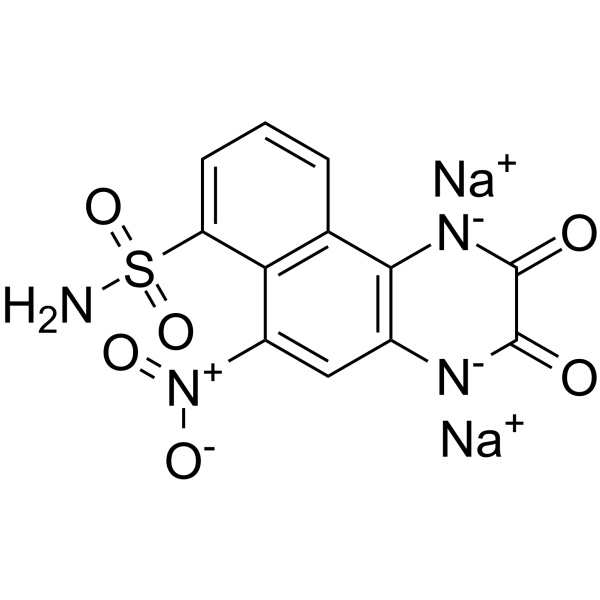
NBQX disodium (FG9202 disodium) is a highly selective and competitive AMPA receptor antagonist. NBQX disodium has neuroprotective and anticonvulsant activity .
|
-
-
- HY-15066A
-
|
FG9065 Disodium
|
iGluR
|
Neurological Disease
|
|
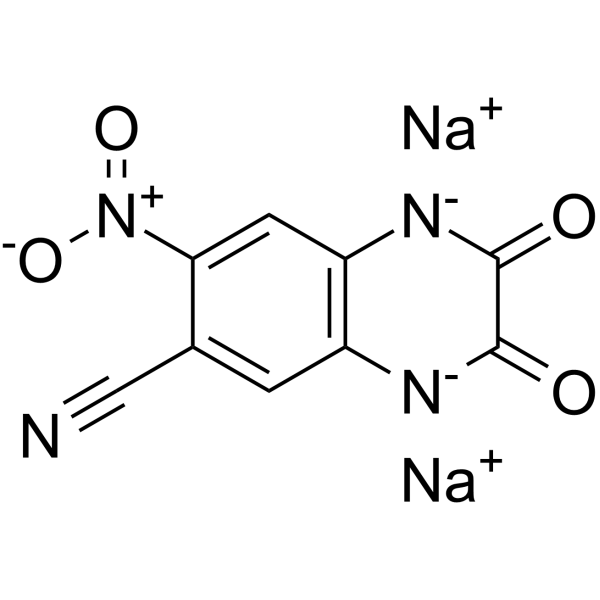
CNQX disodium (FG9065 disodium) is a potent and competitive AMPA/kainate receptor antagonist with IC50s of 0.3 μM and 1.5 μM, respectively. CNQX disodium is a competitive non-NMDA receptor antagonist . CNQX disodium blocks the expression of fear-potentiated startle in rats .
|
-
-
- HY-D0199
-
|
Adenosine diphosphate Disodium; ADP Disodium
|
Endogenous Metabolite
|
Cardiovascular Disease
|
|
Adenosine 5'-diphosphate disodium is a nucleoside diphosphate. Adenosine 5'-diphosphate disodium is the product of ATP dephosphorylation by ATPases. Adenosine 5'-diphosphate disodium is a platelet aggregation agent for hemostasis and the development and extension of arterial thrombosis .
|
-
-
- HY-15908
-
|
Disodium bicinchoninate
|
Beta-secretase
|
Neurological Disease
Cancer
|
|
BCA (Disodium bicinchoninate) is an orally active and non-competitive Beta-site amyloid precursor protein cleaving enzyme 1 (BACE1) inhibitor with an IC50 value of 28 µM, a Ki value of 43 µM. BCA shows anticancer activity. BCA has the potential for the research of Alzheimer's disease (AD) .
|
-
-
- HY-W010970
-
|
5'-GMP Disodium salt; 5'-guanosine monophosphate Disodium salt
|
Endogenous Metabolite
iGluR
|
Neurological Disease
Metabolic Disease
|
|
5'-Guanylic acid disodium salt is the disodium salt form of 5'-Guanylic acid (HY-N5134). 5'-Guanylic acid disodium salt is a purine nucleotide that participates in physiological processes such as energy metabolism, signal transduction, and gene expression regulation. 5'-Guanylic acid disodium salt regulates the expression of genes related to fatty acid metabolism. 5'-Guanylic acid disodium salt is the weak agonist for ionotropic glutamate receptors (iGluR), reduces the activity of the glutamatergic system and exhibits neuroprotective effect. 5'-Guanylic acid disodium salt also causes neuronal cell death at high concentrations .
|
-
-
- HY-136548B
-
|
TFV-DP Disodium
|
HIV
Reverse Transcriptase
|
Infection
Inflammation/Immunology
|
|
Tenofovir diphosphate disodium is an antiretroviral agent. Tenofovir diphosphate disodium is an inhibitor of HIV reverse transcriptase DNA (Ki = 1.55 μM) and RNA (Ki = 0.022 μM). Tenofovir diphosphate disodium can be used for the research of AIDS .
|
-
-
- HY-107794
-
|
Disodium clodronate tetrahydrate
|
Apoptosis
|
Neurological Disease
Inflammation/Immunology
Cancer
|
|
Clodronate disodium tetrahydrate (Disodium clodronate tetrahydrate) is first-generation bisphosphonate, with anti-osteoporotic, anti-inflammatory and analgesic effects. Clodronate disodium tetrahydrate is a selective, potent, reversible and Cl - competitive vesicular nucleotide transporter (VNUT) inhibitor, with an IC50 of 15.6 nM. Clodronate disodium tetrahydrate inhibits vesicular ATP release from neurons and reduces chronic neuropathic and inflammatory pain .
|
-
-
- HY-W105970
-
-
-
- HY-Y0308E
-
|
Disodium hydrogen phosphate, for cell culture
|
Environmental Pollutants
Biochemical Assay Reagents
|
Others
|
|
Sodium phosphate dibasic (Disodium hydrogen phosphate), for cell culture is a buffer and chelating agent. Sodium phosphate dibasic is used to adjust the pH of liquids. Sodium phosphate dibasic can be used in cell culture .
|
-
-
- HY-Y0317H
-
-
-
- HY-B0174
-
|
|
Apoptosis
|
Metabolic Disease
Inflammation/Immunology
Cancer
|
|
Olsalazine Disodium is an orally active prodrug of 5-ASA (HY-15027). Olsalazine Disodium can inhibit cells proliferation and induce apoptosis. Olsalazine Disodium can reduce DAI and MPO activity and inhibit inflammatory cytokines levels. Olsalazine Disodium can be used for the researches of cancer, inflammation and metabolic disease, such as colorectal cancer, inflammatory bowel disease (IBD) and hyperuricemic .
|
-
-
- HY-D0887
-
|
IMP Disodium salt; Disodium inosinate
|
Others
|
Metabolic Disease
|
|
Disodium 5'-inosinate (IMP disodium salt) is a nucleotide-based umami agent. Disodium 5'-inosinate can bind to umami receptors and stimulate taste nerves, allowing the brain to perceive umami. In addition, Disodium 5'-inosinate produces a transient behavioral excitement in mice .
|
-
-
- HY-Y1324
-
|
Disodium hydrogen phosphate dodecahydrate; Disodium phosphate dodecahydrate
|
Environmental Pollutants
Biochemical Assay Reagents
|
Endocrinology
|
|
Phosphoric acid disodium dodecahydrate is an inorganic compound and food additive. Phosphoric acid disodium dodecahydrate promotes gel formation, improves food texture and thermal properties of materials. Phosphoric acid disodium dodecahydrate induces glomerular calcification. Phosphoric acid disodium dodecahydrate can be used in kidney disease research .
|
-
-
- HY-Y0308H
-
|
Disodium hydrogen phosphate, for molecular biology
|
Biochemical Assay Reagents
|
Others
|
|
Sodium phosphate dibasic (Disodium hydrogen phosphate), for molecular biology, is a type of phosphate salt that can be used in molecular biology research to prepare stable buffers free of RNase/DNase/protease .
|
-
-
- HY-114294A
-
|
HMG-CoA Disodium hydrate
|
Biochemical Assay Reagents
|
Metabolic Disease
|
|
DL-3-Hydroxy-3-methylglutaryl coenzyme A disodium hydrate is a disodium salt compound of HMG-CoA, is a intermediate of terpenes and ketone bodies. DL-3-Hydroxy-3-methylglutaryl coenzyme A disodium also involves in ester metabolism in vivo, as a precursor for cholesterol synthesis, and regulates cholesterol synthesis by coupling LDL receptor .
|
-
-
- HY-F0001R
-
|
Disodium NADH (Standard)
|
Reference Standards
Endogenous Metabolite
|
Metabolic Disease
|
|
NADH (disodium salt) (Standard) is the analytical standard of NADH (disodium salt). This product is intended for research and analytical applications. NADH disodium salt (Disodium NADH) is an orally active reduced coenzyme. NADH disodium salt is a donor of ADP-ribose units in ADP-ribosylaton reactions and a precursor of cyclic ADP-ribose. NADH disodium salt plays a role as a regenerative electron donor in cellular energy metabolism, including glycolysis, β-oxidation and the tricarboxylic acid (TCA) cycle .
|
-
-
- HY-13570C
-
|
Betamethasone 21-phosphate Disodium salt; Vista-Methasone
|
Glucocorticoid Receptor
|
Others
|
|
Betamethasone disodium phosphate (Betamethasone 21-phosphate disodium salt) is a kind of corticosteroid, which is commonly used in the intralesional research of keloids .
|
-
-
- HY-A0294A
-
|
MK-0826 Disodium
|
Bacterial
Antibiotic
|
Infection
Cancer
|
|
Ertapenem (MK-0826) disodium is a broad spectrum and long acting β-lactam antibiotic. Ertapenem disodium has a broad-spectrum anti-anaerobic activity against a variety of anaerobes with a mode MIC of 0.12 μg/mL. Ertapenem disodium can be used for the research of severe infections caused by bacteria in the skin, lungs, stomach, pelvis, and urinary tract .
|
-
-
- HY-160120
-
-
-
- HY-W250127
-
|
Terephthalic acid Disodium salt
|
Biochemical Assay Reagents
|
Cancer
|
|
Disodium terephthalate (Terephthalic acid disodium salt) is an isomer and a precursor of polyester PET, which can be used to make clothing and plastics. Disodium terephthalate can be used to build skin tumor models .
|
-
-
- HY-16637D
-
|
Vitamin B9 Disodium; Vitamin M Disodium
|
Endogenous Metabolite
DNA/RNA Synthesis
|
Others
Neurological Disease
Cancer
|
|
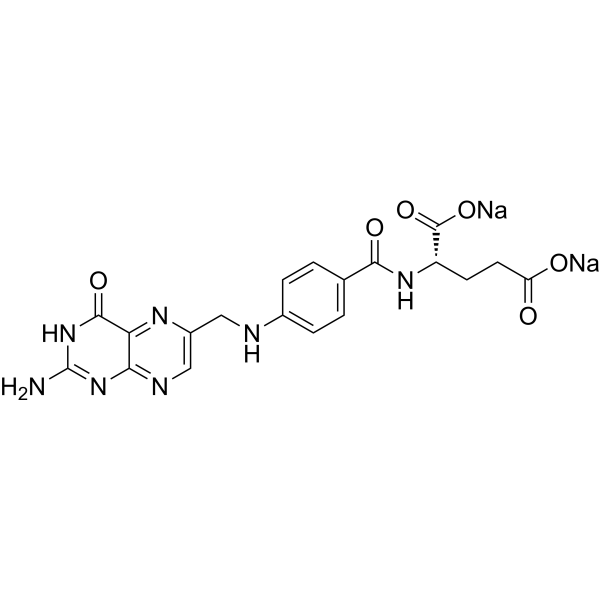
Folic acid disodium (Vitamin B9 disodium; Vitamin M disodium) is an orally active disodium salt form of Folic acid (HY-16637) with an intrinsic dissolution rate (IDR) of 4.96·10 5 g/s . Folic acid disodium serves as cofactor in single-carbon transfer reactions and exhibits protective effects against neural tube defects, ischemic events, and cancer. Folate acid disodium overload leads to impaired brain development in embryogenesis and promotes growth of precancerous altered cells. Folic acid deficiency leads to megaloblastic anemia .
|
-
-
- HY-W094516
-
|
Wormwood acid Disodium hexahydrate
|
Endogenous Metabolite
|
Neurological Disease
Inflammation/Immunology
|
|
Disodium succinate hexahydrate (Wormwood acid disodium hexahydrate) is an anti-anxiety agent with oral activity. Disodium succinate hexahydrate is an intermediate product of the tricarboxylic acid cycle. Disodium succinate hexahydrate is an important platform chemical. Disodium succinate hexahydrate can be used as surfactant, additive, ion chelating agent, flavoring agent and other applications in chemical, pharmaceutical and food fields .
|
-
-
- HY-W250119
-
|
EDTA Disodium calcium salt hydrate; Ethylenediaminetetraacetic acid Disodium calcium salt hydrate
|
Biochemical Assay Reagents
Fungal
Mitochondrial Metabolism
|
Infection
|
|
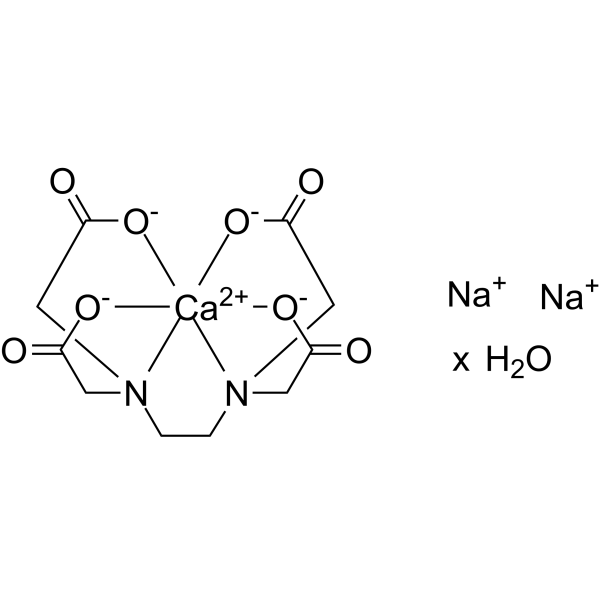
Calcium disodium edetate hydrate (EDTA disodium calcium salt hydrate) is a metal chelator and antifungal agent. Calcium disodium edetate hydrate chelates Mn 2+, damages mitochondria, and interferes with carbohydrate metabolic pathways, particularly the synthesis of pyruvate in glycolysis. Calcium disodium edetate hydrate inhibits Penicillium digitatum and delays conidial germination. Calcium disodium edetate (hydrate) enhances the host defense system of citrus fruits. Calcium disodium edetate hydrate is applicable to research related to citrus green mold .
|
-
-
- HY-D0199R
-
|
Adenosine diphosphate Disodium (Standard); ADP Disodium (Standard)
|
Endogenous Metabolite
Reference Standards
|
Cardiovascular Disease
|
|
Adenosine 5'-diphosphate (disodium) (Standard) is the analytical standard of Adenosine 5'-diphosphate (disodium). This product is intended for research and analytical applications. Adenosine 5'-diphosphate disodium is a nucleoside diphosphate. Adenosine 5'-diphosphate disodium is the product of ATP dephosphorylation by ATPases. Adenosine 5'-diphosphate disodium is a platelet aggregation agent for hemostasis and the development and extension of arterial thrombosis .
|
-
-
- HY-B1829AR
-
|
Dexamethasone 21-phosphate Disodium (Standard)
|
Glucocorticoid Receptor
Reference Standards
|
Inflammation/Immunology
Endocrinology
|
|
Dexamethasone phosphate (disodium) (Standard) is the analytical standard of Dexamethasone phosphate (disodium). This product is intended for research and analytical applications. Dexamethasone phosphate (Dexamethasone 21-phosphate) disodium is an orally active Glucocorticoid receptor agonist .
|
-
-
- HY-W011152
-
|
dCMP Disodium
|
Endogenous Metabolite
|
Others
|
|
2'-Deoxycytidine-5'-monophosphoric acid disodium (dCMP disodium) is an endogenous metabolite .
|
-
-
- HY-135655
-
|
SPR720 Disodium; pVXc-486 Disodium
|
Bacterial
|
Infection
|
|
Fobrepodacin (SPR720) disodium is an orally active and potent phosphate proagent of SPR719 (VXc-486; HY-12930). Fobrepodacin disodium has potent bactericidal activities in vivo .
|
-
-
- HY-N0666D
-
-
-
- HY-W654003
-
|
Disodium (R)-2-hydroxyglutarate-d5
|
Reactive Oxygen Species (ROS)
|
Neurological Disease
Inflammation/Immunology
Cancer
|
|
D-α-Hydroxyglutaric acid-d5 disodium (Disodium (R)-2-hydroxyglutarate-d5) is the deuterium labeled D-α-Hydroxyglutaric acid disodium (HY-100542). D-α-Hydroxyglutaric acid disodium (Disodium (R)-2-hydroxyglutarate) is the principal metabolite accumulating in neurometabolic disease D-2-hydroxyglutaric aciduria. D-α-Hydroxyglutaric acid disodium is a weak competitive antagonist of α-ketoglutarate (α-KG) and inhibits multiple α-KG-dependent dioxygenases with a Ki of 10.87 mM. D-α-Hydroxyglutaric acid disodium increases reactive oxygen species (ROS) production. D-α-Hydroxyglutaric acid disodium binds and inhibits ATP synthase and inhibits mTOR signaling .
|
-
-
- HY-B0540
-
|
Sodium monofluorophosphate
|
Biochemical Assay Reagents
|
Others
|
|
Disodium monofluorophosphate is a biochemical reagent that can be used as a biological material or organic compound for life science related research .
|
-
-
- HY-Y0308D
-
|
Disodium hydrogen phosphate, meets analytical specification of Ph. Eur. BP USP FCC E339
|
Biochemical Assay Reagents
|
Endocrinology
|
|
Sodium phosphate dibasic (Disodium hydrogen phosphate), meets analytical specification of Ph. Eur. BP USP FCC E339 is an inorganic dibasic phosphate that functions as an electrolyte supplement, a buffer carrier for injectable drugs, while also exhibiting nephrotoxicity. Sodium phosphate dibasic, meets analytical specification of Ph. Eur. BP USP FCC E339 induces extensive nephrotic syndrome-like changes, including systemic symptoms such as persistent proteinuria, lipemia, hypercholesterolemia, and anemia, and causes severe renal pathological alterations such as renal enlargement, glomerular calcification, podocyte injury, and tubulointerstitial lesions. Sodium phosphate dibasic, meets analytical specification of Ph. Eur. BP USP FCC E339 has the ability to induce phosphate-induced nephropathy and glomerular calcification, and can be widely used in studies on nephrotic syndrome and related renal pathological mechanisms .
|
-
-
- HY-W094708C
-
|
Disodium hydrogen phosphate dihydrate, for molecular biology
|
Biochemical Assay Reagents
|
Others
|
|
Sodium phosphate dibasic dihydrate, for molecular biology is an inorganic salt compound. Sodium phosphate dibasic dihydrate, for molecular biology is commonly used in molecular biology experiments and can be used as a buffer, nutritional supplement, and detergent.
|
-
-
- HY-107328
-
-
-
- HY-B0345AR
-
|
Adenosine 5'-triphosphate Disodium (Standard); Disodium adenosine triphosphate (Standard)
|
Reference Standards
Endogenous Metabolite
|
Metabolic Disease
Inflammation/Immunology
Cancer
|
|
ATP disodium salt (Standard) is the analytical standard of ATP disodium salt (HY-B0345A). This product is intended for research and analytical applications. ATP disodium salt (Adenosine 5'-triphosphate disodium salt) is a central component of energy storage and metabolism in vivo, provides the metabolic energy to drive metabolic pumps and serves as a coenzyme in cells. ATP disodium salt is an important endogenous signaling molecule in immunity and inflammation .
|
-
- HY-B0320AR
-
|
Cromoglycate Disodium (Standard); Cromoglicic acid Disodium (Standard); FPL-670 (Standard)
|
Reference Standards
GSK-3
NF-κB
Amyloid-β
|
Neurological Disease
Metabolic Disease
Inflammation/Immunology
Cancer
|
|
Cromolyn disodium (Standard) (Cromoglycate disodium (Standard)) is the analytical standard of Cromolyn disodium (HY-B0320A). This product is intended for research and analytical applications. Cromolyn (Cromoglycate) disodium is an orally active GSK-3β inhibitor with an IC50 of 2.0 μM. Cromolyn disodium is also a mast cell stabilizer that can inhibit the release of mediators from mast cells, regulate reflex bronchoconstriction, and reduce non-specific bronchial hyperreactivity, and Cromolyn disodium can be used in the research of bronchial asthma. In addition, Cromolyn disodium has multiple activities such as anti-inflammatory, anti-allergic, anti-histamine, anti-cancer, and neuroprotective effects .
|
-
- HY-14521A
-
|
DDATHF Disodium
|
Antifolate
Apoptosis
Caspase
Bcl-2 Family
|
Cancer
|
|
Lometrexol (DDATHF) disodium, an antipurine antifolate, can inhibit the activity of glycinamide ribonucleotide formyltransferase (GARFT) but do not induce detectable levels of DNA strand breaks. Lometrexol disodium can further inhibit de novo purine synthesis, causing abnormal cell proliferation and apoptosis, even cell cycle arrest. Lometrexol disodium has anticancer activity. Lometrexol disodium also is a potent human Serine hydroxymethyltransferase1/2 (hSHMT1/2) inhibitor .
|
-
- HY-W250303A
-
|
Hydroxybutanedioic acid Disodium hydrate; Disodium DL-malate hydrate; E 296 Disodium hydrate
|
Biochemical Assay Reagents
|
Others
|
|
Malic acid disodium hydrate is an organic compound that is commonly used as a food additive, buffering agent, and nutritional supplement. It contains sodium and malic acid. Malic acid disodium hydrate has a variety of properties that make it suitable for these applications, including the ability to enhance food flavor, improve texture, and regulate acidity. In addition, due to its potential health benefits, including improved energy production, reduced fatigue, and enhanced athletic performance, Malic acid disodium hydrate can be used as a dietary supplement .
|
-
- HY-W015410S2
-
|
|
Endogenous Metabolite
|
Metabolic Disease
|
|
Disodium succinate-d4 is the deuterium labeled Disodium succinate . Disodium succinate is the disodium salt of Succinic acid. Succinic acid is an intermediate product of the tricarboxylic acid cycle, as well as one of fermentation products of anaerobic metabolism .
|
-
- HY-Y0317I
-
|
Disodium sulfate, meets analytical specification of Ph. Eur. BP USP
|
Biochemical Assay Reagents
|
Cancer
|
|
Sodium sulfate anhydrous (Disodium sulfate), meets analytical specification of Ph. Eur. BP USP is an orally active multifunctional ionic salt that serves as a protein precipitant, collagen fibril bundling inducer, and chlorine-free sodium source. Sodium sulfate anhydrous, meets analytical specification of Ph. Eur. BP USP promotes collagen fibril bundling to increase matrix pore size, alters cancer cell morphology and regulates their migration direction via geometric signals, and separates plasma/serum proteins or concentrates proteins at 37°C without causing thermal denaturation. In poultry farming applications, Sodium sulfate anhydrous, meets analytical specification of Ph. Eur. BP USP improves laying performance and eggshell quality, and is safe and effective at an addition level of 0.3-1.5%, while a high concentration of 3.0% causes negative physiological effects. Sodium sulfate anhydrous, meets analytical specification of Ph. Eur. BP USP can be widely applied in scientific research on cervical cancer and related fields .
|
-
- HY-W111522
-
|
di-Sodium hydrogen phosphite, 98%
|
Biochemical Assay Reagents
|
Others
|
|
Sodium phosphite dibasic pentahydrate, 98% is a metal chelating agent used to remove copper ions from water supplies.
|
-
- HY-13630A
-
|
BMY-40481 Disodium
|
Topoisomerase
Autophagy
Apoptosis
|
Neurological Disease
Cancer
|
|
Etoposide phosphate disodium (BMY-40481 disodium) is a potent anti-cancer chemotherapy agent and a selective topoisomerase II inhibitor to prevent re-ligation of DNA strands. Etoposide phosphate disodium is the phosphate ester proagent of etoposide and is considered as active equivalent to Etoposide. Etoposide phosphate disodium induces cell cycle arrest, apoptosis, and autophagy.
|
-
- HY-B0302AS
-
-
- HY-W010735R
-
|
Adenosine 5'-triphosphate Disodium salt hydrate (Standard)
|
Reference Standards
Endogenous Metabolite
|
Metabolic Disease
Inflammation/Immunology
Cancer
|
|
ATP (disodium salt hydrate) (Standard) is the analytical standard of ATP (disodium salt hydrate). This product is intended for research and analytical applications. ATP disodium salt hydrate (Adenosine 5'-triphosphatedisodium salt hydrate) is a central component of energy storage and metabolism in vivo, provides the metabolic energy to drive metabolic pumps and serves as a coenzyme in cells. ATP disodium salt hydrate is an important endogenous signaling molecule in immunity and inflammation .
|
-
- HY-W015410S
-
|
|
Endogenous Metabolite
|
Metabolic Disease
|
|
Disodium succinate- 13C2 is the 13C labeled Disodium succinate . Disodium succinate is the disodium salt of Succinic acid. Succinic acid is an intermediate product of the tricarboxylic acid cycle, as well as one of fermentation products of anaerobic metabolism .
|
-
- HY-15068AR
-
|
FG9202 Disodium (Standard)
|
iGluR
Reference Standards
|
Neurological Disease
|
|
NBQX (disodium) (Standard) is the analytical standard of NBQX (disodium). This product is intended for research and analytical applications. NBQX disodium (FG9202 disodium) is a highly selective and competitive AMPA receptor antagonist. NBQX disodium has neuroprotective and anticonvulsant activity .
|
-
- HY-105168
-
|
|
Endothelin Receptor
|
Cardiovascular Disease
|
|
TAK 044 is an antagonist of Endothelin Receptor. TAK 044 strongly inhibits ET-induced deterioration in various animal models. TAK 044 can be used in study ET-related diseases such as acute myocardial infarction,acute renal failure, acute hepatic malfunction, and subarachnoid hemorrhage .
|
-
- HY-17352A
-
|
Ro 61-1790 Disodium; VML 588 Disodium; AXV-034343 Disodium
|
Endothelin Receptor
|
Cardiovascular Disease
|
|
Clazosentan disodium (Ro 61-1790) is a selective endothelin A (ETA) receptor antagonist. Clazosentan disodium inhibits ET-1-mediated vasoconstriction. Clazosentan disodium prevents cerebral vasospasm, vasospasm-related cerebral infarction .
|
-
- HY-17556A
-
|
Leucovorin Disodium
|
Endogenous Metabolite
Antifolate
|
Cancer
|
|
Folinic acid (Leucovorin) disodium is a biological folic acid and is a forms of vitamin B9. Folinic acid disodium is generally administered along with Methotrexate (HY-14519) as a rescue agent to decrease MTX-induced toxicity. Folinic acid disodium and Sfluorouracil adjuvant chemotherapy shows effective in colon carcinoma .
|
-
- HY-14519AR
-
|
Amethopterin Disodium (Standard); CL14377 Disodium (Standard); WR19039 Disodium (Standard)
|
Antifolate
DNA/RNA Synthesis
ADC Payload
Apoptosis
Bacterial
Reference Standards
|
Inflammation/Immunology
Cancer
|
|
Methotrexate (disodium) (Standard) is the analytical standard of Methotrexate (disodium). This product is intended for research and analytical applications. Methotrexate (Amethopterin) disodium, an antimetabolite and antifolate agent, inhibits the enzyme dihydrofolate reductase, thereby preventing the conversion of folic acid into tetrahydrofolate, and inhibiting DNA synthesis. Methotrexate disodium, also an immunosuppressant and antineoplastic agent, is used for the research of rheumatoid arthritis and a number of different cancers (such as acute lymphoblastic leukemia) .
|
-
- HY-13777B
-
|
Zoledronate Disodium tetrahydrate; CGP 42446 Disodium tetrahydrate; CGP42446A Disodium tetrahydrate; ZOL 446 Disodium tetrahydrate
|
Apoptosis
Autophagy
Bacterial
|
Metabolic Disease
Cancer
|
|
Zoledronic Acid (Zoledronate) disodium tetrahydrate is a third-generation bisphosphonate (BP), with potent anti-resorptive activity. Zoledronic Acid disodium tetrahydrate inhibits the differentiation and apoptosis of osteoclasts. Zoledronic Acid disodium tetrahydrate also has anti-cancer effects .
|
-
- HY-A0294AS
-
-
- HY-W010270A
-
-
- HY-B2176AR
-
|
Adenosine-5'-triphosphate Disodium trihydrate (Standard)
|
Endogenous Metabolite
Reference Standards
|
Metabolic Disease
Inflammation/Immunology
Cancer
|
|
ATP (disodium trihydrate) (Standard) is the analytical standard of ATP (disodium trihydrate). This product is intended for research and analytical applications. ATP disodium trihydrate (Adenosine 5'-triphosphate disodium trihydrate) is a central component of energy storage and metabolism in vivo. ATP disodium trihydrate provides the metabolic energy to drive metabolic pumps and serves as a coenzyme in cells. ATP disodium trihydrate is an important endogenous signaling molecule in immunity and inflammation .
|
-
- HY-W322022
-
-
- HY-W585822
-
|
|
Drug Intermediate
|
Others
|
|
Disodium 6,6′-oxybis(2-naphthalenesulfonate) is an impurity of Sunset Yellow FCF (HY-D0249). Disodium 6,6′-oxybis(2-naphthalenesulfonate) acts as a surfactant, emulsifier, and dispersant. The compound has found applications in synthesizing polymers, pharmaceuticals, and agrochemicals.
|
-
- HY-42247
-
|
Glyoxal-sodium bisulfite monohydrate
|
Drug Intermediate
|
Others
|
|
Disodium 1,2-dihydroxy-1,2-ethanedisulfonate (Glyoxal-sodium bisulfite) monohydrate is a drug intermediate for synthesis of various active compounds.
|
-
- HY-W094708D
-
|
Disodium hydrogen phosphate dihydrate, meets analytical specification of Ph. Eur. BP
|
Biochemical Assay Reagents
|
Others
|
|
Sodium phosphate dibasic dihydrate, meets analytical specification of Ph. Eur. BP is an inorganic salt that can be used for life science related research .
|
-
- HY-B0174R
-
|
|
Reference Standards
Apoptosis
|
Metabolic Disease
Inflammation/Immunology
Cancer
|
|
Olsalazine Disodium (Standard) is an orally active prodrug of 5-ASA (HY-15027). Olsalazine Disodium (Standard) can inhibit cells proliferation and induce apoptosis. Olsalazine Disodium (Standard) can reduce DAI and MPO activity and inhibit inflammatory cytokines levels. Olsalazine Disodium (Standard) can be used for the researches of cancer, inflammation and metabolic disease, such as colorectal cancer, inflammatory bowel disease (IBD) and hyperuricemic .
|
-
- HY-B0302AR
-
|
Etidronate Disodium (Standard); HEDPA Disodium (Standard); HEDP Disodium (Standard)
|
Reference Standards
Apoptosis
|
Metabolic Disease
Cancer
|
|
Etidronic acid (disodium) (Standard) is the analytical standard of Etidronic acid (disodium). This product is intended for research and analytical applications. Etidronic acid (Etidronate) disodium is an orally and intravenously active bisphosphonate. Etidronic acid disodium inhibits resorption of bone, reduces arterial calcification and can be used for osteoporosis research. Etidronic acid disodium has anticancer activity. Etidronic acid disodium is a chelating agent and can be used to remove heavy metal in water .
|
-
- HY-F0001A
-
|
Disodium NADH hydrate
|
Endogenous Metabolite
|
Metabolic Disease
|
|
NADH disodium salt (Disodium NADH) hydrate is an orally active reduced coenzyme. NADH disodium salt hydrate is a donor of ADP-ribose units in ADP-ribosylaton reactions and a precursor of cyclic ADP-ribose. NADH disodium salt hydrate plays a role as a regenerative electron donor in cellular energy metabolism, including glycolysis, β-oxidation and the tricarboxylic acid (TCA) cycle .
|
-
- HY-A0213B
-
|
Tiludronic acid Disodium hemihydrate
|
Proton Pump
|
Metabolic Disease
|
|
Tiludronate (Tiludronic Acid) disodium hemihydrate, an orally active bisphosphonate, can act an osteoregulator. Tiludronate disodium hemihydrate is used for the research of the metabolic bone disorders. Tiludronate disodium hemihydrate is a potent inhibitor of the osteoclast vacuolar H +-ATPase. Antiresorptive and anti-inflammatory properties .
|
-
- HY-10820AS
-
|
LY231514-d5 Disodium
|
Isotope-Labeled Compounds
Antifolate
Autophagy
Apoptosis
|
Cancer
|
|
Pemetrexed-d5 disodium is the deuterium labeled Pemetrexed disodium. Pemetrexed disodium (LY231514 disodium) is an antifolate, the Kis of the pentaglutamate of Pemetrexed disodium are 1.3, 7.2, and 65 nM for inhibits thymidylate synthase (TS), dihydrofolate reductase (DHFR), and glycinamide ribonucleotide formyltransferase (GARFT), respectively .
|
-
- HY-B0645R
-
-
- HY-D0885BR
-
|
Disodium creatine phosphate (Standard)
|
Endogenous Metabolite
MAP3K
Akt
Mitochondrial Metabolism
ERK
Apoptosis
ROS Kinase
Reference Standards
|
Metabolic Disease
|
|
Phosphocreatine (disodium) (Standard) is the analytical standard of Phosphocreatine (disodium). This product is intended for research and analytical applications. Phosphocreatine (disodium) is an organic compound found in vertebrate skeletal muscles. Phosphocreatine (disodium) enhances antioxidant activity, and activates the TAK1 pathway to protect the heart. Phosphocreatine (disodium) normalizing mitochondrial function and reducing oxidative stress via Akt mediated Nrf2/HO-1 pathway. Phosphocreatine (disodium) provides renal protection by suppressing Apoptosis and ROS (Reactive Oxygen Species) generation through ERK mediated mediated Nrf-2/HO-1 pathway. .
|
-
- HY-13718A
-
|
H-Glu-Trp-OH Disodium; L-Glutamyl-L-tryptophan Disodium
|
VEGFR
HCV
Endogenous Metabolite
|
Infection
Cardiovascular Disease
Inflammation/Immunology
Cancer
|
|
Oglufanide (H-Glu-Trp-OH) disodium is a dipeptide immunomodulator isolated from calf thymus. Oglufanide disodium inhibits vascular endothelial growth factor (VEGF). Oglufanide disodium can stimulate the immune response to hepatitic C virus (HCV) and intracellular bacterial infections. Oglufanide disodium shows antitumor and anti-angiogenesis activities .
|
-
- HY-D0994A
-
|
4-MUP Disodium; MUP Disodium
|
Phosphatase
|
Others
|
|
4-Methylumbelliferyl phosphate (4-MUP) disodium, an anionic organophosphate, is a acid and alkaline phosphatase fluorogenic substrate. 4-Methylumbelliferyl phosphate disodium is also a nerve agent simulant .
|
-
- HY-107794R
-
|
Disodium clodronate tetrahydrate (Standard)
|
Others
Reference Standards
|
Neurological Disease
Inflammation/Immunology
Cancer
|
|
Clodronate (disodium tetrahydrate) (Standard) is the analytical standard of Clodronate (disodium tetrahydrate). This product is intended for research and analytical applications. Clodronate disodium tetrahydrate (Disodium clodronate tetrahydrate) is first-generation bisphosphonate, with anti-osteoporotic, anti-inflammatory and analgesic effects. Clodronate disodium tetrahydrate is a selective, potent, reversible and Cl-competitive vesicular nucleotide transporter (VNUT) inhibitor, with an IC50 of 15.6 nM. Clodronate disodium tetrahydrate inhibits vesicular ATP release from neurons and reduces chronic neuropathic and inflammatory pain .
|
-
- HY-A0294AR
-
|
MK-0826 Disodium (Standard)
|
Reference Standards
Bacterial
Antibiotic
|
Infection
Cancer
|
|
Ertapenem (disodium) (Standard) is the analytical standard of Ertapenem (disodium). This product is intended for research and analytical applications. Ertapenem (MK-0826) disodium is a broad spectrum and long acting β-lactam antibiotic. Ertapenem disodium has a broad-spectrum anti-anaerobic activity against a variety of anaerobes with a mode MIC of 0.12 μg/mL. Ertapenem disodium can be used for the research of severe infections caused by bacteria in the skin, lungs, stomach, pelvis, and urinary tract[1][2].
|
-
- HY-W015410R
-
|
|
Reference Standards
Endogenous Metabolite
|
Inflammation/Immunology
|
|
Disodium succinate (Standard) is the analytical standard of Disodium succinate. This product is intended for research and analytical applications. Disodium succinate is an anti-anxiety agent with oral activity. Disodium succinate is the salt form of Succinic acid. Disodium succinate is an intermediate product of the tricarboxylic acid cycle. Disodium succinate is an important platform chemical. Disodium succinate can be used as surfactant, additive, ion chelating agent, flavoring agent and other applications in chemical, pharmaceutical and food fields .
|
-
- HY-13570CR
-
|
Betamethasone 21-phosphate Disodium salt (Standard); Vista-Methasone (Standard)
|
Glucocorticoid Receptor
Reference Standards
|
Others
|
|
Betamethasone disodium phosphate (Standard) is the analytical standard of Betamethasone disodium phosphate. This product is intended for research and analytical applications. Betamethasone disodium phosphate (Betamethasone 21-phosphate disodium salt) is a kind of corticosteroid, which is commonly used in the intralesional research of keloids .
|
-
- HY-17383A
-
|
|
Antifolate
|
Neurological Disease
|
|
Levomefolate disodium is a synthetic disodium salt of L-5-methyltetrahydrofolate and an orally active and brain-penetrant folate supplement. Levomefolate disodium incorporates into body folate pools to increase plasma and red blood cell folate levels over time. Levomefolate disodium does not significantly increase folate concentrations in breast milk. Levomefolate disodium can be used for the research of neural tube defects and megaloblastic anemia .
|
-
- HY-122307A
-
|
DAN-603 Disodium
|
Bacterial
|
Metabolic Disease
|
|
Sulisatin (DAN-603) disodium is an anionic diarrhea-promoting compound. During oral administration, Sulisatin disodium is hydrolyzed to diphenolic derivatives by bacterial aryl sulfate sulfohydrolases in the colon .
|
-
- HY-W769288
-
|
LY231514 Disodium-13C5
|
Isotope-Labeled Compounds
Apoptosis
Antifolate
Autophagy
|
Cancer
|
|
Pemetrexed disodium- 13C5 (LY231514 disodium- 13C5) is the 13C-labeled Pemetrexed disodium (HY-10820A). Pemetrexed disodium (LY231514 disodium) is an antifolate, the Kis of the pentaglutamate of Pemetrexed disodium are 1.3, 7.2, and 65 nM for inhibits thymidylate synthase (TS), dihydrofolate reductase (DHFR), and glycinamide ribonucleotide formyltransferase (GARFT), respectively .
|
-
- HY-Y0682AR
-
|
EDTA Disodium dihydrate (Standard)
|
Biochemical Assay Reagents
Reference Standards
Bacterial
SOD
|
Cardiovascular Disease
Neurological Disease
Cancer
|
|
Ethylenediaminetetraacetic acid (disodium dihydrate) (Standard) is the analytical standard of Ethylenediaminetetraacetic acid (disodium dihydrate). This product is intended for research and analytical applications. Ethylenediaminetetraacetic acid (EDTA) disodium dehydrate is a kind of metal chelating agent (binds to bivalent and trivalent metal cations, including calcium). Ethylenediaminetetraacetic acid disodium dehydrate has antibacterial, anti-inflammatory, antioxidant, anti-hypercalcemia and anticoagulant activities. Ethylenediaminetetraacetic acid disodium dehydrate decreases the metal ion-catalyzed oxidative damage to proteins, and allows maintenance of reducing environment during protein purification. Ethylenediaminetetraacetic acid disodium dehydrate can alleviate the liver fibrosis. Ethylenediaminetetraacetic acid disodium dehydrate can be used for coronary artery disease and neural system disease research [4] .
|
-
- HY-137724A
-
|
Cyclic-di-IMP Disodium
|
STING
|
Cancer
|
|
C-di-IMP disodium is a STING agonist. C-di-IMP disodium can be used in tumor research .
|
-
- HY-N0666DR
-
|
Disodium L-aspartate (Standard)
|
Reference Standards
Endogenous Metabolite
|
Inflammation/Immunology
|
|
L-Aspartic acid disodium is an amino acid. L-Aspartic acid disodium is commonly used for preparing prodrugs to target colon and cecal tissues. L-Aspartic acid disodium commonly used in the study of inflammatory conditions .
|
-
- HY-13038R
-
|
R788Disodium (Standard)
|
Syk
FLT3
Reference Standards
|
Inflammation/Immunology
Cancer
|
|
Fostamatinib Disodium (Standard) is the analytical standard of Fostamatinib Disodium. This product is intended for research and analytical applications. Fostamatinib Disodium (R788 Disodium) is the oral proagent of the active compound R406 . R406 is an orally available and competitive Syk/FLT3 inhibitor with a Ki of 30 nM and an IC50 of 41 nM . R406 also inhibits Lyn (IC50=63 nM) and Lck (IC50=37 nM) .
|
-
- HY-W127530R
-
|
alpha-Tocopherol phosphate Disodium (Standard); TocP Disodium (Standard); Vitamin E phosphate Disodium (Standard)
|
Reference Standards
Apoptosis
Reactive Oxygen Species (ROS)
|
Cardiovascular Disease
Cancer
|
|
α-Tocopherol phosphate (Standard) (alpha-Tocopherol phosphate (Standard)) disodium is the analytical standard of α-Tocopherol phosphate disodium (HY-W127530). This product is intended for research and analytical applications.
α-Tocopherol phosphate disodium is an antioxidant that protects against long-wave UVA1 induced cell death and scavenge UVA1 induced ROS in a skin cell model. α-Tocopherol phosphate disodium exhibits angiogenesis-promoting activity .
|
-
- HY-100542R
-
|
Disodium (R)-2-hydroxyglutarate (Standard)
|
Reference Standards
Reactive Oxygen Species (ROS)
ATP Synthase
mTOR
Endogenous Metabolite
|
Neurological Disease
Inflammation/Immunology
Cancer
|
|
D-α-Hydroxyglutaric acid (disodium) (Standard) is the analytical standard of D-α-Hydroxyglutaric acid (disodium). This product is intended for research and analytical applications. D-α-Hydroxyglutaric acid disodium (Disodium (R)-2-hydroxyglutarate) is the principal metabolite accumulating in neurometabolic disease D-2-hydroxyglutaric aciduria. D-α-Hydroxyglutaric acid disodium is a weak competitive antagonist of α-ketoglutarate (α-KG) and inhibits multiple α-KG-dependent dioxygenases with a Ki of 10.87 mM. D-α-Hydroxyglutaric acid disodium increases reactive oxygen species (ROS) production. D-α-Hydroxyglutaric acid disodium binds and inhibits ATP synthase and inhibits mTOR signaling .
|
-
- HY-F0002AR
-
|
Disodium NADP (Standard)
|
Endogenous Metabolite
Reference Standards
|
Metabolic Disease
Inflammation/Immunology
Cancer
|
|
NADP (disodium salt) (Standard) is the analytical standard of NADP (disodium salt). This product is intended for research and analytical applications. NADP disodium salt is the disodium salt form of NADP (HY-113325). NADP is a coenzyme involved in cellular electron transfer reactions in biological metabolism, which is alternately oxidized (NADP+) and reduced (NADPH), and can maintain cellular redox homeostasis and regulate many biological events, including cellular metabolism. NADPH is a universal electron donor that provides reducing ability for synthetic metabolic reactions and redox balance. NADPH plays a multifunctional role in regulating inflammation, redox homeostasis, and synthetic metabolism processes .
|
-
- HY-Y0317E
-
|
Disodium sulfate (Pharmaceutical primary standard, USP)
|
Biochemical Assay Reagents
|
Others
|
|
Sodium sulfate anhydrous (Disodium sulfate), can be widely used as a desiccant, pH regulator, etc. in biochemical experiments. It is a reference standard grade of the United States Pharmacopeia (USP), pharmaceutical primary standard.
|
-
- HY-W153196
-
|
|
MOFs
|
Others
|
|
Disodium 3,3'-sulfonylbis(6-chlorobenzenesulfonate) is a metal-organic framework (MOF).
|
-
- HY-136883S
-
|
Disodium 3,3'-carbonylbis[4-hydroxy-6-methoxybenzenesulphonate]-d6
|
Isotope-Labeled Compounds
|
Others
|
|
Benzophenone-9-d6 (Disodium 3,3'-carbonylbis[4-hydroxy-6-methoxybenzenesulphonate]-d6) is deuterium labeled Benzophenone-9 .
|
-
- HY-W103073
-
|
Disodium 9,10-dioxo-9,10-dihydroanthracene-2,7-disulfonate
|
MOFs
|
Others
|
|
Sodium 9,10-dioxo-9,10-dihydroanthracene-2,7-disulfonate(Disodium 9,10-dioxo-9,10-dihydroanthracene-2,7-disulfonate) is a metal-organic framework (MOF).
|
-
- HY-13777C
-
|
CGP 42446 Disodium; CGP42446A Disodium; ZOL 446 Disodium
|
Apoptosis
|
Cancer
|
|
Zoledronate (CGP 42446) disodium is a potent bisphosphonate that effectively inhibits osteoclastogenesis, reducing bone turnover and stabilizing the bone matrix. Zoledronate disodium has demonstrated notable effectiveness in managing Paget's disease of bone by suppressing metabolic activity and alleviating bone pain. Zoledronate disodium is being investigated in the ongoing ZiPP trial for its potential to prevent disease progression in patients with Paget's disease. Zoledronate disodium also exhibits diverse anti-tumor effects in osteosarcoma, further highlighting its multifunctional therapeutic applications.
|
-
- HY-W416297
-
|
|
Nucleoside Antimetabolite/Analog
|
Others
|
|
dUDP disodium is a nucleotide that plays a crucial role in the synthesis of DNA. dUDP disodium consists of a uracil base, a ribose, and two phosphate groups. dUDP disodium is also a substrate for the deoxyuridine triphosphate nucleotide hydrolase, which catalyzes the conversion of dUDP to dUMP, which is the precursor for dTTP synthesis. dUDP disodium is involved in various biochemical processes and can be used for various biochemical analyses and applications .
|
-
- HY-B1247A
-
|
PPIX Disodium
|
Endogenous Metabolite
|
Cancer
|
|
Protoporphyrin IX disodium is a final intermediate in the heme biosynthetic pathway, which acts as a radiation sensitizer enhancing ROS generation even in a hypoxic state and inducing DNA damage. Protoporphyrin IX disodium also acts as a photo sensitizer undergoing photobleaching that occurs through direct degradation by light irradiation. Protoporphyrin IX disodium is formed and accumulated following 5-aminolevulinic acid (5-ALA) (HY-W000450) administration in the tumor cells of rats. Protoporphyrin IX disodium causes selective improvement of basal cell carcinoma when activated red fluorescence of a peak wavelength at 405 nm. Protoporphyrin IX disodium is promising for research of sonodynamic and photodynamic agents for a wide range of cancers, such as bladder cancer and nodular basal cell carcinoma .
|
-
- HY-131605B
-
|
GCV-TP Disodium
|
CMV
DNA/RNA Synthesis
|
Infection
Cancer
|
|
Ganciclovir triphosphate (GCV-TP) disodium is a synthetic 2'-deoxyguanosine analog with activity in inhibiting human cytomegalovirus (CMV) replication. Ganciclovir triphosphate disodium is effective against CMV infection by binding to viral DNA polymerase and interfering with viral DNA synthesis. Ganciclovir triphosphate disodium has an IC50 of 0.01 μM against CMV strains from humans, monkeys, mice, and guinea pigs. Ganciclovir triphosphate disodium has also been used in gene-directed enzyme prodrug inhibition for cancer inhibition .
|
-
- HY-W018746R
-
|
Ethylenediaminetetraacetic acid Disodium (Standard)
|
Biochemical Assay Reagents
Reference Standards
|
Others
|
|
EDTA (disodium) (Standard) is the analytical standard of EDTA (disodium). This product is intended for research and analytical applications. EDTA disodium salt, also known as ethylenediaminetetraacetic acid disodium, belongs to the chelating agent category, which is formed by chelating a central metal ion with four carboxylate groups and two amine groups. This compound, with its ability to bind and chelate metal ions such as calcium, magnesium and iron, is commonly used in a variety of applications, including industrial, medical and research settings. It is used as a preservative in food and beverage, as a stabilizer in medicine, as a chelating agent in water treatment, and as a reagent in biochemical and biomedical research. In addition, EDTA disodium salt has been studied for potential research effects such as improving heavy metal poisoning and cardiovascular disease.
|
-
- HY-W587430
-
|
Glycolithocholate sulfate Disodium; Sulfolithocholylglycine Disodium; SLCG Disodium
|
HIV
GPR39
|
Infection
Inflammation/Immunology
|
|
Glycolithocholic acid 3-sulfate disodium is a GPR39 agonist with EC50s of 47.9 and 66.8 μM (absence of Zn 2+) and 8 and 8.7 μM (presence of Zn 2+) in M39-20 and hGPR39-2 cells, respectively. Glycolithocholic acid 3-sulfate disodium stimulates GPR39 receptors to initiate intracellular calcium signaling, independent of Zn 2+ binding sites H17 and H19. Glycolithocholic acid 3-sulfate disodium also inhibits replication of HIV-1 in vitro. Glycolithocholic acid 3-sulfate disodium can be used for the research of HIV infection and gallbladder disease .
|
-
- HY-112572R
-
|
|
Reference Standards
|
|
|
Bisdisulizole disodium (Standard) is the analytical standard of Bisdisulizole disodium. This product is intended for research and analytical applications.
|
-
- HY-112174
-
|
UDP-α-D-N-Acetylglucosamine Disodium
|
OGT
|
Metabolic Disease
|
|
UDP-GlcNAc Disodium Salt (UDP-α-D-N-Acetylglucosamine Disodium Salt) is a donor substrate of O-GlcNAc transferase (OGT).
|
-
- HY-B1367
-
|
|
Gap Junction Protein
Orthopoxvirus
11β-HSD
|
Infection
Inflammation/Immunology
|
|
Carbenoxolone disodium is the active metabolite of Glycyrrhizic acid (HY-N0184) and the inhibitor of human 11β-HSD and bacterial 3α, 20β-HSD . Carbenoxolone disodium is an uncoupling agent for gap junctions and a potent inhibitor of Vaccinia virus replication . Carbenoxolone disodium is used for the study of peptic, esophageal and oral ulceration and inflammation. Carbenoxolone disodium inhibits Vaccinia virus replication.
|
-
- HY-N7097
-
|
|
Bacterial
Antibiotic
|
Infection
|
|
Sulbenicillin disodium is the disodium salt of Sulbenicillin. Sulbenicillin is a Penicillin antibiotic with antibacterial activity against a number of mucoid and non-mucoid strains of Pseudomonas aeruginosa .
|
-
- HY-W127530
-
|
alpha-Tocopherol phosphate Disodium; TocP Disodium; Vitamin E phosphate Disodium
|
Apoptosis
Reactive Oxygen Species (ROS)
|
Cardiovascular Disease
Cancer
|
|
α-Tocopherol phosphate disodium is an antioxidant that protects against long-wave UVA1 induced cell death and scavenge UVA1 induced ROS in a skin cell model. α-Tocopherol phosphate disodium exhibits angiogenesis-promoting activity .
|
-
- HY-D0885D
-
|
|
Endogenous Metabolite
MAP3K
Akt
Mitochondrial Metabolism
ERK
Apoptosis
ROS Kinase
|
Metabolic Disease
|
|
Phosphocreatine (disodium hydrate) is an organic compound found in vertebrate skeletal muscles. Phosphocreatine (disodium hydrate) enhances antioxidant activity, and activates the TAK1 pathway to protect the heart. Phosphocreatine (disodium hydrate) normalizing mitochondrial function and reducing oxidative stress via Akt mediated Nrf2/HO-1 pathway. Phosphocreatine (disodium hydrate) Phosphocreatine (disodium hydrate) provides renal protection by suppressing Apoptosis and ROS (Reactive Oxygen Species) generation through ERK mediated mediated Nrf-2/HO-1 pathway. .
|
-
- HY-112174S
-
|
UDP-α-D-N-Acetylglucosamine-13C Disodium
|
Isotope-Labeled Compounds
|
Metabolic Disease
|
|
UDP-GlcNAc- 13C (disodium) is the 13C labeled UDP-GlcNAc Disodium Salt. UDP-GlcNAc Disodium Salt (UDP-α-D-N-Acetylglucosamine Disodium Salt) is a donor substrate of O-GlcNAc transferase (O .
|
-
- HY-123490
-
|
INS50589
|
P2Y Receptor
|
Inflammation/Immunology
|
|
Regrelor disodium (INS 50589) is a platelet P2Y12 receptor antagonist. Regrelor disodium is a well-tolerated, reversible ADP competitive antagonist. Regrelor disodium inhibits cell proliferation. Regrelor disodium can be used in inflammation-related research .
|
-
- HY-171909A
-
|
GroPIns-4-P Disodium
|
Adenylate Cyclase
ROCK
|
Cancer
|
|
Glycerophosphoinositol 4-phosphate (GroPIns-4-P) disodium is a metabolite of phospholipase A and an inhibitor of adenylylcyclase. Glycerophosphoinositol 4-phosphate disodium can regulate cAMP-dependent cellular functions. Glycerophosphoinositol 4-phosphate disodium can also induce the formation of membrane ruffles and stress fibers in serum-starved Swiss 3T3 cells by activating the small GTPases Rac and Rho, respectively. Glycerophosphoinositol 4-phosphate disodium can be used in research on cancer cell motility and invasiveness .
|
-
- HY-103267R
-
|
|
Reference Standards
Phosphodiesterase (PDE)
|
Inflammation/Immunology
|
|
S32826 (disodium) (Standard) is the analytical standard of S32826 (disodium). This product is intended for research and analytical applications. S32826 disodium is a potent autotaxin inhibitor, with an IC50 of 8.8 nM. S32826 disodium shows similar inhibitory effects at various autotaxin isoforms (α, β and γ). S32826 disodium inhibits LPA release from adipocytes .
|
-
- HY-W015883A
-
|
|
Endogenous Metabolite
NF-κB
p38 MAPK
|
Cardiovascular Disease
Inflammation/Immunology
|
|
Fumaric acid disodium is an unsaturated dicarbonic acid, an intermediate product of the citric acid cycle that provides intracellular energy in the form of ATP. Fumaric acid disodium exerts anti-inflammatory effects by inhibiting the NF-κB signaling pathway dependent on p38 MAPK. Fumaric acid disodium can be used in the study of pregnancy-induced hypertension .
|
-
- HY-W013724
-
|
IDP Disodium; Inosine-5'-diphosphoric acid Disodium
|
c-Myc
Apoptosis
|
Cardiovascular Disease
Inflammation/Immunology
Cancer
|
|
Inosine-5'-diphosphate disodium (IDP disodium) is a decoy substrate of NM23-H2. Inosine-5'-diphosphate disodium has a superior bond capacity on GDP-binding pocket of NM23-H2 (KD: 5.0 μM). Inosine-5'-diphosphate disodium abrogates c-MYC transcription, induces apoptosis and G2/M cell cycle arrest by disrupting NM23-H2-Pu27-GQ interactions without affecting NM23-H2-mediated kinase properties. Inosine-5'-diphosphate disodium has antihypoxic, antihyperthermic and antiarrhythmic activity and protects animals against the noxious effects of γ-irradiation. Inosine-5'-diphosphate disodium can be used for cancers like Burkitt's lymphoma and cardiovascular diseases research .
|
-
- HY-128738R
-
|
TMP Disodium salt (Standard)
|
Reference Standards
Endogenous Metabolite
DNA/RNA Synthesis
|
Metabolic Disease
|
|
Thymidine-5'-monophosphate (TMP) disodium salt (Standard) is the analytical standard of Thymidine-5'-monophosphate disodium salt (HY-128738). This product is intended for research and analytical applications. Thymidine-5'-monophosphate (TMP) disodium salt is a key nucleotide in pyrimidine metabolism, and its kinase activity can be competitively inhibited by 5'-fluorothymidine. The level of Thymidine-5'-monophosphate disodium salt is closely associated with acute kidney injury.
|
-
- HY-113149A
-
|
|
Endogenous Metabolite
Reactive Oxygen Species (ROS)
|
Neurological Disease
Metabolic Disease
Inflammation/Immunology
|
|
Argininosuccinic acid disodium is an intermediate metabolite in the urea cycle, and its level is associated with argininosuccinic aciduria. Argininosuccinic acid disodium can induce oxidative stress, leading to lipid and protein oxidation, reduction of glutathione, and decrease in antioxidant enzyme activity. Argininosuccinic acid disodium can be converted into guanidinosuccinic acid, a nitric oxide mimic, under the action of nitric oxide-derived free radicals. Argininosuccinic acid disodium can be used in the research of metabolic diseases, renal failure, nervous system diseases, etc .
|
-
- HY-12590
-
-
- HY-163060
-
|
|
Drug Derivative
Antibiotic
Bacterial
|
Infection
|
|
Metronidazole phosphate disodium is a water-soluble prodrug for parenteral solutions of Metronidazole (HY-B0318). Metronidazole phosphate disodium is an antibiotic and can be used for the research of anaerobic infections .
|
-
- HY-D0075
-
|
|
Fluorescent Dye
|
Others
|
|
DHPDS disodium salt is a pH-sensitive fluorescent dye. DHPDS disodium salt is used to measure intracellular pH (pHi) from the surface fluorescence of the isolated perfused rat liver .
|
-
- HY-W015883AR
-
|
|
Biochemical Assay Reagents
Reference Standards
Endogenous Metabolite
|
Others
|
|
Fumaric acid (disodium) (Standard) is the analytical standard of Fumaric acid (disodium) (HY-W015883A). This product is intended for research and analytical applications. Fumaric acid disodium is a biochemical reagent that can be used as a biological material or organic compound for life science related research.
|
-
- HY-121538A
-
|
|
Epoxide Hydrolase
PPAR
|
Cardiovascular Disease
|
|
CUDA disodium is a potent inhibitor of soluble epoxide hydrolase (sEH), with IC50s of 11.1 nM and 112 nM for mouse sEH and human sEH, respectively . CUDA disodium selectively increases peroxisome proliferator-activated receptor (PPAR) alpha activity. CUDA disodium may be valuable for the research of cardiovascular disease .
|
-
- HY-W013707
-
|
Cytidine triphosphate Disodium dihydrate; 5'-CTP Disodium dihydrate
|
Endogenous Metabolite
|
Metabolic Disease
|
|
Cytidine-5'-triphosphate disodium dihydrate (5'-CTP disodium dihydrate) is a molecule of high energy, and acts as a coenzyme in glycerophospholipid biosynthesis and protein glycosylation .
|
-
- HY-Y0262BS
-
-
- HY-113038A
-
|
2-Hydroxyglutarate Disodium; 2-Hydroxyglutaric acid Disodium; 2-Hydroxypentanedioic acid Disodium
|
Histone Demethylase
Endogenous Metabolite
|
Cancer
|
|
α-Hydroxyglutaric acid (2-Hydroxyglutarate) disodium is an α-hydroxy acid form of glutaric acid. α-Hydroxyglutaric acid disodium is a competitive inhibitor of multiple α-ketoglutarate-dependent dioxygenases, including histone demethylases and the TET family of 5-methlycytosine (5mC) hydroxylases .
|
-
- HY-103267
-
|
|
Phosphodiesterase (PDE)
|
Inflammation/Immunology
|
|
S32826 disodium is a potent autotaxin inhibitor, with an IC50 of 8.8 nM. S32826 disodium shows similar inhibitory effects at various autotaxin isoforms (α, β and γ). S32826 disodium inhibits LPA release from adipocytes .
|
-
- HY-16502
-
|
Transcrocetin Disodium; trans-Crocetin Disodium
|
iGluR
|
Cancer
|
|
Crocetin (Transcrocetin) disodium, extracted from saffron (Crocus sativus L.), acts as an NMDA receptor antagonist with high affinity.
|
-
- HY-W010907
-
|
|
GPR35
ERK
|
Neurological Disease
|
|
Pamoic acid disodium is a potent GPR35 agonist with an EC50 value of 79 nM. Pamoic acid disodium induces GPR35 internalization and activates ERK1/2 with EC50 values of 22 nM and 65 nM, respectively. Pamoic acid disodium potently recruits β-arrestin2 to GPR35 and has an antinociceptive effect .
|
-
- HY-W008940R
-
|
Cytidine diphosphate Disodium (Standard)
|
Endogenous Metabolite
Reference Standards
|
Metabolic Disease
|
|
Cytidine 5'-diphosphate (disodium salt) (Standard) is the analytical standard of Cytidine 5'-diphosphate (disodium salt). This product is intended for research and analytical applications. Cytidine 5'-diphosphate (Cytidine) disodium salt is a nucleoside diphosphate that acts as a carrier for phosphorylcholine, diacylglycerol, and other molecules during phospholipid synthesis .
|
-
- HY-W013098
-
|
5'-Dexoadenosine triphosphate Disodium
|
Biochemical Assay Reagents
|
|
|
2'-Deoxyadenosine 5'-triphosphate disodium (5'-Dexoadenosine triphosphate disodium) is a nucleotide with important biological activities and can serve as a substrate for a variety of polymerases, including DNA polymerases and reverse transcriptases. 2'-Deoxyadenosine 5'-triphosphate disodium plays a key role in DNA synthesis and reverse transcription. 2'-Deoxyadenosine 5'-triphosphate disodium is also widely used in in vitro reactions in molecular biology research.
|
-
- HY-109174A
-
|
CPX-POM Disodium
|
γ-secretase
|
Metabolic Disease
Cancer
|
|
Fosciclopirox disodium suppresses growth of urothelial cancer by targeting the γ-secretase complex. Fosciclopirox disodium selectively delivers the active metabolite, Ciclopirox (HY-B0450), to the entire urinary tract. Ciclopirox has anticancer activity in a number of solid and hematologic malignancies .
|
-
- HY-N1443
-
-
- HY-N7701E
-
|
|
Fungal
|
Infection
|
|
L-Diguluronic acid disodium is a linear polysaccharide copolymer composed of two L-guluronic acid. L-Diguluronic acid disodium can be used to form Alginate. L-Diguluronic acid disodium is a generic name of unbranched polyanionic polysaccharides and it can be used for the research of antifungal agents delivery carries .
|
-
- HY-W010735
-
|
Adenosine 5'-triphosphate Disodium salt hydrate
|
Endogenous Metabolite
|
Metabolic Disease
Inflammation/Immunology
Cancer
|
|
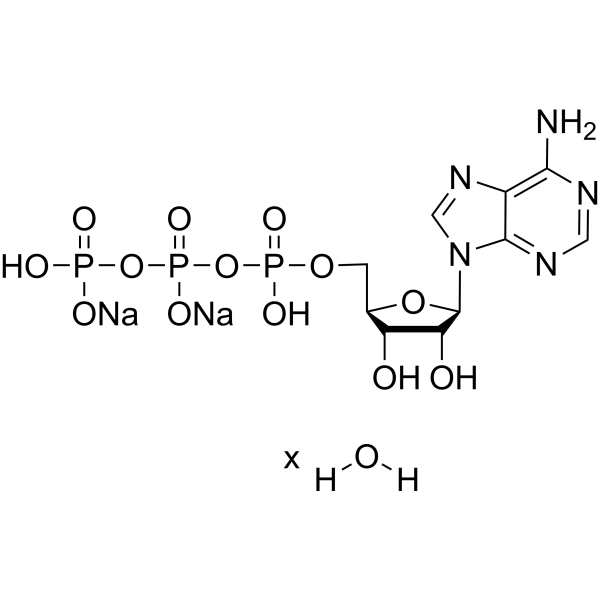
ATP disodium salt hydrate (Adenosine 5'-triphosphatedisodium salt hydrate) is a central component of energy storage and metabolism in vivo, provides the metabolic energy to drive metabolic pumps and serves as a coenzyme in cells. ATP disodium salt hydrate is an important endogenous signaling molecule in immunity and inflammation .
|
-
- HY-W105310A
-
|
Nacr
|
HDAC
Sirtuin
CDK
Bcl-2 Family
Apoptosis
|
Others
|
|
Croconic acid disodium (Nacr) is a lysine crotonylation (Kcr) activator and electroactive material. Croconic acid disodium reduces the expression of HDAC2, HDAC3, SIRT1, and SIRT3, and increases the expression of EP300, CITED1, ACSS2, DPF2, CDYL, MLLT3, and YEATS2. Croconic acid disodium elevates intracellular crotonyl-CoA content and global histone lysine crotonylation levels. Croconic acid disodium promotes the growth of bovine fibroblasts, regulates cell cycle progression, and inhibits bovine fibroblast apoptosis (apoptosis). Croconic acid disodium improves the blastocyst development efficiency of bovine somatic cell nuclear transfer embryos. Croconic acid disodium undergoes reversible lithium intercalation/deintercalation reactions via sodium-lithium ion exchange. Croconic acid disodium is applicable to research related to cell growth promotion .
|
-
- HY-110382
-
|
c-di-GMP Disodium; cyclic diguanylate Disodium; 5GP-5GP Disodium
|
STING
Endogenous Metabolite
|
Cancer
|
|
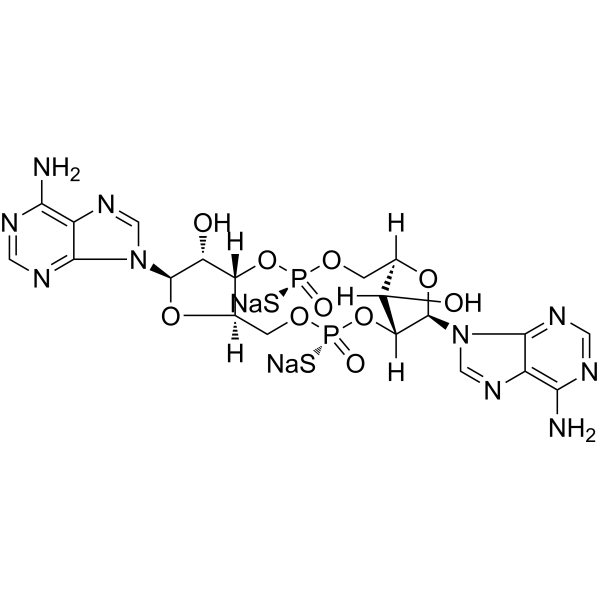
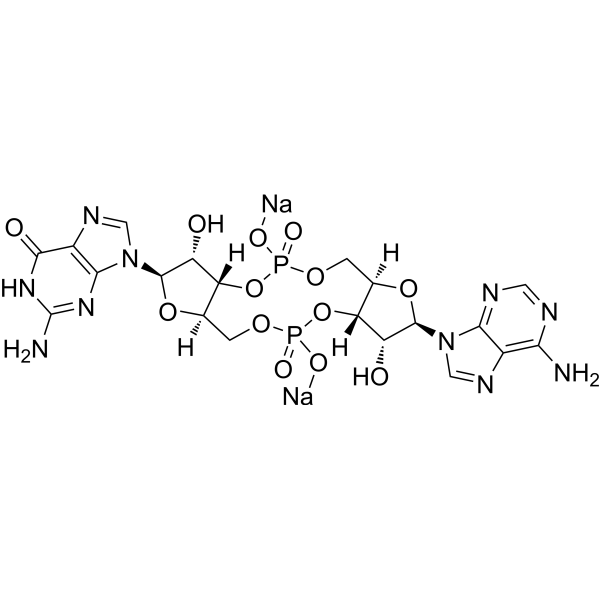
Cyclic-di-GMP disodium is a STING agonist and a bacterial second messenger that coordinates different aspects of bacterial growth and behavior, including motility, virulence, biofilm formation, and cell cycle progression. Cyclic-di-GMP disodium has anti-cancer cell proliferation activity and also induces elevated CD4 receptor expression and cell cycle arrest. Cyclic-di-GMP disodium can be used in cancer research .
|
-
- HY-113038AS1
-
|
2-Hydroxyglutarate-d4 Disodium; 2-Hydroxyglutaric acid-d4 Disodium; 2-Hydroxypentanedioic acid-d4 Disodium
|
Histone Demethylase
Endogenous Metabolite
|
Cancer
|
|
α-Hydroxyglutaric acid-d4 (disodium) is the deuterium labeled α-Hydroxyglutaric acid disodium . α-Hydroxyglutaric acid (2-Hydroxyglutarate) disodium is an α-hydroxy acid form of glutaric acid. α-Hydroxyglutaric acid disodium is a competitive inhibitor of multiple α-ketoglutarate-dependent dioxygenases, including histone demethylases and the TET family of 5-methlycytosine (5mC) hydroxylases .
|
-
- HY-W018746
-
|
Ethylenediaminetetraacetic acid Disodium
|
Environmental Pollutants
Biochemical Assay Reagents
|
Others
|
|
EDTA disodium salt, also known as ethylenediaminetetraacetic acid disodium, belongs to the chelating agent category, which is formed by chelating a central metal ion with four carboxylate groups and two amine groups. This compound, with its ability to bind and chelate metal ions such as calcium, magnesium and iron, is commonly used in a variety of applications, including industrial, medical and research settings. It is used as a preservative in food and beverage, as a stabilizer in medicine, as a chelating agent in water treatment, and as a reagent in biochemical and biomedical research. In addition, EDTA disodium salt has been studied for potential research effects such as improving heavy metal poisoning and cardiovascular disease.
|
-
- HY-113238A
-
|
Sulfolithocholic acid Disodium; LCAS Disodium
|
GPR39
ROR
|
Metabolic Disease
Inflammation/Immunology
|
|
Lithocholic acid 3-sulfate disodium is a GPR39 agonist, with EC50 values of 41 μM and 42.4 μM in M39-20 and hGPR39-2 cells, respectively, in the absence of Zn 2+, and 0.88 μM and 0.97 μM in the presence of Zn 2+. Lithocholic acid 3-sulfate disodium acts as a RORγt ligand. Lithocholic acid 3-sulfate disodium stimulates the GPR39 receptor to initiate intracellular calcium signaling, independent of the Zn 2+-binding sites H17 and H19. LCA-3-S selectively inhibits Th17 cell differentiation by targeting RORγt. Lithocholic acid 3-sulfate disodium can be used in the research of cholestatic liver diseases .
|
-
- HY-B1829A
-
-
- HY-136072
-
|
|
Bacterial
|
Infection
|
|
Xeruborbactam disodium is a potent, ultra-broad-spectrum boronic acid beta-lactamase inhibitor. Xeruborbactam disodium inhibits key serine and metallo beta-lactamases at a nano molar range .
|
-
- HY-111999B
-
|
|
STING
|
Cancer
|
|
E7766 disodium is a macrocycle-bridged STING agonist with a Kd of 40 nM. E7766 disodium shows potent pan-genotypic and antitumor activities .
|
-
- HY-10820BR
-
|
LY231514 Disodium heptahydrate (Standard)
|
Reference Standards
Antifolate
Autophagy
|
Cancer
|
|
Pemetrexed (disodium heptahydrate) (Standard) is the analytical standard of Pemetrexed (disodium heptahydrate). This product is intended for research and analytical applications. Pemetrexed disodium heptahydrate is a novel antifolate, the Ki values of the pentaglutamate of LY231514 are 1.3, 7.2, and 65 nM for inhibits thymidylate synthase (TS), dihydrofolate reductase (DHFR), and glycinamide ribonucleotide formyltransferase (GARFT), respectively.
|
-
- HY-13781R
-
|
LY231514 Disodium hemipenta hydrate (Standard)
|
Antifolate
Autophagy
Apoptosis
Reference Standards
|
Cancer
|
|
Pemetrexed (disodium hemipenta hydrate) (Standard) is the analytical standard of Pemetrexed (disodium hemipenta hydrate). This product is intended for research and analytical applications. Pemetrexed disodium hemipenta hydrate is a novel antifolate, the Ki values of the pentaglutamate of LY231514 are 1.3, 7.2, and 65 nM for inhibits thymidylate synthase (TS), dihydrofolate reductase (DHFR), and glycinamide ribonucleotide formyltransferase (GARFT), respectively.
|
-
- HY-W392263
-
-
- HY-136664A
-
-
- HY-113238AS
-
|
Sulfolithocholic acid-d4 Disodium
|
Isotope-Labeled Compounds
|
Others
|
|
Lithocholic acid 3-sulfate-d4 (disodium) is the deuterium labeled Lithocholic acid 3-sulfate disodium .
|
-
- HY-W013159
-
|
5′-dGMP Disodium
|
Endogenous Metabolite
Nucleoside Antimetabolite/Analog
|
Metabolic Disease
|
|
2'-Deoxyguanosine 5'-monophosphate (5′-dGMP) disodium is a mononucleotide having guanine as the nucleobase. 2'-Deoxyguanosine 5'-monophosphate disodium is a reactant involved in analysis of self-assembling in solution and nucleation/growth of G-qudruplexes, nucleophilic trapping and reductive alkylation. 2'-Deoxyguanosine 5'-monophosphate disodium can be used as an oxidizable target. 2'-Deoxyguanosine 5'-monophosphate disodium is a nucleic acid guanosine triphosphate (GTP) derivative and is a nucleotide precursor used in DNA synthesis .
|
-
- HY-W073082
-
|
Triglycollamic acid Disodium salt
|
Biochemical Assay Reagents
|
Others
|
|
Nitrilotriacetic acid disodium salt is a biochemical reagent that can be used as a biological material or organic compound for life science related research.
|
-
- HY-145934
-
|
UDP-N-azidoacetylgalactosamine Disodium
|
Biochemical Assay Reagents
OGT
Glycosidase
|
Metabolic Disease
|
|
UDP-GalNAz (UDP-N-azidoacetylgalactosamine) disodium is the analogue of UDP-GalNAc disodium (HY-114365). UDP-GalNAc disodium is the donor substrate of many N-acetylgalactosaminyltransferases, enzymes which transfer GalNAc from the nucleotide sugar to a saccharide or peptide acceptor. UDP-GalNAz disodium is a click chemistry reagent, it contains an Azide group and can undergo copper-catalyzed azide-alkyne cycloaddition reaction (CuAAc) with molecules containing Alkyne groups. It can also undergo strain-promoted alkyne-azide cycloaddition (SPAAC) reactions with molecules containing DBCO or BCN groups .
|
-
- HY-112572
-
|
|
Biochemical Assay Reagents
|
Others
|
|
Bisdisulizole disodium is an organic chromophore with large near UV absorption cross section. Solutions of Bisdisulizole disodium dissolved in polar solvents show a strong, broad UV absorption feature centered at 340 nm .
|
-
- HY-W013159R
-
|
5′-dGMP Disodium (Standard)
|
Endogenous Metabolite
Reference Standards
Nucleoside Antimetabolite/Analog
|
Metabolic Disease
|
|
2'-Deoxyguanosine 5'-monophosphate (disodium) (Standard) is the analytical standard of 2'-Deoxyguanosine 5'-monophosphate (disodium) (HY-W013159). This product is intended for research and analytical applications. 2'-Deoxyguanosine 5'-monophosphate (5′-dGMP) disodium is a mononucleotide having guanine as the nucleobase. 2'-Deoxyguanosine 5'-monophosphate disodium is a reactant involved in analysis of self-assembling in solution and nucleation/growth of G-qudruplexes, nucleophilic trapping and reductive alkylation. 2'-Deoxyguanosine 5'-monophosphate disodium can be used as an oxidizable target. 2'-Deoxyguanosine 5'-monophosphate disodium is a nucleic acid guanosine triphosphate (GTP) derivative and is a nucleotide precursor used in DNA synthesis .
|
-
- HY-W013175R
-
|
5'-Uridylic acid Disodium salt (Standard)
|
Endogenous Metabolite
Cholinesterase (ChE)
Reference Standards
Potassium Channel
Apoptosis
|
Cardiovascular Disease
Metabolic Disease
|
|
Uridine 5'-monophosphate (disodium salt) (Standard) is the analytical standard of Uridine 5'-monophosphate (disodium salt). This product is intended for research and analytical applications. Uridine 5'-monophosphate (5'-Uridylic acid) disodium salt is an orally active mitochondrial ATP-dependent potassium channel activator that has a protective effect on the heart. Uridine 5'-monophosphate disodium salt can promote the synthesis of CDP-choline and induce apoptosis in intestinal epithelial cells, which is beneficial for gut development and reduces diarrhea .
|
-
- HY-128738
-
|
TMP Disodium salt
|
Endogenous Metabolite
DNA/RNA Synthesis
|
Metabolic Disease
|
|
Thymidine-5'-monophosphate (TMP) disodium salt is a key nucleotide in pyrimidine metabolism, and its kinase activity can be competitively inhibited by 5'-fluorothymidine. The level of Thymidine-5'-monophosphate disodium salt is closely associated with acute kidney injury .
|
-
- HY-W013100R
-
|
Cytidine triphosphate Disodium (Standard); 5'-CTP Disodium (Standard)
|
Reference Standards
DNA/RNA Synthesis
Nucleoside Antimetabolite/Analog
Endogenous Metabolite
|
Metabolic Disease
|
|
Cytidine-5'-triphosphate (Cytidine triphosphate) (Standard) disodium is the analytical standard of Cytidine-5'-triphosphate disodium (HY-W013100). This product is intended for research and analytical applications. Cytidine-5'-triphosphate (Cytidine triphosphate; 5'-CTP) disodium is a nucleoside triphosphate, that is invovled in biosynthesis of DNA, RNA and lipid. Cytidine triphosphate synthase can catalyze the formation of cytidine 5′-triphosphate from uridine 5′-triphosphate (UTP). Cytidine 5′-triphosphate disodium is an essential biomolecule in the de novo pyrimidine biosynthetic pathway in T. gondii.
|
-
- HY-130115A
-
|
|
STING
|
Cancer
|
|
IACS-8803 disodium is a highly potent cyclic dinucleotide STING agonist. IACS-8803 disodium has a robust systemic antitumor efficacy .
|
-
- HY-12885A
-
|
ADU-S100 Disodium salt; MIW815 Disodium salt; ML RR-S2 CDA Disodium salt
|
STING
|
Inflammation/Immunology
Cancer
|
|
2’3’-c-di-AM(PS)2 (Rp,Rp) disodium salt (ADU-S100 disodium salt) is an activator of stimulator of interferon genes (STING).
|
-
- HY-Z19731
-
-
- HY-W726630
-
-
- HY-W742557
-
-
- HY-13038
-
|
R788Disodium
|
Syk
FLT3
|
Inflammation/Immunology
Cancer
|
|
Fostamatinib Disodium (R788 Disodium) is the oral proagent of the active compound R406 . R406 is an orally available and competitive Syk/FLT3 inhibitor with a Ki of 30 nM and an IC50 of 41 nM . R406 also inhibits Lyn (IC50=63 nM) and Lck (IC50=37 nM) .
|
-
- HY-N11287A
-
|
|
Endogenous Metabolite
|
Others
|
|
UDP-xylose disodium is an endogenous sugar nucleotide and a catalytic substrate of UDP-xylose disodium synthase (UXS). UDP-xylose disodium is a sugar donor for the synthesis of glycoproteins, polysaccharides, various metabolites and oligosaccharides in plants, vertebrates and fungi, and participates in the synthesis of proteoglycans as a glycosyl donor. UDP-xylose disodium participates in the regulation of the synthesis of extracellular matrix components and can be used to study the mechanism of proteoglycan biosynthesis in glycobiology and related diseases (such as connective tissue diseases)[1][2].
|
-
- HY-113066AR
-
|
GDP Disodium salt (Standard)
|
Hepcidin
Endogenous Metabolite
Potassium Channel
Reference Standards
|
Neurological Disease
Inflammation/Immunology
Cancer
|
Guanosine 5'-diphosphate (disodium salt) (Standard) is the analytical standard of Guanosine 5'-diphosphate (disodium salt). This product is intended for research and analytical applications. Guanosine 5'-diphosphate (GDP) disodium salt, a purine nucleoside diphosphate, is interconverted to guanosine by the action of exonucleotidase and phosphorylation of nucleoside to guanine. Guanosine 5'-diphosphate disodium salt activates adenosine 5'-triphosphate-sensitive K+ channel and is used to study the kinetics and characteristics of GTPases such as those associated with G-protein coupled receptors (GPCR). Guanosine 5'-diphosphate disodium salt is a potential iron mobilizer, which prevents the Hepcidin (HY-P70400)-ferroportin interaction and modulates the interleukin-6 (IL-6)/stat-3 pathway. Elevated levels of guanosine 5’-diphosphate are associated with the pathogenesis of neurological diseases. Guanosine 5'-diphosphate disodium salt is promising for the research of inflammation, such as anemia of inflammation (AI) .
|
-
- HY-W749867
-
|
Calcium Disodium EDTA dihydrate
|
Bacterial
|
Infection
Others
|
|
CaⅡ-EDTA disodium dihydrate (Calcium disodium EDTA dihydrate) is an orally active metal chelating reagent, exhibits bactericidal activities against periodontal pathogens Aggregatibacter actinomycetemcomitans, Prevotella intermedia and Porphyromonas gingivalis . CaⅡ-EDTA disodium dihydrate is effective chelating antidotes for lead- and cadmium poisoning .
|
-
- HY-114365
-
|
UDP-N-acetyl-D-galactosamine Disodium
|
Endogenous Metabolite
|
Metabolic Disease
Cancer
|
|
UDP-GalNAc (UDP-N-acetyl-D-galactosamine) disodium is a sugar nucleotide and a substrate for EpsC115. EpsC115 is a mutant with N-terminal residues 1-115 deleted from the exopolymeric substance (EPS). UDP-GalNAc disodium is a donor substrate for many N-acetylgalactosaminyltransferases, which transfer GalNAc from nucleotide sugars to sugar or peptide acceptors. UDP-GalNAc disodium provides a sugar group donor for glycosylation reactions. UDP-GalNAc disodium can be used in cancer research, such as colorectal and breast cancer .
|
-
- HY-148285A
-
|
Succinyl-coenzyme A Disodium; S-(Hydrogen succinyl)coenzyme A Disodium
|
Endogenous Metabolite
|
Metabolic Disease
|
|
Succinyl CoA (Succinyl-coenzyme A) disodium is a pivotal intermediate metabolite in the tricarboxylic acid cycle and a key coenzyme A metabolite. Succinyl CoA disodium is biosynthesized from α-ketoglutarate or propionyl-CoA. Succinyl CoA disodium acts as a critical precursor and substrate for heme biosynthesis and gluconeogenesis. Succinyl CoA disodium insufficiency caused by cobalamin deficiency is directly linked to growth retardation, impaired heme synthesis, tissue glycine accumulation and neurological abnormalities. Succinyl-Coenzyme A sodium can be used in research on metabolic, neurological, and hematological abnormalities (such as porphyria) caused by nutritional vitamin B12 deficiency (leading to a lack of Succinyl-Coenzyme A synthesis) .
|
-
- HY-B0525AR
-
|
Sodium carbenicillin (Standard)
|
Reference Standards
Antibiotic
Bacterial
|
Infection
|
|
Carbenicillin (disodium) (Standard) is the analytical standard of Carbenicillin (disodium). This product is intended for research and analytical applications. Carbenicillin disodium (Sodium carbenicillin) is a broad-spectrum semi-synthetic penicillin antibiotic for gram-negative bacteria. Carbenicillin disodium can interfere the cell wall synthesis while displaying low toxicity to plant tissue .
|
-
- HY-129560
-
-
- HY-W096122
-
|
|
Biochemical Assay Reagents
|
Others
|
|
DTSSP Crosslinker disodium is a protein cross-linker containing a disulfide bond. DTSSP Crosslinker disodium can react with sidechains of amino acids that are within close proximity .
|
-
- HY-137829
-
|
|
Endogenous Metabolite
|
Others
|
|
5-Methyltetrahydrofolic acid disodium is the metabolite of Folinic acid (Leucovorin) (HY-17556). 5-Methyltetrahydrofolic acid disodium is involved in one-carbon metabolism and the transfer of methyl groups .
|
-
- HY-166220
-
-
- HY-134367
-
-
- HY-113407A
-
|
|
Endogenous Metabolite
FBPase
|
Neurological Disease
Metabolic Disease
|
|
D-Fructose 6-phosphate disodium is an endogenous metabolite. D-Fructose 6-phosphate disodium can be obtained by hydrolysis of Fructose-1,6-bisphosphatase (FBPase). D-Fructose-6-phosphate disodium is a sugar intermediate in the glycolysis pathway and the pentose phosphate pathway. D-Fructose-6-phosphate disodium can be used to detect glucosamine-6-phosphate synthase and TAL activities. D-Fructose 6-phosphate disodium can be used to study Lewy body dementia .
|
-
- HY-113407B
-
|
|
Endogenous Metabolite
FBPase
|
Neurological Disease
Metabolic Disease
|
|
D-Fructose 6-phosphate disodium hydrate is an endogenous metabolite. D-Fructose 6-phosphate disodium hydrate can be obtained by hydrolysis of Fructose-1,6-bisphosphatase (FBPase). D-Fructose-6-phosphate disodium hydrate is a sugar intermediate in the glycolysis pathway and the pentose phosphate pathway. D-Fructose-6-phosphate disodium hydrate can be used to detect glucosamine-6-phosphate synthase and TAL activities. D-Fructose 6-phosphate disodium hydrate can be used to study Lewy body dementia .
|
-
- HY-W766920
-
-
- HY-107360R
-
-
- HY-112502A
-
|
Adenosine 5'-(α,β-methylene)diphosphate Disodium
|
CD73
|
Cancer
|
|
MethADP disodium is a specific CD73 inhibitor.
|
-
- HY-B1654AR
-
|
FAD Disodium salt (Standard); FAD-Na2 (Standard)
|
Reference Standards
Endogenous Metabolite
|
Cardiovascular Disease
|
|
Flavin adenine dinucleotide (disodium salt) (Standard) is the analytical standard of Flavin adenine dinucleotide (disodium salt). This product is intended for research and analytical applications. Flavin adenine dinucleotide (FAD) disodium salt is a redox cofactor, more specifically a prosthetic group of a protein, involved in several important enzymatic reactions in metabolism.
|
-
- HY-W011012R
-
|
|
Reference Standards
Adenosine Receptor
|
Metabolic Disease
|
|
Adenosine 5'-monophosphate (disodium) (Standard) is the analytical standard of Adenosine 5'-monophosphate (disodium). This product is intended for research and analytical applications. Adenosine 5'-monophosphate disodium is an orally active purine nucleotide, and participates in ATP metabolism. Adenosine 5'-monophosphate disodium is also a ligand for adenosine 2B receptor. Adenosine 5'-monophosphate disodium can activate AMPK in skeletal muscle, and ameliorates insulin resistance and impaired glucose metabolism. Adenosine 5'-monophosphate disodium can be used for research of diabetes .
|
-
- HY-W011012
-
|
|
Adenosine Receptor
|
Metabolic Disease
|
|
Adenosine 5'-monophosphate disodium is an orally active purine nucleotide, and participates in ATP metabolism. Adenosine 5'-monophosphate disodium is also a ligand for adenosine 2B receptor. Adenosine 5'-monophosphate disodium can activate AMPK in skeletal muscle, and ameliorates insulin resistance and impaired glucose metabolism. Adenosine 5'-monophosphate disodium can be used for research of diabetes .
|
-
- HY-W779068
-
-
- HY-W010854
-
|
dADP Disodium
|
DNA/RNA Synthesis
|
Others
|
|
2'-Deoxyadenosine 5'-di-phos-phate disodium (dADP disodium) is an inhibitor of bacterial poly(A) polymerase. It can be used to synthesize deoxyadenosine oligonucleotides with Escherichia coli polynucleotide phosphorylase and other enzymes .
|
-
- HY-W143273
-
|
|
PROTAC Linkers
|
Cancer
|
|
Decanedioic acid (disodium) is a PROTAC linker that can be used in the synthesis of PROTACs.
|
-
- HY-141412
-
|
3-Phospho-D-glyceric acid Disodium
|
Enolase
Phosphoglycerate Dehydrogenase (PHGDH)
MDM-2/p53
Apoptosis
|
Infection
|
|
D-(-)-3-Phosphoglyceric acid (3-Phospho-D-glyceric acid) disodium is an important intermediate in the enzyme-catalyzed glycolysis process. D-(-)-3-Phosphoglyceric acid disodium competitively inhibits yeast enolase (enolase). D-(-)-3-Phosphoglyceric acid disodium can regulate the activity of phosphoglycerate dehydrogenase (PHGDH) to modulate p53 protein and apoptosis .
|
-
- HY-112169A
-
|
|
Endogenous Metabolite
|
Metabolic Disease
|
|
10-Formyltetrahydrofolic acid disodium is a form of tetrahydrofolic acid that acts as a donor of formyl groups in anabolism. 10-Formyltetrahydrofolic acid disodium can be used as a substrate for formyltransferase reactions and is involved in the biosynthesis of purines .
|
-
- HY-134354A
-
|
ADP-ribose-pNP Disodium
|
Poly(ADP-ribose) Glycohydrolase (PARG)
|
Others
|
|
pNP-ADPr disodium is a colorimetric substrate that used for the first continuous Poly(ADP-ribose) glycohydrolase (PARG) and ADP-ribosyl hydrolase 3 (ARH3) activity assays. pNP-ADPr disodium can be used for the research of poly(ADP-ribose)polymerase (PARP) enzymes .
|
-
- HY-134433A
-
|
|
Endogenous Metabolite
|
Metabolic Disease
|
|
GDP-L-fucose disodium is a nucleotide sugar that is a key substrate for the biosynthesis of fucose oligosaccharides. GDP-L-fucose disodium provides the fucose moiety for the oligosaccharides. The formation of GDP-L-fucose disodium occurs through two pathways, the major de novo metabolic pathway and the minor remedial metabolic pathway .
|
-
- HY-W787630
-
-
- HY-W342120
-
-
- HY-137135A
-
|
|
Phosphatase
Apoptosis
|
Cancer
|
|
Cantharidic acid disodium is the hydrolysis product of the acid anhydride Cantharidin that induces apoptosis in various human cancer cells. Cantharidic acid disodium is a selective protein phosphatase 2 (PP2A) and PP1 inhibitor withIC50 values of 50 nM and 600 nM, respectively .
|
-
- HY-D1520
-
|
|
Phosphatase
|
Others
|
|
Naphthol AS-GR phosphate disodium is substrates for acid and alkaline phosphatases. Naphthol AS-GR phosphate disodium has an intense green fluorescence used in histochemical studies .
|
-
- HY-W015114R
-
|
(S)-2-Hydroxyglutaric acid Disodium (Standard)
|
Reference Standards
Histone Demethylase
Mitochondrial Metabolism
Endogenous Metabolite
|
Cancer
|
|
L-2-Hydroxyglutaric acid (disodium) (Standard) is the analytical standard of L-2-Hydroxyglutaric acid (disodium). This product is intended for research and analytical applications. L-2-Hydroxyglutaric acid disodium is an epigenetic modifier and putative oncometabolite in renal cancer. L-2-Hydroxyglutaric acid disodium can inhibit histone demethylases and hence promote histone methylation . L-2-Hydroxyglutaric acid inhibits mitochondrial creatine kinase (Mi-CK) activity with Km and Ki of 2.52 mM and 11.13 mM, respectively .
|
-
- HY-404548
-
|
|
Biochemical Assay Reagents
|
Others
|
|
Sulfo-TAG TFP ester disodium is a tetrafluorophenyl (TFP) ester that can be coupled to proteins via primary amine groups. Sulfo-TAG TFP ester disodium is more hydrophobic than NHS esters and exhibits higher hydrolytic stability in aqueous solutions. Sulfo-TAG TFP ester disodium can be used for antibody labeling.
|
-
- HY-145934A
-
|
|
OGT
Biochemical Assay Reagents
Glycosidase
|
Metabolic Disease
|
|
UDP-GlcNAz disodium is the analogue of UDP-GlcNAc disodium (HY-112174). UDP-GlcNAc disodium is the donor substrate of many N-acetylgalactosaminyltransferases, enzymes which transfer GlcNAc from the nucleotide sugar to a saccharide or peptide acceptor. UDP-GlcNAc disodium is a click chemistry reagent, it contains an Azide group and can undergo copper-catalyzed azide-alkyne cycloaddition reaction (CuAAc) with molecules containing Alkyne groups. It can also undergo strain-promoted alkyne-azide cycloaddition (SPAAC) reactions with molecules containing DBCO or BCN groups .
|
-
- HY-W772717
-
|
|
Endogenous Metabolite
Ferroptosis
Reactive Oxygen Species (ROS)
Keap1-Nrf2
Apoptosis
|
Metabolic Disease
Inflammation/Immunology
Cancer
|
|
L-Cystine disodium monohydrate is an orally active extracellular form of L-Cysteine (HY-Y0337), occurring in proteins of plants and animals. L-Cystine disodium monohydrate elevates Nrf2 protein expression and activates Nrf2 transcription factor. L-Cystine disodium monohydrate reduces ROS generation and protects against oxidant- or Doxorubicin (HY-15142A)-induced apoptosis. L-Cystine disodium monohydrate combined with L-theanine (HY-15121) enhances the production of antigen-specific IgG by increasing glutathione (GSH) levels and T helper 2 (Th2) mediated responses in mice. L-Cystine disodium monohydrate is promising for research of cystinuria and kidney stones .
|
-
- HY-113066A
-
|
GDP Disodium salt
|
Hepcidin
Potassium Channel
Endogenous Metabolite
|
Neurological Disease
Inflammation/Immunology
Cancer
|
Guanosine 5'-diphosphate (GDP) disodium salt, a purine nucleoside diphosphate, is interconverted to guanosine by the action of exonucleotidase and phosphorylation of nucleoside to guanine. Guanosine 5'-diphosphate disodium salt activates adenosine 5'-triphosphate-sensitive K + channel and is used to study the kinetics and characteristics of GTPases such as those associated with G-protein coupled receptors (GPCR). Guanosine 5'-diphosphate disodium salt is a potential iron mobilizer, which prevents the Hepcidin (HY-P70400)-ferroportin interaction and modulates the interleukin-6 (IL-6)/stat-3 pathway. Elevated levels of guanosine 5’-diphosphate are associated with the pathogenesis of neurological diseases. Guanosine 5'-diphosphate disodium salt is promising for the research of inflammation, such as anemia of inflammation (AI) .
|
-
- HY-D3304
-
|
|
Fluorescent Dye
|
Others
|
|
Cholyl-L-lysine fluorescein disodium is a Fluorescent substrate. Cholyl-L-lysine fluorescein disodium can be used in organoid research .
|
-
- HY-124329A
-
|
|
Biochemical Assay Reagents
|
Cancer
|
|
BS3 Crosslinker disodium is an amine-reactive homobifunctional protein crosslinker. BS3 Crosslinker disodium enables stable protein-protein, peptide, and biomolecule conjugation.
|
-
- HY-D0217
-
|
Bromosulfophthalein Disodium salt
|
Fluorescent Dye
|
Metabolic Disease
|
|
Sulfobromophthalein (Bromosulfophthalein) disodium salt is an organic anion dye used in the study of a variety of membrane carriers expressed in animal tissues and involved in transport of agents and metabolites .
|
-
- HY-126304R
-
|
|
Reference Standards
Phosphatase
Endogenous Metabolite
ERK
|
Metabolic Disease
|
|
β-Glycerophosphate disodium salt hydrate (Standard) is the analytical standard of β-Glycerophosphate disodium salt hydrate (HY-126304). This product is intended for research and analytical applications. β-Glycerophosphate disodium salt pentahydrate is a bioactive endogenous metabolite and a phosphatase inhibitor. β-Glycerophosphate disodium salt pentahydrate plays an important role in inducing and maintaining osteoblast differentiation, mineral metabolism and signal transduction, and can be used as a drug carrier to form heat-sensitive hydrogels. β-Glycerophosphate disodium salt hydrate accelerates the calcification of vascular smooth muscle cells.
|
-
- HY-164018A
-
|
|
DNA/RNA Synthesis
|
Infection
|
|
PMEG-DP disodium is a potent DNA polymerase inhibitor (IC50=2.5 μM), especially for DNA polymerase α and δ. PMEG-DP disodium acts as an active metabolite of G-9191, which effectively inhibits the growth of papillomavirus (HPV) -infected cell lines. PMEG-DP disodium can be used in the study of HPV-related diseases .
|
-
- HY-B0525A
-
|
Sodium carbenicillin
|
Antibiotic
Bacterial
|
Infection
|
|
Carbenicillin disodium (Sodium carbenicillin) is a broad-spectrum semi-synthetic penicillin antibiotic for gram-negative bacteria. Carbenicillin disodium can interfere the cell wall synthesis while displaying low toxicity to plant tissue .
|
-
- HY-N0473A
-
-
- HY-W151206
-
|
|
Fluorescent Dye
|
Others
|
|
Hydroxy naphthol blue disodium is an azo dye compound commonly used as an acid-base indicator (λmax = 650 nm). Within the pH range of 12 to 13, the indicator solution of Hydroxy naphthol blue disodium appears pale red in the presence of calcium ions and dark blue in the presence of disodium EDTA .
|
-
- HY-131139
-
|
|
Apoptosis
|
Neurological Disease
Cancer
|
|
Ganglioside GD3 disodium salt is an acidic glycosphingolipid. Ganglioside GD3 disodium salt inhibits the proliferation of cancer cells, affects the opening of the mitochondrial permeability transition pore (PTPC), induces apoptosis and activates caspase family. Ganglioside GD3 disodium salt can be used in research about cancer and neurodegenerative diseases .
|
-
- HY-148029
-
|
TAK-676
|
STING
|
Cancer
|
|
Dazostinag disodium (TAK-676) is an agonist of STING, triggering the activation of STING signaling pathway and type I interferons. Dazostinag disodium is also a modulator of immune system, resulting complete regressions and durable memory T-cell immunity. Dazostinag disodium promotes durable IFN-dependent antitumor immunity .
|
-
- HY-W040147
-
-
- HY-164903A
-
|
|
Biochemical Assay Reagents
|
Others
|
|
UDP-D-GalNAlk disodium is an alkyne-modified UDP sugar and unnatural sugar nucleotide. UDP-D-GalNAlk disodium allows in vitro synthesis via mutant AGX1 enzyme. UDP-D-GalNAlk disodium serves as a substrate for engineered GalNAc-T enzymes, enabling the selective installation of alkyne-modified D-GalNAc derivatives in glycoproteomes. UDP-D-GalNAlk disodium is a biochemical reagent used as a biological material or organic compound for life science research .
|
-
- HY-113407C
-
|
|
Drug Intermediate
|
Metabolic Disease
|
|
D-Fructose-6-phosphate disodium monohydrate is an intermediate of Glycolysis. D-Fructose-6-phosphate disodium monohydrate is the precursor for the synthesis of amino sugars, such as galactosamine and glucosamine .
|
-
- HY-153631
-
-
- HY-B1141
-
|
NC-503
|
Amyloid-β
|
Others
|
|
Eprodisate disodium (NC-503) is the orally available disodium salt form of Eprodisate, a negatively charged sulfonated inhibitor of fibrillogenesis, that can be used in the treatment of amyloid A (AA) amyloidosis.
|
-
- HY-113606
-
|
|
Drug Intermediate
|
Metabolic Disease
|
|
Adenosine 5'-phosphosulfate disodium is a metabolism intermediates of sulfur. Adenosine 5'-phosphosulfate disodium can used in study sulfotransferases and sulforeductases in various organisms .
|
-
- HY-106723A
-
|
|
HSP
|
Cancer
|
|
AMP-PCP disodium is an ATP analogue and can bind to Hsp90 N-terminal domain with a Kd value of 3.8 μM. AMP-PCP disodium binding favors the formation of the active homodimer of Hsp90 .
|
-
- HY-114364
-
|
|
Endogenous Metabolite
P2Y Receptor
|
Metabolic Disease
|
|
UDP-Galactose disodium is a monosaccharide and a key glycosyl donor molecule in cells that participates in nucleotide sugar metabolism. UDP-Galactose disodium is the natural agonist of the P2Y14 receptor coupled to Gi proteins in the immune system (IC50 = 0.67 μM, hP2Y14). UDP-Galactose disodium can be used to study cell signal transduction and substance metabolism .
|
-
- HY-13038BR
-
|
R788 Disodium hexahydrate (Standard)
|
Syk
FLT3
Reference Standards
|
Inflammation/Immunology
Cancer
|
|
Fostamatinib (disodium hexahydrate) (Standard) is the analytical standard of Fostamatinib (disodium hexahydrate). This product is intended for research and analytical applications. Fostamatinib (R788) disodium hexahydrate is the oral proagent of the active compound R406 . R406 is an orally available and competitive Syk/FLT3 inhibitor with a Ki of 30 nM and an IC50 of 41 nM . R406 also inhibits Lyn (IC50=63 nM) and Lck (IC50=37 nM) .
|
-
- HY-W011142R
-
|
dUMP Disodium (Standard)
|
Endogenous Metabolite
Reference Standards
|
Infection
Metabolic Disease
|
|
2'-Deoxyuridine 5'-monophosphate (disodium) (Standard) is the analytical standard of 2'-Deoxyuridine 5'-monophosphate (disodium) (HY-W011142). This product is intended for research and analytical applications. 2'-Deoxyuridine 5'-monophosphate (dUMP) disodium is a deoxynucleotide that is reductively methylated to dTMP (2'-deoxythymidine 5'-monophosphate) by bisubstrate enzyme thymidylate synthase (TS). dTMP is a nucleotide required for DNA synthesis .
|
-
- HY-W009371R
-
|
|
Reference Standards
DNA/RNA Synthesis
Endogenous Metabolite
|
Metabolic Disease
|
|
D-Ribose 5-phosphate disodium (Standard) is the analytical standard of D-Ribose 5-phosphate disodium (HY-W009371) . This product is intended for research and analytical applications. D-Ribose 5-phosphate disodium is an intermediate of the oxidative branch of the pentose phosphate pathway (PPP) and an end product of the nonoxidative branch of the PPP. D-Ribose 5-phosphate disodium is used in the synthesis of nucleotides and nucleic acids.
|
-
- HY-B0730R
-
|
|
Reference Standards
RANKL/RANK
Toll-like Receptor (TLR)
Wnt
β-catenin
|
Metabolic Disease
Inflammation/Immunology
Cancer
|
|
Pamidronate (disodium pentahydrate) (Standard) is the analytical standard of Pamidronate (disodium pentahydrate). This product is intended for research and analytical applications. Pamidronate disodium pentahydrate, the second-generation nitrogen-containing bisphosphonate, is an inhibitor of bone loss. Pamidronate disodium pentahydrate significantly inhibits subchondral bone loss in early osteoarthritis by upregulating the expression of osteoprotegerin in cartilage and subchondral bone, and inhibiting the expression of RANKL and MMP-9 in both tissues, as well as TLR-4 in cartilage, thereby alleviating cartilage degeneration. Additionally, Pamidronate disodium pentahydrate can inhibit the signaling of Wnt and β-catenin, and is applicable for research on osteoporosis and osteosarcoma .
|
-
- HY-W653841
-
|
|
Endogenous Metabolite
Parasite
|
Infection
Inflammation/Immunology
Cancer
|
|
Chondroitin sulfate A disodium is a mucopolysaccharide extracted from animal cartilages such as porcine nasal cartilage, and serves as a major structural component of cartilage. Chondroitin sulfate A disodium is one of the specific receptors for the adhesion of Plasmodium falciparum-infected red blood cells in the microcirculation. Chondroitin sulfate A disodium can be used together with selenium to prepare nanoparticles for protecting cartilage against T‑2 toxin-induced damage. Chondroitin sulfate A disodium is abnormally highly expressed in ameloblastoma, and is particularly enriched in stellate reticulum-like tumor cells. Chondroitin sulfate A disodium can be applied to studies on Plasmodium infection mechanisms, cartilage protection and oral tumors .
|
-
- HY-N7032
-
|
UDP-D-Glucose Disodium
|
Endogenous Metabolite
P2Y Receptor
|
Cardiovascular Disease
Metabolic Disease
Inflammation/Immunology
|
|
Uridine 5’-diphosphoglucose (UDP-glucose) disodium, secreted by cardiomyocytes during ischemia and reperfu, is a potent agonist of the proinflammatory P2Y14 receptor. It acts an important role in the regulation of inflammation and neutrophil polarization in neutrophils. Uridine 5’-diphosphoglucose disodium is also the precursor of glucose-containing oligosaccharides, polysaccharides, glycoproteins, and glycolipids in animal tissues and in some microorganisms. Uridine 5’-diphosphoglucose disodium is promising for research in counteracting myocardial infarction/reperfusion (MIR)-induced inflammation in the heart tissue.
|
-
- HY-W587516
-
-
- HY-W115799
-
-
- HY-W013100
-
|
Cytidine triphosphate Disodium; 5'-CTP Disodium
|
DNA/RNA Synthesis
Nucleoside Antimetabolite/Analog
Endogenous Metabolite
|
Metabolic Disease
|
|
Cytidine-5'-triphosphate (Cytidine triphosphate; 5'-CTP) disodium is a nucleoside triphosphate, that is invovled in biosynthesis of DNA, RNA and lipid. Cytidine triphosphate synthase can catalyze the formation of cytidine 5′-triphosphate from uridine 5′-triphosphate (UTP). Cytidine 5′-triphosphate disodium is an essential biomolecule in the de novo pyrimidine biosynthetic pathway in T. gondii .
|
-
- HY-128374R
-
|
|
Reference Standards
Endogenous Metabolite
|
Metabolic Disease
|
|
D-Glucose 6-phosphate disodium salt (Standard) is the analytical standard of D-Glucose 6-phosphate disodium salt (HY-128374). This product is intended for research and analytical applications. D-Glucose-6-phosphate disodium salt is a glucose sugar phosphorylated at the hydroxy group on carbon 6.
|
-
- HY-137255
-
|
3-Sulfotaurolithocholic acid Disodium
|
GPR39
|
Inflammation/Immunology
|
|
Taurolithocholic acid 3-sulfate disodium is a GPR39 agonist with EC50s of 71.6 and 69.4 (absence of Zn 2+) and 9 and 9.6 μM (presence of Zn 2+) in M39-20 and hGPR39-2 cells, respectively. Taurolithocholic acid 3-sulfate disodium stimulates GPR39 receptors to initiate intracellular calcium signaling, independent of Zn 2+ binding sites H17 and H19. Taurolithocholic acid 3-sulfate disodium can be used for the research of gallbladder disease .
|
-
- HY-156957
-
|
|
Biochemical Assay Reagents
|
Others
|
|
5-CNAC disodium is an orally active enhancer of absorption, with no pharmacological activity on its own. 5-CNAC disodium can significantly enhance the absorption efficiency of the drug (such as Salmon calcitonin (HY-P0090)) when administered together with it in the gastrointestinal tract. 5-CNAC disodium binds reversibly and non-covalently to peptide drugs, protecting them from degradation by gastrointestinal enzymes, increasing their lipid solubility, promoting passive transcellular absorption, and not damaging the integrity of the intestinal epithelium. 5-CNAC disodium can be used in the research of adjuvants for orally administered peptide agents .
|
-
- HY-Z3203S
-
-
- HY-W582564
-
|
Ethylenediaminetetraacetic acid copper Disodium tetrahydrate
|
Biochemical Assay Reagents
|
Others
|
|
Cu(Ⅱ)-EDTA disodium tetrahydrate, a typical contaminant in industrial wastewater, is an EDTA-complexed heavy metal. Cu(Ⅱ)-EDTA disodium tetrahydrate can be used in research on the recovery of heavy metal resources from mixed wastewater .
|
-
- HY-134261A
-
|
8-Bromoadenosine-5'-O-diphosphoribose Disodium
|
CaMK
TRP Channel
|
Metabolic Disease
Inflammation/Immunology
Cancer
|
|
8-Br-ADPR disodium (8-Bromoadenosine-5'-O-diphosphoribose) is a TRPM2 inhibitor and ADPR signaling pathway antagonist. 8-Br-ADPR disodium inhibits glucagon-mediated nuclear calcium signaling and downstream CaMKII/CREB phosphorylation by blocking ADPR-induced TRPM2 activation. 8-Br-ADPR disodium significantly reduces gluconeogenic gene expression and blood glucose levels in diabetic models. 8-Br-ADPR disodium effectively blocks ADPR-mediated calcium signal transduction in NK cells, inhibits immune synapse formation, granzyme B release and cytolytic activity against melanoma cells. 8-Br-ADPR disodium is widely used in studies related to diseases such as diabetes, melanoma and lymphoma .
|
-
- HY-W013175
-
-
- HY-160202
-
|
|
Bacterial
|
Infection
|
|
18:1 Cardiolipin disodium is a virulence regulator with two phosphate groups and four acyl chains.18:1 Cardiolipin disodium can be used in the study of the regulation and mechanism of bacterial infection .
|
-
- HY-W740010
-
-
- HY-W300403A
-
-
- HY-15928
-
|
p-Nitrophenyl phosphate Disodium
|
Fluorescent Dye
|
Others
|
|
4-Nitrophenyl phosphate (p-Nitrophenyl phosphate) disodium is a non-proteinaceous chromogenic substrate for alkaline and acid phosphatases used in ELISA and conventional spectrophotometric assays.
|
-
- HY-138870
-
|
|
Bacterial
|
Infection
|
|
Enzyme-IN-3 disodium (compound 7) is a selective inhibitor of Mycobacterium tuberculosis shikimate kinase with an IC50 of 1.6 μM. Enzyme-IN-3 disodium has antibacterial activity .
|
-
- HY-116022A
-
|
p-Nitrophenyl phosphate Disodium hexahydrate
|
Biochemical Assay Reagents
|
Others
|
|
4-Nitrophenyl phosphate (p-nitrophenyl phosphate) disodium hexahydrate is widely used as a small molecule phosphotyrosine-like substrate in activity assays for protein tyrosine phosphatases. 4-Nitrophenyl phosphate disodium hexahydrate is a colorless substrate that upon hydrolysis is converted to a yellow 4-nitrophenolate ion that can be monitored by absorbance at 405 nm .
|
-
- HY-N2021A
-
-
- HY-21586
-
|
m7GTP Disodium
|
Nucleoside Antimetabolite/Analog
|
Metabolic Disease
|
|
7-Methyl-guanosine-5'-triphosphate (m7GTP) disodium is a guanosine 5'-phosphate. 7-Methyl-guanosine-5'-triphosphate disodium phosphorothioate analog is a potent cap-dependent translation inhibitor .
|
-
- HY-143645S
-
|
|
Isotope-Labeled Compounds
|
Others
|
|
Glycochenodeoxycholic acid 3-sulfate-d5 (disodium) is the deuterium labeled Glycochenodeoxycholic acid 3-sulfate disodium .
|
-
- HY-131524S
-
-
- HY-143017S
-
-
- HY-139614S
-
-
- HY-126304
-
|
|
Phosphatase
Endogenous Metabolite
ERK
|
Metabolic Disease
|
|
β-Glycerophosphate disodium salt pentahydrate is a bioactive endogenous metabolite and a phosphatase inhibitor. β-Glycerophosphate disodium salt pentahydrate plays an important role in inducing and maintaining osteoblast differentiation, mineral metabolism and signal transduction, and can be used as a drug carrier to form heat-sensitive hydrogels. β-Glycerophosphate disodium salt hydrate accelerates the calcification of vascular smooth muscle cells .
|
-
- HY-123065
-
-
- HY-107360
-
-
- HY-133424A
-
|
|
Fluorescent Dye
|
Others
|
|
Trisulfo-Cy3-acid disodium is a derivative of Cy3 (Cyanine3) dye. Trisulfo-Cy3-acid disodium contains three sulfonate ions and has improved water solubility.
|
-
- HY-W879008
-
-
- HY-N11102A
-
|
|
Drug Derivative
|
Others
|
|
Thymidine-5'-diphosphate-L-rhamnose disodium is the disodium form of Thymidine-5'-diphosphate-L-rhamnose (HY-N11102). Thymidine-5'-diphosphate-L-rhamnose disodium can be isolated from Occhromonas malhamensis .
|
-
- HY-124329AS
-
|
|
Isotope-Labeled Compounds
Biochemical Assay Reagents
|
Others
|
|
BS3 Crosslinker-d4 disodium is the deuterium labeled BS3 Crosslinker. BS3 Crosslinker disodium is an amine-reactive homobifunctional protein crosslinker. BS3 Crosslinker disodium enables stable protein-protein, peptide, and biomolecule conjugation.
|
-
- HY-N7032S
-
|
UDP-D-Glucose-13C Disodium
|
Isotope-Labeled Compounds
Endogenous Metabolite
P2Y Receptor
|
Cardiovascular Disease
Metabolic Disease
Inflammation/Immunology
|
|
Uridine 5′-diphosphoglucose- 13C (UDP-D-Glucose- 13C) disodium is the 13C labeled Uridine 5′-diphosphoglucose disodium (HY-N7032) . Uridine 5’-diphosphoglucose (UDP-glucose) disodium, secreted by cardiomyocytes during ischemia and reperfu, is a potent agonist of the proinflammatory P2Y14 receptor. It acts an important role in the regulation of inflammation and neutrophil polarization in neutrophils. Uridine 5’-diphosphoglucose disodium is also the precursor of glucose-containing oligosaccharides, polysaccharides, glycoproteins, and glycolipids in animal tissues and in some microorganisms. Uridine 5’-diphosphoglucose disodium is promising for research in counteracting myocardial infarction/reperfusion (MIR)-induced inflammation in the heart tissue .
|
-
- HY-W009371
-
|
|
DNA/RNA Synthesis
Endogenous Metabolite
|
Metabolic Disease
|
|
D-Ribose 5-phosphate disodium is an intermediate of the oxidative branch of the pentose phosphate pathway (PPP) and an end product of the nonoxidative branch of the PPP. D-Ribose 5-phosphate disodium is used in the synthesis of nucleotides and nucleic acids .
|
-
- HY-W393450A
-
-
- HY-130547
-
|
|
DNA Alkylator/Crosslinker
|
Cancer
|
|
BS2G Crosslinker disodium is an amine-reactive homobifunctional protein crosslinker. BS2G Crosslinker disodium enables stable protein-protein, peptide, and biomolecule conjugation.
|
-
- HY-W746663
-
-
- HY-W009162S
-
|
|
Isotope-Labeled Compounds
Endogenous Metabolite
|
Metabolic Disease
|
|
Cytidine 5′-monophosphate- 15N3 (disodium) is the 15N labeled Cytidine 5'-monophosphate disodium . Cytidine 5'-monophosphate (5'-Cytidylic acid) disodium is a nucleotide which is used as a monomer in RNA. Cytidine 5'-monophosphate disodium consists of the nucleobase cytosine, the pentose sugar ribose, and the phosphate group .
|
-
- HY-B0397A
-
|
Diclofenamide Disodium
|
Carbonic Anhydrase
|
Neurological Disease
|
|
Dichlorphenamide (Diclofenamide) disodium is an orally active, specific, carbonic anhydrase inhibitor. Dichlorphenamide can reduce intraocular pressure by inhibiting the secretion of water from the eye. Dichlorphenamide can be used for glaucoma research .
|
-
- HY-D1676
-
|
|
Phosphatase
|
Others
|
|
Thymolphthalein monophosphate disodium hydrate is a chromogenic substrate for the determination of acid phosphatase and alkaline phosphatase. Thymolphthalein is released during the reaction, increases the pH of the medium for easy detection, produces color and stops hydrolysis. Thymolphthalein monophosphate disodium hydrate can be used for the specific detection of prostatic phosphatase in serum .
|
-
- HY-W700989
-
-
- HY-N16013
-
-
- HY-150659S
-
-
- HY-108879
-
|
|
Bacterial
Antibiotic
|
Infection
|
|
Cefotetan disodium is a semisynthetic cephamycin antibiotic that exerts its bactericidal effects by inhibition of cell-wall synthesis .
|
-
- HY-D0170
-
|
|
Biochemical Assay Reagents
|
Others
|
|
Ferene disodium is a biochemical reagent that can be used as a biological material or organic compound for life science related research.
|
-
- HY-W110914A
-
-
- HY-W713875
-
-
- HY-D2238
-
-
- HY-W879370
-
-
- HY-116295A
-
|
|
P2Y Receptor
p38 MAPK
Calcium Channel
|
Cardiovascular Disease
|
|
MRS2690 disodium is a selective P2Y14 receptor agonist. MRS2690 disodium inhibits adenylyl cyclase activity, thereby reducing intracellular cAMP levels and mediating concentration-dependent vasoconstriction of porcine coronary arteries. MRS2690 disodium induces intracellular calcium mobilization, activates P38 and stimulates [ 35S]GTPγS binding to RBL-2H3 cell membranes. MRS2690 enhances antigen (NP-BSA)-, C3a-induced β-hexosaminidase (β-Hex) release. MRS2690 disodium can be used for ischemic heart disease .
|
-
- HY-W011012S1
-
|
|
Isotope-Labeled Compounds
|
Others
|
|
Adenosine 5'-monophosphate-d2 disodium is the deuterium labeled Adenosine 5'-monophosphate (HY-W011012). Adenosine 5'-monophosphate disodium is an orally active purine nucleotide, and participates in ATP metabolism. Adenosine 5'-monophosphate disodium is also a ligand for adenosine 2B receptor. Adenosine 5'-monophosphate disodium can activate AMPK in skeletal muscle, and ameliorates insulin resistance and impaired glucose metabolism. Adenosine 5'-monophosphate disodium can be used for research of diabetes .
|
-
- HY-W011012S
-
|
|
Isotope-Labeled Compounds
|
Others
|
|
Adenosine 5'-monophosphate- 13C (disodium) is a 13C-labeled Adenosine 5'-monophosphate (HY-W011012). Adenosine 5'-monophosphate disodium is an orally active purine nucleotide, and participates in ATP metabolism. Adenosine 5'-monophosphate disodium is also a ligand for adenosine 2B receptor. Adenosine 5'-monophosphate disodium can activate AMPK in skeletal muscle, and ameliorates insulin resistance and impaired glucose metabolism. Adenosine 5'-monophosphate disodium can be used for research of diabetes .
|
-
- HY-B0730
-
|
|
RANKL/RANK
Toll-like Receptor (TLR)
Wnt
β-catenin
|
Metabolic Disease
Inflammation/Immunology
Cancer
|
|
Pamidronate disodium pentahydrate, the second-generation nitrogen-containing bisphosphonate, is an inhibitor of bone loss. Pamidronate disodium pentahydrate significantly inhibits subchondral bone loss in early osteoarthritis by upregulating the expression of osteoprotegerin in cartilage and subchondral bone, and inhibiting the expression of RANKL and MMP-9 in both tissues, as well as TLR-4 in cartilage, thereby alleviating cartilage degeneration. Additionally, Pamidronate disodium pentahydrate can inhibit the signaling of Wnt and β-catenin, and is applicable for research on osteoporosis and osteosarcoma .
|
-
- HY-164169A
-
|
|
Biochemical Assay Reagents
|
Others
|
|
GDP-Azido-Fucose disodium is a chemically modified donor substrate. GDP-Azido-Fucose disodium can be used to synthesize fluorophore-conjugated GDP-fucose. GDP-Azido-Fucose can be used to study glycosyltransferase reactions .
|
-
- HY-131576B
-
|
dTDP Disodium
|
Endogenous Metabolite
|
Metabolic Disease
|
|
Thymidine 5′-diphosphate (dTDP) disodium is a key product for pyrimidine synthesis in organisms. Thymidine 5′-diphosphate is generated via the phosphorylation of thymidine 5'-monophosphate (dTMP) catalyzed by thymidylate kinase (TMPK), a process requiring ATP and Mg 2+. Thymidine 5′-diphosphate disodium is further catalyzed by TMPK into thymidine 5'-triphosphate (dTTP). Detection of Thymidine 5′-diphosphate levels enables the assessment of TMPK activity .
|
-
- HY-B1657AR
-
|
|
Reference Standards
Sodium Channel
|
Neurological Disease
|
|
Fosphenytoin (disodium) (Standard) is the analytical standard of Fosphenytoin (disodium). This product is intended for research and analytical applications. Fosphenytoin sodium is a phenytoin proagent with similar anticonvulsant properties. Its main mechanism is to block frequency-dependent, use-dependent and voltage-dependent neuronal sodium channels, and therefore limit repetitive firing of action potentials.
|
-
- HY-130116A
-
|
|
STING
|
Cancer
|
|
IACS-8779 disodium is a highly potent stimulator of interferon genes (STING) agonist with robust systemic antitumor efficacy. IACS-8779 disodium shows robust activation of the STING pathway in vitro and a superior systemic anti-tumor response in the B16 murine model of melanoma .
|
-
- HY-W115721
-
|
Sodium rhodizonate dibasic
|
Reactive Oxygen Species (ROS)
DNA/RNA Synthesis
|
Others
|
|
Rhodizonic acid disodium (Sodium rhodizonate dibasic) is a transition metal-dependent pro-oxidant and lead detection agent that induces reactive oxygen species generation, DNA damage, and inhibits Aconitase activity. Rhodizonic acid disodium generates superoxide anion radicals in an iron (II)-dependent manner, leading to aconitase inactivation. Rhodizonic acid disodium also triggers hydroxyl radical-mediated DNA strand breaks and 8-OHdG formation via copper ion reduction. Rhodizonic acid disodium reacts with lead to form a scarlet precipitate, with the color intensity proportional to lead content, enabling qualitative or quantitative analysis of lead. Rhodizonic acid disodium can also be used for real-time visualization of the dynamic process of lead sequestration in the plant rhizosphere and evaluation of the effects of environmental factors such as soil type on the stability of lead-sequestering structures .
|
-
- HY-W008940
-
|
Cytidine diphosphate Disodium
|
Endogenous Metabolite
|
Metabolic Disease
|
|
Cytidine 5'-diphosphate (Cytidine) disodium salt is a nucleoside diphosphate that acts as a carrier for phosphorylcholine, diacylglycerol, and other molecules during phospholipid synthesis .
|
-
- HY-W015114
-
|
(S)-2-Hydroxyglutaric acid Disodium
|
Histone Demethylase
Mitochondrial Metabolism
Endogenous Metabolite
|
Cancer
|
|
L-2-Hydroxyglutaric acid disodium is an epigenetic modifier and putative oncometabolite in renal cancer. L-2-Hydroxyglutaric acid disodium can inhibit histone demethylases and hence promote histone methylation . L-2-Hydroxyglutaric acid inhibits mitochondrial creatine kinase (Mi-CK) activity with Km and Ki of 2.52 mM and 11.13 mM, respectively .
|
-
- HY-W740049
-
-
- HY-W127778
-
|
Pentacyanoamine ferrate ammonium Disodium
|
Biochemical Assay Reagents
|
Others
|
|
Ammonium disodium pentacyanoammineferrate(II) is a biochemical reagent that can be used as a biological material or organic compound for life science related research.
|
-
- HY-160204
-
|
Diphosphatidylglycerol (16:0) Disodium
|
Biochemical Assay Reagents
|
Metabolic Disease
|
|
16:0 Cardiolipin (Diphosphatidylglycerol (16:0)) disodium is a lipid that can be used to prepare lipid nanoparticles (LNPs) for drug delivery.
|
-
- HY-W744986
-
|
(2S)-2-Hydroxyglutaric acid-d5 Disodium
|
Isotope-Labeled Compounds
Histone Demethylase
Mitochondrial Metabolism
Endogenous Metabolite
|
Cancer
|
|
L-2-Hydroxyglutaric acid-d5 disodium ((2S)-2-Hydroxyglutaric acid-d5 disodium) is the deuterium labeled L-2-Hydroxyglutaric acid disodium (HY-W015114). L-2-Hydroxyglutaric acid disodium is an epigenetic modifier and putative oncometabolite in renal cancer. L-2-Hydroxyglutaric acid disodium can inhibit histone demethylases and hence promote histone methylation . L-2-Hydroxyglutaric acid inhibits mitochondrial creatine kinase (Mi-CK) activity with Km and Ki of 2.52 mM and 11.13 mM, respectively .
|
-
- HY-D0855A
-
|
|
Biochemical Assay Reagents
|
Others
|
|
ADA (disodium) is a buffer salt derived from ADA (adenosine deaminase) and is widely used in biochemical research, especially in the preparation of enzyme buffers.
|
-
- HY-107921
-
|
EDTA calcium Disodium salt,98%; Adsorbonac,98%
|
Environmental Pollutants
Biochemical Assay Reagents
|
Others
|
|
EDTA Calcium disodium, 98% (EDTA calcium disodium salt, 98%; Adsorbonac, 98%) is a chelating agent for calcium and other metal ions, preventing them from participating in chemical reactions. It can effectively remove metal ions from solutions, preventing them from interfering with experimental processes.
|
-
- HY-139610S
-
-
- HY-W011012S2
-
-
- HY-133953A
-
|
|
Drug Intermediate
|
Others
|
|
9-Oxoheptadecanedioic acid (Compound 46) disodium is a precursor of Civetone used for labeling proteins .
|
-
- HY-B2097
-
|
YM 175; Bisphonal
|
Farnesyl Transferase
|
Metabolic Disease
|
|
Incadronate disodium (YM 175) is a bisphosphonate with strong inhibitory activity on bone resorption. Incadronate disodium indirectly stimulates renal 25-hydroxyvitamin D-1-hydroxylase by increasing circulating parathyroid hormone. Incadronate disodium, a cholesterol-lowering agent, is a potent inhibitor of rat liver microsomal squalene synthase (Ki=57 nM). Incadronate disodium inhibits sterol biosynthesis in mouse macrophage J774 cells (IC50=64 μM). Incadronate disodium has the potential for malignant tumors research .
|
-
- HY-114364S
-
|
|
Isotope-Labeled Compounds
|
Others
|
|
UDP-α-D-Galactose- 13C disodium is the 13C labeled UDP-α-D-Galactose disodium. UDP-Galactose disodium is a monosaccharide and a key glycosyl donor molecule in cells that participates in nucleotide sugar metabolism. UDP-Galactose disodium is the natural agonist of the P2Y14 receptor coupled to Gi proteins in the immune system (IC50 = 0.67 μM, hP2Y14). UDP-Galactose disodium can be used to study cell signal transduction and substance metabolism .
|
-
- HY-152903S
-
-
- HY-N7032S1
-
|
UDP-D-Glucose-13C6 Disodium
|
Isotope-Labeled Compounds
Endogenous Metabolite
P2Y Receptor
|
Cardiovascular Disease
Metabolic Disease
Inflammation/Immunology
|
|
Uridine 5′-diphosphoglucose- 13C6 (UDP-D-Glucose- 13C6) disodium is the 13C labeled Uridine 5′-diphosphoglucose disodium (HY-N7032) . Uridine 5’-diphosphoglucose (UDP-glucose) disodium, secreted by cardiomyocytes during ischemia and reperfu, is a potent agonist of the proinflammatory P2Y14 receptor. It acts an important role in the regulation of inflammation and neutrophil polarization in neutrophils. Uridine 5’-diphosphoglucose disodium is also the precursor of glucose-containing oligosaccharides, polysaccharides, glycoproteins, and glycolipids in animal tissues and in some microorganisms. Uridine 5’-diphosphoglucose disodium is promising for research in counteracting myocardial infarction/reperfusion (MIR)-induced inflammation in the heart tissue .
|
-
- HY-134269A
-
|
7-deaza-8-bromo-cADPR Disodium; 7-deaza-8-bromo-cyclic ADP ribose Disodium
|
Calcium Channel
|
Neurological Disease
|
|
8-Br-7-CH-cADPR disodium (7-Deaza-8-bromo-cADPR) is a potent cADPR antagonist. 8-Br-7-CH-cADPR disodium shows partial inhibition of calcium elevation caused by sTIR dimerization. 8-Br-7-CH-cADPR disodium significantly decreases Paclitaxel (HY-B0015)-induced axon degeneration .
|
-
- HY-W015883AS
-
-
- HY-17449
-
|
CA 4DP; CA 4P; Combretastatin A4 Disodium phosphate
|
Microtubule/Tubulin
Apoptosis
|
Cancer
|
|
Fosbretabulin disodium (CA 4DP) is a tubulin destabilizing agent. Fosbretabulin disodium is the Combretastatin A4 proagent that selectively targets endothelial cells, induces regression of nascent tumour neovessels, reduces tumour blood flow and causes central tumour necrosis .
|
-
- HY-134318B
-
|
|
DNA/RNA Synthesis
|
Others
|
|
8-Azido-ADP (disodium) is a covalent-binding inhibitor of mitochondrial adenine nucleotide translocation. 8-Azido-ADP (disodium) causes irreversible inhibition of adenine nucleotide exchange in a light-dependent reaction. 8-Azido-ADP (disodium) inhibits the normal state 4 → 3 transitions of mitochondrial respiration induced by ADP . 8-Azido-ADP (disodium) is a click chemistry reagent, it contains an Azide group and can undergo copper-catalyzed azide-alkyne cycloaddition reaction (CuAAc) with molecules containing Alkyne groups. It can also undergo strain-promoted alkyne-azide cycloaddition (SPAAC) reactions with molecules containing DBCO or BCN groups.
|
-
- HY-W879228
-
|
|
Fluorescent Dye
|
Others
|
|
Disulfo-ICG-DBCO disodium is a double sulfonic acid-modified indocyanine green. Disulfo-ICG-DBCO disodium can react with d-AzAla modified bacteria to detect the bacteria by copper-free click chemistry-mediated photothermal lysis and measurement of ATP bioluminescence .
|
-
- HY-B1657AS
-
|
|
Isotope-Labeled Compounds
Sodium Channel
|
Neurological Disease
|
|
Fosphenytoin-d10 (disodium) is deuterium labeled Fosphenytoin (disodium). Fosphenytoin sodium is a phenytoin proagent with similar anticonvulsant properties. Its main mechanism is to block frequency-dependent, use-dependent and voltage-dependent neuronal sodium channels, and therefore limit repetitive firing of action potentials.
|
-
- HY-D0886
-
|
|
Phosphatase
Endogenous Metabolite
ERK
|
Metabolic Disease
Cancer
|
|
β-Glycerophosphate disodium salt pentahydrate is a bioactive endogenous metabolite and a phosphatase inhibitor. β-Glycerophosphate disodium salt pentahydrate plays an important role in inducing and maintaining osteoblast differentiation, mineral metabolism and signal transduction, and can be used as a drug carrier to form heat-sensitive hydrogels. β-Glycerophosphate disodium salt hydrate accelerates the calcification of vascular smooth muscle cells .
|
-
- HY-D0850
-
|
Sodium tartrate dibasic dihydrate; Sodium tartrate dihydrate
|
Phosphatase
Endogenous Metabolite
|
Cardiovascular Disease
|
|
Tartaric acid disodium dehydrate (L-(+) -tartaric acid) is an orally active weak organic acid that can be isolated from grapes. Tartaric acid disodium dehydrate has vasodilatory and antihypertensive effects. Tartaric acid disodium dehydrate can be used as flavorings and antioxidants in a range of foods and beverages. Tartaric acid disodium dehydrate can be used in laser frequency doubling and optical limiting applications .
|
-
- HY-113407CS
-
|
|
Isotope-Labeled Compounds
Drug Intermediate
|
Metabolic Disease
|
|
D-Fructose-6-phosphate disodium monohydrate- 13C6 is the 13C-labeled D-Fructose-6-phosphate disodium monohydrate (HY-113407C). D-Fructose-6-phosphate disodium monohydrate is an intermediate of Glycolysis. D-Fructose-6-phosphate disodium monohydrate is the precursor for the synthesis of amino sugars, such as galactosamine and glucosamine .
|
-
- HY-A0213A
-
|
Tiludronic acid Disodium
|
Proton Pump
|
Inflammation/Immunology
|
|
Tiludronate (Tiludronic Acid) disodium, an orally active bisphosphonate, can act an osteoregulator. Tiludronate is used for the research of the metabolic bone disorders. Tiludronate is a potent inhibitor of the osteoclast vacuolar H(+)-ATPase. Antiresorptive and anti-inflammatory properties .
|
-
- HY-D1848
-
|
|
Fluorescent Dye
|
Others
|
|
Sulfo-Cy3-NHS disodium is a derivative of Cy3 (Cyanine3) (HY-D0822) dye containing sulfonate ions. Sulfo-Cy3-NHS disodium contains sulfonate ions and has improved water solubility. Sulfo-Cy3-NHS disodium can label biomolecules containing amine groups, such as proteins, antibodies or peptides.
|
-
- HY-177892A
-
-
- HY-129963
-
-
- HY-D0505A
-
|
Acid Red 87
|
Fluorescent Dye
|
Others
|
|
Eosin Y disodium (Acid Red 87) is a soluble acid red dye molecule. Eosin Y disodium has a wide application in organic synthesis as a photoredox catalyst .
|
-
- HY-113128S
-
|
|
Isotope-Labeled Compounds
Endogenous Metabolite
|
Metabolic Disease
|
|
sn-Glycerol 3-phosphate- 13C3 disodium is the 13C-labeled sn-Glycerol 3-phosphate disodium. sn-Glycerol 3-phosphate disodium is produced by cytosolic glycerol 3-phosphate dehydrogenase pathway through the reduction of dihydroxyacetone phosphate using NADH formed during glycolysis .
|
-
- HY-157917
-
|
|
Biochemical Assay Reagents
|
Others
|
|
Nitro-PAPS disodium dihydrate is a highly sensitive colometric reagent for Fe(II) detection with a maximal absorption wavelength of 592 nm. Nitro-PAPS disodium dihydrate is suitable for the determination of Fe(II) in serum and also be used to determine micro molar levels of Cu, Zn, Ni, Co and V .
|
-
- HY-137709A
-
|
|
STING
IFNAR
Endogenous Metabolite
|
Metabolic Disease
|
|
2'2'-cGAMP disodium, a synthetic CDN, binds STING in the immune response, inducing IFN-β. 2'2'-cGAMP disodium binds weaker binding to STING than 2'3'-cGAMP (HY-100564) but stronger than other CDNs .
|
-
- HY-W615108B
-
|
NMNH Disodium
|
Endogenous Metabolite
|
Cancer
|
|
β-Nicotinamide mononucleotide, reduced form (NMNH) disodium is an orally active reduced version of β-Nicotinamide mononucleotide (HY-F0004). β-Nicotinamide mononucleotide, reduced form disodium can significantly increase the levels of NAD + and NADH, inhibit glycolysis, the tricarboxylic acid cycle, and cell growth, with its effects being dependent on nicotinamide mononucleotide adenylyltransferase (NMNAT) .
|
-
- HY-W727837
-
-
- HY-177579
-
-
- HY-128747R
-
|
|
Reference Standards
Endogenous Metabolite
|
Cardiovascular Disease
Metabolic Disease
Inflammation/Immunology
|
|
α-D-Glucose-1-phosphate disodium (Standard) is the analytical standard of α-D-Glucose-1-phosphate disodium (HY-128747). This product is intended for research and analytical applications.
α-D-Glucose-1-phosphate disodium is used as a starting material for synthesis of glucuronic acid. α-D-Glucose-1-phosphate disodium can be used as a cytostatic compound essential for cardiopathic therapy, as an antibiotic, as an immunosuppressive agent, and as a circulatory system therapy element.
|
-
- HY-D0850R
-
|
Sodium tartrate dibasic dihydrate (Standard); Sodium tartrate dihydrate (Standard)
|
Reference Standards
Phosphatase
Endogenous Metabolite
|
Cardiovascular Disease
|
|
Tartaric acid (disodium dihydrate) (Standard) is the analytical standard of Tartaric acid (disodium dihydrate). This product is intended for research and analytical applications. Tartaric acid disodium dehydrate (L-(+) -tartaric acid) is an orally active weak organic acid that can be isolated from grapes. Tartaric acid disodium dehydrate has vasodilatory and antihypertensive effects. Tartaric acid disodium dehydrate can be used as flavorings and antioxidants in a range of foods and beverages. Tartaric acid disodium dehydrate can be used in laser frequency doubling and optical limiting applications [4].
|
-
- HY-W134005
-
|
Ethylenediaminetetraacetic acid magnesium Disodium tetrahydrate
|
Phosphatase
|
Others
|
|
Mg(Ⅱ)-EDTA disodium tetrahydrate is a reversible non-covalent activator of fructose diphosphatase (Km=0.9 μM). Mg(Ⅱ)-EDTA disodium tetrahydrate synergistically activates fructose diphosphatase with free Mg 2+, promotes the hydrolysis of fructose-1,6-bisphosphate at pH≤8, and plays a role in enhancing the activity of key enzymes in gluconeogenesis .
|
-
- HY-B1654A
-
|
FAD Disodium salt; FAD-Na2
|
Endogenous Metabolite
|
Cardiovascular Disease
|
|
Flavin adenine dinucleotide (FAD) disodium salt is a redox cofactor, more specifically a prosthetic group of a protein, involved in several important enzymatic reactions in metabolism.
|
-
- HY-W105272
-
|
|
Endogenous Metabolite
|
Metabolic Disease
|
|
2′-Deoxyadenosine 5′-monophosphate disodium, a nucleic acid AMP derivative, is a deoxyribonucleotide found in DNA. 2′-Deoxyadenosine 5′-monophosphate disodium can be used to study adenosine-based interactions during DNA synthesis and DNA damage .
|
-
- HY-164294A
-
|
|
Photosensitizer
|
Others
|
|
Aluminum phthalocyanine disulfonate disodium is a potential photosensitizer used for the research of Sonodynamic therapy (SDT) .
|
-
- HY-W587458
-
|
|
Drug Metabolite
|
Others
|
|
Deoxycholic acid 3-sulfate disodium is a steroid bile salt, a sulfate derivative of the bile acid (BA) deoxycholic acid.
|
-
- HY-W793605
-
-
- HY-129834
-
|
|
Drug Metabolite
|
Metabolic Disease
|
|
Bilirubin Conjugate disodium is a ditaurate derivative of Bilirubin. Bilirubin, a major end product of heme breakdown, is an important constituent of bile .
|
-
- HY-128695
-
|
|
Drug Derivative
|
Inflammation/Immunology
|
|
Oleanolic acid hemiphthalate disodium salt is a hemiphthalate derivative of Oleanolic acid (HY-128695) with anti-inflammatory and potential anti-ulcer activities .
|
-
- HY-W127776
-
|
Ethylenediaminetetraacetic acid zinc Disodium tetrahydrate
|
Biochemical Assay Reagents
|
Others
|
|
Zn(II)-EDTA (Ethylenediaminetetraacetic acid zinc) disodium tetrahydrate is a coordinating agent. Zn(II)-EDTA disodium tetrahydrate coordinates with Zn 2+ to modify its solvated structure, provides pre-synthesized EDTA-Zn complexes that release Zn 2+ to repair zinc anode defects under interfacial electric field, adsorbs onto zinc anode surface to block oxygen and water molecules, inhibits corrosion and hydrogen evolution reactions, promotes uniform Zn 2+ deposition, suppresses zinc dendrite formation, and modulates the hydrogen bonding network within the electrolyte. Zn(II)-EDTA disodium tetrahydrate acts as an electrolyte additive to enhance reversibility and stability of zinc anodes in aqueous zinc-ion batteries .
|
-
- HY-A0119
-
|
Sodium nitroprusside dihydrate; Sodium Nitroferricyanide(III) Dihydrate
|
Autophagy
|
Cardiovascular Disease
Cancer
|
|
Nitroprusside disodium dehydrate (Sodium nitroprusside dihydrate) is a vasodilator that available for the research of acute hypertension, heart failure. Nitroprusside disodium dehydrate induces autophagy in glutathione-depleted osteoblasts. Nitroprusside disodium dehydrate acts as a nitric oxide (NO) donor in a rat intestinal ischemia reperfusion model .
|
-
- HY-148854
-
|
|
Drug Derivative
Collagen
|
Others
|
|
L-Ascorbate-2-sulfate disodium (page 46) is a pharmacologically acceptable salt of the L-Ascorbic acid (HY-B0166G) derivative. L-Ascorbate-2-sulfate disodium stimulates collagen synthesis and possess skin-care functions including an elimination function of active oxygen .
|
-
- HY-W766913
-
-
- HY-113407CR
-
|
|
Reference Standards
Drug Intermediate
|
Metabolic Disease
|
|
D-Fructose-6-phosphate disodium monohydrate (Standard) is the analytical standard of D-Fructose-6-phosphate disodium monohydrate. D-Fructose-6-phosphate is an intermediate of Glycolysis. D-Fructose-6-phosphate is the precursor for the synthesis of amino sugars, such as galactosamine and glucosamine .
|
-
- HY-106139A
-
|
TBC-1269Z
|
P-selectin
|
Inflammation/Immunology
|
|
Bimosiamose disodium (TBC-1269Z) is a nonoligosaccharide pan-selectin inhibitor with IC50s of 88 μM, 20 μM, and 86 μM for E-selectin, P-selectin, and L-selectin, respectively. Bimosiamose disodium has anti-inflammatory effects .
|
-
- HY-139793
-
|
|
OGT
Endogenous Metabolite
|
Metabolic Disease
|
|
UDP-glucosamine (UDP-GlcNAc) disodium is a substrate for O-GlcNAc transferase, which catalyzes the attachment of O-GlcNAc to proteins. O-GlcNAcase catalyzes the removal of O-GlcNAc from proteins. UDP-glucosamine (UDP-GlcNAc) disodium is the end product of the hexosamine biosynthesis pathway, which is regulated primarily by glucose-6-phosphate-Glutamine:fructose-6-phosphate amidotransferase (GFAT) .
|
-
- HY-W011061
-
-
- HY-W089664
-
-
- HY-128747A
-
|
|
Drug Derivative
Drug Intermediate
Antibiotic
|
Cardiovascular Disease
Inflammation/Immunology
|
|
α-D-Glucose-1-phosphate disodium hydrate is a derivative of D-glucose (HY-B0389). α-D-Glucose-1-phosphate disodium hydrate serves as a starting material for glucuronic acid synthesis. Glucuronic acid acts as a Ca 2+ chelator and also functions as a biosynthetic substrate for the production of linear maltooligosaccharides or α,α-trehalose. α-D-Glucose-1-phosphate disodium hydrate can be used as a cytostatic compound, Antibiotic, and immunosuppressant essential for heart disease management. α-D-Glucose-1-phosphate disodium hydrate is applicable to the research of heart disease .
|
-
- HY-W601362
-
|
|
Endogenous Metabolite
|
Metabolic Disease
|
|
N-Acetyl-D-galactosamine-6-phosphate disodium is a galactosamine phosphate that involved in galactose metabolism and phosphotransferase system (PTS). N-Acetyl-D-galactosamine-6-phosphate disodium can be hydrolyze by NagA .
|
-
- HY-10820B
-
|
LY231514 Disodium heptahydrate
|
Antifolate
Autophagy
|
Cancer
|
|
Pemetrexed disodium heptahydrate is a novel antifolate, the Ki values of the pentaglutamate of LY231514 are 1.3, 7.2, and 65 nM for inhibits thymidylate synthase (TS), dihydrofolate reductase (DHFR), and glycinamide ribonucleotide formyltransferase (GARFT), respectively.
|
-
- HY-B0012A
-
|
CGP 23339A
|
RANKL/RANK
Toll-like Receptor (TLR)
Wnt
β-catenin
|
Metabolic Disease
Inflammation/Immunology
Cancer
|
|
Pamidronate disodium (CGP 23339A), the second-generation nitrogen-containing bisphosphonate, is an inhibitor of bone loss. Pamidronate disodium significantly inhibits subchondral bone loss in early osteoarthritis by upregulating the expression of osteoprotegerin in cartilage and subchondral bone, and inhibiting the expression of RANKL and MMP-9 in both tissues, as well as TLR-4 in cartilage, thereby alleviating cartilage degeneration. Additionally, Pamidronate disodium can inhibit the signaling of Wnt and β-catenin, and is applicable for research on osteoporosis and osteosarcoma .
|
-
- HY-W009371CR
-
|
|
Endogenous Metabolite
Reference Standards
|
Metabolic Disease
|
|
D-Ribose 5-phosphate (disodium dihydrate) (Standard) is the analytical standard of D-Ribose 5-phosphate (disodium dihydrate) (HY-W009371C). This product is intended for research and analytical applications. D-Ribose 5-phosphate disodium dihydrate is an intermediate of the oxidative branch of the pentose phosphate pathway (PPP) and an end product of the nonoxidative branch of the PPP. D-Ribose 5-phosphate is used in the synthesis of nucleotides and nucleic acids .
|
-
- HY-W339545A
-
|
|
Biochemical Assay Reagents
|
Others
|
|
α-Ketoglutaric acid disodium hydrate, an important dicarboxylic acid, is an intermediate in the tricarboxylic acid cycle (TCC) and amino acid metabolism. α-Ketoglutaric acid disodium hydrate can be used as building block chemical for the chemical synthesis of heterocycles, dietary supplement, component of infusion solutions and wound healing compounds, or as main component of new elastomers with a wide range of interesting mechanical and chemical properties .
|
-
- HY-128374
-
-
- HY-125818I
-
|
Cytidine triphosphate Disodium salt, 100 mM Solution, PCR Grade; 5'-CTP Disodium salt, 100 mM Solution, PCR Grade
|
Biochemical Assay Reagents
|
Metabolic Disease
|
|
CTP (Cytidine triphosphate; 5'-CTP disodium salt) disodium salt, 100 mM Solution, PCR Grade is an immediate-use solution of cytidine triphosphate diodium salt. CTP is one of the four basic raw materials for RNA biosynthesis. CTP disodium salt is mainly used in molecular biology applications such as in vitro transcription (IVT), RNA synthesis and labeling .
|
-
- HY-N7389B
-
|
|
Endogenous Metabolite
|
Metabolic Disease
|
|
GDP-α-D-mannose disodium is the donor substrate for mannosyltransferases and the precursor of GDP-β-L-fucose. GDP-α-D-mannose disodium gives a competitive inhibition with respect to GTP (Ki 14.7 μM) and an uncompetitive inhibition with respect to mannose-1-P (Ki 115 μM) .
|
-
- HY-W010771
-
|
dCTP Disodium; 2′-Deoxycytidine-5′-triphosphate Disodium
|
DNA/RNA Synthesis
Nucleoside Antimetabolite/Analog
Endogenous Metabolite
|
Others
|
|
Deoxycytidine triphosphate (dCTP; 2′-Deoxycytidine-5′-triphosphate) disodium is a nucleoside triphosphate that can be used for DNA synthesis. Deoxycytidine triphosphate has many applications, such as real-time PCR, cDNA synthesis, and DNA sequencing .
|
-
- HY-160199A
-
|
|
Drug Derivative
|
Others
|
|
3'-L-histidyl-AMP (disodium) is applicable for nucleoside modification (DNA, RNA) .
|
-
- HY-144085S
-
-
- HY-W013159S
-
|
5′-dGMP-13C10,15N5 Disodium
|
Isotope-Labeled Compounds
Endogenous Metabolite
Nucleoside Antimetabolite/Analog
|
Metabolic Disease
|
|
2'-Deoxyguanosine 5'-monophosphate- 13C10, 15N5 (dGMP- 13C10, 15N5) disodium is the 13C and 15N labeled 2'-Deoxyguanosine 5'-monophosphate disodium (HY-W013159). 2'-Deoxyguanosine 5'-monophosphate (5′-dGMP) disodium is a mononucleotide having guanine as the nucleobase. 2'-Deoxyguanosine 5'-monophosphate disodium is a reactant involved in analysis of self-assembling in solution and nucleation/growth of G-qudruplexes, nucleophilic trapping and reductive alkylation. 2'-Deoxyguanosine 5'-monophosphate disodium can be used as an oxidizable target. 2'-Deoxyguanosine 5'-monophosphate disodium is a nucleic acid guanosine triphosphate (GTP) derivative and is a nucleotide precursor used in DNA synthesis .
|
-
- HY-137942
-
|
α-Naphthyl phosphate Disodium salt, 98%
|
Biochemical Assay Reagents
|
Others
|
|
1-Naphthyl phosphate disodium salt, 98% is a histochemical substrate for acidic and alkaline phosphatases, and can also be used as a substrate for measuring prostatic acid phosphatase.
|
-
- HY-134242
-
|
6-Thioguanosine monophosphate Disodium; 6-Thio-GMP Disodium
|
Drug Metabolite
|
Inflammation/Immunology
|
|
6-T-5'-GMP disodium is an analogue of guanosine-5'-O-monophosphate (5'-GMP) and a metabolite of an immunosuppressive drug, azathioprine (HY-B0256) .
|
-
- HY-W243460
-
|
|
Biochemical Assay Reagents
|
Others
|
|
EDTA copper (II) disodium salt, 97% is a negatively charged copper (II)-ethylenediaminetetraacetic acid chelate and also an adsorption substrate. EDTA copper (II) disodium salt, 97% forms amide bonds with chitosan amino groups in weakly acidic (pH 3-5) solutions, while it forms the CuEDTA (OH) 3− hydroxyl complex in strongly alkaline (pH > 12) solutions. EDTA copper (II) disodium salt, 97% can be adsorbed onto granular activated carbon, with electrostatic interactions dominating its pH-dependent adsorption behavior. EDTA copper (II) disodium salt, 97% can be used to eliminate the inhibition of enzyme-catalyzed reactions caused by trace heavy metals .
|
-
- HY-103233
-
|
FG 9041 Disodium salt
|
iGluR
|
Cancer
|
|
DNQX (FG 9041) disodium salt, a quinoxaline derivative, is a selective, potent competitive non-NMDA glutamate receptor antagonist (IC50s = 0.5, 2 and 40 μM for AMPA, kainate and NMDA receptors, respectively) .
|
-
- HY-13781
-
-
- HY-143840S
-
|
|
Isotope-Labeled Compounds
Drug Metabolite
|
Others
|
|
2-Hydroxy Atorvastatin-d5 disodium is the deuterium labeled 2-Hydroxy Atorvastatin disodium . 2-Hydroxy atorvastatin calcium salt is a hydroxy metabolite of Atorvastatin calcium salt. Atorvastatin is a potent HMG-CoA reductase inhibitor with an IC50 value of 8 nM.
|
-
- HY-112253A
-
|
|
Endogenous Metabolite
|
Metabolic Disease
|
|
D-Fructose 1-phosphate disodium is a key intermediate metabolite in the fructose metabolic pathway. As a key signaling molecule linking fructose metabolism and glucose metabolic regulation, D-Fructose 1-phosphate disodium acts as an allosteric modulator to counteract the inhibitory effect of the glucokinase-regulatory protein complex, thereby finely regulating the direction of hepatic glucose metabolism at the substrate level .
|
-
- HY-130767A
-
|
|
Biochemical Assay Reagents
|
Cancer
|
|
Naphthol AS-TR Phosphate disodium is a water-soluble dye commonly used as an enzymatic substrate in various biochemical assays to detect alkaline phosphatase activity. Naphthol AS-TR Phosphate disodium has unique chemical properties that allow it to be hydrolyzed by alkaline phosphatase, forming a colored product that can be detected spectrophotometrically. This makes it a useful tool for monitoring enzyme activity in biological samples such as serum or urine.
|
-
- HY-129085
-
|
C5OH
|
Drug Derivative
Apoptosis
NF-κB
|
Cancer
|
|
5-Methyl cromolyn (C5OH) disodium, an analog of Cromolyn (HY-B1619), is a S100P inhibitor. 5-Methyl cromolyn disodium inhibits the binding of S100P to its receptor RAGE, NF-κB activity and cell proliferation, and promotes Gemcitabine (HY-17026)-induced apoptosis. 5-Methyl cromolyn disodium reduces tumor growth and metastasis, and prolongs survival in mouse models of syngeneic PDAC. 5-Methyl cromolyn disodium can be used for pancreatic cancer like pancreatic ductal adenocarcinoma (PDAC) research .
|
-
- HY-W013175S2
-
|
5'-Uridylic acid-13C9,15N2 Disodium
|
Isotope-Labeled Compounds
Endogenous Metabolite
Cholinesterase (ChE)
Potassium Channel
Apoptosis
|
Cardiovascular Disease
Metabolic Disease
|
|
Uridine 5'-monophosphate- 13C9, 15N2 disodium is the 13C and 15N labeled Uridine 5'-monophosphate disodium salt (HY-W013175). Uridine 5'-monophosphate (5'-Uridylic acid) disodium salt is an orally active mitochondrial ATP-dependent potassium channel activator that has a protective effect on the heart. Uridine 5'-monophosphate disodium salt can promote the synthesis of CDP-choline and induce apoptosis in intestinal epithelial cells, which is beneficial for gut development and reduces diarrhea .
|
-
- HY-128747
-
-
- HY-W011142
-
|
dUMP Disodium
|
Endogenous Metabolite
|
Infection
Metabolic Disease
|
|
2'-Deoxyuridine 5'-monophosphate (dUMP) disodium is a deoxynucleotide that is reductively methylated to dTMP (2'-deoxythymidine 5'-monophosphate) by bisubstrate enzyme thymidylate synthase (TS). dTMP is a nucleotide required for DNA synthesis .
|
-
- HY-112537S1
-
|
|
Isotope-Labeled Compounds
Endogenous Metabolite
mTOR
|
Cardiovascular Disease
Metabolic Disease
|
|
D-Glucose 6-Phosphate- 13C6 disodium xhydrate is a 13C-labeled D-Glucose 6-phosphate disodium xhydrate. D-Glucose 6-phosphate disodium xhydrate is a key central node metabolite in sugar metabolism, serving as the initial metabolite of glycolysis and pentose phosphate pathway, and also a substrate for glycogen synthesis. D-Glucose 6-phosphate disodium xhydrate can act as a metabolic stress signal, especially when phosphoglucomutase (PGI) is inhibited, activating the mTOR pathway, promoting protein synthesis, and thereby participating in the remodeling process of the heart. D-Glucose 6-phosphate disodium xhydrate can be used in research related to non-insulin-dependent diabetes and heart failure.
|
-
- HY-151267A
-
|
|
SARS-CoV
|
Infection
|
|
SARS-CoV-2-IN-25 (Compound CP026) disodium is a potent SARS-CoV-2 spike pseudoparticle transduction inhibitor with an IC50 of 1.6 μM. SARS-CoV-2-IN-25 disodium inhibits enveloped viruses and liposomes .
|
-
- HY-W010832
-
-
- HY-151269A
-
|
|
SARS-CoV
|
Infection
|
|
SARS-CoV-2-IN-23 disodium is a two-armed diphosphate ester and medium length molecular tweezers. SARS-CoV-2-IN-23 disodium exhibits antiviral activity with IC50s of 8.2 μM and 2.6 μM against SARS-CoV-2 activity and the spike pseudoparticle transduction, respectively. SARS-CoV-2-IN-23 disodium induces liposomal membrane disruption with an EC50 value of 4.4 μM .
|
-
- HY-151276A
-
|
|
SARS-CoV
|
Infection
|
|
SARS-CoV-2-IN-29 disodium is a two-armed diphosphate ester with benzene system and molecular tweezers. SARS-CoV-2-IN-29 disodium exhibits antiviral activity with IC50s of 1.5 μM and 1.6 μM against SARS-CoV-2 activity and the spike pseudoparticle transduction, respectively. SARS-CoV-2-IN-29 disodium induces liposomal membrane disruption with an EC50 value of 3.0 μM .
|
-
- HY-151274A
-
|
|
SARS-CoV
|
Infection
|
|
SARS-CoV-2-IN-28 disodium is a two-armed diphosphate ester with C7 alkyl and molecular tweezers with extended length. SARS-CoV-2-IN-28 disodium exhibits antiviral activity with IC50s of 0.4 μM and 1.0 μM against SARS-CoV-2 activity and the spike pseudoparticle transduction, respectively. SARS-CoV-2-IN-28 disodium induces liposomal membrane disruption with an EC50 value of 4.4 μM .
|
-
- HY-151271A
-
|
|
SARS-CoV
|
Infection
|
|
SARS-CoV-2-IN-27 disodium is a two-armed diphosphate ester with C6 alkyl and molecular tweezers with extended length. SARS-CoV-2-IN-27 disodium exhibits antiviral activity with IC50s of 1.0 μM and 1.7 μM against SARS-CoV-2 activity and the spike pseudoparticle transduction, respectively. SARS-CoV-2-IN-27 disodium induces liposomal membrane disruption with an EC50 value of 6.5 μM .
|
-
- HY-151278A
-
|
|
SARS-CoV
|
Infection
|
|
SARS-CoV-2-IN-30 disodium is a two-armed diphosphate ester with benzene system and molecular tweezers. SARS-CoV-2-IN-30 disodium exhibits antiviral activity with IC50s of 0.6 μM and 6.9 μM against SARS-CoV-2 activity and the spike pseudoparticle transduction, respectively. SARS-CoV-2-IN-30 disodium induces liposomal membrane disruption with an EC50 value of 6.9 μM .
|
-
- HY-177891
-
-
- HY-W585820
-
|
|
Drug Intermediate
|
Others
|
|
4,4′-(Diazoamino) dibenzenesulfonic acid disodium is a chemical compound known for its presence in certain color additives.
|
-
- HY-183226
-
|
|
Drug Derivative
|
Others
|
|
Heparin disaccharide II-A disodium is a derivative of Heparin (HY-17567) and can be used for modifying nanoparticles .
|
-
- HY-139409A
-
|
|
Hexokinase
Glucose-6-Phosphate Isomerase (GPI)
|
Cancer
|
|
2-Deoxy-D-glucose 6-phosphate disodium is an ATP-competitive, 2-deoxy-D-glucose non-competitive Hexokinase inhibitor, with a Ki value of 1.45 mM against bovine heart hexokinase. 2-Deoxy-D-glucose 6-phosphate disodium exerts ATP-competitive and 2-deoxy-D-glucose non-competitive inhibitory effects on bovine heart hexokinase. 2-DG inhibits glycolysis via the production and intracellular accumulation of 2-Deoxy-D-glucose 6-phosphate disodium, thereby inhibiting the functions of hexokinase and Glucose-6-phosphate isomerase, and inducing cell death. 2-Deoxy-D-glucose 6-phosphate disodium can be used in cancer-related research .
|
-
- HY-W587561
-
|
|
Endogenous Metabolite
|
Metabolic Disease
|
|
Glycochenodeoxycholic acid 3-glucuronide disodium is a type of steroid glucuronide and a plasma metabolite that can be used in the research of biomarkers for diabetes and hepatocellular carcinoma (HCC) .
|
-
- HY-W802699
-
|
|
Biochemical Assay Reagents
|
Others
|
|
α-Ketoglutaric acid disodium dihydrate, an important dicarboxylic acid, is an intermediate in the tricarboxylic acid cycle (TCC) and amino acid metabolism. α-Ketoglutaric acid disodium dihydrate can be used as building block chemical for the chemical synthesis of heterocycles, dietary supplement, component of infusion solutions and wound healing compounds, or as main component of new elastomers with a wide range of interesting mechanical and chemical properties .
|
-
- HY-136072A
-
-
- HY-110385
-
|
Cyclic GMP-AMP Disodium; 3',3'-cGAMP Disodium
|
STING
Endogenous Metabolite
|
Inflammation/Immunology
|
|
cGAMP (Cyclic GMP-AMP) disodium functions as an endogenous second messenger in metazoans and triggers interferon production in response to cytosolic DNA. cGAMP diammonium activates stimulator of interferon genes (STING), which activates a signaling cascade leading to the production of type I interferons and other immune mediators .
|
-
- HY-W145626
-
|
beta-D-Glucopyranose 1-phosphate Disodium salt
|
Biochemical Assay Reagents
|
Others
|
|
β-D-Glucopyranose 1-Phosphate Disodium Salt is a biochemical reagent that can be used as a biological material or organic compound for life science related research.
|
-
- HY-B2176I
-
|
Adenosine 5'-triphosphate Disodium salt, 100 mM Solution, PCR Grade
|
Endogenous Metabolite
NOD-like Receptor (NLR)
Interleukin Related
Bacterial
|
Infection
Metabolic Disease
Inflammation/Immunology
|
|
ATP (Adenosine 5'-triphosphate) disodium salt, 100 mM Solution, PCR Grade is a central component of energy storage and metabolism in vivo. ATP disodium salt, 100 mM Solution, PCR Grade provides the metabolic energy to drive metabolic pumps and serves as a coenzyme in cells. ATP disodium salt, 100 mM Solution, PCR Grade is an important endogenous signaling molecule in immunity and inflammation. ATP disodium salt, 100 mM Solution, PCR Grade can activate the NLRP3 inflammasome and induce IL-1β and chemokines secretion. ATP disodium salt, 100 mM Solution, PCR Grade has anti-bacterial infection effects and can protect mice against bacterial infection in mice .
|
-
- HY-W133934A
-
|
|
Biochemical Assay Reagents
|
Others
|
|
EDTA magnesium disodium, 99% is a chelating agent with the ability to effectively bind metal ions (including calcium, magnesium, and iron) and remove them from solution.
|
-
- HY-100747A
-
|
|
CD73
|
Cancer
|
|
PSB-12379 disodium, a nucleotide analogue, is a potent Ecto-5'-Nucleotidase (CD73) inhibitor with Kis of 9.03 nM (rat) and 2.21 nM (human) .
|
-
- HY-137243
-
|
|
Endogenous Metabolite
Nucleoside Antimetabolite/Analog
|
Others
|
|
Adenosine 3',5'-diphosphate disodium is an endogenous purine nucleotide. Adenosine 3',5'-diphosphate disodium acts as an inhibitor of bovine adrenal estrogen sulfotransferase (EST) with a Ki value of 7.0 μM. It also serves as an indispensable specific cofactor for the pregnenolone-binding protein (PBP) steroid-binding complex, with an EC50 value of 1.5 μM in guinea pigs .
|
-
- HY-16182A
-
|
|
Biochemical Assay Reagents
|
Others
|
|
Ecamsule disodium is a broad-spectrum UVA filter that can be used in sunscreen product. Ecamsule reduces biological damage caused by solar radiation such as pyrimidine dimer formation, p53 protein accumula-tion, or collagenase 2 expression .
|
-
- HY-131475A
-
|
|
Biochemical Assay Reagents
|
Others
|
|
Naphthol AS-BI phosphate (disodium hydrate) is used as a substrate for determining the activity of both alkaline and acidic phosphatases; it can also be used to measure the activity of individual cell acid phosphatase.
|
-
- HY-D0885A
-
|
Creatine phosphate Disodium tetrahydrate; Creatinephosphoric acid Disodium tetrahydrate
|
Endogenous Metabolite
|
Metabolic Disease
|
|
Phosphocreatine disodium tetrahydrate, primarily found in the skeletal muscles of vertebrates and one of organic compounds known as alpha amino acids and derivatives, is a substrate for the determination of creatine kinase and used to regenerate ATP during skeletal muscle contraction .
|
-
- HY-W615108BR
-
|
|
Endogenous Metabolite
Reference Standards
|
Cancer
|
|
β-Nicotinamide mononucleotide, reduced form (disodium) (Standard) is the analytical standard of β-Nicotinamide mononucleotide, reduced form (disodium) (HY-W615108B). This product is intended for research and analytical applications. β-Nicotinamide mononucleotide, reduced form (NMNH) disodium is an orally active reduced version of β-Nicotinamide mononucleotide (HY-F0004). β-Nicotinamide mononucleotide, reduced form disodium can significantly increase the levels of NAD+ and NADH, inhibit glycolysis, the tricarboxylic acid cycle, and cell growth, with its effects being dependent on nicotinamide mononucleotide adenylyltransferase (NMNAT) .
|
-
- HY-141535A
-
|
|
Interleukin Related
|
Infection
Inflammation/Immunology
|
|
IL-17 modulator 1 (disodium) is an orally active, highly efficacious IL-17 modulator extracted from patent WO 2020127685. IL-17 modulator 1 (disodium) can be used for the research of diseases including psoriasis, ankylosing spondylitis and psoriatic arthritis .
|
-
- HY-145536
-
-
- HY-W010832R
-
-
- HY-126304A
-
|
|
Biochemical Assay Reagents
|
Others
|
|
Glycerophosphoric acid (disodium salt hydrate) (α and β mixture) is a complex contains α and β Glycerophosphoric acid isomers.
|
-
- HY-137255S
-
|
3-Sulfotaurolithocholic acid-d4 Disodium
|
Isotope-Labeled Compounds
|
Others
|
|
Taurolithocholic Acid-3-Sulfate-d4 (disodium salt) is the deuterium labeled Taurolithocholic Acid-3-Sulfate .
|
-
- HY-110382S
-
|
c-di-GMP-13C20,15N10 Disodium; cyclic diguanylate-13C20,15N10 Disodium; 5GP-5GP-13C20,15N10 Disodium
|
Isotope-Labeled Compounds
Endogenous Metabolite
STING
|
Cancer
|
|
13C20, 15N10-Cyclic di-GMP ( 13C20, 15N10-c-di-GMP) is 13C and 15N labeled Cyclic-di-GMP (disodium). Cyclic-di-GMP disodium is a STING agonist and a bacterial second messenger that coordinates different aspects of bacterial growth and behavior, including motility, virulence, biofilm formation, and cell cycle progression. Cyclic-di-GMP disodium has anti-cancer cell proliferation activity and also induces elevated CD4 receptor expression and cell cycle arrest. Cyclic-di-GMP disodium can be used in cancer research .
|
-
- HY-W105272S
-
|
|
Endogenous Metabolite
|
Metabolic Disease
|
|
2′-Deoxyadenosine 5′-monophosphate- 13C10, 15N5 (disodium) is the 13C and 15N labeled 2′-Deoxyadenosine 5′-monophosphate disodium . 2′-Deoxyadenosine 5′-monophosphate disodium, a nucleic acid AMP derivative, is a deoxyribonucleotide found in DNA. 2′-Deoxyadenosine 5′-monophosphate disodium can be used to study adenosine-based interactions during DNA synthesis and DNA damage .
|
-
- HY-W250156
-
|
|
Biochemical Assay Reagents
|
Others
|
|
3-Acetylpyridine adenine dinucleotide (disodium) is a biochemical reagent that can be used as a biological material or organic compound for life science related research.
|
-
- HY-W010759
-
|
|
Endogenous Metabolite
|
Metabolic Disease
|
|
Inosine-5'-monophosphate disodium salt octahydrate is a purine nucleotide that can be used as an umami tastant as well as a precursor of GMP and AMP .
|
-
- HY-130547S
-
|
|
Isotope-Labeled Compounds
DNA Alkylator/Crosslinker
|
Others
|
|
BS2G Crosslinker-d4 disodium is the deuterium labeled BS2G Crosslinker disodium (HY-130547). BS2G Crosslinker is an amine-reactive homobifunctional protein crosslinker. BS2G Crosslinker enables stable protein-protein, peptide, and biomolecule conjugation.
|
-
- HY-W587537
-
|
|
FXR
|
Metabolic Disease
|
|
Deoxycholic Acid 3-O-beta-D-Glucuronide disodium salt is a bile acid receptor (FXR) agonist.
|
-
- HY-111926
-
|
|
Biochemical Assay Reagents
|
Others
|
|
N6-Methyladenosine 5'-monophosphate disodium salt is an N6-methyladenosine derivative and also the phosphorylated form of N 6-methyladenosine. N6-Methyladenosine 5'-monophosphate disodium salt serves as an elution reagent for m6A-modified RNA in MeRIP assays .
|
-
- HY-W250303
-
|
Hydroxybutanedioic acid Disodium salt; E 296 Disodium salt
|
Biochemical Assay Reagents
|
Others
|
|
Sodium DL-Malate is an organic compound commonly used as a food additive, buffer and nutritional supplement. It contains sodium and malic acid. Malic acid disodium salt has several properties suitable for these applications, including the ability to enhance food flavor, improve texture and regulate acidity. Additionally, it can be used as a dietary supplement due to its potential health benefits, including improved energy production, reduced fatigue, and enhanced athletic performance.
|
-
- HY-141918S
-
-
- HY-147063
-
|
|
Endogenous Metabolite
|
Others
|
|
N-acetyl-α-d-glucosamine 1-phosphate disodium (GlcNAc-1-P) is an ectopic sugar phosphate and a key intermediate in N-glycoprotein biosynthesis. N-acetyl-α-d-glucosamine 1-phosphate disodium serves as a metabolic precursor of teichoic acid and muramic acid, which are components of bacterial cell walls .
|
-
- HY-137261
-
-
- HY-B1175R
-
|
|
Reference Standards
Antibiotic
Bacterial
|
Infection
|
|
(2S,5R,6R)-Ticarcillin disodium (Standard) is the analytical standard of (2S,5R,6R)-Ticarcillin disodium. This product is intended for research and analytical applications. (2S,5R,6R)-Ticarcillin disodium is a semisynthetic antibiotic with bactericidal activities. (2S,5R,6R)-Ticarcillin disodium is the (2S,5R,6R)-enantiomer of Ticarcillin (HY-139805).
|
-
- HY-108244
-
|
|
Interleukin Related
STAT
|
Inflammation/Immunology
Cancer
|
|
Balsalazide disodium is a prodrug of amino salicylic acid that releases mesalamine (HY-15027) in the colon, offering various anti-inflammatory effects in areas of colitis, and it also exerts related anticancer effects by regulating the IL-6/STAT3 pathway .
|
-
- HY-13615A
-
|
|
Fluorescent Dye
Folate Receptor (FR)
|
Cancer
|
|
EC-17 disodium salt is a folate receptor alpha (FRα) targeting contrast agent with fluorescent properties in the visible light spectrum. The EC-17 maximum excitation and emission wavelengths are 490 nm and 520 nm, respectively .
|
-
- HY-13038B
-
|
R788 Disodium hexahydrate
|
Syk
FLT3
|
Inflammation/Immunology
Cancer
|
|
Fostamatinib (R788) disodium hexahydrate is the oral proagent of the active compound R406 . R406 is an orally available and competitive Syk/FLT3 inhibitor with a Ki of 30 nM and an IC50 of 41 nM . R406 also inhibits Lyn (IC50=63 nM) and Lck (IC50=37 nM) .
|
-
- HY-W587451
-
|
OCA-3-glucuronide Disodium
|
FXR
|
Metabolic Disease
|
|
Cholic acid 3-O-glucuronide (OCA-3-glucuronide) disodium is a farnesoid X receptor (FXR) agonist with an EC50 value of 91.5 μM. Cholic acid 3-O-glucuronide is promising for research of bile acid metabolism and detoxification .
|
-
- HY-W587912
-
|
|
Drug Derivative
|
Others
|
|
Glycodeoxycholic acid-3-O-b-glucuronide disodium is a β-D-glucopyranosiduronic acid derivative.
|
-
- HY-141931S1
-
-
- HY-B1433S
-
-
- HY-B0712S
-
|
Ro 13-9904-d3 Disodium
|
Bacterial
Antibiotic
|
Infection
|
|
Ceftriaxone-d3 (disodium) is the deuterium labeled Ceftriaxone. Ceftriaxone is a third-generation cephalosporin antibiotic with excellent activity against many gram-negative, and reasonable activity against most gram-positive microorganisms. Anti-inflammatory and antioxidant characteristics .
|
-
- HY-D1867
-
|
|
Fluorescent Dye
|
Others
|
|
Sulfo-Cy3-PEG2-TCO disodium is a derivative of Cy3 (Cyanine3) (HY-D0822) dye containing sulfonate and TCO groups. The TCO groups of Sulfo-Cy3-PEG2-TCO disodium react with tetrazine functional groups in highly specific click chemistry to form covalent bonds. Thus, Sulfo-Cy3-PEG2-TCO disodium can be covalently bound to some biomolecules (especially antibodies, proteins, etc.) to track their location and dynamic changes in biological samples.
|
-
- HY-160236B
-
|
|
Drug Metabolite
|
Neurological Disease
|
|
3-(3-Sulfooxyphenyl) propanoic acid disodium is a metabolite of Echinacoside (HY-N0020). 3-(3-Sulfooxyphenyl) propanoic acid disodium promotes neural, psychological and brain health, enhances the proliferation, function and activity of brain cells, and facilitates extinction learning. 3-(3-Sulfooxyphenyl) propanoic acid disodiumis can be used in research related to anxiety disorders, post-traumatic stress disorder, extinction learning deficits, autism, as well as neurodegenerative diseases including Parkinson's disease and Alzheimer's disease .
|
-
- HY-137896
-
|
|
Fluorescent Dye
|
Others
|
|
4-Acetamido-4'-isothiocyanatostilbene-2,2'-disulfonic acid disodium is a fluorescent dye. 4-Acetamido-4'-isothiocyanatostilbene-2,2'-disulfonic acid disodium can be used to demonstrate retrograde axonal transport to label secondary antibodies and as a fluorescent whole cell stain .
|
-
- HY-N7389A
-
|
|
Endogenous Metabolite
Drug Intermediate
|
Metabolic Disease
|
|
GDP-D-mannose disodium consists of GDP-α-D-mannose (HY-N7389B) and GDP-β-D-mannose. GDP-α-D-mannose serves as a donor substrate for mannosyltransferases and acts as a precursor of GDP-β-L-fucose. GDP-α-D-mannose exerts competitive inhibition on GTP (with a Ki value of 14.7 μM) and non-competitive inhibition on mannose-1-P (with a Ki value of 115 μM). GDP-D-mannose disodium is metabolized to GDP-L-fucose (HY-134433) via GMDS (Gmd) and TSTA3 (WcaG) .
|
-
- HY-147061
-
|
|
Biochemical Assay Reagents
|
Others
|
|
2-Deoxyribose 5-phosphate disodium is a substrate of 2-deoxyribose-5-phosphate aldolase (DERA). DERA belongs to class I aldolases, catalyzes reversible aldol reactions, and does not require any cofactors .
|
-
- HY-W741028
-
|
|
Antibiotic
Bacterial
|
Others
|
|
Moxifloxacin N-sulfate disodium is an anionic sulfonate derivative of Moxifloxacin (HY-66011A). Moxifloxacin is an 8-methoxyquinolone antibacterial antibiotic used in the research of acute bacterial sinusitis, acute bacterial exacerbations of chronic bronchitis, and infectious pneumonia .
|
-
- HY-B1175
-
|
|
Antibiotic
Bacterial
|
Infection
|
|
(2S,5R,6R)-Ticarcillin disodium is a semisynthetic antibiotic with bactericidal activities. (2S,5R,6R)-Ticarcillin disodium is the (2S,5R,6R)-enantiomer of Ticarcillin (HY-139805) .
|
-
- HY-W008885
-
-
- HY-15027S3
-
|
Mesalamine-d3 Disodium; 5-ASA-d3 Disodium; Mesalazine-d3 Disodium
|
PPAR
NF-κB
Endogenous Metabolite
PAK
Isotope-Labeled Compounds
|
Inflammation/Immunology
|
|
5-Aminosalicylic acid-d3 disodium is deuterated labeled 5-Aminosalicylic Acid (HY-15027). 5-Aminosalicylic acid (Mesalamine) acts as a specific PPARγ agonist and also inhibits p21-activated kinase 1 (PAK1) and NF-κB.5-Aminosalicylic acid can inhibit the activity of osteopontin (OPN).
|
-
- HY-W009371C
-
|
|
Endogenous Metabolite
|
Metabolic Disease
|
|
D-Ribose 5-phosphate disodium dihydrate is an intermediate of the oxidative branch of the pentose phosphate pathway (PPP) and an end product of the nonoxidative branch of the PPP. D-Ribose 5-phosphate is used in the synthesis of nucleotides and nucleic acids .
|
-
- HY-174295
-
|
|
Drug Derivative
|
Others
|
|
Guanine nucleotide imidazolide intermediate (Compound 19e) disodium is a guanine nucleotide derivative that can be used to synthesize modified RNA .
|
-
- HY-141719S
-
|
|
Isotope-Labeled Compounds
|
Others
|
|
N-Acetyl-S-(3-carboxy-2-propyl)-L-cysteine-d3 disodium is the deuterium labeled N-Acetyl-S-(3-carboxy-2-propyl)-L-cysteine disodium .
|
-
- HY-W127790
-
|
|
Biochemical Assay Reagents
|
Others
|
|
Bathophenanthrolinedisulfonic acid disodium salt (BPS) is a colorimetric reagent for iron detection, with a wavelength of 535 nm for iron complex. It can be used for iron determination in aqueous solution systems without the need for extraction solvents. BPS can serve as a precursor to prepare Europium(III) tris(dibenzoylmethanate) bis(bathophenanthrolinedisulfonate) complex and ruthenium(II) tris(bathophenanthrolinedisulfonate), or participate in the catalytic oxidation of 2-hexanol by forming water-soluble complexes with palladium .
|
-
- HY-141945S
-
|
|
Isotope-Labeled Compounds
|
Others
|
|
Taurochenodeoxycholic acid-3-o-glucuronide-d4 (disodium) is the deuterium labeled Taurochenodeoxycholic acid-3-o-glucuronide .
|
-
- HY-N8515C
-
|
UDP-3-O-(3-hydroxytetradecanoyl)-N-acetylglucosamine Disodium
|
Endogenous Metabolite
|
Infection
Others
|
|
UDP-3-O-acyl-GlcNAc (UDP-3-O-(3-hydroxytetradecanoyl)-N-acetylglucosamine) disodium is an E. coli metabolite that is involved in 3-deoxy-D-manno-octulosonate (KDO) biosynthesis pathway .
|
-
- HY-18756A
-
|
|
SHP2
SHP1
Phosphatase
Apoptosis
|
Cancer
|
|
NSC-87877 disodium is a potent inhibitor of Shp2 and Shp1 protein tyrosine phosphatases (SH-PTP2 and SH-PTP1), with IC50 values of 0.318 μM, 0.355 μM shp2 and shp1, respectively . NSC-87877 also inhibits dual-specificity phosphatase 26 (DUSP26) .
|
-
- HY-W854355
-
|
|
Biochemical Assay Reagents
|
Others
|
|
D-Mannose-6-phosphate (disodium) is a class of biochemical reagents used in glycobiology research. Glycobiology studies the structure, synthesis, biology, and evolution of sugars. It involves carbohydrate chemistry, enzymology of glycan formation and degradation, protein-glycan recognition, and the role of glycans in biological systems. This field is closely related to basic research, biomedicine, and biotechnology .
|
-
- HY-W747072
-
|
3-Sulfocholyl Taurine; TCA3S
|
Drug Metabolite
|
Neurological Disease
Metabolic Disease
|
|
3-Sulfo-taurocholic Acid Disodium Salt (3-Sulfocholyl Taurine; TCA3S) is a metabolite of the conjugated bile acid taurocholic acid. Plasma levels of 3-Sulfo-taurocholic Acid Disodium Salt are elevated in wild-type and Sortilin 1 (Sort1) knockout mice at 6 hours following bile duct ligation (BDL) and are further elevated in Sort1 knockout mice at 24 hours post-BDL.
|
-
- HY-W127347
-
|
|
Biochemical Assay Reagents
|
Others
|
|
1,2-Dioleoyl-sn-glycero-3-phosphoric acid disodium is a biochemical reagent that can be used as a biological material or organic compound for life science related research.
|
-
- HY-W702789
-
-
- HY-D0206
-
|
|
Fluorescent Dye
|
Others
|
|
Chromotropic acid disodium is a multifunctional dye. Dyes are important tools in biological experiments. They can help researchers observe and analyze cell structures, track biomolecules, evaluate cell functions, distinguish cell types, detect biomolecules, study tissue pathology and monitor microorganisms. Their applications range from basic scientific research to clinical A wide range of diagnostics. Dyes are also widely used in traditional fields such as textile dyeing, as well as in emerging fields such as functional textile processing, food pigments and dye-sensitized solar cells.
|
-
- HY-W010737
-
|
5'-GTP Disodium salt
|
Exosomes
Endogenous Metabolite
MicroRNA
|
Metabolic Disease
|
|
Guanosine 5'-triphosphate (5'-GTP) trisodium salt is a G protein (G proteins) signaling activator and a high-energy precursor in the biosynthesis of nucleotide units in DNA and RNA. Guanosine 5'-triphosphate trisodium salt can promote myogenic cell differentiation by upregulating miRNA (miR133a, miR133b) and myogenic regulatory factor expression, and by inducing human myogenic precursor cells to release exosomes containing guanosine molecules. Guanosine-5'-triphosphate disodium salt holds promise for research in biosynthesis and skeletal muscle regeneration .
|
-
- HY-W590551A
-
-
- HY-W747597
-
|
Disialoganglioside GD1b; Ganglioside C1; Ganglioside G2
|
Endogenous Metabolite
|
Cancer
|
|
Ganglioside GD1b Disodium Salt (Bovine Brain) (Disialoganglioside GD1b; Ganglioside C1) is an acidic glycosphingolipid containing two sialic acid residues linked to an internal galactose unit. Ganglioside GD1b Disodium Salt tightly packs with cholesterol to form lipid microdomains that modulate intracellular and intercellular signaling events. Concentrations of Ganglioside GD1b Disodium Salt (Bovine Brain) in the human brain increase with age and are positively correlated with pilocytic astrocytoma tumor grade. Ganglioside GD1b Disodium Salt has been detected in various other gliomas, including primitive neuroectodermal tumors, glioblastomas, and anaplastic astrocytomas.
|
-
- HY-W768574
-
|
|
Isotope-Labeled Compounds
|
Others
|
|
Bisphenol A Bissulfate Disodium Salt- 13C12 is the 13C-labeled Sodium S,S′-[(1-methylethylidene)di-4,1-phenylene] disulfate (2:1) (HY-W587516).
|
-
- HY-145538
-
|
5'-Deoxyguanylic acid Disodium hydrate
|
DNA/RNA Synthesis
|
Others
|
|
2'-Deoxyguanosine 5'-monophosphate (5'-Deoxyguanylic acid; dGMP) disodium hydrate is an oxidizable target of the photosensitizer pterin (PT) and can be used to evaluate the photosensitizing properties of biopterins (such as Bip, Fop and Cap) . Pterin causes a photosensitive reaction of dGMP under UV-A radiation, causing damage to DNA molecules. There are two main mechanisms for the photosensitive oxidation of purine nucleotides by pterin in vitro: one is the hydrogen abstraction reaction of electron transfer from dGMP to the triplet excited state of pterin (type I mechanism), and the other is the interaction between dGMP and pterin. The reaction produces singlet molecular oxygen (1O2) (Type II mechanism) .
|
-
- HY-W040204
-
|
Anthracene-9,10-dipropionic acid Disodium saltadpa
|
MOFs
|
Others
|
|
Sodium 3,3'-(anthracene-9,10-diyl)dipropanoate(Anthracene-9,10-dipropionic acid disodium saltadpa) is a metal-organic framework (MOF).
|
-
- HY-D1851
-
|
|
Fluorescent Dye
|
Others
|
|
Cy3B amine chloride is a dye derivative of Cyanine 3 (Cy3) (HY-D0822) bearing an amine group in the disodium salt form. Cy3 is a fluorescent dye with a fluorescence spectrum typically in the green to orange wavelength range. The amine functionality of Sulfo-Cy3 amine can react with carboxyl groups to form covalent bonds. Sulfo-Cy3 amine can bind to biological molecules such as proteins and antibodies to track their location and dynamic changes in biological samples.
|
-
- HY-W144262
-
|
Sodium 2,7-dihydroxyl naphthalene-3,6-disulfonate
|
MOFs
|
Others
|
|
2,7-Dihydroxynaphthalene-3,6-disulfonic acid (disodium)(Sodium 2,7-dihydroxyl naphthalene-3,6-disulfonate) is a metal-organic framework (MOF).
|
-
- HY-137672A
-
|
2',3'-cNADP+; β-Nicotinamide adenine dinucleotide-2',3'-cyclic phosphate
|
Phosphodiesterase (PDE)
Calcium Channel
|
Neurological Disease
|
|
2',3'-Cyclic NADP disodium (2',3'-cNADP+; β-Nicotinamide adenine dinucleotide-2',3'-cyclic phosphate) is a substrate for 2',3'-cyclic nucleotide 3'-phosphodiesterase (CNP), an enzyme abundant in myelin. It has been used in a coupled enzyme assay to quantify CNP activity. 2',3'-Cyclic NADP disodium (5 μM) increases calcium overload-induced calcium release and prevents calcium-induced swelling in rat brain mitochondria.
|
-
- HY-W034953
-
|
|
Biochemical Assay Reagents
|
Others
|
|
Bathocuproine disulfonate disodium (BCS) is an organic compound used as a highly sensitive colorimetric reagent for copper ions in biochemical and analytical applications. It has a bright yellow color and absorbs light at specific wavelengths, so it can be used to detect and quantify trace copper. In biochemical applications, BCS is commonly used to study the role of copper ions in various biological processes. Copper is an essential nutrient for many organisms, but it can also be toxic in high concentrations, so accurate measurement of copper levels is important to understand its impact on living systems. In terms of analysis, BCS is often used in environmental monitoring and water quality testing to detect copper pollution. It can detect copper even at very low concentrations, making it an invaluable tool for identifying potential sources of pollution and assessing the impact of industrial activities on aquatic ecosystems.
|
-
- HY-182962
-
|
7-Me-3'-OMe-GDP imidazole
|
Amino Acid Derivatives
Drug Intermediate
|
Others
|
|
7-Methylguanosine 5-disphosphoimidazolide disodium (7-Me-3'-OMe-GDP imidazole) is a guanosine diphosphate imidazolide and starting material for synthesis of alkyne-containing C-phosphonate and phosphoester clickable mononucleotide building blocks for triazole-modified mRNA cap analogues .
|
-
- HY-125818S1
-
|
|
Nucleoside Antimetabolite/Analog
DNA/RNA Synthesis
Endogenous Metabolite
|
Metabolic Disease
|
|
Cytidine-5′-triphosphate-d14 disodium is the deuterium labeled Cytidine-5'-triphosphate . Cytidine 5′-triphosphate (Cytidine triphosphate;5'-CTP) is a nucleoside triphosphate and serves as a building block for nucleotides and nucleic acids, lipid biosynthesis. Cytidine triphosphate synthase can catalyze the formation of cytidine 5′-triphosphate from uridine 5′-triphosphate (UTP). Cytidine 5′-triphosphate is an essential biomolecule in the de novo pyrimidine biosynthetic pathway in T. gondii .
|
-
- HY-113044R
-
|
UDP-D-Glucose (Standard)
|
Reference Standards
Endogenous Metabolite
P2Y Receptor
|
Cardiovascular Disease
Metabolic Disease
Inflammation/Immunology
|
|
Uridine 5′-diphosphoglucose (Standard) (UDP-D-Glucose (Standard)) is the analytical standard of Uridine 5′-diphosphoglucose (HY-113044). This product is intended for research and analytical applications. Uridine 5’-diphosphoglucose (UDP-glucose), secreted by cardiomyocytes during ischemia and reperfu, is a potent agonist of the proinflammatory P2Y14 receptor. It acts an important role in the regulation of inflammation and neutrophil polarization in neutrophils. Uridine 5’-diphosphoglucose is also the precursor of glucose-containing oligosaccharides, polysaccharides, glycoproteins, and glycolipids in animal tissues and in some microorganisms. Uridine 5’-diphosphoglucose is promising for research in counteracting myocardial infarction/reperfusion (MIR)-induced inflammation in the heart tissue.
|
-
- HY-113044
-
|
UDP-D-Glucose
|
Endogenous Metabolite
P2Y Receptor
|
Cardiovascular Disease
Metabolic Disease
Inflammation/Immunology
|
|
Uridine 5’-diphosphoglucose (UDP-glucose), secreted by cardiomyocytes during ischemia and reperfu, is a potent agonist of the proinflammatory P2Y14 receptor. It acts an important role in the regulation of inflammation and neutrophil polarization in neutrophils. Uridine 5’-diphosphoglucose is also the precursor of glucose-containing oligosaccharides, polysaccharides, glycoproteins, and glycolipids in animal tissues and in some microorganisms. Uridine 5’-diphosphoglucose is promising for research in counteracting myocardial infarction/reperfusion (MIR)-induced inflammation in the heart tissue .
|
-
- HY-W779800
-
|
|
Isotope-Labeled Compounds
Endogenous Metabolite
Reactive Oxygen Species (ROS)
mTOR
ATP Synthase
|
Neurological Disease
|
|
D-α-Hydroxyglutaric acid- 13C5 disodium is the 13C-labeled D-α-Hydroxyglutaric acid (HY-113038). D-α-Hydroxyglutaric acid ((R)-2-Hydroxyglutarate) is the principal metabolite accumulating in neurometabolic disease D-2-hydroxyglutaric aciduria. D-α-Hydroxyglutaric acid is a weak competitive antagonist of α-ketoglutarate (α-KG) and inhibits multiple α-KG-dependent dioxygenases with a Ki of 10.87 mM. D-α-Hydroxyglutaric acid increases reactive oxygen species (ROS) production. D-α-Hydroxyglutaric acid binds and inhibits ATP synthase and inhibits mTOR signaling .
|
-
- HY-W766835
-
|
Sodium S,S′-[(1-methylethylidene)di-4,1-phenylene] disulfate-d6 (2:1)
|
Isotope-Labeled Compounds
|
Others
|
|
Bisphenol A bissulfate-d6 (disodium salt) (Sodium S,S′-[(1-methylethylidene)di-4,1-phenylene] disulfate-d6 (2:1)) is the deuterium labeled Sodium S,S′-[(1-methylethylidene)di-4,1-phenylene] disulfate (2:1) (HY-W587516).
|
-
- HY-B0345AS
-
|
|
Endogenous Metabolite
|
Metabolic Disease
|
|
ATP- 18O4 (disodium salt) is the 18O labeled ATP disodium salt . ATP disodium salt (Adenosine 5'-triphosphate disodium salt) is a central component of energy storage and metabolism in vivo, provides the metabolic energy to drive metabolic pumps and serves as a coenzyme in cells. ATP disodium salt is an important endogenous signaling molecule in immunity and inflammation .
|
-
- HY-138247R
-
|
EX-A4764 (Standard); UUN51204 (Standard)
|
Beta-lactamase
Reference Standards
Bacterial
Antibiotic
|
Infection
|
|
ATP (disodium salt) (Standard) is the analytical standard of ATP (disodium salt). This product is intended for research and analytical applications. ATP disodium salt (Adenosine 5'-triphosphate disodium salt) is a central component of energy storage and metabolism in vivo, provides the metabolic energy to drive metabolic pumps and serves as a coenzyme in cells. ATP disodium salt is an important endogenous signaling molecule in immunity and inflammation .
|
-
- HY-13570CS
-
|
|
Apoptosis
Glucocorticoid Receptor
Isotope-Labeled Compounds
|
Others
|
|
Betamethasone 21-phosphate-d5 is the deuterium labeled Betamethasone disodium phosphate. Betamethasone disodium phosphate (Betamethasone 21-phosphate disodium salt) is a kind of corticosteroid, which is commonly used in the intralesional research of keloids .
|
-
- HY-135359R
-
|
|
Drug Metabolite
Reference Standards
|
Neurological Disease
|
|
Adenosine 5'-monophosphate (disodium) (Standard) is the analytical standard of Adenosine 5'-monophosphate (disodium). This product is intended for research and analytical applications. Adenosine 5'-monophosphate disodium is an orally active purine nucleotide, and participates in ATP metabolism. Adenosine 5'-monophosphate disodium is also a ligand for adenosine 2B receptor. Adenosine 5'-monophosphate disodium can activate AMPK in skeletal muscle, and ameliorates insulin resistance and impaired glucose metabolism. Adenosine 5'-monophosphate disodium can be used for research of diabetes .
|
-
- HY-108971R
-
|
|
Antibiotic
Reference Standards
Bacterial
|
Infection
|
|
Uridine 5'-monophosphate (disodium salt) (Standard) is the analytical standard of Uridine 5'-monophosphate (disodium salt). This product is intended for research and analytical applications. Uridine 5'-monophosphate disodium salt is component used for RNA synthesis.
|
-
- HY-108213AR
-
|
5'-IMP Disodiumhydrate(1:2:X) (Standard); IMP Disodiumhydrate(1:2:X) (Standard); Inosine 5'-dihydrogen phosphate Disodiumhydrate(1:2:X) (Standard)
|
Reference Standards
Endogenous Metabolite
|
Others
|
|
Inosinic acid (disodium)(hydrate)(1:2:X) (Standard) is the analytical standard of Inosinic acid (disodium)(hydrate)(1:2:X). This product is intended for research and analytical applications. Inosinic acid (disodium)(hydrate)(1:2:X) (5'-IMP (disodium)(hydrate)(1:2:X)) is an endogenous metabolite. Inosinic acid (disodium)(hydrate)(1:2:X) is used as umami tastant, or as the dietary supplement to improve the yield and meat quality of pigs .
|
-
- HY-100196AR
-
|
PQQ Disodium salt (Standard); Methoxatin Disodium salt (Standard)
|
Reference Standards
Endogenous Metabolite
|
Inflammation/Immunology
|
|
Triazophos (Standard) is the analytical standard of Triazophos. This product is intended for research and analytical applications. Triazophos, a non-systemic insecticide and acaricide that acts as an acetylcholinesterase (AChE) inhibitor, covalently and irreversibly binds to the acetylcholine binding site, thus blocking the hydrolysis of acetylcholine and leading to hyperexcitability; it is effective against a variety of soil insects and mites, including aphids, thrips, midges, beetles, Lepidoptera larvae, cutworms, and spider mites in crops such as ornamentals, cotton, rice, maize, soybeans, oil palms, olives, and coffee.
|
-
- HY-125818C
-
|
Cytidine triphosphate Disodium hydrate; 5'-CTP Disodium hydrate
|
DNA/RNA Synthesis
Nucleoside Antimetabolite/Analog
Endogenous Metabolite
|
Metabolic Disease
|
|
Cytidine 5′-triphosphate is a nucleoside triphosphate and serves as a building block for nucleotides and nucleic acids, lipid biosynthesis. Cytidine triphosphate synthase can catalyze the formation of cytidine 5′-triphosphate from uridine 5′-triphosphate (UTP). Cytidine 5′-triphosphate is an essential biomolecule in the de novo pyrimidine biosynthetic pathway in T. gondii .
|
-
- HY-109000A
-
|
Debio 1450 Disodium; AFN-1720 Disodium
|
Bacterial
|
Infection
|
|
Afabicin (Debio 1450) is the proagent of Debio1452, specifically targeting staphylococci without significant activity against other Gram-positive or Gram-negative species. Debio1452 is an inhibitor FabI, an enzyme critical to fatty acid biosynthesis in staphylococci .
|
-
- HY-12326A
-
|
Cyclic diadenylate Disodium; Cyclic-di-AMP Disodium
|
STING
Bacterial
Endogenous Metabolite
|
Inflammation/Immunology
|
|
c-di-AMP (Cyclic diadenylate) sodium is a STING agonist, which binds to the transmembrane protein STING thereby activating the TBK3-IRF3 signaling pathway, subsequently triggering the production of type I IFN and TNF. c-di-AMP sodium is also a bacterial second messenger, which regulates cell growth, survival, and virulence, primarily within Gram-positive bacteria, and also regulates host immune response. c-di-AMP sodium acts as a potent mucosal adjuvant stimulating both humoral and cellular responses .
|
-
- HY-108932A
-
|
Gemcitabine 5′-phosphate Disodium
|
Apoptosis
|
Cancer
|
|
Gemcitabine monophosphate (Gemcitabine 5′-phosphate) is one of the active intermediates of Gemcitabine (HY-17026). Gemcitabine monophosphate has a synergistic anti-cancer effect and can be delivered by formulating it into nanoparticles .
|
-
- HY-108213A
-
|
5'-IMP Disodiumhydrate(1:2:X); IMP Disodiumhydrate(1:2:X); Inosine 5'-dihydrogen phosphate Disodiumhydrate(1:2:X)
|
Endogenous Metabolite
|
Others
|
|
Inosinic acid (disodium)(hydrate)(1:2:X) (5'-IMP (disodium)(hydrate)(1:2:X)) is an endogenous metabolite. Inosinic acid (disodium)(hydrate)(1:2:X) is used as umami tastant, or as the dietary supplement to improve the yield and meat quality of pigs .
|
-
- HY-113038AR
-
|
2-Hydroxyglutarate Disodium (Standard); 2-Hydroxyglutaric acid Disodium (Standard); 2-Hydroxypentanedioic acid Disodium (Standard)
|
Reference Standards
Histone Demethylase
Endogenous Metabolite
|
Cancer
|
|
Ophiopogonin D (Standard) is the analytical standard of Ophiopogonin D. This product is intended for research and analytical applications. Ophiopogonin D, isolated from the tubers of Ophiopogon japonicus, is a rare naturally occurring C29 steroidal glycoside . Ophiopogonin D is a CYP2J3 inducer that significantly inhibits Ang II induced NF-κB nuclear translocation, IκBα down-regulation, intracellular Ca2+ overload and activation of pro-inflammatory cytokines by increasing the expression of CYP2J2/EETs and PPARα in human umbilical vein endothelial cells (HUVECs). Ophiopogonin D has been used to treat inflammatory and cardiovascular diseases for thousands of years .
|
-
- HY-D1160
-
-
- HY-136830
-
|
Adenosine-5'-diphosphoglucose Disodium
|
Biochemical Assay Reagents
|
Others
|
|
ADP-Glucose disodiumIs an immediate precursor for the biosynthesis of storage polysaccharides in plants, green algae and cyanobacteria, and structural polysaccharides in some bacteria, by the addition of glucose. It is used to produce amylose, amylopectin, starch and other polysaccharides by amylose synthase or starch synthase in plastids. ADPGUsually produced in plastids, although it can be biosynthesized in the cytoplasm of some grasses and imported into plastids by membrane-bound transporters .
|
-
- HY-138227A
-
|
3′-dADP Disodium
|
DNA/RNA Synthesis
|
Others
|
|
3′-Deoxyadenosine 5′-diphosphate (3′-dADP) disodiumIt can be used to study various physiological processes such as energy metabolism and information transmission.
|
-
- HY-112942B
-
|
CMP-Neu5Ac Disodium
|
Endogenous Metabolite
|
Metabolic Disease
|
|
CMP-Sialic acid (CMP-Neu5Ac) sodium is an allosteric inhibitor of UDP-GlcNAc 2-epimerase. CMP-Sialic acid sodium provides a substrate for Golgi sialyltransferases. CMP-Sialic acid sodium is an important sugar nucleotide for biosynthesis of sialic acid and its conjugates .
|
-
- HY-W127640
-
|
|
Biochemical Assay Reagents
|
Others
|
|
Phosphocholine Chloride Sodium Salt is an organic compound containing phosphate, choline and chloride ions. It is commonly used to prepare cell membranes and liposomes for drug delivery systems. Phosphocholine Chloride Sodium Salt has various applications in the pharmaceutical industry, especially as a stabilizer and surfactant. In addition, it is used as an emulsifier and conditioning agent in the manufacture of cosmetic and personal care products.
|
-
- HY-B1657A
-
|
|
Sodium Channel
|
Neurological Disease
|
|
Fosphenytoin sodium is a phenytoin proagent with similar anticonvulsant properties. Its main mechanism is to block frequency-dependent, use-dependent and voltage-dependent neuronal sodium channels, and therefore limit repetitive firing of action potentials.
|
-
- HY-W011271
-
|
1,4-Piperazinediethanesulfonic acid monosodium
|
Biochemical Assay Reagents
|
Others
|
|
PIPES (1,4-Piperazinediethanesulfonic acid) monosodium is a pH buffer that can be mixed with another disodium salt form of PIPES. By changing the ratio and total amount of the PIPES monosodium and disodium buffers, the pH and ionic strength of the medium can be changed .
|
-
- HY-W776843
-
-
- HY-N2021AR
-
-
- HY-W096124
-
-
- HY-W704805
-
|
|
Isotope-Labeled Compounds
Histone Demethylase
Endogenous Metabolite
|
Cancer
|
|
Sodium 2-hydroxypentanedioate-2,3,3-d3 is the deuterium labeled α-Hydroxyglutaric acid disodium (HY-113038A). α-Hydroxyglutaric acid (2-Hydroxyglutarate) disodium is an α-hydroxy acid form of glutaric acid. α-Hydroxyglutaric acid disodium is a competitive inhibitor of multiple α-ketoglutarate-dependent dioxygenases, including histone demethylases and the TET family of 5-methlycytosine (5mC) hydroxylases .
|
-
- HY-139409
-
|
|
Hexokinase
Glucose-6-Phosphate Isomerase (GPI)
|
Cancer
|
|
2-Deoxy-D-glucose 6-phosphate disodium is an ATP-competitive and 2-deoxy-D-glucose non-competitive Hexokinase inhibitor, with a Ki value of 1.45 mM against bovine heart hexokinase. 2-Deoxy-D-glucose 6-phosphate disodium exerts ATP-competitive and 2-deoxy-D-glucose non-competitive inhibitory effects on bovine heart hexokinase. 2-DG inhibits glycolysis via the generation and intracellular accumulation of 2-Deoxy-D-glucose 6-phosphate disodium, thereby inhibiting the functions of hexokinase and Glucose-6-phosphate isomerase, and inducing cell death. 2-Deoxy-D-glucose 6-phosphate disodium can be used in cancer-related research .
|
-
- HY-B1829
-
|
Dexamethasone 21-phosphate
|
Glucocorticoid Receptor
|
Others
|
|
Dexamethasone phosphate (Dexamethasone 21-phosphate) disodium is a biologically inactive compound which undergoes dephosphorylation by intra-erythrocyte enzymes. The active metabolite, Dexamethasone, is then released into the circulation by simple passive diffusion through cell membranes. Dexamethasone phosphate disodium-encapsulated erythrocyte has the potential for steroid-dependent ulcerative colitis research .
|
-
- HY-145934B
-
|
|
OGT
Biochemical Assay Reagents
Glycosidase
|
Metabolic Disease
|
|
UDP-GlcNAz is the analogue of UDP-GlcNAc disodium (HY-112174). UDP-GlcNAc disodium is the donor substrate of many N-acetylgalactosaminyltransferases, enzymes which transfer GlcNAc from the nucleotide sugar to a saccharide or peptide acceptor. UDP-GlcNAc disodium is a click chemistry reagent, it contains an Azide group and can undergo copper-catalyzed azide-alkyne cycloaddition reaction (CuAAc) with molecules containing Alkyne groups. It can also undergo strain-promoted alkyne-azide cycloaddition (SPAAC) reactions with molecules containing DBCO or BCN groups .
|
-
- HY-107579R
-
|
AY 25712 (Standard)
|
Reference Standards
GPR109A
|
Cardiovascular Disease
|
|
(2S,5R,6R)-Ticarcillin (disodium) (Standard) is the analytical standard of (2S,5R,6R)-Ticarcillin (disodium). This product is intended for research and analytical applications. (2S,5R,6R)-Ticarcillin disodium is an injectable antibiotic for the treatment of Gram-negative bacteria, particularly Pseudomonas aeruginosa. It is also one of the few antibiotics capable of treating Stenotrophomonas maltophilia infections.
|
-
- HY-113038AS
-
|
2-Hydroxyglutarate-13C5 Disodium; 2-Hydroxyglutaric acid-13C5 Disodium; 2-Hydroxypentanedioic acid-13C5 Disodium
|
Histone Demethylase
Endogenous Metabolite
|
Cancer
|
|
α-Hydroxyglutaric acid- 13C5 (sodium) is the 13C labeled α-Hydroxyglutaric acid sodium . α-Hydroxyglutaric acid (2-Hydroxyglutarate) sodium is an α-hydroxy acid form of glutaric acid. α-Hydroxyglutaric acid sodium is a competitive inhibitor of multiple α-ketoglutarate-dependent dioxygenases, including histone demethylases and the TET family of 5-methlycytosine (5mC) hydroxylases .
|
-
- HY-W587911
-
-
- HY-B0667A
-
|
Balsalazide Disodium dihydrate
|
Interleukin Related
STAT
|
Inflammation/Immunology
Cancer
|
|
Balsalazide sodium hydrate is a prodrug of amino salicylic acid that releases mesalamine (HY-15027) in the colon, offering various anti-inflammatory effects in areas of colitis, and it also exerts related anticancer effects by regulating the IL-6/STAT3 pathway .
|
-
- HY-Z3384R
-
|
|
Reference Standards
|
|
|
(S)-4-amino-5-ethoxy-5-oxopentanoic acid (Pemetrexed Disodium Impurity) (Standard) is the analytical standard of (S)-4-amino-5-ethoxy-5-oxopentanoic acid (Pemetrexed Disodium Impurity). This product is intended for research and analytical applications.
|
-
- HY-A0213AS
-
|
Tiludronic acid-d5 sodium
|
Isotope-Labeled Compounds
Proton Pump
|
Inflammation/Immunology
|
|
Tiludronate-d5 (sodium)mis the deuterium labeled Tiludronate disodium. Tiludronate (Tiludronic Acid) disodium, an orally active bisphosphonate, can act an osteoregulator. Tiludronate is used for the research of the metabolic bone disorders. Tiludronate is a potent inhibitor of the osteoclast vacuolar H(+)-ATPase. Antiresorptive and anti-inflammatory properties .
|
-
- HY-N11102
-
|
|
Others
|
Others
|
|
Thymidine-5'-diphosphate-L-rhamnose disodium can be isolated from Occhromonas malhamensis .
|
-
- HY-U00148
-
-
- HY-150635S
-
|
5'-Uridylic acid-15N2 Disodium
|
Isotope-Labeled Compounds
|
Others
|
|
Uridine-5'-monophosphate- 15N2 (sodium) is the deuterium and 15N labeled Uridine-5'-monophosphate sodium .
|
-
- HY-150651S
-
|
5'-Uridylic acid-15N2 Disodium salt
|
Isotope-Labeled Compounds
|
Others
|
|
Uridine 5′-monophosphate- 15N2 (sodium) is the 15N labeled Uridine 5′-monophosphate sodium .
|
-
- HY-147061R
-
|
|
Endogenous Metabolite
Reference Standards
|
Others
|
|
2-Hydroxybenzimidazole (Standard) is the analytical standard of 2-Hydroxybenzimidazole. This product is intended for research and analytical applications. 2-Hydroxybenzimidazole is a biochemical reagent that can be used as a biological material or organic compound for life science related research.
|
-
- HY-141916S
-
-
- HY-B1829R
-
|
Dexamethasone 21-phosphate (Standard)
|
Glucocorticoid Receptor
Reference Standards
|
Others
|
|
Dexamethasone phosphate (Standard) is the analytical standard of Dexamethasone phosphate. This product is intended for research and analytical applications. Dexamethasone phosphate (Dexamethasone 21-phosphate) disodium is a biologically inactive compound which undergoes dephosphorylation by intra-erythrocyte enzymes. The active metabolite, Dexamethasone, is then released into the circulation by simple passive diffusion through cell membranes. Dexamethasone phosphate disodium-encapsulated erythrocyte has the potential for steroid-dependent ulcerative colitis research .
|
-
- HY-180450
-
|
|
Biochemical Assay Reagents
|
Cancer
|
|
Gadoxetate disodium is a liver-specific magnetic resonance imaging (MRI) contrast agent, can be used for detecting and identifying liver tumors .
|
-
- HY-16344
-
-
- HY-N15828
-
-
- HY-W105272R
-
|
|
Reference Standards
Endogenous Metabolite
|
Metabolic Disease
|
|
Halofuginone (Standard) is the analytical standard of Halofuginone. This product is intended for research and analytical applications. Halofuginone (RU-19110), a Febrifugine derivative, is a competitive prolyl-tRNA synthetase inhibitor with a Ki of 18.3 nM . Halofuginone is a specific inhibitor of type-I collagen synthesis and attenuates osteoarthritis (OA) by inhibition of TGF-β activity . Halofuginone is also a potent pulmonary vasodilator by activating Kv channels and blocking voltage-gated, receptor-operated and store-operated Ca2+ channels. Halofuginone has anti-malaria, anti-inflammatory, anti-cancer, anti-fibrosis effects .
|
-
- HY-B0961
-
|
Mercury dibromofluorescein Disodium salt; ZP1
|
Flavivirus
Proteasome
|
Others
|
|
Merbromin is a mixed inhibitor of the 3-chymotrypsin-like protease (3CLpro) of SARS-CoV-2, with an IC50 of 2.7 μM. Merbromin effectively inhibits the replication of the Zika virus (ZIKV) and shows anti-ZIKV activity by inhibiting ZIKVpro. Merbromin can also be used as a topical disinfectant for cuts and scrapes, and it serves as a biological dye .
|
-
- HY-N15772
-
-
- HY-N2417
-
|
|
Bacterial
|
Infection
|
|
Stearyl glycyrrhetinate, a major component in licorice extract, has a MIC against S. aureus strains of more than 256 mg/L. Stearyl glycyrrhetinate has antibacterial effects .
|
-
- HY-147063R
-
|
|
Reference Standards
Endogenous Metabolite
|
Others
|
|
Indole (Standard) is the analytical standard of Indole. This product is intended for research and analytical applications. Indole is an aromatic, heterocyclic, organic compound which widely distributed in the natural environment and can be produced by a variety of bacteria. Indole regulates various aspects of bacterial physiology, including spore formation, plasmid stability, resistance to drugs, biofilm formation, and virulence as an intercellular signal molecule .
|
-
- HY-157367
-
|
|
Biochemical Assay Reagents
|
Others
|
|
Bismuth Sulfite Agar Medium can be used for selective isolation and culture of Salmonella. Bismuth Sulfite Agar Medium ingredients include tryptone, peptone, beef powder, ferrous sulfate, bismuth sulfite, disodium hydrogen phosphate, glucose, brilliant green, agar .
|
-
- HY-W748361
-
|
|
Fluorescent Dye
|
Others
|
|
Sulfo-Cy3(Me)COOH sodium is a derivative of Cy3 (Cyanine3) (HY-D0822) dye containing sulfonate ions. Trisulfo-Cy3-acid disodium contains sulfonate ions and has improved water solubility.
|
-
- HY-W008646R
-
|
|
Reference Standards
SOD
Apoptosis
NO Synthase
|
Others
|
|
NADH (disodium salt) (Standard) is the analytical standard of NADH (disodium salt). This product is intended for research and analytical applications. 7,8-Dihydro-L-biopterin is a NOS uncoupling inducer with blood-brain barrier permeability, and it is a reduced non-conjugated pteridine. 7,8-Dihydro-L-biopterin is the main metabolite of 4-amino-tetrahydro-L-biopterin, and it undergoes photooxidation to form biopterin. 7,8-Dihydro-L-biopterin promotes the conversion of nitric oxide synthase to a superoxide-producing form, thereby increasing oxidative stress levels in the renal outer medulla and inducing apoptosis. 7,8-Dihydro-L-biopterin is sensitive to the inhibitory effect of SOD, and it can be applied to research related to salt-sensitive hypertension, moderate to severe traumatic brain injury, and neurodegenerative diseases .
|
-
- HY-N0420
-
|
Wormwood acid
|
Environmental Pollutants
Endogenous Metabolite
|
Neurological Disease
|
|
Succinic acid is an anti-anxiety agent with oral activity. Disodium succinate is the salt form of Succinic acid. Succinic acid is an intermediate product of the tricarboxylic acid cycle. Succinic acid is an important platform chemical. Succinic acid can be used as surfactant, additive, ion chelating agent, flavoring agent and other applications in chemical, pharmaceutical and food fields .
|
-
- HY-135490
-
|
|
Adrenergic Receptor
Phosphodiesterase (PDE)
|
Inflammation/Immunology
|
|
Reproterol is a selective β2-adrenoceptor agonist and cAMP phosphodiesterase (PDE) inhibitor. Reproterol inhibits adenylate cyclase-induced phosphodiesterase activity. Reproterol inhibits histamine release from mast cells. Reproterol is applicable to research related to asthma .
|
-
- HY-N0420R
-
|
Wormwood acid (Standard)
|
Reference Standards
Endogenous Metabolite
|
Neurological Disease
|
|
Succinic acid (Standard) is the analytical standard of Succinic acid. This product is intended for research and analytical applications. Succinic acid is an anti-anxiety agent with oral activity. Disodium succinate is the salt form of Succinic acid. Succinic acid is an intermediate product of the tricarboxylic acid cycle. Succinic acid is an important platform chemical. Succinic acid can be used as surfactant, additive, ion chelating agent, flavoring agent and other applications in chemical, pharmaceutical and food fields .
|
-
- HY-D0256
-
|
Chlorazol Black E; Ferristatin II Disodium; C.I. 30235
|
Biochemical Assay Reagents
|
Others
|
|
Direct Black 38 (Chlorazol Black E) is a benzidine-based azo dye, a substrate of Enterococcus gallinarum, and is mainly used for textile dyeing. Direct Black 38 is biodegradable after being reduced by microbial enzymes (such as Enterococcus gallinarum azoreductase), breaking the azo bonds and releasing benzidine and 4-aminobiphenyl. Direct Black 38 can be used in environmental toxicology, wastewater treatment and carcinogenicity studies, but its metabolite benzidine is listed as a human carcinogen .
|
-
- HY-D0256A
-
|
Chlorazol Black E free acid; Ferristatin II; C.I. 30235 free acid
|
Biochemical Assay Reagents
|
Others
|
|
Direct Black 38 (Chlorazol Black E; Ferristatin II disodium) free acid is a benzidine-based azo dye, a substrate of Enterococcus gallinarum, and is mainly used for textile dyeing. Direct Black 38 free acid is biodegradable after being reduced by microbial enzymes (such as Enterococcus gallinarum azoreductase), breaking the azo bonds and releasing benzidine and 4-aminobiphenyl. Direct Black 38 free acid can be used in environmental toxicology, wastewater treatment and carcinogenicity studies, but its metabolite benzidine is listed as a human carcinogen .
|
-
- HY-12695B
-
|
5'-GTP trisodium salt hydrate
|
Exosomes
Endogenous Metabolite
DNA/RNA Synthesis
|
Metabolic Disease
|
|
Guanosine 5'-triphosphate (5'-GTP) trisodium salt hydrate is a G protein (G proteins) signaling activator and a high-energy precursor in the biosynthesis of nucleotide units in DNA and RNA. Guanosine 5'-triphosphate trisodium salt hydrate can promote myogenic cell differentiation by upregulating miRNA (miR133a, miR133b) and myogenic regulatory factor expression, and by inducing human myogenic precursor cells to release exosomes containing guanosine molecules. Guanosine-5'-triphosphate disodium salt hydrate holds promise for research in biosynthesis and skeletal muscle regeneration .
|
-
- HY-160113
-
|
|
Biochemical Assay Reagents
|
Others
|
|
Sodium phosphate buffer 0.02 M, pH 6.9 is a commonly used aqueous biological buffer that maintains a stable pH value. Sodium phosphate buffer 0.02 M, pH 6.9 is often used in enzyme activity assays, such as α-amylase assays. Sodium phosphate buffer 0.02 M, pH 6.9 is prepared by mixing disodium hydrogen phosphate (Na2HPO4) (HY-B2243) and sodium dihydrogen phosphate (NaH2PO4) (HY-Y0308) to a total concentration of 0.02 M .
|
-
- HY-W013724S
-
|
IDP-15N4 dilithium; Inosine-5'-diphosphoric acid-15N4 Disodium
|
Isotope-Labeled Compounds
c-Myc
Apoptosis
|
Cardiovascular Disease
Inflammation/Immunology
Cancer
|
|
Inosine-5'-diphosphate- 15N4 dilithium (IDP- 15N4 dilithium) is 15N labeled Inosine-5'-diphosphate dilithium. Inosine-5'-diphosphate (IDP) is a decoy substrate of NM23-H2. Inosine-5'-diphosphate has a superior bond capacity on GDP-binding pocket of NM23-H2 (KD: 5.0 μM). Inosine-5'-diphosphate abrogates c-MYC transcription, induces apoptosis and G2/M cell cycle arrest by disrupting NM23-H2-Pu27-GQ interactions without affecting NM23-H2-mediated kinase properties. Inosine-5'-diphosphate has antihypoxic, antihyperthermic and antiarrhythmic activity and protects animals against the noxious effects of γ-irradiation. Inosine-5'-diphosphate can be used for cancers like Burkitt's lymphoma and cardiovascular diseases research .
|
-
| Cat. No. |
Product Name |
Type |
-
- HY-15928
-
|
p-Nitrophenyl phosphate Disodium
|
Fluorescent Dye
|
|
4-Nitrophenyl phosphate (p-Nitrophenyl phosphate) disodium is a non-proteinaceous chromogenic substrate for alkaline and acid phosphatases used in ELISA and conventional spectrophotometric assays.
|
-
- HY-B0961
-
|
Mercury dibromofluorescein Disodium salt; ZP1
|
Fluorescent Dye
|
|
Merbromin is a mixed inhibitor of the 3-chymotrypsin-like protease (3CLpro) of SARS-CoV-2, with an IC50 of 2.7 μM. Merbromin effectively inhibits the replication of the Zika virus (ZIKV) and shows anti-ZIKV activity by inhibiting ZIKVpro. Merbromin can also be used as a topical disinfectant for cuts and scrapes, and it serves as a biological dye .
|
-
- HY-D0256
-
|
Chlorazol Black E; Ferristatin II Disodium; C.I. 30235
|
Fluorescent Dye
|
|
Direct Black 38 (Chlorazol Black E) is a benzidine-based azo dye, a substrate of Enterococcus gallinarum, and is mainly used for textile dyeing. Direct Black 38 is biodegradable after being reduced by microbial enzymes (such as Enterococcus gallinarum azoreductase), breaking the azo bonds and releasing benzidine and 4-aminobiphenyl. Direct Black 38 can be used in environmental toxicology, wastewater treatment and carcinogenicity studies, but its metabolite benzidine is listed as a human carcinogen .
|
-
- HY-D0217
-
|
Bromosulfophthalein Disodium salt
|
Fluorescent Dye
|
|
Sulfobromophthalein (Bromosulfophthalein) disodium salt is an organic anion dye used in the study of a variety of membrane carriers expressed in animal tissues and involved in transport of agents and metabolites .
|
-
- HY-D0075
-
|
|
Fluorescent Dye
|
|
DHPDS disodium salt is a pH-sensitive fluorescent dye. DHPDS disodium salt is used to measure intracellular pH (pHi) from the surface fluorescence of the isolated perfused rat liver .
|
-
- HY-W151206
-
|
|
Fluorescent Dye
|
|
Hydroxy naphthol blue disodium is an azo dye compound commonly used as an acid-base indicator (λmax = 650 nm). Within the pH range of 12 to 13, the indicator solution of Hydroxy naphthol blue disodium appears pale red in the presence of calcium ions and dark blue in the presence of disodium EDTA .
|
-
- HY-137896
-
|
|
Fluorescent Dye
|
|
4-Acetamido-4'-isothiocyanatostilbene-2,2'-disulfonic acid disodium is a fluorescent dye. 4-Acetamido-4'-isothiocyanatostilbene-2,2'-disulfonic acid disodium can be used to demonstrate retrograde axonal transport to label secondary antibodies and as a fluorescent whole cell stain .
|
-
- HY-D1520
-
|
|
Fluorescent Dye
|
|
Naphthol AS-GR phosphate disodium is substrates for acid and alkaline phosphatases. Naphthol AS-GR phosphate disodium has an intense green fluorescence used in histochemical studies .
|
-
- HY-D1676
-
|
|
Fluorescent Dye
|
|
Thymolphthalein monophosphate disodium hydrate is a chromogenic substrate for the determination of acid phosphatase and alkaline phosphatase. Thymolphthalein is released during the reaction, increases the pH of the medium for easy detection, produces color and stops hydrolysis. Thymolphthalein monophosphate disodium hydrate can be used for the specific detection of prostatic phosphatase in serum .
|
-
- HY-W879228
-
|
|
Fluorescent Dye
|
|
Disulfo-ICG-DBCO disodium is a double sulfonic acid-modified indocyanine green. Disulfo-ICG-DBCO disodium can react with d-AzAla modified bacteria to detect the bacteria by copper-free click chemistry-mediated photothermal lysis and measurement of ATP bioluminescence .
|
-
- HY-D0206
-
|
|
Fluorescent Dye
|
|
Chromotropic acid disodium is a multifunctional dye. Dyes are important tools in biological experiments. They can help researchers observe and analyze cell structures, track biomolecules, evaluate cell functions, distinguish cell types, detect biomolecules, study tissue pathology and monitor microorganisms. Their applications range from basic scientific research to clinical A wide range of diagnostics. Dyes are also widely used in traditional fields such as textile dyeing, as well as in emerging fields such as functional textile processing, food pigments and dye-sensitized solar cells.
|
-
- HY-D0256A
-
|
Chlorazol Black E free acid; Ferristatin II; C.I. 30235 free acid
|
Fluorescent Dye
|
|
Direct Black 38 (Chlorazol Black E; Ferristatin II disodium) free acid is a benzidine-based azo dye, a substrate of Enterococcus gallinarum, and is mainly used for textile dyeing. Direct Black 38 free acid is biodegradable after being reduced by microbial enzymes (such as Enterococcus gallinarum azoreductase), breaking the azo bonds and releasing benzidine and 4-aminobiphenyl. Direct Black 38 free acid can be used in environmental toxicology, wastewater treatment and carcinogenicity studies, but its metabolite benzidine is listed as a human carcinogen .
|
-
- HY-D0994A
-
|
4-MUP Disodium; MUP Disodium
|
Fluorescent Dye
|
|
4-Methylumbelliferyl phosphate (4-MUP) disodium, an anionic organophosphate, is a acid and alkaline phosphatase fluorogenic substrate. 4-Methylumbelliferyl phosphate disodium is also a nerve agent simulant .
|
-
- HY-133424A
-
|
|
Fluorescent Dye
|
|
Trisulfo-Cy3-acid disodium is a derivative of Cy3 (Cyanine3) dye. Trisulfo-Cy3-acid disodium contains three sulfonate ions and has improved water solubility.
|
-
- HY-W879008
-
-
- HY-D2238
-
-
- HY-W879370
-
-
- HY-D1848
-
|
|
Fluorescent Dye
|
|
Sulfo-Cy3-NHS disodium is a derivative of Cy3 (Cyanine3) (HY-D0822) dye containing sulfonate ions. Sulfo-Cy3-NHS disodium contains sulfonate ions and has improved water solubility. Sulfo-Cy3-NHS disodium can label biomolecules containing amine groups, such as proteins, antibodies or peptides.
|
-
- HY-D1867
-
|
|
Fluorescent Dye
|
|
Sulfo-Cy3-PEG2-TCO disodium is a derivative of Cy3 (Cyanine3) (HY-D0822) dye containing sulfonate and TCO groups. The TCO groups of Sulfo-Cy3-PEG2-TCO disodium react with tetrazine functional groups in highly specific click chemistry to form covalent bonds. Thus, Sulfo-Cy3-PEG2-TCO disodium can be covalently bound to some biomolecules (especially antibodies, proteins, etc.) to track their location and dynamic changes in biological samples.
|
-
- HY-D1851
-
|
|
Fluorescent Dye
|
|
Cy3B amine chloride is a dye derivative of Cyanine 3 (Cy3) (HY-D0822) bearing an amine group in the disodium salt form. Cy3 is a fluorescent dye with a fluorescence spectrum typically in the green to orange wavelength range. The amine functionality of Sulfo-Cy3 amine can react with carboxyl groups to form covalent bonds. Sulfo-Cy3 amine can bind to biological molecules such as proteins and antibodies to track their location and dynamic changes in biological samples.
|
-
- HY-D1160
-
|
Diiodofluorescein
|
Fluorescent Dye
|
|
Diiodofluorescein disodium salt is a dye.
|
-
- HY-W748361
-
|
|
Fluorescent Dye
|
|
Sulfo-Cy3(Me)COOH sodium is a derivative of Cy3 (Cyanine3) (HY-D0822) dye containing sulfonate ions. Trisulfo-Cy3-acid disodium contains sulfonate ions and has improved water solubility.
|
-
- HY-D3304
-
|
|
Fluorescent Dye
|
|
Cholyl-L-lysine fluorescein disodium is a Fluorescent substrate. Cholyl-L-lysine fluorescein disodium can be used in organoid research .
|
-
- HY-W585820
-
|
|
Fluorescent Dye
|
|
4,4′-(Diazoamino) dibenzenesulfonic acid disodium is a chemical compound known for its presence in certain color additives.
|
| Cat. No. |
Product Name |
Type |
-
- HY-W018746
-
|
Ethylenediaminetetraacetic acid Disodium
|
Biochemical Assay Reagents
|
|
EDTA disodium salt, also known as ethylenediaminetetraacetic acid disodium, belongs to the chelating agent category, which is formed by chelating a central metal ion with four carboxylate groups and two amine groups. This compound, with its ability to bind and chelate metal ions such as calcium, magnesium and iron, is commonly used in a variety of applications, including industrial, medical and research settings. It is used as a preservative in food and beverage, as a stabilizer in medicine, as a chelating agent in water treatment, and as a reagent in biochemical and biomedical research. In addition, EDTA disodium salt has been studied for potential research effects such as improving heavy metal poisoning and cardiovascular disease.
|
-
- HY-W034953
-
|
|
Biochemical Assay Reagents
|
|
Bathocuproine disulfonate disodium (BCS) is an organic compound used as a highly sensitive colorimetric reagent for copper ions in biochemical and analytical applications. It has a bright yellow color and absorbs light at specific wavelengths, so it can be used to detect and quantify trace copper. In biochemical applications, BCS is commonly used to study the role of copper ions in various biological processes. Copper is an essential nutrient for many organisms, but it can also be toxic in high concentrations, so accurate measurement of copper levels is important to understand its impact on living systems. In terms of analysis, BCS is often used in environmental monitoring and water quality testing to detect copper pollution. It can detect copper even at very low concentrations, making it an invaluable tool for identifying potential sources of pollution and assessing the impact of industrial activities on aquatic ecosystems.
|
-
- HY-Y0682A
-
|
EDTA Disodium dihydrate
|
Biochemical Assay Reagents
|
|
Ethylenediaminetetraacetic acid (EDTA) disodium dehydrate is a kind of metal chelating agent (binds to bivalent and trivalent metal cations, including calcium). Ethylenediaminetetraacetic acid disodium dehydrate has antibacterial, anti-inflammatory, antioxidant, anti-hypercalcemia and anticoagulant activities. Ethylenediaminetetraacetic acid disodium dehydrate decreases the metal ion-catalyzed oxidative damage to proteins, and allows maintenance of reducing environment during protein purification. Ethylenediaminetetraacetic acid disodium dehydrate can alleviate the liver fibrosis. Ethylenediaminetetraacetic acid disodium dehydrate can be used for coronary artery disease and neural system disease research .
|
-
- HY-114364
-
|
|
Biochemical Assay Reagents
|
|
UDP-Galactose disodium is a monosaccharide and a key glycosyl donor molecule in cells that participates in nucleotide sugar metabolism. UDP-Galactose disodium is the natural agonist of the P2Y14 receptor coupled to Gi proteins in the immune system (IC50 = 0.67 μM, hP2Y14). UDP-Galactose disodium can be used to study cell signal transduction and substance metabolism .
|
-
- HY-114365
-
|
UDP-N-acetyl-D-galactosamine Disodium
|
Biochemical Assay Reagents
|
|
UDP-GalNAc (UDP-N-acetyl-D-galactosamine) disodium is a sugar nucleotide and a substrate for EpsC115. EpsC115 is a mutant with N-terminal residues 1-115 deleted from the exopolymeric substance (EPS). UDP-GalNAc disodium is a donor substrate for many N-acetylgalactosaminyltransferases, which transfer GalNAc from nucleotide sugars to sugar or peptide acceptors. UDP-GalNAc disodium provides a sugar group donor for glycosylation reactions. UDP-GalNAc disodium can be used in cancer research, such as colorectal and breast cancer .
|
-
- HY-116022A
-
|
p-Nitrophenyl phosphate Disodium hexahydrate
|
Biochemical Assay Reagents
|
|
4-Nitrophenyl phosphate (p-nitrophenyl phosphate) disodium hexahydrate is widely used as a small molecule phosphotyrosine-like substrate in activity assays for protein tyrosine phosphatases. 4-Nitrophenyl phosphate disodium hexahydrate is a colorless substrate that upon hydrolysis is converted to a yellow 4-nitrophenolate ion that can be monitored by absorbance at 405 nm .
|
-
- HY-D0199
-
|
Adenosine diphosphate Disodium; ADP Disodium
|
Biochemical Assay Reagents
|
|
Adenosine 5'-diphosphate disodium is a nucleoside diphosphate. Adenosine 5'-diphosphate disodium is the product of ATP dephosphorylation by ATPases. Adenosine 5'-diphosphate disodium is a platelet aggregation agent for hemostasis and the development and extension of arterial thrombosis .
|
-
- HY-137255
-
|
3-Sulfotaurolithocholic acid Disodium
|
Biochemical Assay Reagents
|
|
Taurolithocholic acid 3-sulfate disodium is a GPR39 agonist with EC50s of 71.6 and 69.4 (absence of Zn 2+) and 9 and 9.6 μM (presence of Zn 2+) in M39-20 and hGPR39-2 cells, respectively. Taurolithocholic acid 3-sulfate disodium stimulates GPR39 receptors to initiate intracellular calcium signaling, independent of Zn 2+ binding sites H17 and H19. Taurolithocholic acid 3-sulfate disodium can be used for the research of gallbladder disease .
|
-
- HY-15908
-
|
Disodium bicinchoninate
|
Biochemical Assay Reagents
|
|
BCA (Disodium bicinchoninate) is an orally active and non-competitive Beta-site amyloid precursor protein cleaving enzyme 1 (BACE1) inhibitor with an IC50 value of 28 µM, a Ki value of 43 µM. BCA shows anticancer activity. BCA has the potential for the research of Alzheimer's disease (AD) .
|
-
- HY-D0850
-
|
Sodium tartrate dibasic dihydrate; Sodium tartrate dihydrate
|
Biochemical Assay Reagents
|
|
Tartaric acid disodium dehydrate (L-(+) -tartaric acid) is an orally active weak organic acid that can be isolated from grapes. Tartaric acid disodium dehydrate has vasodilatory and antihypertensive effects. Tartaric acid disodium dehydrate can be used as flavorings and antioxidants in a range of foods and beverages. Tartaric acid disodium dehydrate can be used in laser frequency doubling and optical limiting applications .
|
-
- HY-W105970
-
|
Disodium pyrophosphate; Sodium acid pyrophosphate; SAPP
|
Biochemical Assay Reagents
|
|
Sodium pyrophosphate (Disodium pyrophosphate), a food additive, is an inorganic compound. Sodium pyrophosphate has potential hematotoxic and immunotoxic effects .
|
-
- HY-Y0308E
-
|
Disodium hydrogen phosphate, for cell culture
|
Biochemical Assay Reagents
|
|
Sodium phosphate dibasic (Disodium hydrogen phosphate), for cell culture is a buffer and chelating agent. Sodium phosphate dibasic is used to adjust the pH of liquids. Sodium phosphate dibasic can be used in cell culture .
|
-
- HY-Y0317H
-
|
Disodium sulfate, for cell culture
|
Biochemical Assay Reagents
|
|
Sodium sulfate anhydrous, for cell culture is a drying agent in organic synthesis, which can be used for cell culture .
|
-
- HY-Y1324
-
|
Disodium hydrogen phosphate dodecahydrate; Disodium phosphate dodecahydrate
|
Biochemical Assay Reagents
|
|
Phosphoric acid disodium dodecahydrate is an inorganic compound and food additive. Phosphoric acid disodium dodecahydrate promotes gel formation, improves food texture and thermal properties of materials. Phosphoric acid disodium dodecahydrate induces glomerular calcification. Phosphoric acid disodium dodecahydrate can be used in kidney disease research .
|
-
- HY-W015883A
-
|
|
Biochemical Assay Reagents
|
|
Fumaric acid disodium is an unsaturated dicarbonic acid, an intermediate product of the citric acid cycle that provides intracellular energy in the form of ATP. Fumaric acid disodium exerts anti-inflammatory effects by inhibiting the NF-κB signaling pathway dependent on p38 MAPK. Fumaric acid disodium can be used in the study of pregnancy-induced hypertension .
|
-
- HY-113238A
-
|
Sulfolithocholic acid Disodium; LCAS Disodium
|
Biochemical Assay Reagents
|
|
Lithocholic acid 3-sulfate disodium is a GPR39 agonist, with EC50 values of 41 μM and 42.4 μM in M39-20 and hGPR39-2 cells, respectively, in the absence of Zn 2+, and 0.88 μM and 0.97 μM in the presence of Zn 2+. Lithocholic acid 3-sulfate disodium acts as a RORγt ligand. Lithocholic acid 3-sulfate disodium stimulates the GPR39 receptor to initiate intracellular calcium signaling, independent of the Zn 2+-binding sites H17 and H19. LCA-3-S selectively inhibits Th17 cell differentiation by targeting RORγt. Lithocholic acid 3-sulfate disodium can be used in the research of cholestatic liver diseases .
|
-
- HY-145934A
-
|
|
Biochemical Assay Reagents
|
|
UDP-GlcNAz disodium is the analogue of UDP-GlcNAc disodium (HY-112174). UDP-GlcNAc disodium is the donor substrate of many N-acetylgalactosaminyltransferases, enzymes which transfer GlcNAc from the nucleotide sugar to a saccharide or peptide acceptor. UDP-GlcNAc disodium is a click chemistry reagent, it contains an Azide group and can undergo copper-catalyzed azide-alkyne cycloaddition reaction (CuAAc) with molecules containing Alkyne groups. It can also undergo strain-promoted alkyne-azide cycloaddition (SPAAC) reactions with molecules containing DBCO or BCN groups .
|
-
- HY-W127776
-
|
Ethylenediaminetetraacetic acid zinc Disodium tetrahydrate
|
Biochemical Assay Reagents
|
|
Zn(II)-EDTA (Ethylenediaminetetraacetic acid zinc) disodium tetrahydrate is a coordinating agent. Zn(II)-EDTA disodium tetrahydrate coordinates with Zn 2+ to modify its solvated structure, provides pre-synthesized EDTA-Zn complexes that release Zn 2+ to repair zinc anode defects under interfacial electric field, adsorbs onto zinc anode surface to block oxygen and water molecules, inhibits corrosion and hydrogen evolution reactions, promotes uniform Zn 2+ deposition, suppresses zinc dendrite formation, and modulates the hydrogen bonding network within the electrolyte. Zn(II)-EDTA disodium tetrahydrate acts as an electrolyte additive to enhance reversibility and stability of zinc anodes in aqueous zinc-ion batteries .
|
-
- HY-B2176I
-
|
Adenosine 5'-triphosphate Disodium salt, 100 mM Solution, PCR Grade
|
Biochemical Assay Reagents
|
|
ATP (Adenosine 5'-triphosphate) disodium salt, 100 mM Solution, PCR Grade is a central component of energy storage and metabolism in vivo. ATP disodium salt, 100 mM Solution, PCR Grade provides the metabolic energy to drive metabolic pumps and serves as a coenzyme in cells. ATP disodium salt, 100 mM Solution, PCR Grade is an important endogenous signaling molecule in immunity and inflammation. ATP disodium salt, 100 mM Solution, PCR Grade can activate the NLRP3 inflammasome and induce IL-1β and chemokines secretion. ATP disodium salt, 100 mM Solution, PCR Grade has anti-bacterial infection effects and can protect mice against bacterial infection in mice .
|
-
- HY-Y0308H
-
|
Disodium hydrogen phosphate, for molecular biology
|
Biochemical Assay Reagents
|
|
Sodium phosphate dibasic (Disodium hydrogen phosphate), for molecular biology, is a type of phosphate salt that can be used in molecular biology research to prepare stable buffers free of RNase/DNase/protease .
|
-
- HY-160113
-
|
|
Biochemical Assay Reagents
|
|
Sodium phosphate buffer 0.02 M, pH 6.9 is a commonly used aqueous biological buffer that maintains a stable pH value. Sodium phosphate buffer 0.02 M, pH 6.9 is often used in enzyme activity assays, such as α-amylase assays. Sodium phosphate buffer 0.02 M, pH 6.9 is prepared by mixing disodium hydrogen phosphate (Na2HPO4) (HY-B2243) and sodium dihydrogen phosphate (NaH2PO4) (HY-Y0308) to a total concentration of 0.02 M .
|
-
- HY-W011012
-
|
|
Biochemical Assay Reagents
|
|
Adenosine 5'-monophosphate disodium is an orally active purine nucleotide, and participates in ATP metabolism. Adenosine 5'-monophosphate disodium is also a ligand for adenosine 2B receptor. Adenosine 5'-monophosphate disodium can activate AMPK in skeletal muscle, and ameliorates insulin resistance and impaired glucose metabolism. Adenosine 5'-monophosphate disodium can be used for research of diabetes .
|
-
- HY-W115721
-
|
Sodium rhodizonate dibasic
|
Biochemical Assay Reagents
|
|
Rhodizonic acid disodium (Sodium rhodizonate dibasic) is a transition metal-dependent pro-oxidant and lead detection agent that induces reactive oxygen species generation, DNA damage, and inhibits Aconitase activity. Rhodizonic acid disodium generates superoxide anion radicals in an iron (II)-dependent manner, leading to aconitase inactivation. Rhodizonic acid disodium also triggers hydroxyl radical-mediated DNA strand breaks and 8-OHdG formation via copper ion reduction. Rhodizonic acid disodium reacts with lead to form a scarlet precipitate, with the color intensity proportional to lead content, enabling qualitative or quantitative analysis of lead. Rhodizonic acid disodium can also be used for real-time visualization of the dynamic process of lead sequestration in the plant rhizosphere and evaluation of the effects of environmental factors such as soil type on the stability of lead-sequestering structures .
|
-
- HY-107921
-
|
EDTA calcium Disodium salt,98%; Adsorbonac,98%
|
Biochemical Assay Reagents
|
|
EDTA Calcium disodium, 98% (EDTA calcium disodium salt, 98%; Adsorbonac, 98%) is a chelating agent for calcium and other metal ions, preventing them from participating in chemical reactions. It can effectively remove metal ions from solutions, preventing them from interfering with experimental processes.
|
-
- HY-114294A
-
|
HMG-CoA Disodium hydrate
|
Biochemical Assay Reagents
|
|
DL-3-Hydroxy-3-methylglutaryl coenzyme A disodium hydrate is a disodium salt compound of HMG-CoA, is a intermediate of terpenes and ketone bodies. DL-3-Hydroxy-3-methylglutaryl coenzyme A disodium also involves in ester metabolism in vivo, as a precursor for cholesterol synthesis, and regulates cholesterol synthesis by coupling LDL receptor .
|
-
- HY-W134005
-
|
Ethylenediaminetetraacetic acid magnesium Disodium tetrahydrate
|
Biochemical Assay Reagents
|
|
Mg(Ⅱ)-EDTA disodium tetrahydrate is a reversible non-covalent activator of fructose diphosphatase (Km=0.9 μM). Mg(Ⅱ)-EDTA disodium tetrahydrate synergistically activates fructose diphosphatase with free Mg 2+, promotes the hydrolysis of fructose-1,6-bisphosphate at pH≤8, and plays a role in enhancing the activity of key enzymes in gluconeogenesis .
|
-
- HY-125818I
-
|
Cytidine triphosphate Disodium salt, 100 mM Solution, PCR Grade; 5'-CTP Disodium salt, 100 mM Solution, PCR Grade
|
Biochemical Assay Reagents
|
|
CTP (Cytidine triphosphate; 5'-CTP disodium salt) disodium salt, 100 mM Solution, PCR Grade is an immediate-use solution of cytidine triphosphate diodium salt. CTP is one of the four basic raw materials for RNA biosynthesis. CTP disodium salt is mainly used in molecular biology applications such as in vitro transcription (IVT), RNA synthesis and labeling .
|
-
- HY-W010759
-
|
|
Biochemical Assay Reagents
|
|
Inosine-5'-monophosphate disodium salt octahydrate is a purine nucleotide that can be used as an umami tastant as well as a precursor of GMP and AMP .
|
-
- HY-W250127
-
|
Terephthalic acid Disodium salt
|
Biochemical Assay Reagents
|
|
Disodium terephthalate (Terephthalic acid disodium salt) is an isomer and a precursor of polyester PET, which can be used to make clothing and plastics. Disodium terephthalate can be used to build skin tumor models .
|
-
- HY-W094516
-
|
Wormwood acid Disodium hexahydrate
|
Biochemical Assay Reagents
|
|
Disodium succinate hexahydrate (Wormwood acid disodium hexahydrate) is an anti-anxiety agent with oral activity. Disodium succinate hexahydrate is an intermediate product of the tricarboxylic acid cycle. Disodium succinate hexahydrate is an important platform chemical. Disodium succinate hexahydrate can be used as surfactant, additive, ion chelating agent, flavoring agent and other applications in chemical, pharmaceutical and food fields .
|
-
- HY-W127530
-
|
alpha-Tocopherol phosphate Disodium; TocP Disodium; Vitamin E phosphate Disodium
|
Biochemical Assay Reagents
|
|
α-Tocopherol phosphate disodium is an antioxidant that protects against long-wave UVA1 induced cell death and scavenge UVA1 induced ROS in a skin cell model. α-Tocopherol phosphate disodium exhibits angiogenesis-promoting activity .
|
-
- HY-W013098
-
|
5'-Dexoadenosine triphosphate Disodium
|
Biochemical Assay Reagents
|
|
2'-Deoxyadenosine 5'-triphosphate disodium (5'-Dexoadenosine triphosphate disodium) is a nucleotide with important biological activities and can serve as a substrate for a variety of polymerases, including DNA polymerases and reverse transcriptases. 2'-Deoxyadenosine 5'-triphosphate disodium plays a key role in DNA synthesis and reverse transcription. 2'-Deoxyadenosine 5'-triphosphate disodium is also widely used in in vitro reactions in molecular biology research.
|
-
- HY-W010854
-
|
dADP Disodium
|
Biochemical Assay Reagents
|
|
2'-Deoxyadenosine 5'-di-phos-phate disodium (dADP disodium) is an inhibitor of bacterial poly(A) polymerase. It can be used to synthesize deoxyadenosine oligonucleotides with Escherichia coli polynucleotide phosphorylase and other enzymes .
|
-
- HY-W115799
-
|
Ethylenediaminetetraacetic acid (Disodium manganese)
|
Biochemical Assay Reagents
|
|
Disodium manganese EDTA is a biochemical reagent that can be used as a biological material or organic compound for life science related research.
|
-
- HY-W010771
-
|
dCTP Disodium; 2′-Deoxycytidine-5′-triphosphate Disodium
|
Biochemical Assay Reagents
|
|
Deoxycytidine triphosphate (dCTP; 2′-Deoxycytidine-5′-triphosphate) disodium is a nucleoside triphosphate that can be used for DNA synthesis. Deoxycytidine triphosphate has many applications, such as real-time PCR, cDNA synthesis, and DNA sequencing .
|
-
- HY-W145626
-
|
beta-D-Glucopyranose 1-phosphate Disodium salt
|
Biochemical Assay Reagents
|
|
β-D-Glucopyranose 1-Phosphate Disodium Salt is a biochemical reagent that can be used as a biological material or organic compound for life science related research.
|
-
- HY-W250303
-
|
Hydroxybutanedioic acid Disodium salt; E 296 Disodium salt
|
Biochemical Assay Reagents
|
|
Sodium DL-Malate is an organic compound commonly used as a food additive, buffer and nutritional supplement. It contains sodium and malic acid. Malic acid disodium salt has several properties suitable for these applications, including the ability to enhance food flavor, improve texture and regulate acidity. Additionally, it can be used as a dietary supplement due to its potential health benefits, including improved energy production, reduced fatigue, and enhanced athletic performance.
|
-
- HY-W127790
-
|
|
Biochemical Assay Reagents
|
|
Bathophenanthrolinedisulfonic acid disodium salt (BPS) is a colorimetric reagent for iron detection, with a wavelength of 535 nm for iron complex. It can be used for iron determination in aqueous solution systems without the need for extraction solvents. BPS can serve as a precursor to prepare Europium(III) tris(dibenzoylmethanate) bis(bathophenanthrolinedisulfonate) complex and ruthenium(II) tris(bathophenanthrolinedisulfonate), or participate in the catalytic oxidation of 2-hexanol by forming water-soluble complexes with palladium .
|
-
- HY-136830
-
|
Adenosine-5'-diphosphoglucose Disodium
|
Biochemical Assay Reagents
|
|
ADP-Glucose disodiumIs an immediate precursor for the biosynthesis of storage polysaccharides in plants, green algae and cyanobacteria, and structural polysaccharides in some bacteria, by the addition of glucose. It is used to produce amylose, amylopectin, starch and other polysaccharides by amylose synthase or starch synthase in plastids. ADPGUsually produced in plastids, although it can be biosynthesized in the cytoplasm of some grasses and imported into plastids by membrane-bound transporters .
|
-
- HY-W250119
-
|
EDTA Disodium calcium salt hydrate; Ethylenediaminetetraacetic acid Disodium calcium salt hydrate
|
Biochemical Assay Reagents
|
|
Calcium disodium edetate hydrate (EDTA disodium calcium salt hydrate) is a metal chelator and antifungal agent. Calcium disodium edetate hydrate chelates Mn 2+, damages mitochondria, and interferes with carbohydrate metabolic pathways, particularly the synthesis of pyruvate in glycolysis. Calcium disodium edetate hydrate inhibits Penicillium digitatum and delays conidial germination. Calcium disodium edetate (hydrate) enhances the host defense system of citrus fruits. Calcium disodium edetate hydrate is applicable to research related to citrus green mold .
|
-
- HY-D0199R
-
|
Adenosine diphosphate Disodium (Standard); ADP Disodium (Standard)
|
Biochemical Assay Reagents
|
|
Adenosine 5'-diphosphate (disodium) (Standard) is the analytical standard of Adenosine 5'-diphosphate (disodium). This product is intended for research and analytical applications. Adenosine 5'-diphosphate disodium is a nucleoside diphosphate. Adenosine 5'-diphosphate disodium is the product of ATP dephosphorylation by ATPases. Adenosine 5'-diphosphate disodium is a platelet aggregation agent for hemostasis and the development and extension of arterial thrombosis .
|
-
- HY-W011152
-
|
dCMP Disodium
|
Biochemical Assay Reagents
|
|
2'-Deoxycytidine-5'-monophosphoric acid disodium (dCMP disodium) is an endogenous metabolite .
|
-
- HY-W018746R
-
|
Ethylenediaminetetraacetic acid Disodium (Standard)
|
Biochemical Assay Reagents
|
|
EDTA (disodium) (Standard) is the analytical standard of EDTA (disodium). This product is intended for research and analytical applications. EDTA disodium salt, also known as ethylenediaminetetraacetic acid disodium, belongs to the chelating agent category, which is formed by chelating a central metal ion with four carboxylate groups and two amine groups. This compound, with its ability to bind and chelate metal ions such as calcium, magnesium and iron, is commonly used in a variety of applications, including industrial, medical and research settings. It is used as a preservative in food and beverage, as a stabilizer in medicine, as a chelating agent in water treatment, and as a reagent in biochemical and biomedical research. In addition, EDTA disodium salt has been studied for potential research effects such as improving heavy metal poisoning and cardiovascular disease.
|
-
- HY-W749867
-
|
Calcium Disodium EDTA dihydrate
|
Biochemical Assay Reagents
|
|
CaⅡ-EDTA disodium dihydrate (Calcium disodium EDTA dihydrate) is an orally active metal chelating reagent, exhibits bactericidal activities against periodontal pathogens Aggregatibacter actinomycetemcomitans, Prevotella intermedia and Porphyromonas gingivalis . CaⅡ-EDTA disodium dihydrate is effective chelating antidotes for lead- and cadmium poisoning .
|
-
- HY-134433A
-
|
|
Biochemical Assay Reagents
|
|
GDP-L-fucose disodium is a nucleotide sugar that is a key substrate for the biosynthesis of fucose oligosaccharides. GDP-L-fucose disodium provides the fucose moiety for the oligosaccharides. The formation of GDP-L-fucose disodium occurs through two pathways, the major de novo metabolic pathway and the minor remedial metabolic pathway .
|
-
- HY-W040147
-
|
1,4-Piperazinediethanesulfonic acid Disodium
|
Biochemical Assay Reagents
|
|
PIPES (1,4-Piperazinediethanesulfonic acid) disodium is an important component of PIPES buffer agent used in biochemistry .
|
-
- HY-D0170
-
|
|
Biochemical Assay Reagents
|
|
Ferene disodium is a biochemical reagent that can be used as a biological material or organic compound for life science related research.
|
-
- HY-B0540
-
|
Sodium monofluorophosphate
|
Biochemical Assay Reagents
|
|
Disodium monofluorophosphate is a biochemical reagent that can be used as a biological material or organic compound for life science related research .
|
-
- HY-W127640
-
|
|
Biochemical Assay Reagents
|
|
Phosphocholine Chloride Sodium Salt is an organic compound containing phosphate, choline and chloride ions. It is commonly used to prepare cell membranes and liposomes for drug delivery systems. Phosphocholine Chloride Sodium Salt has various applications in the pharmaceutical industry, especially as a stabilizer and surfactant. In addition, it is used as an emulsifier and conditioning agent in the manufacture of cosmetic and personal care products.
|
-
- HY-W011271
-
|
1,4-Piperazinediethanesulfonic acid monosodium
|
Biochemical Assay Reagents
|
|
PIPES (1,4-Piperazinediethanesulfonic acid) monosodium is a pH buffer that can be mixed with another disodium salt form of PIPES. By changing the ratio and total amount of the PIPES monosodium and disodium buffers, the pH and ionic strength of the medium can be changed .
|
- HY-W587911
-
- HY-Y0308D
-
|
Disodium hydrogen phosphate, meets analytical specification of Ph. Eur. BP USP FCC E339
|
Biochemical Assay Reagents
|
|
Sodium phosphate dibasic (Disodium hydrogen phosphate), meets analytical specification of Ph. Eur. BP USP FCC E339 is an inorganic dibasic phosphate that functions as an electrolyte supplement, a buffer carrier for injectable drugs, while also exhibiting nephrotoxicity. Sodium phosphate dibasic, meets analytical specification of Ph. Eur. BP USP FCC E339 induces extensive nephrotic syndrome-like changes, including systemic symptoms such as persistent proteinuria, lipemia, hypercholesterolemia, and anemia, and causes severe renal pathological alterations such as renal enlargement, glomerular calcification, podocyte injury, and tubulointerstitial lesions. Sodium phosphate dibasic, meets analytical specification of Ph. Eur. BP USP FCC E339 has the ability to induce phosphate-induced nephropathy and glomerular calcification, and can be widely used in studies on nephrotic syndrome and related renal pathological mechanisms .
|
- HY-W094708C
-
|
Disodium hydrogen phosphate dihydrate, for molecular biology
|
Biochemical Assay Reagents
|
|
Sodium phosphate dibasic dihydrate, for molecular biology is an inorganic salt compound. Sodium phosphate dibasic dihydrate, for molecular biology is commonly used in molecular biology experiments and can be used as a buffer, nutritional supplement, and detergent.
|
- HY-W250303A
-
|
Hydroxybutanedioic acid Disodium hydrate; Disodium DL-malate hydrate; E 296 Disodium hydrate
|
Biochemical Assay Reagents
|
|
Malic acid disodium hydrate is an organic compound that is commonly used as a food additive, buffering agent, and nutritional supplement. It contains sodium and malic acid. Malic acid disodium hydrate has a variety of properties that make it suitable for these applications, including the ability to enhance food flavor, improve texture, and regulate acidity. In addition, due to its potential health benefits, including improved energy production, reduced fatigue, and enhanced athletic performance, Malic acid disodium hydrate can be used as a dietary supplement .
|
- HY-W582564
-
|
Ethylenediaminetetraacetic acid copper Disodium tetrahydrate
|
Biochemical Assay Reagents
|
|
Cu(Ⅱ)-EDTA disodium tetrahydrate, a typical contaminant in industrial wastewater, is an EDTA-complexed heavy metal. Cu(Ⅱ)-EDTA disodium tetrahydrate can be used in research on the recovery of heavy metal resources from mixed wastewater .
|
- HY-W011061
-
- HY-W339545A
-
|
|
Biochemical Assay Reagents
|
|
α-Ketoglutaric acid disodium hydrate, an important dicarboxylic acid, is an intermediate in the tricarboxylic acid cycle (TCC) and amino acid metabolism. α-Ketoglutaric acid disodium hydrate can be used as building block chemical for the chemical synthesis of heterocycles, dietary supplement, component of infusion solutions and wound healing compounds, or as main component of new elastomers with a wide range of interesting mechanical and chemical properties .
|
- HY-W250156
-
|
|
Biochemical Assay Reagents
|
|
3-Acetylpyridine adenine dinucleotide (disodium) is a biochemical reagent that can be used as a biological material or organic compound for life science related research.
|
- HY-W854355
-
|
|
Biochemical Assay Reagents
|
|
D-Mannose-6-phosphate (disodium) is a class of biochemical reagents used in glycobiology research. Glycobiology studies the structure, synthesis, biology, and evolution of sugars. It involves carbohydrate chemistry, enzymology of glycan formation and degradation, protein-glycan recognition, and the role of glycans in biological systems. This field is closely related to basic research, biomedicine, and biotechnology .
|
- HY-Y0317I
-
|
Disodium sulfate, meets analytical specification of Ph. Eur. BP USP
|
Biochemical Assay Reagents
|
|
Sodium sulfate anhydrous (Disodium sulfate), meets analytical specification of Ph. Eur. BP USP is an orally active multifunctional ionic salt that serves as a protein precipitant, collagen fibril bundling inducer, and chlorine-free sodium source. Sodium sulfate anhydrous, meets analytical specification of Ph. Eur. BP USP promotes collagen fibril bundling to increase matrix pore size, alters cancer cell morphology and regulates their migration direction via geometric signals, and separates plasma/serum proteins or concentrates proteins at 37°C without causing thermal denaturation. In poultry farming applications, Sodium sulfate anhydrous, meets analytical specification of Ph. Eur. BP USP improves laying performance and eggshell quality, and is safe and effective at an addition level of 0.3-1.5%, while a high concentration of 3.0% causes negative physiological effects. Sodium sulfate anhydrous, meets analytical specification of Ph. Eur. BP USP can be widely applied in scientific research on cervical cancer and related fields .
|
- HY-W111522
-
|
di-Sodium hydrogen phosphite, 98%
|
Biochemical Assay Reagents
|
|
Sodium phosphite dibasic pentahydrate, 98% is a metal chelating agent used to remove copper ions from water supplies.
|
- HY-W392263
-
- HY-123065
-
- HY-D0855A
-
|
|
Biochemical Assay Reagents
|
|
ADA (disodium) is a buffer salt derived from ADA (adenosine deaminase) and is widely used in biochemical research, especially in the preparation of enzyme buffers.
|
- HY-W802699
-
|
|
Biochemical Assay Reagents
|
|
α-Ketoglutaric acid disodium dihydrate, an important dicarboxylic acid, is an intermediate in the tricarboxylic acid cycle (TCC) and amino acid metabolism. α-Ketoglutaric acid disodium dihydrate can be used as building block chemical for the chemical synthesis of heterocycles, dietary supplement, component of infusion solutions and wound healing compounds, or as main component of new elastomers with a wide range of interesting mechanical and chemical properties .
|
- HY-W133934A
-
|
|
Biochemical Assay Reagents
|
|
EDTA magnesium disodium, 99% is a chelating agent with the ability to effectively bind metal ions (including calcium, magnesium, and iron) and remove them from solution.
|
- HY-W073082
-
|
Triglycollamic acid Disodium salt
|
Biochemical Assay Reagents
|
|
Nitrilotriacetic acid disodium salt is a biochemical reagent that can be used as a biological material or organic compound for life science related research.
|
- HY-W322022
-
- HY-W127778
-
|
Pentacyanoamine ferrate ammonium Disodium
|
Biochemical Assay Reagents
|
|
Ammonium disodium pentacyanoammineferrate(II) is a biochemical reagent that can be used as a biological material or organic compound for life science related research.
|
- HY-W008885
-
|
|
Biochemical Assay Reagents
|
|
4,4'-Bis(2-sulfostyryl)biphenyl disodium is an anionic surfactant widely used in various scientific research applications .
|
- HY-W094708D
-
|
Disodium hydrogen phosphate dihydrate, meets analytical specification of Ph. Eur. BP
|
Biochemical Assay Reagents
|
|
Sodium phosphate dibasic dihydrate, meets analytical specification of Ph. Eur. BP is an inorganic salt that can be used for life science related research .
|
- HY-Y0682AR
-
|
EDTA Disodium dihydrate (Standard)
|
Biochemical Assay Reagents
|
|
Ethylenediaminetetraacetic acid (disodium dihydrate) (Standard) is the analytical standard of Ethylenediaminetetraacetic acid (disodium dihydrate). This product is intended for research and analytical applications. Ethylenediaminetetraacetic acid (EDTA) disodium dehydrate is a kind of metal chelating agent (binds to bivalent and trivalent metal cations, including calcium). Ethylenediaminetetraacetic acid disodium dehydrate has antibacterial, anti-inflammatory, antioxidant, anti-hypercalcemia and anticoagulant activities. Ethylenediaminetetraacetic acid disodium dehydrate decreases the metal ion-catalyzed oxidative damage to proteins, and allows maintenance of reducing environment during protein purification. Ethylenediaminetetraacetic acid disodium dehydrate can alleviate the liver fibrosis. Ethylenediaminetetraacetic acid disodium dehydrate can be used for coronary artery disease and neural system disease research [4] .
|
- HY-W127530R
-
|
alpha-Tocopherol phosphate Disodium (Standard); TocP Disodium (Standard); Vitamin E phosphate Disodium (Standard)
|
Biochemical Assay Reagents
|
|
α-Tocopherol phosphate (Standard) (alpha-Tocopherol phosphate (Standard)) disodium is the analytical standard of α-Tocopherol phosphate disodium (HY-W127530). This product is intended for research and analytical applications.
α-Tocopherol phosphate disodium is an antioxidant that protects against long-wave UVA1 induced cell death and scavenge UVA1 induced ROS in a skin cell model. α-Tocopherol phosphate disodium exhibits angiogenesis-promoting activity .
|
- HY-136664A
-
- HY-W011012R
-
|
|
Biochemical Assay Reagents
|
|
Adenosine 5'-monophosphate (disodium) (Standard) is the analytical standard of Adenosine 5'-monophosphate (disodium). This product is intended for research and analytical applications. Adenosine 5'-monophosphate disodium is an orally active purine nucleotide, and participates in ATP metabolism. Adenosine 5'-monophosphate disodium is also a ligand for adenosine 2B receptor. Adenosine 5'-monophosphate disodium can activate AMPK in skeletal muscle, and ameliorates insulin resistance and impaired glucose metabolism. Adenosine 5'-monophosphate disodium can be used for research of diabetes .
|
- HY-W342120
-
- HY-W772717
-
|
|
Biochemical Assay Reagents
|
|
L-Cystine disodium monohydrate is an orally active extracellular form of L-Cysteine (HY-Y0337), occurring in proteins of plants and animals. L-Cystine disodium monohydrate elevates Nrf2 protein expression and activates Nrf2 transcription factor. L-Cystine disodium monohydrate reduces ROS generation and protects against oxidant- or Doxorubicin (HY-15142A)-induced apoptosis. L-Cystine disodium monohydrate combined with L-theanine (HY-15121) enhances the production of antigen-specific IgG by increasing glutathione (GSH) levels and T helper 2 (Th2) mediated responses in mice. L-Cystine disodium monohydrate is promising for research of cystinuria and kidney stones .
|
- HY-W110914A
-
- HY-W713875
-
- HY-157917
-
|
|
Biochemical Assay Reagents
|
|
Nitro-PAPS disodium dihydrate is a highly sensitive colometric reagent for Fe(II) detection with a maximal absorption wavelength of 592 nm. Nitro-PAPS disodium dihydrate is suitable for the determination of Fe(II) in serum and also be used to determine micro molar levels of Cu, Zn, Ni, Co and V .
|
- HY-D0850R
-
|
Sodium tartrate dibasic dihydrate (Standard); Sodium tartrate dihydrate (Standard)
|
Biochemical Assay Reagents
|
|
Tartaric acid (disodium dihydrate) (Standard) is the analytical standard of Tartaric acid (disodium dihydrate). This product is intended for research and analytical applications. Tartaric acid disodium dehydrate (L-(+) -tartaric acid) is an orally active weak organic acid that can be isolated from grapes. Tartaric acid disodium dehydrate has vasodilatory and antihypertensive effects. Tartaric acid disodium dehydrate can be used as flavorings and antioxidants in a range of foods and beverages. Tartaric acid disodium dehydrate can be used in laser frequency doubling and optical limiting applications [4].
|
- HY-137942
-
|
α-Naphthyl phosphate Disodium salt, 98%
|
Biochemical Assay Reagents
|
|
1-Naphthyl phosphate disodium salt, 98% is a histochemical substrate for acidic and alkaline phosphatases, and can also be used as a substrate for measuring prostatic acid phosphatase.
|
- HY-131475A
-
|
|
Biochemical Assay Reagents
|
|
Naphthol AS-BI phosphate (disodium hydrate) is used as a substrate for determining the activity of both alkaline and acidic phosphatases; it can also be used to measure the activity of individual cell acid phosphatase.
|
- HY-Y0317E
-
|
Disodium sulfate (Pharmaceutical primary standard, USP)
|
Biochemical Assay Reagents
|
|
Sodium sulfate anhydrous (Disodium sulfate), can be widely used as a desiccant, pH regulator, etc. in biochemical experiments. It is a reference standard grade of the United States Pharmacopeia (USP), pharmaceutical primary standard.
|
- HY-157367
-
|
|
Biochemical Assay Reagents
|
|
Bismuth Sulfite Agar Medium can be used for selective isolation and culture of Salmonella. Bismuth Sulfite Agar Medium ingredients include tryptone, peptone, beef powder, ferrous sulfate, bismuth sulfite, disodium hydrogen phosphate, glucose, brilliant green, agar .
|
- HY-W015883AR
-
|
|
Biochemical Assay Reagents
|
|
Fumaric acid (disodium) (Standard) is the analytical standard of Fumaric acid (disodium) (HY-W015883A). This product is intended for research and analytical applications. Fumaric acid disodium is a biochemical reagent that can be used as a biological material or organic compound for life science related research.
|
- HY-W787630
-
- HY-W793605
-
- HY-W776843
-
| Cat. No. |
Product Name |
Target |
Research Area |
-
- HY-N0473A
-
-
- HY-105168
-
|
|
Endothelin Receptor
|
Cardiovascular Disease
|
|
TAK 044 is an antagonist of Endothelin Receptor. TAK 044 strongly inhibits ET-induced deterioration in various animal models. TAK 044 can be used in study ET-related diseases such as acute myocardial infarction,acute renal failure, acute hepatic malfunction, and subarachnoid hemorrhage .
|
-
- HY-12590
-
| Cat. No. |
Product Name |
Category |
Target |
Chemical Structure |
-
- HY-F0001
-
-
-
- HY-D0886
-
-
-
- HY-B0345A
-
-
-
- HY-126304
-
-
-
- HY-W010737
-
-
-
- HY-W015410
-
-
-
- HY-113066A
-
|
GDP Disodium salt
|
Structural Classification
Natural Products
Classification of Application Fields
Endogenous metabolite
Inflammation/Immunology
Disease Research Fields
Source Classification
|
Hepcidin
Potassium Channel
Endogenous Metabolite
|
Guanosine 5'-diphosphate (GDP) disodium salt, a purine nucleoside diphosphate, is interconverted to guanosine by the action of exonucleotidase and phosphorylation of nucleoside to guanine. Guanosine 5'-diphosphate disodium salt activates adenosine 5'-triphosphate-sensitive K + channel and is used to study the kinetics and characteristics of GTPases such as those associated with G-protein coupled receptors (GPCR). Guanosine 5'-diphosphate disodium salt is a potential iron mobilizer, which prevents the Hepcidin (HY-P70400)-ferroportin interaction and modulates the interleukin-6 (IL-6)/stat-3 pathway. Elevated levels of guanosine 5’-diphosphate are associated with the pathogenesis of neurological diseases. Guanosine 5'-diphosphate disodium salt is promising for the research of inflammation, such as anemia of inflammation (AI) .
|
-
-
- HY-N7032
-
|
UDP-D-Glucose Disodium
|
Natural Products
Endogenous metabolite
Source Classification
|
Endogenous Metabolite
P2Y Receptor
|
|
Uridine 5’-diphosphoglucose (UDP-glucose) disodium, secreted by cardiomyocytes during ischemia and reperfu, is a potent agonist of the proinflammatory P2Y14 receptor. It acts an important role in the regulation of inflammation and neutrophil polarization in neutrophils. Uridine 5’-diphosphoglucose disodium is also the precursor of glucose-containing oligosaccharides, polysaccharides, glycoproteins, and glycolipids in animal tissues and in some microorganisms. Uridine 5’-diphosphoglucose disodium is promising for research in counteracting myocardial infarction/reperfusion (MIR)-induced inflammation in the heart tissue.
|
-
-
- HY-W009371
-
-
-
- HY-B2176A
-
-
-
- HY-N11287A
-
|
|
Natural Products
Classification of Application Fields
Other Diseases
Endogenous metabolite
Disease Research Fields
Source Classification
|
Endogenous Metabolite
|
|
UDP-xylose disodium is an endogenous sugar nucleotide and a catalytic substrate of UDP-xylose disodium synthase (UXS). UDP-xylose disodium is a sugar donor for the synthesis of glycoproteins, polysaccharides, various metabolites and oligosaccharides in plants, vertebrates and fungi, and participates in the synthesis of proteoglycans as a glycosyl donor. UDP-xylose disodium participates in the regulation of the synthesis of extracellular matrix components and can be used to study the mechanism of proteoglycan biosynthesis in glycobiology and related diseases (such as connective tissue diseases)[1][2].
|
-
-
- HY-113407A
-
-
-
- HY-12326A
-
-
-
- HY-100196A
-
-
-
- HY-F0002A
-
-
-
- HY-B1654A
-
-
-
- HY-W010832
-
-
-
- HY-D0885B
-
-
-
- HY-W010735
-
-
-
- HY-114364
-
-
-
- HY-100542
-
-
-
- HY-113149A
-
|
|
Classification of Application Fields
Ketones, Aldehydes, Acids
Endogenous metabolite
Inflammation/Immunology
Disease Research Fields
Source Classification
|
Endogenous Metabolite
Reactive Oxygen Species (ROS)
|
|
Argininosuccinic acid disodium is an intermediate metabolite in the urea cycle, and its level is associated with argininosuccinic aciduria. Argininosuccinic acid disodium can induce oxidative stress, leading to lipid and protein oxidation, reduction of glutathione, and decrease in antioxidant enzyme activity. Argininosuccinic acid disodium can be converted into guanidinosuccinic acid, a nitric oxide mimic, under the action of nitric oxide-derived free radicals. Argininosuccinic acid disodium can be used in the research of metabolic diseases, renal failure, nervous system diseases, etc .
|
-
-
- HY-110382
-
-
-
- HY-114365
-
-
-
- HY-112169A
-
-
-
- HY-128374
-
-
-
- HY-D0199
-
-
-
- HY-17449
-
-
-
- HY-W011142
-
-
-
- HY-W010970
-
|
5'-GMP Disodium salt; 5'-guanosine monophosphate Disodium salt
|
Classification of Application Fields
Ketones, Aldehydes, Acids
Other Diseases
Endogenous metabolite
Disease Research Fields
Source Classification
|
Endogenous Metabolite
iGluR
|
|
5'-Guanylic acid disodium salt is the disodium salt form of 5'-Guanylic acid (HY-N5134). 5'-Guanylic acid disodium salt is a purine nucleotide that participates in physiological processes such as energy metabolism, signal transduction, and gene expression regulation. 5'-Guanylic acid disodium salt regulates the expression of genes related to fatty acid metabolism. 5'-Guanylic acid disodium salt is the weak agonist for ionotropic glutamate receptors (iGluR), reduces the activity of the glutamatergic system and exhibits neuroprotective effect. 5'-Guanylic acid disodium salt also causes neuronal cell death at high concentrations .
|
-
-
- HY-W013175
-
-
-
- HY-N2021A
-
-
-
- HY-W015114
-
-
-
- HY-W615108B
-
-
-
- HY-110385
-
-
-
- HY-147063
-
-
-
- HY-W009371C
-
-
-
- HY-D0887
-
-
-
- HY-W015883A
-
-
-
- HY-113038A
-
-
-
- HY-W013159
-
-
-
- HY-128738
-
-
-
- HY-113044R
-
|
UDP-D-Glucose (Standard)
|
Natural Products
Human Gut Microbiota Metabolites
Microorganisms
Endogenous metabolite
Source Classification
|
Reference Standards
Endogenous Metabolite
P2Y Receptor
|
|
Uridine 5′-diphosphoglucose (Standard) (UDP-D-Glucose (Standard)) is the analytical standard of Uridine 5′-diphosphoglucose (HY-113044). This product is intended for research and analytical applications. Uridine 5’-diphosphoglucose (UDP-glucose), secreted by cardiomyocytes during ischemia and reperfu, is a potent agonist of the proinflammatory P2Y14 receptor. It acts an important role in the regulation of inflammation and neutrophil polarization in neutrophils. Uridine 5’-diphosphoglucose is also the precursor of glucose-containing oligosaccharides, polysaccharides, glycoproteins, and glycolipids in animal tissues and in some microorganisms. Uridine 5’-diphosphoglucose is promising for research in counteracting myocardial infarction/reperfusion (MIR)-induced inflammation in the heart tissue.
|
-
-
- HY-F0001R
-
|
Disodium NADH (Standard)
|
Structural Classification
Natural Products
Endogenous metabolite
Source Classification
|
Reference Standards
Endogenous Metabolite
|
|
NADH (disodium salt) (Standard) is the analytical standard of NADH (disodium salt). This product is intended for research and analytical applications. NADH disodium salt (Disodium NADH) is an orally active reduced coenzyme. NADH disodium salt is a donor of ADP-ribose units in ADP-ribosylaton reactions and a precursor of cyclic ADP-ribose. NADH disodium salt plays a role as a regenerative electron donor in cellular energy metabolism, including glycolysis, β-oxidation and the tricarboxylic acid (TCA) cycle .
|
-
-
- HY-D0885D
-
-
-
- HY-W779068
-
-
-
- HY-128747A
-
-
-
- HY-112253A
-
-
-
- HY-128747
-
-
-
- HY-D0885A
-
-
- HY-N7389A
-
-
- HY-147061
-
-
- HY-16637D
-
-
- HY-N7097
-
-
- HY-16502
-
-
- HY-W105272
-
-
- HY-N8515C
-
-
- HY-113044
-
-
- HY-D0199R
-
|
Adenosine diphosphate Disodium (Standard); ADP Disodium (Standard)
|
Structural Classification
Natural Products
Endogenous metabolite
Source Classification
|
Endogenous Metabolite
Reference Standards
|
|
Adenosine 5'-diphosphate (disodium) (Standard) is the analytical standard of Adenosine 5'-diphosphate (disodium). This product is intended for research and analytical applications. Adenosine 5'-diphosphate disodium is a nucleoside diphosphate. Adenosine 5'-diphosphate disodium is the product of ATP dephosphorylation by ATPases. Adenosine 5'-diphosphate disodium is a platelet aggregation agent for hemostasis and the development and extension of arterial thrombosis .
|
-
- HY-N0666D
-
-
- HY-134433A
-
-
- HY-129963
-
-
- HY-139793
-
-
- HY-B0345AR
-
-
- HY-113066AR
-
|
GDP Disodium salt (Standard)
|
Structural Classification
Natural Products
Endogenous metabolite
Source Classification
|
Hepcidin
Endogenous Metabolite
Potassium Channel
Reference Standards
|
Guanosine 5'-diphosphate (disodium salt) (Standard) is the analytical standard of Guanosine 5'-diphosphate (disodium salt). This product is intended for research and analytical applications. Guanosine 5'-diphosphate (GDP) disodium salt, a purine nucleoside diphosphate, is interconverted to guanosine by the action of exonucleotidase and phosphorylation of nucleoside to guanine. Guanosine 5'-diphosphate disodium salt activates adenosine 5'-triphosphate-sensitive K+ channel and is used to study the kinetics and characteristics of GTPases such as those associated with G-protein coupled receptors (GPCR). Guanosine 5'-diphosphate disodium salt is a potential iron mobilizer, which prevents the Hepcidin (HY-P70400)-ferroportin interaction and modulates the interleukin-6 (IL-6)/stat-3 pathway. Elevated levels of guanosine 5’-diphosphate are associated with the pathogenesis of neurological diseases. Guanosine 5'-diphosphate disodium salt is promising for the research of inflammation, such as anemia of inflammation (AI) .
|
-
- HY-W015114R
-
-
- HY-W009371R
-
-
- HY-113407CR
-
-
- HY-W010735R
-
-
- HY-N1443
-
-
- HY-126304R
-
|
|
Structural Classification
Ketones, Aldehydes, Acids
Endogenous metabolite
Source Classification
|
Reference Standards
Phosphatase
Endogenous Metabolite
ERK
|
|
β-Glycerophosphate disodium salt hydrate (Standard) is the analytical standard of β-Glycerophosphate disodium salt hydrate (HY-126304). This product is intended for research and analytical applications. β-Glycerophosphate disodium salt pentahydrate is a bioactive endogenous metabolite and a phosphatase inhibitor. β-Glycerophosphate disodium salt pentahydrate plays an important role in inducing and maintaining osteoblast differentiation, mineral metabolism and signal transduction, and can be used as a drug carrier to form heat-sensitive hydrogels. β-Glycerophosphate disodium salt hydrate accelerates the calcification of vascular smooth muscle cells.
|
-
- HY-108213A
-
-
- HY-N11102
-
-
- HY-17556A
-
-
- HY-B2176AR
-
|
Adenosine-5'-triphosphate Disodium trihydrate (Standard)
|
Structural Classification
Ketones, Aldehydes, Acids
Endogenous metabolite
Source Classification
|
Endogenous Metabolite
Reference Standards
|
|
ATP (disodium trihydrate) (Standard) is the analytical standard of ATP (disodium trihydrate). This product is intended for research and analytical applications. ATP disodium trihydrate (Adenosine 5'-triphosphate disodium trihydrate) is a central component of energy storage and metabolism in vivo. ATP disodium trihydrate provides the metabolic energy to drive metabolic pumps and serves as a coenzyme in cells. ATP disodium trihydrate is an important endogenous signaling molecule in immunity and inflammation .
|
-
- HY-12590
-
-
- HY-N7389B
-
-
- HY-D0885BR
-
|
Disodium creatine phosphate (Standard)
|
Structural Classification
Amino acids
Endogenous metabolite
Source Classification
|
Endogenous Metabolite
MAP3K
Akt
Mitochondrial Metabolism
ERK
Apoptosis
ROS Kinase
Reference Standards
|
|
Phosphocreatine (disodium) (Standard) is the analytical standard of Phosphocreatine (disodium). This product is intended for research and analytical applications. Phosphocreatine (disodium) is an organic compound found in vertebrate skeletal muscles. Phosphocreatine (disodium) enhances antioxidant activity, and activates the TAK1 pathway to protect the heart. Phosphocreatine (disodium) normalizing mitochondrial function and reducing oxidative stress via Akt mediated Nrf2/HO-1 pathway. Phosphocreatine (disodium) provides renal protection by suppressing Apoptosis and ROS (Reactive Oxygen Species) generation through ERK mediated mediated Nrf-2/HO-1 pathway. .
|
-
- HY-W015410R
-
|
|
Structural Classification
Ketones, Aldehydes, Acids
Endogenous metabolite
Source Classification
|
Reference Standards
Endogenous Metabolite
|
|
Disodium succinate (Standard) is the analytical standard of Disodium succinate. This product is intended for research and analytical applications. Disodium succinate is an anti-anxiety agent with oral activity. Disodium succinate is the salt form of Succinic acid. Disodium succinate is an intermediate product of the tricarboxylic acid cycle. Disodium succinate is an important platform chemical. Disodium succinate can be used as surfactant, additive, ion chelating agent, flavoring agent and other applications in chemical, pharmaceutical and food fields .
|
-
- HY-N0666DR
-
-
- HY-100542R
-
-
- HY-128738R
-
|
TMP Disodium salt (Standard)
|
Structural Classification
Ketones, Aldehydes, Acids
Endogenous metabolite
|
Reference Standards
Endogenous Metabolite
DNA/RNA Synthesis
|
|
Thymidine-5'-monophosphate (TMP) disodium salt (Standard) is the analytical standard of Thymidine-5'-monophosphate disodium salt (HY-128738). This product is intended for research and analytical applications. Thymidine-5'-monophosphate (TMP) disodium salt is a key nucleotide in pyrimidine metabolism, and its kinase activity can be competitively inhibited by 5'-fluorothymidine. The level of Thymidine-5'-monophosphate disodium salt is closely associated with acute kidney injury.
|
-
- HY-F0002AR
-
|
Disodium NADP (Standard)
|
Structural Classification
Microorganisms
other families
Animals
Ketones, Aldehydes, Acids
Plants
Source Classification
|
Endogenous Metabolite
Reference Standards
|
|
NADP (disodium salt) (Standard) is the analytical standard of NADP (disodium salt). This product is intended for research and analytical applications. NADP disodium salt is the disodium salt form of NADP (HY-113325). NADP is a coenzyme involved in cellular electron transfer reactions in biological metabolism, which is alternately oxidized (NADP+) and reduced (NADPH), and can maintain cellular redox homeostasis and regulate many biological events, including cellular metabolism. NADPH is a universal electron donor that provides reducing ability for synthetic metabolic reactions and redox balance. NADPH plays a multifunctional role in regulating inflammation, redox homeostasis, and synthetic metabolism processes .
|
-
- HY-W008940R
-
-
- HY-W013175R
-
-
- HY-B1654AR
-
-
- HY-N16013
-
-
- HY-W010832R
-
-
- HY-108213AR
-
|
5'-IMP Disodiumhydrate(1:2:X) (Standard); IMP Disodiumhydrate(1:2:X) (Standard); Inosine 5'-dihydrogen phosphate Disodiumhydrate(1:2:X) (Standard)
|
Ketones, Aldehydes, Acids
Endogenous metabolite
Source Classification
|
Reference Standards
Endogenous Metabolite
|
|
Inosinic acid (disodium)(hydrate)(1:2:X) (Standard) is the analytical standard of Inosinic acid (disodium)(hydrate)(1:2:X). This product is intended for research and analytical applications. Inosinic acid (disodium)(hydrate)(1:2:X) (5'-IMP (disodium)(hydrate)(1:2:X)) is an endogenous metabolite. Inosinic acid (disodium)(hydrate)(1:2:X) is used as umami tastant, or as the dietary supplement to improve the yield and meat quality of pigs .
|
-
- HY-100196AR
-
|
PQQ Disodium salt (Standard); Methoxatin Disodium salt (Standard)
|
Quinones
Structural Classification
Microorganisms
Benzene Quinones
Endogenous metabolite
Source Classification
|
Reference Standards
Endogenous Metabolite
|
|
Triazophos (Standard) is the analytical standard of Triazophos. This product is intended for research and analytical applications. Triazophos, a non-systemic insecticide and acaricide that acts as an acetylcholinesterase (AChE) inhibitor, covalently and irreversibly binds to the acetylcholine binding site, thus blocking the hydrolysis of acetylcholine and leading to hyperexcitability; it is effective against a variety of soil insects and mites, including aphids, thrips, midges, beetles, Lepidoptera larvae, cutworms, and spider mites in crops such as ornamentals, cotton, rice, maize, soybeans, oil palms, olives, and coffee.
|
-
- HY-113038AR
-
|
2-Hydroxyglutarate Disodium (Standard); 2-Hydroxyglutaric acid Disodium (Standard); 2-Hydroxypentanedioic acid Disodium (Standard)
|
Ketones, Aldehydes, Acids
Endogenous metabolite
Source Classification
|
Reference Standards
Histone Demethylase
Endogenous Metabolite
|
|
Ophiopogonin D (Standard) is the analytical standard of Ophiopogonin D. This product is intended for research and analytical applications. Ophiopogonin D, isolated from the tubers of Ophiopogon japonicus, is a rare naturally occurring C29 steroidal glycoside . Ophiopogonin D is a CYP2J3 inducer that significantly inhibits Ang II induced NF-κB nuclear translocation, IκBα down-regulation, intracellular Ca2+ overload and activation of pro-inflammatory cytokines by increasing the expression of CYP2J2/EETs and PPARα in human umbilical vein endothelial cells (HUVECs). Ophiopogonin D has been used to treat inflammatory and cardiovascular diseases for thousands of years .
|
-
- HY-N2021AR
-
-
- HY-107579R
-
|
AY 25712 (Standard)
|
Human Gut Microbiota Metabolites
Endogenous metabolite
Source Classification
|
Reference Standards
GPR109A
|
|
(2S,5R,6R)-Ticarcillin (disodium) (Standard) is the analytical standard of (2S,5R,6R)-Ticarcillin (disodium). This product is intended for research and analytical applications. (2S,5R,6R)-Ticarcillin disodium is an injectable antibiotic for the treatment of Gram-negative bacteria, particularly Pseudomonas aeruginosa. It is also one of the few antibiotics capable of treating Stenotrophomonas maltophilia infections.
|
-
- HY-W015883AR
-
-
- HY-W013159R
-
|
5′-dGMP Disodium (Standard)
|
Structural Classification
Natural Products
Endogenous metabolite
Source Classification
|
Endogenous Metabolite
Reference Standards
Nucleoside Antimetabolite/Analog
|
|
2'-Deoxyguanosine 5'-monophosphate (disodium) (Standard) is the analytical standard of 2'-Deoxyguanosine 5'-monophosphate (disodium) (HY-W013159). This product is intended for research and analytical applications. 2'-Deoxyguanosine 5'-monophosphate (5′-dGMP) disodium is a mononucleotide having guanine as the nucleobase. 2'-Deoxyguanosine 5'-monophosphate disodium is a reactant involved in analysis of self-assembling in solution and nucleation/growth of G-qudruplexes, nucleophilic trapping and reductive alkylation. 2'-Deoxyguanosine 5'-monophosphate disodium can be used as an oxidizable target. 2'-Deoxyguanosine 5'-monophosphate disodium is a nucleic acid guanosine triphosphate (GTP) derivative and is a nucleotide precursor used in DNA synthesis .
|
-
- HY-W011142R
-
|
dUMP Disodium (Standard)
|
Natural Products
Endogenous metabolite
Source Classification
|
Endogenous Metabolite
Reference Standards
|
|
2'-Deoxyuridine 5'-monophosphate (disodium) (Standard) is the analytical standard of 2'-Deoxyuridine 5'-monophosphate (disodium) (HY-W011142). This product is intended for research and analytical applications. 2'-Deoxyuridine 5'-monophosphate (dUMP) disodium is a deoxynucleotide that is reductively methylated to dTMP (2'-deoxythymidine 5'-monophosphate) by bisubstrate enzyme thymidylate synthase (TS). dTMP is a nucleotide required for DNA synthesis .
|
-
- HY-W746663
-
|
12-Hydroxy taurolithocholic acid sulfate Disodium
|
Lipid
|
Biochemical Assay Reagents
|
|
12-Hydroxy Taurolithocholic Acid Sulfate Disodium Salt can be studied in research on lipid.
|
-
- HY-W587458
-
-
- HY-W009371CR
-
-
- HY-W615108BR
-
|
|
Structural Classification
Natural Products
Endogenous metabolite
Source Classification
|
Endogenous Metabolite
Reference Standards
|
|
β-Nicotinamide mononucleotide, reduced form (disodium) (Standard) is the analytical standard of β-Nicotinamide mononucleotide, reduced form (disodium) (HY-W615108B). This product is intended for research and analytical applications. β-Nicotinamide mononucleotide, reduced form (NMNH) disodium is an orally active reduced version of β-Nicotinamide mononucleotide (HY-F0004). β-Nicotinamide mononucleotide, reduced form disodium can significantly increase the levels of NAD+ and NADH, inhibit glycolysis, the tricarboxylic acid cycle, and cell growth, with its effects being dependent on nicotinamide mononucleotide adenylyltransferase (NMNAT) .
|
-
- HY-147061R
-
-
- HY-W105272R
-
|
|
Structural Classification
Natural Products
Endogenous metabolite
Source Classification
|
Reference Standards
Endogenous Metabolite
|
|
Halofuginone (Standard) is the analytical standard of Halofuginone. This product is intended for research and analytical applications. Halofuginone (RU-19110), a Febrifugine derivative, is a competitive prolyl-tRNA synthetase inhibitor with a Ki of 18.3 nM . Halofuginone is a specific inhibitor of type-I collagen synthesis and attenuates osteoarthritis (OA) by inhibition of TGF-β activity . Halofuginone is also a potent pulmonary vasodilator by activating Kv channels and blocking voltage-gated, receptor-operated and store-operated Ca2+ channels. Halofuginone has anti-malaria, anti-inflammatory, anti-cancer, anti-fibrosis effects .
|
-
- HY-N15772
-
-
- HY-N2417
-
-
- HY-147063R
-
|
|
Natural Products
Endogenous metabolite
Source Classification
|
Reference Standards
Endogenous Metabolite
|
|
Indole (Standard) is the analytical standard of Indole. This product is intended for research and analytical applications. Indole is an aromatic, heterocyclic, organic compound which widely distributed in the natural environment and can be produced by a variety of bacteria. Indole regulates various aspects of bacterial physiology, including spore formation, plasmid stability, resistance to drugs, biofilm formation, and virulence as an intercellular signal molecule .
|
-
- HY-W008646R
-
|
|
Structural Classification
Natural Products
Human Gut Microbiota Metabolites
Microorganisms
Endogenous metabolite
Source Classification
|
Reference Standards
SOD
Apoptosis
NO Synthase
|
|
NADH (disodium salt) (Standard) is the analytical standard of NADH (disodium salt). This product is intended for research and analytical applications. 7,8-Dihydro-L-biopterin is a NOS uncoupling inducer with blood-brain barrier permeability, and it is a reduced non-conjugated pteridine. 7,8-Dihydro-L-biopterin is the main metabolite of 4-amino-tetrahydro-L-biopterin, and it undergoes photooxidation to form biopterin. 7,8-Dihydro-L-biopterin promotes the conversion of nitric oxide synthase to a superoxide-producing form, thereby increasing oxidative stress levels in the renal outer medulla and inducing apoptosis. 7,8-Dihydro-L-biopterin is sensitive to the inhibitory effect of SOD, and it can be applied to research related to salt-sensitive hypertension, moderate to severe traumatic brain injury, and neurodegenerative diseases .
|
-
- HY-N0420
-
-
- HY-N0420R
-
-
- HY-12695B
-
-
| Cat. No. |
Product Name |
Chemical Structure |
-
- HY-112537S1
-
|
|
|
D-Glucose 6-Phosphate- 13C6 disodium xhydrate is a 13C-labeled D-Glucose 6-phosphate disodium xhydrate. D-Glucose 6-phosphate disodium xhydrate is a key central node metabolite in sugar metabolism, serving as the initial metabolite of glycolysis and pentose phosphate pathway, and also a substrate for glycogen synthesis. D-Glucose 6-phosphate disodium xhydrate can act as a metabolic stress signal, especially when phosphoglucomutase (PGI) is inhibited, activating the mTOR pathway, promoting protein synthesis, and thereby participating in the remodeling process of the heart. D-Glucose 6-phosphate disodium xhydrate can be used in research related to non-insulin-dependent diabetes and heart failure.
|
-
-
- HY-B0712S
-
|
|
|
Ceftriaxone-d3 (disodium) is the deuterium labeled Ceftriaxone. Ceftriaxone is a third-generation cephalosporin antibiotic with excellent activity against many gram-negative, and reasonable activity against most gram-positive microorganisms. Anti-inflammatory and antioxidant characteristics .
|
-
-
- HY-113038AS
-
|
|
|
α-Hydroxyglutaric acid- 13C5 (sodium) is the 13C labeled α-Hydroxyglutaric acid sodium . α-Hydroxyglutaric acid (2-Hydroxyglutarate) sodium is an α-hydroxy acid form of glutaric acid. α-Hydroxyglutaric acid sodium is a competitive inhibitor of multiple α-ketoglutarate-dependent dioxygenases, including histone demethylases and the TET family of 5-methlycytosine (5mC) hydroxylases .
|
-
-
- HY-113038AS1
-
|
|
|
α-Hydroxyglutaric acid-d4 (disodium) is the deuterium labeled α-Hydroxyglutaric acid disodium . α-Hydroxyglutaric acid (2-Hydroxyglutarate) disodium is an α-hydroxy acid form of glutaric acid. α-Hydroxyglutaric acid disodium is a competitive inhibitor of multiple α-ketoglutarate-dependent dioxygenases, including histone demethylases and the TET family of 5-methlycytosine (5mC) hydroxylases .
|
-
-
- HY-144085S
-
|
|
|
D-Fructose-6-phosphate- 13C6 disodium x.hydrate is a 13C-labeled D-Fructose-6-phosphate disodium x.hydrate .
|
-
-
- HY-W654003
-
|
|
|
D-α-Hydroxyglutaric acid-d5 disodium (Disodium (R)-2-hydroxyglutarate-d5) is the deuterium labeled D-α-Hydroxyglutaric acid disodium (HY-100542). D-α-Hydroxyglutaric acid disodium (Disodium (R)-2-hydroxyglutarate) is the principal metabolite accumulating in neurometabolic disease D-2-hydroxyglutaric aciduria. D-α-Hydroxyglutaric acid disodium is a weak competitive antagonist of α-ketoglutarate (α-KG) and inhibits multiple α-KG-dependent dioxygenases with a Ki of 10.87 mM. D-α-Hydroxyglutaric acid disodium increases reactive oxygen species (ROS) production. D-α-Hydroxyglutaric acid disodium binds and inhibits ATP synthase and inhibits mTOR signaling .
|
-
-
- HY-113128S
-
|
|
|
sn-Glycerol 3-phosphate- 13C3 disodium is the 13C-labeled sn-Glycerol 3-phosphate disodium. sn-Glycerol 3-phosphate disodium is produced by cytosolic glycerol 3-phosphate dehydrogenase pathway through the reduction of dihydroxyacetone phosphate using NADH formed during glycolysis .
|
-
-
- HY-W013175S2
-
|
|
|
Uridine 5'-monophosphate- 13C9, 15N2 disodium is the 13C and 15N labeled Uridine 5'-monophosphate disodium salt (HY-W013175). Uridine 5'-monophosphate (5'-Uridylic acid) disodium salt is an orally active mitochondrial ATP-dependent potassium channel activator that has a protective effect on the heart. Uridine 5'-monophosphate disodium salt can promote the synthesis of CDP-choline and induce apoptosis in intestinal epithelial cells, which is beneficial for gut development and reduces diarrhea .
|
-
-
- HY-B0345AS
-
|
|
|
ATP- 18O4 (disodium salt) is the 18O labeled ATP disodium salt . ATP disodium salt (Adenosine 5'-triphosphate disodium salt) is a central component of energy storage and metabolism in vivo, provides the metabolic energy to drive metabolic pumps and serves as a coenzyme in cells. ATP disodium salt is an important endogenous signaling molecule in immunity and inflammation .
|
-
-
- HY-W015410S2
-
|
|
|
Disodium succinate-d4 is the deuterium labeled Disodium succinate . Disodium succinate is the disodium salt of Succinic acid. Succinic acid is an intermediate product of the tricarboxylic acid cycle, as well as one of fermentation products of anaerobic metabolism .
|
-
-
- HY-W011012S2
-
|
|
|
Adenosine-5'-monophosphate- 15N5 (disodium) is the deuterium labeled Adenosine 5'-monophosphate disodium salt .
|
-
-
- HY-152903S
-
|
|
|
Sulfuric- 34S acid disodium is an active compound.
|
-
-
- HY-B0302AS
-
|
|
|
Etidronic acid-d3 (disodium) is the deuterium labeled Etidronic acid disodium .
|
-
-
- HY-112174S
-
|
|
|
UDP-GlcNAc- 13C (disodium) is the 13C labeled UDP-GlcNAc Disodium Salt. UDP-GlcNAc Disodium Salt (UDP-α-D-N-Acetylglucosamine Disodium Salt) is a donor substrate of O-GlcNAc transferase (O .
|
-
-
- HY-W015410S
-
|
|
|
Disodium succinate- 13C2 is the 13C labeled Disodium succinate . Disodium succinate is the disodium salt of Succinic acid. Succinic acid is an intermediate product of the tricarboxylic acid cycle, as well as one of fermentation products of anaerobic metabolism .
|
-
-
- HY-143645S
-
|
|
|
Glycochenodeoxycholic acid 3-sulfate-d5 (disodium) is the deuterium labeled Glycochenodeoxycholic acid 3-sulfate disodium .
|
-
-
- HY-W011012S
-
|
|
|
Adenosine 5'-monophosphate- 13C (disodium) is a 13C-labeled Adenosine 5'-monophosphate (HY-W011012). Adenosine 5'-monophosphate disodium is an orally active purine nucleotide, and participates in ATP metabolism. Adenosine 5'-monophosphate disodium is also a ligand for adenosine 2B receptor. Adenosine 5'-monophosphate disodium can activate AMPK in skeletal muscle, and ameliorates insulin resistance and impaired glucose metabolism. Adenosine 5'-monophosphate disodium can be used for research of diabetes .
|
-
-
- HY-114364S
-
|
|
|
UDP-α-D-Galactose- 13C disodium is the 13C labeled UDP-α-D-Galactose disodium. UDP-Galactose disodium is a monosaccharide and a key glycosyl donor molecule in cells that participates in nucleotide sugar metabolism. UDP-Galactose disodium is the natural agonist of the P2Y14 receptor coupled to Gi proteins in the immune system (IC50 = 0.67 μM, hP2Y14). UDP-Galactose disodium can be used to study cell signal transduction and substance metabolism .
|
-
-
- HY-N7032S1
-
|
|
|
Uridine 5′-diphosphoglucose- 13C6 (UDP-D-Glucose- 13C6) disodium is the 13C labeled Uridine 5′-diphosphoglucose disodium (HY-N7032) . Uridine 5’-diphosphoglucose (UDP-glucose) disodium, secreted by cardiomyocytes during ischemia and reperfu, is a potent agonist of the proinflammatory P2Y14 receptor. It acts an important role in the regulation of inflammation and neutrophil polarization in neutrophils. Uridine 5’-diphosphoglucose disodium is also the precursor of glucose-containing oligosaccharides, polysaccharides, glycoproteins, and glycolipids in animal tissues and in some microorganisms. Uridine 5’-diphosphoglucose disodium is promising for research in counteracting myocardial infarction/reperfusion (MIR)-induced inflammation in the heart tissue .
|
-
-
- HY-W013159S
-
|
|
|
2'-Deoxyguanosine 5'-monophosphate- 13C10, 15N5 (dGMP- 13C10, 15N5) disodium is the 13C and 15N labeled 2'-Deoxyguanosine 5'-monophosphate disodium (HY-W013159). 2'-Deoxyguanosine 5'-monophosphate (5′-dGMP) disodium is a mononucleotide having guanine as the nucleobase. 2'-Deoxyguanosine 5'-monophosphate disodium is a reactant involved in analysis of self-assembling in solution and nucleation/growth of G-qudruplexes, nucleophilic trapping and reductive alkylation. 2'-Deoxyguanosine 5'-monophosphate disodium can be used as an oxidizable target. 2'-Deoxyguanosine 5'-monophosphate disodium is a nucleic acid guanosine triphosphate (GTP) derivative and is a nucleotide precursor used in DNA synthesis .
|
-
-
- HY-W105272S
-
|
|
|
2′-Deoxyadenosine 5′-monophosphate- 13C10, 15N5 (disodium) is the 13C and 15N labeled 2′-Deoxyadenosine 5′-monophosphate disodium . 2′-Deoxyadenosine 5′-monophosphate disodium, a nucleic acid AMP derivative, is a deoxyribonucleotide found in DNA. 2′-Deoxyadenosine 5′-monophosphate disodium can be used to study adenosine-based interactions during DNA synthesis and DNA damage .
|
-
-
- HY-141918S
-
|
|
|
Chenodeoxycholic acid 3-sulfate-d4 disodium is the deuterium labeled Chenodeoxycholic acid 3-sulfate .
|
-
-
- HY-A0294AS
-
|
|
|
Ertapenem-d4 (disodium) is deuterium labeled Ertapenem (disodium).
|
-
-
- HY-N7032S
-
|
|
|
Uridine 5′-diphosphoglucose- 13C (UDP-D-Glucose- 13C) disodium is the 13C labeled Uridine 5′-diphosphoglucose disodium (HY-N7032) . Uridine 5’-diphosphoglucose (UDP-glucose) disodium, secreted by cardiomyocytes during ischemia and reperfu, is a potent agonist of the proinflammatory P2Y14 receptor. It acts an important role in the regulation of inflammation and neutrophil polarization in neutrophils. Uridine 5’-diphosphoglucose disodium is also the precursor of glucose-containing oligosaccharides, polysaccharides, glycoproteins, and glycolipids in animal tissues and in some microorganisms. Uridine 5’-diphosphoglucose disodium is promising for research in counteracting myocardial infarction/reperfusion (MIR)-induced inflammation in the heart tissue .
|
-
-
- HY-137255S
-
|
|
|
Taurolithocholic Acid-3-Sulfate-d4 (disodium salt) is the deuterium labeled Taurolithocholic Acid-3-Sulfate .
|
-
-
- HY-A0213AS
-
|
|
|
Tiludronate-d5 (sodium)mis the deuterium labeled Tiludronate disodium. Tiludronate (Tiludronic Acid) disodium, an orally active bisphosphonate, can act an osteoregulator. Tiludronate is used for the research of the metabolic bone disorders. Tiludronate is a potent inhibitor of the osteoclast vacuolar H(+)-ATPase. Antiresorptive and anti-inflammatory properties .
|
-
-
- HY-10820AS
-
|
|
|
Pemetrexed-d5 disodium is the deuterium labeled Pemetrexed disodium. Pemetrexed disodium (LY231514 disodium) is an antifolate, the Kis of the pentaglutamate of Pemetrexed disodium are 1.3, 7.2, and 65 nM for inhibits thymidylate synthase (TS), dihydrofolate reductase (DHFR), and glycinamide ribonucleotide formyltransferase (GARFT), respectively .
|
-
-
- HY-W769288
-
|
|
|
Pemetrexed disodium- 13C5 (LY231514 disodium- 13C5) is the 13C-labeled Pemetrexed disodium (HY-10820A). Pemetrexed disodium (LY231514 disodium) is an antifolate, the Kis of the pentaglutamate of Pemetrexed disodium are 1.3, 7.2, and 65 nM for inhibits thymidylate synthase (TS), dihydrofolate reductase (DHFR), and glycinamide ribonucleotide formyltransferase (GARFT), respectively .
|
-
-
- HY-Y0262BS
-
|
|
|
Oxalic Acid- 13C2 (disodium) is the 13C labeled Oxalic Acid disodium .
|
-
-
- HY-113238AS
-
|
|
|
Lithocholic acid 3-sulfate-d4 (disodium) is the deuterium labeled Lithocholic acid 3-sulfate disodium .
|
-
-
- HY-W726630
-
|
|
|
Tizoxanide-d4 glucuronide disodium is the deuterium labeled Tizoxanide glucuronide disodium.
|
-
-
- HY-W742557
-
|
|
|
Acetaminophen glutathione-d3 disodium is the deuterium labeled Acetaminophen glutathione disodium.
|
-
-
- HY-W766920
-
|
|
|
Olsalazine disodium- 13C12 is the 13C-labeled Olsalazine disodium (HY-B0174). Olsalazine Disodium is an anti-inflammatory compound that works in inflammatory bowel disease and ulcerative colitis.
|
-
-
- HY-Z3203S
-
|
|
|
N-Desmethyl Rosuvastatin-d6 (disodium) is the deuterium labeled N-Desmethyl Rosuvastatin disodium .
|
-
-
- HY-131524S
-
|
|
|
Taurocholic acid 3-sulfate-d4 (disodium) is the deuterium labeled Taurocholic acid 3-sulfate disodium .
|
-
-
- HY-143017S
-
|
|
|
4-Hydroxy Atorvastatin-d5 (disodium) is the deuterium labeled 4-Hydroxy Atorvastatin disodium salt .
|
-
-
- HY-139614S
-
|
|
|
Cholic acid 3-sulfate-d4 (disodium) is the deuterium labeled Cholic acid 3-sulfate disodium .
|
-
-
- HY-W009162S
-
|
|
|
Cytidine 5′-monophosphate- 15N3 (disodium) is the 15N labeled Cytidine 5'-monophosphate disodium . Cytidine 5'-monophosphate (5'-Cytidylic acid) disodium is a nucleotide which is used as a monomer in RNA. Cytidine 5'-monophosphate disodium consists of the nucleobase cytosine, the pentose sugar ribose, and the phosphate group .
|
-
-
- HY-W700989
-
|
|
|
Methyl-D-erythritol phosphate-d3 disodium is the deuterium labeled Methyl-D-erythritol phosphate disodium.
|
-
-
- HY-150659S
-
|
|
|
Adenosine-5′-triphosphate-d14 (disodium) is the deuterium labeled Adenosine-5′-triphosphate disodium .
|
-
-
- HY-W011012S1
-
|
|
|
Adenosine 5'-monophosphate-d2 disodium is the deuterium labeled Adenosine 5'-monophosphate (HY-W011012). Adenosine 5'-monophosphate disodium is an orally active purine nucleotide, and participates in ATP metabolism. Adenosine 5'-monophosphate disodium is also a ligand for adenosine 2B receptor. Adenosine 5'-monophosphate disodium can activate AMPK in skeletal muscle, and ameliorates insulin resistance and impaired glucose metabolism. Adenosine 5'-monophosphate disodium can be used for research of diabetes .
|
-
-
- HY-W740049
-
|
|
|
N-Desmethyl rosuvastatin-d6 disodium salt is the deuterium labeled N-Desmethyl rosuvastatin disodium salt.
|
-
-
- HY-W744986
-
|
|
|
L-2-Hydroxyglutaric acid-d5 disodium ((2S)-2-Hydroxyglutaric acid-d5 disodium) is the deuterium labeled L-2-Hydroxyglutaric acid disodium (HY-W015114). L-2-Hydroxyglutaric acid disodium is an epigenetic modifier and putative oncometabolite in renal cancer. L-2-Hydroxyglutaric acid disodium can inhibit histone demethylases and hence promote histone methylation . L-2-Hydroxyglutaric acid inhibits mitochondrial creatine kinase (Mi-CK) activity with Km and Ki of 2.52 mM and 11.13 mM, respectively .
|
-
-
- HY-139610S
-
|
|
|
3-Sulfo-glycodeoxycholic acid-d4 (disodium) is the deuterium labeled 3-Sulfo-glycodeoxycholic acid disodium .
|
-
-
- HY-W015883AS
-
|
|
|
Fumaric acid2,3- 13C2 (disodium) is the deuterium labeled Fumaric acid disodium .
|
-
-
- HY-B1657AS
-
|
|
|
Fosphenytoin-d10 (disodium) is deuterium labeled Fosphenytoin (disodium). Fosphenytoin sodium is a phenytoin proagent with similar anticonvulsant properties. Its main mechanism is to block frequency-dependent, use-dependent and voltage-dependent neuronal sodium channels, and therefore limit repetitive firing of action potentials.
|
-
-
- HY-110382S
-
|
|
|
13C20, 15N10-Cyclic di-GMP ( 13C20, 15N10-c-di-GMP) is 13C and 15N labeled Cyclic-di-GMP (disodium). Cyclic-di-GMP disodium is a STING agonist and a bacterial second messenger that coordinates different aspects of bacterial growth and behavior, including motility, virulence, biofilm formation, and cell cycle progression. Cyclic-di-GMP disodium has anti-cancer cell proliferation activity and also induces elevated CD4 receptor expression and cell cycle arrest. Cyclic-di-GMP disodium can be used in cancer research .
|
-
-
- HY-141931S1
-
|
|
|
Glycolithocholic acid 3-sulfate-d4 disodium is the deuterium labeled Glycolithocholic acid 3-sulfate (HY-113074) .
|
-
-
- HY-B1433S
-
|
|
|
Perindoprilat-d3 disodium is deuterated labeled Perindoprilat (HY-B1433). Perindoprilat (S 9780) is an angiotensin-converting enzyme (ACE) inhibitor with the IC50 value ranging from 1.5 to 3.2 nM. Perindoprilat can be used in hypertension research .
|
-
-
- HY-15027S3
-
|
|
|
5-Aminosalicylic acid-d3 disodium is deuterated labeled 5-Aminosalicylic Acid (HY-15027). 5-Aminosalicylic acid (Mesalamine) acts as a specific PPARγ agonist and also inhibits p21-activated kinase 1 (PAK1) and NF-κB.5-Aminosalicylic acid can inhibit the activity of osteopontin (OPN).
|
-
- HY-141719S
-
|
|
|
N-Acetyl-S-(3-carboxy-2-propyl)-L-cysteine-d3 disodium is the deuterium labeled N-Acetyl-S-(3-carboxy-2-propyl)-L-cysteine disodium .
|
-
- HY-141945S
-
|
|
|
Taurochenodeoxycholic acid-3-o-glucuronide-d4 (disodium) is the deuterium labeled Taurochenodeoxycholic acid-3-o-glucuronide .
|
-
- HY-W768574
-
|
|
|
Bisphenol A Bissulfate Disodium Salt- 13C12 is the 13C-labeled Sodium S,S′-[(1-methylethylidene)di-4,1-phenylene] disulfate (2:1) (HY-W587516).
|
-
- HY-125818S1
-
|
|
|
Cytidine-5′-triphosphate-d14 disodium is the deuterium labeled Cytidine-5'-triphosphate . Cytidine 5′-triphosphate (Cytidine triphosphate;5'-CTP) is a nucleoside triphosphate and serves as a building block for nucleotides and nucleic acids, lipid biosynthesis. Cytidine triphosphate synthase can catalyze the formation of cytidine 5′-triphosphate from uridine 5′-triphosphate (UTP). Cytidine 5′-triphosphate is an essential biomolecule in the de novo pyrimidine biosynthetic pathway in T. gondii .
|
-
- HY-W779800
-
|
|
|
D-α-Hydroxyglutaric acid- 13C5 disodium is the 13C-labeled D-α-Hydroxyglutaric acid (HY-113038). D-α-Hydroxyglutaric acid ((R)-2-Hydroxyglutarate) is the principal metabolite accumulating in neurometabolic disease D-2-hydroxyglutaric aciduria. D-α-Hydroxyglutaric acid is a weak competitive antagonist of α-ketoglutarate (α-KG) and inhibits multiple α-KG-dependent dioxygenases with a Ki of 10.87 mM. D-α-Hydroxyglutaric acid increases reactive oxygen species (ROS) production. D-α-Hydroxyglutaric acid binds and inhibits ATP synthase and inhibits mTOR signaling .
|
-
- HY-W766835
-
|
|
|
Bisphenol A bissulfate-d6 (disodium salt) (Sodium S,S′-[(1-methylethylidene)di-4,1-phenylene] disulfate-d6 (2:1)) is the deuterium labeled Sodium S,S′-[(1-methylethylidene)di-4,1-phenylene] disulfate (2:1) (HY-W587516).
|
-
- HY-13570CS
-
|
|
|
Betamethasone 21-phosphate-d5 is the deuterium labeled Betamethasone disodium phosphate. Betamethasone disodium phosphate (Betamethasone 21-phosphate disodium salt) is a kind of corticosteroid, which is commonly used in the intralesional research of keloids .
|
-
- HY-W704805
-
|
|
|
Sodium 2-hydroxypentanedioate-2,3,3-d3 is the deuterium labeled α-Hydroxyglutaric acid disodium (HY-113038A). α-Hydroxyglutaric acid (2-Hydroxyglutarate) disodium is an α-hydroxy acid form of glutaric acid. α-Hydroxyglutaric acid disodium is a competitive inhibitor of multiple α-ketoglutarate-dependent dioxygenases, including histone demethylases and the TET family of 5-methlycytosine (5mC) hydroxylases .
|
-
- HY-150635S
-
|
|
|
Uridine-5'-monophosphate- 15N2 (sodium) is the deuterium and 15N labeled Uridine-5'-monophosphate sodium .
|
-
- HY-150651S
-
|
|
|
Uridine 5′-monophosphate- 15N2 (sodium) is the 15N labeled Uridine 5′-monophosphate sodium .
|
-
- HY-141916S
-
|
|
|
Taurodeoxycholic Acid-3-Sulfate-d4 (Sodium) is the deuterium labeled Taurodeoxycholic Acid-3-Sulfate .
|
-
- HY-N15828
-
|
|
|
Glycochenodeoxycholic acid 3-sulfate-d4 is the deuterium labeled bile acid .
|
-
- HY-W013724S
-
|
|
|
Inosine-5'-diphosphate- 15N4 dilithium (IDP- 15N4 dilithium) is 15N labeled Inosine-5'-diphosphate dilithium. Inosine-5'-diphosphate (IDP) is a decoy substrate of NM23-H2. Inosine-5'-diphosphate has a superior bond capacity on GDP-binding pocket of NM23-H2 (KD: 5.0 μM). Inosine-5'-diphosphate abrogates c-MYC transcription, induces apoptosis and G2/M cell cycle arrest by disrupting NM23-H2-Pu27-GQ interactions without affecting NM23-H2-mediated kinase properties. Inosine-5'-diphosphate has antihypoxic, antihyperthermic and antiarrhythmic activity and protects animals against the noxious effects of γ-irradiation. Inosine-5'-diphosphate can be used for cancers like Burkitt's lymphoma and cardiovascular diseases research .
|
-
- HY-124329AS
-
|
|
|
BS3 Crosslinker-d4 disodium is the deuterium labeled BS3 Crosslinker. BS3 Crosslinker disodium is an amine-reactive homobifunctional protein crosslinker. BS3 Crosslinker disodium enables stable protein-protein, peptide, and biomolecule conjugation.
|
-
- HY-113407CS
-
|
|
|
D-Fructose-6-phosphate disodium monohydrate- 13C6 is the 13C-labeled D-Fructose-6-phosphate disodium monohydrate (HY-113407C). D-Fructose-6-phosphate disodium monohydrate is an intermediate of Glycolysis. D-Fructose-6-phosphate disodium monohydrate is the precursor for the synthesis of amino sugars, such as galactosamine and glucosamine .
|
-
- HY-W766913
-
|
|
|
Moxifloxacin (N-Sulfate Disodium)- 13C,d3 is the deuterium labeled and 13C-labeled Moxifloxacin (N-Sulfate Disodium).
|
-
- HY-143840S
-
|
|
|
2-Hydroxy Atorvastatin-d5 disodium is the deuterium labeled 2-Hydroxy Atorvastatin disodium . 2-Hydroxy atorvastatin calcium salt is a hydroxy metabolite of Atorvastatin calcium salt. Atorvastatin is a potent HMG-CoA reductase inhibitor with an IC50 value of 8 nM.
|
-
- HY-130547S
-
|
|
|
BS2G Crosslinker-d4 disodium is the deuterium labeled BS2G Crosslinker disodium (HY-130547). BS2G Crosslinker is an amine-reactive homobifunctional protein crosslinker. BS2G Crosslinker enables stable protein-protein, peptide, and biomolecule conjugation.
|
-
- HY-136883S
-
|
|
|
Benzophenone-9-d6 (Disodium 3,3'-carbonylbis[4-hydroxy-6-methoxybenzenesulphonate]-d6) is deuterium labeled Benzophenone-9 .
|
-
| Cat. No. |
Product Name |
|
Classification |
-
- HY-145934
-
|
UDP-N-azidoacetylgalactosamine Disodium
|
|
Azide
|
|
UDP-GalNAz (UDP-N-azidoacetylgalactosamine) disodium is the analogue of UDP-GalNAc disodium (HY-114365). UDP-GalNAc disodium is the donor substrate of many N-acetylgalactosaminyltransferases, enzymes which transfer GalNAc from the nucleotide sugar to a saccharide or peptide acceptor. UDP-GalNAz disodium is a click chemistry reagent, it contains an Azide group and can undergo copper-catalyzed azide-alkyne cycloaddition reaction (CuAAc) with molecules containing Alkyne groups. It can also undergo strain-promoted alkyne-azide cycloaddition (SPAAC) reactions with molecules containing DBCO or BCN groups .
|
-
- HY-145934A
-
|
|
|
Azide
|
|
UDP-GlcNAz disodium is the analogue of UDP-GlcNAc disodium (HY-112174). UDP-GlcNAc disodium is the donor substrate of many N-acetylgalactosaminyltransferases, enzymes which transfer GlcNAc from the nucleotide sugar to a saccharide or peptide acceptor. UDP-GlcNAc disodium is a click chemistry reagent, it contains an Azide group and can undergo copper-catalyzed azide-alkyne cycloaddition reaction (CuAAc) with molecules containing Alkyne groups. It can also undergo strain-promoted alkyne-azide cycloaddition (SPAAC) reactions with molecules containing DBCO or BCN groups .
|
-
- HY-W879228
-
|
|
|
DBCO
|
|
Disulfo-ICG-DBCO disodium is a double sulfonic acid-modified indocyanine green. Disulfo-ICG-DBCO disodium can react with d-AzAla modified bacteria to detect the bacteria by copper-free click chemistry-mediated photothermal lysis and measurement of ATP bioluminescence .
|
-
- HY-W879008
-
|
|
|
Azide
|
|
DiSulfo-ICG-azide disodium is a fluorescent dye.
|
-
- HY-W879370
-
|
|
|
Alkynes
|
|
Disulfo-ICG-alkyne disodium is a click chemistry reagent.
|
-
- HY-134318B
-
|
|
|
Azide
|
|
8-Azido-ADP (disodium) is a covalent-binding inhibitor of mitochondrial adenine nucleotide translocation. 8-Azido-ADP (disodium) causes irreversible inhibition of adenine nucleotide exchange in a light-dependent reaction. 8-Azido-ADP (disodium) inhibits the normal state 4 → 3 transitions of mitochondrial respiration induced by ADP . 8-Azido-ADP (disodium) is a click chemistry reagent, it contains an Azide group and can undergo copper-catalyzed azide-alkyne cycloaddition reaction (CuAAc) with molecules containing Alkyne groups. It can also undergo strain-promoted alkyne-azide cycloaddition (SPAAC) reactions with molecules containing DBCO or BCN groups.
|
-
- HY-164169A
-
|
|
|
Azide
|
|
GDP-Azido-Fucose disodium is a chemically modified donor substrate. GDP-Azido-Fucose disodium can be used to synthesize fluorophore-conjugated GDP-fucose. GDP-Azido-Fucose can be used to study glycosyltransferase reactions .
|
| Cat. No. |
Product Name |
|
Classification |
-
- HY-N0420
-
|
Wormwood acid
|
|
Cosolvents
pH Modifiers
|
|
Succinic acid is an anti-anxiety agent with oral activity. Disodium succinate is the salt form of Succinic acid. Succinic acid is an intermediate product of the tricarboxylic acid cycle. Succinic acid is an important platform chemical. Succinic acid can be used as surfactant, additive, ion chelating agent, flavoring agent and other applications in chemical, pharmaceutical and food fields .
|
-
- HY-W010737
-
|
5'-GTP Disodium salt
|
|
Nucleotide Analogs
|
|
Guanosine 5'-triphosphate (5'-GTP) trisodium salt is a G protein (G proteins) signaling activator and a high-energy precursor in the biosynthesis of nucleotide units in DNA and RNA. Guanosine 5'-triphosphate trisodium salt can promote myogenic cell differentiation by upregulating miRNA (miR133a, miR133b) and myogenic regulatory factor expression, and by inducing human myogenic precursor cells to release exosomes containing guanosine molecules. Guanosine-5'-triphosphate disodium salt holds promise for research in biosynthesis and skeletal muscle regeneration .
|
-
- HY-145934
-
|
UDP-N-azidoacetylgalactosamine Disodium
|
|
Nucleotide Analogs
|
|
UDP-GalNAz (UDP-N-azidoacetylgalactosamine) disodium is the analogue of UDP-GalNAc disodium (HY-114365). UDP-GalNAc disodium is the donor substrate of many N-acetylgalactosaminyltransferases, enzymes which transfer GalNAc from the nucleotide sugar to a saccharide or peptide acceptor. UDP-GalNAz disodium is a click chemistry reagent, it contains an Azide group and can undergo copper-catalyzed azide-alkyne cycloaddition reaction (CuAAc) with molecules containing Alkyne groups. It can also undergo strain-promoted alkyne-azide cycloaddition (SPAAC) reactions with molecules containing DBCO or BCN groups .
|
-
- HY-113066A
-
|
GDP Disodium salt
|
|
Nucleotide Analogs
|
Guanosine 5'-diphosphate (GDP) disodium salt, a purine nucleoside diphosphate, is interconverted to guanosine by the action of exonucleotidase and phosphorylation of nucleoside to guanine. Guanosine 5'-diphosphate disodium salt activates adenosine 5'-triphosphate-sensitive K + channel and is used to study the kinetics and characteristics of GTPases such as those associated with G-protein coupled receptors (GPCR). Guanosine 5'-diphosphate disodium salt is a potential iron mobilizer, which prevents the Hepcidin (HY-P70400)-ferroportin interaction and modulates the interleukin-6 (IL-6)/stat-3 pathway. Elevated levels of guanosine 5’-diphosphate are associated with the pathogenesis of neurological diseases. Guanosine 5'-diphosphate disodium salt is promising for the research of inflammation, such as anemia of inflammation (AI) .
|
-
- HY-B2176A
-
|
Adenosine-5'-triphosphate Disodium trihydrate
|
|
Nucleotide Analogs
|
|
ATP disodium trihydrate (Adenosine 5'-triphosphate disodium trihydrate) is a central component of energy storage and metabolism in vivo. ATP disodium trihydrate provides the metabolic energy to drive metabolic pumps and serves as a coenzyme in cells. ATP disodium trihydrate is an important endogenous signaling molecule in immunity and inflammation .
|
-
- HY-Y0682A
-
|
EDTA Disodium dihydrate
|
|
Antioxidants
Chelating Agents
|
|
Ethylenediaminetetraacetic acid (EDTA) disodium dehydrate is a kind of metal chelating agent (binds to bivalent and trivalent metal cations, including calcium). Ethylenediaminetetraacetic acid disodium dehydrate has antibacterial, anti-inflammatory, antioxidant, anti-hypercalcemia and anticoagulant activities. Ethylenediaminetetraacetic acid disodium dehydrate decreases the metal ion-catalyzed oxidative damage to proteins, and allows maintenance of reducing environment during protein purification. Ethylenediaminetetraacetic acid disodium dehydrate can alleviate the liver fibrosis. Ethylenediaminetetraacetic acid disodium dehydrate can be used for coronary artery disease and neural system disease research .
|
-
- HY-F0002A
-
|
Disodium NADP
|
|
Nucleotide Analogs
|
|
NADP disodium salt is the disodium salt form of NADP (HY-113325). NADP is a coenzyme involved in cellular electron transfer reactions in biological metabolism, which is alternately oxidized (NADP+) and reduced (NADPH), and can maintain cellular redox homeostasis and regulate many biological events, including cellular metabolism. NADPH is a universal electron donor that provides reducing ability for synthetic metabolic reactions and redox balance. NADPH plays a multifunctional role in regulating inflammation, redox homeostasis, and synthetic metabolism processes .
|
-
- HY-Y0308
-
|
|
|
Chelating Agents
pH Modifiers
|
|
Disodium phosphate is commonly used as a food additive, buffer and laboratory reagent. Disodium phosphate has unique chemical properties that make it an important ingredient in the manufacture of fertilizers, detergents and water treatment products. Additionally, it is used in various medical applications such as osmotic laxatives and electrolyte replacement solutions.
|
-
- HY-D0199
-
|
Adenosine diphosphate Disodium; ADP Disodium
|
|
Nucleotide Analogs
Adenine Nucleotide
|
|
Adenosine 5'-diphosphate disodium is a nucleoside diphosphate. Adenosine 5'-diphosphate disodium is the product of ATP dephosphorylation by ATPases. Adenosine 5'-diphosphate disodium is a platelet aggregation agent for hemostasis and the development and extension of arterial thrombosis .
|
-
- HY-W011142
-
|
dUMP Disodium
|
|
Nucleotide Analogs
|
|
2'-Deoxyuridine 5'-monophosphate (dUMP) disodium is a deoxynucleotide that is reductively methylated to dTMP (2'-deoxythymidine 5'-monophosphate) by bisubstrate enzyme thymidylate synthase (TS). dTMP is a nucleotide required for DNA synthesis .
|
-
- HY-W010970
-
|
5'-GMP Disodium salt; 5'-guanosine monophosphate Disodium salt
|
|
Nucleotide Analogs
|
|
5'-Guanylic acid disodium salt is the disodium salt form of 5'-Guanylic acid (HY-N5134). 5'-Guanylic acid disodium salt is a purine nucleotide that participates in physiological processes such as energy metabolism, signal transduction, and gene expression regulation. 5'-Guanylic acid disodium salt regulates the expression of genes related to fatty acid metabolism. 5'-Guanylic acid disodium salt is the weak agonist for ionotropic glutamate receptors (iGluR), reduces the activity of the glutamatergic system and exhibits neuroprotective effect. 5'-Guanylic acid disodium salt also causes neuronal cell death at high concentrations .
|
-
- HY-W013175
-
|
5'-Uridylic acid Disodium salt
|
|
Nucleotide Analogs
|
|
Uridine 5'-monophosphate (5'-Uridylic acid) disodium salt is an orally active mitochondrial ATP-dependent potassium channel activator that has a protective effect on the heart. Uridine 5'-monophosphate disodium salt can promote the synthesis of CDP-choline and induce apoptosis in intestinal epithelial cells, which is beneficial for gut development and reduces diarrhea .
|
-
- HY-D0850
-
|
Sodium tartrate dibasic dihydrate; Sodium tartrate dihydrate
|
|
Chelating Agents
|
|
Tartaric acid disodium dehydrate (L-(+) -tartaric acid) is an orally active weak organic acid that can be isolated from grapes. Tartaric acid disodium dehydrate has vasodilatory and antihypertensive effects. Tartaric acid disodium dehydrate can be used as flavorings and antioxidants in a range of foods and beverages. Tartaric acid disodium dehydrate can be used in laser frequency doubling and optical limiting applications .
|
-
- HY-Y1324
-
|
Disodium hydrogen phosphate dodecahydrate; Disodium phosphate dodecahydrate
|
|
pH Modifiers
|
|
Phosphoric acid disodium dodecahydrate is an inorganic compound and food additive. Phosphoric acid disodium dodecahydrate promotes gel formation, improves food texture and thermal properties of materials. Phosphoric acid disodium dodecahydrate induces glomerular calcification. Phosphoric acid disodium dodecahydrate can be used in kidney disease research .
|
-
- HY-W013159
-
|
5′-dGMP Disodium
|
|
Nucleotide Analogs
|
|
2'-Deoxyguanosine 5'-monophosphate (5′-dGMP) disodium is a mononucleotide having guanine as the nucleobase. 2'-Deoxyguanosine 5'-monophosphate disodium is a reactant involved in analysis of self-assembling in solution and nucleation/growth of G-qudruplexes, nucleophilic trapping and reductive alkylation. 2'-Deoxyguanosine 5'-monophosphate disodium can be used as an oxidizable target. 2'-Deoxyguanosine 5'-monophosphate disodium is a nucleic acid guanosine triphosphate (GTP) derivative and is a nucleotide precursor used in DNA synthesis .
|
-
- HY-12695B
-
|
5'-GTP trisodium salt hydrate
|
|
Nucleotide Analogs
|
|
Guanosine 5'-triphosphate (5'-GTP) trisodium salt hydrate is a G protein (G proteins) signaling activator and a high-energy precursor in the biosynthesis of nucleotide units in DNA and RNA. Guanosine 5'-triphosphate trisodium salt hydrate can promote myogenic cell differentiation by upregulating miRNA (miR133a, miR133b) and myogenic regulatory factor expression, and by inducing human myogenic precursor cells to release exosomes containing guanosine molecules. Guanosine-5'-triphosphate disodium salt hydrate holds promise for research in biosynthesis and skeletal muscle regeneration .
|
-
- HY-128738
-
|
TMP Disodium salt
|
|
Nucleotide Analogs
|
|
Thymidine-5'-monophosphate (TMP) disodium salt is a key nucleotide in pyrimidine metabolism, and its kinase activity can be competitively inhibited by 5'-fluorothymidine. The level of Thymidine-5'-monophosphate disodium salt is closely associated with acute kidney injury .
|
-
- HY-W013100
-
|
Cytidine triphosphate Disodium; 5'-CTP Disodium
|
|
Nucleotide Analogs
Cytidine Nucleotide
|
|
Cytidine-5'-triphosphate (Cytidine triphosphate; 5'-CTP) disodium is a nucleoside triphosphate, that is invovled in biosynthesis of DNA, RNA and lipid. Cytidine triphosphate synthase can catalyze the formation of cytidine 5′-triphosphate from uridine 5′-triphosphate (UTP). Cytidine 5′-triphosphate disodium is an essential biomolecule in the de novo pyrimidine biosynthetic pathway in T. gondii .
|
-
- HY-137243
-
|
|
|
Nucleotide Analogs
Adenine Nucleotide
|
|
Adenosine 3',5'-diphosphate disodium is an endogenous purine nucleotide. Adenosine 3',5'-diphosphate disodium acts as an inhibitor of bovine adrenal estrogen sulfotransferase (EST) with a Ki value of 7.0 μM. It also serves as an indispensable specific cofactor for the pregnenolone-binding protein (PBP) steroid-binding complex, with an EC50 value of 1.5 μM in guinea pigs .
|
-
- HY-W013707
-
|
Cytidine triphosphate Disodium dihydrate; 5'-CTP Disodium dihydrate
|
|
Nucleotide Analogs
Cytidine Nucleotide
|
|
Cytidine-5'-triphosphate disodium dihydrate (5'-CTP disodium dihydrate) is a molecule of high energy, and acts as a coenzyme in glycerophospholipid biosynthesis and protein glycosylation .
|
-
- HY-W010759
-
|
|
|
Nucleotide Analogs
Inosine Nucleoside
|
|
Inosine-5'-monophosphate disodium salt octahydrate is a purine nucleotide that can be used as an umami tastant as well as a precursor of GMP and AMP .
|
-
- HY-W013098
-
|
5'-Dexoadenosine triphosphate Disodium
|
|
Nucleotide Analogs
Adenine Nucleotide
|
|
2'-Deoxyadenosine 5'-triphosphate disodium (5'-Dexoadenosine triphosphate disodium) is a nucleotide with important biological activities and can serve as a substrate for a variety of polymerases, including DNA polymerases and reverse transcriptases. 2'-Deoxyadenosine 5'-triphosphate disodium plays a key role in DNA synthesis and reverse transcription. 2'-Deoxyadenosine 5'-triphosphate disodium is also widely used in in vitro reactions in molecular biology research.
|
-
- HY-W010854
-
|
dADP Disodium
|
|
Nucleotide Analogs
Adenine Nucleotide
|
|
2'-Deoxyadenosine 5'-di-phos-phate disodium (dADP disodium) is an inhibitor of bacterial poly(A) polymerase. It can be used to synthesize deoxyadenosine oligonucleotides with Escherichia coli polynucleotide phosphorylase and other enzymes .
|
-
- HY-160202
-
|
|
|
Phospholipids
|
|
18:1 Cardiolipin disodium is a virulence regulator with two phosphate groups and four acyl chains.18:1 Cardiolipin disodium can be used in the study of the regulation and mechanism of bacterial infection .
|
-
- HY-W105272
-
|
|
|
Nucleotide Analogs
|
|
2′-Deoxyadenosine 5′-monophosphate disodium, a nucleic acid AMP derivative, is a deoxyribonucleotide found in DNA. 2′-Deoxyadenosine 5′-monophosphate disodium can be used to study adenosine-based interactions during DNA synthesis and DNA damage .
|
-
- HY-W010771
-
|
dCTP Disodium; 2′-Deoxycytidine-5′-triphosphate Disodium
|
|
Nucleotide Analogs
Cytidine Nucleotide
|
|
Deoxycytidine triphosphate (dCTP; 2′-Deoxycytidine-5′-triphosphate) disodium is a nucleoside triphosphate that can be used for DNA synthesis. Deoxycytidine triphosphate has many applications, such as real-time PCR, cDNA synthesis, and DNA sequencing .
|
-
- HY-W011152
-
|
dCMP Disodium
|
|
Nucleoside Analogs
Cytidine
|
|
2'-Deoxycytidine-5'-monophosphoric acid disodium (dCMP disodium) is an endogenous metabolite .
|
-
- HY-113606
-
|
|
|
Nucleotide Analogs
Adenine Nucleotide
|
|
Adenosine 5'-phosphosulfate disodium is a metabolism intermediates of sulfur. Adenosine 5'-phosphosulfate disodium can used in study sulfotransferases and sulforeductases in various organisms .
|
-
- HY-W011061
-
-
- HY-177892A
-
|
|
|
Nucleoside Analogs
|
|
UDP-2-alkyne-GlcNAc disodium (Compound 3) is a UDP-GlcNAc (HY-148596) derivative. UDP-2-alkyne-GlcNAc disodium can be used for the remodeling of cell surface glycans .
|
-
- HY-W008940
-
|
Cytidine diphosphate Disodium
|
|
Nucleotide Analogs
Cytidine Nucleotide
|
|
Cytidine 5'-diphosphate (Cytidine) disodium salt is a nucleoside diphosphate that acts as a carrier for phosphorylcholine, diacylglycerol, and other molecules during phospholipid synthesis .
|
-
- HY-W590551A
-
-
- HY-21586
-
|
m7GTP Disodium
|
|
Nucleotide Analogs
Guanine Nucleotide
|
|
7-Methyl-guanosine-5'-triphosphate (m7GTP) disodium is a guanosine 5'-phosphate. 7-Methyl-guanosine-5'-triphosphate disodium phosphorothioate analog is a potent cap-dependent translation inhibitor .
|
-
- HY-125818C
-
|
Cytidine triphosphate Disodium hydrate; 5'-CTP Disodium hydrate
|
|
Nucleotide Analogs
Cytidine Nucleotide
|
|
Cytidine 5′-triphosphate is a nucleoside triphosphate and serves as a building block for nucleotides and nucleic acids, lipid biosynthesis. Cytidine triphosphate synthase can catalyze the formation of cytidine 5′-triphosphate from uridine 5′-triphosphate (UTP). Cytidine 5′-triphosphate is an essential biomolecule in the de novo pyrimidine biosynthetic pathway in T. gondii .
|
-
- HY-138227A
-
|
3′-dADP Disodium
|
|
Nucleotide Analogs
Adenine Nucleotide
|
|
3′-Deoxyadenosine 5′-diphosphate (3′-dADP) disodiumIt can be used to study various physiological processes such as energy metabolism and information transmission.
|
-
- HY-W393450A
-
|
2'-Deoxycytidine-5'-diphosphate Disodium
|
|
Nucleoside Analogs
Nucleotide Analogs
|
|
dCDP (2'-Deoxycytidine-5'-diphosphate) disodium is a monomeric raw material that can be used for nucleic acid synthesis.
|
-
- HY-164169A
-
|
|
|
Nucleotide Analogs
Guanine Nucleotide
|
|
GDP-Azido-Fucose disodium is a chemically modified donor substrate. GDP-Azido-Fucose disodium can be used to synthesize fluorophore-conjugated GDP-fucose. GDP-Azido-Fucose can be used to study glycosyltransferase reactions .
|
-
- HY-131576B
-
|
dTDP Disodium
|
|
Nucleoside Analogs
Nucleotide Analogs
|
|
Thymidine 5′-diphosphate (dTDP) disodium is a key product for pyrimidine synthesis in organisms. Thymidine 5′-diphosphate is generated via the phosphorylation of thymidine 5'-monophosphate (dTMP) catalyzed by thymidylate kinase (TMPK), a process requiring ATP and Mg 2+. Thymidine 5′-diphosphate disodium is further catalyzed by TMPK into thymidine 5'-triphosphate (dTTP). Detection of Thymidine 5′-diphosphate levels enables the assessment of TMPK activity .
|
-
- HY-160204
-
|
Diphosphatidylglycerol (16:0) Disodium
|
|
Phospholipids
|
|
16:0 Cardiolipin (Diphosphatidylglycerol (16:0)) disodium is a lipid that can be used to prepare lipid nanoparticles (LNPs) for drug delivery.
|
-
- HY-N15772
-
|
|
|
Phospholipids
|
|
16:0 Folate cap PE is a lipid layer containing phospholipid surfactant. 16:0 Folate cap PE can be used to prepare lipid nanoparticles for drug delivery .
|
Your information is safe with us. * Required Fields.
Inquiry Information
- Product Name:
- Cat. No.:
- Quantity:
- MCE Japan Authorized Agent:

