


214 Results for "

FES

" in MedChemExpress (MCE) Product Catalog:
Products (214)

214 Results for "FES" in MCE Product Catalog:

  • Recombinant Proteins Recommended:
433
433 Publications Verification
Cat. No.: HY-B0988
CAS No.: 138-14-7
Synonyms: Desferrioxamine B mesylate; DFOM
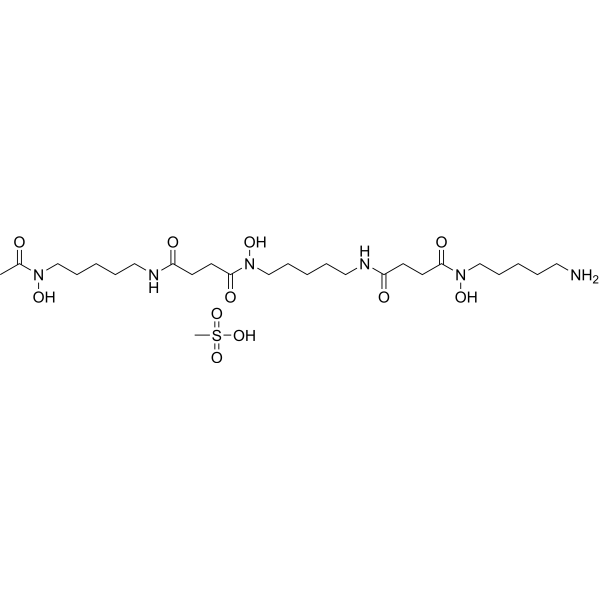
Deferoxamine mesylate (Deferoxamine B mesylate) is an iron chelator (binds to Fe(III) and many other metal cations), is widely used to reduce iron accumulation and deposition in tissues. Deferoxamine mesylate upregulates HIF-1α levels with good antioxidant activity. Deferoxamine mesylate also shows anti-proliferative activity, can induce apoptosis and autophagy in cancer cells. Deferoxamine mesylate can be used in studies of diabetes, neurodegenerative diseases as well as anti-cancer and anti-COVID-19 .
loading...
    loading...
433
433 Publications Verification
Cat. No.: HY-B1625
CAS No.: 70-51-9
Synonyms: Deferoxamine B; Deferriferrioxamine B; Deferrioxamine
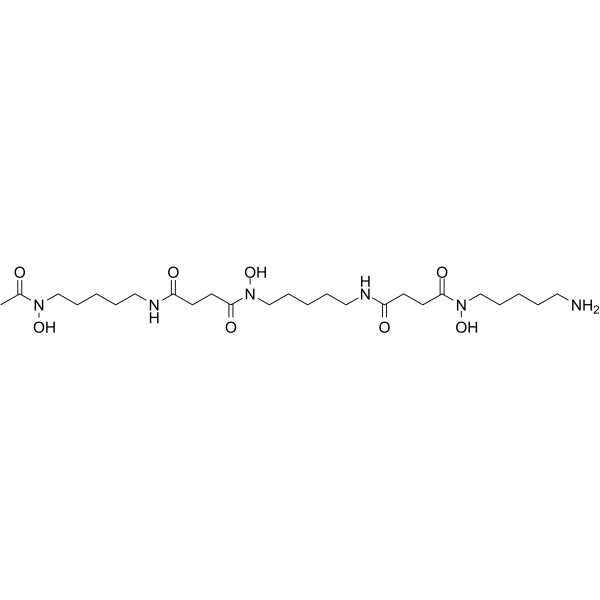
Deferoxamine (Deferoxamine B) is an iron chelator (binds to Fe(III) and many other metal cations), is widely used to reduce iron accumulation and deposition in tissues. Deferoxamine upregulates HIF-1α levels with good antioxidant activity. Deferoxamine also shows anti-proliferative activity, can induce apoptosis and autophagy in cancer cells. Deferoxamine can be used in studies of diabetes, neurodegenerative diseases as well as anti-cancer and anti-COVID-19 .
loading...
    loading...
129
129 Cited Publications
Cat. No.: HY-12040
CAS No.: 488832-69-5
Purity:  99.80%
Synonyms: STA-4783
Research Areas:  

Cancer

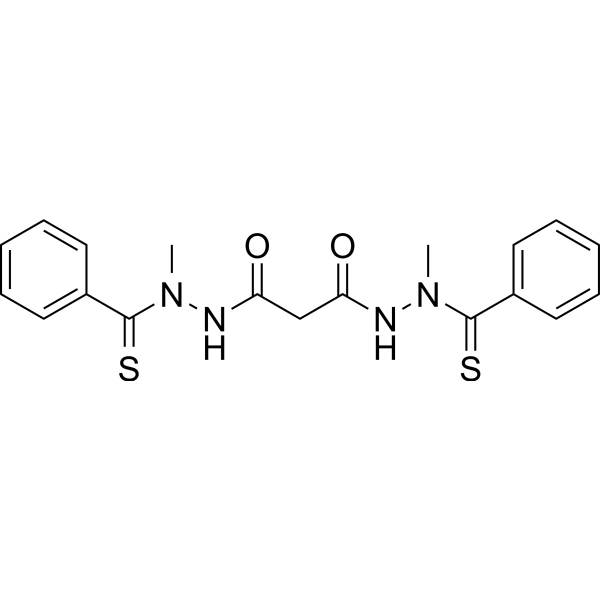
Elesclomol (STA-4783) is a potent copper ionophore and promotes copper-dependent cell death (cuproptosis). Elesclomol specifically binds ferredoxin 1 (FDX1) α2/α3 helices and β5 strand. Elesclomol inhibits FDX1-mediated Fe-S cluster biosynthesis. Elesclomol is an oxidative stress inducer that induces cancer cell apoptosis. Elesclomol is a reactive oxygen species (ROS) inducer. Elesclomol can be used for Menkes and associated disorders of hereditary copper deficiency research .
loading...
    loading...
45
45 Cited Publications
Cat. No.: HY-D1533
CAS No.: 1447815-38-4
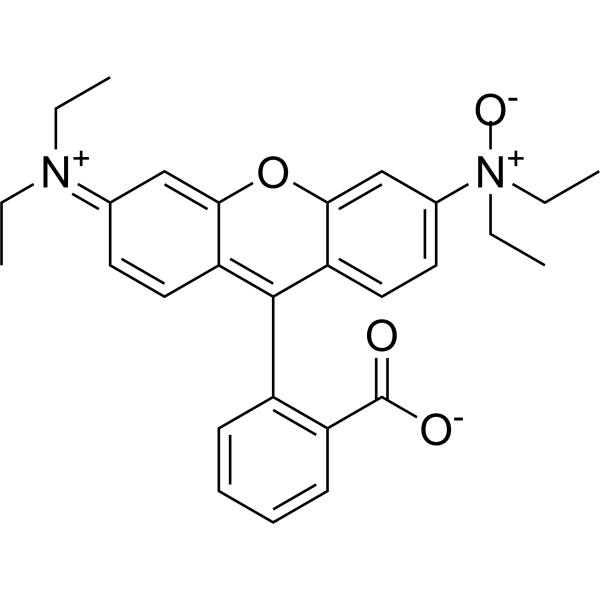
RhoNox-1 is a fluorescent probe for the specific detection of divalent iron ions, and when RhoNox-1 reacts with Fe 2+. RhoNox-1 can generate an irreversible orange (red) fluorescent product (Ex/Em:540/575 nm) . FeRhoNox-1 can enter the cell well, suitable for the detection of Fe 2+ in living cells, and tends to be localized in the Golgi apparatus .
loading...
    loading...
29
29 Cited Publications
Cat. No.: HY-D1913
Fe2Orange is a Fe 2+ selective probe with an excitation wavelength of 543 nm and an emission wavelength of 580 nm. Fe2Orange emits fluorescence after binding to intracellular Fe 2+, thereby achieving specific labeling of Fe 2+. Fe2Orange is used to detect the content and distribution of Fe 2+ in cells .
loading...
    loading...
17
17 Cited Publications
Cat. No.: HY-126823
CAS No.: 234075-45-7
Purity:  95.33%
Synonyms: PGSK diacetate (5/6-mixture)
Target:  

Fluorescent Dye

Research Areas:  

Others

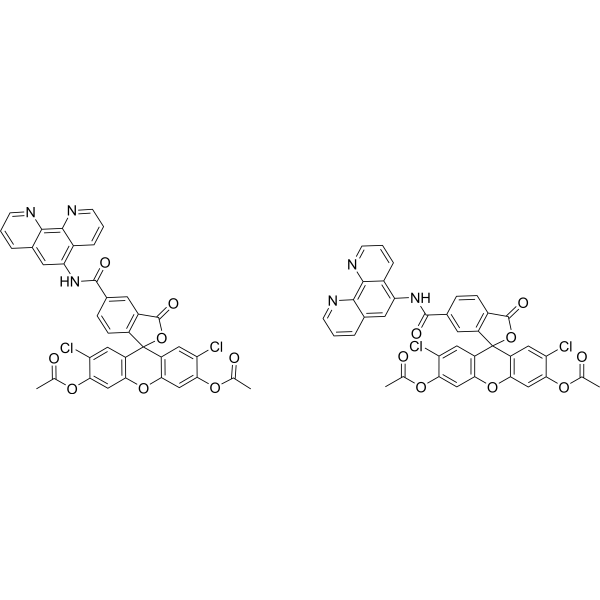
Phen green SK (PGSK) diacetate (PGSK diacetate (5/6-mixture)) is a metal ion-sensitive fluorescent probe that can penetrate cell membranes. Phen green SK (PGSK) diacetate can react with a variety of metal ions, including Fe 2+, Cd 2+, Co 2+, Ni 2+, Zn 2+, etc. Phen green SK (PGSK) diacetate chelates Fe 2+, resulting in fluorescence quenching, which can be restored when a membrane-permeable chelator is added, thereby reflecting the changes in the intracellular chelatable iron pool. The excitation/emission maxima of Phen green SK diacetate are 507/532 nm, respectively .
loading...
    loading...
11
11 Cited Publications
Cat. No.: HY-16168A
CAS No.: 214766-78-6
Synonyms: FE 200486 free base
Target:  

GnRH Receptor Apoptosis

Research Areas:  

Endocrinology Cancer

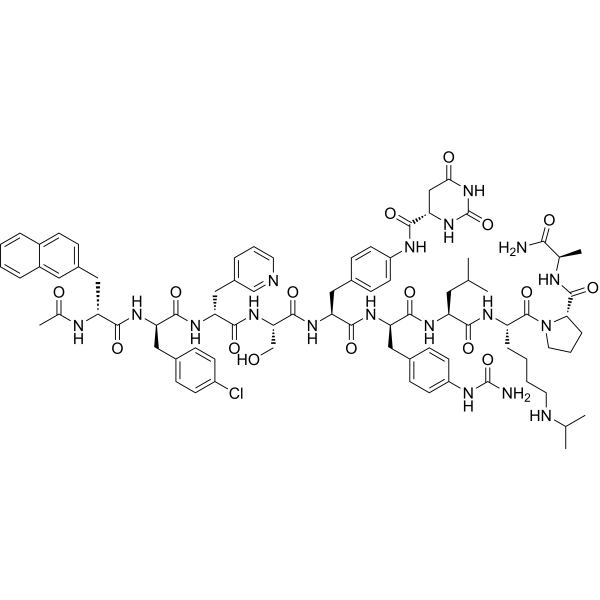
Degarelix acetate (FE 200486) is a decapeptide that shows high affinity/selectivity to human gonadotropin-releasing hormone (GnRH) receptor (IC50 = 3 nM). Degarelix acetate Degarelix acetate (FE 200486) is used for the research of prostate cancer .
loading...
    loading...
11
11 Cited Publications
Cat. No.: HY-16168
CAS No.: 934016-19-0
Synonyms: FE 200486
Target:  

GnRH Receptor

Research Areas:  

Cancer

Degarelix acetate (FE 200486) is a decapeptide that shows high affinity/selectivity to human gonadotropin-releasing hormone (GnRH) receptor (IC50 = 3 nM). Degarelix acetate (FE 200486) is used for the research of prostate cancer .
loading...
    loading...
7
7 Cited Publications
Cat. No.: HY-K0322

MCE Cell Ferrous Iron (Fe2+) Assay Kit (Fluorometric) utilizes fluorescence detection technology to analyze the levels of ferrous ions (Fe2+) in cells.

loading...
    loading...
7
7 Cited Publications
Cat. No.: HY-D2295
Mito-FerroGreen is a mitochondria-specific Fluorescent indicator used to detect mitochondrial Fe 2+ levels (excitation: 488 nm; emission: 500-550 nm). Mito-FerroGreen can be applied to research related to colorectal cancer and chronic heart failure .
loading...
    loading...
6
6 Cited Publications
Cat. No.: HY-Y1841
CAS No.: 5144-89-8
Synonyms: 1,10-Phenanthroline monohydrate
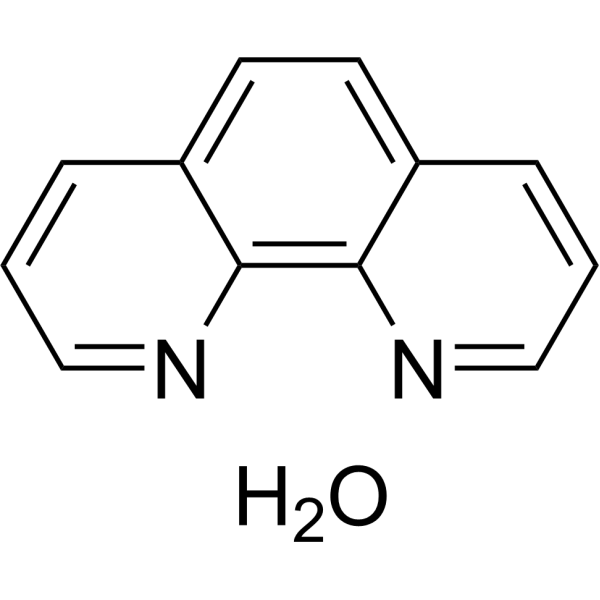
o-Phenanthroline (1,10-Phenanthroline) monohydrate, a metal chelator, prevents the induction of chromosomal aberrations in streptozotocin-treated cells. o-Phenanthroline monohydrate forms a red chelate with Fe 2+ that absorbs maximally at 510 nm. o-Phenanthroline (1,10-Phenanthroline) monohydrate is also a MMP inhibitor .
loading...
    loading...
6
6 Cited Publications
Cat. No.: HY-W004544
CAS No.: 66-71-7
Synonyms: 1,10-Phenanthroline
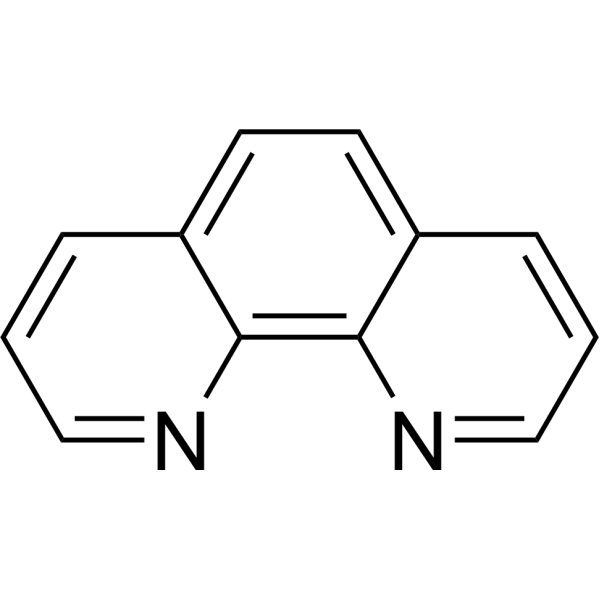
o-Phenanthroline (1,10-Phenanthroline), a metal chelator, prevents the induction of chromosomal aberrations in streptozotocin-treated cells. o-Phenanthroline (1,10-Phenanthroline) forms a red chelate with Fe 2+ that absorbs maximally at 510 nm. o-Phenanthroline (1,10-Phenanthroline) is also a MMP inhibitor .
loading...
    loading...
4
4 Cited Publications
Cat. No.: HY-N0928
CAS No.: 500-44-7
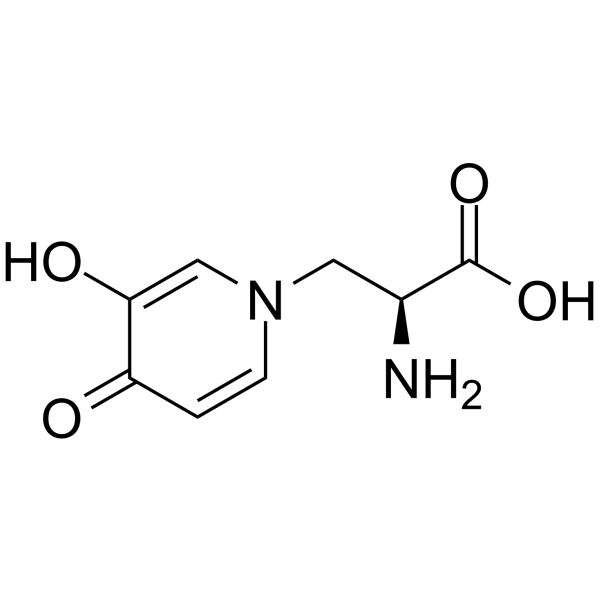
Mimosine, a tyrosine analog , can act as an antioxidant by its potent iron-binding activity . Mimosine is a known chelator of Fe(III) . Mimosine induces apoptosis through metal ion chelation, mitochondrial activation and ROS production in human leukemic cells . Anti-cancer, antiinflammation.
loading...
    loading...
4
4 Cited Publications
Cat. No.: HY-B1306
CAS No.: 61-78-9
Synonyms: p-Aminohippuric acid
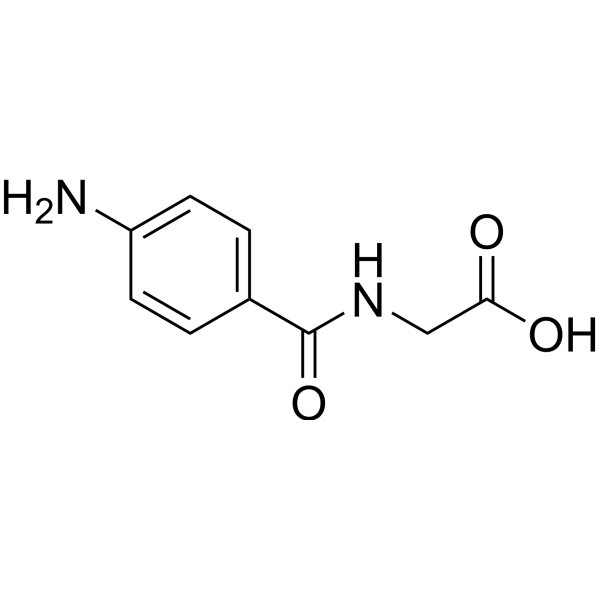
4-Aminohippuric acid (p-Aminohippuric acid) is a coordination ligand for metal ions (such as Cu 2+, Fe 3+, Hg 2+) and a functionalization reagent for nanomaterials. 4-Aminohippuric acid can coordinate with metal ions or modify the surface of materials such as carbon nanotubes and gold nanoparticles through amino and carboxyl groups. 4-Aminohippuric acid can form stable complexes with metal ions or participate in the synthesis of nanomaterials as a reducing agent/stabilizer, enriching metal ions or giving nanoparticles peroxidase-mimicking activity. 4-Aminohippuric acid can be used to construct highly sensitive electrochemical sensors or colorimetric sensors to detect and quantitatively analyze heavy metal ions such as copper, iron, and mercury in environmental water samples and biological samples. 4-Aminohippuric acid may also be a biomarker for attention-deficit/hyperactivity disorder (ADHD) .
loading...
    loading...
3
3 Cited Publications
Cat. No.: HY-137805
CAS No.: 69898-45-9
Purity:  99.96%
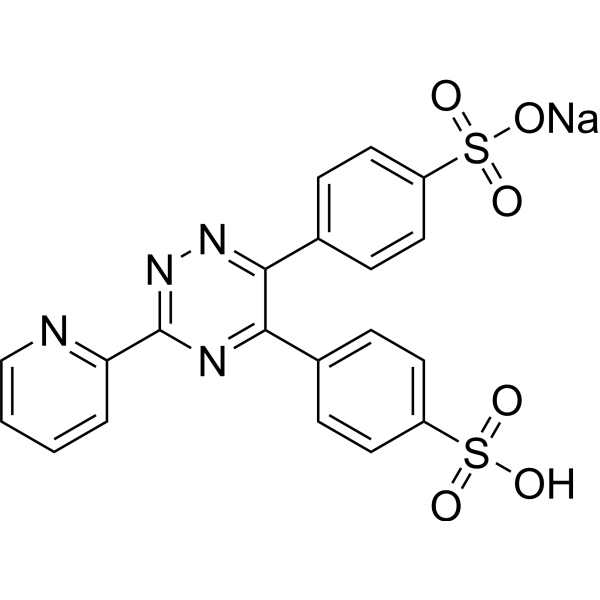
Ferrozine is a spectrophotometric reagent for iron ions, can react with divalent Fe to form a stable magenta complex species. The complex has an absorption peak at 562 nm . Ferrozine-based colorimetric assays can quantify iron in cells
loading...
    loading...
3
3 Cited Publications
Cat. No.: HY-122844
CAS No.: 1227948-82-4
Purity:  99.66%
Synonyms: BI-853520; IN-10018
Target:  

FAK

Research Areas:  

Cancer

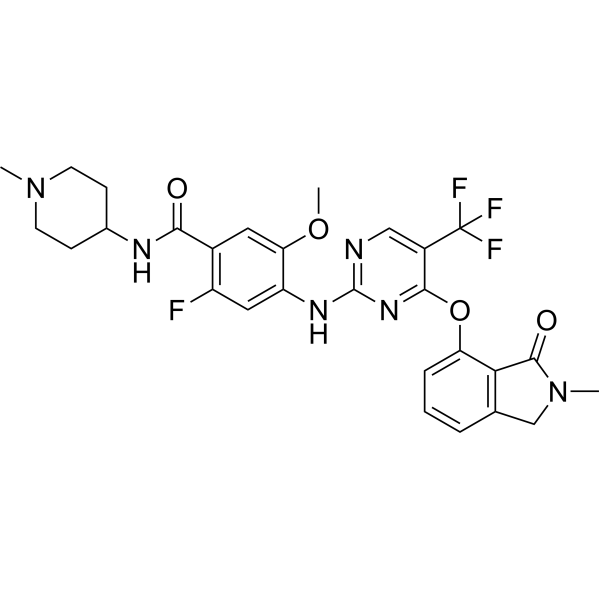
Ifebemtinib (BI 853520) is an orally active and potent focal adhesion kinase (FAK) inhibitor (recombinant FAK IC50=1 nM). Ifebemtinib shows anti-proliferative activity against cancer cells. Ifebemtinib inhibits FER Kinase and FES Kinase with IC50s of 900 nM and 1040 nM, respectively .
loading...
    loading...
3
3 Cited Publications
Cat. No.: HY-N10473
CAS No.: 957-86-8
Target:  

Bacterial Fungal

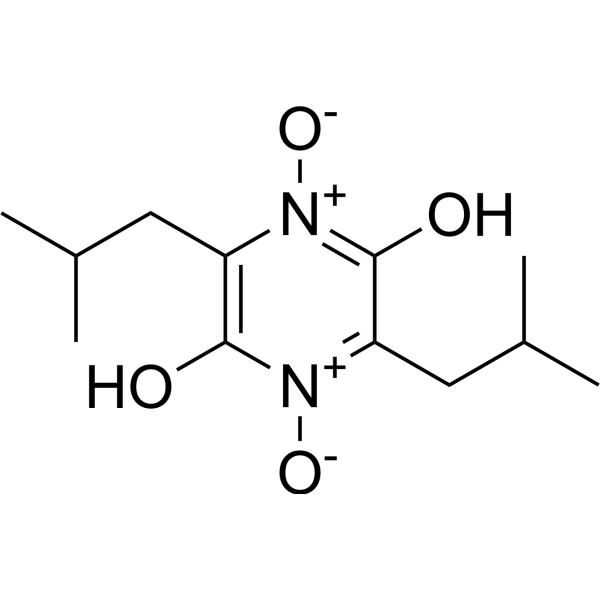
Pulcherriminic acid is a cyclic dipeptide antimicrobial agent with high affinity for Fe 3+, found mainly in Bacillus and yeast. Pulcherriminic acid chelates iron ions through a non-enzymatic reaction to form the extracellular red pigment pulcherrimin, which competes for iron nutrition and thus achieves an antibacterial effect. Pulcherriminic acid has great applications in food, agriculture and medical industries .
loading...
    loading...
3
3 Cited Publications
Cat. No.: HY-B1625R
CAS No.: 70-51-9
Synonyms: Deferoxamine B (Standard); Deferriferrioxamine B (Standard); Deferrioxamine (Standard)
Deferoxamine (Standard) is the analytical standard of Deferoxamine. This product is intended for research and analytical applications. Deferoxamine (Deferoxamine B) is an iron chelator (binds to Fe(III) and many other metal cations), is widely used to reduce iron accumulation and deposition in tissues. Deferoxamine upregulates HIF-1α levels with good antioxidant activity. Deferoxamine also shows anti-proliferative activity, can induce apoptosis and autophagy in cancer cells. Deferoxamine can be used in studies of diabetes, neurodegenerative diseases as well as anti-cancer and anti-COVID-19 .
loading...
    loading...
2
2 Cited Publications
Cat. No.: HY-107928
CAS No.: 9004-66-4
Synonyms: Fe dextran
Target:  

Transferrin Receptor

Research Areas:  

Metabolic Disease Cancer

Iron dextran (Fe dextran) can be used in the study of iron-deficiency anemia in animals .
loading...
    loading...
2
2 Cited Publications
Cat. No.: HY-W075707
CAS No.: 55266-17-6
Synonyms: Iron(III) meso-Tetra(4-carboxyphenyl)porphine chloride
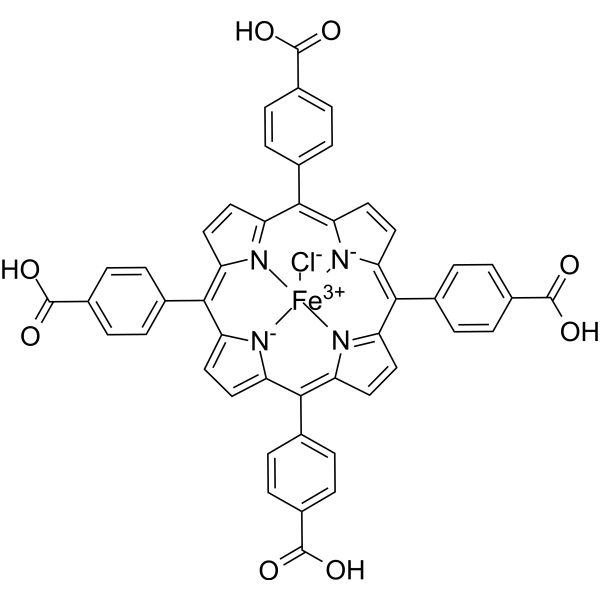
FeTCPP chloride (Iron(III) meso-Tetra(4-carboxyphenyl)porphine chloride) is a metallic porphyrin compound formed by the coordination of a central iron ion (Fe 3+) with four 4-carboxyphenylporphyrins (TCPP). FeTCPP chloride can be used as a catalyst for catalytic, electrochemical, photochemical and biomedical research. FeTCPP chloride has high photocatalytic performance for p-nitrophenol under visible light. FeTCPP chloride also has peroxisase-like activity, which is used in bionic catalysis research .
loading...
    loading...

