1. Search Result
Search Result
Results for "

Gaucher

" in MedChemExpress (MCE) Product Catalog:

44

Inhibitors & Agonists

1

Natural
Products

5

Isotope-Labeled Compounds

1

Click Chemistry

2

Oligonucleotides

Cat. No. Product Name Target Research Areas Chemical Structure
  • HY-17020
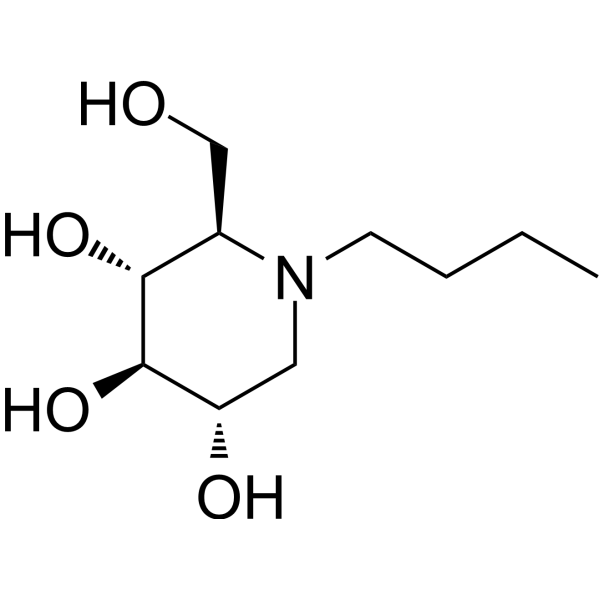
    Miglustat
    Maximum Cited Publications
    6 Publications Verification

    N-Butyldeoxynojirimycin; NB-DNJ; OGT 918

    Glucosylceramide Synthase (GCS) Neurological Disease Inflammation/Immunology
    Miglustat (N-Butyldeoxynojirimycin) is an orally active and reversible ceramide glucosyltransferase inhibitor. Miglustat can be used for the research of type I gaucher disease .
    Miglustat
  • HY-16743
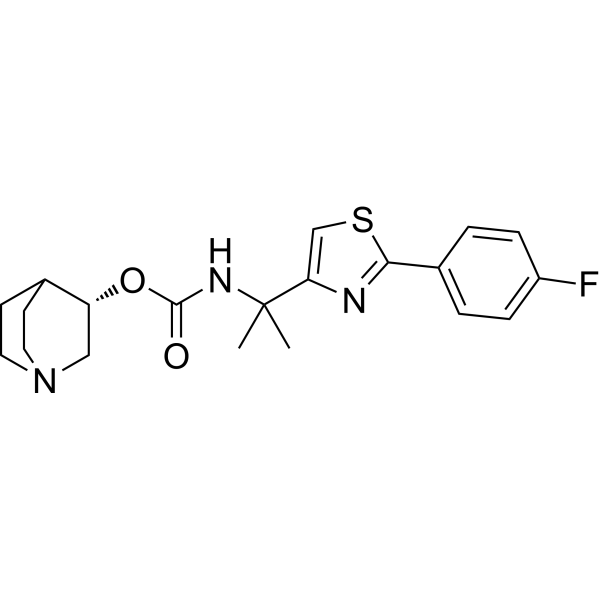
    Ibiglustat
    3 Publications Verification

    Venglustat; SAR402671; GZ402671

    Glucosylceramide Synthase (GCS) Metabolic Disease
    Ibiglustat (Venglustat) is an orally active, brain-penetrant glucosylceramide synthase (GCS) inhibitor. Ibiglustat can be used for the research of Gaucher disease type 3, Parkinson's disease associated with GBA mutations, Fabry disease, GM2 gangliosidosis, and autosomal dominant polycystic kidney disease .
    Ibiglustat
  • HY-N7745
    Glucosylsphingosine
    1 Publications Verification

    Glucopsychosine; Lyso-Gb1; Lyso-GL1

    Drug Metabolite Glycosidase Neurological Disease Metabolic Disease Cancer
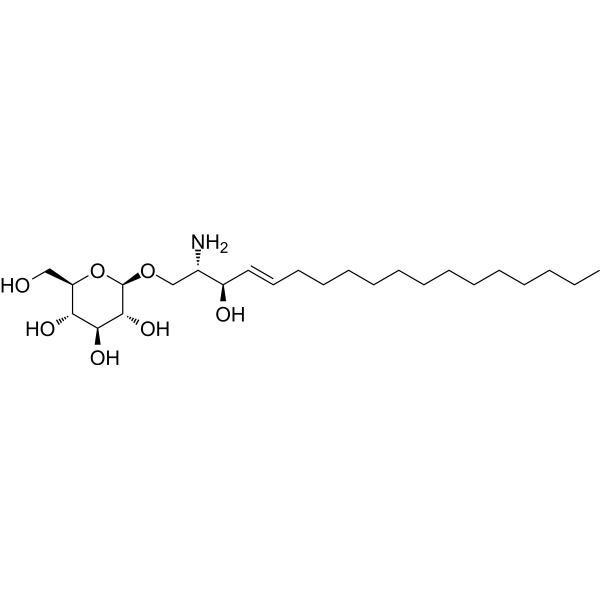
    Glucosylsphingosine (lyso-Gb1) is a deacylated form of glucosylceramide with neurotoxicity and is also a noncompetitively inhibitor of glucocerebrosidase with a Ki value of 30 μM. Glucosylsphingosine is promising for research of Krabbe and Gaucher disease .
    Glucosylsphingosine
  • HY-B1039A
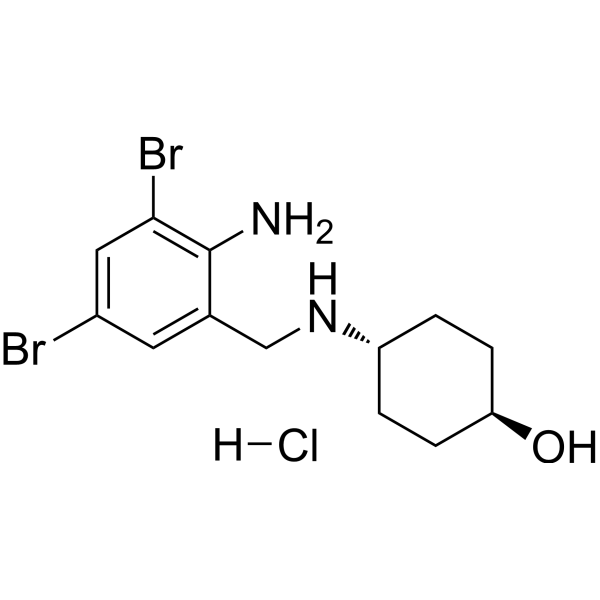
    Ambroxol hydrochloride
    3 Publications Verification

    NA-872 hydrochloride

    Glycosidase Autophagy Neurological Disease Metabolic Disease
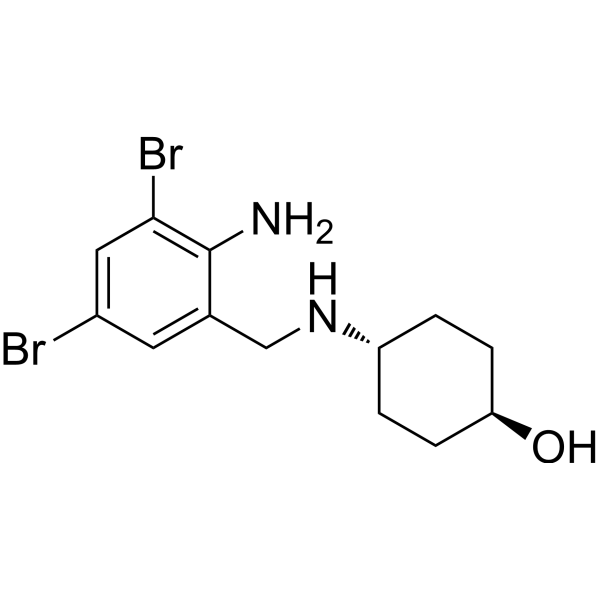
    Ambroxol hydrochloride (NA-872 hydrochloride), an active metabolite of the proagent Bromhexine, has potent expectorant effects. Ambroxol hydrochloride is a glucocerebrosidase (GCase) chaperone and increases glucocerebrosidase activity. Ambroxol hydrochloride induces lung autophagy and has the potential for Parkinson disease and neuronopathic Gaucher disease research .
    Ambroxol hydrochloride
  • HY-17020A
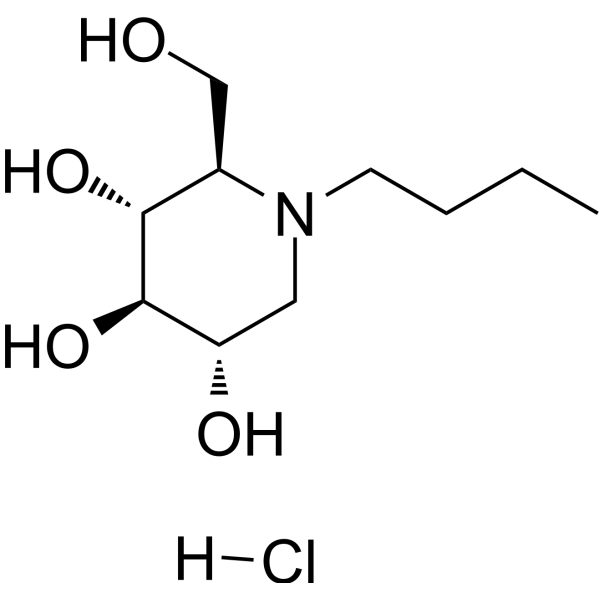
    Miglustat hydrochloride
    Maximum Cited Publications
    6 Publications Verification

    N-Butyldeoxynojirimycin hydrochloride; NB-DNJ hydrochloride; OGT 918 hydrochloride

    Glucosylceramide Synthase (GCS) Neurological Disease Inflammation/Immunology
    Miglustat (N-Butyldeoxynojirimycin) hydrochloride is an orally active and reversible ceramide glucosyltransferase inhibitor, with blood-brain barrier permeability. Miglustat hydrochloride can be used for the research of type I gaucher disease .
    Miglustat hydrochloride
  • HY-B1039
    Ambroxol
    3 Publications Verification

    NA-872

    Glycosidase Autophagy Neurological Disease Metabolic Disease
    Ambroxol (NA-872), an active metabolite of the proagent Bromhexine, has potent expectorant effects. Ambroxol is a glucocerebrosidase (GCase) chaperone and increases glucocerebrosidase activity. Ambroxol induces lung autophagy and has the potential for Parkinson disease and neuronopathic Gaucher disease research .
    Ambroxol
  • HY-147976

    Glycosidase Neurological Disease Metabolic Disease
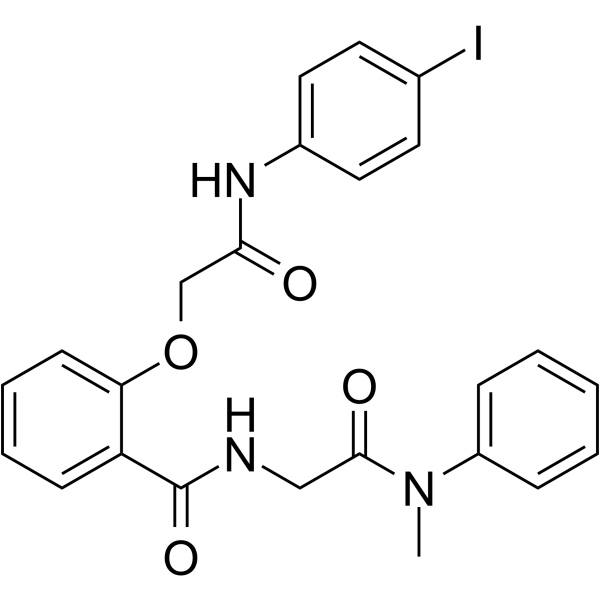
    Glucocerebrosidase-IN-1 (compound 11a) is a potent and selective GCase (glucocerebrosidase) inhibitor, with an IC50 of 29.3 μM and a Ki of 18.5 μM. Glucocerebrosidase-IN-1 can be used for the research of Gaucher disease (GD) and Parkinson’s disease (PD) .
    Glucocerebrosidase-IN-1
  • HY-W039897
    Methyl α-D-mannopyranoside
    1 Publications Verification

    α-Methyl-D-mannoside

    Environmental Pollutants Bacterial Infection
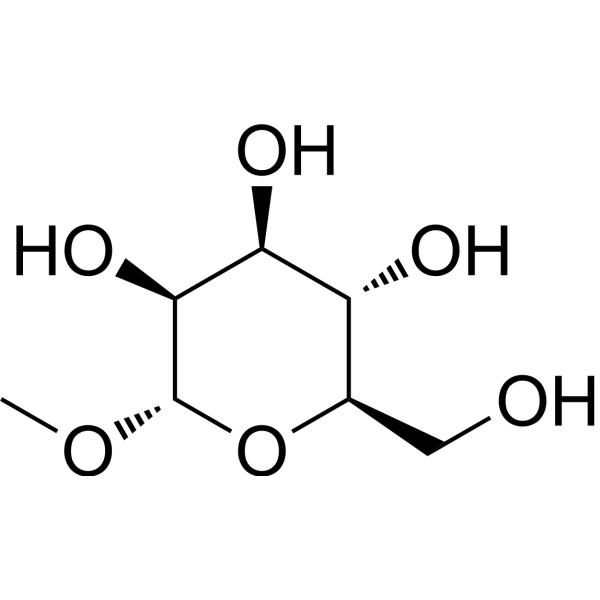
    Methyl α-D-mannopyranoside (α-Methyl-D-mannoside) is a methyl glycoside derivative and conformational stabilizer of α-D-mannopyranose. The glycosidic bond conformation of Methyl α-D-mannopyranoside is significantly affected by the environment. In aqueous solution, Methyl α-D-mannopyranoside stabilizes into a trans conformation via intermolecular hydrogen bonds; in the gas phase, however, steric interactions drive Methyl α-D-mannopyranoside to prefer a clockwise gauche conformation. Methyl α-D-mannopyranoside also serves as a major component of secondary cell wall polymers in some bacteria and an active precursor site for virus-targeted glycoproteins. Methyl α-D-mannopyranoside acts as an acceptor substrate for alternansucrase, mediating the transfer of D-glucopyranosyl groups to generate a variety of glycosylated oligosaccharide products, with methyl α-D-glucopyranosyl-(1→6)-α-D-mannopyranoside as the main component. Methyl α-D-mannopyranoside is applicable to studies on bacterial pathogenic mechanisms associated with mannose-specific fimbrial lectins .
    Methyl α-D-mannopyranoside
  • HY-W587488

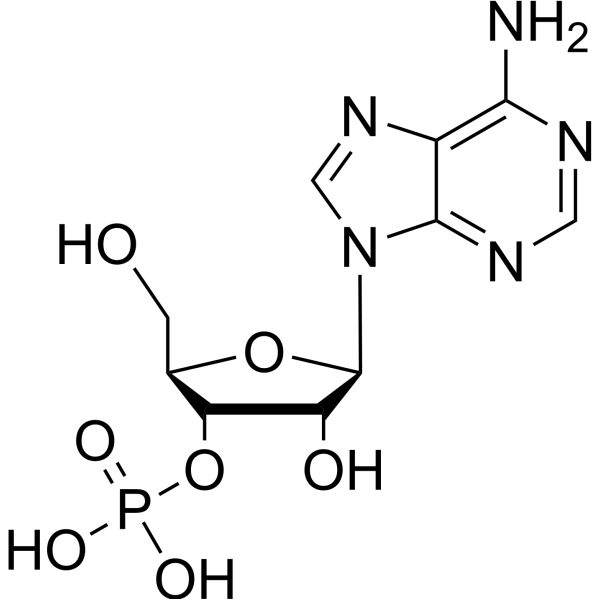
    3′-AMP

    Nucleoside Antimetabolite/Analog Cyclic GMP-AMP Synthase Cancer
    Adenosine 3’-monophosphate (3’-AMP) is a nucleotide. Adenosine 3’-monophosphate is a cyclic AMP production agonist. Adenosine 3’-monophosphate increases cyclic AMP levels concentration-dependently in NG108-15 cells. Adenosine 3’-monophosphate can be used in the determination of acid phosphatase activity of human serum, which is estabilished as a laboratory procedure in the diagnosis of prostate cancer, metastatic mammary cancer and Gaucher’s disease. Adenosine 3’-monophosphate inhibits human aortic and coronary vascular smooth muscle cell proliferation via A2B receptors .
    Adenosine 3′-monophosphate
  • HY-141866
    Acid Ceramidase-IN-1
    1 Publications Verification

    Ceramidase Neurological Disease
    Acid Ceramidase-IN-1 is orally active and blood-brain barrier penetrant acid ceramidase (AC, ASAH-1) inhibitor (hAC IC50=0.166 μM). Acid Ceramidase-IN-1 reduces AC activity, accumulates ceramide species (Cer (d18:0/16:0), Cer (d18:1/16:0)), and decreases sphingosine levels. Acid Ceramidase-IN-1 can be used for the study of severe neurological lysosomal storage diseases (LSDs) such as Gaucher’s disease (GD) and Krabbe’s disease (KD) .
    Acid Ceramidase-IN-1
  • HY-16743A
    Ibiglustat (L-Malic acid)
    3 Publications Verification

    Venglustat (L-Malic acid); SAR402671 (L-Malic acid); GZ402671 (L-Malic acid)

    Glucosylceramide Synthase (GCS) Metabolic Disease
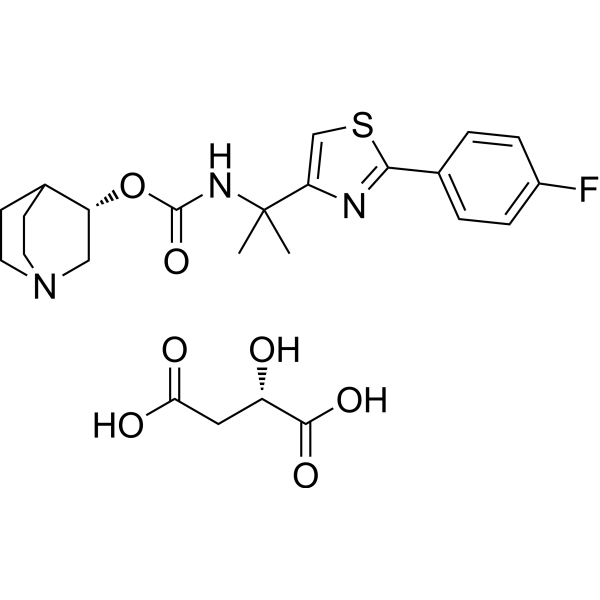
    Ibiglustat (Venglustat) L-Malic acid is an orally active, brain-penetrant glucosylceramide synthase (GCS) inhibitor. Ibiglustat L-Malic acid can be used for the research of Gaucher disease type 3, Parkinson's disease associated with GBA mutations, Fabry disease, GM2 gangliosidosis, and autosomal dominant polycystic kidney disease .
    Ibiglustat (L-Malic acid)
  • HY-170035

    C18 Glucosyl(β) ceramide (d18:1/18:0); D-glucosyl-β-1,1' N-stearoyl-D-erythro-sphingosine

    Fungal Wnt β-catenin Infection Neurological Disease Cancer
    GlcCer (d18:1/18:0) (C18 Glucosyl(β) ceramide (d18:1/18:0)) is a glycosphingolipids that activates the Wnt/β-catenin pathway by targeting LRP6. GlcCer (d18:1/18:0) drives EMT, migration, invasion and GBA1-mediated liver cancer metastasis. GlcCer (d18:1/18:0) accumulates to impair lysosomal function and induce toxic α-synuclein aggregation. GlcCer (d18:1/18:0) supports growth, sporulation, germination and virulence in Penicillium digitatum. GlcCer (d18:1/18:0) is reduced in demyelinated mouse corpus callosum. GlcCer (d18:1/18:0) can be used for the research of liver cancer, synucleinopathies, fungal, Parkinson’s disease and Gaucher disease .
    GlcCer (d18:1/18:0)
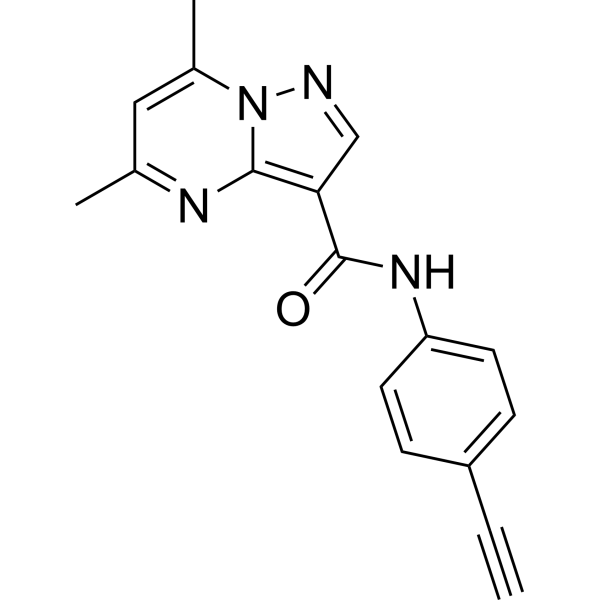
  • HY-117861

    Glycosidase Metabolic Disease
    ML198 is a glucocerebrosidase (GCase) modulator with an EC50 of 0.4 μM. ML198 is an activator and non-inhibitory chaperone of glucocerebrosidase. ML198 can be used for the research of Gaucher disease . ML198 is a click chemistry reagent, it contains an Alkyne group and can undergo copper-catalyzed azide-alkyne cycloaddition (CuAAc) with molecules containing Azide groups.
    ML198
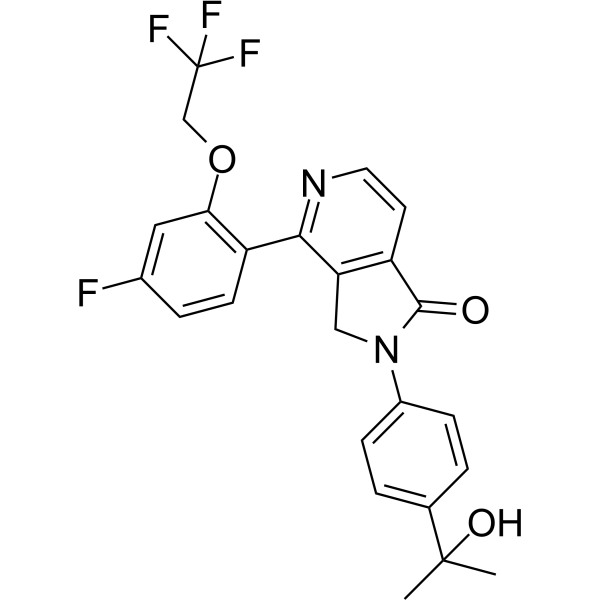
  • HY-120034
    NCGC 607
    1 Publications Verification

    Glycosidase α-synuclein Neurological Disease Metabolic Disease
    NCGC 607 is a noninhibitory small-molecule chaperone of glucocerebrosidase (GCase). NCGC 607 can increase GCase activity, reduce α-synuclein levels, and decrease glycolipid levels. NCGC 607 can be used in the research of Gaucher disease and Parkinson's disease .
    NCGC 607
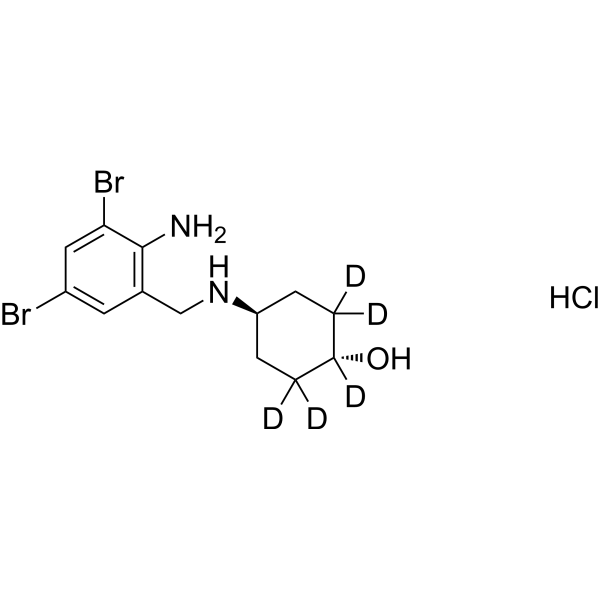
  • HY-B1039AS

    NA-872-d5 hydrochloride

    Isotope-Labeled Compounds Glycosidase Autophagy Neurological Disease Metabolic Disease
    Ambroxol-d5 (hydrochloride) is the deuterium labeled Ambroxol hydrochloride. Ambroxol hydrochloride (NA-872 hydrochloride), an active metabolite of the proagent Bromhexine, has potent expectorant effects. Ambroxol hydrochloride is a glucocerebrosidase (GCase) chaperone and increases glucocerebrosidase activity. Ambroxol hydrochloride induces lung autophagy and has the potential for Parkinson disease and neuronopathic Gaucher disease research .
    Ambroxol-d5 hydrochloride
  • HY-114043

    Glycosidase Metabolic Disease
    NCGC00092410 is a potent, selective, and nonsugar glucocerebrosidase (GC) inhibitor, with an IC50 of 31 nM. NCGC00092410 shows no activity against the related hydrolases at concentrations up to 77 μM. NCGC00092410, a GC chaperone, and increases the activity and lysosomal localization of glucocerebrosidase in mutant cell lines. NCGC00092410 can be used for the research of Gaucher disease .
    NCGC00092410
  • HY-16743B
    Ibiglustat succinate
    3 Publications Verification

    Venglustat succinate; SAR402671 succinate; GZ402671 succinate

    Glucosylceramide Synthase (GCS) Neurological Disease
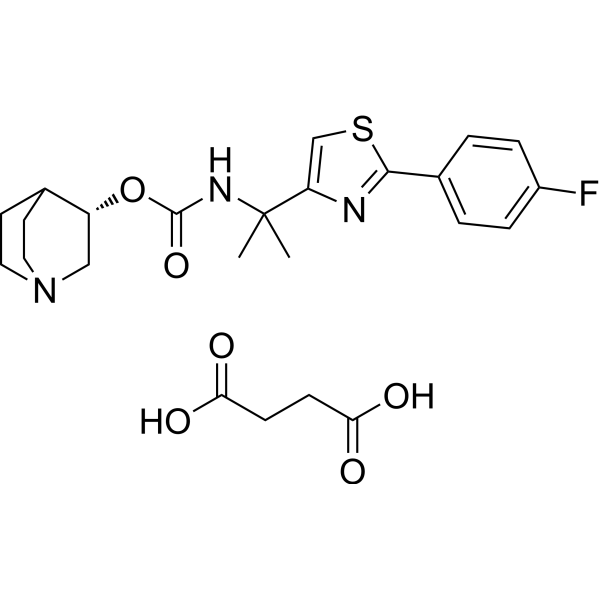
    Ibiglustat (Venglustat) succinate is an orally active, brain-penetrant glucosylceramide synthase (GCS) inhibitor. Ibiglustat succinate can be used for the research of Gaucher disease type 3, Parkinson's disease associated with GBA mutations, Fabry disease, GM2 gangliosidosis, and autosomal dominant polycystic kidney disease .
    Ibiglustat succinate
  • HY-144266

    Glucosylceramide synthase-IN-1

    Glucosylceramide Synthase (GCS) Neurological Disease Metabolic Disease
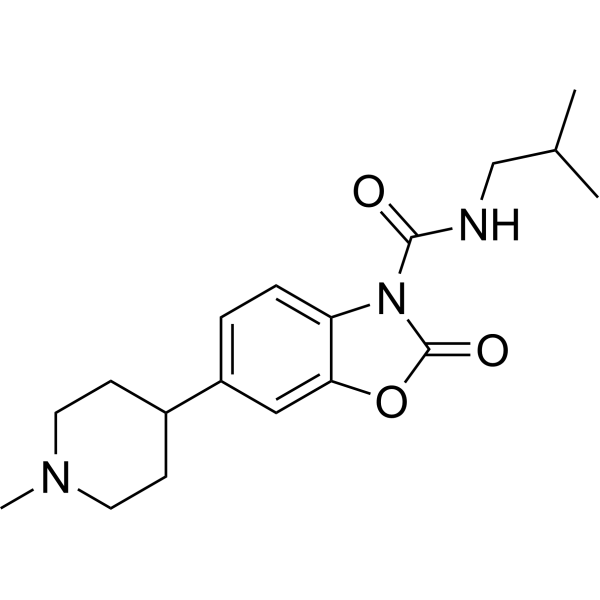
    Glucosylceramide synthase-IN-1 (T-036), a chemical probe, a potent, brain-penetrant and orally active glucosylceramide synthase (GCS) inhibitor with IC50s of 31 nM and 51 nM for human GCS and mouse GCS, respectively. Glucosylceramide synthase-IN-1 can be used for Gaucher's disease research .
    TP-060
  • HY-B1039AR

    NA-872 hydrochloride (Standard)

    Reference Standards Glycosidase Autophagy Neurological Disease Metabolic Disease
    Ambroxol (hydrochloride) (Standard) is the analytical standard of Ambroxol (hydrochloride). This product is intended for research and analytical applications. Ambroxol hydrochloride (NA-872 hydrochloride), an active metabolite of the proagent Bromhexine, has potent expectorant effects. Ambroxol hydrochloride is a glucocerebrosidase (GCase) chaperone and increases glucocerebrosidase activity. Ambroxol hydrochloride induces lung autophagy and has the potential for Parkinson disease and neuronopathic Gaucher disease research .
    Ambroxol hydrochloride (Standard)
  • HY-144267

    Glucosylceramide Synthase (GCS) Neurological Disease Metabolic Disease
    Glucosylceramide synthase-IN-2 (compound T-690) is a potent, brain-penetrant and orally active glucosylceramide synthase (GCS) inhibitor with IC50s of 15 nM and 190 nM for human GCS and mouse GCS, respectively.Glucosylceramide synthase-IN-2 exhibits noncompetitive type inhibition with C8-ceramide and UDP-glucose.Glucosylceramide synthase-IN-2 can be used for Gaucher's disease research .
    Glucosylceramide synthase-IN-2
  • HY-165035

    Glucocerebrosides; Gaucher cerebroside; GluCers (Gaucher's spleen)

    Endogenous Metabolite Neurological Disease Metabolic Disease
    Glucosylceramides are sphingolipid molecules found in both neuronal and non-neuronal mammalian tissues, as well as in low quantities across various plant species. Elevated levels of glucosylceramides provide cellular protection and prepare certain cells for proliferation; however, they have also been linked to obesity-induced insulin resistance in mice and to neuronal deficits observed in neuronopathic Gaucher disease .
    Glucosylceramide (gaucher's spleen)
  • HY-151240

    Endogenous Metabolite Neurological Disease
    Galactosylceramide (GalC) is a galactosylceramide that has been implicated in many physiological and pathological phenomena. For example, important lysosomal storage disorders such as Gaucher disease (GD) and neurodegenerative diseases are characterized by GlcCer accumulation.
    Galactosylceramide
  • HY-156155

    Glycosyltransferase Metabolic Disease
    GYS1-IN-1 (compound 783) is a glycogen synthase 1(GYS1) inhibitor. GYS1-IN-1 can be used for the study of GYS1 -mediated disease, such as Gaucher and Fabry diseases .
    GYS1-IN-1
  • HY-147976A

    Glycosidase Neurological Disease
    Glucocerebrosidase-IN-1 (compound 11a) hydrochloride is a potent and selective GCase (glucocerebrosidase) inhibitor, with an IC50 of 29.3 μM and a Ki of 18.5 μM. Glucocerebrosidase-IN-1 hydrochloride can be used for the research of Gaucher disease (GD) and Parkinson’s disease (PD) .
    Glucocerebrosidase-IN-1 hydrochloride
  • HY-110363

    N-Butyldeoxynojirimycin-d9 hydrochloride; NB-DNJ-d9 hydrochloride; OGT 918-d9 hydrochloride

    Isotope-Labeled Compounds Glucosylceramide Synthase (GCS) Neurological Disease
    Miglustat-d9 hydrochloride is the deuterium labeled Miglustat hydrochloride. Miglustat hydrochloride is an inhibitor of glucosylceramide synthase, primarily to treat Type I Gaucher disease (GD1) .
    Miglustat-d9 hydrochloride
  • HY-144270

    Glucosylceramide Synthase (GCS) Neurological Disease Metabolic Disease
    Glucosylceramide synthase-IN-3 (compound BZ1) is a potent, brain-penetrant and orally active glucosylceramide synthase (GCS) inhibitor with IC50s of 16 nM for human GCS.Glucosylceramide synthase-IN-3 can be used for Gaucher's disease research .
    Glucosylceramide synthase-IN-3
  • HY-17020R

    N-Butyldeoxynojirimycin (Standard); NB-DNJ (Standard); OGT 918 (Standard)

    Glucosylceramide Synthase (GCS) Reference Standards Neurological Disease Inflammation/Immunology
    Miglustat (Standard) is the analytical standard of Miglustat. This product is intended for research and analytical applications. Miglustat (N-Butyldeoxynojirimycin) is an orally active and reversible ceramide glucosyltransferase inhibitor. Miglustat can be used for the research of type I gaucher disease .
    Miglustat (Standard)
  • HY-126362

    Glycosidase Others
    ML266 is glucocerebrosidase (GCase) molecule chaperone with IC50 of 2.5 µM. ML266 binds to GCase and transports of the mutant protein to the lysosome, and resume the activity of GCase. ML266 dose not inhibit the GCase enzyme’s action. ML266 has the potential for the research of gaucher disease .
    ML266
  • HY-B1039C

    NA-872 acefylline; Acebrophylline

    Glycosidase Autophagy Neurological Disease Metabolic Disease
    Ambroxol (NA-872) acefylline, an active metabolite of the proagent Bromhexine, has potent expectorant effects. Ambroxol acefylline is a glucocerebrosidase (GCase) chaperone and increases glucocerebrosidase activity. Ambroxol acefylline induces lung autophagy and has the potential for Parkinson disease and neuronopathic Gaucher disease research .
    Ambroxol acefylline
  • HY-17020S

    N-Butyldeoxynojirimycin-d9; NB-DNJ-d9; OGT 918-d9

    Isotope-Labeled Compounds Glucosylceramide Synthase (GCS) Neurological Disease
    Miglustat-d9 is the deuterium labeled Miglustat. Miglustat (N-Butyldeoxynojirimycin) is an inhibitor of glucosylceramide synthase, primarily to treat Type I Gaucher disease (GD1) .
    Miglustat-d9
  • HY-N7745S2

    Glucopsychosine-13C6; Lyso-Gb1-13C6; Lyso-GL1-13C6

    Isotope-Labeled Compounds Others
    Glucosylsphingosine- 13C6 (Glucopsychosine- 13C6) is the 13C-labeled Glucosylsphingosine (HY-N7745). Glucosylsphingosine (lyso-Gb1) is a deacylated form of glucosylceramide with neurotoxicity and is also a noncompetitively inhibitor of glucocerebrosidase with a Ki value of 30 μM. Glucosylsphingosine is promising for research of Krabbe and Gaucher disease.
    Glucosylsphingosine-13C6
  • HY-172546

    LysoGM2 ammonium

    PKC Metabolic Disease
    Lyso-monosialoganglioside GM2 (LysoGM2) ammonium is a lysosphingolipid and protein kinase C inhibitor (IC50: 50 μM). Lyso-monosialoganglioside GM2 ammonium can inhibit the binding of protein kinase C to Phorbol 12,13-dibutyrate (HY-18985). Lyso-monosialoganglioside GM2 ammonium is a specific biomarker for GM2 gangliosidosis. Lyso-monosialoganglioside GM2 ammonium can be used in the research of sphingolipidoses .
    Lyso-monosialoganglioside GM2 ammonium
  • HY-165420

    Glycosidase Others
    GC-IN-2 (Compound 25) is a potent, selective, and nonsugar glucocerebrosidase inhibitor with an IC50 of 6.46 μM. GC-IN-2 can be utilized in research related to Gaucher disease .
    GC-IN-2
  • HY-17020AR

    N-Butyldeoxynojirimycin hydrochloride (Standard); NB-DNJ hydrochloride (Standard); OGT 918 hydrochloride (Standard)

    Glucosylceramide Synthase (GCS) Reference Standards Neurological Disease Inflammation/Immunology
    Miglustat (hydrochloride) (Standard) is the analytical standard of Miglustat (hydrochloride). This product is intended for research and analytical applications. Miglustat (N-Butyldeoxynojirimycin) hydrochloride is an orally active and reversible ceramide glucosyltransferase inhibitor. Miglustat hydrochloride can be used for the research of type I gaucher disease .
    Miglustat hydrochloride (Standard)
  • HY-B1039R

    NA-872 (Standard)

    Reference Standards Glycosidase Autophagy Neurological Disease Metabolic Disease
    Ambroxol (Standard) is the analytical standard of Ambroxol. This product is intended for research and analytical applications. Ambroxol (NA-872), an active metabolite of the proagent Bromhexine, has potent expectorant effects. Ambroxol is a glucocerebrosidase (GCase) chaperone and increases glucocerebrosidase activity. Ambroxol induces lung autophagy and has the potential for Parkinson disease and neuronopathic Gaucher disease research .
    Ambroxol (Standard)
  • HY-156020

    Glycosidase Metabolic Disease
    Glucocerebrosidase-IN-2 (compound 12) is a quinazoline analogue and an inhibitor of glucocerebrosidase (GC). Glucocerebrosidase-IN-2 has the potential to improve GC translocation to lysosomes in Gaucher disease patient-derived cells (mostly carrying the N370S mutation). Glucocerebrosidase-IN-2 inhibits the hydrolysis of 4-methylumbelliferone β-D-glucopyranoside (4MU) and fluorescent glycosylceramide (FlourGC) in N370S mutant tissues with an AC50 of 25.29 μM .
    Glucocerebrosidase-IN-2
  • HY-153592

    Glycosidase Others
    Therapeutic agent-1 is a heteroaryl compound that can be used in Gaucher disease glucocerebrosidase activity enzyme replacement therapy .
    Therapeutic agent-1
  • HY-157679

    Endogenous Metabolite Cardiovascular Disease
    1-O-Hexadecyl-2-eicosapentaenoyl-SN-glycero-3-phosphocholine is a phospholipid present in blood plasma and blood cells .
    1-O-Hexadecyl-2-eicosapentaenoyl-SN-glycero-3-phosphocholine
  • HY-109514

    Recombinant GCase (glucocerebrosidase)

    Glycosidase Neurological Disease Metabolic Disease
    Imiglucerase is a recombinant human glucocerebrosidase that glucosylceramide to glucose and ceramide. Imiglucerase can be used for the study of type 1 (non-neuronopathic) and type 3 (chronic neuronopathic) Gaucher's disease .
    Imiglucerase
  • HY-16743C

    Venglustat hydrochloride; SAR402671 hydrochloride; GZ402671 hydrochloride

    Glucosylceramide Synthase (GCS) Metabolic Disease
    Ibiglustat hydrochloride is an orally active, brain-penetrant glucosylceramide synthase (GCS) inhibitor. Ibiglustat hydrochloride can be used for the research of Gaucher disease type 3, Parkinson's disease associated with GBA mutations, Fabry disease, GM2 gangliosidosis, and autosomal dominant polycystic kidney disease .
    Ibiglustat hydrochloride
  • HY-W739944

    NA-872-d5

    Isotope-Labeled Compounds Autophagy Glycosidase Neurological Disease Metabolic Disease
    Ambroxol-d5 (NA-872-d5) is deuterium labeled Ambroxol. Ambroxol (NA-872), an active metabolite of the proagent Bromhexine, has potent expectorant effects. Ambroxol is a glucocerebrosidase (GCase) chaperone and increases glucocerebrosidase activity. Ambroxol induces lung autophagy and has the potential for Parkinson disease and neuronopathic Gaucher disease research .
    Ambroxol-d5
  • HY-181469

    Adamantanyl GluCer (d18:1/2:0); Adamantanyl glucosylceramide (d18:1/2:0); AdaGluCer (d18:1/2:0)

    Glycosidase Metabolic Disease
    C2 Adamantanyl glucosylceramide (d18:1/2:0) (Adamantanyl GluCer (d18:1/2:0)) is an inhibitor of glucocerebrosidase (GCC) and LacCer synthase. At low doses, C2 Adamantanyl glucosylceramide (d18:1/2:0) increases intracellular glycolipid levels by inhibiting glucocerebrosidase. C2 Adamantanyl glucosylceramide (d18:1/2:0) alters glycolipid metabolism. C2 Adamantanyl glucosylceramide (d18:1/2:0) can be used for the research of Gaucher disease and Fabry disease .
    C2 Adamantanyl glucosylceramide (d18:1/2:0)
  • HY-178216

    Glycosidase Neurological Disease
    Glycosidase-IN-3 (example 92) is a pyrimidine compound targeting beta-glucocerebrosidase, which can be used in the research of related diseases such as Gaucher's disease and Parkinson's disease .
    Glycosidase-IN-3
  • HY-206259

    Glucosylceramide Synthase (GCS) Metabolic Disease
    CCG-203586 is a brain-penetrant glucosylceramide synthase (GCS) inhibitor. CCG-203586 reduces GCS production and brain levels, blocks the first committed step in ganglioside biosynthesis, and lowers downstream ganglioside levels. CCG-203586 can be used for the research of Tay-Sachs, Sandhoff disease, and types 2 and 3 Gaucher disease .
    CCG-203586

Inquiry Online

Your information is safe with us. * Required Fields.

Salutation


Country or Region *

Applicant Name *


Organization Name *

Department *


Email Address *


Product Name *

Cat. No.


Requested quantity *

Phone Number *


Remarks

Inquiry Online

Inquiry Information

Product Name:
Cat. No.:
Quantity:
MCE Japan Authorized Agent:

