158 Results for "

Hyaluronic acid

" in MedChemExpress (MCE) Product Catalog:
Products (158)

158 Results for "Hyaluronic acid" in MCE Product Catalog:

21
21 Publications Verification
Cat. No.: HY-B0633A
CAS No.: 9004-61-9
Synonyms: Hyaluronan; Hyaluronate
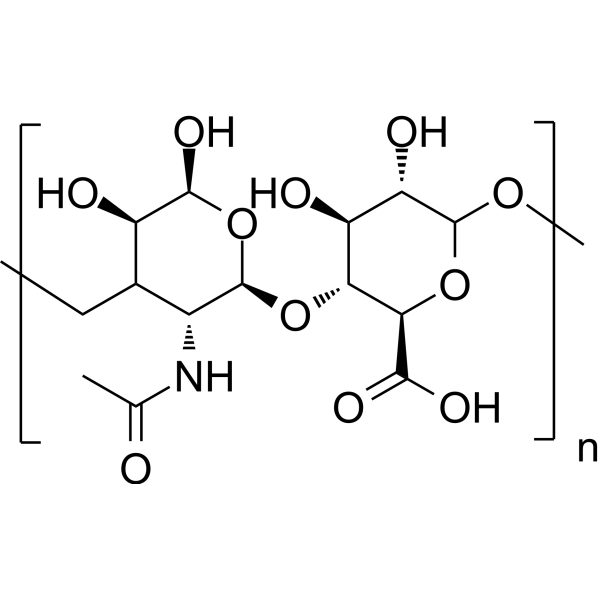
Hyaluronic acid is a biopolymer composed of repeating units of disaccharides with various applications. Hyaluronic acid is a major component of the extracellular matrix (ECM). Hyaluronic acid is synthesized at the plasma membrane. Increased hyaluronic acid levels are associated with tumor cell growth, adhesion, migration, invasion and angiogenesis in digestive cancers. Hyaluronic acid participates in tissue remodeling and rapid cell proliferation in some physiological processes including embryonic morphogenesis and wound-healing. Hyaluronic acid activates the PI3K-Akt signaling. Hyaluronic acid acts as a regulator of cancer-associated lymphangiogenesis. Hyaluronic acid also enhances cell invasion and angiogenesis by promoting proteolytic MMP-9 binding to cell surface or stimulating MMP-9 binding to cell surface. Hyaluronic acid can be used as drug delivery for sodium butyrate to improve the anti-proliferative activity on breast cancer cell line. Hyaluronic acid can be studied in joint diseases, wound healing and cancer .
loading...
    loading...
21
21 Publications Verification
Cat. No.: HY-B0633
CAS No.: 9067-32-7
Synonyms: Sodium hyaluronate
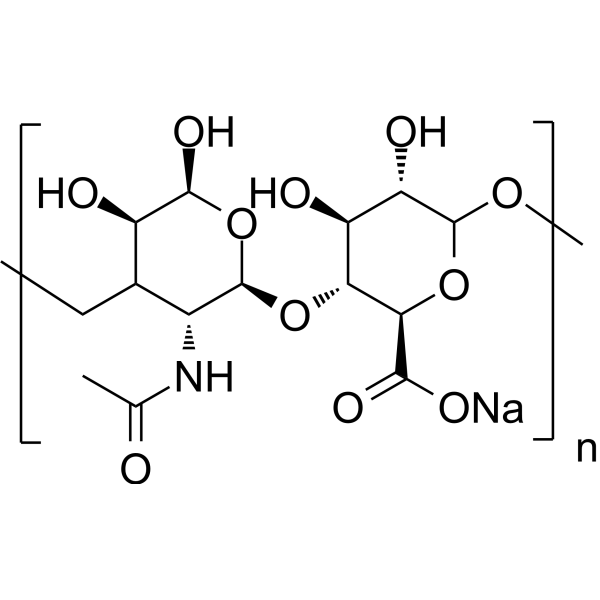
Hyaluronic acid sodium (Sodium hyaluronate) is a biopolymer composed of repeating units of disaccharides with various applications. Hyaluronic acid sodium is a major component of the extracellular matrix (ECM). Hyaluronic acid sodium is synthesized at the plasma membrane. Increased hyaluronic acid sodium levels are associated with tumor cell growth, adhesion, migration, invasion and angiogenesis in digestive cancers. Hyaluronic acid sodium participates in tissue remodeling and rapid cell proliferation in some physiological processes including embryonic morphogenesis and wound-healing. Hyaluronic acid sodium activates the PI3K-Akt signaling. Hyaluronic acid sodium acts as a regulator of cancer-associated lymphangiogenesis. Hyaluronic acid sodium also enhances cell invasion and angiogenesis by promoting proteolytic MMP-9 binding to cell surface or stimulating MMP-9 binding to cell surface. Hyaluronic acid sodium can be used as drug delivery for sodium butyrate to improve the anti-proliferative activity on breast cancer cell line. Hyaluronic acid sodium can be studied in joint diseases, wound healing and cancer .
loading...
    loading...
19
19 Cited Publications
Cat. No.: HY-107910
CAS No.: 37326-33-3
Synonyms: Hyaluronate 4-glycanohydrolase, Bovine testes; Hyaluronoglucosaminidase, Bovine testes
Target:  

NF-κB

Research Areas:  

Inflammation/Immunology Cancer

Hyaluronidase, Bovine testes (Hyaluronate 4-glycanohydrolase; Hyaluronoglucosaminidase) is an endoglycosidase that depolymerizes Hyaluronic acid (HA) (HY-B0633A) by cleavage of glycosidic bonds. Hyaluronidase degrades HA and activates membrane receptors that trigger pathways converging in NF-κB activation. Hyaluronidase is employed in the research of granulomatous foreign body reactions, soft-tissue necrosis caused by vascular compromise and uncomplicated nodules, overcorrection, inflamed nodules or tissue ischemia associated with HA filler injection .
loading...
    loading...
19
19 Cited Publications
Cat. No.: HY-108903
CAS No.: 37326-33-3
Synonyms: Vorhyaluronidase alfa; rHuPH 20
Research Areas:  

Metabolic Disease

Hyaluronidase (human recombinant) (Vorhyaluronidase alfa; rHuPH 20) is an enzyme that catalyzes the degradation of hyaluronic acid. Hyaluronidase (human recombinant) is used to improve the absorption and dispersal of parenteral fluids, medications, and contrast media .
loading...
    loading...
19
19 Cited Publications
Cat. No.: HY-108903A
CAS No.: 37326-33-3
Purity:  95.00%
Research Areas:  

Endocrinology

Hyaluronidase, Ovine testes is an endoglycosidase. Hyaluronidase, Ovine testes specifically degrades Hyaluronic acid (HY-B0633A) and Chondroitin sulfate (HY-B2162) by hydrolyzing β-glycosidic bonds in acidic mucopolysaccharides. Hyaluronidase, Ovine testes disperses follicular cells during fertilization by breaking down the hyaluronic acid-rich cumulus. Hyaluronidase, Ovine testes can be used in the study of fertility-related diseases .
loading...
    loading...
9
9 Cited Publications
Cat. No.: HY-N0187
CAS No.: 90-33-5
Synonyms: Hymecromone; 4-MU
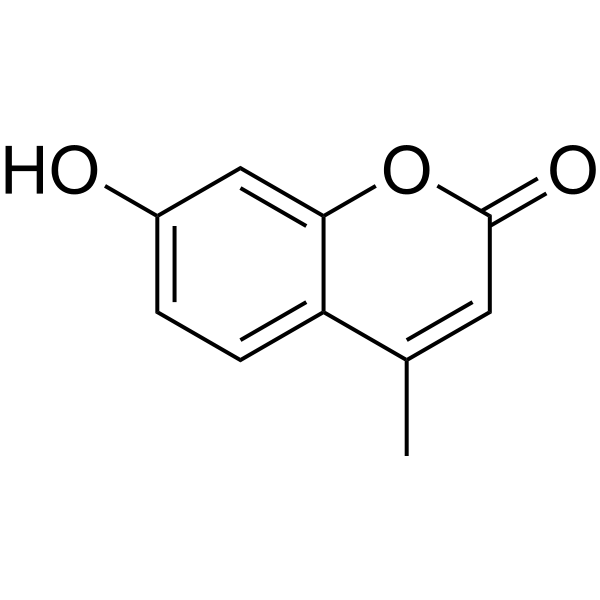
4-Methylumbelliferone is a hyaluronic acid biosynthesis inhibitor with antitumoral and antimetastatic effects.
loading...
    loading...
3
3 Cited Publications
Cat. No.: HY-P0123
CAS No.: 1621717-95-0
Target:  

Inhibitory Antibodies

Research Areas:  

Others

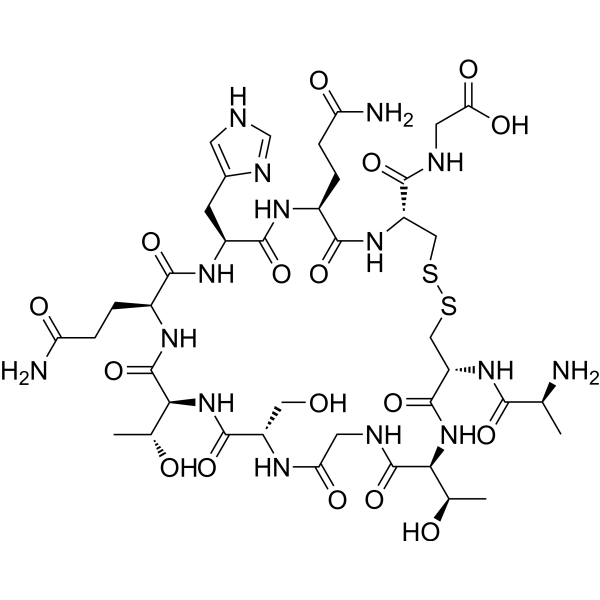
SPACE peptide is a skin penetrating peptide (SPPs). SPACE peptide can enhance topical delivery of a macromolecule, hyaluronic acid .
loading...
    loading...
3
3 Cited Publications
Cat. No.: HY-149897
CAS No.: 3009761-01-4
Purity:  99.36%
Research Areas:  

Cancer

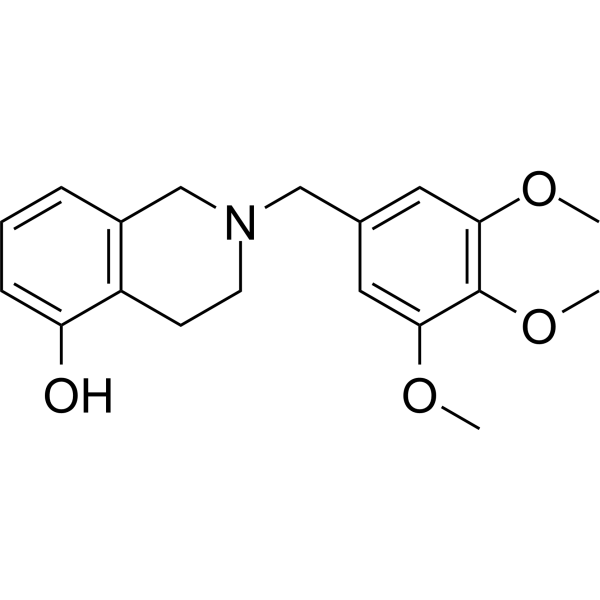
HA-CD44 interaction inhibitor 2 is a CD44 inhibitor that can inhibit the interaction between Hyaluronic acid (HA) (HY-B0633A) and CD44. HA-CD44 interaction inhibitor 2 acts as an antiproliferative agent against CD44 + cancer cells. HA-CD44 interaction inhibitor 2 can disrupt the integrity of cancer spheres and reduce cancer cell viability in a dose-dependent manner. HA-CD44 interaction inhibitor 2 is applicable for tumor research .
loading...
    loading...
2
2 Cited Publications
Cat. No.: HY-P990859

Research Areas:  

Cancer

Anti-CD44 Antibody (Hermes-1) is a kind of rat IgG2a κ chimeric antibody, targeting to human CD44. Anti-CD44 Antibody (Hermes-1) blocks the binding of hyaluronan to CD44. Anti-CD44 Antibody (Hermes-1) restores (Platelet-derived Growth Factor-BB)-induced β-receptor activation and motility in fibroblasts. Anti-CD44 Antibody (Hermes-1) causes partial loss of the anti-aging effect of hyaluronic .
loading...
    loading...
2
2 Cited Publications
Cat. No.: HY-P70832
Purity:  ≥ 95%, as determined by reducing SDS-PAGE.
Synonyms: HABP2; Factor VII Activating Protein; Hyaluronan Binding Protein 2; Hyaluronan-Binding Protein 2; HGFAL; FVII Activator; PHBP; PHBSP; FSAP; Hyaluronic acid Binding Protein 2; HABP; Plasma Hyaluronan-Binding Protein; Hepatocyte Growth Factor Activator-Like
Species:  
Human
Source:  
HEK293
loading...
    loading...
1
1 Cited Publications
Cat. No.: HY-108036B
CAS No.: 439685-79-7
Purity:  ≥98.0%
Synonyms: Hydroxypropyl tetrahydropyrantriol
Research Areas:  

Metabolic Disease

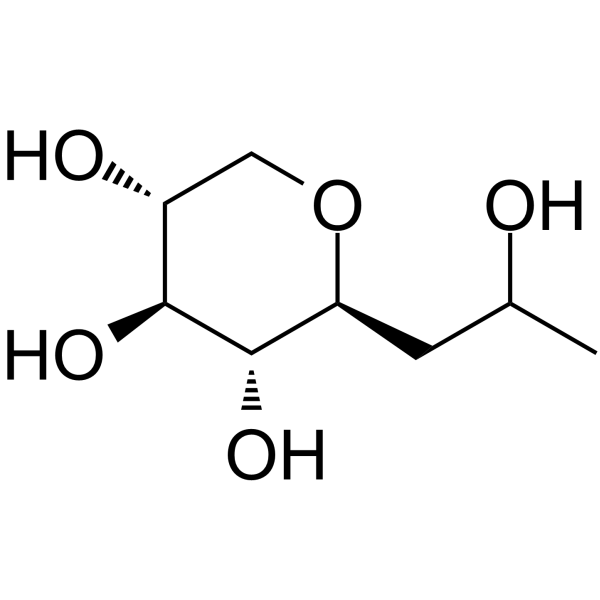
Pro-xylane (Hydroxypropyl tetrahydropyrantriol) is a bioactive C-glycoside that targets the biosynthesis pathway of glycosaminoglycans/mucopolysaccharides (GAGs) in the skin matrix and can be absorbed transdermally. Pro-xylane stimulates the biosynthesis of GAGs in fibroblasts, enhances the structural stability of the skin extracellular matrix, improves skin elasticity and moisturizing ability, and delays wrinkle formation. Pro-xylane can effectively promote the synthesis of collagen fibers and hyaluronic acid in the dermis. Pro-xylane is used in the field of anti-aging cosmetics to improve skin hydration and elasticity. Pro-xylane is eco-friendly and biodegradable .
loading...
    loading...
1
1 Cited Publications
Cat. No.: HY-108036
CAS No.: 439685-79-7
Purity:  ≥98.0%
Synonyms: Hydroxypropyl tetrahydropyrantriol (30% in water)
Research Areas:  

Metabolic Disease

Pro-xylane (30% in water) (Hydroxypropyl tetrahydropyrantriol) is a bioactive C-glycoside that targets the biosynthesis pathway of glycosaminoglycans/mucopolysaccharides (GAGs) in the skin matrix and can be absorbed transdermally. Pro-xylane (30% in water) stimulates the biosynthesis of GAGs in fibroblasts, enhances the structural stability of the skin extracellular matrix, improves skin elasticity and moisturizing ability, and delays wrinkle formation. Pro-xylane (30% in water) can effectively promote the synthesis of collagen fibers and hyaluronic acid in the dermis. Pro-xylane (30% in water) is used in the field of anti-aging cosmetics to improve skin hydration and elasticity. Pro-xylane (30% in water) is eco-friendly and biodegradable .
loading...
    loading...
Cat. No.: HY-B0633C
CAS No.: 9004-61-9
Hyaluronic acid (Mw: 1000-2000 Da) is a long-chain unbranched polysaccharide with a molecular weight of 1000-2000 Da. Hyaluronic acid (Mw: 2000 Da) inhibits IL-1β expression and increases LC3-II. Hyaluronic acid (Mw: 1000-2000Da) can regulate tissue homeostasis and stress resistance, promote angiogenesis and tissue remodeling. Hyaluronic acid (Mw: 1000-2000 Da) has good biocompatibility and biodegradability, and can be used in drug delivery systems and tissue engineering. Hyaluronic acid (Mw: 2000 Da) can reduce facial skin blemishes and sagging .
loading...
    loading...
Cat. No.: HY-149898
CAS No.: 3052354-70-5
Purity:  99.34%
Research Areas:  

Cancer

HA-CD44 interaction inhibitor 1 is a CD44 inhibitor that can inhibit the interaction between Hyaluronic acid (HA) (HY-B0633A) and CD44. HA-CD44 interaction inhibitor 1 exerts an antiproliferative effect on CD44+ cancer cell lines. HA-CD44 interaction inhibitor 1 can be used for the research of cancer .
loading...
    loading...
Cat. No.: HY-B0633D
CAS No.: 9067-32-7
Hyaluronic acid sodium (MW 200-1560) is a biopolymer composed of repeating disaccharide units, with a molecular weight of 200-1560. Hyaluronic acid sodium is a major component of the extracellular matrix (ECM). It is synthesized on the plasma membrane. Hyaluronic acid sodium exerts its effects by binding to receptors CD44 and RHAMM. Hyaluronic acid sodium activates PI3K-Akt signaling. Hyaluronic acid sodium also enhances cell invasion and angiogenesis by promoting or stimulating the binding of proteolytic MMP-9 to the cell surface. Elevated hyaluronic acid levels are associated with tumor cell growth, adhesion, migration, invasion, and angiogenesis in digestive system cancers. Hyaluronic acid sodium is involved in tissue remodeling and rapid cell proliferation in several physiological processes, including embryonic morphogenesis and wound healing. Hyaluronic acid sodium can be used as a regulator of cancer-associated lymphangiogenesis. Hyaluronic acid sodium can be used as a drug delivery carrier for sodium butyrate, enhancing its anti-proliferative activity against breast cancer cell lines. Hyaluronic acid sodium can lubricate the corneal endothelium. Hyaluronic acid sodium can improve tissue hydration and enhance the resistance of cells to mechanical damage. Hyaluronic acid sodium has been conjugated with antibodies to ensure that the active compound continues to exert its effects at the site of inflammation. Hyaluronic acid sodium can be used in research in the fields of osteoarthritis, ophthalmology, cosmetic dermatology, oncology, and liver diseases .
loading...
    loading...
Cat. No.: HY-B0633E
CAS No.: 9004-61-9
Synonyms: Hyaluronan, low endotoxin; Hyaluronate, low endotoxin
Hyaluronic acid, low endotoxin (Hyaluronan, low endotoxin) is a biopolymer composed of repeating disaccharide units containing low levels of endotoxin. Hyaluronic acid is a major component of the extracellular matrix (ECM). It is synthesized on the plasma membrane. Hyaluronic acid exerts its effects by binding to receptors CD44 and RHAMM. Hyaluronic acid activates PI3K-Akt signaling. Hyaluronic acid also enhances cell invasion and angiogenesis by promoting or stimulating the binding of proteolytic MMP-9 to the cell surface. Elevated hyaluronic acid levels are associated with tumor cell growth, adhesion, migration, invasion, and angiogenesis in digestive system cancers. Hyaluronic acid is involved in tissue remodeling and rapid cell proliferation in several physiological processes, including embryonic morphogenesis and wound healing. Hyaluronic acid can be used as a regulator of cancer-associated lymphangiogenesis. Hyaluronic acid can be used as a drug delivery carrier for sodium butyrate, enhancing its anti-proliferative activity against breast cancer cell lines. Hyaluronic acid can lubricate the corneal endothelium. Hyaluronic acid can improve tissue hydration and enhance the resistance of cells to mechanical damage. Hyaluronic acid has been conjugated with antibodies to ensure that the active compound continues to exert its effects at the site of inflammation. Hyaluronic acid can be used in research in the fields of osteoarthritis, ophthalmology, cosmetic dermatology, oncology, and liver diseases .
loading...
    loading...
Cat. No.: HY-B0633B
CAS No.: 9004-61-9
Synonyms: Hyaluronan (MW 50000-100000); Hyaluronate (MW 50000-100000)
Hyaluronic acid (MW 50000-100000) (Hyaluronan (MW 50000-100000)) is a biopolymer composed of repeating units of disaccharides with a molecular weight of 50000-100000 Da. Hyaluronic acid (MW 50000-100000) can be used as a drug carrier for drug delivery .
loading...
    loading...
Cat. No.: HY-B0633I
CAS No.: 9067-32-7
Hyaluronic acid sodium (MW 800kDa) is a biopolymer composed of repeating units of disaccharides with various applications. Hyaluronic acid sodium is a major component of the extracellular matrix (ECM). Hyaluronic acid sodium is synthesized at the plasma membrane. Increased hyaluronic acid sodium levels are associated with tumor cell growth, adhesion, migration, invasion and angiogenesis in digestive cancers. Hyaluronic acid sodium participates in tissue remodeling and rapid cell proliferation in some physiological processes including embryonic morphogenesis and wound-healing. Hyaluronic acid sodium activates the PI3K-Akt signaling. Hyaluronic acid sodium acts as a regulator of cancer-associated lymphangiogenesis. Hyaluronic acid sodium also enhances cell invasion and angiogenesis by promoting proteolytic MMP-9 binding to cell surface or stimulating MMP-9 binding to cell surface. Hyaluronic acid sodium can be used as drug delivery for sodium butyrate to improve the anti-proliferative activity on breast cancer cell line. Hyaluronic acid sodium can be studied in joint diseases, wound healing and cancer .
loading...
    loading...
Cat. No.: HY-P991487

Research Areas:  

Inflammation/Immunology

LASN01 is a humanized antibody targeting IL-11R, with a Kd of 37 pM. LASN01 blocks the IL-11 signaling pathway via IL-11Rα, and inhibits the phosphorylation of STAT3 and ERK, as well as the expression of pro-inflammatory cytokines, hyaluronic acid, procollagen and fibrotic markers. LASN01 can be used in studies related to thyroid eye disease .
loading...
    loading...
Cat. No.: HY-N6613
CAS No.: 25990-10-7
Synonyms: Galacturonic acid polymer
Polygalacturonic acid (Galacturonic acid polymer) is transparent colloid, is a major component of the cell wall. Polygalacturonic acid can be used to prepare silver nanoparticles (AgNPs), as an antioxidant and anti-inflammatory that protect cells from destructive effect of elevated ROS and accelerate wound healing. Polygalacturonic acid nanoparticles also displays anti-bacterial activity .
loading...
    loading...

