45 Results for "

Hydroxyproline

" in MedChemExpress (MCE) Product Catalog:
Products (45)

45 Results for "Hydroxyproline" in MCE Product Catalog:

16
16 Publications Verification
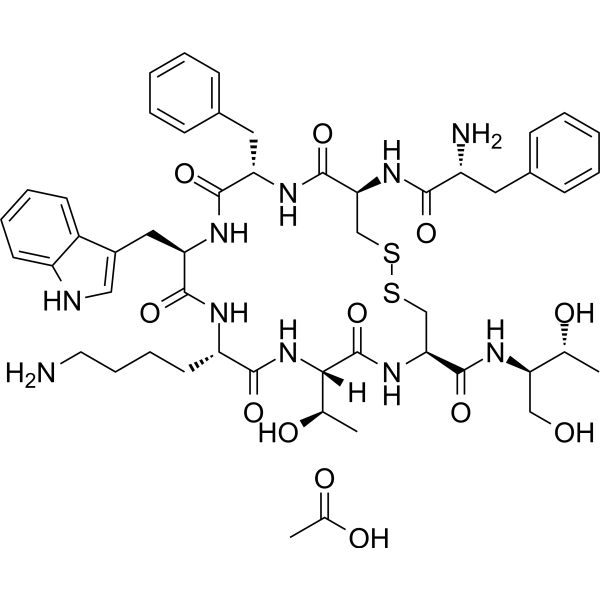
Cat. No.: HY-17365
CAS No.: 79517-01-4
Synonyms: SMS 201-995 acetate
Octreotide acetate, a long-acting synthetic analog of native somatostatin, inhibits growth hormone, glucagon, and insulin more potently.
loading...
    loading...
2
2 Cited Publications
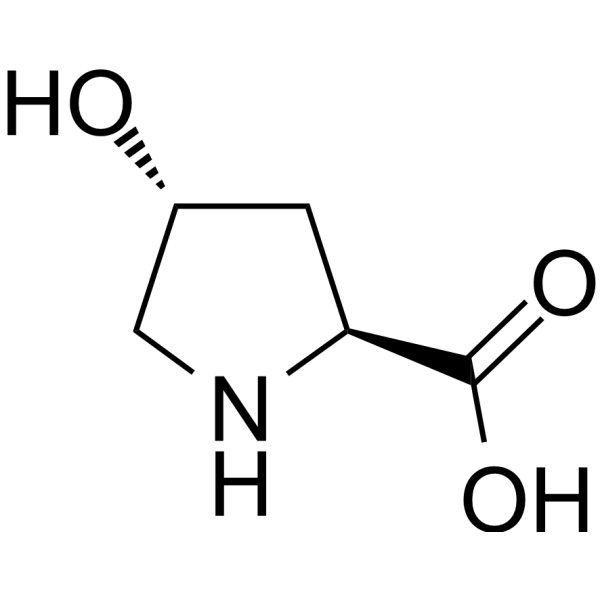
Cat. No.: HY-40135
CAS No.: 51-35-4
Synonyms: (2S,4R)-4-Hydroxypyrrolidine-2-carboxylic acid
L-Hydroxyproline, one of the hydroxyproline (Hyp) isomers, is a useful chiral building block in the production of many pharmaceuticals.
loading...
    loading...
1
1 Cited Publications
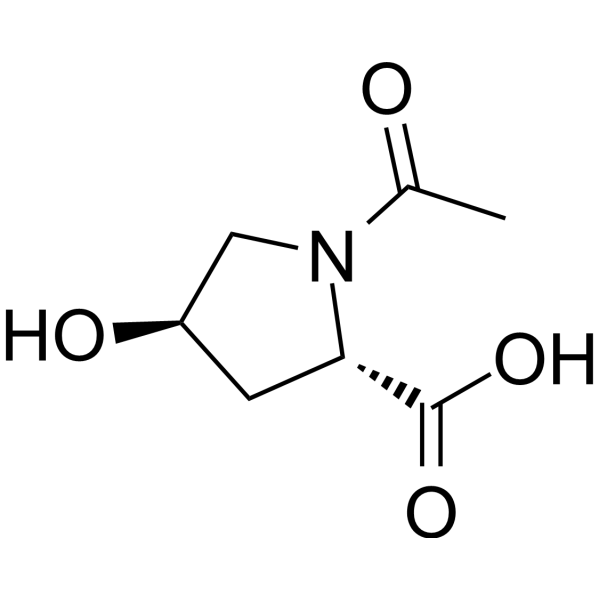
Cat. No.: HY-17490
CAS No.: 33996-33-7
Synonyms: N-Acetyl-L-Hydroxyproline
Oxaceprol (N-Acetyl-L-hydroxyproline), an orally active derivative of L-proline, possesses distinct anti-inflammatory activity. Oxaceprol is usually used for the research of osteoarthritis and rheumatoid arthritis .
loading...
    loading...
1
1 Cited Publications
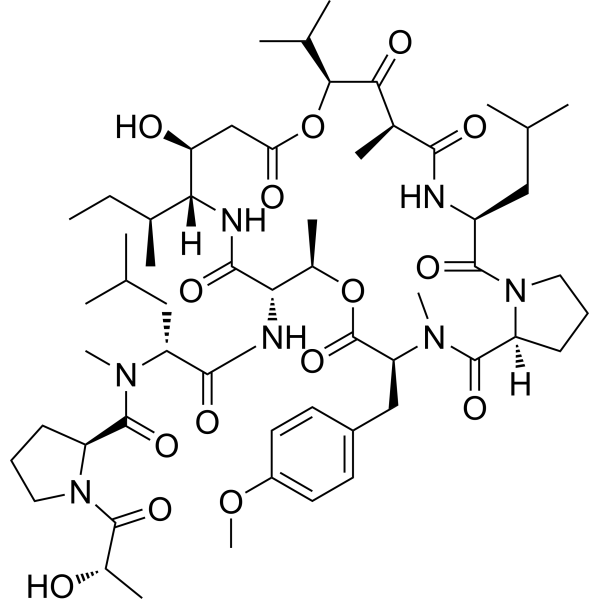
Cat. No.: HY-105055
CAS No.: 77327-05-0
Purity:  99.95%
Didemnin B is a depsipeptide extracted from the marine tunicate Trididemnin cyanophorum. Didemnin B can be used for the research of cancer .
loading...
    loading...
1
1 Cited Publications
Cat. No.: HY-142035
CAS No.: 58160-95-5
Purity:  99.70%
N-Propargylglycine is a brain-penetrant and orally active PRODH inhibitor. N-Propargylglycine covalently modifies enzyme-bound FAD and active site lysine, causing enzyme structural distortion, protein decay, and irreversible inhibition of proline and 4-hydroxyproline catabolism. N-Propargylglycine induces UPRmt, upregulates mitochondrial chaperones and YME1L1, enhances mitochondrial proteostasis, blocks astrocytic L-proline consumption, and abolishes L-proline’s ATP-maintaining and viability-protective effects. N-Propargylglycine stimulates neural processes, increases brain proline, hydroxyproline, and sarcosine levels, partially normalizes Huntington’s disease whole brain transcriptomes. N-Propargylglycine reduces hyperoxaluria, prevents calcium oxalate stone formation, reduces kidney tubular damage, and restores weight and survival in Grhpr knockout mice. N-Propargylglycine can be used for the research of breast cancer, neurodegenerative disorders, Huntington’s disease, and primary hyperoxaluria type 2 .
loading...
    loading...
Cat. No.: HY-125586
CAS No.: 21150-22-1
Purity:  ≥96.0%
Research Areas:  

Cancer

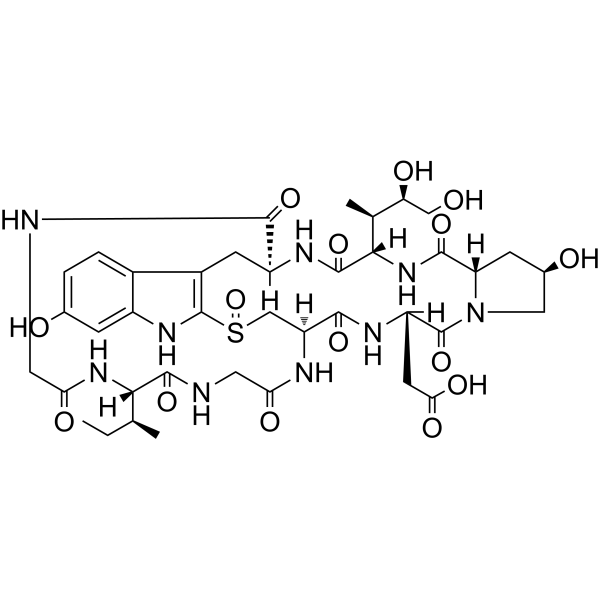
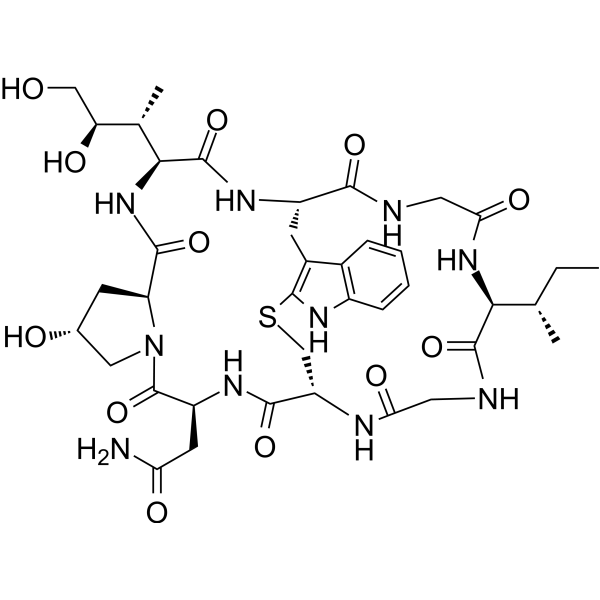
β-Amanitin is a cyclic peptide toxin in the poisonous Amanita phalloides mushroom. β-Amanitin inhibits inhibits eukaryotic RNA polymerase II and III. β-Amanitin inhibits protein synthesis. β-Amanitin can be used as a cytotoxic component of antibody-drug conjugates (ADCs) .
loading...
    loading...
Cat. No.: HY-40135S
CAS No.: 1356016-86-8
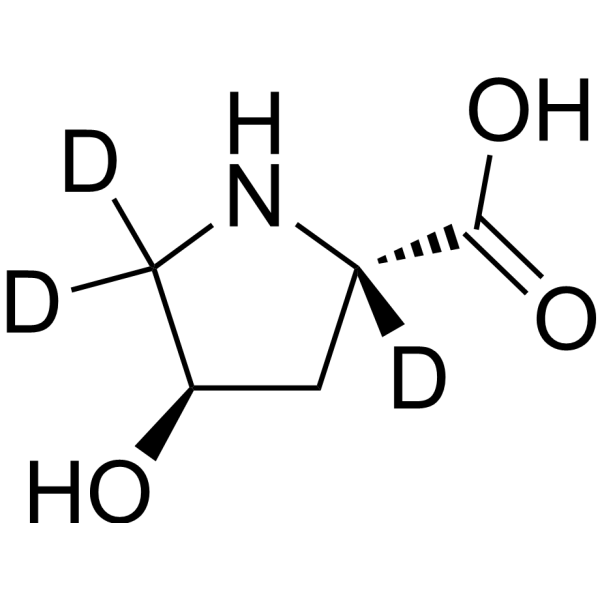
L-Hydroxyproline-d3 is the deuterium labeled L-Hydroxyproline. L-Hydroxyproline, one of the hydroxyproline (Hyp) isomers, is a useful chiral building block in the production of many pharmaceuticals.
loading...
    loading...
Cat. No.: HY-W337672
CAS No.: 18684-24-7
Synonyms: ProlylHydroxyproline; Pro-Hyp
Research Areas:  

Others

H-Pro-Hyp-OH is a collagen peptide composed of proline (Pro) and hydroxyproline (Hyp). H-Pro-Hyp-OH can be used in research on slowing down facial aging .
loading...
    loading...
Cat. No.: HY-W129161
CAS No.: 827306-88-7
Research Areas:  

Metabolic Disease

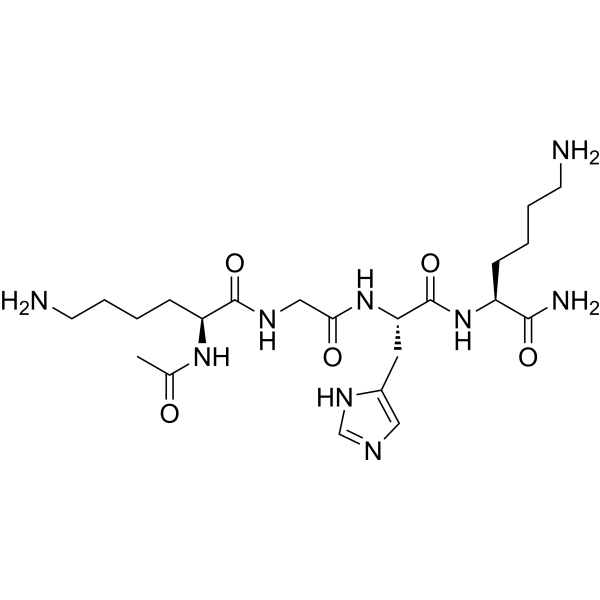
Acetyl tetrapeptide-3 is a synthetic peptide. Acetyl tetrapeptide-3 enhances the adhesion of hair follicles to the scalp but also promotes the development of new hair follicles. Acetyl tetrapeptide-3 stimulates the synthesis of collagen III in hair follicles. Acetyl tetrapeptide-3 combined with Biochanin A (HY-14595) and ginseng extracts, can stimulate dermal papilla extracellular matrix (ECM) proteins by increasing hydroxyproline, Collagen Type 3, and laminin, yielding a significant improvement in hair follicle size and hair anchoring .
loading...
    loading...
Cat. No.: HY-34666
CAS No.: 3398-22-9
(4S)-4-Hydroxy-D-proline is a D-proline derivative and aglycon core for synthesis of cell wall O-glycans of the green alga Chlamydomonas reinhardtii .
loading...
    loading...
Cat. No.: HY-W654232
CAS No.: 2734920-51-3
Synonyms: (2S,4R)-4-Hydroxypyrrolidine-2-carboxylic acid-d4
L-Hydroxyproline-d4 is deuterium labeled L-Hydroxyproline. L-Hydroxyproline, one of the hydroxyproline (Hyp) isomers, is a useful chiral building block in the production of many pharmaceuticals .
loading...
    loading...
Cat. No.: HY-121235
CAS No.: 17737-65-4
Purity:  ≥98.0%
Synonyms: SCH-10304
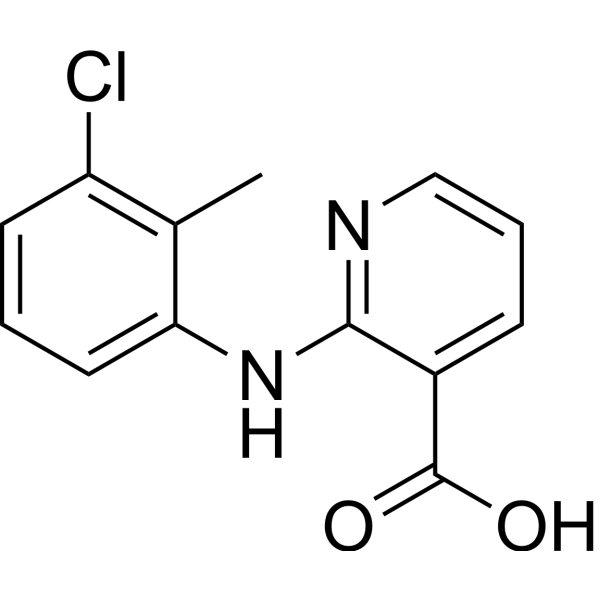
Clonixin (SCH-10304) is an orally active non-steroidal anti-inflammatory agent (NSAID) that inhibits COX synthesis. Clonixin acts as a voltage-gated L-type calcium channel blocker, exerts vasodilatory effects by antagonizing Ca 2+ in vascular smooth muscle. Clonixin inhibits TGF-β, reduces lung coefficient, immune cell infiltration level, oxidative stress response, airway resistance, hydroxyproline content and collagen deposition. Clonixin can be used in research related to inflammation such as idiopathic pulmonary fibrosis and moderate to severe pain .
loading...
    loading...
Cat. No.: HY-P10447
CAS No.: 103651-09-8
Synonyms: Fengycin IX; SNA-60-367-3
Target:  

Phospholipase Fungal

Research Areas:  

Infection

Plipastatin A1 (Fengycin IX; SNA-60-367-3) is a lipopeptide with phospholipase A2 inhibitory activity. Plipastatin A1 inhibits conidial germination of Botrytis cinerea in vitro and reduces the incidence of gray mold on tomato leaves. Plipastatin A1 is applicable to research related to gray mold [1][2].
loading...
    loading...
Cat. No.: HY-40135R
CAS No.: 51-35-4
Synonyms: (2S,4R)-4-Hydroxypyrrolidine-2-carboxylic acid (Standard)
L-Hydroxyproline (Standard) is the analytical standard of L-Hydroxyproline. This product is intended for research and analytical applications. L-Hydroxyproline, one of the hydroxyproline (Hyp) isomers, is a useful chiral building block in the production of many pharmaceuticals.
loading...
    loading...
Cat. No.: HY-W008205
CAS No.: 88050-17-3
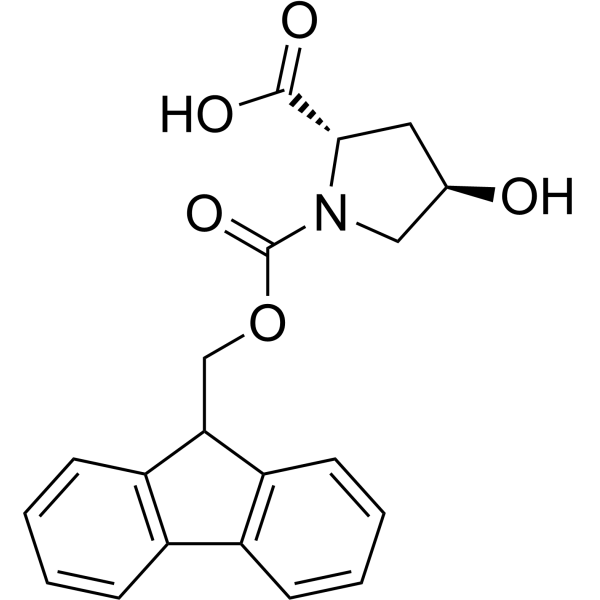
Synonyms: Fmoc-L-Hydroxyproline
Fmoc-Hyp-OH is a biochemical reagent that can be used as a biological material or organic compound for life science related research.
loading...
    loading...
Cat. No.: HY-148231
CAS No.: 58255-46-2
Research Areas:  

Cancer

Dideoxy-amanitin (compound 2), an α-Amanitin (HY-19610) derivative, is a potent and selective RNA polymerase II allosteric inhibitor with an IC50 value of 74.2 nM .
loading...
    loading...
Cat. No.: HY-P4550
CAS No.: 7672-35-7
Target:  

Endogenous Metabolite

Research Areas:  

Metabolic Disease

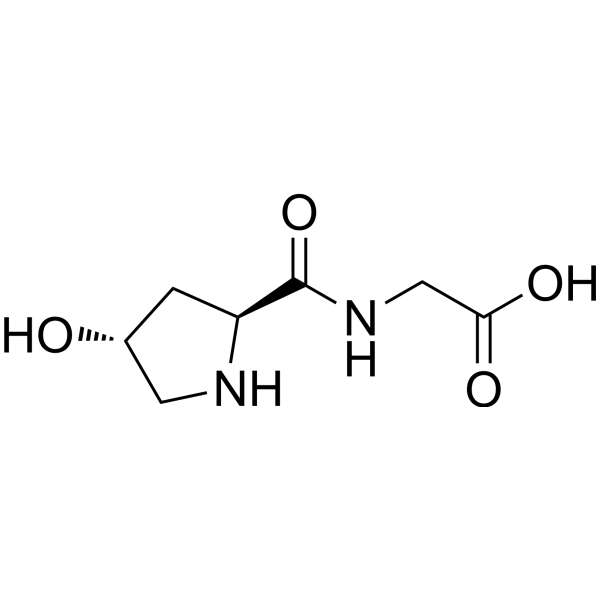
H-Hyp-Gly-OH is a dipeptide containing hydroxyproline and glycine. H-Hyp-Gly-OH promotes the growth of mouse primary fibroblasts on collagen gel. H-Hyp-Gly-OH has potential applications in improving skin by ingesting hydrolyzed collagen. H-Hyp-Gly-OH can be used for metabolic research .
loading...
    loading...
Cat. No.: HY-P2874
CAS No.: 9025-32-5
Target:  

Aminopeptidase

Research Areas:  

Others

Prolidase is a metallo-dependent hydrolase. Prolidase is a metal-dependent peptidase specialized in the cleavage of dipeptides containing proline or hydroxyproline on their C-termini .
loading...
    loading...
Cat. No.: HY-W343900
CAS No.: 6912-67-0
Synonyms: DL-Hydroxyproline
Research Areas:  

Metabolic Disease

Hydroxyproline (DL-Hydroxyproline) is a non-essential amino acid and one of the main components of collagen tissue. Hydroxyproline can be used in research on endocrine and metabolic diseases, as well as genetic diseases and malformations. Hydroxyproline can also serve as a biomarker .
loading...
    loading...
Cat. No.: HY-P4755
CAS No.: 282726-24-3
Research Areas:  

Others

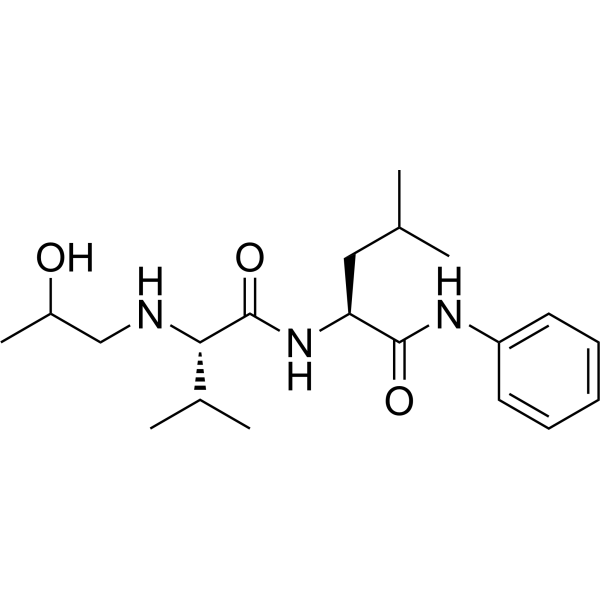
N-((RS)-2-Hydroxy-propyl)-Val-Leu-anilide is a polypeptide composed of L-phenyleline and L-leucine bound to aniline groups. N-((RS)-2-Hydroxy-propyl)-Val-Leu-anilide can be used to quantitatively determine the N-terminal heme adduct formed upon exposure to propylene oxide (PO) .
loading...
    loading...

