1. Search Result
Search Result
Results for "

Inflammasome inhibition

" in MedChemExpress (MCE) Product Catalog:

19

Inhibitors & Agonists

1

Inhibitory Antibodies

11

Natural
Products

Cat. No. Product Name Target Research Areas Chemical Structure
  • HY-N0822
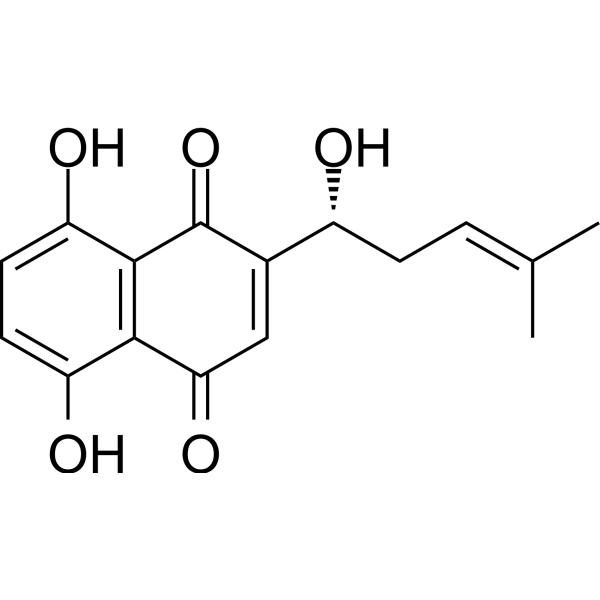
    Shikonin
    Maximum Cited Publications
    66 Publications Verification

    C.I. 75535; Isoarnebin 4

    Exosomes Chloride Channel Pyruvate Kinase NF-κB TNF Receptor HIV AIM2 Cancer
    Shikonin is a major component of a Chinese herbal medicine named zicao. Shikonin is a potent TMEM16A chloride channel inhibitor with an IC50 of 6.5 μM . Shikonin is a specific pyruvate kinase M2 (PKM2) inhibitor and can also inhibit TNF-α and NF-κB pathway . Shikonin decreases exosome secretion through the inhibition of glycolysis . Shikonin inhibits AIM2 inflammasome activation .
    Shikonin
  • HY-113298
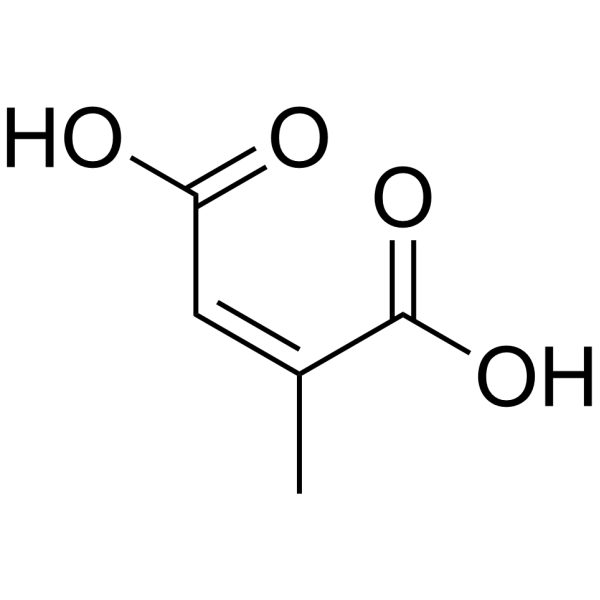
    Citraconic acid
    4 Publications Verification

    Methylmaleic acid

    NOD-like Receptor (NLR) Keap1-Nrf2 Reactive Oxygen Species (ROS) Cardiovascular Disease Inflammation/Immunology
    Citraconic acid (Methylmaleic acid) is an orally active inhibitor targeting the NLRP3 inflammasome and Keap1-Nrf2 pathway. Citraconic acid reduces reactive oxygen species (ROS) generation by inhibiting succinate dehydrogenase (SDH) activity. Citraconic acid also modifies the conformation of Keap1 protein, relieves its inhibition of Nrf2, promotes antioxidant gene expression, and inhibits NLRP3 activation and the release of pro-inflammatory factors such as IL-1β and IL-18. Citraconic acid has anti-inflammatory and antioxidant activities, can reduce oxidative stress and cell pyroptosis, improve tissue damage, and can be used for the research of inflammation-related diseases such as acute renal ischemia-reperfusion injury. Citraconic acid is an isomer of Itaconic acid (HY-Y052) .
    Citraconic acid
  • HY-B0987
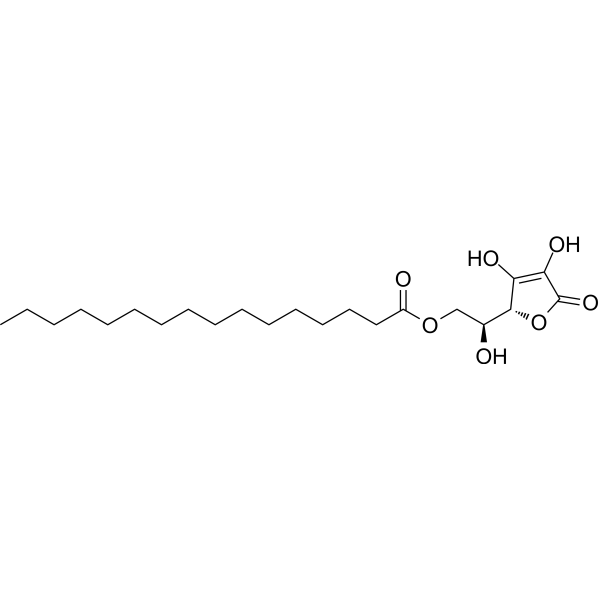
    Ascorbyl palmitate
    3 Publications Verification

    L-Ascorbic acid 6-hexadecanoate; 6-O-Palmitoyl-L-ascorbic acid

    Environmental Pollutants Reactive Oxygen Species (ROS) Endogenous Metabolite Apoptosis Bcl-2 Family Caspase Calcium Channel NOD-like Receptor (NLR) Sodium Channel Inflammation/Immunology
    Ascorbyl palmitate is an orally active ester formed from ascorbic acid and palmitic acid, used as an antioxidant and food additive. Ascorbyl palmitate in preventing fat and oil oxidation is more efficient than Butylated hydroxyanisole (HY-B1066) and Butylated hydroxytoluene (HY-Y0172). Ascorbyl palmitate mitigates inhibition of collagen synthesis by select calcium and sodium channel blockers. Ascorbyl palmitate induces Apoptosis in human umbilical vein endothelial cells (HUVECs). Ascorbyl palmitate ameliorates inflammatory diseases by inhibition of NLRP3 inflammasome .
    Ascorbyl palmitate
  • HY-16059

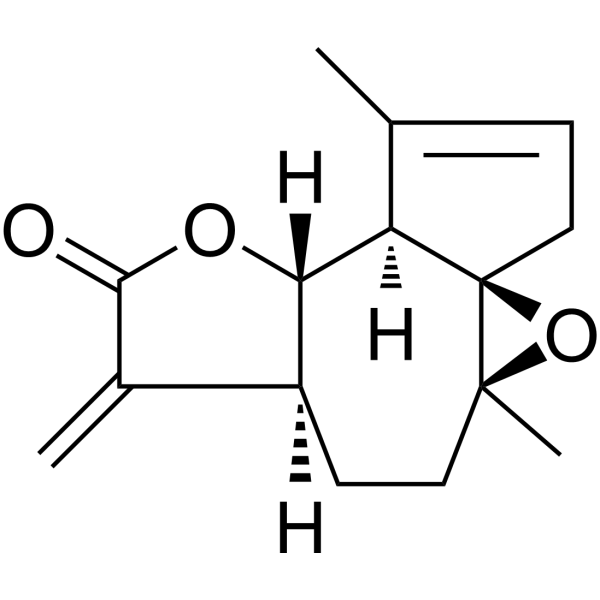
    (+)-Arglabin

    NOD-like Receptor (NLR) Farnesyl Transferase Autophagy Inflammation/Immunology Cancer
    Arglabin ((+)-Arglabin), a natural product isolated from Artemisia glabella, is a NLRP3 inflammasome inhibitor. Arglabin shows anti-inflammatory and antitumor activities . The antitumor activity of Arglabin proceeds through its inhibition of farnesyl transferase which leads to the activation of RAS proto-oncogene .
    Arglabin
  • HY-N6712
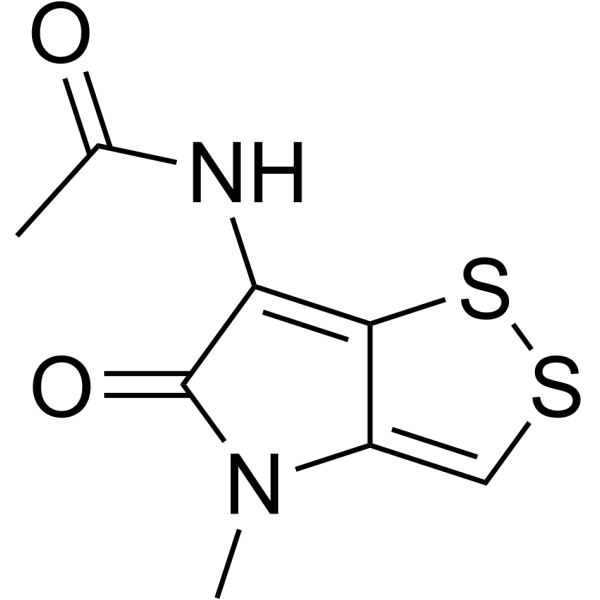
    Thiolutin
    4 Publications Verification

    Acetopyrrothin

    Antibiotic Bacterial Deubiquitinase NOD-like Receptor (NLR) DNA/RNA Synthesis Pyroptosis HMG-CoA Reductase (HMGCR) Infection Cardiovascular Disease Cancer
    Thiolutin (Acetopyrrothin) is a sulfur-containing antibiotic, which is a potent inhibitor of bacterial and yeast RNA polymerases. Thiolutin can be produced by Streptomyces. Thiolutin inhibits AMSH (IC50 = 4 μM) and Rpn11 (IC50 = 0.53 μM). Thiolutin is a dual inhibitor of BRCC36 and the NLRP3 inflammasome, exhibiting anti-inflammatory effects. Thiolutin effectively suppresses the interaction between BRCC36 and HMGCR, leading to the inhibition of HCC growth. Thiolutin attenuates pyroptosis and NLRP3 inflammasome activation. Thiolutin markedly alleviates renal injury and inflammatory process in IgAN. Thiolutin is an anti-angiogenic compound which can ease Doxorubicin-induced cardiotoxicity (DOXIC) [1][2][3][4][5].
    Thiolutin
  • HY-P2776

    Endogenous Metabolite Metabolic Disease
    Hexokinase (ScHEX1) (EC 2.7.1.1) is a glycolytic enzyme hexokinase that is inhibited by n-acetylglucosamine. Inhibition of Hexokinase (ScHEX1) by n-acetylglucosamine leads to its separation from the mitochondrial outer membrane, resulting in activation of NLRP3 inflammasome .
    Hexokinase, microorganism
  • HY-P991083

    Arumakimig

    Interleukin Related Inflammation/Immunology
    MAS82590 (Arumakimig) is a bispecific IL-1β and IL-18 monoclonal antibody that reduces inflammasome-mediated inflammation. MAS825 combines the anti-IL-1β and anti-IL-18 monoclonal antibodies (mAbs) inhibition domains in a single bispecific high-affinity cytokine capture molecule .
    MAS825
  • HY-162150
    Azalamellarin N
    2 Publications Verification

    AZL-N

    Pyroptosis Inflammation/Immunology
    Azalamellarin N is an inhibitor of pyroptosis and has different inhibitory effects on different pyroptosis inducers. Azalamellarin N inhibits pyroptosis by targeting molecules that act upstream of NLRP3 inflammasome activation, rather than directly targeting components of the NLRP3 inflammasome. Inhibitory potency against different pyroptosis inducers: Nigericin (HY-127019) > R837 (HY-B0180) .
    Azalamellarin N
  • HY-122920

    HSV CMV Influenza Virus HIV NOD-like Receptor (NLR) YB-1 Infection Inflammation/Immunology
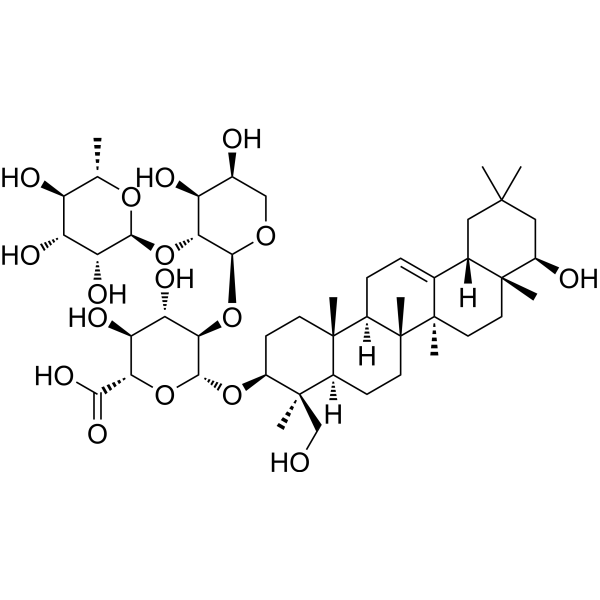
    Soyasaponin II is a saponin with antiviral activity. Soyasaponin II inhibits the replication of HSV-1, HCMV, influenza virus, and HIV-1. Soyasaponin II shows potent inhibition on HSV-1 replication. Soyasaponin II serves as a inhibitor for YB-1 phosphorylation and NLRP3 inflammasome priming and could protect mice against LPS/GalN induced acute liver failure .
    Soyasaponin II
  • HY-N0822R

    C.I. 75535 (Standard); Isoarnebin 4 (Standard)

    Reference Standards Exosomes Chloride Channel Pyruvate Kinase NF-κB TNF Receptor HIV AIM2 Cancer
    Shikonin (Standard) is the analytical standard of Shikonin. This product is intended for research and analytical applications. Shikonin is a major component of a Chinese herbal medicine named zicao. Shikonin is a potent TMEM16A chloride channel inhibitor with an IC50 of 6.5 μM . Shikonin is a specific pyruvate kinase M2 (PKM2) inhibitor and can also inhibit TNF-α and NF-κB pathway . Shikonin decreases exosome secretion through the inhibition of glycolysis . Shikonin inhibits AIM2 inflammasome activation .
    Shikonin (Standard)
  • HY-156034A

    NLRP3-IN-19 sodium

    NOD-like Receptor (NLR) Inflammation/Immunology
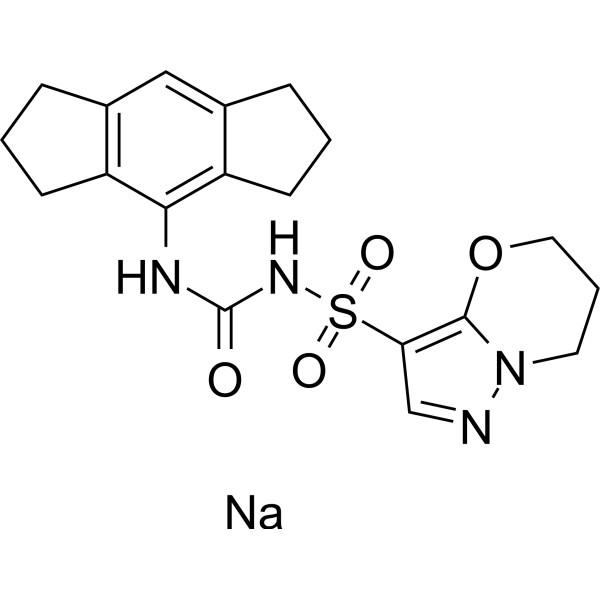
    JT001 (NLRP3-IN-19) sodium is a potent, specific and orally active inhibitor of NLRP3. JT001 sodium can inhibit NLRP3 inflammasome assembly, resulting in the inhibition of cytokine release and the prevention of pyroptosis. JT001 sodium can be used for the research of nonalcoholic steatohepatitis and liver fibrosis .
    JT001 sodium
  • HY-156034

    NLRP3-IN-19

    NOD-like Receptor (NLR) Inflammation/Immunology
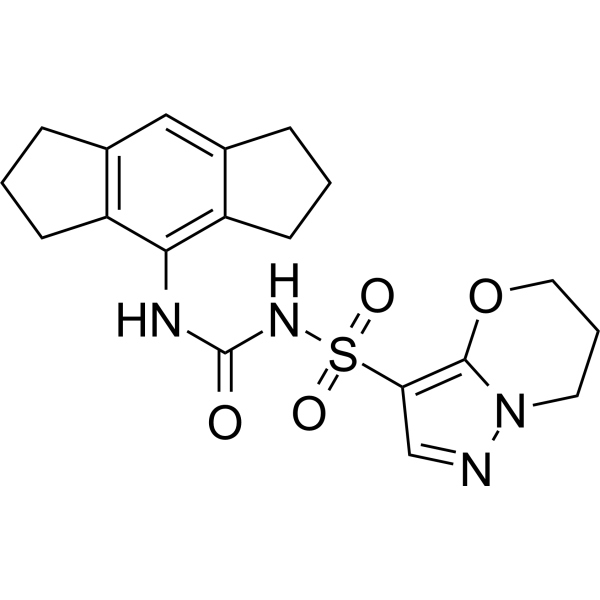
    JT001 (NLRP3-IN-19) is a potent, specific and orally active inhibitor of NLRP3. JT001 can inhibit NLRP3 inflammasome assembly, resulting in the inhibition of cytokine release and the prevention of pyroptosis. JT001 can be used for the research of nonalcoholic steatohepatitis and liver fibrosis .
    JT001
  • HY-169227

    Pyroptosis NOD-like Receptor (NLR) Inflammation/Immunology
    NLRP3-IN-55 (Compound 19) is a potent NLRP3 inhibitor (IC50 = 0.34 μM). NLRP3-IN-55 directly targets the NLRP3 protein (KD = 0.45 μM), blocking the assembly and activation of the NLRP3 inflammasome, leading to anti-inflammatory effects and inhibition of cellular pyroptosis .
    NLRP3-IN-55
  • HY-N6712R

    Acetopyrrothin (Standard)

    Reference Standards Antibiotic Bacterial Deubiquitinase NOD-like Receptor (NLR) DNA/RNA Synthesis Pyroptosis HMG-CoA Reductase (HMGCR) Cardiovascular Disease Inflammation/Immunology Cancer
    Thromycin (Standard) is the analytical standard of thromycin (Acetopyrrothin) (HY-N6712). Thiolutin is a sulfur-containing antibiotic, which is a potent inhibitor of bacterial and yeast RNA polymerases. Thiolutin can be produced by Streptomyces. Thiolutin inhibits AMSH (IC50 = 4 μM) and Rpn11 (IC50 = 0.53 μM). Thiolutin is a dual inhibitor of BRCC36 and the NLRP3 inflammasome, exhibiting anti-inflammatory effects. Thiolutin effectively suppresses the interaction between BRCC36 and HMGCR, leading to the inhibition of HCC growth. Thiolutin attenuates pyroptosis and NLRP3 inflammasome activation. Thiolutin markedly alleviates renal injury and inflammatory process in IgAN. Thiolutin is an anti-angiogenic compound which can ease Doxorubicin (HY-15142A)-induced cardiotoxicity (DOXIC) [1][2][3][4][5].
    Thiolutin (Standard)
  • HY-W016586R

    AT-125 (Standard); U-42126 (Standard)

    Reference Standards Parasite γ-Glutamyl Transferase (GGT) Infection Cancer
    Articaine (Standard) is the analytical standard of Articaine. This product is intended for research and analytical applications. Articaine (Hoe-045 free base) is an amide agent that can suppress or relieve pain. containing an ester group, reversibly binding to the α-subunit of the voltage-gated sodium channels within the inner cavity of the nerve, can provide effective pain relief. Articaine ameliorates LPS-induced acute kidney injury via inhibition of NF-κB activation and the NLRP3 inflammasome pathway .
    Acivicin (Standard)
  • HY-113298R

    Methylmaleic acid (Standard)

    Reference Standards NOD-like Receptor (NLR) Keap1-Nrf2 Reactive Oxygen Species (ROS) Cardiovascular Disease Inflammation/Immunology
    Citraconic acid (Methylmaleic acid) (Standard) is the analytical standard of Citraconic acid (HY-113298). This product is intended for research and analytical applications. Citraconic acid is an orally active inhibitor targeting the NLRP3 inflammasome and Keap1-Nrf2 pathway. Citraconic acid reduces reactive oxygen species (ROS) generation by inhibiting succinate dehydrogenase (SDH) activity. Citraconic acid also modifies the conformation of Keap1 protein, relieves its inhibition of Nrf2, promotes antioxidant gene expression, and inhibits NLRP3 activation and the release of pro-inflammatory factors such as IL-1β and IL-18. Citraconic acid has anti-inflammatory and antioxidant activities, can reduce oxidative stress and cell pyroptosis, improve tissue damage, and can be used for the research of inflammation-related diseases such as acute renal ischemia-reperfusion injury. Citraconic acid is an isomer of Itaconic acid (HY-Y052) .
    Citraconic acid (Standard)
  • HY-186072

    NOD-like Receptor (NLR) Interleukin Related Cytochrome P450 Neurological Disease Metabolic Disease Inflammation/Immunology
    NT-0527 is a selective, orally active, and brain-permeable NLRP3 inflammasome inhibitor. NT-0527 can specifically block the formation of the NLRP3 inflammasome, resulting in the reduction in the maturation and release of IL-1β, exhibit inhibition on CYP2C19. NT-0527 displays anti-inflammatory activity in the mouse LPS (HY-D1056) /ATP (HY-B2176)-induced peritonitis model. NT-0527 can be used for the research of neuroinflammatory disorders (Parkinson's disease, Alzheimer's disease, amyotrophic lateral sclerosis) and peripheral inflammatory disorders (type II diabetes, atherosclerosis, gout, etc.) associated with NLRP3 inflammasome .
    NT-0527
  • HY-178898

    NOD-like Receptor (NLR) Caspase Insecticide Ser/Thr Protease Pyroptosis Infection
    7-Oxogedunin (Compound 7DG; Compound 16) is a small molecule that protects macrophages from cell pyroptosis induced by anthrax lethal toxin (LT). Its target is protein kinase R (PKR). 7-Oxogedunin can widely inhibit the assembly of various inflammasomes (NLRP1 and NLRP3) and the activation of caspase-1 by inhibiting the kinase-independent function of PKR. 7-Oxogedunin has growth inhibitory activity on European corn borer larvae. 7-Oxogedunin can be used for LT toxicity inhibition and pest control research .
    7-Oxogedunin
  • HY-184199

    URAT1 Interleukin Related NOD-like Receptor (NLR) Caspase Metabolic Disease
    URAT1-IN-16 is an orally active URAT1 inhibitor with an IC50 value of 0.19 μM. URAT1-IN-16 also functions as an NLRP3 inflammasome pathway inhibitor by effectively suppressing mature IL-1β secretion (IC50 = 2.52 μM). URAT1-IN-16 exhibits remarkable serum uric acid-lowering and anti-inflammatory activities in vivo, and can be used for hyperuricemia and gout research .
    URAT1-IN-16

Inquiry Online

Your information is safe with us. * Required Fields.

Salutation


Country or Region *

Applicant Name *


Organization Name *

Department *


Email Address *


Product Name *

Cat. No.


Requested quantity *

Phone Number *


Remarks

Inquiry Online

Inquiry Information

Product Name:
Cat. No.:
Quantity:
MCE Japan Authorized Agent:

