1. Search Result
Search Result
Results for "

LPC

" in MedChemExpress (MCE) Product Catalog:

18

Inhibitors & Agonists

1

Biochemical Assay Reagents

3

Peptides

2

Natural
Products

4

Recombinant Proteins

1

Isotope-Labeled Compounds

7

Antibodies

6

Oligonucleotides

Cat. No. Product Name Target Research Areas Chemical Structure
  • HY-P1410
    GsMTx4
    110+ Cited Publications

    TRP Channel Piezo Channel Cardiovascular Disease Neurological Disease Inflammation/Immunology
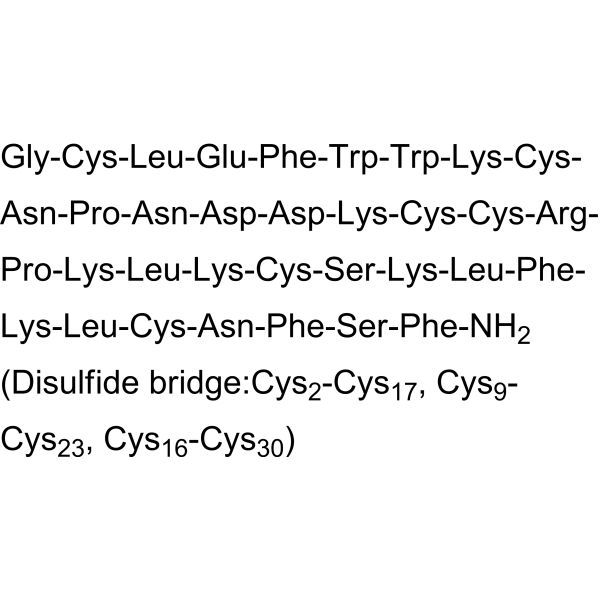
    GsMTx4 is a spider venom peptide that selectively inhibits cationic-permeable mechanosensitive channels (MSCs) belonging to the Piezo and TRP channel families. GsMTx4 also blocks cation-selective stretch-activated channels (SACs) , attenuates lysophosphatidylcholine (LPC)-induced astrocyte toxicity and microglial reactivity. GsMTx4 is an important pharmacological tool for identifying the role of these excitatory MSCs in normal physiology and pathology .
    GsMTx4
  • HY-P1410A
    GsMTx4 TFA
    110+ Cited Publications

    TRP Channel Piezo Channel Cardiovascular Disease Neurological Disease Inflammation/Immunology
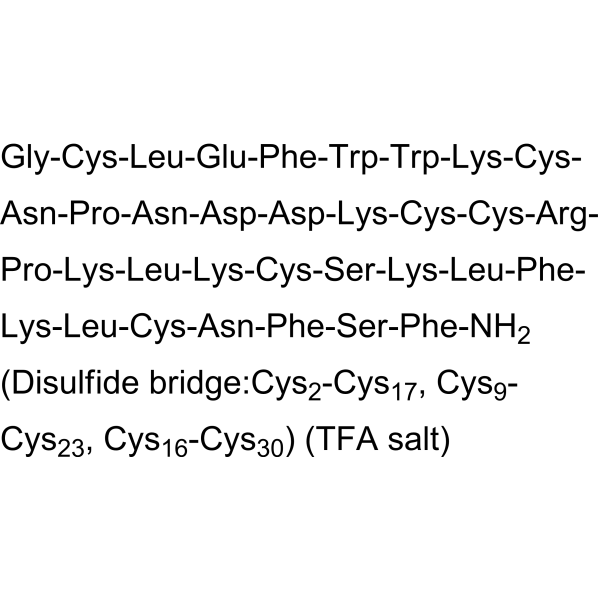
    GsMTx4 TFA is a spider venom peptide that selectively inhibits cationic-permeable mechanosensitive channels (MSCs) belonging to the Piezo and TRP channel families. GsMTx4 TFA also blocks cation-selective stretch-activated channels (SACs) , attenuates lysophosphatidylcholine (LPC)-induced astrocyte toxicity and microglial reactivity. GsMTx4 TFA is an important pharmacological tool for identifying the role of these excitatory MSCs in normal physiology and pathology .
    GsMTx4 TFA
  • HY-N9410

    1-Linoleoyl-2-Hydroxy-sn-glycero-3-PC; LPC(18:2/0:0); LysoPC(18:2)

    Endogenous Metabolite Metabolic Disease
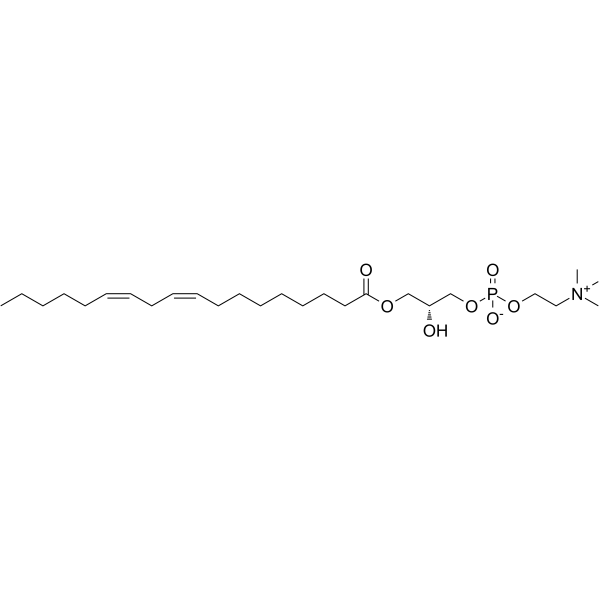
    Lysophosphatidylcholine 18:2 (1-Linoleoyl-2-Hydroxy-sn-glycero-3-PC), a lysophospholipid, is a potential biomarker identified from insulin resistance (IR) polycystic ovary syndrome (PCOS). Low plasma Lysophosphatidylcholine 18:2 also has been shown to predict impaired glucose tolerance, insulin resistance, type 2 diabetes, coronary artery disease, and memory impairment .
    Lysophosphatidylcholine 18:2
  • HY-125771

    18:0 Lyso-PC; LPC(18:0)

    Endogenous Metabolite HDAC STAT Apoptosis Cancer
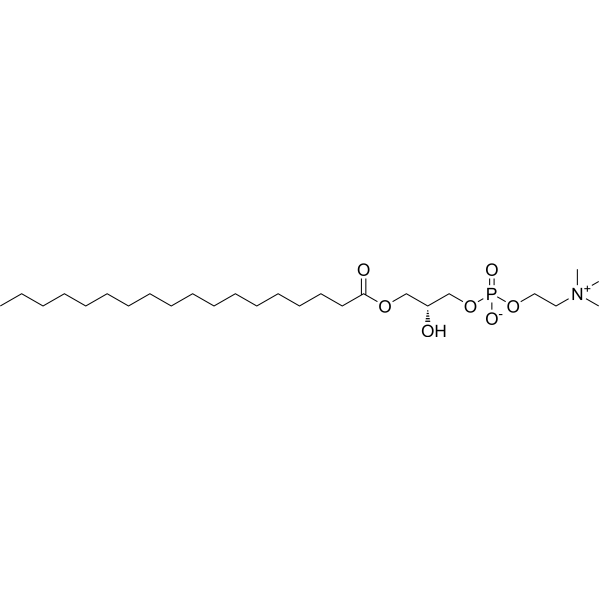
    1-Stearoyl-sn-glycero-3-phosphocholine is a lysophosphatidylcholine that inhibits HDAC3 activity and phosphorylation of STAT3 in K562 cells. 1-Stearoyl-sn-glycero-3-phosphocholine induces apoptosis and exhibits anticancer activity in chronic myelogenous leukemia (CML) K562 cells .
    1-Stearoyl-sn-glycero-3-phosphocholine
  • HY-145561

    BLD-0409; PAT-409

    Phosphodiesterase (PDE) LPL Receptor Inflammation/Immunology Cancer
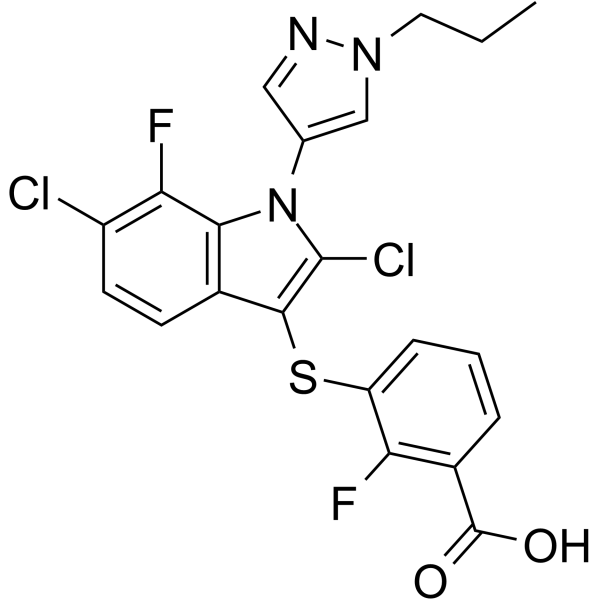
    Cudetaxestat (BLD-0409; PAT-409) is an orally active and noncompetitive autotaxin (ATX) inhibitor. Cudetaxestat inhibits the activity of ATX, reduces the production of LPA, and thereby blocks the signal transduction of the ATX-LPA axis. Cudetaxestat can still maintain nanomolar-level biochemical efficacy even when the concentration of the LPC substrate increases. Cudetaxestat can be used for the study of various diseases related to LPA including fibrosis, tumor metastasis, inflammation and autoimmune diseases, etc .
    Cudetaxestat
  • HY-157700

    C16(Plasm) LPC; Lysophosphatidylcholine 16:0p/0:0

    Biochemical Assay Reagents Neurological Disease
    Hexadecenyl-2-hydroxy-sn-glycero-3-PC (C16(Plasm) LPC) is a phosphatidylcholine. Hexadecenyl-2-hydroxy-sn-glycero-3-PC prolongs the lag-phase of α-syn aggregation, and can be used in Parkinson’s disease research .
    Hexadecenyl-2-hydroxy-sn-glycero-3-PC
  • HY-P5982

    Phosphatase Neurological Disease
    PTPσ Inhibitor, ISP can bind to recombinant human PTPs and inhibits PTPσ signaling. PTPσ Inhibitor, ISP can penetrate the membrane and relieves the chondroitin sulfate proteoglycan (CSPG)-mediated axonal sprouting inhibition in spinal cord injury model. PTPσ Inhibitor, ISP enhances remyelination in LPC-induced demyelinated spinal cord. PTPσ Inhibitor, ISP also promotes oligodendrocyte progenitor cells (OPCs) migration, maturation, remyelination, and functional recovery in animal models of Multiple Sclerosis (MS) .
    PTPσ Inhibitor, ISP
  • HY-W020809

    PC(18:1p/0:0)

    Endogenous Metabolite Others
    C18(Plasm) LPC (PC(18:1p/0:0)) is classified as a type of plasmalogen.
    C18(Plasm) LPC
  • HY-126233

    Phosphodiesterase (PDE) Metabolic Disease
    PAT-347 is an Autotaxin (ATX) inhibitor. ATX is a secretory enzyme that hydrolyzes lysophosphatidylcholine (LPC) and regulates lysophosphatidic acid (LPA) production in the blood .
    PAT-347
  • HY-125771S

    18:0 Lyso-PC-d35; LPC(18:0)-d35

    Isotope-Labeled Compounds Endogenous Metabolite HDAC STAT Apoptosis Cancer
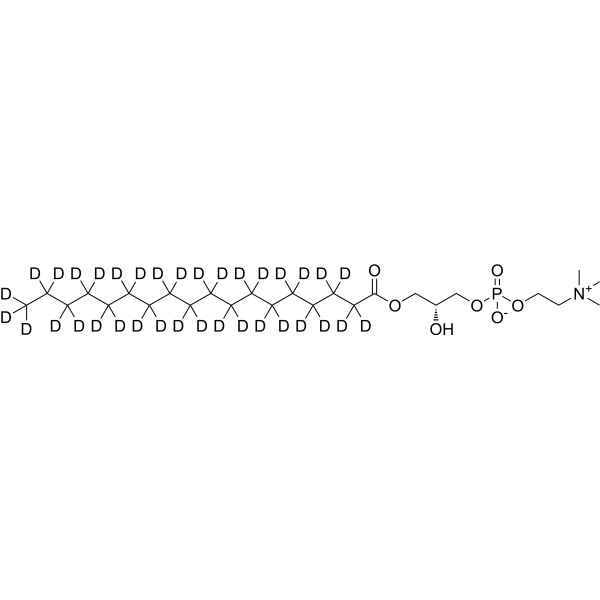
    1-Stearoyl-sn-glycero-3-phosphocholine-d35 is deuterium labeled 1-Stearoyl-sn-glycero-3-phosphocholine (HY-125771). 1-Stearoyl-sn-glycero-3-phosphocholine is a lysophosphatidylcholine that inhibits HDAC3 activity and phosphorylation of STAT3 in K562 cells. 1-Stearoyl-sn-glycero-3-phosphocholine induces apoptosis and exhibits anticancer activity in chronic myelogenous leukemia (CML) K562 cells .
    1-Stearoyl-sn-glycero-3-phosphocholine-d35
  • HY-173509

    Phosphodiesterase (PDE) LPL Receptor Infection Cardiovascular Disease Neurological Disease Cancer
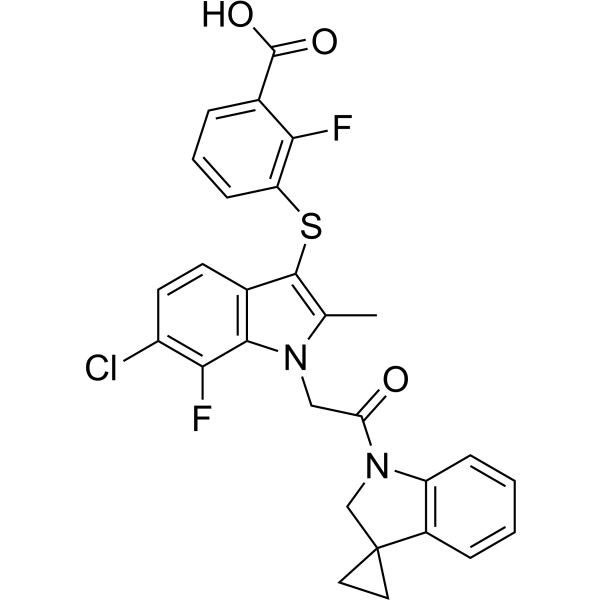
    ATX inhibitor 27 (Compound 31) is an ATX inhibitor. The IC50 values of ATX inhibitor 27 against human autotaxin (hATX) and lysophosphatidylcholine (LPC) are 13 nM and 23 nM, respectively. ATX inhibitor 27 reduces LPA levels in vivo by inhibiting ATX enzyme. ATX inhibitor 27 can be used in the study of ATX-LPA-related diseases such as inflammation, neurodegenerative diseases and cancer .
    ATX inhibitor 27
  • HY-RS10176

    Small Interfering RNA (siRNA) Others

    PCSK7 Human Pre-designed siRNA Set A contains three designed siRNAs for PCSK7 gene (Human), as well as a negative control, a positive control, and a FAM-labeled negative control.

    PCSK7 Human Pre-designed siRNA Set A
    PCSK7 Human Pre-designed siRNA Set A
  • HY-149716

    Phosphodiesterase (PDE) Cancer
    MEY-003 is an Autotaxin(ATX) inhibitor with EC50s of 460 nM and 1.09 μM for hATX-β and hATX-ɣ (analysis with LPC18:1). MEY-003 behaves as a non-competitive inhibitor with K iof 432 nM. MEY-003 can be used for targeted ATX-related disease research .
    MEY-003
  • HY-134954

    Phosphodiesterase (PDE) Cancer
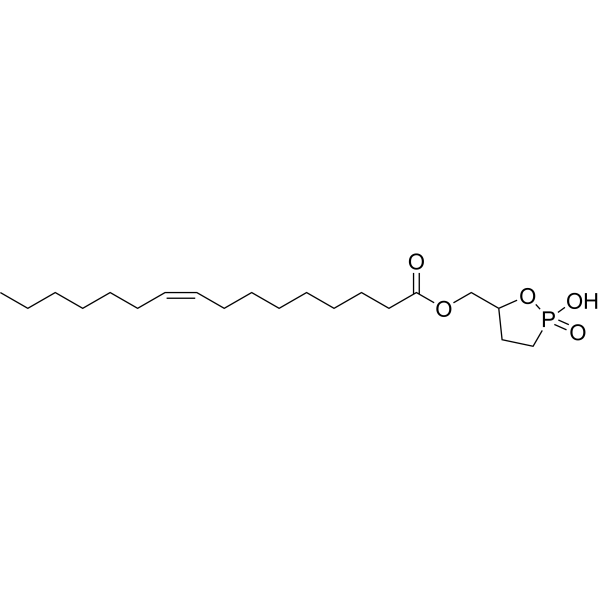
    Palmitoleoyl 3-carbacyclic phosphatidic acid (3ccPA 16:1) is an intermediately potent inhibitor of autotaxin (ATX) with an IC50 of 620 nM. Palmitoleoyl 3-carbacyclic phosphatidic acid can be used for melanoma research .
    Palmitoleoyl 3-carbacyclic phosphatidic acid
  • HY-160581

    Liposome Others
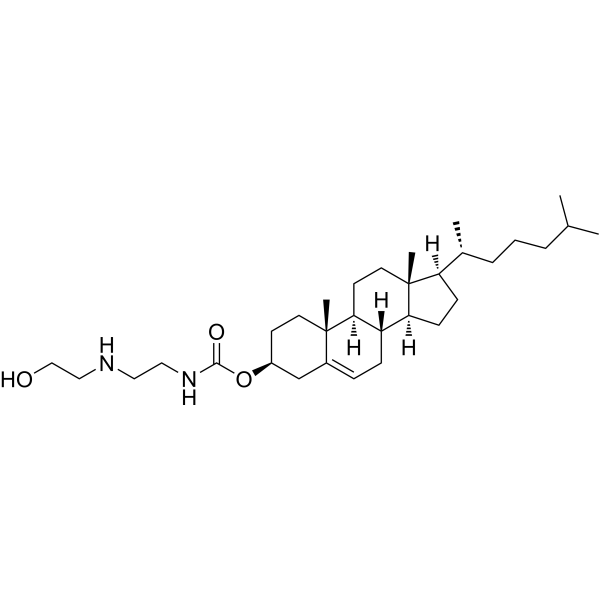
    OH-C-Chol is a cationic liposome that serves as a siRNA delivery vehicle. OH-C-Chol (LP-C) and OH-NC-Chol (LP-NC)/siRNA complexes (lipoplexes) showed better performance than NP-C and NP-NC/siRNA complexes (nanocomplexes), respectively. ) greater gene silencing effect .
    OH-C-Chol
  • HY-120633

    LPL Receptor
    BMS-986104 is a potent and selective S1P1 receptor modulator. BMS-986104 is effective in a mouse EAE model, which is comparable to FTY720. Mechanistically, BMS-986104 exhibites excellent remyelinating effects on lysophosphatidylcholine (LPC)-induced demyelination in a three-dimensional brain cell culture assay.
    BMS-986104
  • HY-126233A

    Phosphodiesterase (PDE) Metabolic Disease
    PAT-347 sodium is an Autotaxin (ATX) inhibitor. ATX is a secretory enzyme that hydrolyzes lysophosphatidylcholine (LPC) and regulates lysophosphatidic acid (LPA) production in the blood .
    PAT-347 sodium
  • HY-119601

    Phosphodiesterase (PDE) Cancer
    GRI918013 (compound 1) is a selective and competitive autotaxin (ATX/NPP2) inhibitor with anti-invasive and anti-metastatic activity. GRI918013 competitively binds to ATX, blocking lipid substrates such as lysophosphatidylcholine (LPC) from entering the ATX active site, thereby inhibiting ATX-mediated hydrolysis of LPC to lysophosphatidic acid (LPA), and consequently inhibiting ATX-LPA axis-related tumor cell invasion and metastasis. GRI918013 inhibits ATX-mediated hydrolysis of the LPL substrate FS-3 (IC50=31.42 nM, Ki=12.98 nM). GRI918013 can be used in research on cancer invasion and metastasis, such as melanoma, and can also serve as a tool compound for ATX-LPA axis-related diseases such as fibrotic diseases, neuropathic pain, and cholestatic pruritus .
    GRI918013

Inquiry Online

Your information is safe with us. * Required Fields.

Salutation


Country or Region *

Applicant Name *


Organization Name *

Department *


Email Address *


Product Name *

Cat. No.


Requested quantity *

Phone Number *


Remarks

Inquiry Online

Inquiry Information

Product Name:
Cat. No.:
Quantity:
MCE Japan Authorized Agent:

