
1. Search Result
Search Result
Results for "

PC

" in MedChemExpress (MCE) Product Catalog:

577

Inhibitors & Agonists

6

Fluorescent Dye

39

Biochemical Assay Reagents

27

Peptides

2

MCE Kits

2

Inhibitory Antibodies

106

Natural
Products

30

Recombinant Proteins

59

Isotope-Labeled Compounds

45

Antibodies

13

Click Chemistry

103

Oligonucleotides

2

GMP Molecules

Targets Recommended:
Cat. No. Product Name Target Research Areas Chemical Structure
  • HY-156633
    Rezatapopt
    3 Publications Verification

    PC14586

    MDM-2/p53 Cancer
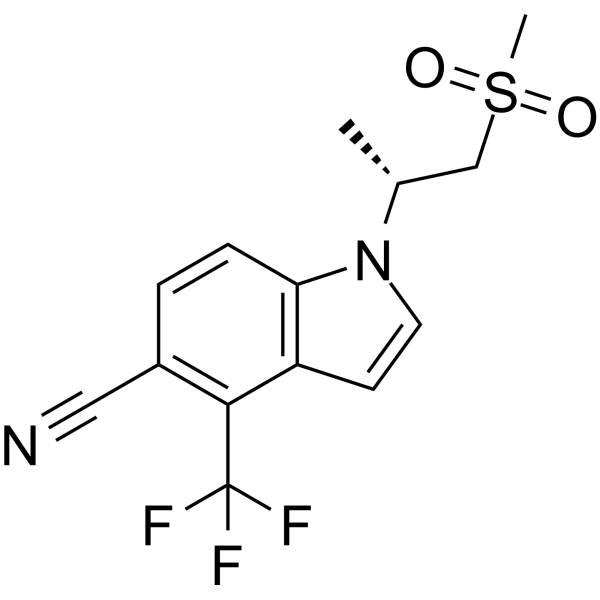
    Rezatapopt (PC14586) is an orally active antineoplastic agent. Rezatapopt binds to a pocket created by the TP53 Y220C mutation. Rezatapopt restores p53 tumor suppressor functions by stabilization of the p53 protein structure. Rezatapopt demonstrates tumor inhibition and regression in mouse models with established human tumor xenografts harboring the TP53 Y220C mutation .
    Rezatapopt
  • HY-146331

    Bacterial Infection
    PC190723 is a bacterial cell division protein FtsZ inhibitor (IC50 = 55 nM). PC 190723 prevents cell division. PC190723 has potent and selective bactericidal activity against staphylococci, including methicillin- and multi-drug-resistant Staphylococcus aureus. PC190723 induces nucleated assembly of Bs-FtsZ into single-stranded coiled protofilaments and polymorphic condensates. PC190723 can be studied in anti-bacterial infection research .
    PC190723
  • HY-102038
    PC786
    2 Publications Verification

    RSV Infection
    PC786 is an inhaled respiratory syncytial virus (RSV) L protein polymerase inhibitor. PC786 demonstrates potent antiviral activity against RSV-A (IC50 <0.09 to 0.71 nM) and RSV-B (IC50, 1.3 to 50.6 nM) .
    PC786
  • HY-117766

    Fungal Cytochrome P450 Infection
    PC945, a potent, long-acting antifungal triazole, possesses activity against a broad range of both azole-susceptible and azole-resistant strains of Aspergillus fumigatus. PC945 is also a potent, tightly binding inhibitor of A. fumigatus sterol 14α-demethylase activity, CYP51A and CYP51B, with IC50s of 0.23 μM and 0.22 μM, respectively .
    PC945
  • HY-140132

    ADC Linker Cancer
    PC Biotin-PEG3-azide is a cleavable 3 unit PEG ADC linker used in the synthesis of antibody-drug conjugates (ADCs) . PC Biotin-PEG3-azide is a click chemistry reagent, it contains an Azide group and can undergo copper-catalyzed azide-alkyne cycloaddition reaction (CuAAc) with molecules containing Alkyne groups. It can also undergo strain-promoted alkyne-azide cycloaddition (SPAAC) reactions with molecules containing DBCO or BCN groups.
    PC Biotin-PEG3-azide
  • HY-157544

    Drug-Linker Conjugates for ADC Microtubule/Tubulin Cancer
    PC5-VC-PAB-MMAE consists the ADCs linker (PC5-VC-PAB) and potent tubulin inhibitor (MMAE). PC5-VC-PAB-MMAE is a agent-linker conjugate for ADC .
    PC5-VC-PAB-MMAE
  • HY-138622

    Liposome Others
    24:0 Lyso PC is a lysophospholipid (LyP). 24:0 Lyso PC could be used for mRNA drug delivery .
    24:0 Lyso PC
  • HY-140140

    ADC Linker Cancer
    PC Mal-NHS carbonate ester is a cleavable ADC linker used in the synthesis of antibody-drug conjugates (ADCs) .
    PC Mal-NHS carbonate ester
  • HY-W440982

    PC(18:0/18:1); 2-Oleoyl-1-stearoyl-sn-glycero-3-phosphocholine

    Liposome Others
    SOPC (PC (18:0/18:1)) is a phosphatidylcholine lipid, which is an unsaturated phospholipid containing a cis double bond. When SOPC binds to Imatinib (HY-15463), Imatinib easily penetrates into its unsaturated liposome bilayer structure, and SOPC forms ordered, larger parallel stripe domains .
    SOPC
  • HY-W019833

    PC(14:0/18:0); 1-Myristoyl-2-stearoyl-sn-glycero-3-phosphocholine

    Endogenous Metabolite Metabolic Disease
    MSPC is an asymmetrical phosphatidylcholine containing a myristic acid (14:0) at the sn-1 position and a stearic acid (18:0) at the sn-2 position. It can self assemble in water to form lipid bilayers. Reagent grade, for research purpose.
    MSPC
  • HY-157647

    PC(18:0/22:4)

    CDK Apoptosis Cancer
    1-Stearoyl-2-Adrenoyl-sn-glycero-3-PC (PC(18:0/22:4)) is an inhibitor of cyclin-dependent kinases (CDKs). 1-Stearoyl-2-Adrenoyl-sn-glycero-3-PC induces apoptosis and inhibits the growth of various cancer cell lines .
    1-Stearoyl-2-Adrenoyl-sn-glycero-3-PC
  • HY-124042
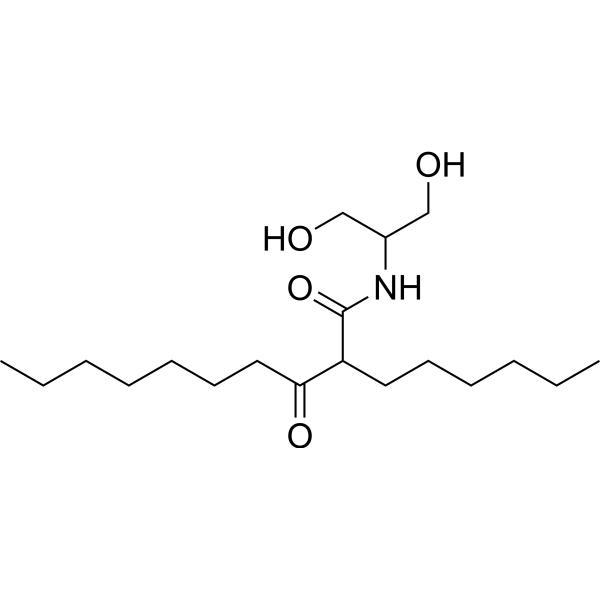
    K6PC-5
    4 Publications Verification

    SphK Filovirus Infection Neurological Disease Inflammation/Immunology
    K6PC-5, a ceramide derivative, is a sphingosine kinase 1(SPHK1) activator and elicites a rapid transient increase in intracellular calcium levels. K6PC-5 has the potential for skin diseases involving abnormal keratinocyte, and neurodegeneration and virus infection research .
    K6PC-5
  • HY-142990

    Liposome Others
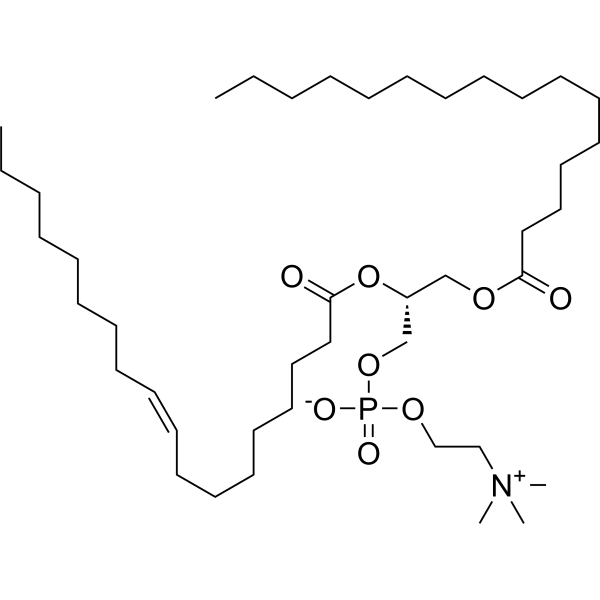
    1-Oleoyl-2-palmitoyl-sn-glycero-3-PC derives from an oleic acid. 1-Oleoyl-2-palmitoyl-sn-glycero-3-PC can be used for the synthesis of liposomes .
    1-Oleoyl-2-palmitoyl-sn-glycero-3-PC
  • HY-140134

    ADC Linker Cancer
    PC Biotin-PEG3-NHS ester is a cleavable 3 unit PEG ADC linker used in the synthesis of antibody-drug conjugates (ADCs) .
    PC Biotin-PEG3-NHS ester
  • HY-141636

    1-Palmitoyl-2-arachidonoyl-sn-glycero-3-phosphocholine; PAPC; PC(16:0/20:4)

    Endogenous Metabolite Biochemical Assay Reagents Cardiovascular Disease
    1-Palmitoyl-2-arachidonoyl-sn-glycero-3-PC (PAPC) is a phospholipid containing palmitic acid (16:0) and arachidonic acid (20:4) at the sn-1 and sn-2 positions, respectively, that is found in biological membranes. PAPC is oxidized in vivo, and its oxidation products are involved in chronic inflammation and vascular disease. PAPC has been used to study signaling of oxidized phospholipids. Levels of PAPC are decreased in isolated human multiple myeloma cells.
    1-PalMitoyl-2-arachidoyllecithin
  • HY-142988

    1S-2M-PC

    Liposome Others
    1-Stearoyl-2-myristoyl-sn-glycero-3-PC (1S-2M-PC) belongs to the class of asymmetric phospholipids. 1-Stearoyl-2-myristoyl-sn-glycero-3-PC is abundant in biological membranes .
    1-Stearoyl-2-myristoyl-sn-glycero-3-PC
  • HY-157666

    PC(13:0/13:0); DTPC

    Endogenous Metabolite Others
    13:0 PC (PC(13:0/13:0)), also known as ditridecanoyl phosphatidyl choline (DTPC), is a phospholipid characterized by its unique structure that includes a polar head with a positively charged quaternary amine and a negatively charged phosphate, along with two non-polar fatty acid tails.
    13:0 PC
  • HY-157698

    C18(plasm)-20:4-PC; 18:0p/20:4-PC; PC(P-18:0/20:4)

    Endogenous Metabolite Metabolic Disease
    1-1(Z)-Octadecenyl-2-arachidonoyl-sn-glycero-3-PC is a plasmalogen that contains 1(Z)-octadecenoic acid and arachidonic acid (HY-109590) at the sn-1 and sn-2 positions, respectively. It scavenges singlet oxygen in a cell-free assay.
    1-1(Z)-Octadecenyl-2-arachidonoyl-sn-glycero-3-PC
  • HY-W440983

    PC(18:0/22:6); DHA-PC; 1-Stearoyl-2-docosahexaenoyl-sn-glyerco-3-phosphocholine

    PPAR Cardiovascular Disease Cancer
    SDPC (DHA-PC) is a new generation of omega-3 lipids, which contains an ester bond linking DHA at the sn-2 position of phospholipid. 1-Stearoyl-2-docosahexaenoyl-sn-glyerco-3-phosphocholine exerts anti-angiogenesis effect through activating PPARγ. 1-Stearoyl-2-docosahexaenoyl-sn-glyerco-3-phosphocholine significantly declines the proliferation, migration, tube formation of human umbilical vein endothelial cells. 1-Stearoyl-2-docosahexaenoyl-sn-glyerco-3-phosphocholine has the potential for anti-tumor angiogenesis research .
    SDPC
  • HY-W329357
    15:0 Lyso PC
    1 Publications Verification

    Endogenous Metabolite Cardiovascular Disease
    15:0 Lyso PC is a lysophosphatidylcholine (Lyso PC), a product of phospholipase A2 (PLA2) hydrolysis of phosphatidylcholine (PC) and is involved in cell membrane remodeling and inflammatory signaling. 15:0 Lyso PC demonstrates significant lipid metabolism disturbances in the serum with ischemic heart disease (IHD) and ischemic cardiomyopathy (ICM). 15:0 Lyso PC can be used as a lipid biomarker for cardiovascular disease .
    15:0 Lyso PC
  • HY-134154

    PAzePC; Azelaoyl PC; 1-Palmitoyl-2-Azelaoyl PC

    Endogenous Metabolite Metabolic Disease
    Oxidized low-density lipoprotein (oxLDL) particles contain low molecular weight species which are cytotoxic and pro-atherogenic. Many of these substances were isolated and purified from oxLDL and identified as phosphatidylcholine species containing a fragmented, oxidized short-chain fatty acid remnant at the sn-2 position. PAz-PC (Azelaoyl PC) is one of the predominant oxLDL species and may be one of the important structural determinants of oxLDL.
    PAz-PC
  • HY-146879S

    Isotope-Labeled Compounds Others
    26:0 Lyso PC-d4 is deuterium labeled 26:0 Lyso PC.
    26:0 Lyso PC-d4
  • HY-165997

    PC-(P16:0/16:0)

    Drug Derivative Metabolic Disease
    1-1(Z)-Hexadecenyl-2-Palmitoyl-sn-glycero-3-PC is an ester product.
    1-1(Z)-Hexadecenyl-2-Palmitoyl-sn-glycero-3-PC
  • HY-W020809

    PC(18:1p/0:0)

    Endogenous Metabolite Others
    C18(Plasm) LPC (PC(18:1p/0:0)) is classified as a type of plasmalogen.
    C18(Plasm) LPC
  • HY-138756

    PROTAC Linkers Cancer
    PC DBCO-PEG4-NHS ester is a PEG-based PROTAC linker that can be used in the synthesis of PROTACs . PC DBCO-PEG4-NHS ester is a click chemistry reagent, it contains a DBCO group that can undergo strain-promoted alkyne-azide cycloaddition (SPAAC) with molecules containing Azide groups.
    PC DBCO-PEG4-NHS ester
  • HY-140139

    ADC Linker Cancer
    PC Alkyne-PEG4-NHS ester is a cleavable 4 unit PEG ADC linker used in the synthesis of antibody-drug conjugates (ADCs) . PC Alkyne-PEG4-NHS ester is a click chemistry reagent, it contains an Alkyne group and can undergo copper-catalyzed azide-alkyne cycloaddition (CuAAc) with molecules containing Azide groups.
    PC Alkyne-PEG4-NHS ester
  • HY-140135

    PROTAC Linkers Cancer
    PC-Biotin-PEG4-NHS carbonate is a PEG-based PROTAC linker that can be used in the synthesis of PROTACs .
    PC-Biotin-PEG4-NHS carbonate
  • HY-W190937

    Biochemical Assay Reagents Others
    PC Azido-PEG3-NHS carbonate ester is a photocleavable linker. It can be used to label the primary amines (-NH2) of proteins, amine-modified oligonucleotides, and other amine-containing molecules.
    PC Azido-PEG3-NHS carbonate ester
  • HY-P3320

    PC 3

    Biochemical Assay Reagents Others
    Phytochelatin 3 (PC 3) is the small metal chelating peptide that can be used for chelating heavy metals. Phytochelatin 3 is a short metal detoxification peptide made from the sulfur-rich molecule glutathione. Phytochelatin 3 can be found in different sources including plant, fungal, algal, and bacterial species, as a detoxification mechanism in response to heavy metal exposure. Phytochelatin 3 plays an important metabolic role in plants .
    Phytochelatin 3
  • HY-W753474

    1,2-DI9-trans-hexa-decenoyl-SN-glycero-3-phosphocholine; PC(16:1(9E)/16:1(9E))

    Biochemical Assay Reagents Metabolic Disease
    1,2-Dipalmitelaidoyl-sn-glycero-3-phosphocholine (PC(16:1(9E)/16:1(9E))) is an ester product.
    1,2-Dipalmitelaidoyl-sn-glycero-3-phosphocholine
  • HY-P3322

    PC 5

    Biochemical Assay Reagents Others
    Phytochelatin 5 is metal-binding compound produced by plants. Phytochelatin 5 may reduce bioavailability of dietary toxic metals such as cadmium .
    Phytochelatin 5
  • HY-W440958

    PSPC; PC(16:0-18:0)

    Liposome Cancer
    1-Palmitoyl-2-stearoyl-sn-glycero-3-phosphocholine is an assymetrical phospholipid containing saturated palmitic and stearic acid at the sn-1 and sn-2 position respectively. The phosphate group is attached to choline.
    1-Palmitoyl-2-stearoyl-sn-glycero-3-phosphocholine
  • HY-138622S1

    Isotope-Labeled Compounds Others
    24:0 Lyso PC-d44 is the deuterium labeled 24:0 Lyso PC. 24:0 Lyso PC is a lysophospholipid (LyP). 24:0 Lyso PC could be used for mRNA drug delivery .
    24:0 Lyso PC-d4
  • HY-157695

    C18(Plasm)-22:6-PC; PC(P-18:0/22:6); 18:0p/22:6-PC

    Endogenous Metabolite Others
    1-(1Z-Octadecenyl)-2-docosahexaenoyl-sn-glycero-3-phosphocholine (C18(Plasm)-22:6-PC) is a phospholipid identified in fish viscera by lipidomics strategy. It has different content and distribution in different fish species and can be used as an indicator of fish species differentiation.
    1-(1Z-Octadecenyl)-2-docosahexaenoyl-sn-glycero-3-phosphocholine
  • HY-N11604

    C16(Plasm)-16:1-PC; PC(P-16:0/16:1); PlsC 16:0/16:1

    Biochemical Assay Reagents Metabolic Disease
    1-(1(Z)-Hexadecenyl)-2-palmitoleoyl-sn-glycero-3-phosphocholine [PC (P-16:0/16:1 (9Z))] is a phosphatidylcholine that can be utilized for liposome preparation and serves as a marker in metabolomics research .
    1-(1(Z)-Hexadecenyl)-2-palmitoleoyl-sn-glycero-3-phosphocholine
  • HY-W725399

    DLiPC; PC24

    Drug Intermediate Endogenous Metabolite Others
    1,2-Dilignoceroyl-sn-glycero-3-phosphocholine (DLiPC) is a long-chain diacyl phospholipid characterized by its C24 saturated hydrocarbon chains and serves as a significant precursor for eicosanoids.
    1,2-Dilignoceroyl-sn-glycero-3-phosphocholine
  • HY-W127369

    PC(O-16:0/22:6(4Z,7Z,10Z,13Z,16Z,19Z))

    Endogenous Metabolite Metabolic Disease
    1-O-Hexadecyl-2-O-docosahexaenoyl-sn-glycero-3-phosphorylcholine is an endogenous metabolite present in Urine that can be used for the research of Obesity .
    1-O-Hexadecyl-2-O-docosahexaenoyl-sn-glycero-3-phosphorylcholine
  • HY-112661

    Antibiotic PC-766B

    Antibiotic Bacterial Fungal Infection Cancer
    PC-766B is a macrolide antibiotic. PC-766B is active against Gram-positive bacteria, and some fungi and yeasts, but inactive against Gram-negative bacteria. PC-766B shows antitumor activity against murine tumor cells. PC-766B has weak inhibitory activity against Na +, K +-ATPase .
    PC-766B
  • HY-165157

    16:0p/20:4-PC; PC(P-16:0/20:4); C16(plasm)-20:4-PC

    Biochemical Assay Reagents Others
    1-1(Z)-Hexadecenyl-2-arachidonoyl-sn-glycero-3-PC is a biochemical reagent.
    1-1(Z)-Hexadecenyl-2-arachidonoyl-sn-glycero-3-PC
  • HY-146895S

    Isotope-Labeled Compounds Others
    14:0 Lyso PC-d27 is deuterium labeled 14:0 Lyso PC.
    14:0 Lyso PC-d27
  • HY-137348

    Biochemical Assay Reagents Others
    10-Pyrene-PC is a biochemical assay reagent.
    10-Pyrene-PC
  • HY-140130

    ADC Linker Cancer
    PC Biotin-PEG3-alkyne is a cleavable 3 unit PEG ADC linker used in the synthesis of antibody-drug conjugates (ADCs) . PC Biotin-PEG3-alkyne is a click chemistry reagent, it contains an Alkyne group and can undergo copper-catalyzed azide-alkyne cycloaddition (CuAAc) with molecules containing Azide groups.
    PC Biotin-PEG3-alkyne
  • HY-140136

    ADC Linker Cancer
    PC DBCO-PEG3-biotin is a cleavable 3 unit PEG ADC linker used in the synthesis of antibody-drug conjugates (ADCs) . PC DBCO-PEG3-biotin is a click chemistry reagent, it contains a DBCO group that can undergo strain-promoted alkyne-azide cycloaddition (SPAAC) with molecules containing Azide groups.
    PC DBCO-PEG3-biotin
  • HY-140863

    PROTAC Linkers Cancer
    PC-PEG11-Azide is a PEG-based PROTAC linker that can be used in the synthesis of PROTACs . PC-PEG11-Azide is a click chemistry reagent, it contains an Azide group and can undergo copper-catalyzed azide-alkyne cycloaddition reaction (CuAAc) with molecules containing Alkyne groups. It can also undergo strain-promoted alkyne-azide cycloaddition (SPAAC) reactions with molecules containing DBCO or BCN groups.
    PC-PEG11-Azide
  • HY-121195

    PC-904

    Bacterial Infection
    Apalcillin (PC-904) in combination with Ro 48-1220, a penam sulfone β-lactamase inhibitor, demonstrated broad-spectrum activity against gram-negative aerobic and anaerobic bacteria, excluding Klebsiella oxytoca. It exhibited potent activity against β-lactamase-producing Moraxella catarrhalis, Haemophilus influenzae, and Neisseria gonorrhoeae, with effective MICs (11 μg/mL). The combination also inhibited Pseudomonas aeruginosa, Stenotrophomonas maltophilia, and Acinetobacter species at low MICs (0.25 to 4 μg/mL). However, its efficacy against oxacillin-resistant staphylococci and certain gram-positive organisms was limited. Apalcillin/Ro 48-1220 showed comparable efficacy to piperacillin/tazobactam against some extended-spectrum β-lactamase-producing Escherichia coli but was less effective against SHV-type β-lactamases .
    Apalcillin
  • HY-19378

    PC 815

    HIV Infection
    MIV-150 is a nonnucleoside reverse transcriptase (NNRT) inhibitor, blocking HIV-1 and HIV-2 infections, with an EC50<1 nM against HIV-1/HIV-2MN.
    MIV-150
  • HY-W440957

    PC(16:0/14:0); 1-palmitoyl-2-myristoyl-sn-glycero-3-phosphocholine

    Liposome Cancer
    PMPC is a phosphatidylcholine with asymmetrical fatty acid. Palmitic acid occupies sn-1 position while myristic acid is placed at the sn-2 position.
    PMPC
  • HY-157880

    Azido-PC

    Biochemical Assay Reagents Others
    N3-PC (Azido-PC) is a photoactivatable phosphatidylcholine that can be used in the synthesis of cell membrane structures. N3-PC (Azido-PC) is a click chemistry reagent containing an azide group .
    N3-PC
  • HY-W019821

    Biochemical Assay Reagents
    23:2 Diyne PC [DC(8,9)PC] is a biochemical reagent .
    23:2 Diyne PC [DC(8,9)PC]
  • HY-120561

    Trk Receptor IRAK Pim Apoptosis Cancer
    PC-046 is a multi-target inhibitor for tyrosine receptor kinase B (TrkB), IRAK-4 and Pim-1, with IC50 of 13.4 μM, 15.4 μM and 19.1 μM, respectively. PC-046 exhibits cytotoxicity against pancreatic cancer cell BxPC3 with IC50 of 7.5-130 nM. PC-046 induces apoptosis and arrests cell cycle at G2/M phase in BxPC3. PC-046 exhibits antitumor efficacy and exhibits good pharmacokinetic characteristics in mice .
    PC-046

Inquiry Online

Your information is safe with us. * Required Fields.

Salutation


Country or Region *

Applicant Name *


Organization Name *

Department *


Email Address *


Product Name *

Cat. No.


Requested quantity *

Phone Number *


Remarks

Inquiry Online

Inquiry Information

Product Name:
Cat. No.:
Quantity:
MCE Japan Authorized Agent:

