Search Result
Results for "
PLGA
" in MedChemExpress (MCE) Product Catalog:
49
Biochemical Assay Reagents
| Cat. No. |
Product Name |
Target |
Research Areas |
Chemical Structure |
-
- HY-B2247
-
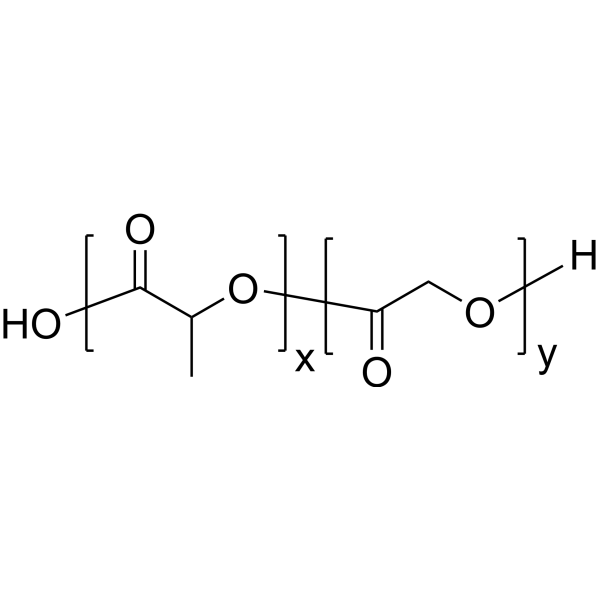
PLGA (50:50)
Maximum Cited Publications
29 Publications Verification
poly(lactic-co-glycolic acid) (50:50)
|
Biochemical Assay Reagents
|
Others
|
|
PLGA (50:50) (poly(lactic-co-glycolic acid) (50:50)) is a copolymer of poly lactic acid (PLA) and poly glycolic acid (PGA) which can be used to fabricate devices for drug delivery and tissue engineering applications.
|
-
-
- HY-B2247A
-
|
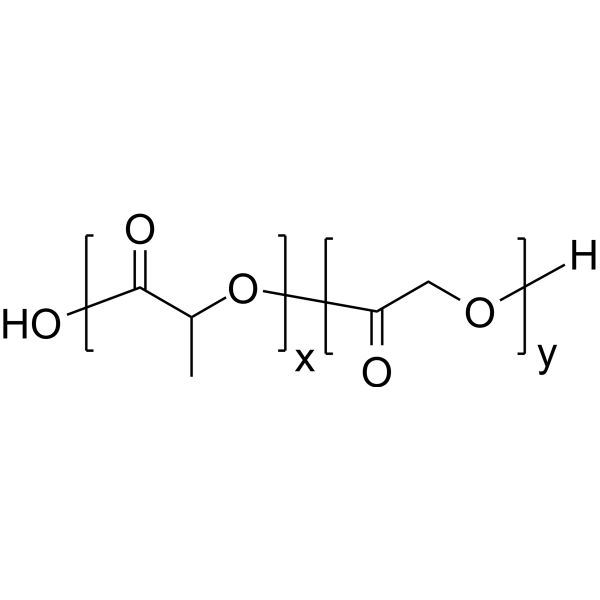
poly(lactic-co-glycolic acid) (75:25)
|
Biochemical Assay Reagents
|
Others
|
|
PLGA (75:25) is a low toxicity, biocompatible and biodegradable controlled drug delivery carrier, can achieve slow release in the organism. PLGA (75:25) is a copolymer of 75% poly lactic acid (PLA) and 25% poly glycolic acid (PGA). PLGA (75:25) has been extensively studied as delivery vehicles for agents, proteins and various other macromolecules such as DNA, RNA and peptides .
|
-
-
- HY-W723152
-
|
|
Drug Intermediate
|
Inflammation/Immunology
|
|
Poly(D,L-lactide-co-glycolide) is a biodegradable polymer copolymer. Poly(D,L-lactide-co-glycolide) undergoes degradation through ester bond hydrolysis into lactic acid and glycolic acid. These two products can be naturally eliminated through metabolism in the body (such as the tricarboxylic acid cycle), without the risk of long-term accumulation. Poly(D,L-lactide-co-glycolide) can be used in medical sutures, implants, and drug delivery systems .
|
-
-
- HY-W127512
-
|
|
Drug Intermediate
|
Others
|
|
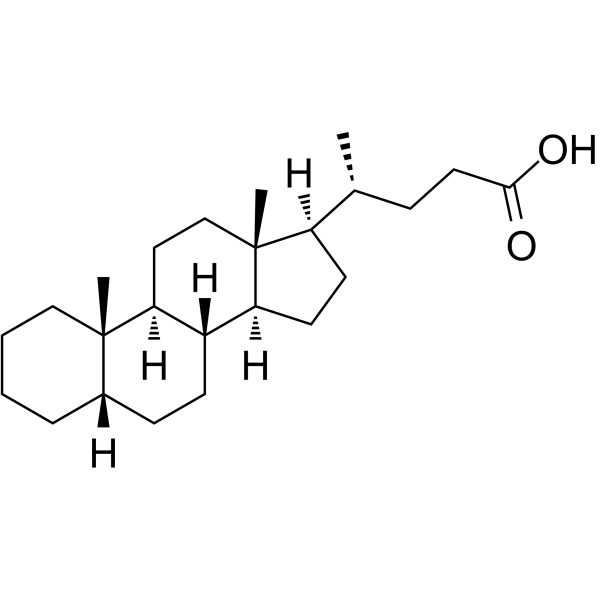
5β-Cholanic acid is a hydrophobic modifier used to modify polymer carriers. 5β-Cholanic acid can improve the acid stability, cell penetration efficiency and drug sustained release ability of nanocarriers, and optimize the oral effectiveness of delivered molecules. 5β-Cholanic acid can covalently bind to Glycol chitosan (GC) to form a GC-CA conjugate, which optimizes the hydrophobic anchoring ability of nanoparticles and enables them to be stably adsorbed on the surface of PLGA nanoparticles. Such nanoparticles can resist dissociation in the gastric acid environment and maintain positive charge to enhance endocytic uptake by intestinal epithelial cells (such as Caco-2 cells). 5β-Cholanic acid can be used in the development of drug delivery systems .
|
-
-
- HY-D0791
-
TRITC
1 Publications Verification
5(6)-Tetramethylrhodamine isothiocyanate
|
Fluorescent Dye
|
Others
|
|
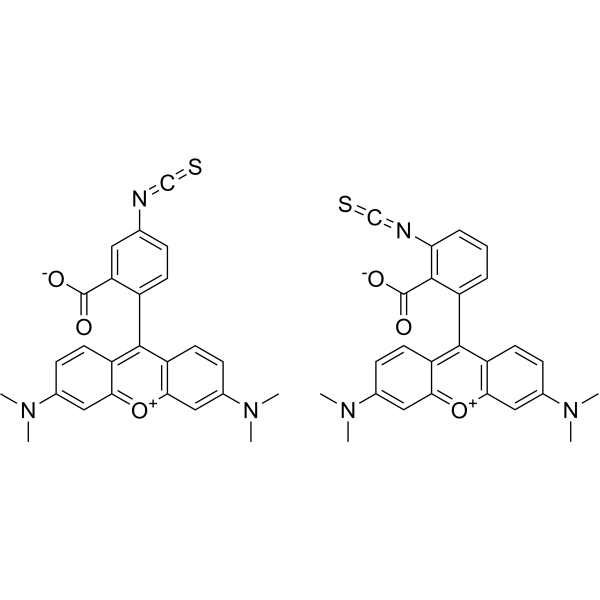
TRITC (5(6)-Tetramethylrhodamine isothiocyanate) is a commonly used fluorescent dye, belonging to the Rhodamine derivative family. It exhibits red fluorescence properties (Ex/Em ≈ 550/580 nm). TRITC can be used for cell labeling and imaging .
|
-
-
- HY-W440823A
-
|
DSPE-PEG1000-NH2 ammonium
|
Liposome
|
Cancer
|
|
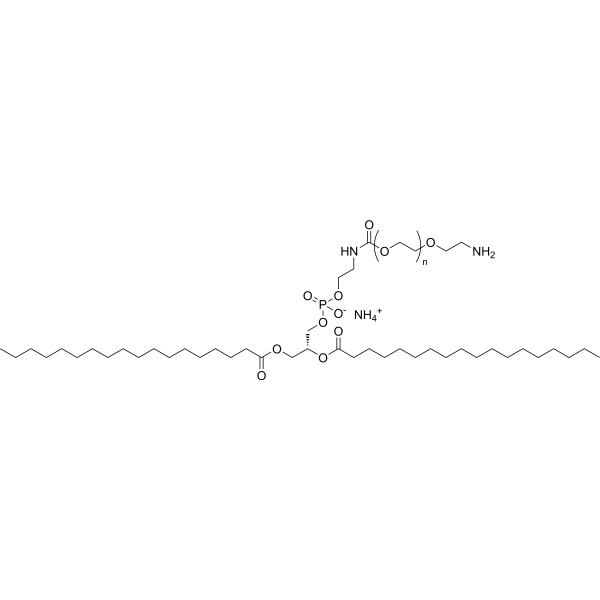
DSPE-PEG1000-Amine (DSPE-PEG1000-NH2) ammonium is a 1,2-distearoyl-sn-glycero-3-phosphoethanolamine-polyethylene glycol conjugate with a terminal amino group. DSPE-PEG1000-Amine ammonium can functionalize the surface of PLGA-lecithin-PEG core-shell nanoparticles to introduce positive surface charges. The amino group of DSPE-PEG1000-Amine ammonium can be converted into an aromatic aldehyde to react with the acetone-protected aromatic hydrazide on the surface of bovine carbonic anhydrase (BCA) molecules .
|
-
-
- HY-Y0850O
-
|
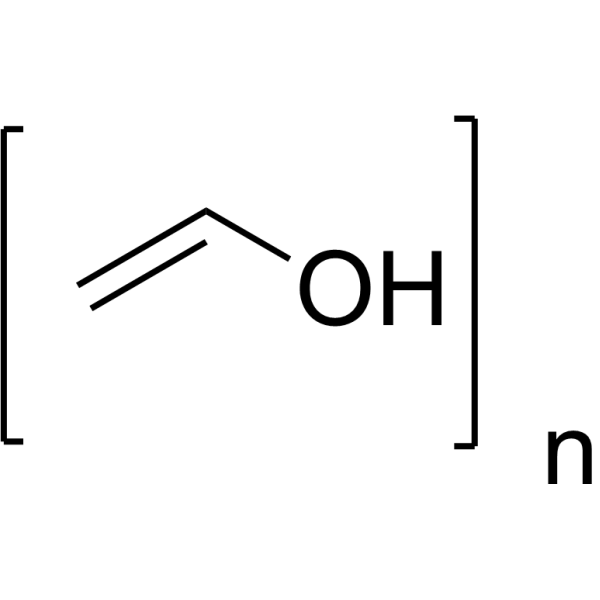
PVA (Mw 31000-50000, 87-89% hydrolyzed); Poly(Ethenol) (Mw 31000-50000, 87-89% hydrolyzed)
|
Environmental Pollutants
Biochemical Assay Reagents
|
Cancer
|
|
Polyvinyl alcohol (PVA; Poly (Ethenol)) (Mw 31000-50000, 87-89% hydrolyzed) is a polymer with emulsifying and stabilizing properties, with a degree of hydrolysis of 87-89%. Polyvinyl alcohol (Mw 31000-50000, 87-89% hydrolyzed) mainly acts as a stabilizer in the preparation of nanomedicines; it not only maintains the structural integrity of PEGylated PLGA nanoparticles during double emulsion synthesis, but also facilitates the preparation of chitosan/matrine-PLGA nanoparticle aqueous solutions and lipid-polymer nanoparticles. Polyvinyl alcohol (Mw 31000-50000, 87-89% hydrolyzed) can be widely used in research related to fields such as breast cancer .
|
-
-
- HY-P10646
-
|
|
Biochemical Assay Reagents
|
Neurological Disease
|
|
Muscle homing peptide M12 can preferentially bind to surface protein of muscle cells. Muscle homing peptide M12 mediates enhanced cellular uptake of nanoparticles (NPs) in myoblasts in vitro. Muscle homing peptide M12 is covalently conjugated to PLGA-PEG NPs via the N-terminal α-amino groups of peptides using the N-hydroxysuccinimide ester reaction .
|
-
-
- HY-156829I
-
|
|
Biochemical Assay Reagents
|
Others
|
|
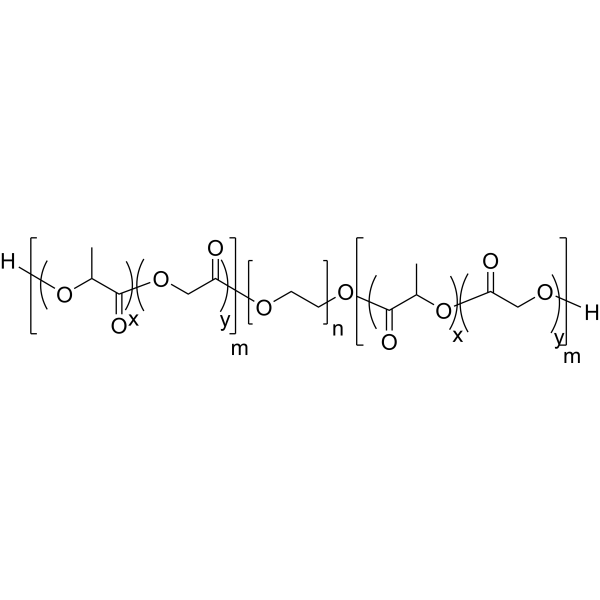
PLGA-PEG-PLGA (hydrogel) (LA:GA 3:1) (15% solution) is a biodegradable thermosensitive hydrogel product that can undergo phase transition at a specific temperature. PLGA-PEG-PLGA (hydrogel) (LA:GA 3:1) (15% solution) can be widely used in drug delivery systems, tissue engineering, wound dressings, and biosensors .
|
-
-
- HY-156829B
-
|
|
Biochemical Assay Reagents
|
Others
|
|
PLGA-PEG-PLGA (hydrogel) (LA:GA 7:1) is a biodegradable thermosensitive hydrogel product that can undergo phase transition at a specific temperature. PLGA-PEG-PLGA (hydrogel) (LA:GA 7:1) can be widely used in drug delivery systems, tissue engineering, wound dressings, and biosensors. The gelation temperature varies with concentration. The higher the concentration, the lower the gelation temperature. The gelation temperature is between 31-34°C at a concentration of 15-20 wt% .
|
-
-
- HY-148775A
-
|
|
Biochemical Assay Reagents
|
Others
|
|
mPEG-PLGA (21500-26500) is a biodegradable polymer composed of methoxypolyethylene glycol (mPEG) and poly (lactic-co-glycolic acid) (PLGA). mPEG-PLGA (21500-26500) is applicable for drug delivery systems .
|
-
-
- HY-145396
-
|
|
Biochemical Assay Reagents
|
Cancer
|
|
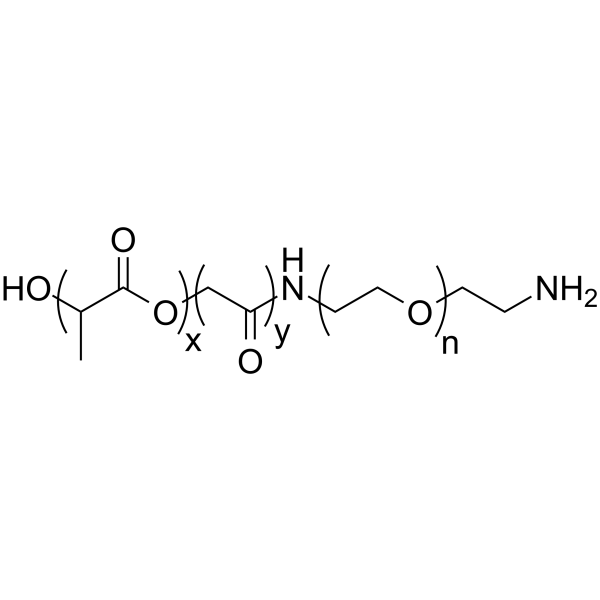
PLGA-PEG-NH2 is a material to synthesis nanomicelles. PLGA-PEG-NH2 nanomicelle is an efficient delivery system of Irinotecan for targeted colorectal cancer and hepatocellular carcinoma .
|
-
-
- HY-158089
-
|
|
Biochemical Assay Reagents
|
Others
|
|
PLGA-COOH (MW 80000) (LA/GA 50:50) is a copolymer composed of lactic acid (LA)-glycolic acid (GA) at a molar ratio of 50:50 and a terminal carboxyl group. PLGA-COOH (MW 80000) (LA/GA 50:50) is used in compound delivery systems due to its biocompatibility and biodegradability .
|
-
-
- HY-144012H
-
|
16:0 PEG5000 PE; 1,2-Dipalmitoyl-sn-glycero-3-phosphoethanolamine-N-[methoxy(polyethylene glycol)-5000] ammonium
|
Liposome
|
Others
|
|
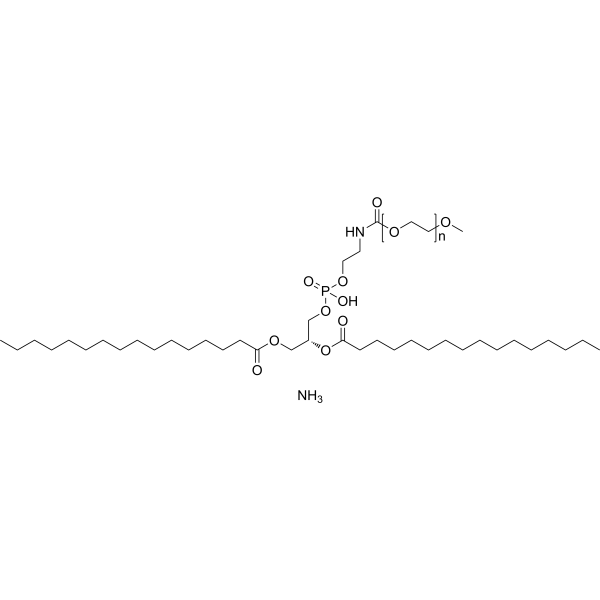
DPPE-PEG5000 (16:0 PEG5000 PE) is a polymer-lipid conjugate and LipoParticle stabilizer with a PEG chain of 5,000 g/mol molecular weight attached to its polar head, and it can be internalized by biological membranes. DPPE-PEG5000 enables LipoParticle to maintain colloidal stability after 20-fold dilution in PBS or cell culture medium, and prevents aggregate formation during lyophilization and rehydration. DPPE-PEG5000 helps enhance the non-cytotoxic property of LipoParticle formulations against human osteoblasts. DPPE-PEG5000 serves as a PEG lipid functional end group for synthesizing liposomes (LPs), is used in the design of conjugated polymer nanoparticles, and applies to research related to bone and joint infections .
|
-
-
- HY-156829J
-
|
|
Biochemical Assay Reagents
|
Others
|
|
PLGA-PEG-PLGA (hydrogel) (LA:GA 3:1) (20% solution) is a biodegradable thermosensitive hydrogel product that can undergo phase transition at a specific temperature. PLGA-PEG-PLGA (hydrogel) (LA:GA 3:1) (20% solution) can be widely used in drug delivery systems, tissue engineering, wound dressings, and biosensors .
|
-
-
- HY-156829A
-
|
|
Biochemical Assay Reagents
|
Cancer
|
|
PLGA-PEG-PLGA (1500-1500-1500) (LA/GA 15:1) is a matrix materia, with lactic acid (LA):glycolic acid (GA) = 15:1, that acts as anti-cancer drug delivery. PLGA-PEG-PLGA (1500-1500-1500) (LA/GA 15:1) can improve a drug's bioavailability, efficacy, water solubility, drug encapsulation efficiency, sustained drug release, and to minimize undesirable toxicity .
|
-
-
- HY-168943
-
-
-
- HY-148775B
-
|
|
Biochemical Assay Reagents
|
Others
|
|
PLGA-PEG-MAL (20kDA-5.0kDA, LA:GA ratio 40:60) is a kind of poly(lactide-co-glycolide)-block-poly(ethylene glycol) (PLGA-PEG-Mal) nanoparticles. PLGA-PEG-MAL (20kDA-5.0kDA, LA:GA ratio 40:60) has a molecular weight of 20kDA to 5.0kDA and contains a 40:60 ratio of lactic acid (LA) to glycolic acid (GA) molecules .
|
-
-
- HY-P10427
-
|
|
CXCR
Dengue Virus
|
Neurological Disease
Inflammation/Immunology
Cancer
|
|
DV1 is a CXCR4 inhibitor with anti-proteolytic properties that specifically blocks the binding of SDF-1α to its receptor. DV1 inhibits the migration of breast cancer cells and enables the targeted delivery of avidin-PLGA nanoparticles to CXCR4-expressing cancer cells. DV1 not only effectively suppresses the progression of metastatic breast cancer in mouse models, but also preferentially accumulates in brain tumor tissues rather than normal brain tissues, showing potential for inhibiting intracranial tumor metastasis. As a humoral immune stimulant, DV1 induces the production of specific IgG, neutralizing antibodies and cellular immune responses, thereby providing the host with protection against lethal challenges. DV1 has been applied to studies on CXCR4-expressing cancers, glioblastoma, dengue fever and other related diseases .
|
-
-
- HY-156829
-
|
|
Biochemical Assay Reagents
|
Cancer
|
|
PLGA-PEG-PLGA (1500-1500-1500) (LA/GA 1:1) is a matrix materia, with lactic acid (LA):glycolic acid (GA) = 1:1, that acts as anti-cancer drug delivery. PLGA-PEG-PLGA (1500-1500-1500) (LA/GA 1:1) can improve a drug's bioavailability, efficacy, water solubility, drug encapsulation efficiency, sustained drug release, and to minimize undesirable toxicity .
|
-
-
- HY-172174
-
|
|
Fluorescent Dye
|
Others
|
|
Red Fluorescent PLGA nanoparticles, 100nm is a nanoparticle made from the polymer PLGA and labeled with a red fluorescent dye. Red Fluorescent PLGA nanoparticles, 100nm can be used for drug delivery and for tracing .
|
-
-
- HY-176499
-
|
|
Biochemical Assay Reagents
|
Others
|
|
PLGA38000-PEG10000 is an amphiphilic polymer. Amphiphilic polymers can be used in drug delivery studies due to their ability to self-assemble into discrete aggregates .
|
-
-
- HY-148776
-
|
|
Biochemical Assay Reagents
|
Others
|
|
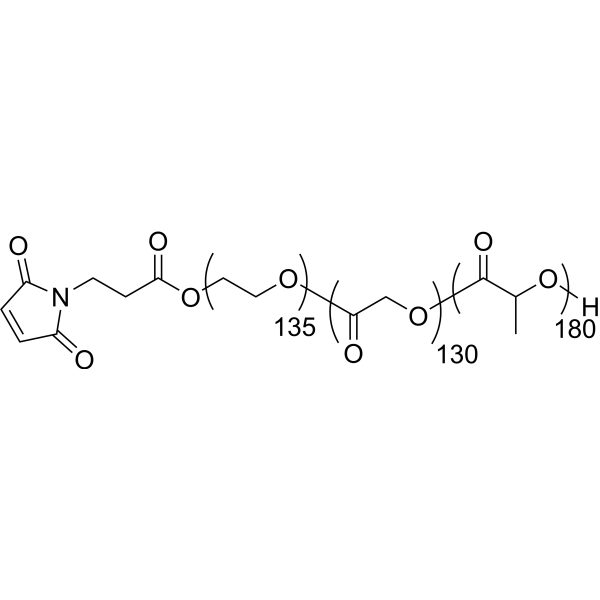
PLGA-PEG-MAL (20kDA-5.0kDA, LA:GA ratio 50:50) is a kind of poly(lactide-co-glycolide)-block-poly(ethylene glycol) (PLGA-PEG-Mal) nanoparticles. PLGA-PEG-MAL (20kDA-5.0kDA, LA:GA ratio 50:50) has a molecular weight of 20kDA to 5.0kDA and contains a 50:50 ratio of lactic acid (LA) to glycolic acid (GA) molecules. The molecular ratio of LA to GA determines the rate of matrix degradation and protein re-release .
|
-
-
- HY-154818
-
|
Ac-BSA
|
Biochemical Assay Reagents
|
Others
|
|
Bovine Serum Albumin, Acetylated (Ac-BSA) is a polypeptide of known structure with strong antigenicity. Bovine Serum Albumin, Acetylated produced a significant immune response, validating the accuracy and reliability of the experimental method. Bovine Serum Albumin, Acetylated can be used as a positive control substance in ELISA or WB experiments, and can be used in experiments with acetylated lysine monoclonal or polyclonal antibodies. Bovine Serum Albumin, Acetylated also improves encapsulation efficiency at low concentrations of PLGA, a polymer for biopharmaceutical delivery with biocompatibility, degradability, and controlled release properties .
|
-
-
- HY-P4125
-
|
|
HIV
Fluorescent Dye
|
Infection
|
|
FITC-LC-TAT (47-57) is a FITC-labeled TAT peptide (HY-P0281) (λex: 493 nm, λem: 522 nm). Derived from the trans-activator of transcription (TAT) of human immunodeficiency virus (HIV-1), TAT enhances the yield of heterologous proteins .
|
-
-
- HY-P10427A
-
|
|
CXCR
Dengue Virus
|
Infection
|
|
DV1 TFA is a CXCR4 inhibitor with anti-proteolytic properties that specifically blocks the binding of SDF-1α to its receptor. DV1 TFA inhibits the migration of breast cancer cells and enables the targeted delivery of avidin-PLGA nanoparticles to CXCR4-expressing cancer cells. DV1 TFA not only effectively suppresses the progression of metastatic breast cancer in mouse models, but also preferentially accumulates in brain tumor tissues rather than normal brain tissues, showing potential for inhibiting intracranial tumor metastasis. As a humoral immune stimulant, DV1 TFA induces the production of specific IgG, neutralizing antibodies and cellular immune responses, thereby providing the host with protection against lethal challenges. DV1 TFA has been applied to studies on CXCR4-expressing cancers, glioblastoma, dengue fever and other related diseases .
|
-
-
- HY-164077
-
-
-
- HY-156829H
-
|
|
Biochemical Assay Reagents
|
Others
|
|
PLGA-PEG-PLGA (hydrogel) (LA:GA 7:1) (20% solution) is a biodegradable thermosensitive hydrogel product that can undergo phase transition at a specific temperature. PLGA-PEG-PLGA (hydrogel) (LA:GA 7:1) (20% solution) can be widely used in drug delivery systems, tissue engineering, wound dressings, and biosensors. The gelation temperature varies with concentration. The higher the concentration, the lower the gelation temperature. The gelation temperature is between 31-34°C at a concentration of 15-20 wt% .
|
-
-
- HY-158255
-
|
|
Biochemical Assay Reagents
|
Others
|
|
mPEG-PLGA (2000-80000) (LA/GA 50:50) is a copolymer, which consists of hydrophilic mPEG and biodegradable PLGA (molar ratio is 50:50) with a molecular weight of 2000 (mPEG) + 80000 (PLGA). mPEG-PLGA (2000-80000) (LA/GA 50:50) forms nanoparticles or microparticles, which is stable in aqueous solution at different pH values and elevated temperatures as well as in serum. mPEG-PLGA (2000-80000) (LA/GA 50:50) is utilized as carrier material in drug delivery systems .
|
-
-
- HY-148775
-
|
|
Biochemical Assay Reagents
|
Others
|
|
PLGA-PEG-MAL (60kDA-3.4kDA, LA:GA ratio 75:25) is a kind of poly(lactide-co-glycolide)-block-poly(ethylene glycol) (PLGA-PEG-Mal) nanoparticles. PLGA-PEG-MAL (60kDA-3.4kDA, LA:GA ratio 75:25) has a molecular weight of 60kDA to 3.4kDA and contains a 75:25 ratio of lactic acid (LA) to glycolic acid (GA) molecules .
|
-
-
- HY-W409806
-
|
|
Liposome
|
Inflammation/Immunology
|
|
Cholesterylamine is a cationic lipid. Cholesterylamine can be added to the PLGA to prepare PLGA particle having surface charge. Cholesterylamine can be used for drug delivery. Cholesterylamine can be used for autoimmune diseases and allergy research .
|
-
-
- HY-178794
-
|
|
PGE synthase
|
Inflammation/Immunology
|
|
AGU661 is a Microsomal prostaglandin E2 synthase 1 (mPGES-1) inhibitor with an IC50 of 0.22 nM. AGU661 lowers PGE2 formation in human pro-inflammatory M1 macrophages and activated monocytes without affecting other lipid mediator pathways. AGU661 has unfavorable physicochemical properties with poor metabolic stability and strong plasma protein binding tendencies. AGU661 into PLGA-based NPs significantly enhances its bioactivity. AGU661 can be used for inflammatory disorders research .
|
-
-
- HY-167006
-
|
PLGA10000-PEG3000-Vinylsulfone
|
Biochemical Assay Reagents
|
Others
|
|
PLGA10000-PEG3000-VS (PLGA10000-PEG3000-Vinylsulfone) is an amphiphilic polymer. Amphiphilic polymers can be used in drug delivery studies due to their ability to self-assemble into discrete aggregates .
|
-
-
- HY-158255A
-
|
|
Biochemical Assay Reagents
|
Others
|
|
mPEG-PLGA (22500-26500) is a biodegradable polymer composed of methyl polyethylene glycol (mPEG) and poly(lactic-co-glycolic acid) (PLGA). mPEG-PLGA (22500-26500) can be used in drug delivery systems .
|
-
-
- HY-168947
-
|
|
Fluorescent Dye
|
Others
|
|
Green Fluorescent PLGA nanoparticles, 100nm is a PLGA nanoparticle labeled with a green fluorescent dye and is commonly used in imaging and diagnostic applications.
|
-
-
- HY-D0153
-
|
|
Fluorescent Dye
|
Cancer
|
|
Tetramethylrhodamine-5-isothiocyanate is a potent fluorescent dye. Tetramethylrhodamine-5-isothiocyanate can be used for label PG-M3 antibody for rapid diagnosis of acute promyelocytic leukemia (APL). Tetramethylrhodamine-5-isothiocyanate can be used as probe to quantify in vivo the biodistribution of PLGA (poly(lactic-co-glycolic) acid) and PLGA/chitosan nanoparticles .
|
-
-
- HY-167033
-
|
PLGA4000-PEG5000-Vinylsulfone
|
Biochemical Assay Reagents
|
Others
|
|
PLGA4000-PEG5000-VS (PLGA4000-PEG5000-Vinylsulfone) is an amphiphilic polymer. Amphiphilic polymers can be used in drug delivery studies due to their ability to self-assemble into discrete aggregates .
|
-
-
- HY-167035
-
|
PLGA5000-PEG2000-Vinylsulfone
|
Biochemical Assay Reagents
|
Others
|
|
PLGA5000-PEG2000-VS (PLGA5000-PEG2000-Vinylsulfone) is an amphiphilic polymer. Amphiphilic polymers can be used in drug delivery studies due to their ability to self-assemble into discrete aggregates .
|
-
-
- HY-168943A
-
-
-
- HY-168943B
-
-
-
- HY-168943C
-
-
-
- HY-156829E
-
|
|
Biochemical Assay Reagents
|
Others
|
|
PLGA-PEG-PLGA (hydrogel) (LA:GA 7:1) (15% solution) is a biodegradable thermosensitive hydrogel product that can undergo phase transition at a specific temperature. PLGA-PEG-PLGA (hydrogel) (LA:GA 7:1) (15% solution) can be widely used in drug delivery systems, tissue engineering, wound dressings, and biosensors. The gelation temperature varies with concentration. The higher the concentration, the lower the gelation temperature. The gelation temperature is between 31-34°C at a concentration of 15-20 wt% .
|
-
-
- HY-172168A
-
|
|
Fluorescent Dye
|
Others
|
|
Orange Fluorescent PLGA nanoparticles, 200nm a nanoparticle made from the polymer PLGA and labeled with an orange fluorescent dye. Orange Fluorescent PLGA nanoparticles, 200nm can be used for drug delivery and for tracing .
|
-
-
- HY-172168B
-
|
|
Fluorescent Dye
|
Others
|
|
Orange Fluorescent PLGA nanoparticles, 500nm a nanoparticle made from the polymer PLGA and labeled with an orange fluorescent dye. Orange Fluorescent PLGA nanoparticles, 500nm can be used for drug delivery and for tracing .
|
-
-
- HY-172168
-
|
|
Fluorescent Dye
|
Others
|
|
Orange Fluorescent PLGA nanoparticles, 100nm a nanoparticle made from the polymer PLGA and labeled with an orange fluorescent dye. Orange Fluorescent PLGA nanoparticles, 100nm can be used for drug delivery and for tracing .
|
-
-
- HY-172174B
-
|
|
Fluorescent Dye
|
Others
|
|
Red Fluorescent PLGA nanoparticles, 500nm is a nanoparticle made from the polymer PLGA and labeled with a red fluorescent dye. Red Fluorescent PLGA nanoparticles, 500nm can be used for drug delivery and for tracing .
|
-
-
- HY-172174A
-
|
|
Fluorescent Dye
|
Others
|
|
Red Fluorescent PLGA nanoparticles, 200nm is a nanoparticle made from the polymer PLGA and labeled with a red fluorescent dye. Red Fluorescent PLGA nanoparticles, 200nm can be used for drug delivery and for tracing .
|
-
-
- HY-145396D
-
-
-
- HY-145396A
-
-
-
- HY-145396C
-
-
- HY-145396B
-
-
- HY-168947A
-
|
|
Fluorescent Dye
|
Others
|
|
Green Fluorescent PLGA nanoparticles, 200nm is a PLGA nanoparticle labeled with a green fluorescent dye and is commonly used in imaging and diagnostic applications.
|
-
- HY-168947B
-
|
|
Fluorescent Dye
|
Others
|
|
Green Fluorescent PLGA nanoparticles, 500nm is a PLGA nanoparticle labeled with a green fluorescent dye and is commonly used in imaging and diagnostic applications.
|
-
- HY-19873
-
|
|
Photosensitizer
|
Cancer
|
|
SL-052 is a hypocrellin-based photosensitizer that has recently shown promising results in clinical and preclinical testing for cancer photodynamic therapy (PDT). SL-052 is encapsulated in biodegradable polylactic-co-glycolic acid (PLGA) polymer nanoparticles optimized using single emulsion solvent evaporation technology. The SL-052-PLGA nanoparticles were more effective in PDT treatment of subcutaneous SCCVII squamous cell carcinoma compared to polyvinylpyrrolidone (PVP)-based and standard liposomal SL-052 formulations. A longer time interval between drug injection and tumor illumination can improve tumor cure rates, and SL-052-PLGA nanoparticles showed the best therapeutic effect among all SL-052 formulations.
|
-
- HY-W010713
-
|
Fimaporfin free base
|
Photosensitizer
|
Cancer
|
|
Meso-tetraphenylchlorin (TPCS2a) is a photosensitizer with poor water solubility, which limits its use in the blood circulation. However, TPCS2a@NPs nanoparticles can be prepared based on polylactic-co-polyethylene glycol acid (PLGA) polymer core loaded with TPCS2. Such nanoparticles can be coated with mesenchymal stem cell-derived plasma membranes (mMSCs) to form mMSC-TPCS2a@NPs, which prolongs blood circulation time and improves tumor targeting ability. Compared with uncoated TPCS2a@NPs, mMSC-TPCS2a@NPs can reduce macrophage uptake by 54% to 70% under different conditions. Both nanoparticle forms are effectively accumulated in MCF7 and MDA-MB-231 breast cancer cells, while uptake in normal breast epithelial cells MCF10A is significantly lower .
|
-
- HY-167019
-
|
PLGA2000-PEG5000-Vinylsulfone
|
Biochemical Assay Reagents
|
Others
|
|
PLGA2000-PEG5000-VS (PLGA2000-PEG5000-Vinylsulfone) is an amphiphilic polymer. Amphiphilic polymers can be used in drug delivery studies due to their ability to self-assemble into discrete aggregates .
|
-
- HY-167027
-
|
PLGA3000-PEG5000-Vinylsulfone
|
Biochemical Assay Reagents
|
Others
|
|
PLGA3000-PEG5000-VS (PLGA3000-PEG5000-Vinylsulfone) is an amphiphilic polymer. Amphiphilic polymers can be used in drug delivery studies due to their ability to self-assemble into discrete aggregates .
|
-
- HY-167030
-
|
PLGA4000-PEG2000-Vinylsulfone
|
Biochemical Assay Reagents
|
Others
|
|
PLGA4000-PEG2000-VS (PLGA4000-PEG2000-Vinylsulfone) is an amphiphilic polymer. Amphiphilic polymers can be used in drug delivery studies due to their ability to self-assemble into discrete aggregates .
|
-
- HY-167032
-
|
PLGA4000-PEG3000-Vinylsulfone
|
Biochemical Assay Reagents
|
Others
|
|
PLGA4000-PEG3000-VS (PLGA4000-PEG3000-Vinylsulfone) is an amphiphilic polymer. Amphiphilic polymers can be used in drug delivery studies due to their ability to self-assemble into discrete aggregates .
|
-
- HY-167005
-
|
PLGA10000-PEG2000-Vinylsulfone
|
Biochemical Assay Reagents
|
Others
|
|
PLGA10000-PEG2000-VS (PLGA10000-PEG2000-Vinylsulfone) is an amphiphilic polymer. Amphiphilic polymers can be used in drug delivery studies due to their ability to self-assemble into discrete aggregates .
|
-
- HY-167038
-
|
PLGA5000-PEG5000-Vinylsulfone
|
Biochemical Assay Reagents
|
Others
|
|
PLGA5000-PEG5000-VS (PLGA5000-PEG5000-Vinylsulfone) is an amphiphilic polymer. Amphiphilic polymers can be used in drug delivery studies due to their ability to self-assemble into discrete aggregates .
|
-
- HY-167018
-
|
PLGA2000-PEG3000-Vinylsulfone
|
Biochemical Assay Reagents
|
Others
|
|
PLGA2000-PEG3000-VS (PLGA2000-PEG3000-Vinylsulfone) is an amphiphilic polymer. Amphiphilic polymers can be used in drug delivery studies due to their ability to self-assemble into discrete aggregates .
|
-
- HY-167013
-
|
PLGA1000-PEG5000-Vinylsulfone
|
Biochemical Assay Reagents
|
Others
|
|
PLGA1000-PEG5000-VS (PLGA1000-PEG5000-Vinylsulfone) is an amphiphilic polymer. Amphiphilic polymers can be used in drug delivery studies due to their ability to self-assemble into discrete aggregates .
|
-
- HY-167020
-
|
PLGA3000-PEG1000-Vinylsulfone
|
Biochemical Assay Reagents
|
Others
|
|
PLGA3000-PEG1000-VS (PLGA3000-PEG1000-Vinylsulfone) is an amphiphilic polymer. Amphiphilic polymers can be used in drug delivery studies due to their ability to self-assemble into discrete aggregates .
|
-
- HY-167037
-
|
PLGA5000-PEG3000-Vinylsulfone
|
Biochemical Assay Reagents
|
Others
|
|
PLGA5000-PEG3000-VS (PLGA5000-PEG3000-Vinylsulfone) is an amphiphilic polymer. Amphiphilic polymers can be used in drug delivery studies due to their ability to self-assemble into discrete aggregates .
|
-
- HY-167008
-
|
PLGA1000-PEG1000-Vinylsulfone
|
Biochemical Assay Reagents
|
Others
|
|
PLGA1000-PEG1000-VS (PLGA1000-PEG1000-Vinylsulfone) is an amphiphilic polymer. Amphiphilic polymers can be used in drug delivery studies due to their ability to self-assemble into discrete aggregates .
|
-
- HY-167029
-
|
PLGA4000-PEG1000-Vinylsulfone
|
Biochemical Assay Reagents
|
Others
|
|
PLGA4000-PEG1000-VS (PLGA4000-PEG1000-Vinylsulfone) is an amphiphilic polymer. Amphiphilic polymers can be used in drug delivery studies due to their ability to self-assemble into discrete aggregates .
|
-
- HY-167009
-
|
PLGA1000-PEG2000-Vinylsulfone
|
Biochemical Assay Reagents
|
Others
|
|
PLGA1000-PEG2000-VS (PLGA1000-PEG2000-Vinylsulfone) is an amphiphilic polymer. Amphiphilic polymers can be used in drug delivery studies due to their ability to self-assemble into discrete aggregates .
|
-
- HY-167026
-
|
PLGA3000-PEG3000-Vinylsulfone
|
Biochemical Assay Reagents
|
Others
|
|
PLGA3000-PEG3000-VS (PLGA3000-PEG3000-Vinylsulfone) is an amphiphilic polymer. Amphiphilic polymers can be used in drug delivery studies due to their ability to self-assemble into discrete aggregates .
|
-
- HY-167034
-
|
PLGA5000-PEG1000-Vinylsulfone
|
Biochemical Assay Reagents
|
Others
|
|
PLGA5000-PEG1000-VS (PLGA5000-PEG1000-Vinylsulfone) is an amphiphilic polymer. Amphiphilic polymers can be used in drug delivery studies due to their ability to self-assemble into discrete aggregates .
|
-
- HY-167014
-
|
PLGA2000-PEG1000-Vinylsulfone
|
Biochemical Assay Reagents
|
Others
|
|
PLGA2000-PEG1000-VS (PLGA2000-PEG1000-Vinylsulfone) is an amphiphilic polymer. Amphiphilic polymers can be used in drug delivery studies due to their ability to self-assemble into discrete aggregates .
|
-
- HY-167023
-
|
PLGA3000-PEG2000-Vinylsulfone
|
Biochemical Assay Reagents
|
Others
|
|
PLGA3000-PEG2000-VS (PLGA3000-PEG2000-Vinylsulfone) is an amphiphilic polymer. Amphiphilic polymers can be used in drug delivery studies due to their ability to self-assemble into discrete aggregates .
|
-
- HY-167010
-
|
PLGA1000-PEG3000-Vinylsulfone
|
Biochemical Assay Reagents
|
Others
|
|
PLGA1000-PEG3000-VS (PLGA1000-PEG3000-Vinylsulfone) is an amphiphilic polymer. Amphiphilic polymers can be used in drug delivery studies due to their ability to self-assemble into discrete aggregates .
|
-
- HY-W127512R
-
|
|
Drug Intermediate
Reference Standards
|
Others
|
|
5β-Cholanic acid is a hydrophobic modifier used to modify polymer carriers. 5β-Cholanic acid can improve the acid stability, cell penetration efficiency and drug sustained release ability of nanocarriers, and optimize the oral effectiveness of delivered molecules. 5β-Cholanic acid can covalently bind to Glycol chitosan (GC) to form a GC-CA conjugate, which optimizes the hydrophobic anchoring ability of nanoparticles and enables them to be stably adsorbed on the surface of PLGA nanoparticles. Such nanoparticles can resist dissociation in the gastric acid environment and maintain positive charge to enhance endocytic uptake by intestinal epithelial cells (such as Caco-2 cells). 5β-Cholanic acid can be used in the development of drug delivery systems .
|
-
- HY-P11799
-
|
|
Transmembrane Glycoprotein
|
Inflammation/Immunology
|
|
cLABL is a cyclic peptide that specifically binds to ICAM‑1. cLABL mediates targeted enrichment and rapid endocytosis of nanoparticles. cLABL is applicable to researches such as precise drug delivery at inflammatory sites .
|
-
| Cat. No. |
Product Name |
Type |
-
- HY-D0791
-
TRITC
1 Publications Verification
5(6)-Tetramethylrhodamine isothiocyanate
|
Fluorescent Dye
|
|
TRITC (5(6)-Tetramethylrhodamine isothiocyanate) is a commonly used fluorescent dye, belonging to the Rhodamine derivative family. It exhibits red fluorescence properties (Ex/Em ≈ 550/580 nm). TRITC can be used for cell labeling and imaging .
|
-
- HY-D0153
-
|
|
Fluorescent Dye
|
|
Tetramethylrhodamine-5-isothiocyanate is a potent fluorescent dye. Tetramethylrhodamine-5-isothiocyanate can be used for label PG-M3 antibody for rapid diagnosis of acute promyelocytic leukemia (APL). Tetramethylrhodamine-5-isothiocyanate can be used as probe to quantify in vivo the biodistribution of PLGA (poly(lactic-co-glycolic) acid) and PLGA/chitosan nanoparticles .
|
| Cat. No. |
Product Name |
Type |
-
- HY-B2247
-
PLGA (50:50)
Maximum Cited Publications
29 Publications Verification
poly(lactic-co-glycolic acid) (50:50)
|
Biochemical Assay Reagents
|
|
PLGA (50:50) (poly(lactic-co-glycolic acid) (50:50)) is a copolymer of poly lactic acid (PLA) and poly glycolic acid (PGA) which can be used to fabricate devices for drug delivery and tissue engineering applications.
|
-
- HY-W440823A
-
|
DSPE-PEG1000-NH2 ammonium
|
Biochemical Assay Reagents
|
|
DSPE-PEG1000-Amine (DSPE-PEG1000-NH2) ammonium is a 1,2-distearoyl-sn-glycero-3-phosphoethanolamine-polyethylene glycol conjugate with a terminal amino group. DSPE-PEG1000-Amine ammonium can functionalize the surface of PLGA-lecithin-PEG core-shell nanoparticles to introduce positive surface charges. The amino group of DSPE-PEG1000-Amine ammonium can be converted into an aromatic aldehyde to react with the acetone-protected aromatic hydrazide on the surface of bovine carbonic anhydrase (BCA) molecules .
|
-
- HY-Y0850O
-
|
PVA (Mw 31000-50000, 87-89% hydrolyzed); Poly(Ethenol) (Mw 31000-50000, 87-89% hydrolyzed)
|
Biochemical Assay Reagents
|
|
Polyvinyl alcohol (PVA; Poly (Ethenol)) (Mw 31000-50000, 87-89% hydrolyzed) is a polymer with emulsifying and stabilizing properties, with a degree of hydrolysis of 87-89%. Polyvinyl alcohol (Mw 31000-50000, 87-89% hydrolyzed) mainly acts as a stabilizer in the preparation of nanomedicines; it not only maintains the structural integrity of PEGylated PLGA nanoparticles during double emulsion synthesis, but also facilitates the preparation of chitosan/matrine-PLGA nanoparticle aqueous solutions and lipid-polymer nanoparticles. Polyvinyl alcohol (Mw 31000-50000, 87-89% hydrolyzed) can be widely used in research related to fields such as breast cancer .
|
-
- HY-156829I
-
|
|
Biochemical Assay Reagents
|
|
PLGA-PEG-PLGA (hydrogel) (LA:GA 3:1) (15% solution) is a biodegradable thermosensitive hydrogel product that can undergo phase transition at a specific temperature. PLGA-PEG-PLGA (hydrogel) (LA:GA 3:1) (15% solution) can be widely used in drug delivery systems, tissue engineering, wound dressings, and biosensors .
|
-
- HY-156829B
-
|
|
Biochemical Assay Reagents
|
|
PLGA-PEG-PLGA (hydrogel) (LA:GA 7:1) is a biodegradable thermosensitive hydrogel product that can undergo phase transition at a specific temperature. PLGA-PEG-PLGA (hydrogel) (LA:GA 7:1) can be widely used in drug delivery systems, tissue engineering, wound dressings, and biosensors. The gelation temperature varies with concentration. The higher the concentration, the lower the gelation temperature. The gelation temperature is between 31-34°C at a concentration of 15-20 wt% .
|
-
- HY-145396
-
|
|
Biochemical Assay Reagents
|
|
PLGA-PEG-NH2 is a material to synthesis nanomicelles. PLGA-PEG-NH2 nanomicelle is an efficient delivery system of Irinotecan for targeted colorectal cancer and hepatocellular carcinoma .
|
-
- HY-144012H
-
|
16:0 PEG5000 PE; 1,2-Dipalmitoyl-sn-glycero-3-phosphoethanolamine-N-[methoxy(polyethylene glycol)-5000] ammonium
|
Biochemical Assay Reagents
|
|
DPPE-PEG5000 (16:0 PEG5000 PE) is a polymer-lipid conjugate and LipoParticle stabilizer with a PEG chain of 5,000 g/mol molecular weight attached to its polar head, and it can be internalized by biological membranes. DPPE-PEG5000 enables LipoParticle to maintain colloidal stability after 20-fold dilution in PBS or cell culture medium, and prevents aggregate formation during lyophilization and rehydration. DPPE-PEG5000 helps enhance the non-cytotoxic property of LipoParticle formulations against human osteoblasts. DPPE-PEG5000 serves as a PEG lipid functional end group for synthesizing liposomes (LPs), is used in the design of conjugated polymer nanoparticles, and applies to research related to bone and joint infections .
|
-
- HY-156829J
-
|
|
Biochemical Assay Reagents
|
|
PLGA-PEG-PLGA (hydrogel) (LA:GA 3:1) (20% solution) is a biodegradable thermosensitive hydrogel product that can undergo phase transition at a specific temperature. PLGA-PEG-PLGA (hydrogel) (LA:GA 3:1) (20% solution) can be widely used in drug delivery systems, tissue engineering, wound dressings, and biosensors .
|
-
- HY-168943
-
|
|
Biochemical Assay Reagents
|
|
PLGA nanoparticles, 100 nm is a nanoparticle made from the polymer PLGA that can be used for drug delivery .
|
-
- HY-172174
-
|
|
Biochemical Assay Reagents
|
|
Red Fluorescent PLGA nanoparticles, 100nm is a nanoparticle made from the polymer PLGA and labeled with a red fluorescent dye. Red Fluorescent PLGA nanoparticles, 100nm can be used for drug delivery and for tracing .
|
-
- HY-154818
-
|
Ac-BSA
|
Biochemical Assay Reagents
|
|
Bovine Serum Albumin, Acetylated (Ac-BSA) is a polypeptide of known structure with strong antigenicity. Bovine Serum Albumin, Acetylated produced a significant immune response, validating the accuracy and reliability of the experimental method. Bovine Serum Albumin, Acetylated can be used as a positive control substance in ELISA or WB experiments, and can be used in experiments with acetylated lysine monoclonal or polyclonal antibodies. Bovine Serum Albumin, Acetylated also improves encapsulation efficiency at low concentrations of PLGA, a polymer for biopharmaceutical delivery with biocompatibility, degradability, and controlled release properties .
|
-
- HY-156829H
-
|
|
Biochemical Assay Reagents
|
|
PLGA-PEG-PLGA (hydrogel) (LA:GA 7:1) (20% solution) is a biodegradable thermosensitive hydrogel product that can undergo phase transition at a specific temperature. PLGA-PEG-PLGA (hydrogel) (LA:GA 7:1) (20% solution) can be widely used in drug delivery systems, tissue engineering, wound dressings, and biosensors. The gelation temperature varies with concentration. The higher the concentration, the lower the gelation temperature. The gelation temperature is between 31-34°C at a concentration of 15-20 wt% .
|
-
- HY-167006
-
|
PLGA10000-PEG3000-Vinylsulfone
|
Biochemical Assay Reagents
|
|
PLGA10000-PEG3000-VS (PLGA10000-PEG3000-Vinylsulfone) is an amphiphilic polymer. Amphiphilic polymers can be used in drug delivery studies due to their ability to self-assemble into discrete aggregates .
|
-
- HY-168947
-
|
|
Biochemical Assay Reagents
|
|
Green Fluorescent PLGA nanoparticles, 100nm is a PLGA nanoparticle labeled with a green fluorescent dye and is commonly used in imaging and diagnostic applications.
|
-
- HY-167033
-
|
PLGA4000-PEG5000-Vinylsulfone
|
Biochemical Assay Reagents
|
|
PLGA4000-PEG5000-VS (PLGA4000-PEG5000-Vinylsulfone) is an amphiphilic polymer. Amphiphilic polymers can be used in drug delivery studies due to their ability to self-assemble into discrete aggregates .
|
-
- HY-167035
-
|
PLGA5000-PEG2000-Vinylsulfone
|
Biochemical Assay Reagents
|
|
PLGA5000-PEG2000-VS (PLGA5000-PEG2000-Vinylsulfone) is an amphiphilic polymer. Amphiphilic polymers can be used in drug delivery studies due to their ability to self-assemble into discrete aggregates .
|
-
- HY-168943A
-
|
|
Biochemical Assay Reagents
|
|
PLGA nanoparticles, 500 nm is a nanoparticle made from the polymer PLGA that can be used for drug delivery .
|
-
- HY-168943B
-
|
|
Biochemical Assay Reagents
|
|
PLGA nanoparticles, 500 nm is a nanoparticle made from the polymer PLGA that can be used for drug delivery .
|
-
- HY-168943C
-
|
|
Biochemical Assay Reagents
|
|
PLGA nanoparticles, 1μm is a nanoparticle made from the polymer PLGA that can be used for drug delivery .
|
-
- HY-156829E
-
|
|
Biochemical Assay Reagents
|
|
PLGA-PEG-PLGA (hydrogel) (LA:GA 7:1) (15% solution) is a biodegradable thermosensitive hydrogel product that can undergo phase transition at a specific temperature. PLGA-PEG-PLGA (hydrogel) (LA:GA 7:1) (15% solution) can be widely used in drug delivery systems, tissue engineering, wound dressings, and biosensors. The gelation temperature varies with concentration. The higher the concentration, the lower the gelation temperature. The gelation temperature is between 31-34°C at a concentration of 15-20 wt% .
|
-
- HY-172168A
-
|
|
Biochemical Assay Reagents
|
|
Orange Fluorescent PLGA nanoparticles, 200nm a nanoparticle made from the polymer PLGA and labeled with an orange fluorescent dye. Orange Fluorescent PLGA nanoparticles, 200nm can be used for drug delivery and for tracing .
|
-
- HY-172168B
-
|
|
Biochemical Assay Reagents
|
|
Orange Fluorescent PLGA nanoparticles, 500nm a nanoparticle made from the polymer PLGA and labeled with an orange fluorescent dye. Orange Fluorescent PLGA nanoparticles, 500nm can be used for drug delivery and for tracing .
|
-
- HY-172168
-
|
|
Biochemical Assay Reagents
|
|
Orange Fluorescent PLGA nanoparticles, 100nm a nanoparticle made from the polymer PLGA and labeled with an orange fluorescent dye. Orange Fluorescent PLGA nanoparticles, 100nm can be used for drug delivery and for tracing .
|
-
- HY-172174B
-
|
|
Biochemical Assay Reagents
|
|
Red Fluorescent PLGA nanoparticles, 500nm is a nanoparticle made from the polymer PLGA and labeled with a red fluorescent dye. Red Fluorescent PLGA nanoparticles, 500nm can be used for drug delivery and for tracing .
|
-
- HY-172174A
-
|
|
Biochemical Assay Reagents
|
|
Red Fluorescent PLGA nanoparticles, 200nm is a nanoparticle made from the polymer PLGA and labeled with a red fluorescent dye. Red Fluorescent PLGA nanoparticles, 200nm can be used for drug delivery and for tracing .
|
-
- HY-145396D
-
-
- HY-145396A
-
-
- HY-145396C
-
-
- HY-145396B
-
-
- HY-168947A
-
|
|
Biochemical Assay Reagents
|
|
Green Fluorescent PLGA nanoparticles, 200nm is a PLGA nanoparticle labeled with a green fluorescent dye and is commonly used in imaging and diagnostic applications.
|
-
- HY-168947B
-
|
|
Biochemical Assay Reagents
|
|
Green Fluorescent PLGA nanoparticles, 500nm is a PLGA nanoparticle labeled with a green fluorescent dye and is commonly used in imaging and diagnostic applications.
|
-
- HY-167019
-
|
PLGA2000-PEG5000-Vinylsulfone
|
Biochemical Assay Reagents
|
|
PLGA2000-PEG5000-VS (PLGA2000-PEG5000-Vinylsulfone) is an amphiphilic polymer. Amphiphilic polymers can be used in drug delivery studies due to their ability to self-assemble into discrete aggregates .
|
-
- HY-167027
-
|
PLGA3000-PEG5000-Vinylsulfone
|
Biochemical Assay Reagents
|
|
PLGA3000-PEG5000-VS (PLGA3000-PEG5000-Vinylsulfone) is an amphiphilic polymer. Amphiphilic polymers can be used in drug delivery studies due to their ability to self-assemble into discrete aggregates .
|
-
- HY-167030
-
|
PLGA4000-PEG2000-Vinylsulfone
|
Biochemical Assay Reagents
|
|
PLGA4000-PEG2000-VS (PLGA4000-PEG2000-Vinylsulfone) is an amphiphilic polymer. Amphiphilic polymers can be used in drug delivery studies due to their ability to self-assemble into discrete aggregates .
|
-
- HY-167032
-
|
PLGA4000-PEG3000-Vinylsulfone
|
Biochemical Assay Reagents
|
|
PLGA4000-PEG3000-VS (PLGA4000-PEG3000-Vinylsulfone) is an amphiphilic polymer. Amphiphilic polymers can be used in drug delivery studies due to their ability to self-assemble into discrete aggregates .
|
-
- HY-167005
-
|
PLGA10000-PEG2000-Vinylsulfone
|
Biochemical Assay Reagents
|
|
PLGA10000-PEG2000-VS (PLGA10000-PEG2000-Vinylsulfone) is an amphiphilic polymer. Amphiphilic polymers can be used in drug delivery studies due to their ability to self-assemble into discrete aggregates .
|
-
- HY-167038
-
|
PLGA5000-PEG5000-Vinylsulfone
|
Biochemical Assay Reagents
|
|
PLGA5000-PEG5000-VS (PLGA5000-PEG5000-Vinylsulfone) is an amphiphilic polymer. Amphiphilic polymers can be used in drug delivery studies due to their ability to self-assemble into discrete aggregates .
|
-
- HY-167018
-
|
PLGA2000-PEG3000-Vinylsulfone
|
Biochemical Assay Reagents
|
|
PLGA2000-PEG3000-VS (PLGA2000-PEG3000-Vinylsulfone) is an amphiphilic polymer. Amphiphilic polymers can be used in drug delivery studies due to their ability to self-assemble into discrete aggregates .
|
-
- HY-167013
-
|
PLGA1000-PEG5000-Vinylsulfone
|
Biochemical Assay Reagents
|
|
PLGA1000-PEG5000-VS (PLGA1000-PEG5000-Vinylsulfone) is an amphiphilic polymer. Amphiphilic polymers can be used in drug delivery studies due to their ability to self-assemble into discrete aggregates .
|
-
- HY-167020
-
|
PLGA3000-PEG1000-Vinylsulfone
|
Biochemical Assay Reagents
|
|
PLGA3000-PEG1000-VS (PLGA3000-PEG1000-Vinylsulfone) is an amphiphilic polymer. Amphiphilic polymers can be used in drug delivery studies due to their ability to self-assemble into discrete aggregates .
|
-
- HY-167037
-
|
PLGA5000-PEG3000-Vinylsulfone
|
Biochemical Assay Reagents
|
|
PLGA5000-PEG3000-VS (PLGA5000-PEG3000-Vinylsulfone) is an amphiphilic polymer. Amphiphilic polymers can be used in drug delivery studies due to their ability to self-assemble into discrete aggregates .
|
-
- HY-167008
-
|
PLGA1000-PEG1000-Vinylsulfone
|
Biochemical Assay Reagents
|
|
PLGA1000-PEG1000-VS (PLGA1000-PEG1000-Vinylsulfone) is an amphiphilic polymer. Amphiphilic polymers can be used in drug delivery studies due to their ability to self-assemble into discrete aggregates .
|
-
- HY-167029
-
|
PLGA4000-PEG1000-Vinylsulfone
|
Biochemical Assay Reagents
|
|
PLGA4000-PEG1000-VS (PLGA4000-PEG1000-Vinylsulfone) is an amphiphilic polymer. Amphiphilic polymers can be used in drug delivery studies due to their ability to self-assemble into discrete aggregates .
|
-
- HY-167009
-
|
PLGA1000-PEG2000-Vinylsulfone
|
Biochemical Assay Reagents
|
|
PLGA1000-PEG2000-VS (PLGA1000-PEG2000-Vinylsulfone) is an amphiphilic polymer. Amphiphilic polymers can be used in drug delivery studies due to their ability to self-assemble into discrete aggregates .
|
-
- HY-167026
-
|
PLGA3000-PEG3000-Vinylsulfone
|
Biochemical Assay Reagents
|
|
PLGA3000-PEG3000-VS (PLGA3000-PEG3000-Vinylsulfone) is an amphiphilic polymer. Amphiphilic polymers can be used in drug delivery studies due to their ability to self-assemble into discrete aggregates .
|
-
- HY-167034
-
|
PLGA5000-PEG1000-Vinylsulfone
|
Biochemical Assay Reagents
|
|
PLGA5000-PEG1000-VS (PLGA5000-PEG1000-Vinylsulfone) is an amphiphilic polymer. Amphiphilic polymers can be used in drug delivery studies due to their ability to self-assemble into discrete aggregates .
|
-
- HY-167014
-
|
PLGA2000-PEG1000-Vinylsulfone
|
Biochemical Assay Reagents
|
|
PLGA2000-PEG1000-VS (PLGA2000-PEG1000-Vinylsulfone) is an amphiphilic polymer. Amphiphilic polymers can be used in drug delivery studies due to their ability to self-assemble into discrete aggregates .
|
-
- HY-167023
-
|
PLGA3000-PEG2000-Vinylsulfone
|
Biochemical Assay Reagents
|
|
PLGA3000-PEG2000-VS (PLGA3000-PEG2000-Vinylsulfone) is an amphiphilic polymer. Amphiphilic polymers can be used in drug delivery studies due to their ability to self-assemble into discrete aggregates .
|
-
- HY-167010
-
|
PLGA1000-PEG3000-Vinylsulfone
|
Biochemical Assay Reagents
|
|
PLGA1000-PEG3000-VS (PLGA1000-PEG3000-Vinylsulfone) is an amphiphilic polymer. Amphiphilic polymers can be used in drug delivery studies due to their ability to self-assemble into discrete aggregates .
|
| Cat. No. |
Product Name |
Target |
Research Area |
-
- HY-P10646
-
|
|
Biochemical Assay Reagents
|
Neurological Disease
|
|
Muscle homing peptide M12 can preferentially bind to surface protein of muscle cells. Muscle homing peptide M12 mediates enhanced cellular uptake of nanoparticles (NPs) in myoblasts in vitro. Muscle homing peptide M12 is covalently conjugated to PLGA-PEG NPs via the N-terminal α-amino groups of peptides using the N-hydroxysuccinimide ester reaction .
|
-
- HY-P10427
-
|
|
CXCR
Dengue Virus
|
Neurological Disease
Inflammation/Immunology
Cancer
|
|
DV1 is a CXCR4 inhibitor with anti-proteolytic properties that specifically blocks the binding of SDF-1α to its receptor. DV1 inhibits the migration of breast cancer cells and enables the targeted delivery of avidin-PLGA nanoparticles to CXCR4-expressing cancer cells. DV1 not only effectively suppresses the progression of metastatic breast cancer in mouse models, but also preferentially accumulates in brain tumor tissues rather than normal brain tissues, showing potential for inhibiting intracranial tumor metastasis. As a humoral immune stimulant, DV1 induces the production of specific IgG, neutralizing antibodies and cellular immune responses, thereby providing the host with protection against lethal challenges. DV1 has been applied to studies on CXCR4-expressing cancers, glioblastoma, dengue fever and other related diseases .
|
-
- HY-P4125
-
|
|
HIV
Fluorescent Dye
|
Infection
|
|
FITC-LC-TAT (47-57) is a FITC-labeled TAT peptide (HY-P0281) (λex: 493 nm, λem: 522 nm). Derived from the trans-activator of transcription (TAT) of human immunodeficiency virus (HIV-1), TAT enhances the yield of heterologous proteins .
|
-
- HY-P10427A
-
|
|
CXCR
Dengue Virus
|
Infection
|
|
DV1 TFA is a CXCR4 inhibitor with anti-proteolytic properties that specifically blocks the binding of SDF-1α to its receptor. DV1 TFA inhibits the migration of breast cancer cells and enables the targeted delivery of avidin-PLGA nanoparticles to CXCR4-expressing cancer cells. DV1 TFA not only effectively suppresses the progression of metastatic breast cancer in mouse models, but also preferentially accumulates in brain tumor tissues rather than normal brain tissues, showing potential for inhibiting intracranial tumor metastasis. As a humoral immune stimulant, DV1 TFA induces the production of specific IgG, neutralizing antibodies and cellular immune responses, thereby providing the host with protection against lethal challenges. DV1 TFA has been applied to studies on CXCR4-expressing cancers, glioblastoma, dengue fever and other related diseases .
|
-
- HY-P11799
-
|
|
Transmembrane Glycoprotein
|
Inflammation/Immunology
|
|
cLABL is a cyclic peptide that specifically binds to ICAM‑1. cLABL mediates targeted enrichment and rapid endocytosis of nanoparticles. cLABL is applicable to researches such as precise drug delivery at inflammatory sites .
|
| Cat. No. |
Product Name |
|
Classification |
-
- HY-B2247
-
PLGA (50:50)
Maximum Cited Publications
29 Publications Verification
poly(lactic-co-glycolic acid) (50:50)
|
|
Polymers
|
|
PLGA (50:50) (poly(lactic-co-glycolic acid) (50:50)) is a copolymer of poly lactic acid (PLA) and poly glycolic acid (PGA) which can be used to fabricate devices for drug delivery and tissue engineering applications.
|
-
- HY-B2247A
-
|
poly(lactic-co-glycolic acid) (75:25)
|
|
Polymers
|
|
PLGA (75:25) is a low toxicity, biocompatible and biodegradable controlled drug delivery carrier, can achieve slow release in the organism. PLGA (75:25) is a copolymer of 75% poly lactic acid (PLA) and 25% poly glycolic acid (PGA). PLGA (75:25) has been extensively studied as delivery vehicles for agents, proteins and various other macromolecules such as DNA, RNA and peptides .
|
-
- HY-W440823A
-
|
DSPE-PEG1000-NH2 ammonium
|
|
Pegylated Lipids
|
|
DSPE-PEG1000-Amine (DSPE-PEG1000-NH2) ammonium is a 1,2-distearoyl-sn-glycero-3-phosphoethanolamine-polyethylene glycol conjugate with a terminal amino group. DSPE-PEG1000-Amine ammonium can functionalize the surface of PLGA-lecithin-PEG core-shell nanoparticles to introduce positive surface charges. The amino group of DSPE-PEG1000-Amine ammonium can be converted into an aromatic aldehyde to react with the acetone-protected aromatic hydrazide on the surface of bovine carbonic anhydrase (BCA) molecules .
|
-
- HY-Y0850O
-
|
PVA (Mw 31000-50000, 87-89% hydrolyzed); Poly(Ethenol) (Mw 31000-50000, 87-89% hydrolyzed)
|
|
Polymers
|
|
Polyvinyl alcohol (PVA; Poly (Ethenol)) (Mw 31000-50000, 87-89% hydrolyzed) is a polymer with emulsifying and stabilizing properties, with a degree of hydrolysis of 87-89%. Polyvinyl alcohol (Mw 31000-50000, 87-89% hydrolyzed) mainly acts as a stabilizer in the preparation of nanomedicines; it not only maintains the structural integrity of PEGylated PLGA nanoparticles during double emulsion synthesis, but also facilitates the preparation of chitosan/matrine-PLGA nanoparticle aqueous solutions and lipid-polymer nanoparticles. Polyvinyl alcohol (Mw 31000-50000, 87-89% hydrolyzed) can be widely used in research related to fields such as breast cancer .
|
-
- HY-156829B
-
|
|
|
Polymers
|
|
PLGA-PEG-PLGA (hydrogel) (LA:GA 7:1) is a biodegradable thermosensitive hydrogel product that can undergo phase transition at a specific temperature. PLGA-PEG-PLGA (hydrogel) (LA:GA 7:1) can be widely used in drug delivery systems, tissue engineering, wound dressings, and biosensors. The gelation temperature varies with concentration. The higher the concentration, the lower the gelation temperature. The gelation temperature is between 31-34°C at a concentration of 15-20 wt% .
|
-
- HY-145396
-
|
|
|
Polymers
|
|
PLGA-PEG-NH2 is a material to synthesis nanomicelles. PLGA-PEG-NH2 nanomicelle is an efficient delivery system of Irinotecan for targeted colorectal cancer and hepatocellular carcinoma .
|
-
- HY-158089
-
|
|
|
Polymers
|
|
PLGA-COOH (MW 80000) (LA/GA 50:50) is a copolymer composed of lactic acid (LA)-glycolic acid (GA) at a molar ratio of 50:50 and a terminal carboxyl group. PLGA-COOH (MW 80000) (LA/GA 50:50) is used in compound delivery systems due to its biocompatibility and biodegradability .
|
-
- HY-144012H
-
|
16:0 PEG5000 PE; 1,2-Dipalmitoyl-sn-glycero-3-phosphoethanolamine-N-[methoxy(polyethylene glycol)-5000] ammonium
|
|
Pegylated Lipids
|
|
DPPE-PEG5000 (16:0 PEG5000 PE) is a polymer-lipid conjugate and LipoParticle stabilizer with a PEG chain of 5,000 g/mol molecular weight attached to its polar head, and it can be internalized by biological membranes. DPPE-PEG5000 enables LipoParticle to maintain colloidal stability after 20-fold dilution in PBS or cell culture medium, and prevents aggregate formation during lyophilization and rehydration. DPPE-PEG5000 helps enhance the non-cytotoxic property of LipoParticle formulations against human osteoblasts. DPPE-PEG5000 serves as a PEG lipid functional end group for synthesizing liposomes (LPs), is used in the design of conjugated polymer nanoparticles, and applies to research related to bone and joint infections .
|
-
- HY-156829J
-
|
|
|
Polymers
|
|
PLGA-PEG-PLGA (hydrogel) (LA:GA 3:1) (20% solution) is a biodegradable thermosensitive hydrogel product that can undergo phase transition at a specific temperature. PLGA-PEG-PLGA (hydrogel) (LA:GA 3:1) (20% solution) can be widely used in drug delivery systems, tissue engineering, wound dressings, and biosensors .
|
-
- HY-176499
-
|
|
|
Polymers
|
|
PLGA38000-PEG10000 is an amphiphilic polymer. Amphiphilic polymers can be used in drug delivery studies due to their ability to self-assemble into discrete aggregates .
|
-
- HY-148776
-
|
|
|
Polymers
|
|
PLGA-PEG-MAL (20kDA-5.0kDA, LA:GA ratio 50:50) is a kind of poly(lactide-co-glycolide)-block-poly(ethylene glycol) (PLGA-PEG-Mal) nanoparticles. PLGA-PEG-MAL (20kDA-5.0kDA, LA:GA ratio 50:50) has a molecular weight of 20kDA to 5.0kDA and contains a 50:50 ratio of lactic acid (LA) to glycolic acid (GA) molecules. The molecular ratio of LA to GA determines the rate of matrix degradation and protein re-release .
|
-
- HY-156829H
-
|
|
|
Polymers
|
|
PLGA-PEG-PLGA (hydrogel) (LA:GA 7:1) (20% solution) is a biodegradable thermosensitive hydrogel product that can undergo phase transition at a specific temperature. PLGA-PEG-PLGA (hydrogel) (LA:GA 7:1) (20% solution) can be widely used in drug delivery systems, tissue engineering, wound dressings, and biosensors. The gelation temperature varies with concentration. The higher the concentration, the lower the gelation temperature. The gelation temperature is between 31-34°C at a concentration of 15-20 wt% .
|
-
- HY-148775
-
|
|
|
Polymers
|
|
PLGA-PEG-MAL (60kDA-3.4kDA, LA:GA ratio 75:25) is a kind of poly(lactide-co-glycolide)-block-poly(ethylene glycol) (PLGA-PEG-Mal) nanoparticles. PLGA-PEG-MAL (60kDA-3.4kDA, LA:GA ratio 75:25) has a molecular weight of 60kDA to 3.4kDA and contains a 75:25 ratio of lactic acid (LA) to glycolic acid (GA) molecules .
|
-
- HY-W409806
-
|
|
|
Cholesterol
|
|
Cholesterylamine is a cationic lipid. Cholesterylamine can be added to the PLGA to prepare PLGA particle having surface charge. Cholesterylamine can be used for drug delivery. Cholesterylamine can be used for autoimmune diseases and allergy research .
|
-
- HY-156829E
-
|
|
|
Polymers
|
|
PLGA-PEG-PLGA (hydrogel) (LA:GA 7:1) (15% solution) is a biodegradable thermosensitive hydrogel product that can undergo phase transition at a specific temperature. PLGA-PEG-PLGA (hydrogel) (LA:GA 7:1) (15% solution) can be widely used in drug delivery systems, tissue engineering, wound dressings, and biosensors. The gelation temperature varies with concentration. The higher the concentration, the lower the gelation temperature. The gelation temperature is between 31-34°C at a concentration of 15-20 wt% .
|
Your information is safe with us. * Required Fields.
Inquiry Information
- Product Name:
- Cat. No.:
- Quantity:
- MCE Japan Authorized Agent:

