372 Results for "

Structure activity

" in MedChemExpress (MCE) Product Catalog:
Products (372)

372 Results for "Structure activity" in MCE Product Catalog:

34
34 Publications Verification
Cat. No.: HY-138565
CAS No.: 2563855-03-6
Purity:  99.89%
Target:  

YAP

Research Areas:  

Cancer

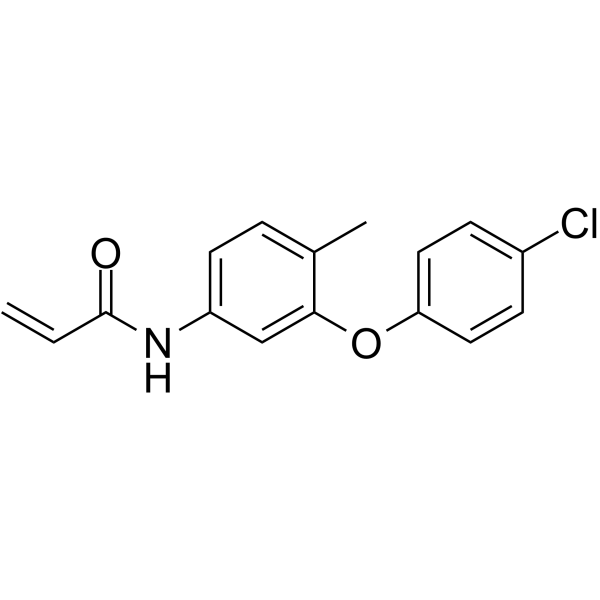
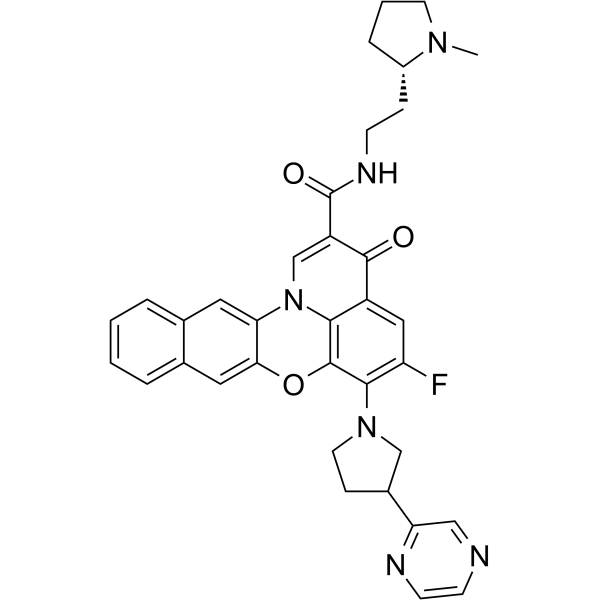
K-975 is a potent, selective and orally active TEAD inhibitor, with a strong inhibitory effect against protein-protein interactions between YAP1/TAZ and TEAD. K-975 covalently binds to Cys359 located in the palmitate-binding pocket of TEAD via an acrylamide structure. K-975 exhibits antitumor activity on malignant pleural mesothelioma .
loading...
    loading...
34
34 Publications Verification
Cat. No.: HY-15176C
CAS No.: 2517456-88-9
Synonyms: RR82 trihydrochloride
Pyridostatin (RR82) trihydrochloride is a G-quadruplex (G4) inducer/stabilizer with a Kd of 490 nM. Pyridostatin trihydrochloride also acts as an inhibitor of Zika virus (ZIKV) NS2B-NS3 protease, with an IC50 of 11.0 μM. Pyridostatin trihydrochloride interacts with G-quadruplex structures, regulates the expression of SRC and SUB1, and induces replication- and transcription-dependent DNA damage, growth arrest, and genomic instability. Pyridostatin trihydrochloride exhibits antiproliferative and antiviral activities. Pyridostatin trihydrochloride can be used in studies related to breast cancer, cervical cancer, and Zika virus infection .
loading...
    loading...
34
34 Publications Verification
Cat. No.: HY-15176B
CAS No.: 1472611-44-1
Purity:  99.54%
Synonyms: RR82 TFA
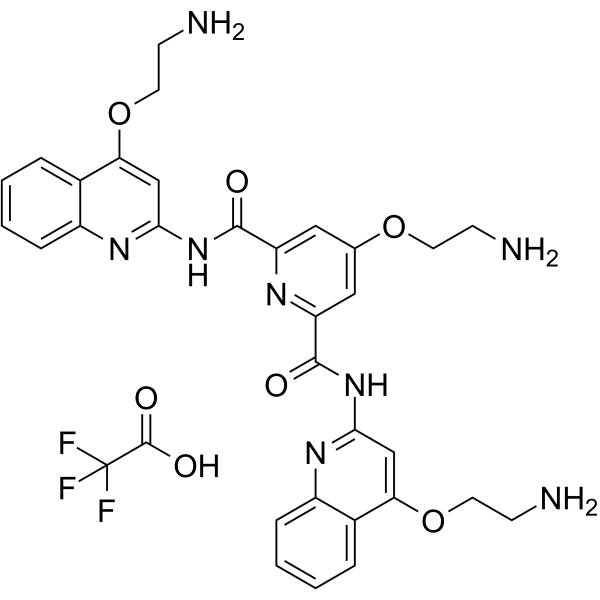
Pyridostatin (RR82) TFA is a G-quadruplex (G4) inducer/stabilizer with a Kd of 490 nM. Pyridostatin TFA also acts as an inhibitor of Zika virus (ZIKV) NS2B-NS3 protease, with an IC50 of 11.0 μM. Pyridostatin TFA interacts with G-quadruplex structures, regulates the expression of SRC and SUB1, and induces replication- and transcription-dependent DNA damage, growth arrest, and genomic instability. Pyridostatin TFA exhibits antiproliferative and antiviral activities. Pyridostatin TFA can be used in studies related to breast cancer, cervical cancer, and Zika virus infection .
loading...
    loading...
33
33 Cited Publications
Cat. No.: HY-14865
CAS No.: 389139-89-3
Purity:  99.85%
Synonyms: PTK 0796; Amadacycline
Target:  

Bacterial Antibiotic

Research Areas:  

Infection

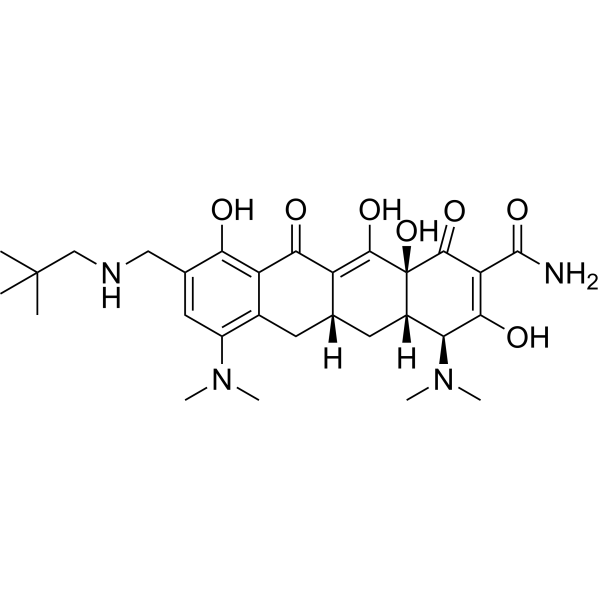
Omadacycline (PTK 0796), a first-in-class orally active aminomethylcycline antibacterial, is a member of the tetracycline class of antibiotics. Omadacycline acts through the inhibition of bacterial protein synthesis by binding to the 30S ribosomal subunit. Omadacycline possesses broad-spectrum antibacterial activity against aerobic and anaerobic Gram-positive and Gram-negative bacteria, as well as atypical bacteria. Omadacycline can be used for the research of acute bacterial skin and skin-structure infections, community-acquired pneumonia, and urinary tract infections .
loading...
    loading...
33
33 Cited Publications
Cat. No.: HY-14865B
CAS No.: 1075240-43-5
Purity:  99.37%
Synonyms: PTK 0796 tosylate; Amadacycline tosylate
Target:  

Bacterial Antibiotic

Research Areas:  

Infection

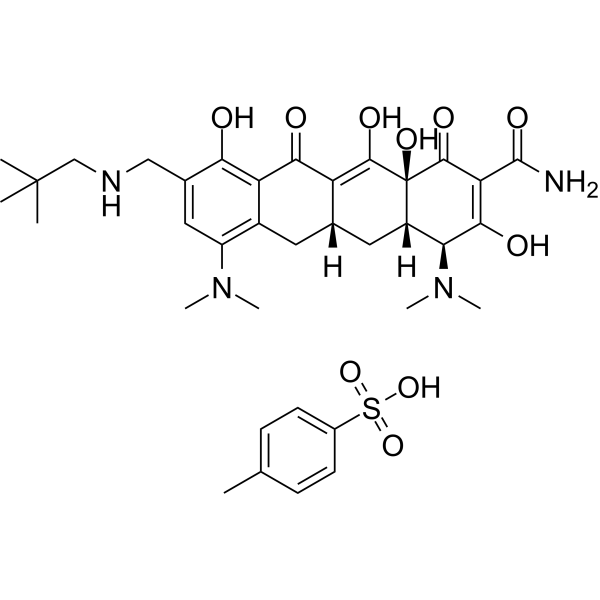
Omadacycline (PTK 0796) tosylate, a first-in-class orally active aminomethylcycline antibacterial, is a member of the tetracycline class of antibiotics. Omadacycline tosylate acts through the inhibition of bacterial protein synthesis by binding to the 30S ribosomal subunit. Omadacycline tosylate possesses broad-spectrum antibacterial activity against aerobic and anaerobic Gram-positive and Gram-negative bacteria, as well as atypical bacteria. Omadacycline tosylate can be used for the research of acute bacterial skin and skin-structure infections, community-acquired pneumonia, and urinary tract infections .
loading...
    loading...
33
33 Cited Publications
Cat. No.: HY-14865C
CAS No.: 1196800-39-1
Purity:  99.47%
Synonyms: PTK0796 hydrochloride; Amadacycline hydrochloride
Target:  

Bacterial Antibiotic

Research Areas:  

Infection

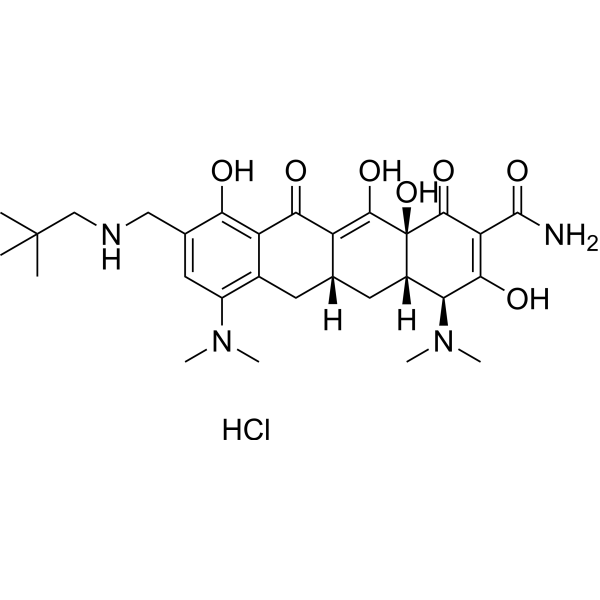
Omadacycline (PTK 0796) hydrochloride, a first-in-class orally active aminomethylcycline antibacterial, is a member of the tetracycline class of antibiotics. Omadacycline hydrochloride acts through the inhibition of bacterial protein synthesis by binding to the 30S ribosomal subunit. Omadacycline hydrochloride possesses broad-spectrum antibacterial activity against aerobic and anaerobic Gram-positive and Gram-negative bacteria, as well as atypical bacteria. Omadacycline hydrochloride can be used for the research of acute bacterial skin and skin-structure infections, community-acquired pneumonia, and urinary tract infections .
loading...
    loading...
13
13 Cited Publications
Cat. No.: HY-B1145
CAS No.: 3697-42-5
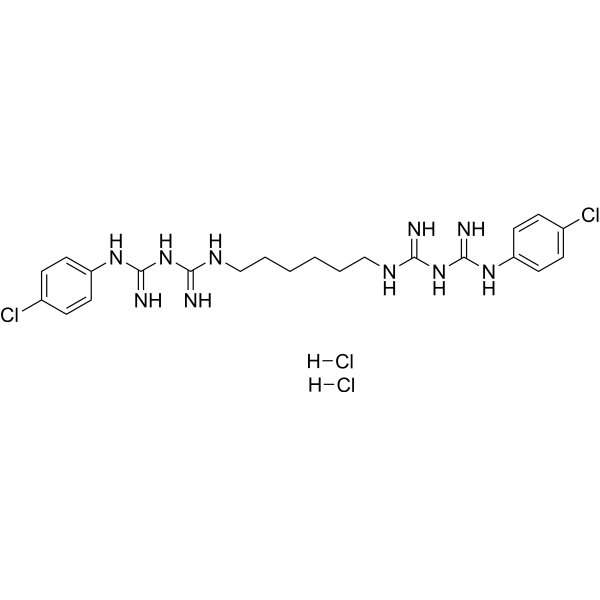
Chlorhexidine dihydrochloride is a orally active cationic antimicrobial agent that targets microbial cell membranes. Chlorhexidine dihydrochloride binds to cell membrane phospholipids non-specifically, destroys membrane structure and induces leakage of cell contents. Chlorhexidine dihydrochloride has broad-spectrum bactericidal activity against both Gram-positive and Gram-negative bacteria. Chlorhexidine dihydrochloride can interfere with membrane permeability, cause protein precipitation and energy metabolism disorders, such as rapid inhibition of microbial growth and induction of cell death (necrosis or apoptosis) .
loading...
    loading...
13
13 Cited Publications
Cat. No.: HY-B1248
CAS No.: 55-56-1
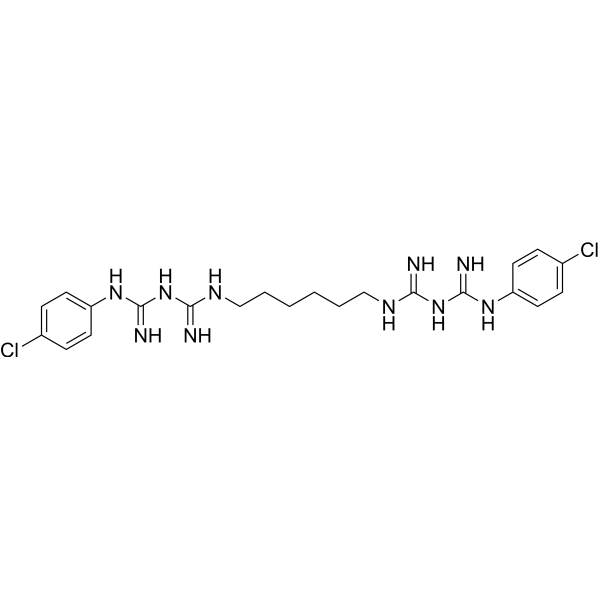
Chlorhexidine is a orally active cationic antimicrobial agent that targets microbial cell membranes. Chlorhexidine binds to cell membrane phospholipids non-specifically, destroys membrane structure and induces leakage of cell contents. Chlorhexidine has broad-spectrum bactericidal activity against both Gram-positive and Gram-negative bacteria. Chlorhexidine can interfere with membrane permeability, cause protein precipitation and energy metabolism disorders, such as rapid inhibition of microbial growth and induction of cell death (necrosis or apoptosis) .
loading...
    loading...
13
13 Cited Publications
Cat. No.: HY-W013699
CAS No.: 56-95-1
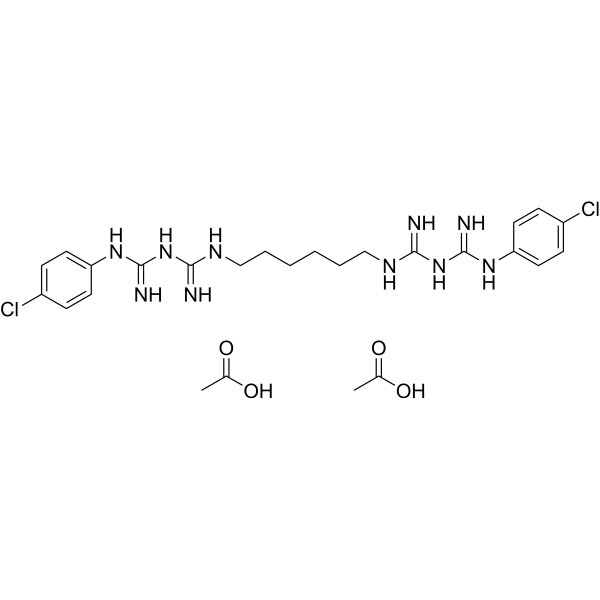
Chlorhexidine diacetate is a orally active cationic antimicrobial agent that targets microbial cell membranes. Chlorhexidine diacetate binds to cell membrane phospholipids non-specifically, destroys membrane structure and induces leakage of cell contents. Chlorhexidine diacetate has broad-spectrum bactericidal activity against both Gram-positive and Gram-negative bacteria. Chlorhexidine diacetate can interfere with membrane permeability, cause protein precipitation and energy metabolism disorders, such as rapid inhibition of microbial growth and induction of cell death (necrosis or apoptosis) .
loading...
    loading...
13
13 Cited Publications
Cat. No.: HY-B0608
CAS No.: 18472-51-0
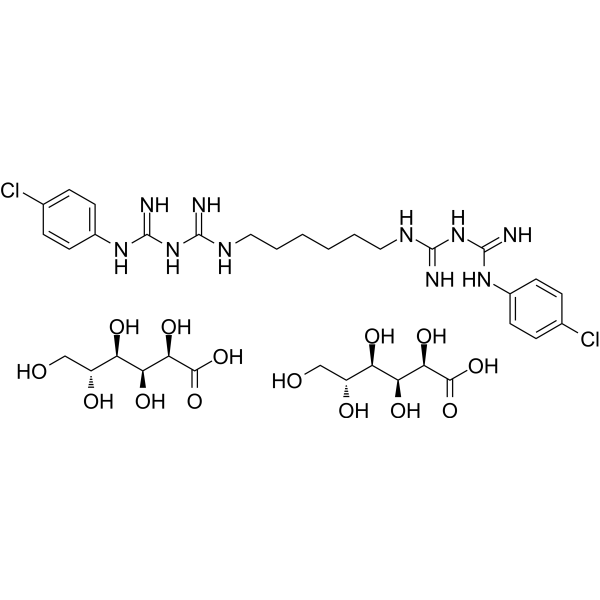
Chlorhexidine digluconate (20% in water) is a orally active cationic antimicrobial agent that targets microbial cell membranes. Chlorhexidine digluconate (20% in water) binds to cell membrane phospholipids non-specifically, destroys membrane structure and induces leakage of cell contents. Chlorhexidine digluconate (20% in water) has broad-spectrum bactericidal activity against both Gram-positive and Gram-negative bacteria. Chlorhexidine digluconate (20% in water) can interfere with membrane permeability, cause protein precipitation and energy metabolism disorders, such as rapid inhibition of microbial growth and induction of cell death (necrosis or apoptosis) .
loading...
    loading...
10
10 Cited Publications
Cat. No.: HY-14776
CAS No.: 865311-47-3
Purity:  99.87%
Synonyms: CX-3543
Target:  

DNA/RNA Synthesis

Research Areas:  

Cancer

Quarfloxin (CX-3543), a fluoroquinolone derivative with antineoplastic activity, targets and inhibits RNA pol I activity, with IC50 values in the nanomolar range in neuroblastoma cells. Quarfloxin disrupts the interaction between the nucleolin protein and a G-quadruplex DNA structure in the ribosomal DNA (rDNA) template .
loading...
    loading...
10
10 Cited Publications
Cat. No.: HY-W112938
CAS No.: 92739-63-4
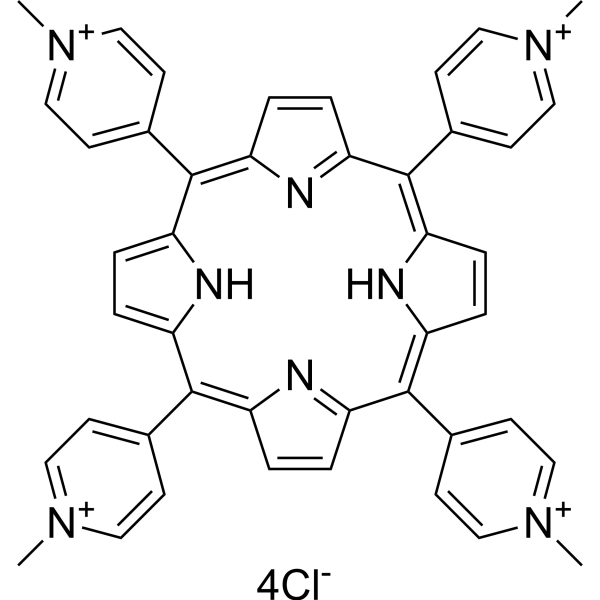
TMPyP tetrachloride is a quadruplex-specific ligand. TMPyP tetrachloride inhibits the interaction between G-quadruplexes and IGF-1. TMPyP tetrachloride is a telomerase inhibitor and inhibits cancer cells proliferation. TMPyP tetrachloride is also a stabilizer of nucleic acid secondary structure and an acetylcholinesterase inhibitor. Besides, TMPyP tetrachloride has antiviral activity against SARS-CoV-2 .
loading...
    loading...
10
10 Cited Publications
Cat. No.: HY-108477
CAS No.: 36951-72-1
Purity:  ≥98.0%
Synonyms: TMP 1363
Research Areas:  

Cancer

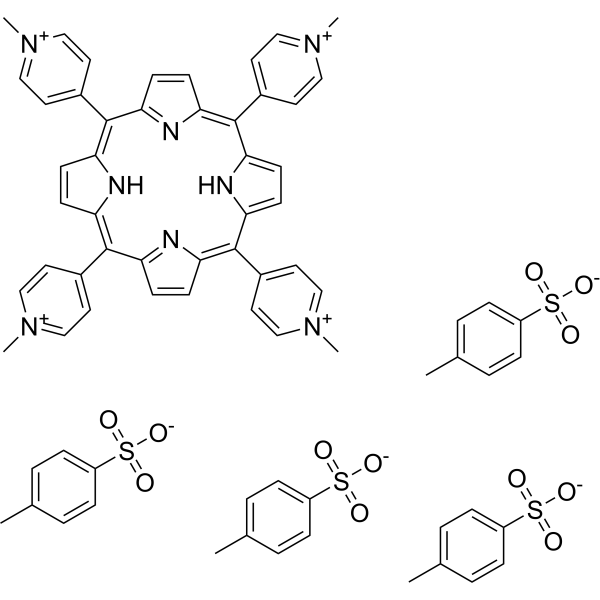
TMPyP4 tosylate (TMP 1363) is a quadruplex-specific ligand. TMPyP4 tosylate inhibits the interaction between G-quadruplexes and IGF-1. TMPyP4 tosylate is a telomerase inhibitor and inhibits cancer cells proliferation. TMPyP4 tosylate is also a stabilizer of nucleic acid secondary structure and an acetylcholinesterase inhibitor. Besides, TMPyP4 tosylate has antiviral activity against SARS-CoV-2 .
loading...
    loading...
9
9 Cited Publications
Cat. No.: HY-114164F
CAS No.: 9002-04-4
Canine Thrombin is a Canine serine protease that plays a central role in blood coagulation. Canine Thrombin stimulates macrophages to polarize into a unique phenotype characterized by anti-inflammatory and pro-repair properties. Canine Thrombin activates PAR1, induces the production of MCP-1, MMP3 and VEGF in intervertebral discs, and causes degradation of the cartilage matrix and destruction of intervertebral disc structure. Canine Thrombin activity increases significantly in paraoxon-induced status epilepticus .
loading...
    loading...
6
6 Cited Publications
Cat. No.: HY-I0400
CAS No.: 131-48-6
Synonyms: NANA; Lactaminic acid
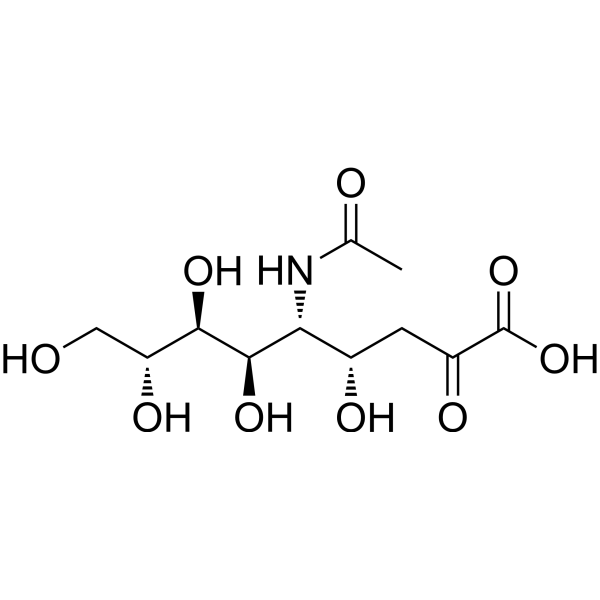
N-Acetylneuraminic acid (NANA; Lactaminic acid), a nonphenolic structure, is the predominant form of sialic from Collocalia esculenta. N-Acetylneuraminic acid plays a biological role in myocardial injury, melanoma and viral or bacterial infection. N-Acetylneuraminic acid inhibits melanogenesis by reducing tyrosinase activity and triggers myocardial injury in vitro and in vivo by activation of the Rho/Rho-associated signaling pathway through binding to RhoA and Cdc42. N-Acetylneuraminic acid may prevent high fat diet (HFD)-induced inflammation and oxidative stress, thereby prevents hyperlipidemia-associated inflammation and oxidative stress. N-Acetylneuraminic acid is promising for research in the field of melanoma, coronary artery, obesity-related diseases and hyperlipidemia .
loading...
    loading...
5
5 Cited Publications
Cat. No.: HY-14273
CAS No.: 241479-67-4
Purity:  99.97%
Synonyms: BAL-4815; RO-0094815
Research Areas:  

Infection Cancer

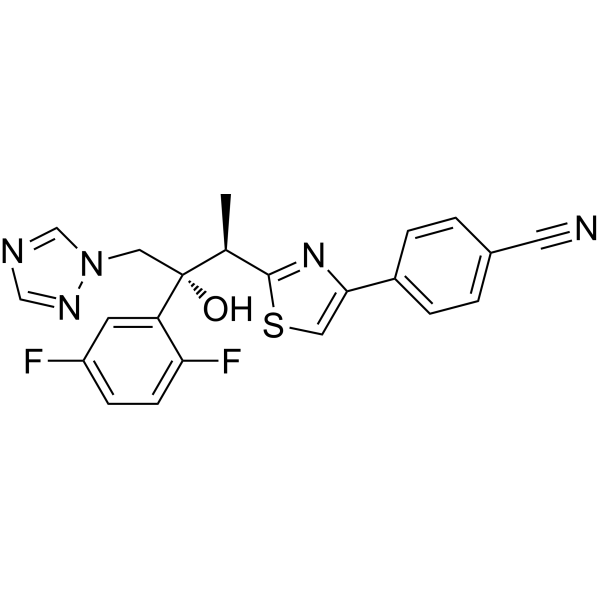
Isavuconazole (BAL-4815) is a triazole proagent with antifungal activity against yeasts, molds, and dimorphic fungi. Isavuconazole inhibits ergosterol biosynthesis and results in the disruption of fungal membrane structure and function. Isavuconazole is a moderate inhibitor of CYP3A4.
loading...
    loading...
4
4 Cited Publications
Cat. No.: HY-15435
CAS No.: 75621-03-3
Purity:  99.91%
Research Areas:  

Others

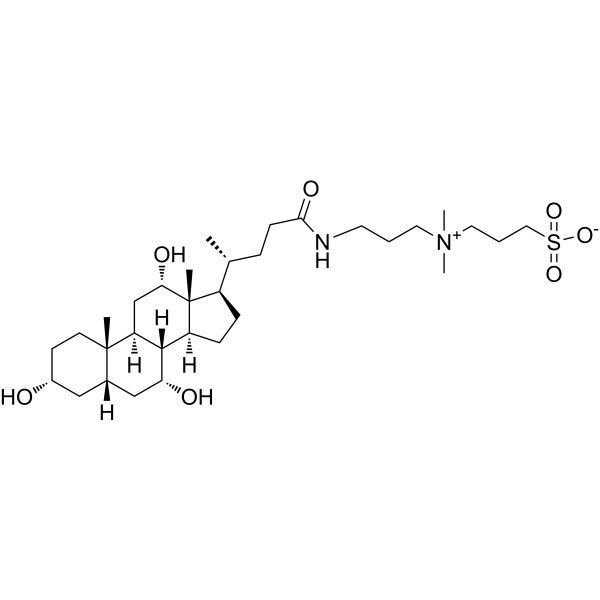
CHAPS is a cholic acid-derived, sulfobetaine-type zwitterionic detergent and micelle-forming agent. CHAPS exhibits properties of weak cationic or nonionic surfactants in different solution systems, undergoes micellization, and forms small, loose hydrophilic aggregates that are temperature-dependent. CHAPS stabilizes mononucleosomes under different ionic strengths, reduces nucleosome sequence specificity, promotes sliding of histone cores along DNA, solubilizes Tamm-Horsfall protein to reduce its interference with urinary exosome isolation, and maintains vesicle structure and the activity of related proteins at the same time. CHAPS is used to recover native folded fusion proteins, enhance the binding capacity of GST fusion proteins, and restore GST enzyme activity. However, CHAPS cannot refold proteins denatured by urea, guanidine hydrochloride or heat, nor can it construct the structure of intrinsically disordered proteins. CHAPS is commonly used in research on the separation and purification of membrane proteins .
loading...
    loading...
4
4 Cited Publications
Cat. No.: HY-15435A
CAS No.: 331717-45-4
Purity:  ≥98.0%
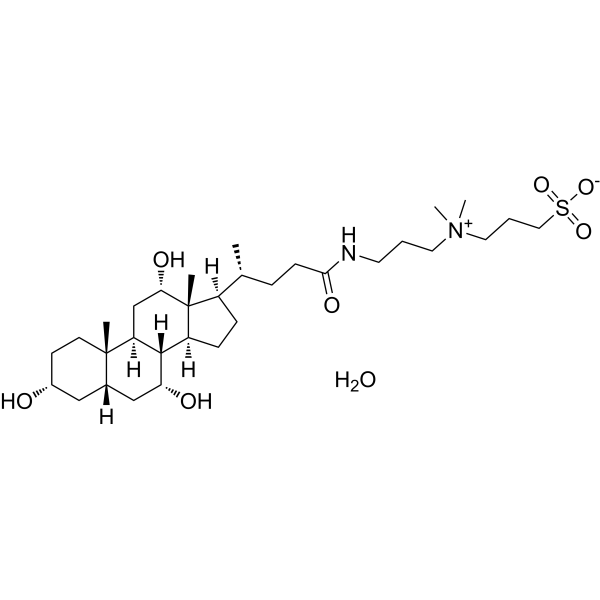
CHAPS hydrate is a cholic acid-derived, sulfobetaine-type zwitterionic detergent and micelle-forming agent. CHAPS hydrate exhibits properties of weak cationic or nonionic surfactants in different solution systems, undergoes micellization, and forms small, loose hydrophilic aggregates that are temperature-dependent. CHAPS hydrate stabilizes mononucleosomes under different ionic strengths, reduces nucleosome sequence specificity, promotes sliding of histone cores along DNA, solubilizes Tamm‑Horsfall protein to reduce its interference with urinary exosome isolation, and maintains vesicle structure and the activity of related proteins at the same time. CHAPS hydrate is used to recover native folded fusion proteins, enhance the binding capacity of GST fusion proteins, and restore GST enzyme activity. However, CHAPS hydrate cannot refold proteins denatured by urea, guanidine hydrochloride or heat, nor can it construct the structure of intrinsically disordered proteins. CHAPS hydrate is commonly used in research on the separation and purification of membrane proteins .
loading...
    loading...
4
4 Cited Publications
Cat. No.: HY-133129
CAS No.: 2225938-17-8
Purity:  98.92%
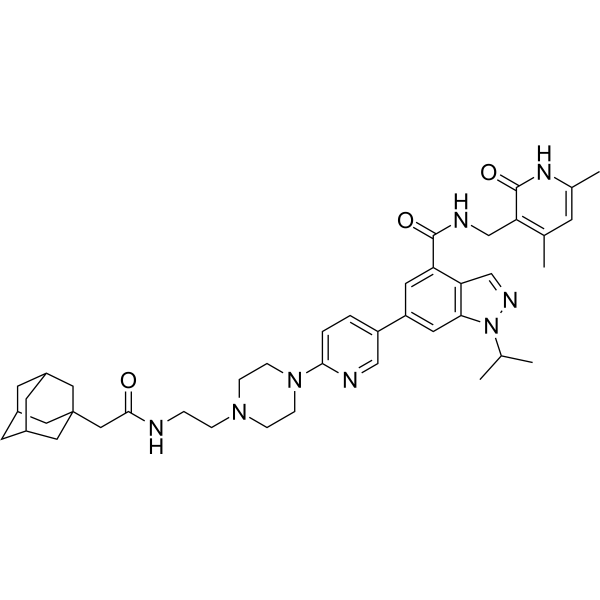
MS1943 is an orally active selective HyT degrader of EZH2 that effectively reduces EZH2 levels in cells. MS1943 has anticancer activity and exhibits cytotoxic effects in a variety of TNBC cells while sparing normal cells. In addition, MS1943 maintains high potency (IC50=120 nM) in inhibiting EZH2 methyltransferase activity and is highly selective for EZH2. (Structure Note: RED, EZH2 ligand (HY-148458); Blue, Hyt (HY-W001578)) .
loading...
    loading...
3
3 Cited Publications
Cat. No.: HY-Y0598
CAS No.: 614-47-1
Synonyms: Benzylideneacetophenone
trans-Chalcone, isolated from Aronia melanocarpa skin, is a biphenolic core structure of flavonoids precursor. trans-Chalcone is a potent fatty acid synthase (FAS) and α-amylase inhibitor. trans-Chalcone causes cellcycle arrest and induces apoptosis in the breastcancer cell line MCF-7. trans-Chalcone has antifungal and anticancer activity .
loading...
    loading...

