



92 Results for "

Treg cell

" in MedChemExpress (MCE) Product Catalog:
Products (92)

92 Results for "Treg cell" in MCE Product Catalog:

28
28 Cited Publications
Cat. No.: HY-15689
CAS No.: 1204669-58-8
Purity:  98.47%
Synonyms: INCB 024360
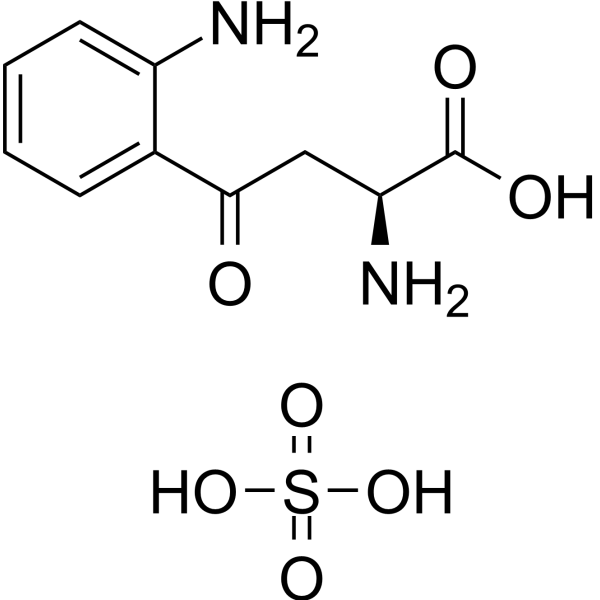
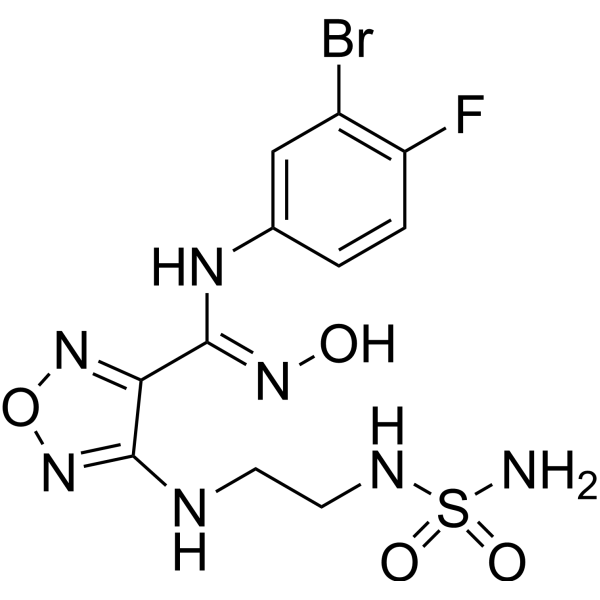
Epacadostat (INCB 024360) is a potent and selective indoleamine 2,3-dioxigenase 1 (IDO1) inhibitor with an IC50 of 71.8 nM . Epacadostat can effectively reduce Trp metabolism, entailing increased activation and maturation of dendritic cells, and enhanced proliferation of effector T cells and natural killer cells (NKs), as well as attenuated Tregs expansion.
loading...
    loading...
3
3 Cited Publications
Cat. No.: HY-B0172A
CAS No.: 2276-93-9
Synonyms: 3β-Hydroxy-5α-cholanic acid
Target:  

Drug Derivative

Research Areas:  

Inflammation/Immunology

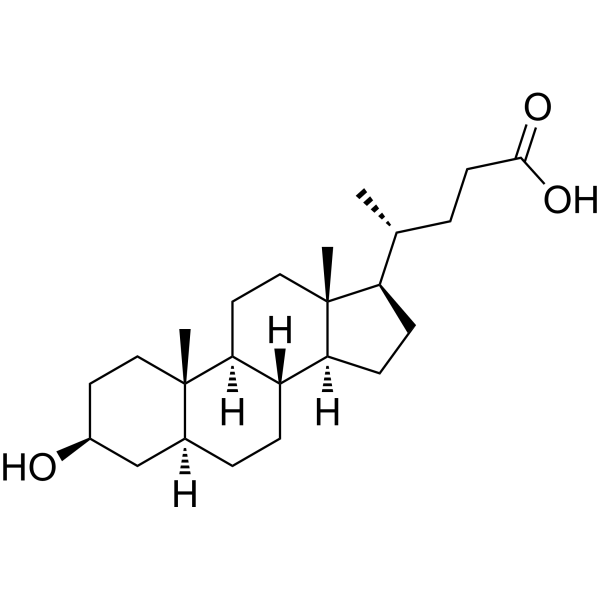
Isoallolithocholic acid (3β-Hydroxy-5α-cholanic acid), a derivative of Lithocholic acid (HY-10219), is a T cell regulator. Isoallolithocholic acid enhances regulatory T cells (Tregs) differentiation .
loading...
    loading...
3
3 Cited Publications
Cat. No.: HY-P99132

Target:  

CTLA-4

Research Areas:  

Inflammation/Immunology Cancer

Anti-Mouse CTLA-4 Antibody (9D9) is an anti-mouse CTLA-4 IgG2b monoclonal antibody. Anti-Mouse CTLA-4 Antibody (9D9) can bind to CTLA-4 and block its binding to B7. Anti-Mouse CTLA-4 Antibody (9D9) enhances T cell function by increasing the ratio of CD8 + T cells to regulatory T cells (Tregs). Anti-Mouse CTLA-4 Antibody (9D9) can be used for research on cancer such as colon cancer and melanoma .
loading...
    loading...
3
3 Cited Publications
Cat. No.: HY-114495
CAS No.: 21802-37-9
Purity:  ≥98.0%
Synonyms: Cerulomycin; Caerulomycin
Caerulomycin A is an orally active immunomodulator and antimicrobial agent. Caerulomycin A targets Smad3, STAT1 and GATA-3. Caerulomycin A downregulates GATA-3 expression, inhibits Th2 cell differentiation and Th2 cytokine production, reduces IgE levels, and alleviates pulmonary inflammatory responses and eosinophil infiltration. Caerulomycin A ameliorates collagen-induced arthritis symptoms, reduces joint inflammation and synovitis, and decreases the levels of proinflammatory cytokines in joints. Caerulomycin A inhibits the growth of some filamentous fungi, yeasts and specific bacteria. Caerulomycin A can be used in research related to arthritis and asthma .
loading...
    loading...
2
2 Cited Publications
Cat. No.: HY-125783
CAS No.: 17364-16-8
Purity:  99.92%
Synonyms: 16:0 Lyso PC
1-Palmitoyl-sn-glycero-3-phosphocholine (16:0 Lyso PC) is an abundant lysophosphatidylcholine. 1-Palmitoyl-sn-glycero-3-phosphocholine exhibits proinflammatory activity. 1-Palmitoyl-sn-glycero-3-phosphocholine can be used in the study of atherosclerosis .
loading...
    loading...
2
2 Cited Publications
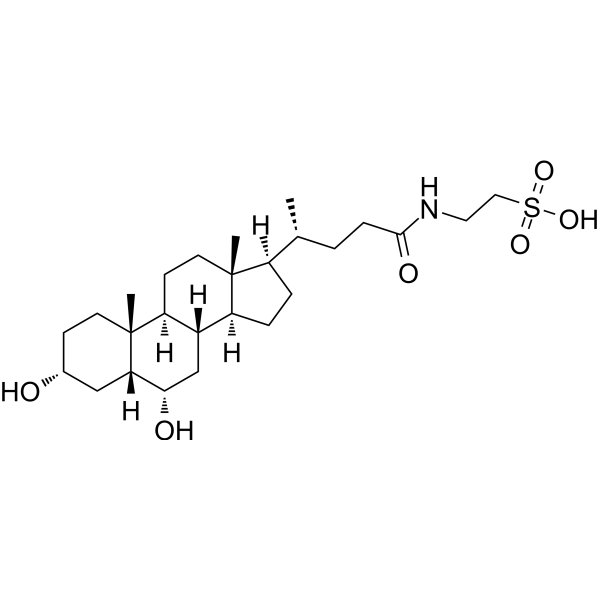
Cat. No.: HY-114360
CAS No.: 2958-04-5
Purity:  99.73%
Taurohyodeoxycholic acid is an orally active 6 alpha-hydroxylated bile acid. Taurohyodeoxycholic acid decreases colonic MPO activity, TNF-α, lL-6 serum levels and the expression of COX-2. Taurohyodeoxycholic acid alleviates trinitrobenzene sulfonic acid induced ulcerative colitis via regulating Th1/Th2 and Th17/Treg cells balance. Taurohyodeoxycholic acid ameliorates high-fat diet-induced nonalcoholic fatty liver disease in mice. Taurohyodeoxycholic acid prevents Taurochenodeoxycholic acid (HY-N2027)-induced hepatotoxicity in bile fistula rats. Taurohyodeoxycholic acid can be used for the study of nonalcoholic fatty liver disease (NAFLD), colitis and biliary fistula .
loading...
    loading...
2
2 Cited Publications
Cat. No.: HY-119217
CAS No.: 929300-19-6
Purity:  99.65%
Target:  

CCR

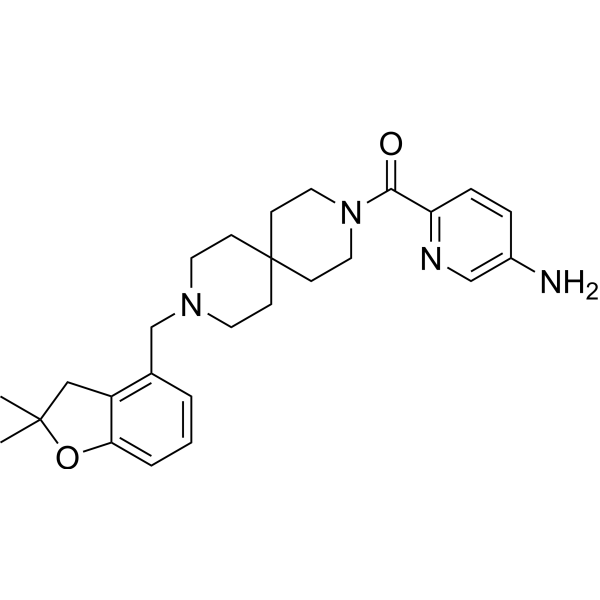
AZ084 is a potent, selective, allosteric and oral active CCR8 allosteric antagonist, with a Ki of 0.9 nM. Has potential to treat asthma . AZ084 restrains the formation of the immunologically tolerant pre-metastatic niche (PMN) and tumor cells metastasis in lung by downregulating Treg differentiation. AZ084 can be used in studies of asthma and cancer .
loading...
    loading...
1
1 Cited Publications
Cat. No.: HY-P99014
CAS No.: 1864871-20-4
Synonyms: ARGX-110

Research Areas:  

Inflammation/Immunology Cancer

Cusatuzumab (ARGX-110) is a selective competitive blocker targeting CD70 (with an equilibrium dissociation constant of 17 pM for binding to human CD70). Cusatuzumab also possesses enhanced antibody-dependent cell-mediated cytotoxicity (ADCC) activity. It is a humanized IgG1 monoclonal antibody, artificially synthesized through humanization and genetic engineering modifications (CH2 region mutation to enhance effector function). Cusatuzumab has a dual mechanism of action: firstly, it competitively blocks the interaction between CD70 and CD27, inhibiting the CD27-NF-κB signaling pathway, reducing regulatory T cell (Treg) activation and tumor cell proliferation; secondly, by enhancing binding to FcγRIIIa, it mediates ADCC and antibody-dependent cellular phagocytosis (ADCP), directly lysing CD70-positive tumor cells. Cusatuzumab can efficiently eliminate leukemia stem cells (LSCs), induce tumor cell differentiation and apoptosis, restore immune surveillance, and target CD70-positive tumors. Cusatuzumab is used in the study of acute myeloid leukemia (AML) .
loading...
    loading...
1
1 Cited Publications
Cat. No.: HY-P99300
CAS No.: 1322627-61-1
Synonyms: QGE 031; Anti-IGHE Recombinant Antibody

Target:  

Fc Receptor (FcR)

Research Areas:  

Inflammation/Immunology

Ligelizumab (QGE 031) is a humanized high-affinity anti-immunoglobulin IgE monoclonal antibody. Ligelizumab selectively inhibits the binding of IgE to the high-affinity receptor FcεRI, while the inhibitory effect on the low-affinity receptor CD23 is weak. Ligelizumab can inhibit the activation of effector cells such as mast cells and Basophil, while reducing the production of IgE by B cells, and restoring the IFN-α production and regulatory T cell (Treg) induction function of plasmacytoid dendritic cells (pDC). Ligelizumab can be used in the study of allergic diseases (such as chronic spontaneous urticaria, allergic asthma) .
loading...
    loading...
1
1 Cited Publications
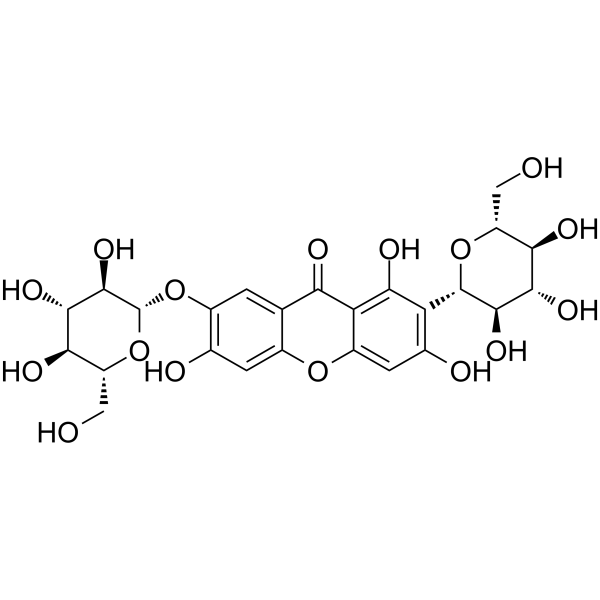
Cat. No.: HY-N0723
CAS No.: 64809-67-2
Neomangiferin is an orally active natural flavonoid. Neomangiferin partially ameliorates non-alcoholic fatty liver disease (NAFLD) by regulating the expression of genes related to free fatty acid uptake and lipid oxidation. Neomangiferin exerts anti-colitis effects by inhibiting Th17/Treg cell differentiation. Neomangiferin exerts anti-aging and lifespan-extending effects by targeting upregulation of bas-1, which in turn activates the autophagy, IIS and MAPK pathways. Neomangiferin has the potential to prevent aseptic loosening of prostheses after total joint arthroplasty due to its significant anti-inflammatory and osteoclastogenesis-inhibiting effects .
loading...
    loading...
1
1 Cited Publications
Cat. No.: HY-103637A
CAS No.: 1802678-42-7
Purity:  98.39%
Synonyms: VTP-43742 hydrochloride
Target:  

ROR

Research Areas:  

Inflammation/Immunology

Vimirogant (VTP-43742) hydrochloride is a potent, selective, and orally active RORγt inhibitor (Ki=3.5 nM; IC50=17 nM). Vimirogant hydrochloride exhibits >1000-fold selectivity versus the RORα and RORβ isotypes. Vimirogant hydrochloride inhibits Th17 differentiation and IL-17A secretion from mouse splenocytes (IC50=57 nM) without affecting Th1, Th2, or Treg cell differentiation. Vimirogant hydrochloride has the potential for autoimmune disorders research .
loading...
    loading...
Cat. No.: HY-P990792
Anti-Mouse CD4 Antibody (GK1.5) is an anti-mouse CD4 IgG2b monoclonal antibody. Anti-Mouse CD4 Antibody (GK1.5) can significantly deplete CD4 + T cells. Anti-Mouse CD4 Antibody (GK1.5) can extend the survival rate of xenograft models. Anti-Mouse CD4 Antibody (GK1.5) can be used for research on immunology. The recommend isotype control of Anti-Mouse CD4 Antibody (GK1.5): Rat IgG2b kappa, Isotype Control (HY-P990682) .
loading...
    loading...
Cat. No.: HY-P99728
CAS No.: 2056881-92-4
Synonyms: RG7835; RO7049665
Melredableukin alfa (RG7835) is a bivalent conjugate composed of a human IL-2 mutant (T3A, N88D, C125A) and human IgG1. Melredableukin alfa exhibits enhanced Treg cell selectivity in cynomolgus monkey and humanized mouse models. Melredableukin alfa can be used in research related to ulcerative colitis and autoimmune hepatitis .
loading...
    loading...
Cat. No.: HY-108738
CAS No.: 152923-56-3
Purity:  99.18%
Synonyms: Ro 24-7375
Daclizumab (Ro 24-7375) is a humanized, monoclonal antibody that blocks CD25 (α-subunit of the high-affinity interleukin-2 receptor (IL-2R-HA)). Daclizumab inhibits effector T cell activation, regulatory T cell (Treg) expansion and survival, and activation-induced T-cell apoptosis. Daclizumab increases IL-2 bioavailability to bind to the intermediate-affinity IL-2R (IL-2R-IA), driving the expansion of anti-inflammatory CD56bright natural killer (NK) cells. Daclizumab can be used for multiple sclerosis and cancer research .
loading...
    loading...
Cat. No.: HY-113238A
CAS No.: 64936-81-8
Purity:  99.93%
Synonyms: Sulfolithocholic acid disodium; LCAS disodium
Lithocholic acid 3-sulfate disodium is a GPR39 agonist, with EC50 values of 41 μM and 42.4 μM in M39-20 and hGPR39-2 cells, respectively, in the absence of Zn 2+, and 0.88 μM and 0.97 μM in the presence of Zn 2+. Lithocholic acid 3-sulfate disodium acts as a RORγt ligand. Lithocholic acid 3-sulfate disodium stimulates the GPR39 receptor to initiate intracellular calcium signaling, independent of the Zn 2+-binding sites H17 and H19. LCA-3-S selectively inhibits Th17 cell differentiation by targeting RORγt. Lithocholic acid 3-sulfate disodium can be used in the research of cholestatic liver diseases .
loading...
    loading...
Cat. No.: HY-P990802

Target:  

CD3

Anti-Mouse CD3ε Antibody (145-2C11) is an orally active anti-mouse CD3ε IgG1 monoclonal antibody. Anti-Mouse CD3ε Antibody (145-2C11) can improve the function of regulatory T cells (Tregs). Anti-Mouse CD3ε Antibody (145-2C11) relieves inflammatory response by inhibiting the production of pro-inflammatory cytokines and increasing the secretion of anti-inflammatory factors. Anti-Mouse CD3ε Antibody (145-2C11) can be used for researches on metabolic and immune system conditions such as diabetes and lupus. The recommend isotype control of Anti-Mouse CD3ε Antibody (145-2C11): Armenian hamster IgG, Isotype Control (HY-P990305) .
loading...
    loading...
Cat. No.: HY-173630
Research Areas:  

Cancer

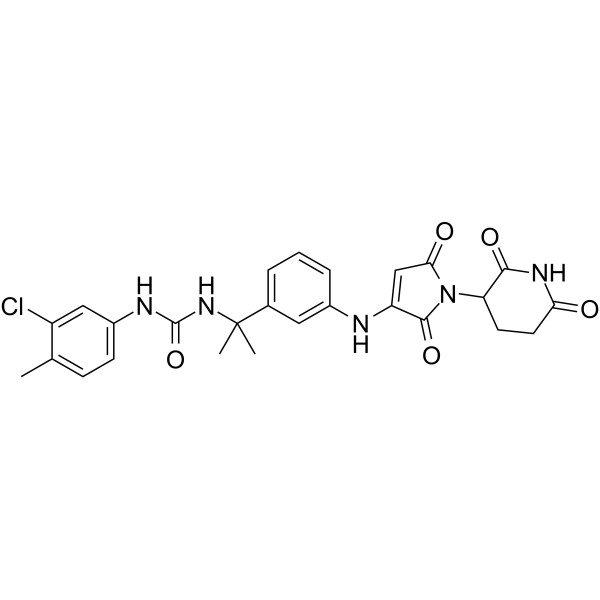
BMS-986449 is a potent and orally active CELMoD molecular glue and an IKZF2/IKZF4 degrader. BMS-986449 targets the degradation of transcription factors Helios (IKZF2) and Eos (IKZF4) in regulatory T (Treg) cells. BMS-986449 redirects the E3 ubiquitin ligase Cereblon to induce the degradation of Helios and Eos, reprogramming Treg cells and enhancing antitumor immunity. BMS-986449 is promising for research of advanced solid tumors .
loading...
    loading...
Cat. No.: HY-137206
CAS No.: 2438124-95-7
Purity:  98.07%
Research Areas:  

Cancer

ALV2 is a potent and selective Helios molecular glue degrader. ALV2 binds CRBN, with an IC50 of 0.57 μM. Helios is the zinc-finger transcription factor that can maintain a stable Treg cell phenotype in the inflammatory tumor microenvironment .
loading...
    loading...
Cat. No.: HY-48814
CAS No.: 570-63-8
Target:  

Bacterial FXR

Research Areas:  

Infection Inflammation/Immunology

3-Epideoxycholic acid is a secondary bile acid and a microbial metabolite of Deoxycholic acid (HY-N0593). 3-Epideoxycholic acid targets FXR in dendritic cells, reduces their immunostimulatory properties, promotes the generation of Treg cells, and exerts anti-inflammatory activity. 3-Epideoxycholic acid can promote the growth of the bacterium Bacteroides. 3-Epideoxycholic acid can be used in research related to inflammatory and immune diseases as well as bacterial infections .
loading...
    loading...
Cat. No.: HY-162275
CAS No.: 861224-48-8
Research Areas:  

Cancer

JMJD1C-IN-1 is an orally active and selective inhibitor of JMJD1C (IC50 = 0.59 μM, Kd = 1.96 μM). JMJD1C-IN-1 inhibits the binding of JMJD1C to H3K9me2 peptide substrate in the HTRF assay (IC50 = 1.47 μM). JMJD1C-IN-1 disrupts intratumoral regulatory T (Treg) cell fitness by dual mechanisms: promoting H3K9me2 accumulation to downregulate PD1 expression and reducing STAT3 demethylation to enhance STAT3 activation. JMJD1C-IN-1 demonstrates dose-dependent antitumor efficacy in multiple mouse tumor models (MCA205 fibrosarcoma, B16-F10 melanoma, LLC lung cancer, Hepa1-6 hepatocellular carcinoma, CT26 colorectal cancer). JMJD1C-IN-1 can be used for the study of tumor immunotherapy by selectively targeting intratumoral Treg cells .
loading...
    loading...

