
14656 Results for "

W741C+T877A double mutant androgen receptor

" in MedChemExpress (MCE) Product Catalog:
Products (14656)

14656 Results for "W741C+T877A double mutant androgen receptor" in MCE Product Catalog:

239
239 Publications Verification
Cat. No.: HY-70002
CAS No.: 915087-33-1
Synonyms: MDV3100
Research Areas:  

Cancer

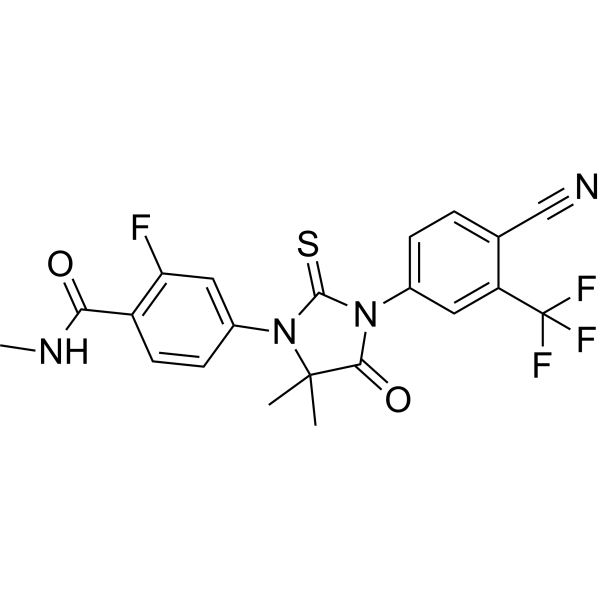
Enzalutamide (MDV3100) is an androgen receptor (AR) antagonist with an IC50 of 36 nM in LNCaP prostate cells. Enzalutamide is an autophagy activator .
loading...
    loading...
209
209 Cited Publications
Cat. No.: HY-79077
CAS No.: 2070014-82-1
Synonyms: AZD-9291 dimesylate; Mereletinib dimesylate
Target:  

EGFR

Research Areas:  

Cancer

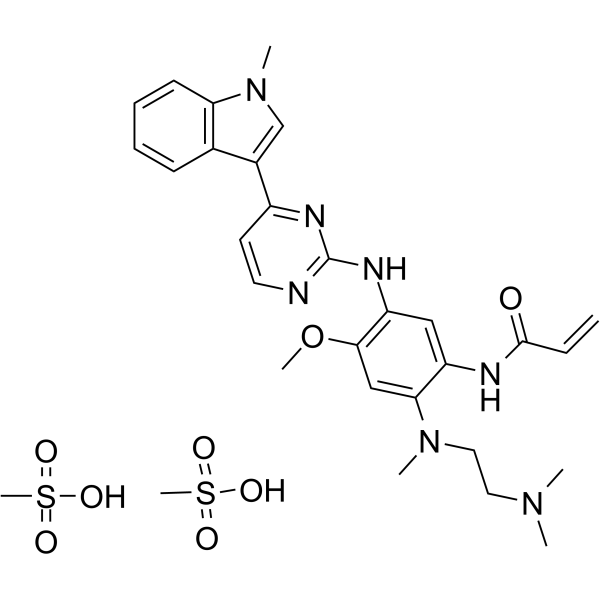
Osimertinib dimesylate (AZD-9291 dimesylate) is an irreversible and mutant selective EGFR inhibitor with IC50s of 12 and 1 nM against EGFR L858R and EGFR L858R/T790M, respectively.
loading...
    loading...
209
209 Cited Publications
Cat. No.: HY-15772
CAS No.: 1421373-65-0
Purity:  99.92%
Synonyms: AZD-9291; Mereletinib
Target:  

EGFR

Research Areas:  

Cancer

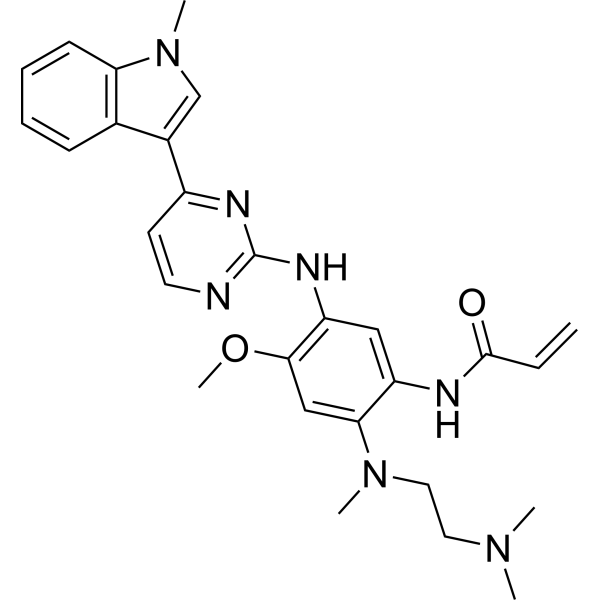
Osimertinib (AZD9291) is a covalent, orally active, irreversible, and mutant-selective EGFR inhibitor with an apparent IC50 of 12 nM against L858R and 1 nM against L858R/T790M, respectively. Osimertinib overcomes T790M-mediated resistance to EGFR inhibitors in lung cancer .
loading...
    loading...
209
209 Cited Publications
Cat. No.: HY-15772A
CAS No.: 1421373-66-1
Purity:  99.97%
Synonyms: AZD-9291 mesylate; Mereletinib mesylate
Target:  

EGFR

Research Areas:  

Cancer

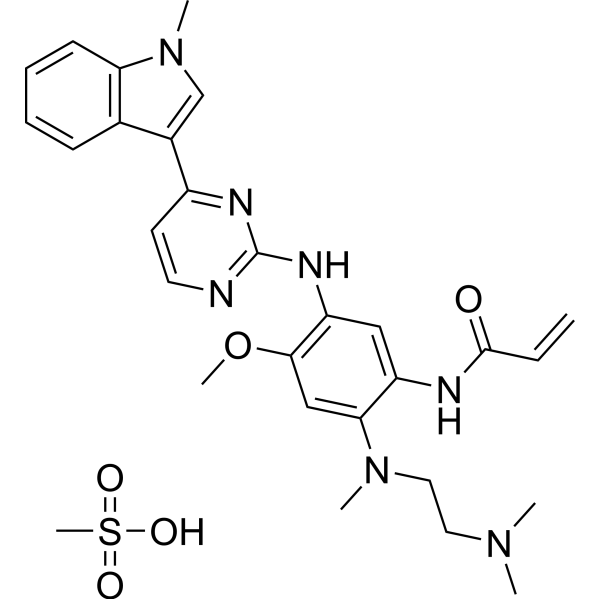
Osimertinib mesylate (AZD9291 mesylate) is a covalent, orally active, irreversible, and mutant-selective EGFR inhibitor with an apparent IC50 of 12 nM against L858R and 1 nM against L858R/T790M. Osimertinib overcomes T790M-mediated resistance to EGFR inhibitors in lung cancer .
loading...
    loading...
170
170 Cited Publications
Cat. No.: HY-17366
CAS No.: 34233-69-7
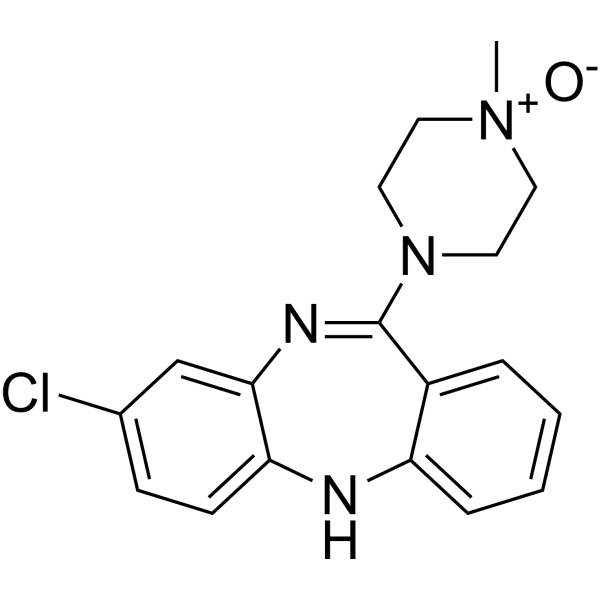
Clozapine N-oxide is a major metabolite of Clozapine and a human muscarinic designer receptors (DREADDs) agonist. Clozapine N-oxide activates the DREADD receptor hM3Dq and hM4Di. Clozapine N-oxide can't cross the blood-brain barrier . Clozapine is a potent dopamine antagonist and also a potent and selective muscarinic M4 receptor (EC50=11 nM) agonist .
loading...
    loading...
170
170 Cited Publications
Cat. No.: HY-17366A
CAS No.: 2250025-93-3
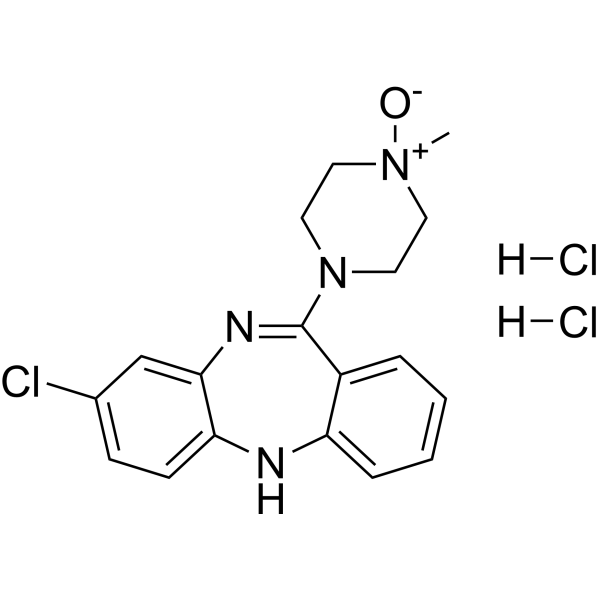
Clozapine N-oxide dihydrochloride is a major metabolite of Clozapine and a human muscarinic designer receptors (DREADDs) agonist. Clozapine N-oxide dihydrochloride activates the DREADD receptor hM3Dq and hM4Di. Clozapine N-oxide dihydrochloride cannot cross the blood-brain barrier . Clozapine is a potent dopamine antagonist and also a potent and selective muscarinic M4 receptor (EC50=11 nM) agonist .
loading...
    loading...
165
165 Cited Publications
Cat. No.: HY-15559
CAS No.: 23491-52-3
Purity:  99.94%
Synonyms: bisBenzimide H 33342; HOE 33342
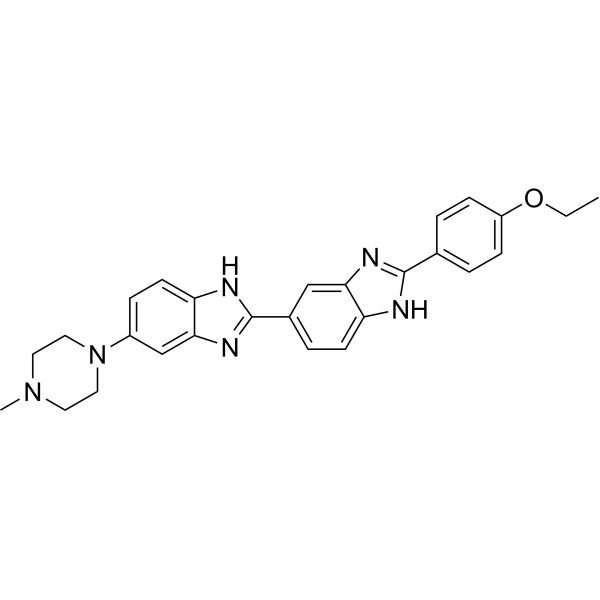
Hoechst 33342 is a marker dye in Hoechst series. Hoechst is A live nuclear marker dye. Hoechst binds to the grooves in the DNA double strand, which tends to be A/ T-rich DNA strand. Although it binds to all nucleic acids, the A/ T-rich double strand DNA significantly enhances fluorescence intensity Therefore,Hoechst dye can be used for living cell labeling. The fluorescence intensity of Hoechst dye increases with the increase of pH of solution .
loading...
    loading...
165
165 Cited Publications
Cat. No.: HY-15559A
CAS No.: 875756-97-1
Purity:  99.81%
Synonyms: bisBenzimide H 33342 trihydrochloride; HOE 33342 trihydrochloride
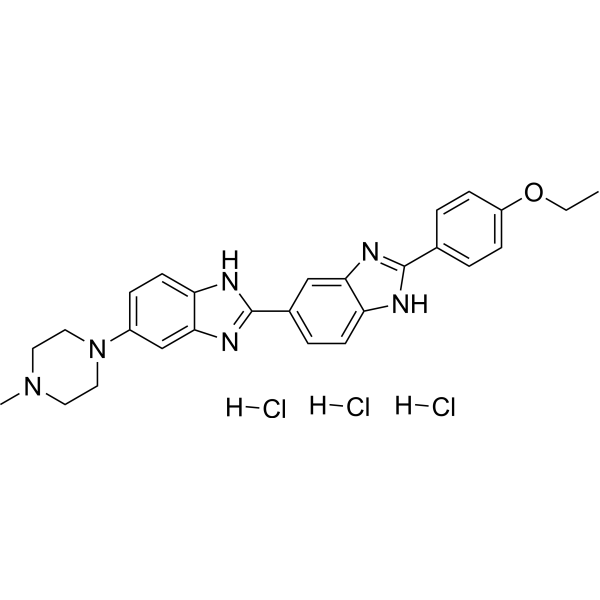
Hoechst 33342 trihydrochloride is a marker dye in Hoechst series. Hoechst is A live nuclear marker dye. Hoechst binds to the grooves in the DNA double strand, which tends to be A/ T-rich DNA strand. Although it binds to all nucleic acids, the A/ T-rich double strand DNA significantly enhances fluorescence intensity Therefore,Hoechst dye can be used for living cell labeling. The fluorescence intensity of Hoechst dye increases with the increase of pH of solution .
loading...
    loading...
150
150 Cited Publications
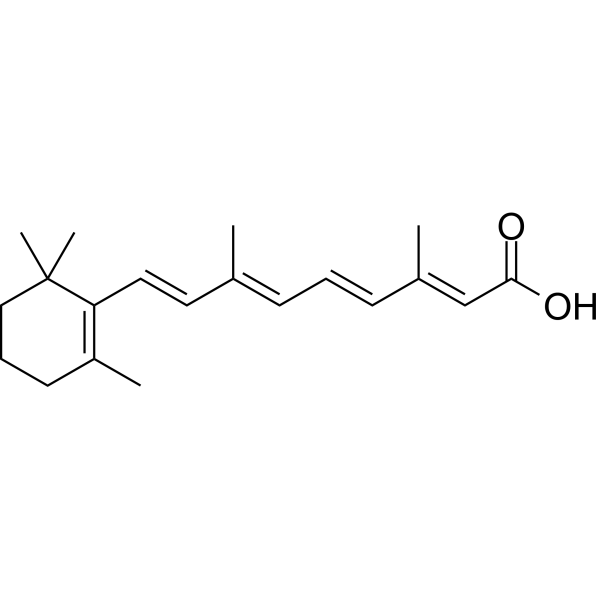
Cat. No.: HY-14649
CAS No.: 302-79-4
Purity:  99.81%
Synonyms: Vitamin A acid; all-trans-Retinoic acid; ATRA
Retinoic acid is a metabolite of vitamin A that plays important roles in cell growth, differentiation, and organogenesis. Retinoic acid is a natural agonist of RAR nuclear receptors, with IC50s of 14 nM for RARα/β/γ. Retinoic acid bind to PPARβ/δ with Kd of 17 nM. Retinoic acid acts as an inhibitor of transcription factor Nrf2 through activation of retinoic acid receptor alpha.
loading...
    loading...
143
143 Cited Publications
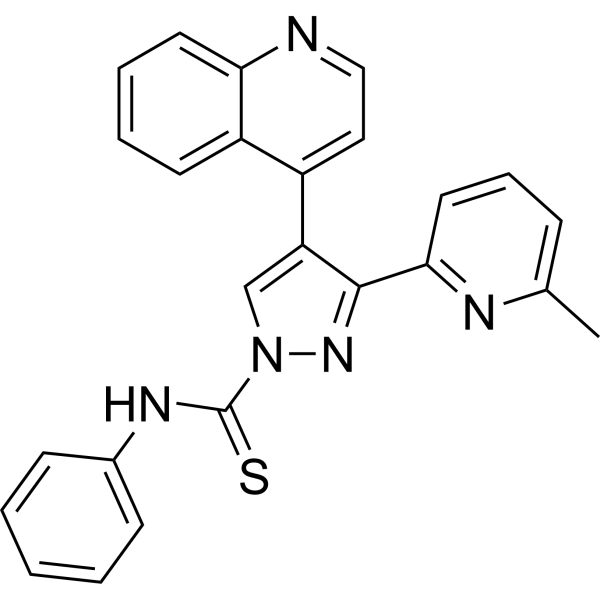
Cat. No.: HY-10432
CAS No.: 909910-43-6
Purity:  99.33%
Research Areas:  

Cancer

A 83-01 is a potent inhibitor of TGF-β type I receptor ALK5 kinase, type I nodal receptor ALK4 and type I nodal receptor ALK7, with IC50s of 12 nM, 45 nM and 7.5 nM against the transcription induced by ALK5, ALK4 and ALK7, respectively .
loading...
    loading...
80
80 Cited Publications
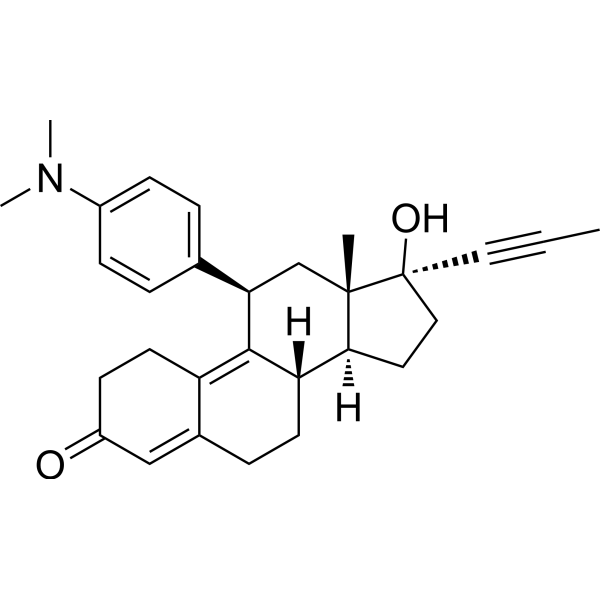
Cat. No.: HY-13683
CAS No.: 84371-65-3
Purity:  99.83%
Synonyms: RU486; RU 38486
Mifepristone (RU486) is a progesterone receptor (PR) and glucocorticoid receptor (GR) antagonist with IC50s of 0.2 nM and 2.6 nM in in vitro assay .
loading...
    loading...
79
79 Cited Publications
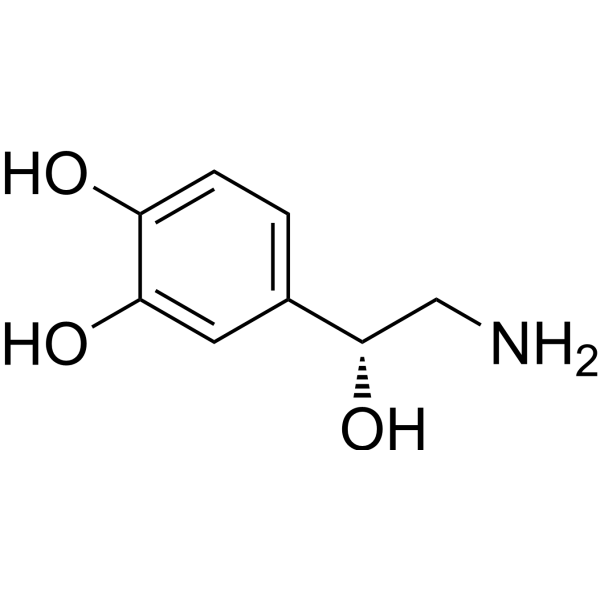
Cat. No.: HY-13715
CAS No.: 51-41-2
Purity:  99.61%
Synonyms: Levarterenol; L-Noradrenaline
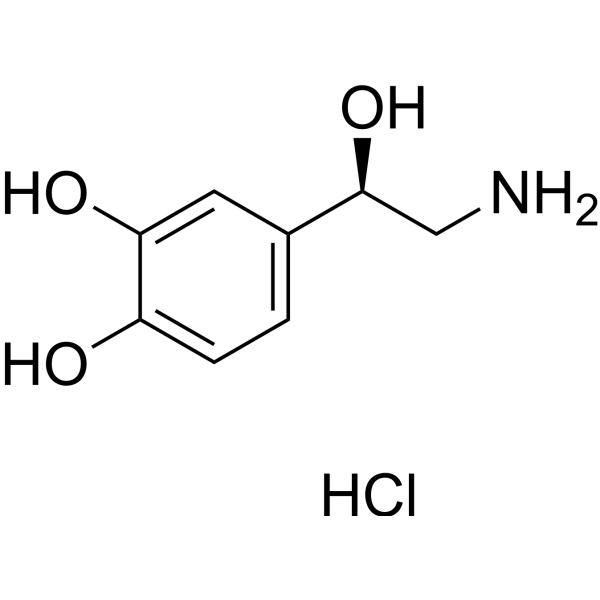
Norepinephrine (Levarterenol; L-Noradrenaline) is a potent adrenergic receptor (AR) agonist. Norepinephrine activates α1, α2, β1 receptors .
loading...
    loading...
79
79 Cited Publications
Cat. No.: HY-13715A
CAS No.: 329-56-6
Purity:  99.89%
Synonyms: Levarterenol hydrochloride; L-Noradrenaline hydrochloride
Norepinephrine (Levarterenol; L-Noradrenaline) hydrochloride is a potent adrenergic receptor (AR) agonist. Norepinephrine activates α1, α2, β1 receptors .
loading...
    loading...
79
79 Cited Publications
Cat. No.: HY-13715B
CAS No.: 108341-18-0
Purity:  99.96%
Synonyms: Levarterenol bitartrate monohydrate; L-Noradrenaline bitartrate monohydrate
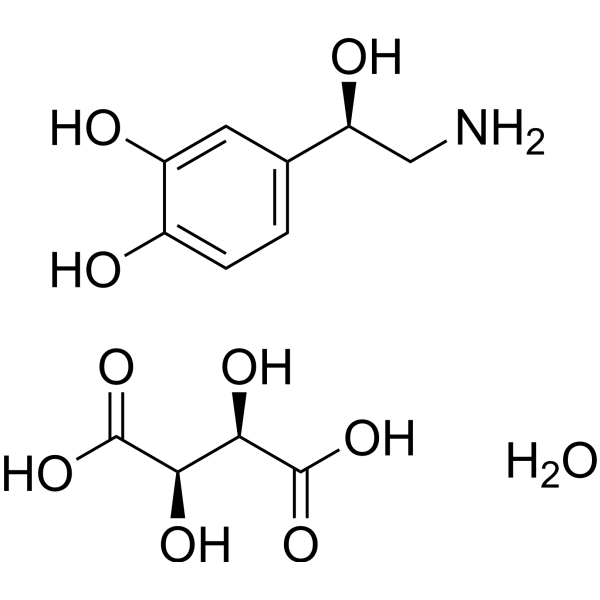
Norepinephrine (Levarterenol; L-Noradrenaline) bitartrate monohydrate is a potent adrenergic receptor (AR) agonist. Norepinephrine activates α1, α2, β1 receptors .
loading...
    loading...
79
79 Cited Publications
Cat. No.: HY-13715C
CAS No.: 51-40-1
Purity:  99.76%
Synonyms: Levarterenol tartrate; L-Noradrenaline tartrate
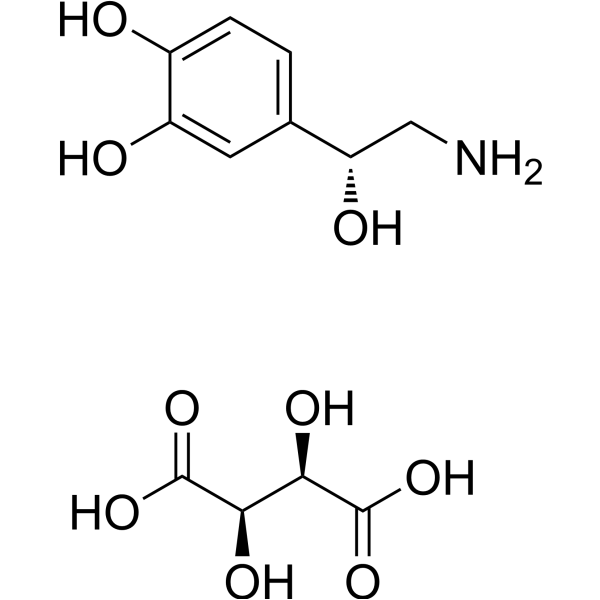
Norepinephrine (Levarterenol; L-Noradrenaline) tartrate is a potent adrenergic receptor (AR) agonist. Norepinephrine tartrate activates α1, α2, β1 receptors .
loading...
    loading...
79
79 Cited Publications
Cat. No.: HY-10002
CAS No.: 32222-06-3
Purity:  99.94%
Synonyms: 1,25-Dihydroxyvitamin D3
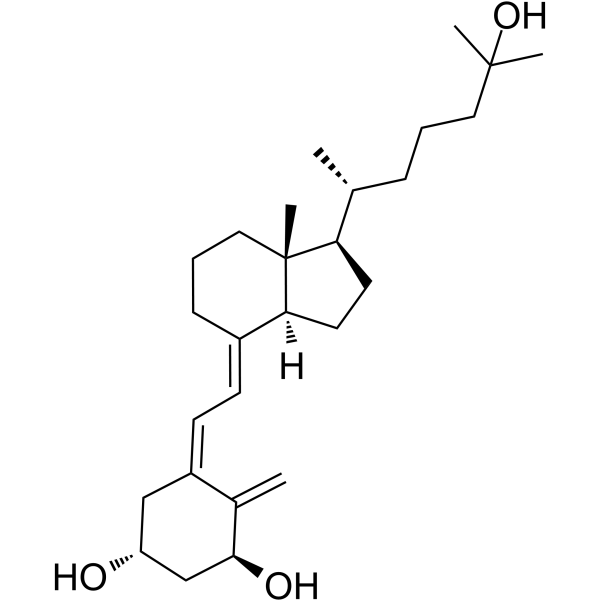
Calcitriol is the most active metabolite of vitamin D and also a vitamin D receptor (VDR) agonist.
loading...
    loading...
75
75 Cited Publications
Cat. No.: HY-135748
CAS No.: 42424-50-0
Purity:  99.4%
Synonyms: Poly(I:C) sodium
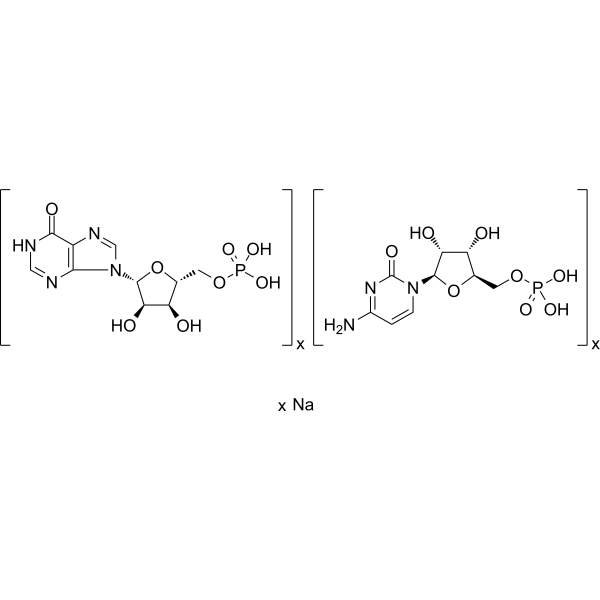
Polyinosinic-polycytidylic acid (Poly(I:C)) sodium is a synthetic analog of double-stranded RNA and an agonist of toll-like receptor 3 (TLR3) and retinoic acid inducible gene I (RIG-I)-like receptors (RIG-I and MDA5). Polyinosinic-polycytidylic acid sodium can be used as a vaccine adjuvant to enhance innate and adaptive immune responses, and to alter the tumor microenvironment. Polyinosinic-polycytidylic acid sodium can directly trigger cancer cells to undergo apoptosis .
loading...
    loading...
73
73 Cited Publications
Cat. No.: HY-107202
CAS No.: 24939-03-5
Purity:  99.40%
Synonyms: Poly(I:C)
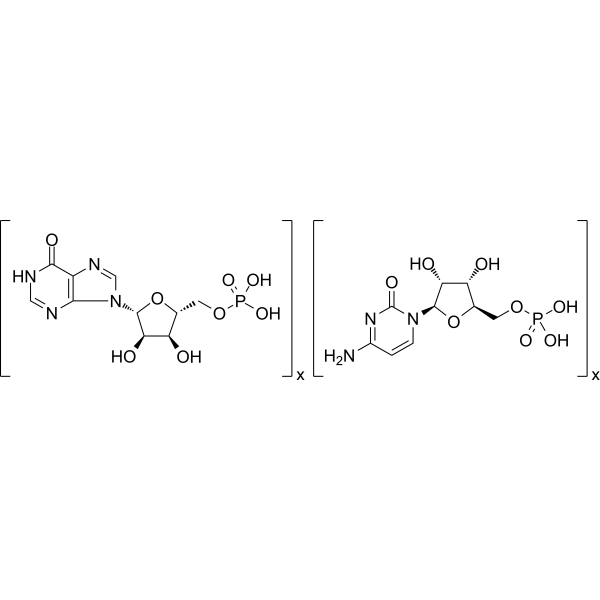
Polyinosinic-polycytidylic acid (Poly(I:C)) is a synthetic analog of double-stranded RNA and an agonist of toll-like receptor 3 (TLR3) and retinoic acid inducible gene I (RIG-I)-like receptors (RIG-I and MDA5). Polyinosinic-polycytidylic acid can be used as a vaccine adjuvant to enhance innate and adaptive immune responses, and to alter the tumor microenvironment. Polyinosinic-polycytidylic acid can directly trigger cancer cells to undergo apoptosis .
loading...
    loading...
72
72 Cited Publications
Cat. No.: HY-13443
CAS No.: 141758-74-9
Purity:  99.95%
Synonyms: Exenatide
Exendin‑4 (Exenatide) is an orally active, blood-brain barrier-permeable glucagon-like peptide-1 receptor (GLP‑1 receptor) agonist that resists degradation mediated by dipeptidyl peptidase IV. Exendin‑4 mediates multiple glucose-regulating effects, including stimulation of glucose-dependent insulin secretion, inhibition of glucagon production, increase in β-cell mass, delay of gastric emptying, reduction of food intake, improvement of peripheral insulin sensitivity, and restoration of normal islet structure. Exendin‑4 inhibits oxidative stress, alleviates inflammatory responses, and reduces neuronal apoptosis. Exendin‑4 reduces the aggregation level of mutant huntingtin, improves motor function, prolongs survival time, and regulates the expression levels of leptin and ghrelin. Exendin‑4 can be used in research related to type 2 diabetes, acute ischemic stroke, and Huntington's disease .
loading...
    loading...
72
72 Cited Publications
Cat. No.: HY-13443A
CAS No.: 914454-01-6
Purity:  99.91%
Synonyms: Exenatide acetate
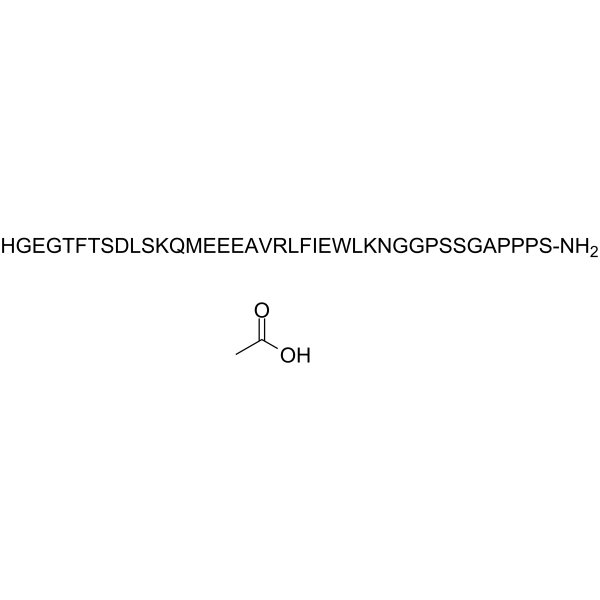
Exendin-4 acetate (Exenatide acetate) is an orally active, blood-brain barrier-permeable glucagon-like peptide-1 receptor (GLP‑1 receptor) agonist that resists degradation mediated by dipeptidyl peptidase IV. Exendin-4 acetate mediates multiple glucose-regulating effects, including stimulation of glucose-dependent insulin secretion, inhibition of glucagon production, increase in β-cell mass, delay of gastric emptying, reduction of food intake, improvement of peripheral insulin sensitivity, and restoration of normal islet structure. Exendin-4 acetate inhibits oxidative stress, alleviates inflammatory responses, and reduces neuronal apoptosis. Exendin-4 acetate reduces the aggregation level of mutant huntingtin, improves motor function, prolongs survival time, and regulates the expression levels of leptin and ghrelin. Exendin-4 acetate can be used in research related to type 2 diabetes, acute ischemic stroke, and Huntington's disease .
loading...
    loading...

