


1815 Results for "

amino-acid

" in MedChemExpress (MCE) Product Catalog:
Products (1815)

1815 Results for "amino-acid" in MCE Product Catalog:

43
43 Cited Publications
Cat. No.: HY-P0014
CAS No.: 204656-20-2
Liraglutide is a glucagon-like peptide-1 (GLP-1) receptor agonist used clinically to treat type 2 diabetes mellitus.
loading...
    loading...
43
43 Cited Publications
Cat. No.: HY-P0014B
Target:  

GLP Receptor

Research Areas:  

Metabolic Disease

Liraglutide (TFA) is an agonist of glucagon-like peptide 1 receptor (GLP-1). Liraglutide (TFA) can activate GLP-1, leading to the release of insulin in the presence of increased glucose concentration. Liraglutide (TFA) also reduces glucagon secretion in a glucose-dependent manner. Liraglutide (TFA) can be studied in research on type 2 diabetes .
loading...
    loading...
13
13 Cited Publications
Cat. No.: HY-W016319
CAS No.: 138-15-8
Research Areas:  

Others

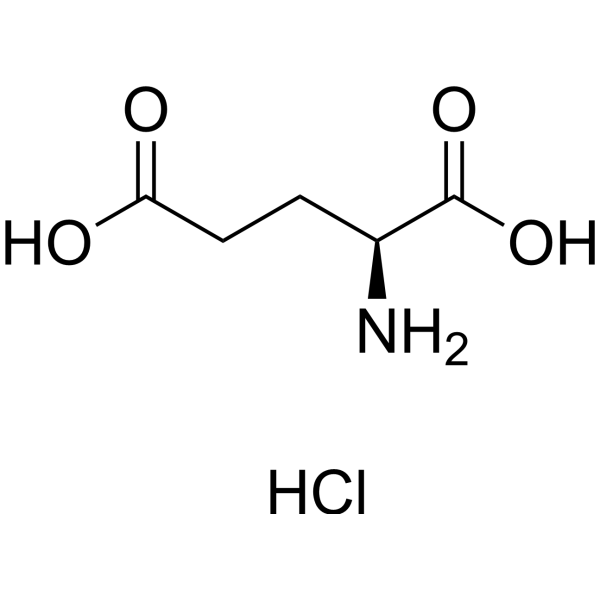
(S)-2-aminopentanedioic acid hydrochloride is a glutamic acid derivative .
loading...
    loading...
12
12 Cited Publications
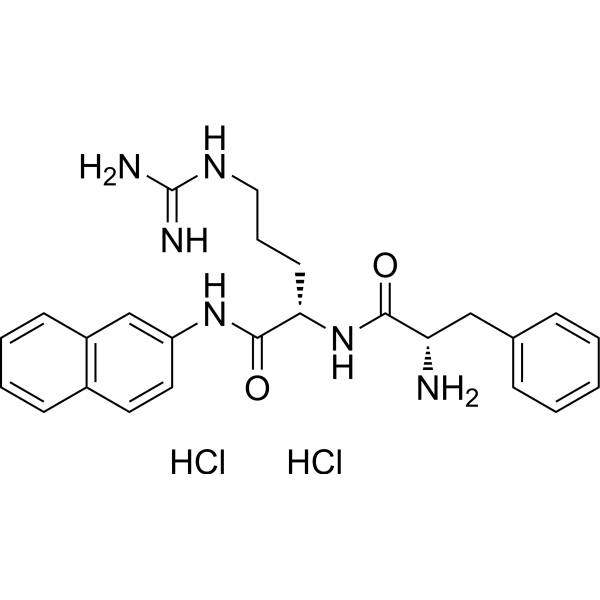
Cat. No.: HY-101444A
CAS No.: 100929-99-5
Purity:  99.89%
Synonyms: MC-207,110 dihydrochloride; Phe-Arg-β-naphthylamide dihydrochloride
Target:  

Bacterial

Research Areas:  

Infection

PAβN dihydrochloride (MC-207110 dihydrochloride) is an efflux pump inhibitor.
loading...
    loading...
10
10 Cited Publications
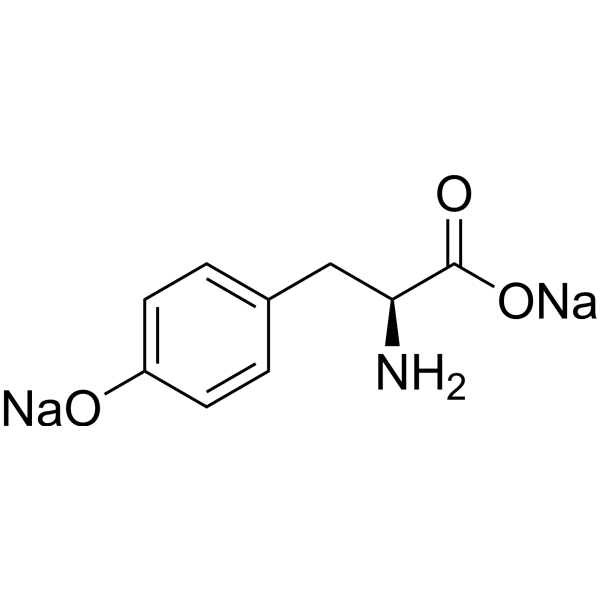
Cat. No.: HY-N0473A
CAS No.: 69847-45-6
Research Areas:  

Others Cancer

L-Tyrosine (disodium) is a tyrosine derivative .
loading...
    loading...
7
7 Cited Publications
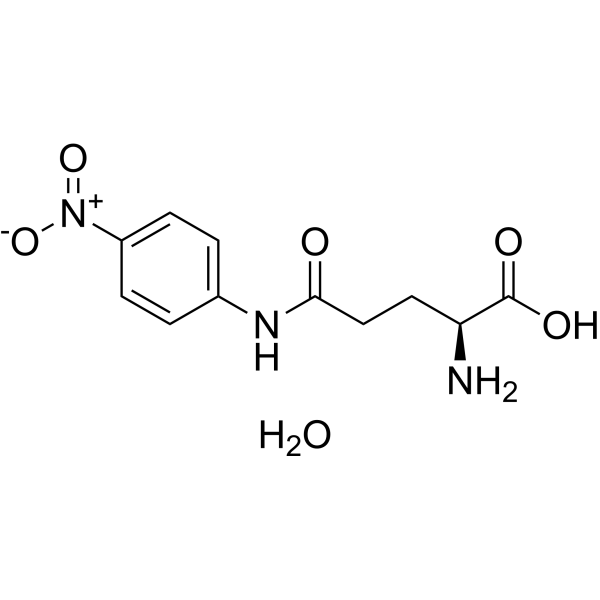
Cat. No.: HY-W011391A
CAS No.: 7300-59-6
Research Areas:  

Others

L-γ-Glutamyl-p-nitroanilide Monohydrate is a glutamic acid derivative .
loading...
    loading...
7
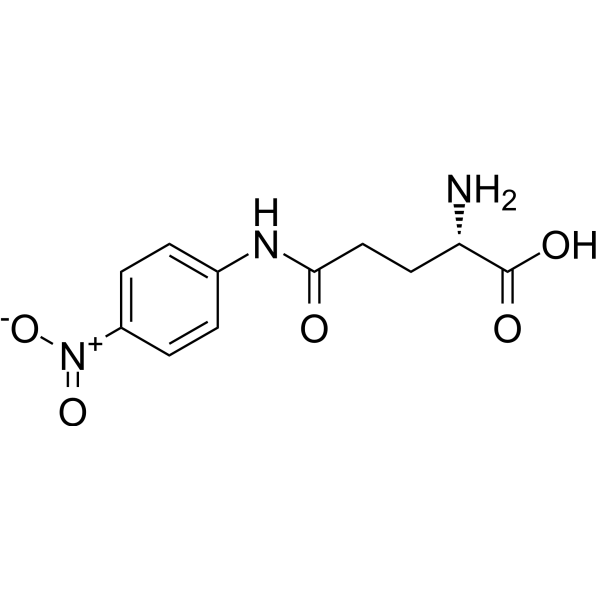
7 Cited Publications
Cat. No.: HY-W345421
CAS No.: 122864-94-2
Research Areas:  

Others

L-γ-Glutamyl-p-nitroanilide (hydrate) is aglutamic acid derivatives.
loading...
    loading...
5
5 Cited Publications
Cat. No.: HY-W009203
CAS No.: 30925-07-6
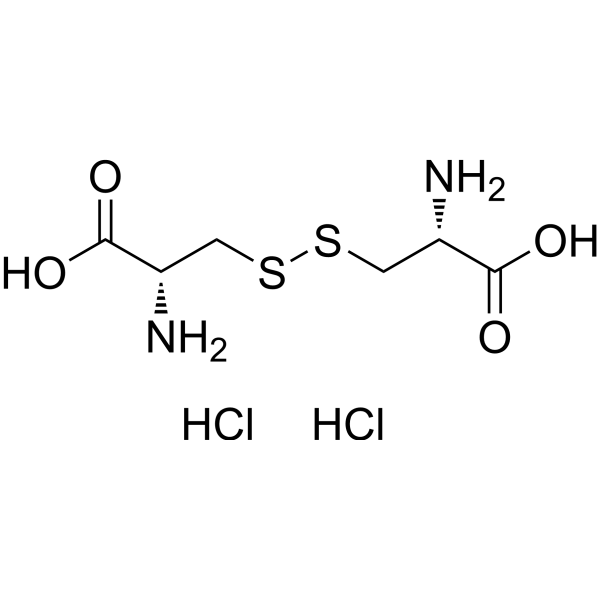
L-Cystine dihydrochloride is the dihydrochloride salt form of L-Cystine (HY-N0394). L-Cystine dihydrochloride elevates Nrf2 protein expression and activates Nrf2 transcription factor. L-cystine dihydrochloride reduces ROS generation and protects against oxidant- or Doxorubicin (HY-15142A)-induced apoptosis. L-Cystine dihydrochloride combined with L-theanine (HY-15121) enhances the production of antigen-specific IgG by increasing glutathione (GSH) levels and T helper 2 (Th2) mediated responses in mice. L-Cystine dihydrochloride is promising for research of cystinuria and kidney stones
loading...
    loading...
5
5 Cited Publications
Cat. No.: HY-W142119
CAS No.: 2792-66-7
Target:  

Ser/Thr Protease

Research Areas:  

Neurological Disease

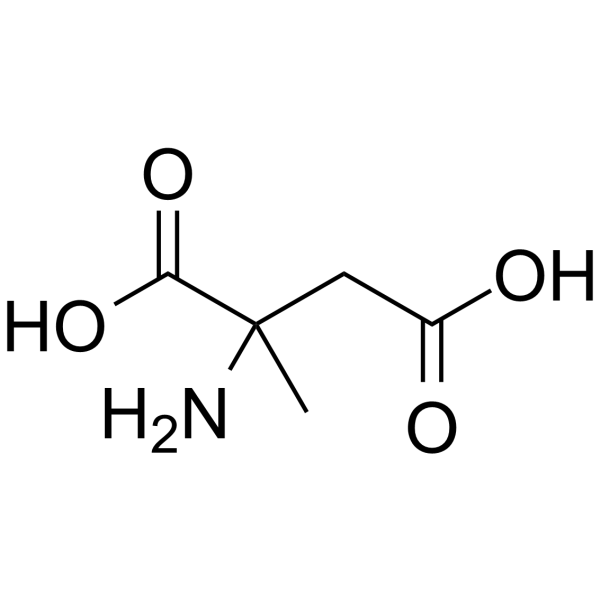
α-Methyl-DL-aspartic acid is a specific inhibitor of argininosuccinate synthase (ASS), and also is the rate-limiting enzyme for the recycling of 1-citrulline to 1-arginine .
loading...
    loading...
4
4 Cited Publications
Cat. No.: HY-P2336A
Target:  

Melanocortin Receptor

Research Areas:  

Cancer

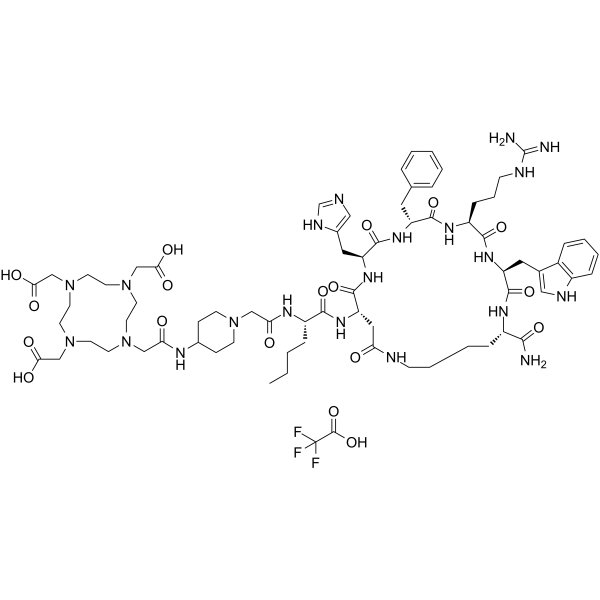
CCZ01048 TFA, a α-MSH analogue, exhibits high binding affinity to melanocortin 1 receptor (MC1R) with a Ki of 0.31 nM. CCZ01048 TFA shows rapid internalization into B16F10 melanoma cells and high in vivo stability. CCZ01048 TFA is a promising candidate for PET imaging of malignant melanoma .
loading...
    loading...
4
4 Cited Publications
Cat. No.: HY-P1674A
CAS No.: 3053070-05-3
Synonyms: POL7080 TFA
Target:  

Bacterial Antibiotic

Research Areas:  

Infection

Murepavadin (POL7080) (TFA), a 14-amino-acid cyclic peptide, is a highly potent, specific antibiotic. Murepavadin exhibits a potent antimicrobial activity for P. aeruginosa with MIC50 and MIC90 values both of 0.12 mg/L. Murepavadin also can target the lipopolysaccharide transport portin D. Murepavadin can be used for the research of bacterial resistance .
loading...
    loading...
4
4 Cited Publications
Cat. No.: HY-W014375
CAS No.: 32042-43-6
Synonyms: (±)-Arginine hydrochloride
Target:  

Endogenous Metabolite

Research Areas:  

Cardiovascular Disease

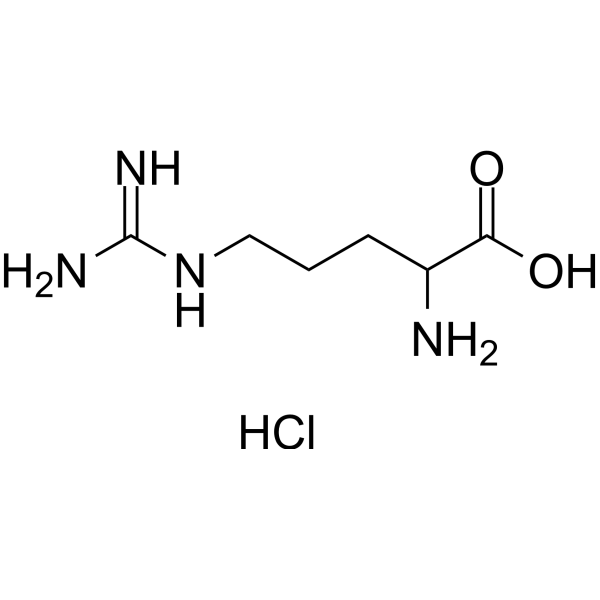
DL-Arginine ((±)-Arginine) hydrochloride is the racemic compound of L-Arginine (HY-N0455) and D-Arginine (HY-W016781). Arginine is an essential amino acid that requires additional supplementation in traumatic or diseased conditions. Arginine is involved in T cell activation, proliferation, and differentiation, and affects the function of immune cells .
loading...
    loading...
4
4 Cited Publications
Cat. No.: HY-W142162
CAS No.: 6027-02-7
Research Areas:  

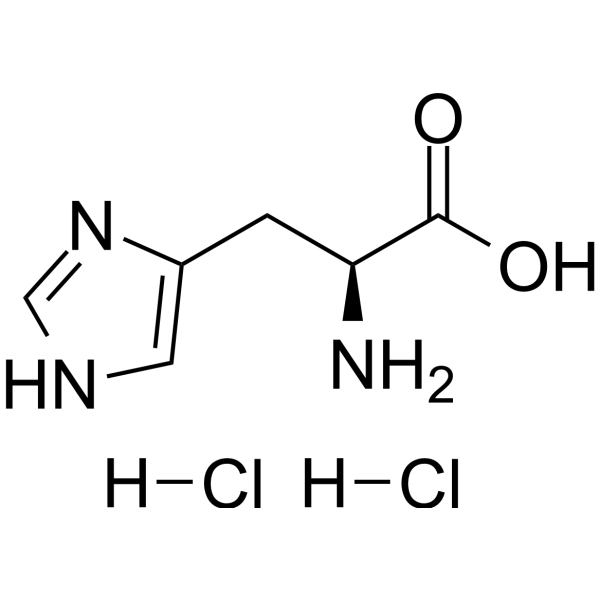
Others

L-Histidine dihydrochloride is a histidine derivative .
loading...
    loading...
3
3 Cited Publications
Cat. No.: HY-P3462
CAS No.: 1415456-99-3
Target:  

CGRP Receptor

Research Areas:  

Metabolic Disease

Cagrilintide is an investigational novel long-acting acylated amylin analogue, acts as nonselective amylin receptors (AMYR) and calcitonin G protein-coupled receptor (CTR) agonist. Cagrilintide induces significant weight loss and reduces food intake. Cagrilintide has the potential for the research of obesity .
loading...
    loading...
3
3 Cited Publications
Cat. No.: HY-P3462A
Target:  

CGRP Receptor

Research Areas:  

Metabolic Disease

Cagrilintide acetate is a non-selective AMYR/CTR agonist and long-acting acylated amylase analogue. Cagrilintide acetate causes a reduction in food intake and significant weight loss in a dose-dependent manner. Cagrilintide acetate can be used in obesity studies .
loading...
    loading...
3
3 Cited Publications
Cat. No.: HY-W012791
CAS No.: 637-96-7
Research Areas:  

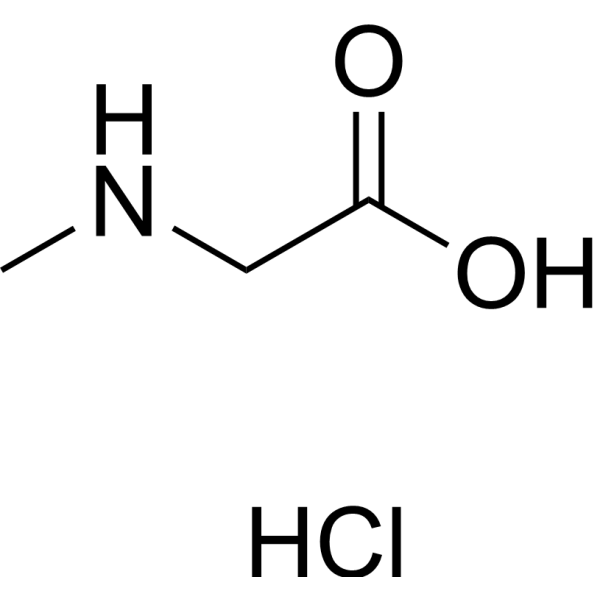
Others

2-(Methylamino)acetic acid hydrochloride is a Glycine (HY-Y0966) derivative .
loading...
    loading...
3
3 Cited Publications
Cat. No.: HY-W010991
CAS No.: 64967-39-1
Synonyms: FAPGG
Research Areas:  

Others

N-[3-(2-Furyl)acryloyl]-Phe-Gly-Gly (FAPGG) is a specific substrate of angiotensin converting enzyme (ACE) with a Ki of 2.546×10 -4 M. It is used as a chromogenic probe for quantitative detection of ACE activity. N-[3-(2-Furyl)acryloyl]-Phe-Gly-Gly can be hydrolyzed by ACE to generate N-[3-(2-furyl)acryloyl]-Phe (FAP) and Gly-Gly, and the ACE inhibitory effect is monitored by photometry. FAPGG competitively binds to the active center of ACE and is a key tool for screening ACE inhibitors such as Captopril (HY-B0368) and Dioscorin. Its reversible mechanism of action supports hypertension research and drug development targeting the renin-angiotensin system .
loading...
    loading...
3
3 Cited Publications
Cat. No.: HY-P0046
CAS No.: 49557-75-7
Synonyms: GHK; Tripeptide-1
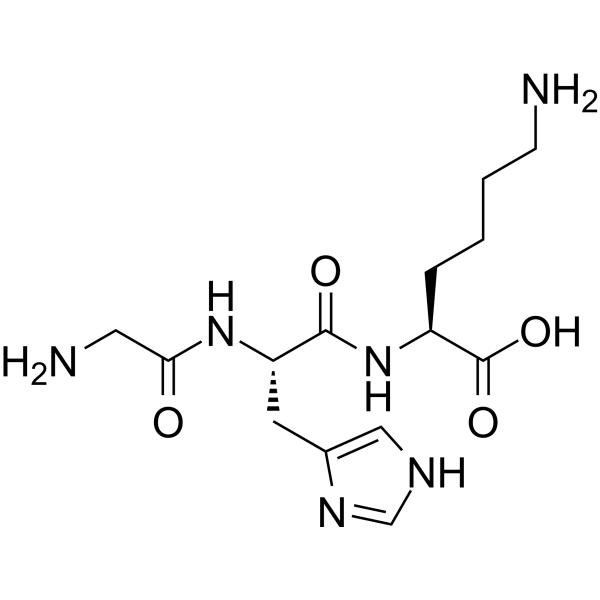
Glycyl-L-histidyl-L-lysine is a tripeptide consisting of glycine, L-histidine and L-lysine residues joined in sequence. Glycyl-L-histidyl-L-lysine is a hepatotropic immunosuppressor and shows anxiolytic effect. Glycyl-L-histidyl-L-lysine and its copper complexes show good skin tolerance .
loading...
    loading...
2
2 Cited Publications
Cat. No.: HY-P0173A
CAS No.: 163515-35-3
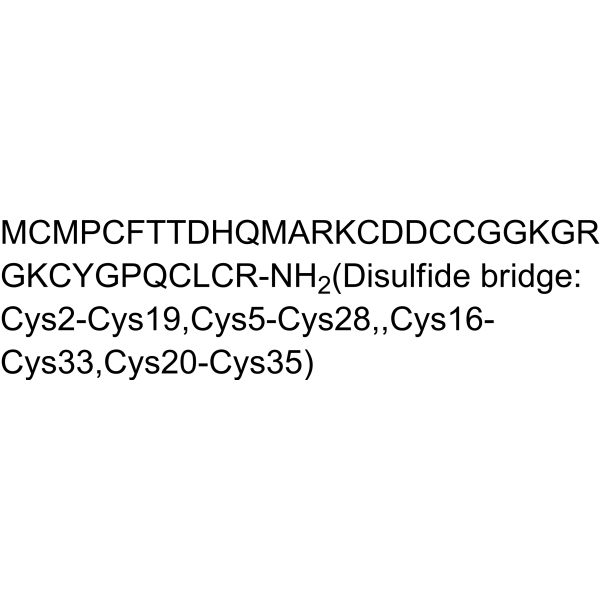
Chlorotoxin is a 36 amino-acid peptide from the venom of the Israeli scorpion Leiurus quinquestriatus with anticancer activity. Chlorotoxin is a chloride channel blocker.
loading...
    loading...
2
2 Cited Publications
Cat. No.: HY-P2230
CAS No.: 220334-14-5
Synonyms: A6 Peptide
Target:  

PAI-1

Research Areas:  

Cancer

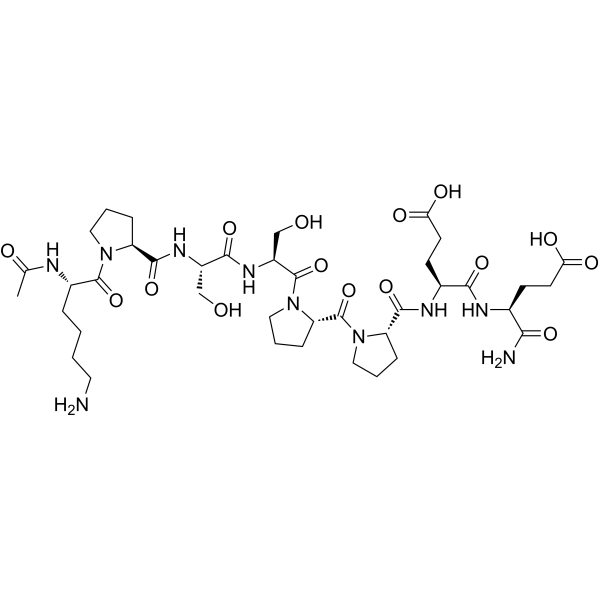
Angstrom6 (A6 Peptide) is an 8 amino-acid peptide derived from single-chain urokinase plasminogen activator (scuPA) and interferes with the uPA/uPAR cascade and abrogates downstream effects. Angstrom6 binds to CD44 resulting in the inhibition of migration, invasion, and metastasis of tumor cells, and the modulation of CD44-mediated cell signaling .
loading...
    loading...