9 Results for "

amniotic

" in MedChemExpress (MCE) Product Catalog:
Products (9)

9 Results for "amniotic" in MCE Product Catalog:

11
11 Publications Verification
Cat. No.: HY-N0264
CAS No.: 1124-11-4
Synonyms: Chuanxiongzine; Tetramethylpyrazine
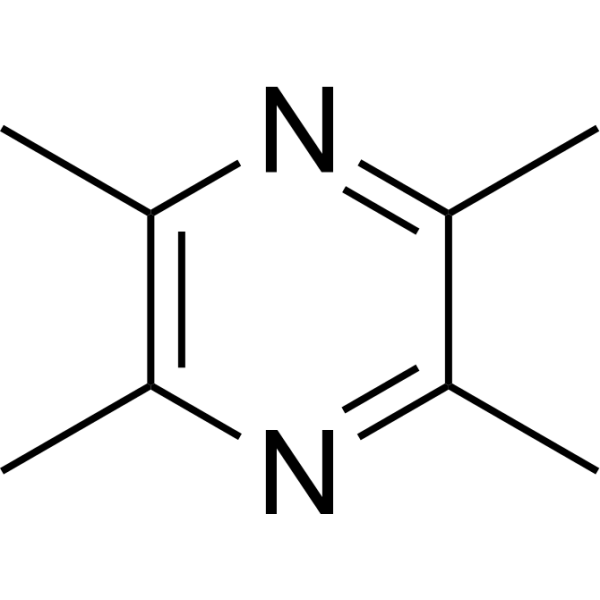
Ligustrazine (Chuanxiongzine) is an orally active, blood-brain barrier-permeable alkaloid. It can be isolated from Ligusticum striatum DC. Ligustrazine reduces ROS, upregulates the levels of p-Akt/Akt and p-eNOS/eNOS, and decreases ALT and AST. It inhibits glutamate excitotoxicity, calcium overload, oxidative stress, ischemia-reperfusion injury and atherosclerotic plaque progression, enhances synaptic plasticity, and improves neurological function, cerebral infarct volume and brain water content. Ligustrazine possesses anti-inflammatory, antioxidant, lipid-lowering, endothelial protective and hepatoprotective activities. It can be used in studies related to ischemic stroke, cerebral ischemia-reperfusion injury and atherosclerosis .
loading...
    loading...
11
11 Publications Verification
Cat. No.: HY-N0935
CAS No.: 76494-51-4
Synonyms: Chuanxiongzine hydrochloride; Tetramethylpyrazine hydrochloride
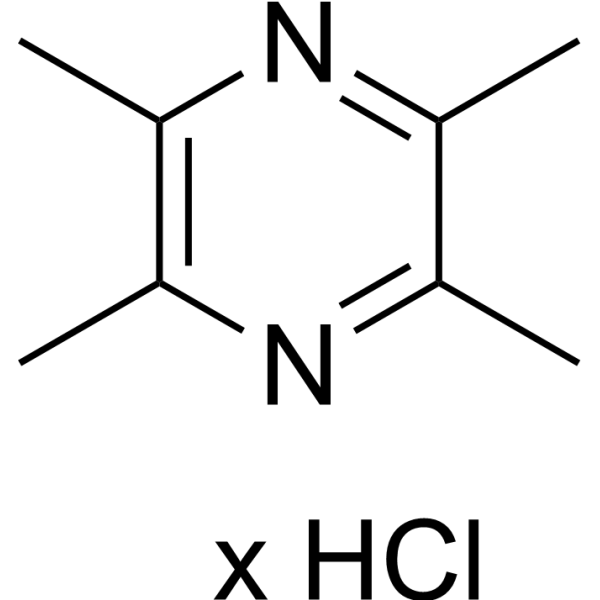
Ligustrazine hydrochloride (Chuanxiongzine hydrochloride) is an orally active, blood-brain barrier-permeable alkaloid. It can be isolated from Ligusticum striatum DC. Ligustrazine hydrochloride reduces ROS, upregulates the levels of p-Akt/Akt and p-eNOS/eNOS, and decreases ALT and AST. It inhibits glutamate excitotoxicity, calcium overload, oxidative stress, ischemia-reperfusion injury and atherosclerotic plaque progression, enhances synaptic plasticity, and improves neurological function, cerebral infarct volume and brain water content. Ligustrazine hydrochloride possesses anti-inflammatory, antioxidant, lipid-lowering, endothelial protective and hepatoprotective activities. It can be used in studies related to ischemic stroke, cerebral ischemia-reperfusion injury and atherosclerosis .
loading...
    loading...
1
1 Cited Publications
Cat. No.: HY-D0227
CAS No.: 77-86-1
Synonyms: Tris; Tris(hydroxymethyl)aminomethane
Research Areas:  

Metabolic Disease

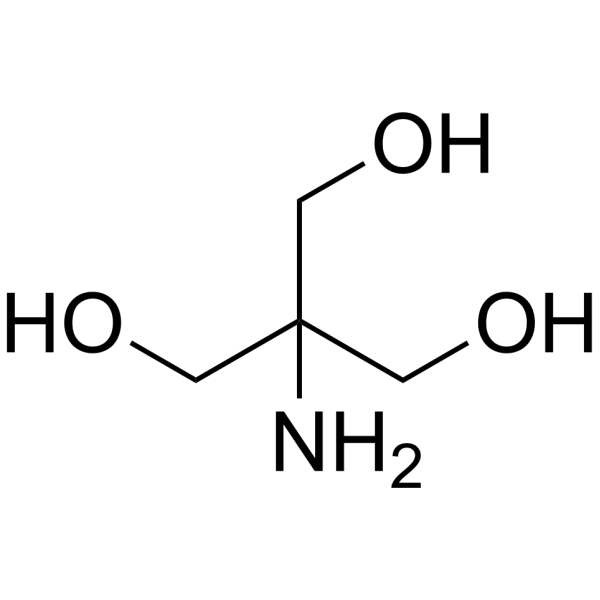
THAM (Tris) is a low-toxicity amino alcohol buffer, a specific CO2-consuming proton acceptor that buffers carbon dioxide and acid both in vitro and in vivo. THAM binds protons to form bicarbonate, reduces PaCO2, and induces intracellular alkalization, thereby ameliorating hypercapnia-induced elevation of pulmonary blood vessels and pulmonary arterial pressure. THAM may cause PaCO2 rebound, hypoglycemia, and respiratory depression. THAM removes amniotic epithelium and preserves the basement membrane, but depletes extracellular matrix and reduces the adhesion rate of limbal epithelial cells. THAM can act as a CO2 carrier to enhance the productivity and carbon utilization rate of Scenedesmus obliquus. THAM is a key component of buffer solutions used in various biological, cell culture, biochemical, and molecular biology applications .
loading...
    loading...
1
1 Cited Publications
Cat. No.: HY-D0227J
CAS No.: 1185-53-1
Synonyms: Tris HCl (≥99%, for cell culture); Tris hydrochloride (≥99%, for cell culture)
THAM hydrochloride (≥99%, for cell culture) is a low-toxicity amino alcohol buffer, a specific CO2-consuming proton acceptor that buffers carbon dioxide and acid both in vitro and in vivo. THAM hydrochloride (≥99%, for cell culture) binds protons to form bicarbonate, reduces PaCO2, and induces intracellular alkalization, thereby ameliorating hypercapnia-induced elevation of pulmonary blood vessels and pulmonary arterial pressure. THAM hydrochloride (≥99%, for cell culture) may cause PaCO2 rebound, hypoglycemia, and respiratory depression. THAM hydrochloride (≥99%, for cell culture) removes amniotic epithelium and preserves the basement membrane, but depletes extracellular matrix and reduces the adhesion rate of limbal epithelial cells. THAM hydrochloride (≥99%, for cell culture) can act as a CO2 carrier to enhance the productivity and carbon utilization rate of Scenedesmus obliquus. THAM hydrochloride (≥99%, for cell culture) is a key component of buffer solutions used in various biological, cell culture, biochemical, and molecular biology applications .
loading...
    loading...
1
1 Cited Publications
Cat. No.: HY-D0227B
CAS No.: 6850-28-8
Synonyms: Tris acetate; Tris(hydroxymethyl)aminomethane acetate
Research Areas:  

Metabolic Disease

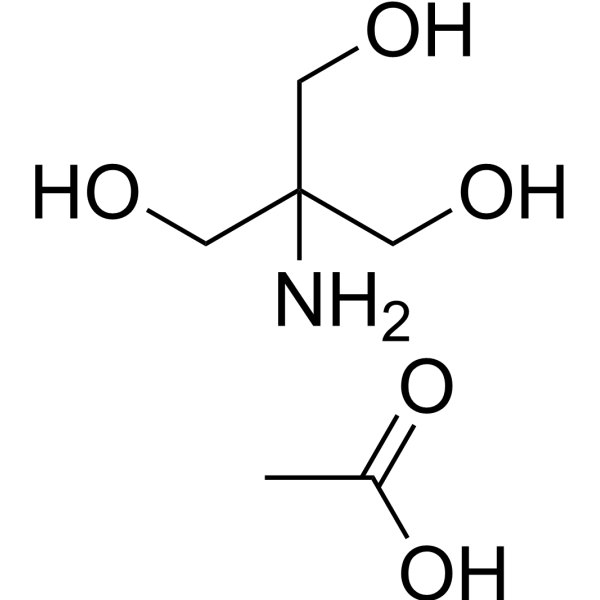
THAM acetate is a low-toxicity amino alcohol buffer, a CO2-consuming proton acceptor that buffers carbon dioxide and acid both in vitro and in vivo. THAM acetate binds protons to form bicarbonate, reduces PaCO2, and induces intracellular alkalization, thereby ameliorating hypercapnia-induced elevation of pulmonary blood vessels and pulmonary arterial pressure. THAM acetate may cause PaCO2 rebound, hypoglycemia, and respiratory depression. THAM acetate removes amniotic epithelium and preserves the basement membrane, but depletes extracellular matrix and reduces the adhesion rate of limbal epithelial cells. THAM acetate can act as a CO2 carrier to enhance the productivity and carbon utilization rate of Scenedesmus obliquus. THAM acetate is a key component of buffer solutions used in various biological, cell culture, biochemical, and molecular biology applications .
loading...
    loading...
1
1 Cited Publications
Cat. No.: HY-P71270
Purity:  ≥ 95%, as determined by reducing SDS-PAGE.
Synonyms: Protein S100-A12; Calcium-binding protein in amniotic fluid 1; Calgranulin-C; Extracellular newly identified RAGE-binding protein; Migration inhibitory factor-related protein 6; S100 calcium-binding protein A12; Calcitermin; S100A12; CGRP; MRP-6; EN-RAGE
Species:  
Source:  
loading...
    loading...
Cat. No.: HY-N0264R
CAS No.: 1124-11-4
Synonyms: Chuanxiongzine (Standard); Tetramethylpyrazine (Standard)
Ligustrazine (Standard) (Chuanxiongzine (Standard)) is the analytical standard of Ligustrazine (HY-N0264). This product is intended for research and analytical applications. Ligustrazine (Chuanxiongzine) is an orally active, blood-brain barrier-permeable alkaloid. It can be isolated from Ligusticum striatum DC. Ligustrazine reduces ROS, upregulates the levels of p-Akt/Akt and p-eNOS/eNOS, and decreases ALT and AST. It inhibits glutamate excitotoxicity, calcium overload, oxidative stress, ischemia-reperfusion injury and atherosclerotic plaque progression, enhances synaptic plasticity, and improves neurological function, cerebral infarct volume and brain water content. Ligustrazine possesses anti-inflammatory, antioxidant, lipid-lowering, endothelial protective and hepatoprotective activities. It can be used in studies related to ischemic stroke, cerebral ischemia-reperfusion injury and atherosclerosis .
loading...
    loading...
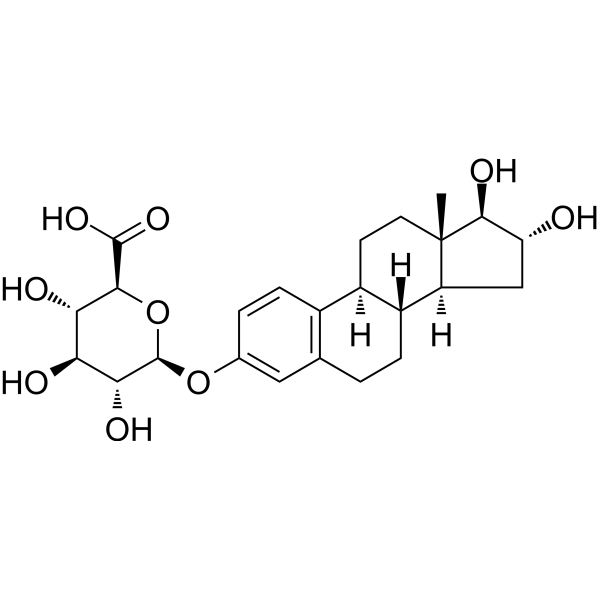
Cat. No.: HY-113169
CAS No.: 2479-91-6
Synonyms: Estriol 3-β-D-glucuronide
Estriol-3-glucuronide exists in amniotic fluid during normal pregnancy and occurs naturally in urine .
loading...
    loading...
Cat. No.: HY-K1065

MCE Exosome Isolation and Purification Kit provides a simple and effective method to isolate and purify intact exosomes from cerebro-spinal fluid, amniotic fluid, milk, saliva, etc, which can be used for electron microscope analysis, NTA analysis, WB, qPCR, etc.

loading...
    loading...

