1. Search Result
Search Result
Pathways Recommended: Antibody-drug Conjugate/ADC Related
Results for "

antibody labeling

" in MedChemExpress (MCE) Product Catalog:

249

Inhibitors & Agonists

162

Fluorescent Dyes

34

Biochemical Assay Reagents

4

Peptides

19

MCE Kits

5

Inhibitory Antibodies

5

Natural
Products

21

Isotope-Labeled Compounds

9

Click Chemistry

22

Oligonucleotides

1

GMP Molecules

Cat. No. Product Name
  • HY-K0702

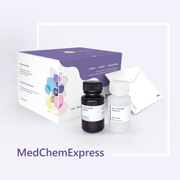
    MCE Antibody Labeling Kit-VF 488 can efficiently and covalently attach the VF 488 dye to antibodies.

  • HY-KD1003

    The MCE four-color immunohistochemical kit can label three indicators. The kit contains rabbit secondary antibodies and can be used in combination with rabbit primary antibodies.

  • HY-KD1004

    The MCE four-color histochemical kit can label three indicators. The kit contains a universal secondary antibody for rabbits and mice and can be used in combination with primary antibodies for rabbits or mice.

  • HY-KD1114
    The NOTA Rapid Labelling Kit enables NOTA labelling of proteins. Based on NHS ester chemistry, NHS ester-activated fluorescent dyes react with primary amines on the antibody/protein to be labelled in a pH 7-9 solution, forming stable amide bonds to achieve conjugation with the antibody/protein. Typically, a single IgG molecule can bind 2–8 NOTA molecules. The entire procedure can be completed within two hours.
  • HY-KD1113
    The Biotinylation Rapid Labelling Kit enables biotinylation of proteins. Based on NHS ester chemistry, the NHS ester-activated fluorescent dye reacts with primary amines in the antibody/protein to be labelled within a pH 7-9 solution, forming stable amide bonds to achieve conjugation with the antibody/protein. Typically, a single IgG molecule can bind 2-8 molecules of biotin. The entire procedure can be completed within two hours.
  • HY-KD1115
    The DOTA rapid labelling kit enables DOTA labelling of proteins. Based on NHS ester chemistry, NHS ester-activated fluorescent dyes react with primary amines on the antibody/protein to form stable amide bonds at pH 7–9, thereby achieving conjugation with the antibody/protein. Typically, a single IgG molecule can bind 2–8 DOTA molecules. The entire procedure can be completed within 2 hours.
  • HY-KD1103
    Red Fluorescent Rapid Labelling Kit (CY3) enables red fluorescent labelling of proteins. Maximum excitation/ Emission Wavelength: 550/570 nm. Based on NHS ester chemistry, the NHS ester-activated fluorescent dye reacts with primary amines in the antibody/protein to be labelled at pH 7-9, forming stable amide bonds to achieve conjugation with the antibody/protein. Typically, one IgG molecule can bind 2–8 molecules of CY3. The entire experiment can be completed within 2 hours.
  • HY-K1005
    160+ Cited Publications

    MCE Ultra High Sensitivity ECL Kit is an ultra-sensitive, luminol-based enhanced chemiluminescent substrate for detecting horseradish peroxidase (HRP) labeled antibodies on western blots. The 100 mL is defined as the base specification. All larger sizes correspond to incremental volumes of this base.

  • HY-KD1106
    Red Fluorescent Rapid Labelling Kit (AF647) enables red fluorescent labelling of proteins. Maximum excitation/ Emission Wavelength: 647/665 nm. Based on NHS ester chemistry, the NHS ester-activated fluorescent dye reacts with primary amines in the antibody/protein to be labelled at pH 7-9, forming stable amide bonds to achieve conjugation. Typically, one IgG molecule can bind 2-8 molecules of AF647. The entire procedure can be completed within two hours.
  • HY-KD1112
    TheBlue Fluorescence Rapid Labelling Kit (AF350) enables red fluorescent labelling of proteins. Maximum excitation/ emission wavelengths: 346/442 nm. Based on NHS ester chemistry, the NHS ester-activated fluorescent dye reacts with primary amines in the antibody/protein to be labelled at pH 7-9, forming stable amide bonds to achieve conjugation. Typically, one IgG molecule can bind 2-8 molecules of AF350. The entire procedure can be completed within two hours.
  • HY-KD1107
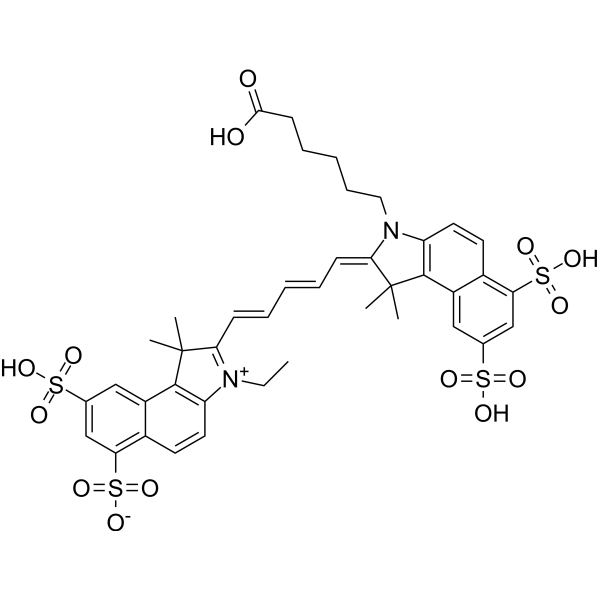
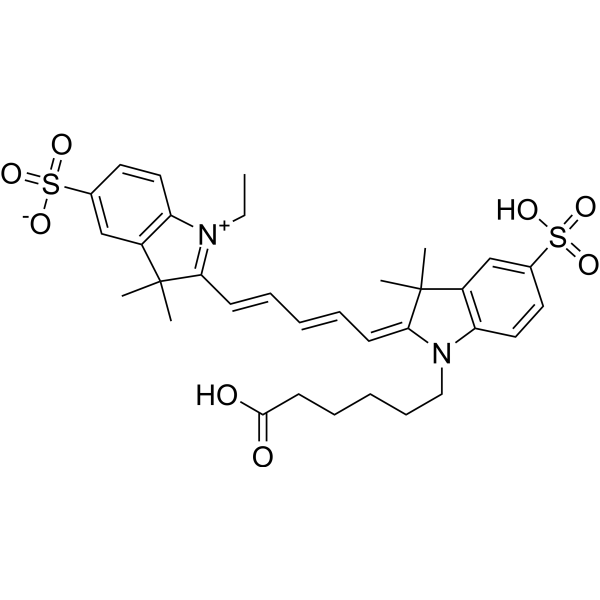
    Deep Red Fluorescent Rapid Labelling Kit (CY5) enables red fluorescent labelling of proteins. Maximum excitation/ emission wavelengths: 649/667 nm. Based on NHS ester chemistry, the NHS ester-activated fluorescent dye reacts with primary amines in the antibody/protein to be labelled at pH 7-9, forming stable amide bonds to achieve conjugation. Typically, one IgG molecule can bind 2–8 molecules of CY5. The entire experiment can be completed within 2 hours.
  • HY-KD1109
    Near-infrared Fluorescent Rapid Labelling Kit (CY7) enables red fluorescent labelling of proteins. Maximum excitation/ emission wavelengths: 750/773 nm. Based on NHS ester chemistry, the NHS ester-activated fluorescent dye reacts with primary amines in the antibody/protein to be labelled at pH 7-9, forming stable amide bonds to achieve conjugation. Typically, one IgG molecule can bind 2–8 molecules of CY7. The entire experiment can be completed within 2 hours.
  • HY-KD1108
    Deep Red Fluorescent Rapid Labelling Kit (CY5.5) enables red fluorescent labelling of proteins. Maximum excitation/ emission wavelengths: 678/695 nm. Based on NHS ester chemistry, the NHS ester-activated fluorescent dye reacts with primary amines in the antibody/protein to be labelled at pH 7-9, forming stable amide bonds to achieve conjugation. Typically, one IgG molecule can bind 2-8 molecules of CY5.5. The entire procedure can be completed within two hours.
  • HY-KD1110
    The Near-Infrared Fluorescence Rapid Labelling Kit (CY7.5) enables red fluorescent labelling of proteins. Maximum excitation/ emission wavelengths: 788/814 nm. Based on NHS ester chemistry, the NHS ester-activated fluorescent dye reacts with primary amines in the antibody/protein to be labelled at pH 7-9, forming stable amide bonds to achieve conjugation. Typically, one IgG molecule can bind 2-8 molecules of CY7.5. The entire procedure can be completed within two hours.
  • HY-KD1101
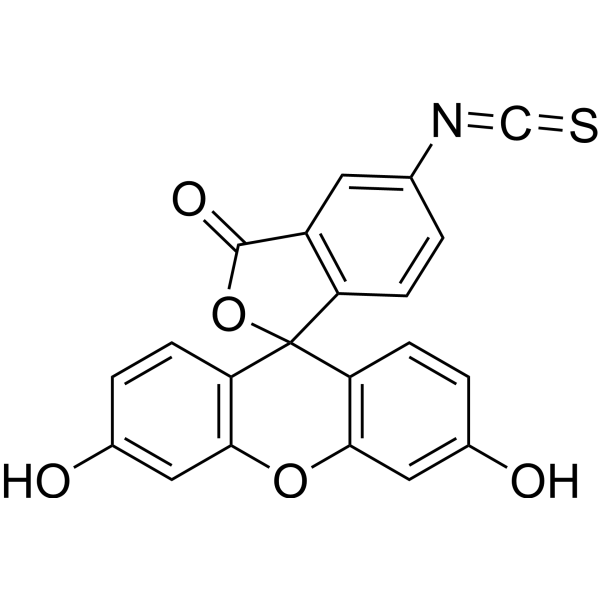
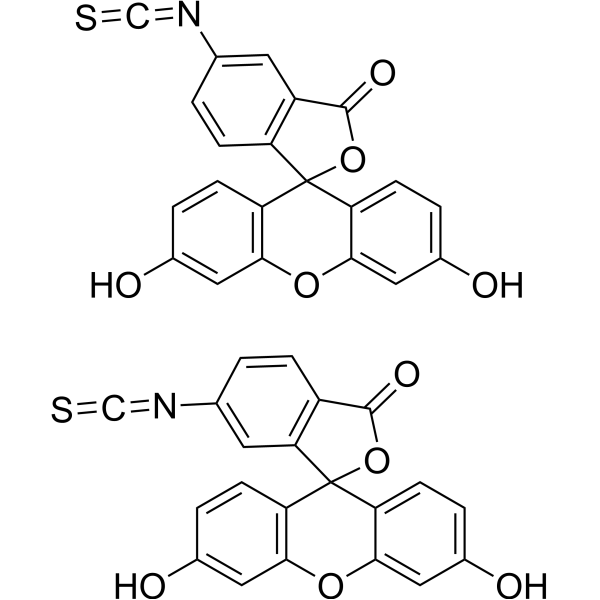
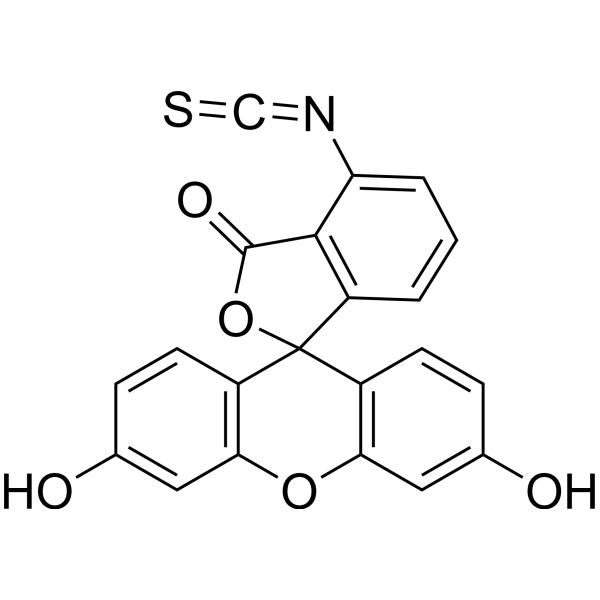
    Green Fluorescent Rapid Labelling Kit (FITC) enables green fluorescent labelling of proteins. Maximum excitation/ emission wavelengths: 488/515 nm. Based on NHS-ester chemistry, the NHS-ester-activated fluorescent dye reacts with primary amines in pH 7-9 solutions to form stable amide bonds, thereby achieving conjugation with antibodies/proteins. Typically, one IgG molecule can bind 2-8 molecules of FITC. The entire procedure can be completed within two hours.
  • HY-KD1111
    Near-infrared Fluorescent Rapid Labelling Kit (AF750) enables red fluorescent labelling of proteins. Maximum excitation/ Emission Wavelength: 750/775 nm. Based on NHS ester chemistry, the NHS ester-activated fluorescent dye reacts with primary amines in pH 7-9 solutions to form stable amide bonds, thereby achieving conjugation with antibodies/proteins. Typically, one IgG molecule can bind 2-8 molecules of AF750. The entire procedure can be completed within two hours.
  • HY-KD1102
    Green Fluorescent Rapid Labelling Kit (AF488) enables green fluorescent labelling of proteins. Maximum excitation/ emission wavelengths: 480/525 nm. Based on NHS ester chemistry, the NHS ester-activated fluorescent dye reacts with primary amines in pH 7-9 solutions to form stable amide bonds, thereby achieving conjugation with antibodies/proteins. Typically, one IgG molecule can bind 2-8 molecules of AF488. The entire procedure can be completed within two hours.
  • HY-KD1105
    Red Fluorescent Rapid Labelling Kit (AF594) enables red fluorescent labelling of proteins. Maximum excitation/ Emission Wavelength: 594/617 nm. Based on NHS ester chemistry, the NHS ester-activated fluorescent dye reacts with primary amines in pH 7-9 solutions to form stable amide bonds, thereby achieving conjugation with antibodies/proteins. Typically, one IgG molecule can bind 2-8 molecules of AF594. The entire procedure can be completed within two hours.
  • HY-KD1104
    Red Fluorescent Rapid Labelling Kit (AF555) enables red fluorescent labelling of proteins. Maximum excitation/ Emission Wavelength: 555/565 nm. Based on NHS ester chemistry, the NHS ester-activated fluorescent dye reacts with primary amines in pH 7-9 solutions to form stable amide bonds with the target antibody/protein, achieving conjugation. Typically, one IgG molecule can bind 2-8 molecules of AF555. The entire procedure can be completed within two hours.

Inquiry Online

Your information is safe with us. * Required Fields.

Salutation


Country or Region *

Applicant Name *


Organization Name *

Department *


Email Address *


Product Name *

Cat. No.


Requested quantity *

Phone Number *


Remarks

Inquiry Online

Inquiry Information

Product Name:
Cat. No.:
Quantity:
MCE Japan Authorized Agent:

